 Jō Asakura
The F-35’s Fibre Mat is totally different and brand new, from the RAM used on either the B-2, or the F-22. Its capability is classified…
Some of the CNT Patents by Lockheed date back to 2007, 2008 & 2010. As far RAM and Fibre MAT goes, capability is classified so you can only guess where Lockheed has been able to take it vis-a-vis its competitors…
Yeah, those would be consistent with an on-going development programme. The all-encapsulating patent for the final & completed article is very recent indeed. Also, recent delamination glitches for the F-135’s cowlings may be indicative of something new being added to the composites in the latest LRIP batches, as would be expected in their concurrency model.
I dont think anyone is questioning the quality and capability of the RAM produced nowadays. As Jo showed there are already public data on Russian RAM materials that on UCAVs can offer a >-30dB RCS reduction. The only problem is the heat resistance of +85 deg C meaning the top speeds would have to be closer to mach 1,5 at altitude…
Maybe I should’ve been clearer. The CNT RAM in the link above is the vanilla version and is commercially available for space, air, sea & land applications both civil and military. There’s a line @ the bottom that reads:
Возможно изготовление образцов по техническим требованиям заказчика.
It is possible to produce designs for the technical requirements of the customer.
The actual developers, Ioffe Intitute RAS, have long worked on the RCS reduction of fighters- particularly of the ‘Flanker’ family. Their material (which I will not link), states at the very least (не менее) -30dB absorption (6mm) over 8-12GHz. There’s actually a chart and it averages out @ -31.5dB.
Importantly, it also states an operating temperature of -100°С to +200°С. Hence, there can be little doubt what this version is for.
The thing about CNT RAM is that it’s one of those technological breakthroughs that resulted from a chance or accidental discovery such as penicillin or radioactivity (in this case Japan, 1991 for MWNTs). As such, it has revolutionary attributes that are a major departure from the RAM materials that preceded it, as already intimated by BIO.
It came too late to be applied to the F-22, but would have been a major design consideration for the F-35. This was definitely the case for the T-50, along with the ‘stealth compressor’ about which I’ll post my latest speculations sometime next week (a small thing called work gets in the way).
What you need to appreciate is the lead times for such developments and the maturity of the technology to facilitate incorporation, again BIO has already covered this. F.e. recently a GKN Aerospace executive played down major graphene applications in airframes even in the medium term, despite all the jumping for joy over this ‘wondermaterial’. He said the lead times may be up to 2 decades if the example of CFRP is anything to go by or, more recently, thermoplastic composites.
Then there was the lauding of graphene as a stealth material- if the graphene layers were rolled-up…which would make them carbon nanotubes :D. First and foremost, the US DoD (and others) will be looking to governments and academic institutions worldwide to do all the R&D, then they’ll look to industrial giants such as Samsung Electronics and Intel Corp. to make the material commercially viable and attain economies of scale before it’s embraced by the aerospace & defence industry as COTS (particularly the capital tooling). A situation recently exemplified by the telecoms industry adopting GaN technology waaay before the military. The latter haven’t called the shots for over 2 decades now.
Of course there are agencies such as DARPA whose raison d’etre is to remain ‘ahead of the game’ and much of the hush-hush stuff they’re developing now will debut on the LRS-B- but let’s keep things in perspective.
Jō AsakuraTo wrap it up…
I asked you how effective you thought rams would be in 2020-2025 compared to ones developed in 2000. I believe that the result may be so impressive that an F35 using the fiber mat of today (developed almost a decade ago) may be inferior to a semi stealthy design using a coating designed in 2020. Taunit is supposed to only be 0,3mm thick in real applications meaning a factor (roughly counted) closer to 125 in RCS reduction. Ten years before that a factor of 10 was impressive and in the Su35BM programme the achieved 13.
UNM ‘Tainut’ is essentially a carbon nanotube raw material with multiple applications for industry. It has a MWNT structure with tube diameter of 60nm and length of 10 micrometres.
In early 2008, @ the Tambov State Technical University (Тамбовского государственного технического университета), a research team undertook radar absorption tests on UNM ‘Tainut’ (УНМ “Таунит”) in the frequency range of 8.5 to 12 GHz. A monolithic polymer composite plate was prepared with an 11.2% constituent (by weight) of UNM ‘Tainut’ with surface treatments’ thickness of 0.3mm and 0.17mm which exhibited absorption of -5.2dB &-3.3dB respectively.
The findings then caught the attention of RAM specialists, the Ioffe Institute RAS (А.Ф. Иоффе РАН), who entered into a partnership with OAO ‘Ferrite Domain’ (ОАО «НИИ «Феррит-Домен») . In addition to the MWNT structure they infused exotic nano-particles such as Co & Ni. Here is the finished product:
http://rusnanonet.ru/download/documents/radar_absorbent_material.pdf
Their official data (from another document) demonstrates >-30dB absorption for 6mm over the 8-12GHz (broad X-band) range -which is an absolutely stunning achievement.
It is their direct counterpart to LM’s ‘FibreMat’ and, needless to say, will debut on the PAK-FA- more extensively and fundamentally than used on the F-35.
Also, LM’s FibreMat may have been in development for a decade, but it certainly wasn’t “developed a decade ago”. As far as timelines go- it’s brand new.
Although both US and Russian versions of this RAM have poor performance in the LF wavelengths, I’d expect the focus of future research to concentrate on materials solutions (as opposed to shaping) to address the half-resonance effect. Probably manifesting as both external laminates and internal primary structures.
Jō AsakuraVideo reportage from UMPO on production of the 117 engine:
Jō AsakuraGreat view if the duct and modified strain gauge on the starboard wing:
http://russianplanes.net/id113905
http://russianplanes.net/id113732
Jō Asakura*facepalm*
“In terms of system/subsystem performance, Su-34 is a very impressive aircraft, but from a PLM perspective I see it as one of the last members of the previous era.”
Orko_8, you make some important and valid points and you are absolutely correct in describing the Su-34 as from a previous era. Remember that high level political and military review @ an airfield in Minsk when the USSR fell apart? It was to ascertain which ‘new’ projects would live and which would die.
I myself view the Su-34 as a ‘Cold War’ relic, however I’m beginning to understand the rationale behind it’s purchase. Firstly, an urgent supplement and to some extent replacement is needed for the Su-24. The ‘cheap and cheerfull’ Su-34 provides that stop-gap, it also acts as a stimulus package for NAPO Chlakov to protect skills and knowledge base and eventual overhaul of design and manufacturing technologies.
However, what the Su-34 does give the RuAF is considerable (cheap) upgrade and growth potential such as a future EA-18G dedicated EW type and also a perfect forward aircraft to act in conjunction with stealth UCAVs (or to use the term ‘mothership’, as coined elsewhere in this forum).
Even comparing the fit and finish of the new Su-34s with KnAAPO’s serial Su-35S’, shows much is found wanting in the former- and supports your contention of Soviet era operational support and maintenance methodology. Notwithstanding, PLM design solutions have been used on the Su-34 and even on the assembly floor @ NAPO (these photos were pulled shortly after ‘livejournal’ uploads). The latest CAD/CAM tools such as ‘SolidEdge’NX have already been adopted by the less well known Soviet era component manufacturers.*
However, it is not the Su-34/NAPO and the AL-31F that you should look to as representative of the current state of the Russian aero industry. Instead look into T-50, MS-21, Ka-62, Mi-38. Aero engines (particularly military) are indicative of a nation’s intellectual & scientific-technical prowess- given their development is somewhat of a ‘black art’ and requires considerable pedigree. Needless to say the ‘Type 30’ is a World beater (by some margin).
Comparisons with Turkey are not relevant because [Turkey] has never had an organic and established aero industry (no offence). Russian imports & licensed production of civil engines, avionics and subsystems is not peculiar to them, it is done the World over, and itself is a major shift away from compulsory indigenous production of often substandard/inferior substitute components of Soviet doctrine- when COTS choices were not an option.
*http://www.plm.automation.siemens.com/CaseStudyWeb/dispatch/viewResource.html?resourceId=31004
http://zavodfoto.livejournal.com/1109894.html
Jō AsakuraThe RuMoD may be getting a great deal on the Su-34. According to this article in Russia’s FT the unit cost of 1 Su-34 is 1bn roubles, using today’s rate of 32.4 gives $30.9m per plane!! A deliverable unit cost of just under $36m for the 92 on order if one factors in the interest payments for ‘Sverbank’s’ finance deal.
Jō AsakuraSpeaking @ a press conference last week, NPO Saturn’s director Ilya Fyedorov states the new gas generator (combustor) for the Stage 2 engine has exceeded [the customer’s] performance requirements.
Ignore the supposed pic of the *117* -it’s not.
http://vpk.name/news/93188_presskonferenciya_npo_saturn.html
Jō AsakuraThe above pics in high-res.:
http://img-fotki.yandex.ru/get/6715/9104257.f8/0_b8ac1_6a56e80_orig
http://img-fotki.yandex.ru/get/9321/9104257.f8/0_b8ac0_b83d0015_orig
http://img-fotki.yandex.ru/get/9327/9104257.f8/0_b8ac2_8207af0a_orig *
http://img-fotki.yandex.ru/get/9327/9104257.f8/0_b8ac3_f331cedf_orig
http://img-fotki.yandex.ru/get/9226/9104257.f8/0_b8ac4_cbc9042f_orig
http://img-fotki.yandex.ru/get/6711/9104257.f8/0_b8ac6_414fbdbb_orig
*I think you were right about the bay doors, MSphere.
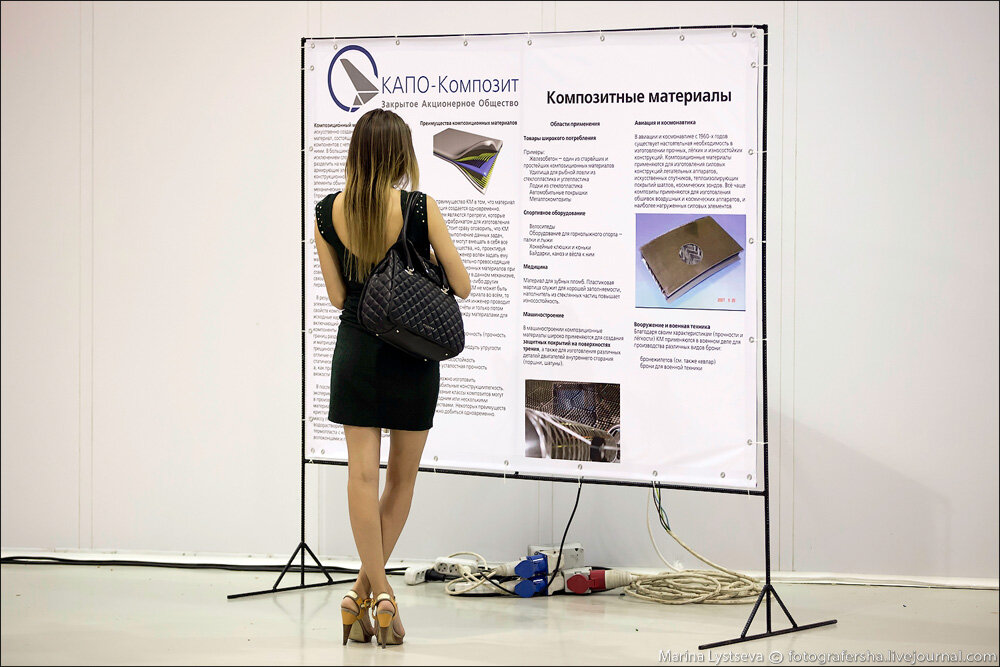
Jō AsakuraRussian big wigs inaugurate the brand new OAO «КАПО-Композит» (JSC ‘KAPO-KOMPOZIT’) plant in Kazan. It will make CF composite components not only for domestic programmes but also Boeing and Airbus.
I love a girls with brains!!…(or is she trying to figure out where to plug in the charger for her iPhone?)
Jō AsakuraActually, Mack8 is right, from the pic below it’s clear the main w/bay doors do indeed form a ^ shape in their centreline seal. You can tell by the camo line distortion and the black square marking on each door (top right) @ the actual ^.
http://russianplanes.net/id106866
Clearly solutions employed on all the LG & fast bay doors are unsuitable for the main bays and hence the ^. Maybe the question should be how does this shape effect creeping waves as opposed to Sukhoi not “caring” or simply being incapable of addressing the issue.
Call me biased, but my money’s on ^ addressing the issue.
Jō AsakuraRussian 80k ton carrier concept presented @ naval exhibition. Includes PAK-FA airwing but surprisingly non-nuclear:
Jō AsakuraJō AsakuraSB does some AW&ST promo shots 😉
http://img-fotki.yandex.ru/get/9090/122475510.14/0_7f818_46332c20_orig
http://img-fotki.yandex.ru/get/6728/122475510.14/0_7f814_50c0f952_orig
http://img-fotki.yandex.ru/get/6719/122475510.14/0_7f817_eb30e8b_orig
http://img-fotki.yandex.ru/get/9111/122475510.14/0_7f815_f9ee6268_orig
http://img-fotki.yandex.ru/get/9310/122475510.14/0_7f81a_9dc29e72_orig
http://img-fotki.yandex.ru/get/9107/122475510.14/0_7f816_a360e56c_orig
http://img-fotki.yandex.ru/get/9220/122475510.14/0_7f819_5f4cbc63_orig
http://img-fotki.yandex.ru/get/6722/122475510.14/0_7f810_d7c15170_orig
http://img-fotki.yandex.ru/get/9092/122475510.14/0_7f820_ed078457_orig
Jō AsakuraT-50-1, yesterday. What is the “thing” on the inside of the right intake trunk?
http://russianplanes.net/id111660
Given that the instrument is attached to the auxiliary intake and ’51’ is undertaking spin recovery trials, it’s purpose may be to measure [subsonic]airflow speeds & pressures of the variable cross-sectional area (Venturi) intakes which are detailed in the patent as acting as flow diffusers.


 Sign In








