 Wanshan
@Wanshan
mW is milliwatts. MW is megawatts. Also, PAAMS is very vague unless they specify Aster 15 or Aster 30. Since IIRC the Aster 15 buy was axed, this would have to be Aster 30, unless they are going to go back and buy Aster 15 too. It would also be interesting to see if they are suggesting the strike length Sylver.
mWhatever!
Just messenger, look at source vid (don’t know where they got theirs).
Wanshan120 crew for a 6000ton+ primary combattant?!?.
Why not?
Nansen class (5290 tons): 120, accommodations for 146.
Dutch LCF (De Zeven provincien) 6050 tons 169 – 207 crew (202 + 30, varies by source).
As compared to 230-250 or thereabouts for F-100 Alvaro de Bazan (6250 tons) and F-124 Sachsen class (5690 tons).
Absalon class (6600 tons) 100, plus aircrew and transients (accommodation for up to 300 in total). New patrol ship (6,200 tons): around 100 men (accomodation for 160)
WanshanI’d like to know where this information came from, about half of it looks like complete bunk.
I got it from that vid. Where they got it? Dunno. At leat some stuff is visually verifiable from CG.
WanshanBAe promo film of the type 26
http://www.defensenews.com/story.php?i=7969488&c=FEA&s=SPE
This suggests a ship of 5000 tons, little bigger then the 23?
6870 grt
142x20x5.6m
crew 125
2x RR WR21 Gtu 21.5 mW each
2x Wartsila VASA32 V12 diesel 20mW each
2 shaft iep
29kt / 7000nm@18kt
1x 6.1″ (155mm) Mk8 mod1 Naval gun
2x 30mm cannon
2x CIWS Phalanx
2x minigun
2x 8-cell Sylver w. PAAMS
2x 4 RGM-84 Harpoon
SVL for 48 CAMM
4x tubes for lightweight torpedoes Stingray
Lynx HMA8 or Merlin HM1, plus 4 UAV
http://www.youtube.com/watch?v=pdMQrF19WZI&feature=related
Wanshanhttp://balancer.ru/forum/punbb/attachment.php?item=250932&download=1
VLS on Admiral Essen? 🙂
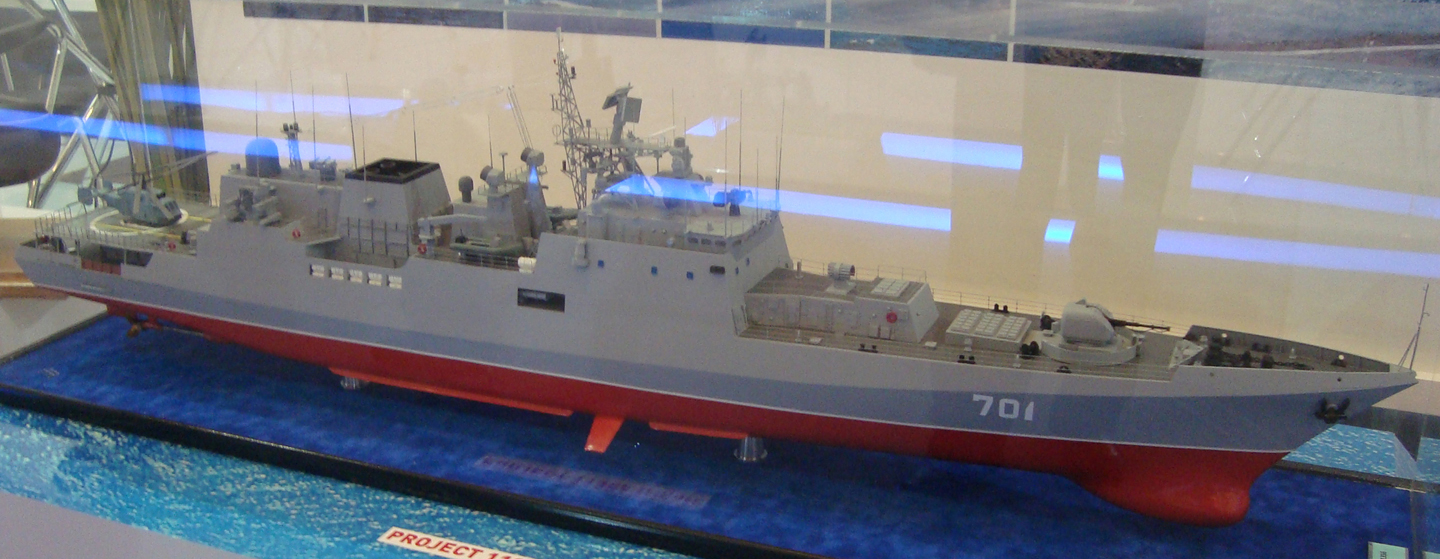
11356M ships are supposed to be all VLS, right?
WanshanNorth American Fj1 Fury > F86 Sabre > North American FJ-2/3/4 Fury.
The North American FJ-2/-3 Fury were a series of swept-wing carrier-capable fighters for the United States Navy and Marine Corps. Based on the United States Air Force’s F-86 Sabre, these aircraft featured folding wings, and a longer nose landing strut designed to both increase angle of attack upon launch and to absorb the shock of hard landings on an aircraft carrier deck
North American FJ-1 Fury, the original straight-winged jet fighter model, 31 produced. It formed the basis for the development of the swept-wing F-86 Sabre.
North American FJ-2/-3 Fury, a navalized version of the F-86 Sabre; 741 produced.
North American FJ-4 Fury, a substantial redesign of the FJ-3 Fury; 374 produced.
WanshanThe RNZN are using the Seasprite not the Wasp.
Tiddles
KAMAN SH-2G Super Seasprite…
The Kaman SH-2G Seasprite was selected as the replacement helicopter for the Royal New Zealand Navy (RNZN) in March 1997. Five SH-2G aircraft were built for the RNZN; the first left the USA for delivery in April 2001. They have an expected operating life of 25 years, or 10,000 hours, of flying.
http://www.navy.mil.nz/visit-the-fleet/naval-aviation/seasprite-specs.htm
Bit smaller than SH60, I’ld say.
Noneheless, half the meko-200 operators use SH60/70
WanshanHarriers to be sold to us marines
Actually, it is one of the commenting posters that points to the source: http://www.navytimes.com/news/2011/11/navy-marine-buying-decommissioned-british-harriers-111311w/
Found this an interesting bit:
Nordeen, however, said he expects the British Harriers to be used initially to replace two-seat Marine F-18D Hornet fighters now operated in the night attack role.
“The F-18Ds are more worn out than the Harriers,” Nordeen said. “Most of the conversions [of ex-British aircraft] early on will be to replace 18Ds and not Harriers.” He noted the first Marine F-35B squadron already is slated to replace an F-18D unit
WanshanI think the main reason for the Seaspite purchase was for the Anzac frigates and patrol ships. I think the Anzac can operate seahawk but it’s easier to use a smaller helo. Again with the tiger helicopter it appears to be let by the thing for as cheap as possible the worry about the rest later. Ends up more expensive in the long run but the doesn’t matter for current year budgets. Instead of Tiger they could of had AH-1 or could of got westland apaches.
Meko 200
Australia, ANZAC class
1 helicopter: Sikorsky S-70B-2 Seahawk (RAN)
Greece, Hydra class
1 Sikorsky S-70B-6 Aegean Hawk
New Zealand, ANZAC class
1 helicopter: Westland Wasp (RNZN)
Turkey, Yavuz class:
1 x AB 212 ASW helicopter
Turkey, Barbados class:
1 x S-70B Seahawk or AB 212 ASW helicopter
Portugal, Vasa da Gama class
2 Super Lynx Mk.95 helicopters
Wanshan“full contact baseball” :p
Wanshanthe Americans do not recognize some of the Canadian claims to sovereignty over areas such as the Northwest passage and the like and giving Canada the capability to enfore their claims is not in the American interest.
Having the Canadians with a nuke boat capability would also allow the Americans to be potentially caught red handed violating Canadian sovereignty by running their SSN’s/SSGN’s/SSBN’s into Canadian waters without permission as they so often do now with impunity.
CIA Factbook listed ‘transnational issues’ of Canada:
managed maritime boundary disputes with the US at Dixon Entrance, Beaufort Sea, Strait of Juan de Fuca, and the Gulf of Maine including the disputed Machias Seal Island and North Rock; Canada and the United States dispute how to divide the Beaufort Sea and the status of the Northwest Passage but continue to work cooperatively to survey the Arctic continental shelf; US works closely with Canada to intensify security measures for monitoring and controlling legal and illegal movement of people, transport, and commodities across the international border; sovereignty dispute with Denmark over Hans Island in the Kennedy Channel between Ellesmere Island and Greenland; commencing the collection of technical evidence for submission to the Commission on the Limits of the Continental Shelf in support of claims for continental shelf beyond 200 nautical miles from its declared baselines in the Arctic, as stipulated in Article 76, paragraph 8, of the United Nations Convention on the Law of the Sea
https://www.cia.gov/library/publications/the-world-factbook/geos/ca.html
Likewise for the US:
the US has intensified domestic security measures and is collaborating closely with its neighbors, Canada and Mexico, to monitor and control legal and illegal personnel, transport, and commodities across the international borders; abundant rainfall in recent years along much of the Mexico-US border region has ameliorated periodically strained water-sharing arrangements; 1990 Maritime Boundary Agreement in the Bering Sea still awaits Russian Duma ratification; Canada and the United States dispute how to divide the Beaufort Sea and the status of the Northwest Passage but continue to work cooperatively to survey the Arctic continental shelf; The Bahamas and US have not been able to agree on a maritime boundary; US Naval Base at Guantanamo Bay is leased from Cuba and only mutual agreement or US abandonment of the area can terminate the lease; Haiti claims US-administered Navassa Island; US has made no territorial claim in Antarctica (but has reserved the right to do so) and does not recognize the claims of any other states; Marshall Islands claims Wake Island; Tokelau included American Samoa’s Swains Island among the islands listed in its 2006 draft constitution
https://www.cia.gov/library/publications/the-world-factbook/geos/us.html
Beaufort Sea dispute
The sea, characterized by severe climate, is frozen over most of the year; only a narrow pass up to 100 km (62 mi) opens in August–September near its shores. The seacoast was populated about 30,000 years ago, but the population density is very low. The sea contains significant resources of petroleum and natural gas under its shelf, such as the Amauligak field. They were discovered in the period between 1950s and 1980s, and their exploration became the major human activity in the area since the 1980s. The traditional occupations of fishery and whale and seal hunting are practiced only locally, and have no commercial significance.
…
There is an ongoing dispute involving a wedge-shaped slice on the International Boundary in the Beaufort Sea, between the Canadian territory of Yukon and the U.S. state of Alaska. Canada claims the maritime boundary to be along the 141st meridian west out to a distance of 200 nmi (370 km; 230 mi), following the Alaska-Yukon land border. The position of the United States is that the boundary line is perpendicular to the coast out to a distance of 200 nmi (370 km; 230 mi), following a line of equidistance from the coast. This difference creates a wedge with an area of about 21,000 km2 (8,100 sq mi) that is claimed by both nations.
…
This dispute has taken on increased significance due to the possible presence of natural reserves within the wedge, which according to Canada’s National Energy Board may contain 1,700,000,000 m3 (6.0×10¹⁰ cu ft) of gas, which would cover the national consumption for 20 years, and more than 1,000,000,000 m3 (3.5×10¹⁰ cu ft) of oil. Because of this, Canada argues that “special circumstances” apply to this border, a position that the U.S. rejects. This dispute is in this respect a mirror image of the dispute between the U.S. and Canada over the Gulf of Maine, where the U.S. argued for “special circumstances” and Canada argued for the equidistance principle
http://en.wikipedia.org/wiki/Beaufort_Sea
The legal status of the Northwest Passage is disputed: Canada considers it to be part of its internal waters according to the United Nations Convention on the Law of the Sea. The United States and most maritime nations, consider them to be an international strait, which means that foreign vessels have right of “transit passage”. In such a regime, Canada would have the right to enact fishing and environmental regulation, and fiscal and smuggling laws, as well as laws intended for the safety of shipping, but not the right to close the passage. In addition, the environmental regulations allowed under the UNCLOS are not as robust as those allowed if the Northwest Passage is part of Canada’s internal waters.[
http://en.wikipedia.org/wiki/Territorial_claims_in_the_Arctic#Canada
In the 1960s and 1970s there was a dispute between Canada and the United States over fishing and other resource rights in the Gulf of Maine, specifically the Georges Bank region. This dispute was taken to the International Court of Justice, which delineated a maritime boundary through the Gulf in 1984. Canada and the U.S. continue to disagree on the sovereignty of Machias Seal Island and the waters surrounding it in the northeastern part of the gulf.
http://en.wikipedia.org/wiki/Gulf_of_maine
http://en.wikipedia.org/wiki/Machias_Seal_Island#Gulf_of_Maine_boundary
List of areas disputed by Canada and the United_States
http://en.wikipedia.org/wiki/List_of_areas_disputed_by_Canada_and_the_United_States
WanshanPls stay on the narrow road, and stay focused on the otherwise exellent thread here..:(
jay!
Wanshanthe Americans do not recognize some of the Canadian claims to sovereignty over areas such as the Northwest passage and the like and giving Canada the capability to enfore their claims is not in the American interest.
Having the Canadians with a nuke boat capability would also allow the Americans to be potentially caught red handed violating Canadian sovereignty by running their SSN’s/SSGN’s/SSBN’s into Canadian waters without permission as they so often do now with impunity.
Seems an awfullly big expenditure to make just to stop the neighbours from trespassing. Real reason must be economical: what’s in those areas for which the US doesn’t recognize Canadian claims to sovereignty? Oil? Scarce minerals? Fish?
And wrt sovereignty, that concept has eroded considerably in the last decade, witness Libya for a recent example 😉
WanshanNo-one noticed the second short trip ??? 😮
Noticed, followed elsewhere.
WanshanChina in 2006 was in talks with Almaz on the purchase of six Zubr hovercraft without result
http://www.freerepublic.com/focus/f-news/2311364/posts
Project 1232.2 Zubr Class Air Cushion Landing Craft
Last updated: 21 June 2008
In 2006, the PRC was reported to have approached Russia and Ukraine to discuss possible acquisition of 6~8 Project 1232.2 (Zubr class) large air cushion landing crafts. Zubr class is the world’s largest air cushion craft with three vessels currently in service with the Russian Navy and two in Ukrainian Navy. The vessel has been built at two locations: Almaz Shipbuilding JSC of Saint Petersburg, Russia Federal, and Feodosia Shipbuilding association “Morye” of Ukraine. So far the negotiation has been progressing very slowly, with no order actually placed
The PRC has also been reportedly negotiating with Ukraine to import the technology of the M-70 gas turbine used on the Zubr class in order to develop its own air cushion landing craft design.
http://www.sinodefence.com/navy/amphibious/zubr.asp
People’s Liberation Army Navy. The Chinese PLAN has reportedly placed an order for four craft at a cost of 315 million US dollars. Two will be built by a Ukrainian firm in Feodosia, and a second pair of vessels will be built in China under the supervision of Ukrainian technicians
Source: “Ukraine military hovercraft to equip Chinese navy”. EarthTimes.org. 2009. http://www.earthtimes.org/articles/show/280583,ukraine-military-hovercraft-to-equip-chinese-navy.html. Retrieved 2009-08-08.
Source no longer existing…
Traced via: http://en.wikipedia.org/wiki/Zubr_class_LCAC
Contents, see: http://www.freerepublic.com/focus/f-news/2311364/posts
Also: http://theasiandefence.blogspot.com/2009/08/ukraine-military-hovercraft-to-equip.html
Also: http://www.centurychina.com/plaboard/archive/3852160.shtml
China intends to acquire Ukraine hovercraft “Bison”
18.08.2009MOSCOW, August 17. (ARMS-TASS). PLA Navy intends to build four small landing ship hovercraft project 1232.2 “Bison” in the agreement signed with Ukraine, which is estimated to cost 315 million dollars, said Jane Defense Weekly. “
As expected, the two ships should be built “Feodosia shipbuilding company” Sea. “Two more ships will be built with the participation of Ukrainian specialists in China.
According to Jane, in 2007 China has already negotiated the delivery of up to 10 DKVP “Bison” with Russia, but the parties were unable to reach an agreement. Nevertheless, the PLA has not lost interest in the acquisition of landing ships and in 2008 began negotiations on the acquisition of the Ukraine. The organization with the help of the Ukrainian production of two ships to the Chinese enterprises will also enable China to continue to build in adequate quantities, since the fleet of four ships will be unable to significantly alter the balance of power in the Taiwan Strait.
Ships “Zubr designed St. Petersburg IKBB” Almaz “in 1970 – 1980. and provide for the rapid movements of troops and the landing on the coast. Production of the ships were at the Russian and Ukrainian enterprises. In particular, the power plants for “Zubr” made in Ukraine.
China plans to equip its Navy with four Zubr Class vessels by 2012.


 Sign In







