 Bager1968
Spring migration.
Bager1968Response 4. VL Asroc is still an important weapons system aboard USN escorts I thought?.
Indeed. The USN acquired some 450 of them from 1993 to 1996.
They have been upgraded twice… the first time from 1996-2001 to RUM-139B standard {with a new variant of the MK 46 torpedo with enhanced shallow-water capability, known as MK 46 MOD 5A(SW)}, and the second time from 2005 on to RUM-139C standard {with the Raytheon MK 54 MOD 0 torpedo} (this program is still underway).
Bager1968From http://www.hazegray.org/faq/slang1.htm
Naval Terminology, Jargon and Slang FAQ
Part 1 – A through M
Indexer – (Aviation) In most common usage, the indicator lights mounted on an aircraft’s glare shield to indicate AOA* during an approach to landing. The light array consists of a red ‘fast’ indication (an upward-pointing chevron) at the bottom of the array, a green ‘slow’ indication (a downward-pointing chevron) at the top, and a yellow on-speed indication (a circle) in the center. It is generally only active while the landing gear are deployed. The same light pattern is sometimes echoed on an external array on or near the nose gear, so that aircraft AOA can be determined by the LSO**.
*Angle of Attack – The angle measured between the relative wind and the chord line of an airfoil. Essentially, the angle between the air movement (*not* the horizon!) and the aircraft’s wing. Has a tremendous import in the handling and behavior of the aircraft. Abbreviated AOA. Aka ‘Alpha’, from the engineering notation for AOA. Primarily an aviation term, although it is applicable to other fluid environments such as a ship’s propeller in water.
**LSO – Landing Signals Officer. Aka ‘Paddles’. A specially-qualified pilot who observes landing approaches aboard a carrier. A pilot’s ‘passes’ (approaches) are critiqued and graded as follows: OK (‘okay underline pass’) is the elusive perfect pass, and counts as 4 points. OK (‘okay pass’) counts 3 points. A ‘no grade pass’ is worth 2 points; A ‘bolter pass’ (which grade can be assigned whether the aircraft traps successfully or not) is worth 1 point. A ‘cut pass’ counts zero points and is considered to have put ship, plane, and pilot in danger.
A discussion of how the indexer is used, and why it refers to speed rather than angle can be found here (KenV’s response to eber):
http://www.avitop.com/cs/forums/thread/2370.aspx
The pilot’s scan pattern “in close” is usually: meatball, centerline, meatball, centerline, meatball, indexer, meatball, centerline, meatball, meatball, meatball. The indexer is unique to Navy aircraft. It is a little colored light system inside the cockpit that tells the pilot when he is at optimum angle of attack (AOA) for the approach. Because the approach is flown on the “backside” of the power curve, AOA determines airspeed, and throttle determines sink rate. This is opposite to normal flight. In normal flight the stick controls up and down and the throttle controls airspeed. To go “up” you pull on the stick and point the nose up. To go faster, you open up the trottle.
Flying backside, the stick and throttle functions are interchanged. The stick instead of controlling up and down now controls airspeed (pull the nose up and you don’t go up, you slow down) and the throttle controls sink rate (increase throttle and you don’t go faster, you go up.)
Incidentally, there are lights on the nose gear the same color as the indexer lights inside the cockpit. The landing signal officer (LSO) talks the pilot all the way to the deck and he can see those lights on the nose landing gear. That way he knows if you are on, under, or over airspeed, very important for a safe carrier landing.
Bager1968Yep… Turkey = South Africa.
Bager1968The problem with that is this:
While the F414 is a little lighter & produces more thrust than the Spey, it also uses more fuel per pound of thrust generated… so your Buccs would have shorter range.
Instead, install the TF-41 that the A-7D/E got. It is a modified Spey, so it’ll fit, it still has the Spey’s fuel-miser quality, but it produces 15,000 pounds thrust vs the 11,000 pounds the historic Buccs did.
Bager1968Category IA offering:
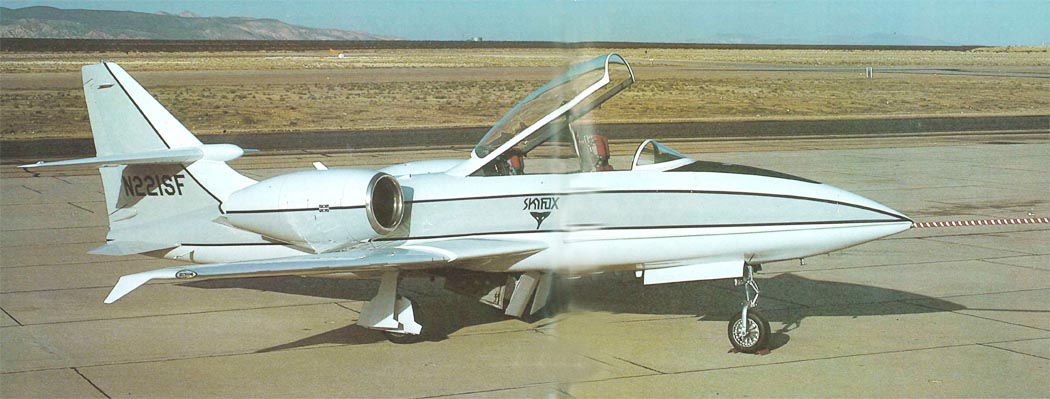
real: Boeing Skyfox (modernized T-33);
my changes: further updated with Griffo radar (if it fits in an F-5, it’ll fit here, and was around well before 2001) & Derby missiles (BVR Python, fielded by/in 1999).
Category IB :
real: A-4K Skyhawk (New Zealand with APG-66 radar); AIM-9L
my changes: upgrade the radar to APG-68 (hey, both fit in the F-16) & fit with AIM-9M and/or AIM-120A
As an aside… your “point limits” seriously short-change a number of the historical aircraft on your lists… preventing them from carrying their actual “real-world” weapons load-outs. This is most severe in the smaller categories… the JAS-39, F-20, & F-16A can all carry more missiles than you allow them to… and I am sure others do as well.
Bager1968Thanks moggy.
After the war were they just returned to Germany or let out to freedom?
From what I have seen in passing, quite a number were held on for a considerable time “to rebuild what they had destroyed”… without being offered citizenship.
This link mentions “out-of-camp work”, and that German POWs held in Britain were returned to Germany starting in 1946, with the “hardened Nazis” being held until 1948 or 1949… but it seems a bit “sanitized” compared to what I have seen elsewhere (the ooc work being voluntary post May 1945, for one point).
http://www.historyonthenet.com/WW2/german_pow_britain.htm
At the end of the war, prisoners were subjected to a re-education programme designed to equip them for life in the new Germany. Prisoners were also assessed with regard to continuing loyalty to Nazi ideals. Those that showed continuing loyalty remained in captivity. The first German prisoners of war returned to their homes in 1946, the last in 1949.
This BBC article mentione the use of German POWs post-1945 in a number of occupations:
http://news.bbc.co.uk/2/hi/uk_news/8564401.stm
This link discusses the change of designation from “POW” to “disarmed enemy forces”, and the accompanying ruling that Geneva Convention rules banning forced labor no longer applied:
http://www.cyberussr.com/hcunn/for/us-germany-pow.html
Bager1968It HAS been some 18 years since the first ex-RAN Trackers were moved to West Sale, and 15 years since the last one made the trip.
It would not surprise me a bit if many of those have been sold on to private firms… like Marsh Aviation, who converts them to turboprop-powered fire-bombers.
Interesting photos here: http://www.s2ftracker.com/marshphotos.htm
This one has the caption:
Stocking up on outer wing sections from Australia.
Bager1968Depending on who you talk to, either there were severe technical issues that were either unsolvable or only solvable with several more years and much, much more money… or it was all working rather well and would have flown on schedule with no significant problems cropping up.
Over the years, I have seen several people on both sides of the debate come up with apparently reliable period sources to support both these scenarios.
I suspect the truth is somewhere between… but the truth seems to have taken a permanent leave of absence, and cannot be located.
Bager1968Well, there might well be some Trackers stored in Australia. Does anyone know what Hookaway Aviation did with the ones it got from the RAN? There are 2 S-2Es & 8 S-2Gs they bought whose last known location was “West Sale VIC” in 1992-1995. What did they do with these?
N12 RAN Grumman S-2E/G Tracker
Primary Role: Anti-submarine/Patrol aircraft
No. in service: 1 (S-2A) instructional airframe, 1 (S-2E) maintenance airframe, 14 (S-2Es) and 16 (S-2Gs)
Period in service: 1968 – 84
Notes:
1. Disaster struck on 4/12/76 when 12 Trackers were badly damaged in a hangar fire. Six were totally destroyed, three more were damaged beyond repair and the remaining three were later repaired. One was away at the time, and survived undamaged.
2. Following the fire, 16 ‘new’ S-2Gs were ordered and subsequently delivered on 5/4/77.
Of the 16 S-2Gs, 10 are recorded as having been “sold to Hookaway Aviation and taken to West Sale VIC” in 1991 & 1992, along with the 3 S-2Es that survived the fire. One S-2E was returned (see below), and two S-2Gs sold off. This leaves the 2 S-2Es & 8 S-2Gs at West Sale VIC mentioned above.
Two other S-2Gs were scrapped by the RAN in 1995.
Known survivors:
Aircraft.Ser – Aircraft Type – Delivered – Const No. – RAN Code – Aircraft History
USN Bu.133160 – S-2A – 131 – ? – n/a – Ex-USN Bu 133160. Delivered in 1966 prior to operational aircraft for instruction, was purchased purely as a training aid/instructional airframe. Now on Static display at the Queensland Air Museum.
USN Bu.151646 – S-2E – ? – 179C – n/a – Ex-USN Bu 151646. Never flew with RAN, was purchased purely as a training aid/instructional airframe. The fuselage marked as 853 at Australia’s Museum of Flight is really Bu.151646*.
N12-153597 – S-2E – 22/11/67 – 341C – 842 – Undamaged by the hanger fire which wrote off 9 S-2E’s and damaged 3 more. It was away at the time of the fire. …..Withdrawn 12/08/84. Sold to Hookway Aviation and taken to West Sale VIC 12/91. Returned to Nowra and now at Bankstown as of 07/99.
N12-153600 – S-2E – 22/11/67 – 344C – 845 – Damaged in Hanger Fire 04/12/76 but not repaired, used as Training Airframe and later displayed as gate guard at Naval Aviation Museum Nowra NSW.
N12-152333 – S-2G – 05/04/77 – 220C – 844 – Withdrawn from Service 12/08/84. Airworthy with RAN Historic Flight, flying as VH-NVX.
N12-152334 – S-2G – 05/04/77 – 221C – 845 – Withdrawn 12/08/84, Hulk at HMAS Albatross. Sold into private hands for $200 to prevent scrapping – located near HMAS Albatross Nowra.
N12-152812 – S-2G – 05/04/77 – 281C – 851 – Withdrawn 12/08/84. Sold 02/02/90 to Qantas as Training Aid. Sold 2006 to HARS. Arrived at HARS 06/11/2006. To be rebuilt to flying condition.
N12-152816 – S-2G – 05/04/77 – 285C – 852 – Was marked as NH/702 with USN prior to service with RAN. Withdrawn 12/08/84. Sold to Hookway Aviation and taken to West Sale VIC 11/91. Registered N16FV in USA.
N12-153567 – S-2G – 05/04/77 – 323C – 855 – Withdrawn 12/08/84. Sold to Hookway Aviation. Sold to Melbourne/Kangan TAFE 02/94.
N12-153582 – S-2G – 05/04/77 – 338C – 859 – Withdrawn 12/08/84. Static Display Australian Naval Aviation Museum, Nowra NSW.
*There were two Trackers marked “853” in RAN service:
N12-153608 – S-2E – 22/11/67 – 352C – 853 – Served with 816 Sqn RAN. Ditched 10/02/75 after night flying when doing a Bolter (missed wire and going around again) from HMAS MELBOURNE. Crew were SBLT(P) G. C. Rulfs RAN, LEUT(O) B. J. Bromfield RAN, ASLT(O) G.J. McCormack RAN and POACM J. Krueger. The crew were all rescued unhurt. Neither crew or maintenance were to blame, it was eventually proved that it was a scientific cause. This was the only RAN Tracker lost flying.
N12-152837 – S-2G – 05/04/77 – 306C – 853 – Was marked as NH/016 with USN prior to service with RAN. Withdrawn 12/08/84. Sold to Hookway Aviation and taken to West Sale VIC 15/04/94. The fuselage marked as 853 at Australia’s Museum of Flight is really Bu.151646.
Bager1968During my time fixing USMC A-6E intruders at MCAS El Toro, Ca, an A-4M was stolen by a Lance Corporal… and returned safely (July 4, 1986)!
LCpl Foote was an Avionics tech, and was also an accomplished private pilot and high altitude glider pilot. Unfortunately he liked to soar the gliders to very high altitudes (one flight a world record for a 17-year-old), and on one flight he got an embolism in one of his arms, which disqualified him from ever becoming a pilot as far as the USMC was concerned. [LCpl Foote was disqualified from flight training for more than just the embolism issue.]
LCpl Foote worked on the transient aircraft line as a plane captain (and was qualified to taxi aircraft under power), and had gotten several senior officers to give him time in the simulators while preparing his (rejected) application for commissioning and flight training. He worked night crew and decided to prove to the Marine Corps that he could indeed fly and that any other physical issues were non-factors.
Foote took the A4 Skyhawk from the flight line at MCAS El Toro (I forget the particular squadron) and was on his way to March AFB. In route the aircraft lost the electrical generator and he was forced to deploy the RAT and return to MCAS El Toro.
Foote had to circle the air station until the MPs were able to have the airfield light turned on so that he could land, as it was a holiday and the entire base was on stand-down from flight ops.
He did get a court martial, and was reduced in Rank and given a General Discharge as part of an agreement with the USMC.
(His own Commanding Officer and other senior officers, including the Wing Commanding General, asked the Court to NOT give him a Dishonorable Discharge due to his outstanding record – except for this one blemish).
Bager1968Indeed… in the entry on the F-111A, Joe Baugher notes:
from the eleventh production aircraft onward a 20mm M61A1 Vulcan cannon was installed in the internal weapons bay in place of two 750 lb. bombs. However, this cannon was rarely carried by actual operational aircraft, the space in the weapons bay being used for bombs, fuel, or electronics.
Bager1968Exactly… that organisation mainly comes to the front when there is a potential for a conflict to start… and their standard message is “if this war starts the world will end, so we cannot let this war start no matter the long-term consequences of appeasing the aggressor side”.
Note they even admit
Deeply concerned as it is by the risk of a nuclear-armed Iran, Israel has never even hinted at using atomic weapons to forestall the perceived threat.
.
CSIS are the crazy ones here… they are the only ones talking about nukes!
Bager1968Not being at home (nor will I for another week), I can’t access my copy of Bill Gunston’s book on the F-111, but a quick look at Joe Baugher’s aircraft site finds a statement indicating it was an available option, with no mention of whether the USN planned to actually have them installed:
Armament: Armed with six Hughes AIM-54A Phoenix air-to-air missiles, four underneath the wings and two inside the fuselage weapons bay. In addition, a 20-mm M61A1 cannon could be fitted.
http://www.joebaugher.com/usaf_fighters/f111_4.html
Note his list of sources for his entry:
Sources:
Grumman Aircraft Since 1929, Rene J. Francillon, Naval Institute Press, 1989.
United States Military Aircraft Since 1909, Gordon Swanborough and Peter M. Bowers, Smithsonian, 1989.
General Dynamics Aircraft and their Predecessors, John Wegg, Naval Institute Press, 1990.
Post-World War II Fighters: 1945-1973, Marcelle Size Knaac, Office of Air Force History, 1986.
The American Fighter, Enzo Angelucci and Peter Bowers, Orion, 1987.
The World Guide to Combat Planes, William Green, Macdonald, 1966.
Modern Air Combat, Bill Gunston and Mike Spick, Crescent Books, 1983.
The Illustrated Encyclopedia of Aircraft Armament, Bill Gunston, Orion, 1988.
F-111 Aardvark–USAF’s Ultimate Strike Aircraft, Tony Thornborough, Osprey Aerospace, 1993.
F-111 Aardvark, Hans Halberstadt, Specialty Press, 1992.
E-mail from Douglas Reynolds on crash of 151973.
Bager1968Current thread running in the Historic Aviation section of this forum:
http://forum.keypublishing.co.uk/showthread.php?t=99035


 Sign In







