 Bager1968
How comparable is AH-1Z to the AH-64D?
OK, some of this is manufacturer hype, but:
AH-1Z Viper
Cost (2006): $12 million (refurbished); somewhere below $44 million (new-build price offered to South Korea “with extras”)
Accommodation: Crew 2
Length, rotors turning: 17,73 m
Fuselage length: 13,87 m
Wingspan: 4,39 m
Height: 3,78 m to the rotor head
Main rotor diameter: 14,63 m
Max Weight: 8391 kg / 8,409 kg (18,538 lb)
Min Weight: 5580 kg / 5,591 kg (12,326 lb)
Max. useful load: 2812 kg
Internal fuel: 1565 litres
Ceiling: 6,100 m (20,013 ft),
Maximum Rate of Climb: 2,790 ft/min (14.2 m/s; 852 mpm)
Max Range: 420 km (227 nm),
Speed limit (Vne): 410 kph (222 kts)
Max. speed: 298 km/h (161 kts)
Cruise speed: 265 km/h (143 kts)
g-loads: + 2,6 / – 0,5 g
Endurance: 3 hours 18 min
# Mission radius: 234 km with 1134 kg of payload
# 334 km with 291 l auxiliary fuel tank
Max. range: 705 km (close air support mission with 8 Hellfire, 14 rockets, 650 rounds of ammunition at 3000 ft at 91,5 deg F)
* AGM-114A, B, and C Hellfire and anti-tank missiles up to 16 total
* AGM-114F Hellfire anti-ship missiles – up to 16 total
* 70mm Rockets, 19 or 7 shot pods –up to 76 total
* AIM-9 Sidewinder*
(*A superior supersonic air-to-air missile with infrared target detection for fire and forget capability.)
* LUU-2A/B nighttime illumination flare
* Mk 77 fire bombs
* 77 and 100 gallon external auxiliary fuel tanks
* 20 mm cannon
(With a higher muzzle velocity and flatter trajectory for better accuracy, it is capable of handling M50-series rounds designed specifically for air-to-air combat)
* MK 76 practice bombs
* BDU-33D/B practice bombs
* MK 106 practice bombs
new composite four bladed rotor system and 2 T700-GE-401 engines (1437 shp -401A until they time-expire, then 1800 shp -401Cs.).
Virtually identical front and rear cockpits (either pilot can fly or operate weapons systems)
The AH-1Z Target Sight System (TSS) incorporates a third-generation FLIR and currently provides the longest range, lowest jitter and highest weapons’ accuracy possible of any helicopter sight in the world. In addition, the completely passive and automatic system scans the battlefield without emitting trackable radar, positively identifying and tracking multiple targets at ranges beyond the maximum range of its weapons system.
A podded Longbow radar has been developed that can be mounted on a wing tip station.
AH-1Z and UH-1Y cockpits are virtually identical for flight instruments, meaning pilots can easily fly either aircraft.
Originally, all 125 AH-1Zs were to be refurbished, the program was then expanded to be 146 AH-1W>AH-1Z conversions and 40 new-build, and then 40 more new-builds were recently ordered, bringing the total to 226, with 80 new-build.
A contract to build new airframe tooling for the new-builds was recently signed by Bell & the USN.
AH-64D
Cost (2006): $56.25 million (new build block III)
Propulsion: Two 1800 shp T700-GE-701Cs
Length: 58.17 ft (17.73 m)
Height: 13.30 ft (4.05 m)
Wing Span: 17.15 ft (5.227 m)
Primary Mission Gross Weight: 16,027 lb (7270 kg) Lot 1
Empty weight: 11,799 lb (5,352 kg)
Max takeoff weight: 23,000 lb (10,433 kg)
Hover In-Ground Effect (MRP): 14,650 ft (4465 m) [Standard Day]; 13,350 ft (4068 m) [Hot Day ISA + 15 C]
Hover Out-of-Ground Effect (MRP): 10,520 ft (3206 m) [Standard Day]; 9,050 ft (2759 m) [Hot Day ISA + 15 C]
Ceiling: 21,000 ft (6,400 m)
Vertical Rate of Climb (MRP): 1,775 fpm (541 mpm) [Sea Level Standard Day]; 1,595 fpm (486 mpm) [Hot Day 2000 ft 70 F (21 C)]
Maximum Rate of Climb (IRP): 2,635 fpm (803 mpm) [Sea Level Standard Day]; 2,600 fpm (793 mpm) [Hot Day 2000 ft 70 F (21 C)]
Maximum Level Flight Speed: 147 kt (273 kph) [Sea Level Standard Day]; 149 kt (276 kph) [Hot Day 2000 ft 70 F (21 C)]
Cruise Speed (MCP): 147 kt (273 kph) [Sea Level Standard Day]; 149 kt (276 kph) [Hot Day 2000 ft 70 F (21 C)]
Endurance: 2 hours 30 min
Range: 400 km – internal fuel; 1,900 km – internal and external fuel
Armament: M230 30mm Gun
70mm (2.75 inch) Hydra-70 Folding-Fin Aerial Rockets (max 76)
AGM-114 HELLFIRE anti-tank missiles (max 16)
AGM-122 Sidearm anti-radar missile (2), or AIM-9 Sidewinder Air-to-Air missiles (2)
Summary:
Both have helmet-mounted integrated sight systems & night-vision in the helmet.
Both carry the same number of Hellfire & FFAR.
Both use the same engines.
Viper is faster (161 kt vs 149 kt), has 40 min longer endurance, longer range on internal fuel (705 km vs 400 km), a faster Rate of Climb: (852 mpm vs 803 mpm), and is at least 28% cheaper for a new-build.
Both aircrew positions have full flight & weapons controls for safety and flexibility.
It also has 84% parts commonality and full aircrew interoperability with the USMC’s light utility helo (UH-1Y).
Apache has a higher cruise speed (149 kt vs 143 kt), a higher ceiling (6,400 m vs 6,100 m), lighter airframe weight (5,352 kg empty vs 5,591 kg), and has a permanently-mounted Longbow radar vs pod-mounted which uses a weapons station.
Only the rear seat has flight controls, and the front seat has most of the weapons & sensor controls.
It shares far less parts with the UH-60 (engines, communications, and self-defense suites… and little else), and requires completely different aircrew certifications.
Bager1968Sounds like the SAAF is in the market for one of these options:
http://www.aviationweek.com/aw/generic/story_channel.jsp?channel=defense&id=news/CENTER100709.xml&headline=Operators%20Eye%20C-130%20Center%20Wing%20Box%20Options
Operators Eye C-130 Center Wing Box Options
Oct 7, 2009 Lee Ann Tegtmeier
Operators of mature C-130 Hercules have three good options for upgrading the aircraft’s center wing box, the high-stress area where wings, empennage and landing gear meet. The first option is refurbishing the wing, the second option is installing a new standard wing and the third option is installing the enhanced service life wing, which flies on new C-130J models. Each choice extends the Hercules’ service lives, at different costs.
About 1,500 C-130s operate in 72 countries, and of these, only 180 are J models, says Jim Grant, Lockheed Martin VP of air mobility. The bulk of them are B, E and H models with service life remaining. “We see customers operating them at least 30 years, across the customer base,” with some more than 40 years, he says. That equates to about 25,000 hours equivalent service life, depending on how the aircraft fly.
With defense budgets getting smaller, many military operators want to lengthen the lives of their C-130s but face fatigue issues with the center wing box. Refurbishing or replacing the center wing box is a good way to do that. The lead time for new Lockheed Martin wings can be 28-30 months, so some operators want an option sooner, and for less cost.
Option One
TIMCO Aviation Services, MacAulay-Brown and Kellstrom developed a rehabilitation solution for C-130 center wing boxes (CWB) to restore them to “zero time,” based on replacing more than 90% of parts with ones with the Lockheed Martin hologram. All of the CWB’s critical structural components, including spars, wing planks and rainbow fittings, are new, says Ray Hauck, TIMCO SVP military business development. This solution is particularly designed for C-130B, E and H models and costs around $5 million to $6 million, with the functional check flight.
The zero-time CWB solution takes advantage of TIMCO’s C-130 experience, which includes completing 123 CWB and programmed depot maintenance visits since the 1980s, when the MRO could concurrently refurbish the CWB and finish a PDM in 132 calendar days, from landing to takeoff. The U.S. Coast Guard is a current C-130 PDM customer and also is having TIMCO complete progressive structural inspection baseline work on some aircraft. TIMCO has completed heavy maintenance on C-130s from countries such as Bolivia and Ecuador, as well as for a few customers flying the C-130 commercial variant.
The TIMCO team’s refurbished CWB package, including the new or refurbished wing, attaching hardware and new structural vertical beams, gives operators an airplane that can fly another five to 20 years, depending on what type of wing was installed.
TIMCO completes the project within 4/1000ths of an inch tolerance. “We’ve perfected this over the years” and have a very regimented work process flow detailing every task and tolerance, says Hauck. “That way you make schedule, you bring the quality to the table that needs to be there, and you keep your costs down.”
The final steps TIMCO takes to insert new wings are similarly exacting, Hauck says: “You get the existing structure nailed in so nothing can move. You slide it in to make sure the alignment’s perfect, then you change one beam at a time,” precisely replacing the old with the new, “until your alignment is still dead on.”
TIMCO has two “seed boxes” and wing panels ready to go for a customer interested in a refurbished CWB.
Grant says Lockheed looked at a refurbished option for customers with end-of-life CWBs but decided to stick to replacing them with new versions.
Option Two
Lockheed Martin makes a new center wing box kit, which takes the OEM about five months to create, but the lead time for it is 28-30 months, according to Grant. Lockheed Martin has delivered 13 standard center wing box kits to the U.S. Air Force, its sole customer so far, and has 51 on order, he says. However, Lockheed Martin has discussed the CWB kit with L100 (the commercial, legacy version of the C-130) operators as well as a number of international customers, “but we haven’t closed on those yet,” says Grant.
The U.S. Air Force is installing standard center wing boxes, which have a service life of 38,000 equivalent base hours, on HC-130N, HC-130P, EC-130H and C-130H (FY74 and older), according to Jeff Huggett, C-130 modification chief and C-130 CWR program manager for 560 ACSS/GFLB at Robins AFB. Robins AFB receives a center wing box from Lockheed Martin every two to three weeks, and there have been no delivery delays, he says. It takes about five months to install the kit.
To maintain original manufacturing tolerances, Robins’ 402nd Maintenance Wing uses traditional optics and modern laser trackers. Precision optical alignment occurs multiple times during the replacement process. Engineers use extensive shoring and fixtures to level and restrain aircraft for the center wing box modification; fixtures around the aircraft were recapitalized from a similar replacement program that took place during the 1990s, Huggett notes. The unit also developed tooling, shop aids, work stands and processes to ensure a repeatable process, he says.
Third Option
The enhanced service life wing on the C-130Js have two to three times the life span of previous models because of better structural support, including more robust stringers, upper and lower rainbow fittings and engine mounts. Huggett says the enhanced service life wing box is designed to serve as a form, fit and function replacement, although its installation requires some plumbing and wire routing modifications. It also costs about $300,000 more than the standard center wing box.
The U.S. Air Force is installing the enhanced center wing box on special mission aircraft with more difficult mission flight profiles. These include MC-130H, AC-130U and C-130H (FY78 and newer). So far, Lockheed has delivered seven ESL kits but has 37 on order.
Lockheed Martin’s Grant says the international community is looking at how to bundle CNS/ATM avionics upgrades with a CWB replacement, particularly for C-130H customers who want to fly their aircraft another 20 years. Operators considering this substantial avionics investment most likely would upgrade their center wing box simultaneously, believes Grant. “Because the center wing box lead time is in the 28-30 month range, the avionics could clearly be done in that time period, as well,” he says.
Grant thinks the enhanced wing is a particularly good investment for H models, some of which have been flying at high operations tempo in Iraq or Afghanistan, “so they’re flying ahead of where they thought they’d be.”
Hercules operators may refurbish or replace this high-stress area of the aircraft.
Bager1968G’day, Bruce.
And no, I’m not dragging up the rest of that skit… 😀
so you are 7 years behind me.
Bager1968Is that after the RAF heavy bombers had knocked-out the costal artillery so that the battleships could approach the coast? :diablo:
Like you say…..it’s the size of your back-up that counts! 😉
Tell that to the many who fell victim to the many coastal artillery pieces NOT “knocked out by the RAF heavy bombers”!
Those battleships (and cruisers, and destroyers) were just fine closing and engaging those batteries at rather close quarters… would that the RAF had pressed their attacks as closely before the landings began.
Bager1968Give me a range to target. One ping only, Vasily.
😉
Bager1968When the real, official, announcement does finally come through, can we have a clean, new thread about it so we don’t have this “bloated, degenerating well into petty arguing” mess haunting the front page like a diseased dog?
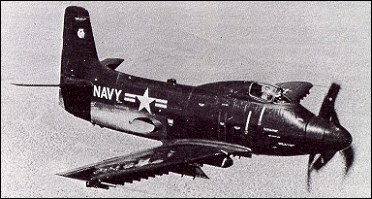
Bager1968For all you “turbo-Skyraider” fans… the USN already tried it!
There is still one around to use as a pattern!
A2D Skyshark:
http://en.wikipedia.org/wiki/A2D_Skyshark

Bager1968However, Malaysia seems perfectly happy with their 8 F/A-18Ds.
Here is another take on the issue:
http://www.defenseindustrydaily.com/malaysia-receives-first-2-su30mkms-03336/
Oct 28/09: Defence Minister Datuk Seri Dr Ahmad Zahid Hamidi says that Malaysia’s MiG-29Ns will be phased out early, due to their high maintenance costs. The ministry intends to immediately reduce its fleet to 10 MiG-29Ns for airspace defence (something that may simply ratify existing operational numbers), which would decline further to 6 in 2010. The jets will be phased out at the end of 2010. From The Malaysia Star:
“With this, the Government would save RM260mil [about $76.1 million] a year in maintenance costs and the sum could be used to maintain other aircraft in the Royal Malaysian Air Force inventory…. [Zahid said that] Malaysia bought the [18] MiG[-29Ns] at a relatively low price but later, the RMAF had to contend with higher expenses in spare part replacement and maintenence work…. Each MiG also needed to undergo preventive and restoration work which cost RM10mil and RM7mil [$2-3 million] for engine overhaul every year after it completed a flight time of between 1,000 hours and 4,000 hours, he said. Zahid said the cost of maintaining the MiGs was also high as the jets needed to be sent to Russia for overhaul.”
The SU-30MKMs will take the MiGs’ place initially, and with Malaysia’s F/A-18Ds aging in place, a competition may be in the works for a new set of lighter interceptors if Malaysia’s recovery continues. Zahid mentioned the possibility of buying from America (likely the F/A-18 E/F Super Hornet, which was offered in the SU-30MKM competition), Britain (Eurofighter), France (Rafale), or Sweden (JAS-39 Gripen). Malaysia’s neighbors in Australia will soon induct F/A-18F Super Hornets into service, and Thailand has begun receiving JAS-39C/D Gripens. Russia appears to have been pointedly excluded from that list, and buying more SU-30MKMs does not seem to be an active option at this time.
Bager1968Better story writing than in that Daily mail blurb…
Bager1968Well, if two swallows were to carry it suspended between them on a string…
Bager1968Well, if two swallows were to carry it suspended between them on a string…
Bager1968A quick Google found this:
Due to a number of recent enquiries, the Club is considering the manufacture of a further batch of Dunlop DR6620 tyres, 7.25 x 7.75, suitable for Leopard Moth, Hornet Moth, Proctor, Prentice, Winjeel, BA Swallow and maybe others. Expressions of interest to deHMC HQ.
From http://www.dhmothclub.co.uk/advert/mm127.html
The de Havilland Moth Club advertisments section.
http://www.dhmothclub.co.uk/advert/index.html
Bager1968Yep… there certainly is.
I wonder what it is from?
Bager1968Yep… there certainly is.
I wonder what it is from?
Bager1968I recall reading somewhere that the JMSDF has a serious manning problem at the moment the article stated that at least some ships are going to sea without a full complement.
And a freighter disobeying traffic control and turning into the path of the JMSDF ship, effectively ramming the Japanese warship is the fault of the Japanese warship’s manning level how?


 Sign In







