 Bager1968
He was found hiding in a box in his parents’ attic.
His older brother, who repeatedly told police that he had seen his brother climb into the cargo box of the balloon just before take-off is likely to experience a “hiding” of his own.
Bager1968He was found hiding in a box in his parents’ attic.
His older brother, who repeatedly told police that he had seen his brother climb into the cargo box of the balloon just before take-off is likely to experience a “hiding” of his own.
Bager1968So is this a “Great Leap Forward” in Chinese military capability?
Bager1968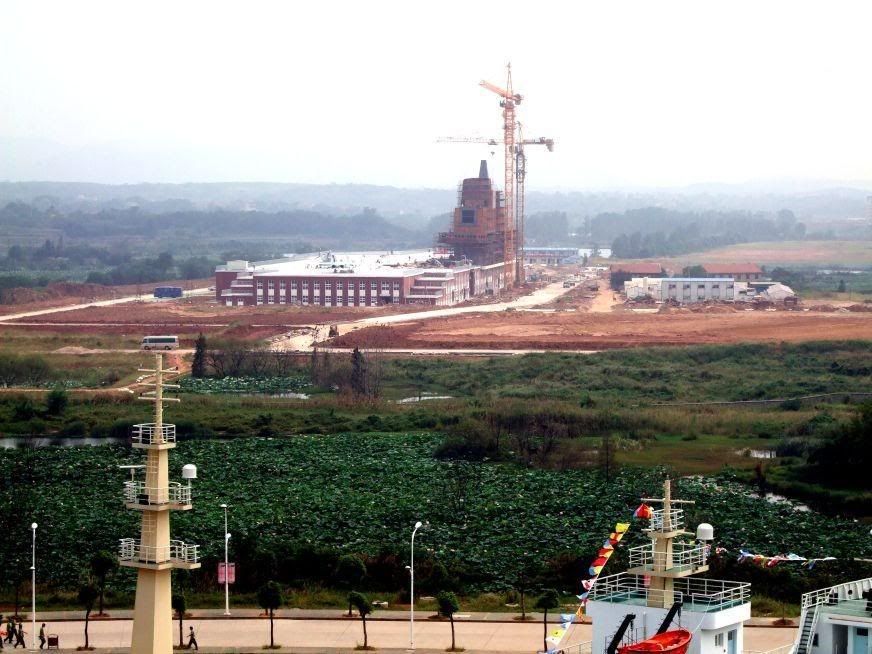
Note the other ship mock-ups in the foreground… the bare dirt around the “carrier-building, and the incomplete part of the building on the far side of the tower cranes?
That is a dedicated training building, designed around the carrier deck roof and the island mock-up, just like the ones in the foreground are for destroyer/frigate training.
Bager1968Who said anything about the Russians catering to the Chinese? The russians didn’t have much to go on aside from yak-39 VTOl and went from Su-27 to Su-33 all by themselves. How hard can it be for the chinese to go from J11 to something similar, really?
Particularly considering all the public-domain data around on the F-4 Phantom, etc… and the friendly relations between China & Iran, who have flying F-14s, for Allah’s sake!
Then add in information gained from espionage programs.
Lots of technical info from which to create computer models for aerodynamic simulations and structural analysis of carrier aircraft designs!
China should have no problem designing a successful carrier aircraft of their own.
Bager1968The Russians sold it to “a Chinese amusement-park company, for use as a tourist attraction”… thus the clause, to prevent its transfer to the PLAN and completion as a warship.
Which was obvious from the start to be ludicrous, for many reasons… not the least of which is China’s long history of breaking international contracts any time they felt it was in their interest to do so.
Bager1968All this is exactly what a friend (retired from the USN in 2001) and I agreed the Chinese would do when the sale was first announced way back then… and we laughed at the “not to be made a functional ship” clause in the sale contract.
Bager1968And Turkey is considering delaying any possible Typhoon purchase in order to boost its F-35 buy from 100 to 120.
Turkey is considering raising the number of new generation F-35 Joint Strike Fighters, or JSF, Lightning II aircraft it plans to buy from 100 to 120, paying at least $2 billion more than earlier planned.
The F-35 is being developed and built by a consortium led by the U.S. firm Lockheed Martin. The consortium’s members also include companies from several European allies, including Turkey. “We may buy 120 JSF aircraft instead of 100,” Murad Bayar, head of the Undersecretariat for Defense Industries, told the Hürriyet Daily News & Economic Review.
…..
No Eurofighters soon
Turkey’s potential decision to raise the number of F-35s to 120 means that it will not buy the rival Eurofighter Typhoon in the near future. “We may consider buying some Eurofighters after 2020,” Bayar said. “We don’t rule out that option after that year.” The Typhoon is being manufactured by the Eurofighter consortium whose members are Britain, Italy, Germany and Spain. The consortium has been seeking to sell at least one squadron of 20 Typhoons to the Turkish Air Force since 2005. Tusas Aerospace Industries, or TAI, and several other Turkish companies have secured contracts to produce F-35 parts worth more than $4 billion, procurement officials say.
http://www.hurriyetdailynews.com/n.php?n=turkey-may-buy-20-more-f-35-fighters-2009-10-07#
Bager1968It is probable that the large structures of the boilers/turbines WERE installed during construction, but few (if any) of the many smaller parts (that can be moved through the installed deck hatches) were in place… and those were probably removed before sale.
Thus, it is very likely that they can indeed be completed, and brought to operational status without major “hull-cutting” being done.
Alternatively, consider that the CVL HNLMS Karel Doorman (ex-RN WW2 Colossus class light fleet carrier) had her boilers replaced by those from the incomplete HMS Leviathan in 1968-69 before her sale to Argentina (as 25 de Mayo).
How was this done? Perhaps the Chinese got “historical info” from the Dutch?
Bager1968Does the down draft from the prop blades contribute to the cooling of the heat exaust in any way?
Thanks
Yes, it does.
The AH-1Z Viper has “turned exhausts” specifically to spread the hot exhaust out where the rotor downwash can cool and dissipate it more quickly. It also reduces heating of the tail boom, which had been causing problems on the AH-1W SuperCobra. With the new exhaust, peak tailboom temperature was reduced by
over 150°C. This had also been a major source of IR emmissions, which are now far lower.
AH-1W: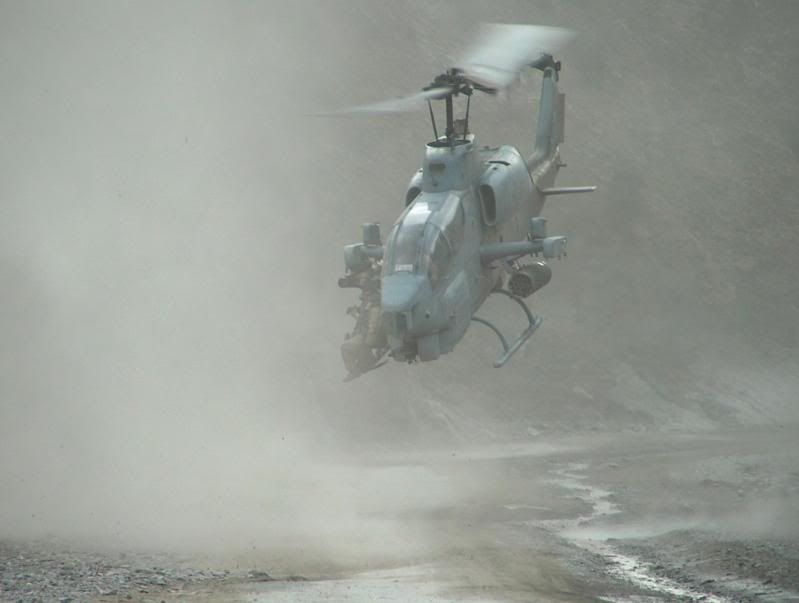
AH-1Z:
This PDF gives the story of the development of the “turned exhaust”:
http://www.vtol.org/pdf/61OperationsII.pdf
Bager1968I like the BAE-146M concept with Rolls Royce BR725’s and a high mount TP400 turboprop:
I don’t think I WANT what you’ve been smoking!!
😮
Bager1968To me it looks like a visual screen to block direct views of the “hot” parts of the exhaust from the bottom & sides.
This would reduce the angles from which a “lock-on” of the IR seeker on the manpad could be achieved.
It might also bring more cold air in close to mix with the exhaust, cooling it more quickly than without it.
Bager1968Does anyone else find it odd that Italian-designed, Italian-built, ex-Italian air force aircraft are referred to using the designation applied in US (not Italian) service to a slightly modified (different avionics) version?
Note that this article, posted in the Military Aviation News from around the world thread here (page 11, post #308, 28 Sept 2009), calls them G.222s, and never mentions the US designation once!
The C-27A designation is probably being applied because the aircraft are being bought with USAF assistance program funds.
http://forum.keypublishing.co.uk/showpost.php?p=1465606&postcount=308
Bager1968As I said before (in http://forum.keypublishing.co.uk/showpost.php?p=812112&postcount=23), I’m a Fungus from Yuggoth.


Bager1968Yeah the OSD for Phantom was meant to be 2008 not 1992, the Phantoms were going through an expensive SLEP when they were retired to get them to this point.
As for a naval Tornado if CVA-01 had happened…I don’t think so.
Phantom and Bucaneer would of operated off CVA-01 until the late 90’s at least maybe even the first few years of this decade. No reason why the couldn’t, the Phantoms were fairly fresh when they were retired and when CVA-01 was on the cards they were going to be purchased in larger numbers.
I think we would of seen a E2C Hawkeye purchase in the mid 80’s and the Phantom/Buccaneer replacement would of been a single type possible the the F/A18D or some kind of Anglo/French project.
The RN would probably have done a more in-depth modernization of the Phantoms in the early 1990s.
Perhaps like the Greek’s Peace Icarus 2000. That got the APG-65 radar… the same as the USN/USMC’s F/A-18A/C/Ds have.
Or the Japanese F-4EJ Kai, with the APG-66 (F-16) radar?
Or the Israeli Phantom 2000? They got a new radar based on the Norden multi-mode synthetic aperture technology developed for the A-6F/G program. They also wanted to replace the J79s with PW1120 (same thrust as the Spey in the RN’s Phantoms but with slightly worse fuel consumption, but better high-altitude performance than the Speys).
Perhaps the RN’s ‘Tooms & Buccs would get something resembling the Blue Vixen?
And upgraded Speys based on the TF41 (license-built Spey variant from the A-7D/E, which had 2,000-2,500 lb more military thrust than any UK Spey variant)?
Probably the late 1970s for the E-2B/Cs, and more likely either the UK sides with the French on a carrier version of the Eurofighter, go with France on Rafale, or just buy F/A-18E/Fs. Perhaps with EJ-200s?
The first Grumman W2F-1 Hawkeye (E-2A) flew in October of 1961, with first fleet operations commencing in January of 1964. There were 59 E-2A aircraft delivered by 1967.
In 1968, the development of two other versions started because some of the instruments aboard the E-2A were not very reliable. This resulted in the creation of the E-2B and the E-2C. Based on Vietnam experience, an improved model with a better computer, the E-2B, was developed, first flying on 20 February 1969. By 1974, 50 of the E-2As were retrofitted with improved avionics (new AN/APS-120 radar) and computers and were designated as E-2Bs. The E-2B can track up to 300 targets both in the air and on the surface or ground. The last E-2B squadron (VAW-117) traded them for E-2Cs in 1986.
Built during the early 1970s (new-builds, not modernizations except the 2 prototypes), the E-2C utilized an AN/APS-120 radar. In 1978 the AN/APS-125 Advanced Radar Processing System was introduced with automatic overland detection and tracking capability. In 1984 it was succeeded by the AN/APS-138, with improved operation in an Electro-Magnetic Interference (EMI) environment. December 1991 saw the start of an upgrade to the AN/APS-145 radar system, which provides fully automatic overland targeting and tracking capability, an improved IFF system, and a 40 percent increase in radar and IFF ranges.


 Sign In







