 Bager1968
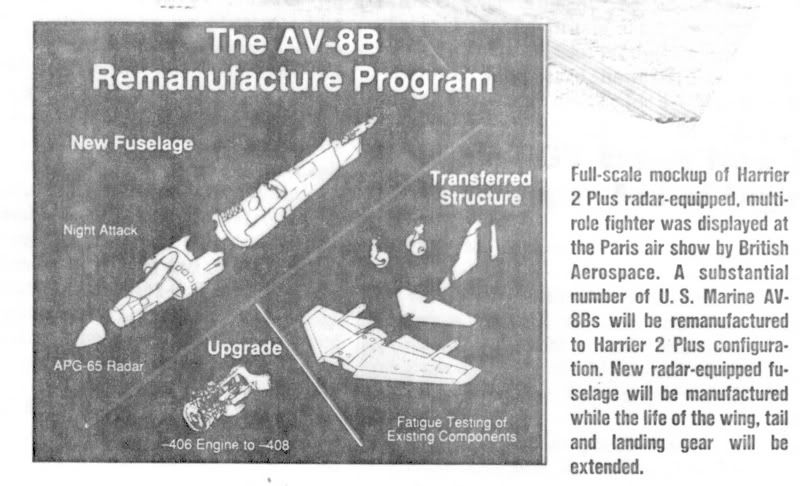
Reminds me of the “upgrade” the USMC/Italy/Spain performed with their AV-8Bs to get the AV-8B+…
Note the extent of the “modifications”… “No, Congressman, this is not a new aircraft”
Bager1968Probably as a hedge against a previously undetected flaw grounding all of the F110 engines… and vice-versa. This way, they will have at least 21 capable of flying.
Bager1968“Perverting the course of Justice”… sounds to me like he looted something… either from the contents of the house, or the aircraft… which would bear on ongoing investigations.
Or perhaps was hiding/altering records of the aircraft or pilot.
Note they specifically stated “not related to the cause of the crash”, though.
Bager1968And the F414G engine to move the extra weight efficiently.
RM12 (Volvo-built F404): 12,140 lb (18,100 lb a/b) thrust
F414-GE-400: 14,756 lb (22,000 lb a/b) thrust
The F414G uses a similar architecture to the popular F414-GE-400 engine powering the F/A-18 Super Hornet, with minor changes to the alternator for added aircraft power, and modified Full Authority Digital Electronic Control (FADEC) software for enhanced single-engine operation. The F414 engine is capable of producing more than 22,000 pounds (96 kN) of thrust.
Nice.
Bager1968It turned out to be cheaper (and easier) to just install the same landing gear (no design changes, no production line changes) than to install a different gear that might save 50-75 pounds.
Having the entire aircraft lightened would have made a significant difference, but the cost was prohibitive… and considering the problems the heavy-duty version has had (earlier-than-planned/designed fuselage center barrel replacement due to fatigue issues), it is a good thing they canceled the “less robust” version.
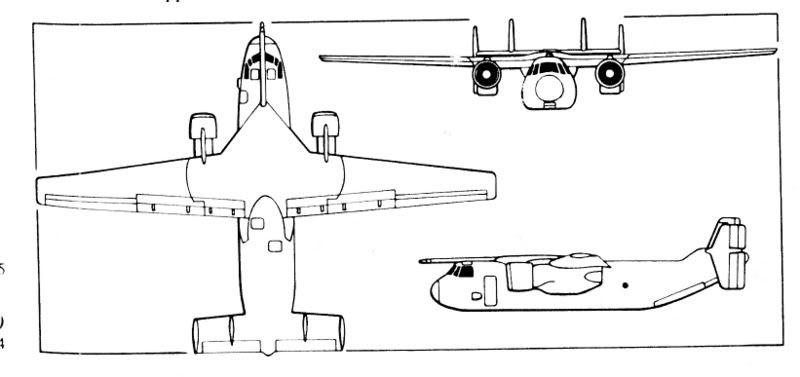
Bager1968Proposal from 1999 called the Greyhound21:
Bager1968Or tell the software in the radar to ignore the reflections from the rotors.
It’s called a “range gate”.
Blocks reflections that arrive back sooner than a certain time (which matches the minimum range you desire).
Has been part of airborne radar systems since the 1950s.
The main problem with “rotor interference” would be that an unusually high percentage of the pulses would be ignored by the radar… leading to a reduction in resolution.
However, modern radars have such high resolution that a 15% reduction (for example) would still leave you with better resolution than a 1990s radar would have with no such reduction.
Bager1968Of course, popular entertainers had their say as well, with Tom Lehrer producing this gem in 1965:
MLF Lullaby
A considerable amount of commotion was stirred up during the past year over the prospect of a multilateral force, known to the headline writers as MLF. Much of this discussion took place during the baseball season, so the Chronicle may not have covered it, but it did get a certain amount of publicity; and the basic idea was that a bunch of us nations, the good guys, would get together on a joint nuclear deterrent force, including our current friends, like France, and our traditional friends, like Germany. Here’s a song about that, called the MLF Lullaby:
Sleep, baby, sleep, in peace may you slumber,
No danger lurks, your sleep to encumber.
We’ve got the missiles, peace to determine,
And one of the fingers on the button will be German.
Why shouldn’t they have nuclear warheads?
England says no, but they all are soreheads.
I say a bygone should be a bygone,
Let’s make peace the way we did in Stanleyville and Saigon.
Once all the Germans were warlike and mean,
But that couldn’t happen again.
We taught them a lesson in 1918
And they’ve hardly bothered us since then.
So, sleep well, my darling, the sandman can linger.
We know our buddies won’t give us the finger.
Heil – hail – the Wehrmacht, I mean the Bundeswehr,
Hail to our loyal ally!
M L F
Will scare Brezhnev.
I hope he is half as scared as I!
The comments about Italy, et al, getting their own nuclear weapons invokes this other of his songs:
Who’s Next
One of the big news items of the past year concerned the fact that China, which we call Red China, exploded a nuclear bomb, which we called a device. Then Indonesia announced that it was gonna have one soon, and proliferation became the word of the day. Here’s a song about that.
First we got the bomb and that was good,
‘Cause we love peace and motherhood.
Then Russia got the bomb, but that’s O.K.,
‘Cause the balance of power’s maintained that way!
Who’s next?
France got the bomb, but don’t you grieve,
‘Cause they’re on our side, I believe.
China got the bomb, but have no fears;
They can’t wipe us out for at least five years!
Who’s next?
Then Indonesia claimed that they
Were gonna get one any day.
South Africa wants two, that’s right:
One for the black and one for the white!
Who’s next?
Egypt’s gonna get one, too,
Just to use on you know who.
So Israel’s getting tense,
Wants one in self defense.
“The Lord’s our shepherd,” says the psalm,
But just in case, we better get a bomb!
Who’s next?
Luxembourg is next to go
And, who knows, maybe Monaco.
We’ll try to stay serene and calm
When Alabama gets the bomb!
Who’s next, who’s next, who’s next?
Who’s next?
Album:
That Was the Year That Was – Reprise Records R/RS 6179, 1965:
also: Pye Records (U.K.) same catalog number, 1965
Bager1968On this thread:
http://warships1discussionboards.yuku.com/topic/5921?page=3
I wonder why modern engines have axial compressors and not centrifugal
Actually, modern engines have either axial or centrifugal compressors, or both, largely dependent on engine size. During the early era of the aviation gas turbine (gas turbines actually date from the early 20th century; iirc the first were built in 1904, aviation gas turbines were more-or-less simultaneously “invented” in the UK and Germany in the late 1930’s), there was more experience with centrifugal compressors, which were used for supercharging practically all aircraft engines. Axial compressors were not well-understood.
On the other hand, axial compressors can be more easily staged (staging centrifugal compressors requires turning the flow from the first stage through 270 degrees to get it to the second), so they can be used for higher pressure ratios. They also tend to have a smaller diameter for a given mass flow. Centrifugal compressors scale downwards in size better, both aerodynamically (their efficiencies drop off more slowly as size decreases) and mechanically (very small axial compressors are quite difficult to make and quite fragile).
Depends what you mean by “modern” engines. The sort with axial compressors have a much higher thrust and much higher mass flow rates. The sort with centrifugal and mixed flow compressors have a much lower thrust and lower mass flow rates.
For applications below 2000-3000lbf the the centrifugal compressor is superior. Above this, the axial compressor is superior, and if higher pressure ratios are needed. A way of compring both types is the use the specific speed, which takes into account rotational speed, volume flow rate and pressure ratio to give a number that can be compared with other pumps.
Bager1968Funny, all I had to do to find the identity of the second was to right-click on it & select “save image as” and the file name “Vought Sikorsky XOS2U-1” came up.
A little more on-line searching might have got me the engine model & BuNo, but I had already guessed the Ranger engine, as it didn’t look like an Allison or Merlin, which left the Ranger for US-built in-line engines.
I knew all about the Skyrocket already though.
Bager1968It is already striking that the issue has crossed party lines, with senators and congressmen from states like Alabama that stand to profit from the contract in favor of it, whether they are liberals or conservatives, Republicans or Democrats, while Republicans and Democrats alike from states that stand to lose from the deal because of their reliance on Boeing and its industry partners fiercely oppose it.
To quote/paraphrase the line from the movie & song…
“Its all about the Benjamins*… err votes… same thing!!!”
* for those outside the US, the US $1 bill carries the portrait of Benjamin Franklin… hence the nickname for money.
Bager1968From earlier discussions elsewhere, it seems they are working on placing the entire system into a “plug&play” module that can be removed & installed in less than an hour, which would allow a set of 3-4 MV-22s to switch off AEW duties with COD transport duties.
That would greatly decrease program costs, as a smaller number of airframes could do both jobs.
Bager1968The USMC/Boeing/Royal Navy team has already been exploring this concept.
http://informationdissemination.blogspot.com/2008/03/vertical-upgrade-for-airborne-early.html
TOSS is a Bell/Boeing V-22 equipped with a palletized version of the Royal Navy/Thales Cerberus airborne radar system. In RN service, the Cerberus – which comprises the Searchwater radar and operator stations – is fitted to the Sea King ASaC7 helicopter. Although it resembles the original Sea King AEW system, developed in a panic reaction after the loss of two ships to Exocet missiles in the 1982 Falklands war, the Cerberus system is new, the last of 13 aircraft having been delivered early this year, and has AEW and overland modes and synthetic aperture radar (SAR) and inverse SAR capability.
TOSS stands for Tactical Organic Sensing System (TOSS) and the project apparently has some quiet momentum.
Boeing is proposing a three year joint capability technology demonstration (JCTD) with extensive support from the RN – which needs a replacement platform for the Sea King and could adapt the rear-ramp configuration to the Merlin helicopter. The kit requires very minor modifications to the V-22 – the addition of CV-22-type sponson tanks, power connectors, intercom and a Link 16 antenna – and the radar needs a rigid radome (the Sea King radome is inflatable.)
Nevermind that this would be a huge capability increase over the Sea Kings AEWs, the value on the export market after the Royal Navy would be enormous. Nothing deployed from sea is in the class of the Hawkeye, nothing, but the Hawkeye can only take off and land on US and French carriers. This version of the MV-22 however could take off and land on aviation ships from Australia to South Korea to Japan to India to Italy to Spain to Brazil and potentially even Turkey and South Africa in the future. This would be a game changing capability for Navy’s that leveraged the Joint Strike Fighter from naval aviation ships.

The USMC is interested in this as a “battlefield control” system, to coordinate air movements in & around the beach/insertion landing zone of amphibious operations. They would fly from the LHD/LHA(R) ships, along with AH-1Z/AV-8B/F-35B/UH-1Y/CH-53/MV-22.
Bager1968
Bager1968Numerous articles over the last 3 or 4 years have brought out that the radar in the F-35 has a considerable ECM/DECM capability… added to the defensive ECM suite on the F-35 and its inherent stealthiness, this means that each USMC F-35B strike package could protect itself nearly as well as a F/A-18E/F package would be protected by an EA-18G.
This also applies to USN all-F-35C strike packages.
The Growler is mainly to protect the F/A-18E/F strike/air superiority packages and mixed Super Hornet/Lightning II groups.
The USMC will keep the EA-6B until all its F/A-18C/Ds and AV-8Bs are replaced by F-35Bs, then retire them.


 Sign In







