 RPM, FF, TGT…
Digging the P-38 out….
Well, faintly, I remember as a lad… digging in the sand close to the sea at Skegness and Chapel St. Leonards…. Every time I dug a little spade full of sand out of the beach, the hole would fill with sea water, then I would dig a bit more and the sea water would come in faster until I got a decent sized hole then the sides would collapse and then a wave would come in and level the whole lot out again….
Simple digging is not an option. Recall the Halifax in the Zuider Zee had to have pilings around it… same thing on the Welsh Beach. You will not be able to simply “dig it out” for it will go in deeper and deeper the more you dig. It is tidal isn’t it ? Perhaps King Canute could have another attempt at holding it back, or have we forgotten him ?
A circle of interlocking pilings will be required which will be horribly expensive. Best left where it is is still the best option. Put a memorial on the beach if the greenies will allow it if you want to pay respects to the fallen but would it be appropriate for this aircraft, which I understand never saw combat ?
RPM…
RPM, FF, TGT…ZRX61
Spot on…. You’ve hit the right button again !
David Burke
You wrote (in a post earlier):
A sensible approach by someone like the IWM could involve recruiting suitable volunteers with the offer of a week in sunny North Wales and a little bit of glory. Whilst I agree with you that deterioration will happen very quickly -the aircraft is very close to a former airfield and I don’t view it as an ‘impossible’ recovery .
A week in Wales on the beach with volunteers with buckets and spades will not help on this one. Three months maybe. Heavy equipment will be needed and if a crane is not available in that area maybe a Chinook with a hook will be needed. There will still be the requirement for a cradle or it will break up during the lift out of the ‘oggin. There will still be a requirement for a levee around it and there will still be the immediate need of a water tank. The job of getting rid of the sand inside the shell will be another of the major problems. Look at the position of the wreck, you cannot see the booms or the tops of the fins. Are the booms broken or is the wreck resting nose high ?
I don’t see the reasoning behind the closeness of Llanbedr (?). Do you mean that in a sense of disassembling the wreck and then carting it to Duxford by a Herc ? Disassembling it after all those years in the sea and sand will see pneumatic chisels being used to chop off the wing attachment bolts, boom attachment bolts, etc; as they’ll be corroded and impossible to shift. Even the vibration of doing that will endanger what left of the appearance of the wreck.
What are the “greenies” doing about this ? The Environmentalists usually get involved where there is pristine beauty such as that beach in Wales.
Logistically it will be a nightmare, not impossible, I grant you. Tighar claim to be experts on many things but the proof is in the pudding and we haven’t even seen one wreck “recovered” by them so far and there are far more easier wrecks to recover then this one.
I still firmly believe it is the requirement for “continuing” OPM which is the driving force behind this and everything else that Tighar does. ZRX61 is saying exactly what I also believe.
RPM…
RPM, FF, TGT…Frazer Nash
To ascertain what TIGHAR actually does, go to their website: http://www.tighar.org, and set aside about three years to read all the articles that exist on there. Their Tighar Forum is interesting too and there are pages and pages of discussions on that….. but NO announcemnts of actual aircraft recoveries in the 20-odd years of TIGHAR’s existence during which at least single figure millions of around five fingers of OPM have been spent. Therefore, the grand and somewhat difficult acronym including the word “recovery” is a misnomer.
RPM…
RPM, FF, TGT…ZRX61
That is a correct statement. Back about five years ago when TIGHAR (…pronounced Tye-gurrrr….) had spent around US$4 million of OPM, I asked Gillespie in an email, “How many historic aircraft have you actually recovered ?”, the answer came back, “NONE”. That is still the situation today, despite probably another million or so flowing under the bridge.
DaveF68
Stop the spin ? The spin will only stop when the flow of OPM stops. Look at it this way… TIGHAR has around 250 members who pay around US$100 a pop each year for membership. That is only US$25,000 and not enough to support this “not for profit” organisation. TIGHAR sells what it calls “Stuff”: Baseball Caps, T-Shirts, “Aircraft Archealogical Courses” (which one participant with some aviation knowledge told me were not worth the paper they were printed on), Heraldic Scrolls (complete with picture of shining armour Knight) with “Maid of Harlech” prominently displayed….US$100 a time, ching, Thankyou very much….but the biggest thing TIGHAR sells is the “spin”. Stop the spin – No TIGHAR. It’s like the old shell game, now you see it, now you don’t.
Years ago I had a hardcopy of TIGHAR’s manifesto and at the back it related how much each member of the TIGHAR Board were paid for their services. Gillespie is paid for his “Executive Directorship” of TIGHAR, it’s his living and when he is on “Field Work”, the manifesto said he was paid at around double the rate which back then was (I recall – no quote) about US$50 an hour, almost 20 years ago. Rate that now ! I have not seen that kind of information put out by TIGHAR anymore. TIGHAR is an industry (a non-profit industry), for the earners in TIGHAR, no more, no less… They would not do it for nothing, they have to eat.
The P-38
What you see is what you get and after 60-odd years in a salt solution, what will be left of that aircraft can be classed with certainty as “junk”. Looking down on the Left Hand (No.1) engine, you can see that the “rusty innards” are exposed. That’s because the casting above “the innards” was probably made with a magnesium content for lightness. Magnesium alloy “fizzes” to nothing in salt water and all the magnesium alloy casting and machined parts on that P-38 will have vanished. Salt action will have thinned the skins and structure of the wreck and it will be likened to an eggshell. One slip and it will break up.
The aircraft will be full of the most numerous commodity on that beach – SAND. It will be in all the cavities in the aircraft and will have to be removed before the aircraft is lifted out. You can only do that with water and a large bore pipe will be required from the nearest hydrant.
How to get it out ? Ring it with interlocking steel pylons and pump out the sea water and sand. How to do that ? A large crane with a pile driver and a sand pump, possibly an amphibious crane too (as the area is tidal) will be required. What else ? A specially manufactured cradle in which to support the airframe and which the crane can lift out while it carries the aircraft. What else ? An enormous water tank. When the cradle is lifted and deposited on the beach, wheels will be attached and the whole thing towed off to the water tank where the cradle and wreck will be lifted again and immersed in “Gillespie Fluid” for about a year before it can be allowed to dry out.
What will you have ? Well, for certain, it ain’t gonna improve any for being lifted out. Anyone who has seen an aircraft wreck, particularly WWII aircraft wrecks after immersion in salt water will agree that it won’t be pretty. Eaten away, it will never be able to support itself, it will be extremely fragile.
To sum up… the exercise will be an exercise in futility and a complete waste of time and money. How much money ? How much OPM ? I estimate US$2.5 to US$3 million.
Like Gillespie so often says of other people’s efforts at removing wrecks…”It’s best left where it is…”, and that would be the most sensible thing to do here too. So why is he doing it ? Or, I should say, why does he want to get the OPM to do it ? Because with the OPM, TIGHAR is able to carry on, it’s his living, you see.
Sad to say about the condition of the P-38 on the Welsh Beach but the truth.
RPM, FF, TGT…
RPM, FF, TGT…Correction to last post….
Lauriebe informs me that I have the number of the M.U. at Seletar incorrect and his is right. The M.U’s (two) were 389 M.U. and 390 M.U. on East Camp. There was a roving team of guys from, I think, 390 M.U., who went around FEAF doing the major modifications and heavy repair work, they were with us at ASF Changi for a long time on the Hastings at the Minor Inspections. “Minor” in this sense was not a “small” inspection it was just a term.
Thanks Laurie…. “Oh, to have a memory as sharp as a tack….”
Regards,
RPM, Fuel Flow, TGT…
http://www.electranewbritain.com
RPM, FF, TGT…Your “normal” British Officers….
J Boyle….
Not only would a British Major-General not stand in line, he would not be seen dead in a Burger King….. He’d be wearing civilian clothes, sunglasses and a beanie to disguise himself even if his kids dragged him in there to buy a bun….
My Log Book says that on December 6th, 1967, I was on a VIP run with the USN C-in-C Pacific fleet (CINCPAC), the little cigar chewing guy “Bull” something or other…. he was there to have an aerial look at the Naval Base in Singapore. He made hand signals to me to unplug my microphone and head set and when I did he said words to the effect that he was getting the run-around about the Naval Base from the senior officers he was meeting and when he went to the Naval Base himself on his schedule would it be possible to get the honest picture from the senior enlisted men as he wanted to get a clear understanding of the state of the Naval Base….. An entirely different approach from an American “very” senior officer. I told him that he would have to “insist” that he wanted to speak to CPO’s and PO’s and senior ratings and that RN senior Officers would not be happy about it. “Then we’ll see,” he said and stuck the cigar back in his mouth.
There were many occasions where I had to just smile and move on, aware of the stupidity but unable to get past it. British Officers then thought of themselves as “the bees knees”, when clearly a lot were not. Yes, there were good ones but a lot of them were just passable as officers in my opinion. A lot of them had never heard the phrase, “Water your horse first…” and if they had they would not have known the meaning behind it.
There have been many films where the attitudes and actions of British Officers have been portrayed and most of it is correct. Born to Rule was their attitude during the time I was in the RAF. Despite some coming from the lowliest of backgrounds, their attitude changed once they become commissoned and surrounded by other officers. Pranks played by airmen would be treated by a charge and “jankers” or even days inside but stupid activity on the part of officers was always “high spirits”…. and we wouldn’t want to curtail that, now would we chaps ? Their attitude was one of the reasons for leaving the RAF. I hope to God that it has changed in this modern world.
An Army Captain I lfted out of Bankit one day in Sarawak appeared in our “All Ranks” RAF bar at Nanga Gaat in his jungle green uniform with pips removed from his epaulettes. I walked into the bar and recognised him as coming out of Bankit that day. Small talk ensued and he said, “I think it’s bloody marvellous that you RAF chaps all get together in this bar for a convivial drink after duty….. of course you know I’m a Captain don’t you ?” I mean it was obvious to anybody by the six holes on his epaulettes but why re-inforce it ? I turned around and left the bar.
I leave you with this reply by a Lieutenant-Colonel who we brought out of a forward base in Borneo. His name was Carruthers. I asked him, “Has your family been in the British Army for a long time, Colonel ? You have a very ‘British Army’ name….” He replied, simply, “Since Cromwell”.
Regards,
RPM, Fuel Flow, TGT…
http://www.electranewbritain.com
RPM, FF, TGT…More pictures of Seletar
For Postfade…..
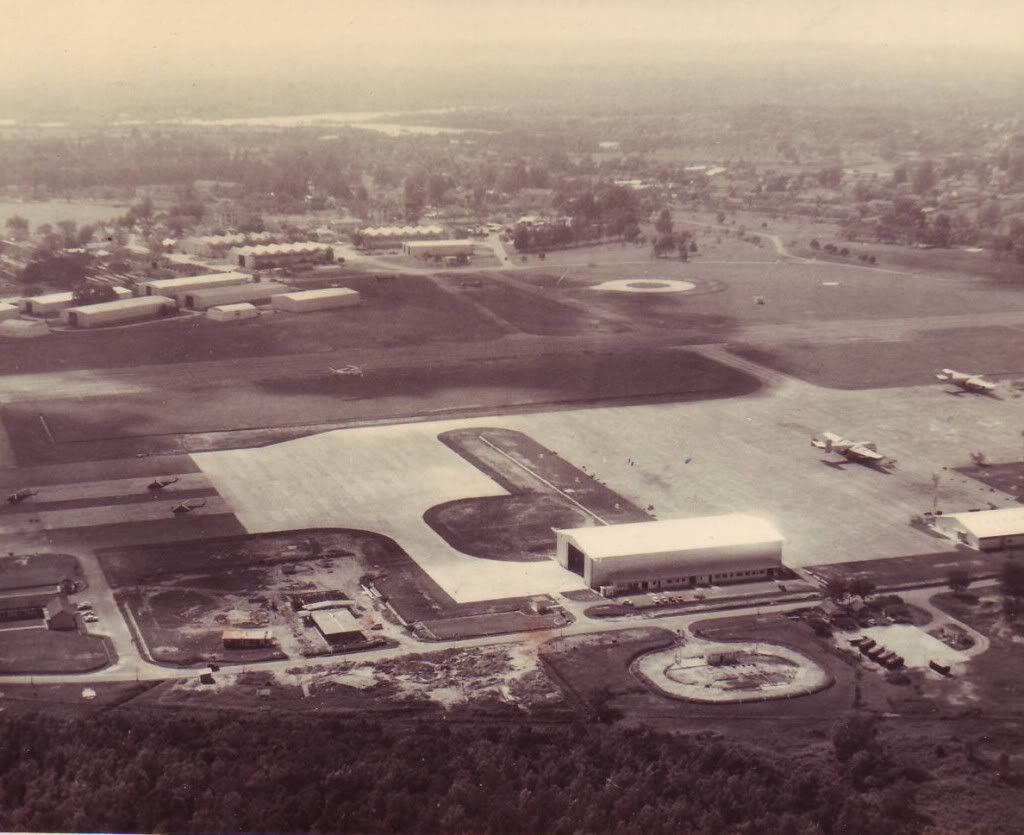
This string of three photos should allow you to get your bearings:
Your photos of the Dakota, the cut down Single Pin and the Vampire were on East Camp as in this photo below you can see the two small hangars at the left with the grass area in front of them. I recall that the Beverleys were broken up in that same area. The compass swing circle can be clearly seen. The brand new hangar and concrete apron must have been made ready for the Andovers, but my memory is not good as to the veracity of that. You can see the old 23 M.U. hangars in the background. During the time I was at Changi 1959-1962, the Avro Yorks were running the rockets and rocket fuel from the U.K. to Australia and one of them crushed the port wingtip against the ASF Hangar at Changi. ASF phoned 23 M.U. and asked if they still had a Lancaster wingtip in stock. You should have seen the relief on the face of the Dan-Air York Captain when the answer came back, “Yes”. The guys that fitted it got SIN$50.00 each which to us then was quite a lot of money. Dan-Air F/E’s also used to go scouting around in the scrap tyre dump at Changi and roll a few Shackleton or Hastings tyres out and into the York for the return flight to the U.K.. That was lucrative as well ! In this picture you can just see the 103 Sqdn side of the 103/110 HQ’s building at the lower left.
This is the 34 Squadron dispersal as before. To the left of where the Pig fuselage is, there are a few rows of low-set buildings and one of my duties at Air Niugini (1992-2002) was to audit contractors. AAR Allen had those buildings as a Maintenance Repair Shop for aircraft components and I audited them there before they moved to the Loyang Industrial Area at Changi.
A Note about Changi: A lot of Changi camp is still there but Google Earth shows that a lot of the barrack blocks at Changi have now been pulled down. I used to be in Block 151 which has the Murals on the walls on the lower floor painted by a POW. That is still there according to Google. Block 151 was used as a Hospital Block during the Japanese occupation and outside the block there was an area where the grass did not grow. You can still go onto the old RAF barrack block area by checking into the Guardroom there and the Singapore Defence Force has made a Chapel at the southern end of the ground floor of Block 151 which can be visited to show your respect.
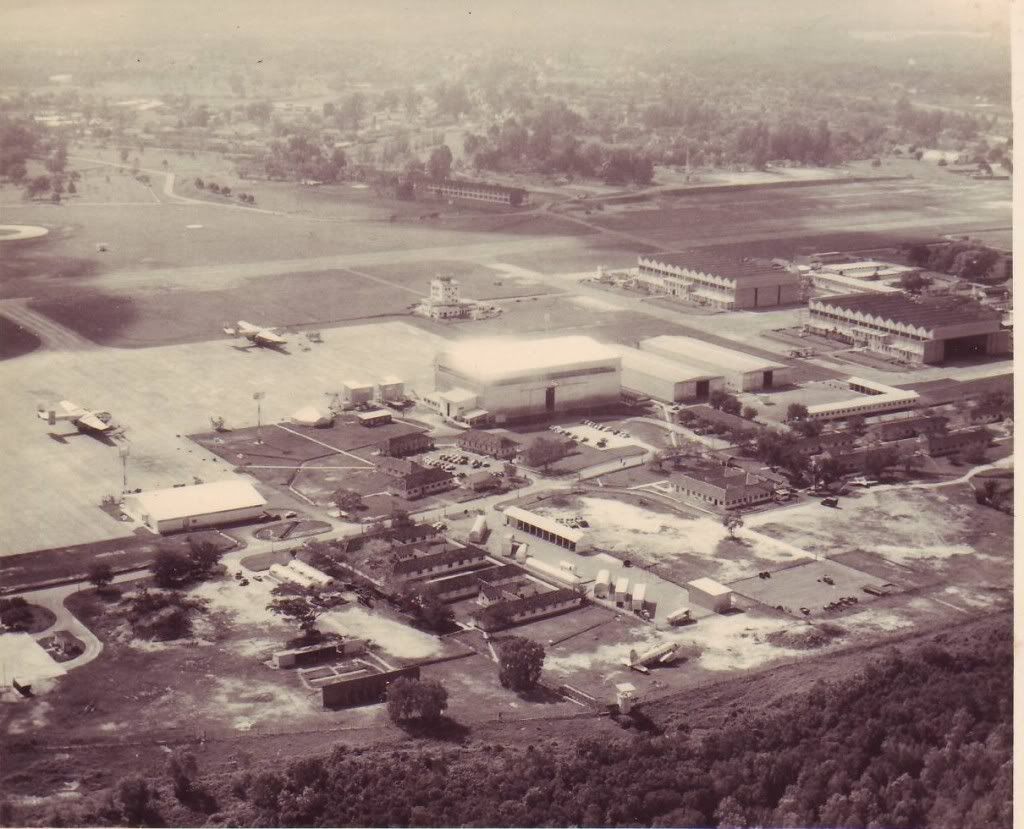
Last picture of West Camp Seletar shows the 209 Squadron hangars at left and the boundary road from the Main Guardroom which started when you turned left on entering the camp from Jalan Kayu. Seletar roads had names like “Piccadilly” and “The Strand” as I remember. Anyone can go onto Seletar now on business and there is a flourishing Golf Club there and a restaurant on East Camp.
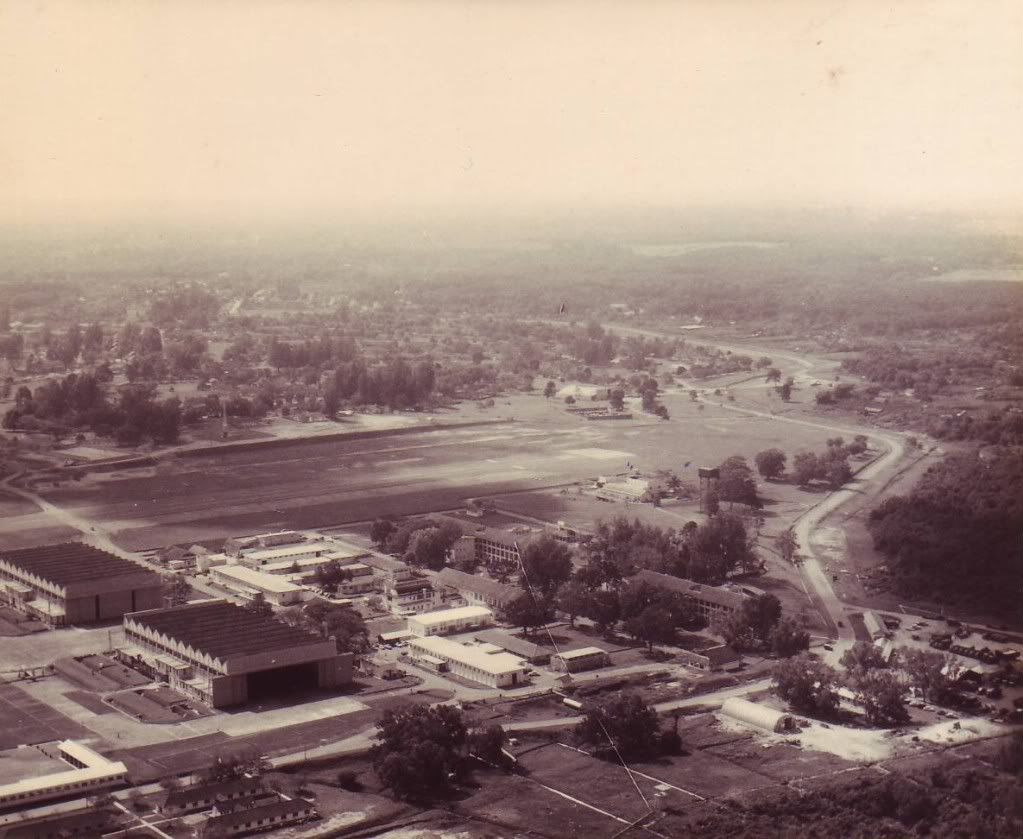
I have forgotten what most of the buildings were used for now but I guess with the roles that the Squadrons were in, there would be Army despatcher units and all sorts of support units resident at Seletar.
Lauriebe: Was it 52 Squadron Andovers ? I always thought it was 84 Sqdn. Maybe if it was 84 then 52 had transferred one of their aircraft out to SIN to kick-off 84…. Just like we did with 28 Sqdn in HongKong.
Regards,
RPM, Fuel Flow, TGT…
http://www.electranewbritain.com
RPM, FF, TGT…Was it good out there ?
Lauriebe, pagen01 and Postfade….
Don’t know much about the Valetta fuselage lying next to the wooded area next to the Sungei Seletar. It may have been used by the Fire Stoppers for evacuation practice. The Vampire stood at the back of the building there and in truth I’d forgotten about it until the picture came up enlarged on the Forum thread !
I had been out to Singapore straight out of the brats in 1959 and was at the ASF at Changi, first in the Modification Bay, then posted to Labuan for six months and then back to Changi on 2nd Line Inspections, Hastings mainly. That took up the two and a half years. Labuan was beautiful, a small island, friendly people, never did I think I would get back there again when I left in 1961. I left Singapore in 1962 and then went to RAF Lyneham, then Thorney Island where I worked on 1st Line Argosy, posted in when the OCU moved from Benson…..
After eighteen months Flight Engineer training from 1964 to 1965 and flying at Thorney on the Argosy, I eventually arrived at RAF Ternhill for SRT training. That was quite a let down and none of us F/E’s wanted to be there. After flying on the Argosy after OCU training and then being posted onto Whirlwinds it came as a complete shock to be on helicopters from which I did not recover !
I remember a senior officer maybe an AVM; “Bird-Wilson” visiting Ternhill and asking me how I liked Helicopters (?)…. “Not at all Sir, I am not interested in them at all Sir….” I got the usual ****-eyed looks from the hangers-on officers accompanying him. At least I told the truth ! They should have trained up volunteer helicopter Groundcrew to be on the things and given them an aircrew category of “Crewman”, full stop. We were called “Flight Engineer Crewmen”, but they dropped that to “Crewman” when the NCO Aircrew Signallers started being posted onto helicopters. There were then Air Electronics brevet wearers and they didn’t know what to do with the surplus “signallers” trained up so: “Here you go, go to helicopters as Crewmen…..”. In the main, they didn’t like it either.
No. 5 SRT Course at Ternhill had been a revelation. We had Royal Navy pilots on the course as well as RAF pilots and I found the Navy drivers to be ill-disciplined and during the confined space landing exercises I thought they took too many chances and I regarded their flying as “bull-at-a-gate” stuff. Risk takers. I didn’t want to be on their sorties…..
We did the ‘winching at sea’ exercises at RAF Valley in bitterly cold weather and it was no fun to be in an immersion suit for four or five hours at a time. After all that “rescue” training, I recall I only had to do one rescue on the winch in Borneo throughout the near two years we went there.
After arriving at Seletar and settling-in, in late December 1965, I was sent over for two weeks familiarisation to Sibu and Nanga Gaat. When I arrived at Nanga Gaat in late January 1966 the Navy had long vacated but there were a few tales of their antics.
Borneo was a sort of magical place but the Sarwaks I spoke to could not understand “why” they were being incorporated into Malaya. Nanga Gaat was the home of the person known as the Tumunggung Juga and he was the representative in the Malaysian Parliament for his Iban people. He was fiery but I can’t recall him having any success with the Malays. One look on Google Earth shows what the Malaysians have removed from Sarawak. There are very rich Malaysians today because of the plunder of Sarawak.
Did I enjoy it, you ask ? I enjoyed Borneo, but did I enjoy helicopters ? No not really. Getting back onto the Argosy in 1968 was like the bad dream ending.
Postfade… I have a couple more aerial shots of Seletar and I can see where the picture of the Dakota was taken…it was on East Camp, you’ll see the two small hangars in the background right on the left of the photos. If Photobucket will behave I’ll have them up as a string of three (with the first one posted in the middle) shortly.
Regards,
RPM, Fuel Flow, TGT…
http://www.electranewbritain.com
RPM, FF, TGT…Just about the last pictures I have….
Bri….
Yes, I remember when the English did indeed speak English…. I’m attuned to the Australian version now though !
The idea of a book is good as you say. I think it would take a lot of ex-Confrontation guys to get all the stories together and that means from all the services too. I do not think a historian has actually sat down with all the War Diaries from the three services and put everything together in a chronological order. There have been a few books but not a composite picture. I could stand to be corrected there.
These are the last pictures I have which are posted now….most are of Seletar…from 1966 & 1967and an air to air of an HAR10…
View is looking South over Seletar, West Camp, then the runway, then East Camp and on towards Jalan Kayu village. The 34 Squadrom Beverley’s and their huge hangar glistening in the sun. Ex-Seletar Airmen Aircrew will have fond memories of the NCO Aircrew Sergeant’s Mess which was located on West Camp. The older hangars on the right were used by 209 Squadron Single & Twin Pioneers. I think the old hangars are gone now and SASCO (an aircraft maintenance organisation) are on that site. The hangars on East Camp which were 23 Maintenance Unit have been taken over by other maintenance organisations. Most of the old married quarters have been sold off to Singaporeans.
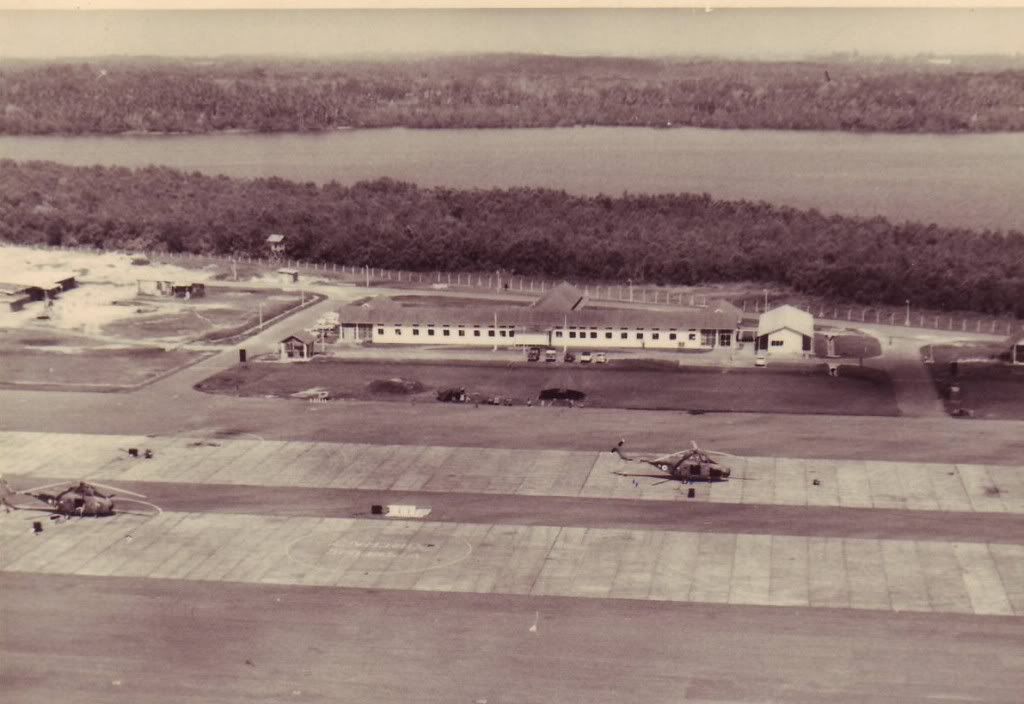
This the Whirlwind dispersal and the 103 and 110 Squadrons HQ’s Building, 103 on the left and 110 on the right. The building is still there I believe, I last saw it in about 1997 or 98. I think the Singapore Flying Club or some club has the building for their office now. The Sungei Seletar in the background is now a fresh water reservoir. Only two helicopters to be seen plus the one I’m in, most were in Borneo.
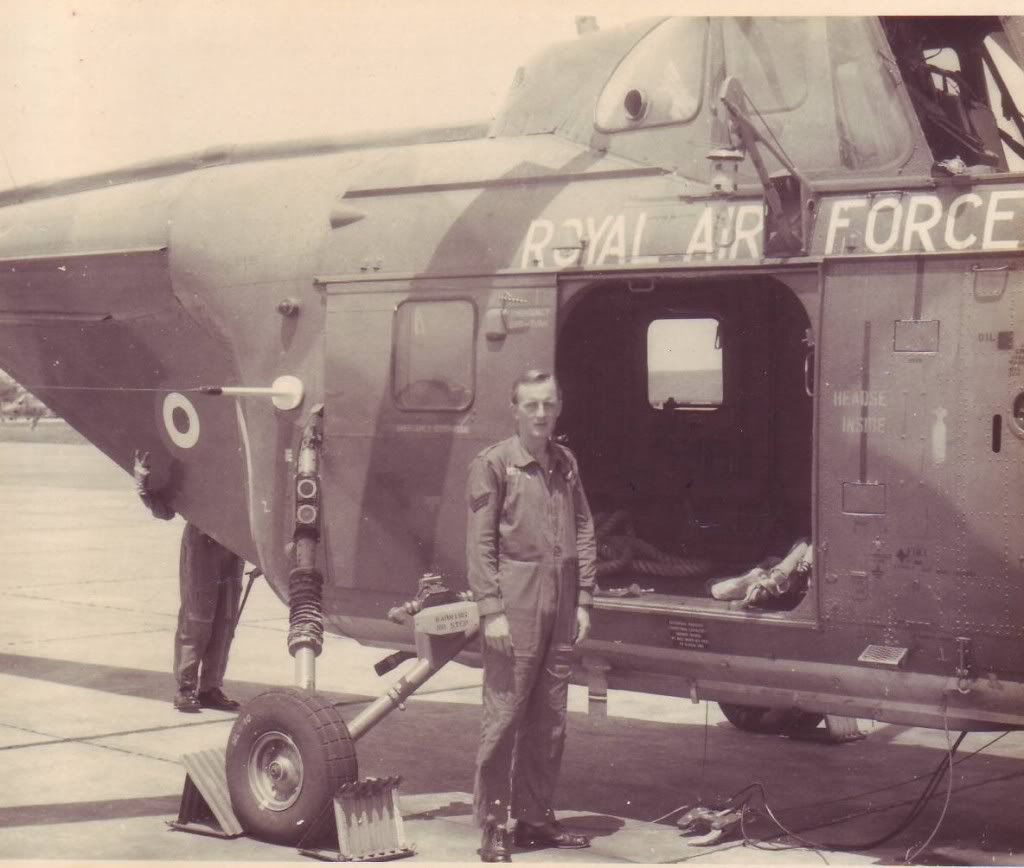
I’m giving the game away here… Aaaah, to be young again….This is “RPM” in his yoof in 1966 as a young Sergeant Flight Engineer Crewman straight off the Argosy onto the cooling fan….. “V” sign courtesy of Sgt. Pilot Fred A_____. Yes, there were still some Sergeant Pilots around in 1966, I recall on 110 we had two and two Master Pilots (aka Warrant Officers). One Flt.Sgt Pilot was the QHI and some Officers didn’t like that….
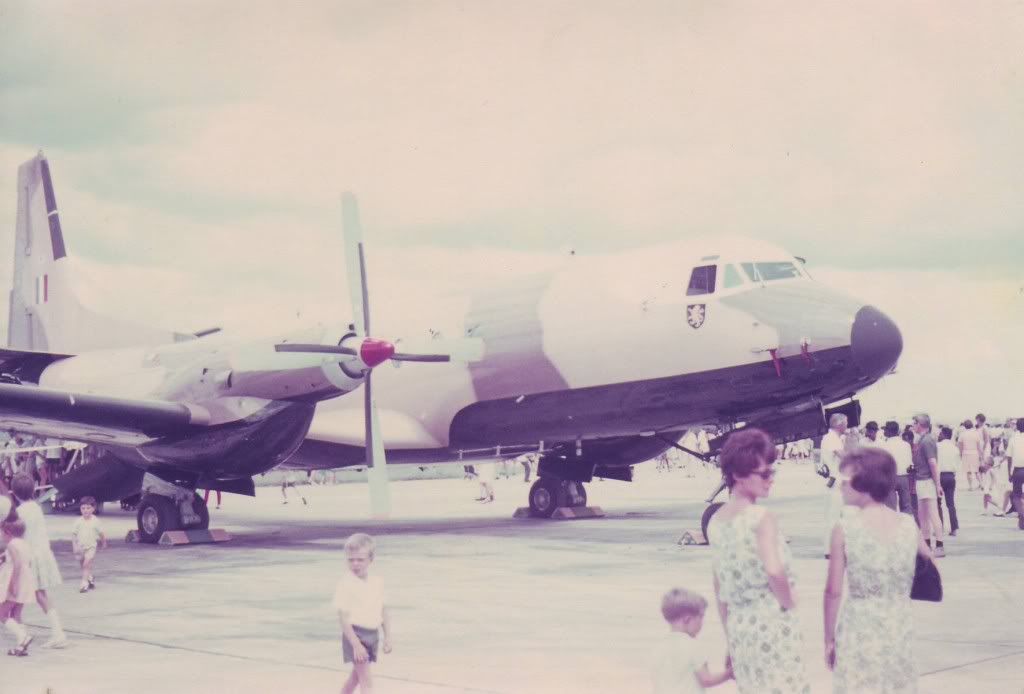
This must have been the RAF 50th Anniversary Open day at Seletar with this shiny new 84 Squadron Andover being an attraction.
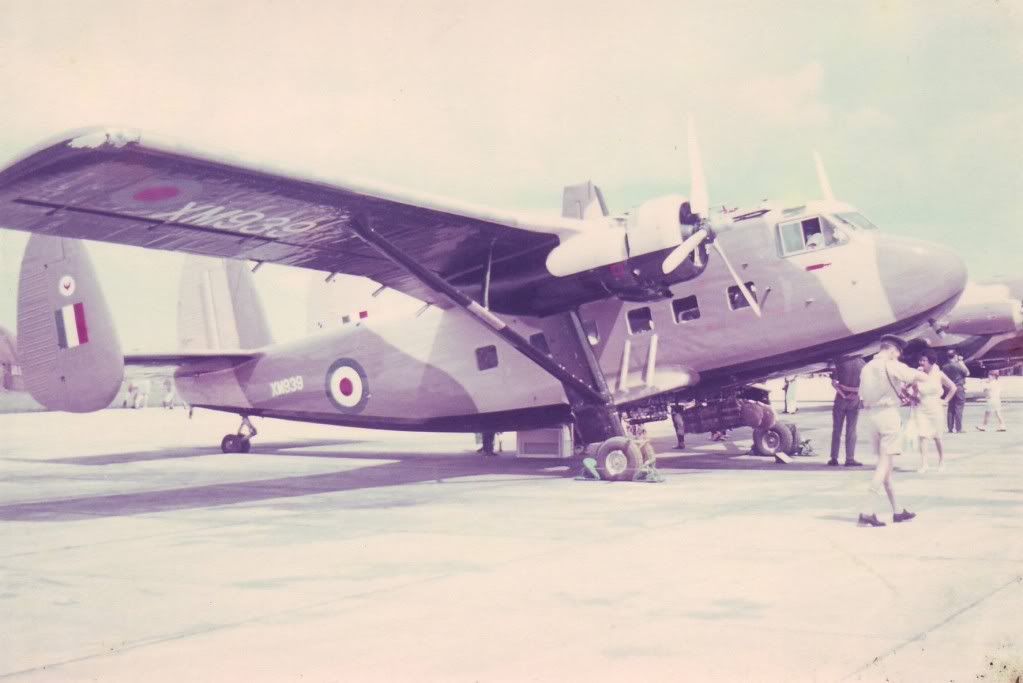
Polished Twin Pioneer from 209 Squadron.
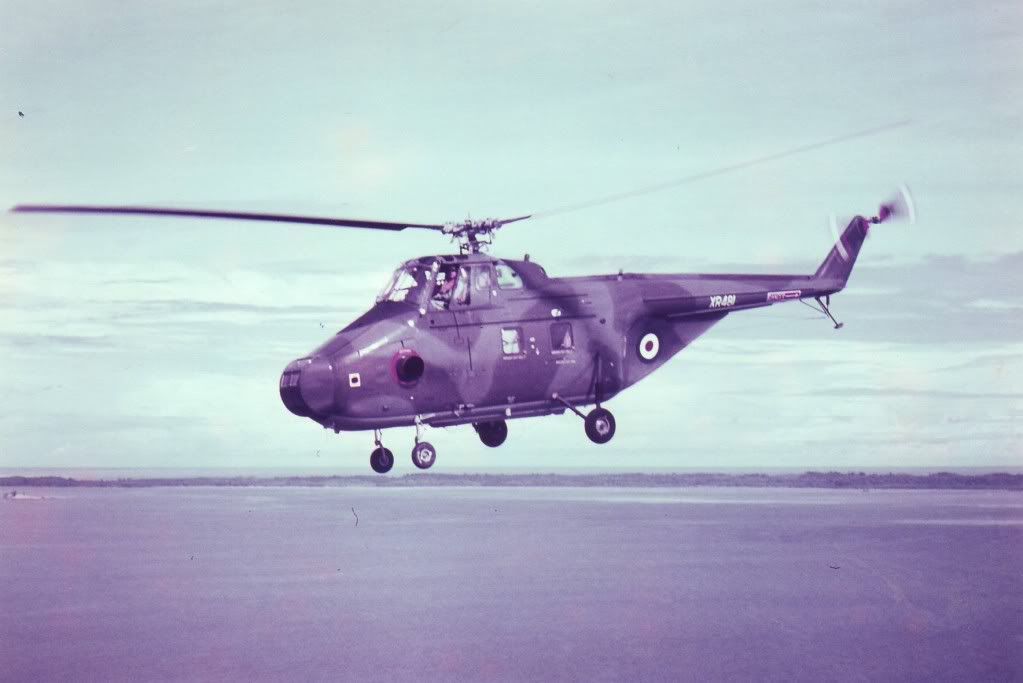
Last photo….nice air-to-air “Bound for Labuan…” Returning from the interior to Labuan over Brunei Bay….
Best Regards…
RPM, Fuel Flow, TGT…
http://www.electranewbritain.com
RPM, FF, TGT…Bario Pictures…Ahh, Bario… a pleasant place…
First off… The Lt.Col. in the foregoing post was a brave man to face up to a howling Jakarta mob…
BARIO….
Bario is located close to the Kalimantan border and in this picture the border is possibly the hill in the East.
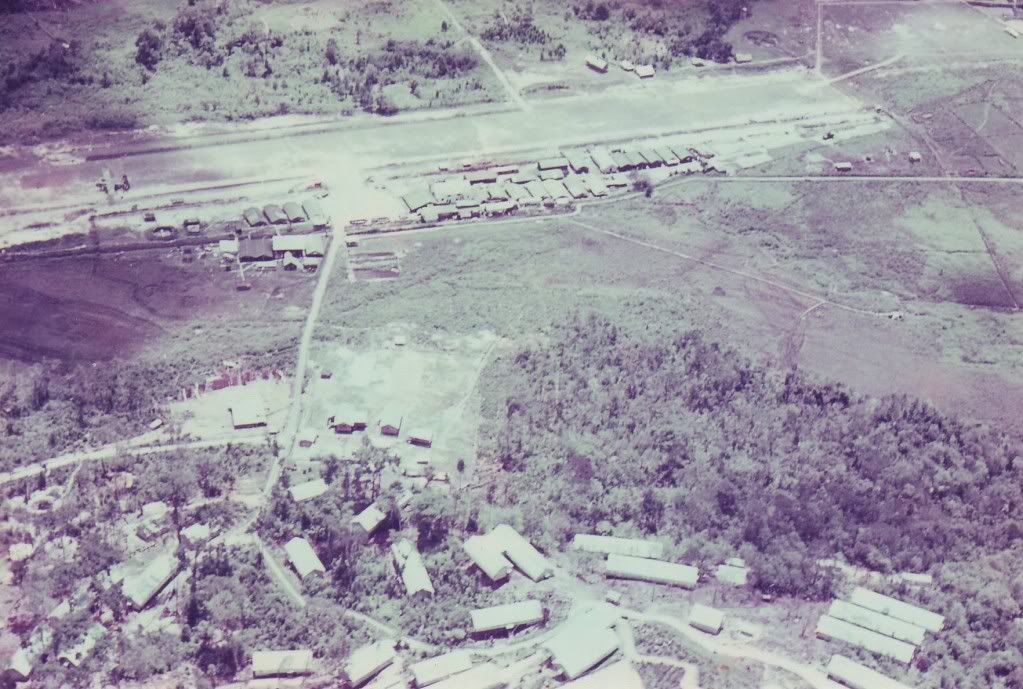
This picture shows the whole camp… RAF accomodation beside the runway, Army camp on the hill. View is looking South-west.
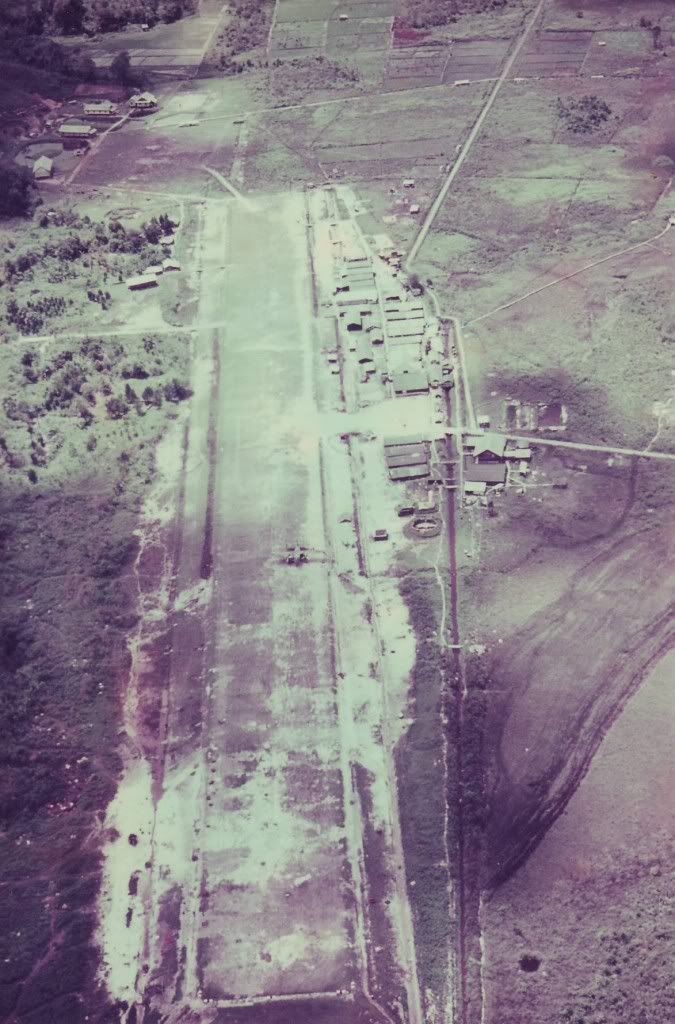
This picture looking West back up the normal approach route into Bario.
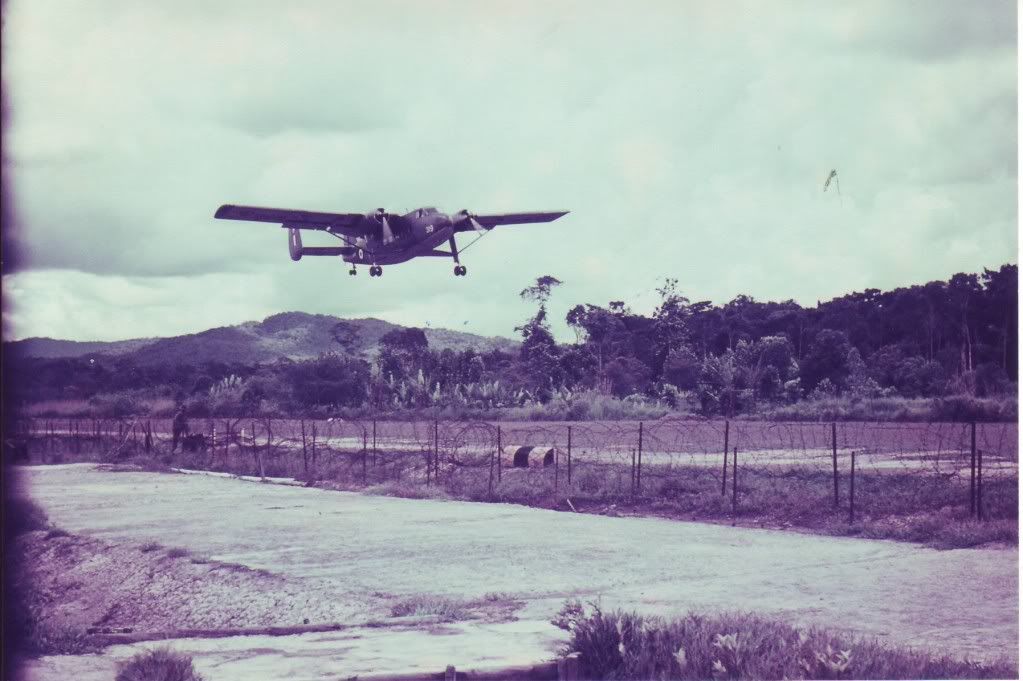
The first pic shows the TwinPin taking off to the West which re-inforces the fact that the border was not that far away from Bario.
Bario is at 3,500 feet so the climate was very pleasant. I was lucky enough to hear the local schoolkids playing their bamboo flutes, tenor flutes, right down to bass flutes. It made an eerie sound. I was told that the English schoolmaster resident there, had introduced music into their lives and had also introduced salad variety vegetables into Bario, they grew tomatoes and other salad stuff there.
While I was there, Borneo Airways did fly in with their Twin Pioneers. On the left of the last picture, beside the runway are a group of huts. That was the Borneo Airways Terminal. The Bario locals used to bring a water buffalo there that they intended to butcher and sell in Labuan…. They would wait until they heard the sound of the Twin Pioneer at the scheduled “Borneo Airways” time, butcher the beast and have it all in cuts and wrapped up in banana leaves tied with vine by the time the Twin Pioneer landed. Ten minutes at the most !!!
RPM, Fuel; Flow, TGT…
http://www.electranewbritain.com
RPM, FF, TGT…Felicity, Long Lellang and Limbang Pics…
Felicity was a reporting point about half way from Nanga Gaat to Lang Jawi… Felicity was the rock faced hill to the right of this picture and the view is of the valley heading towards Long Jawi.
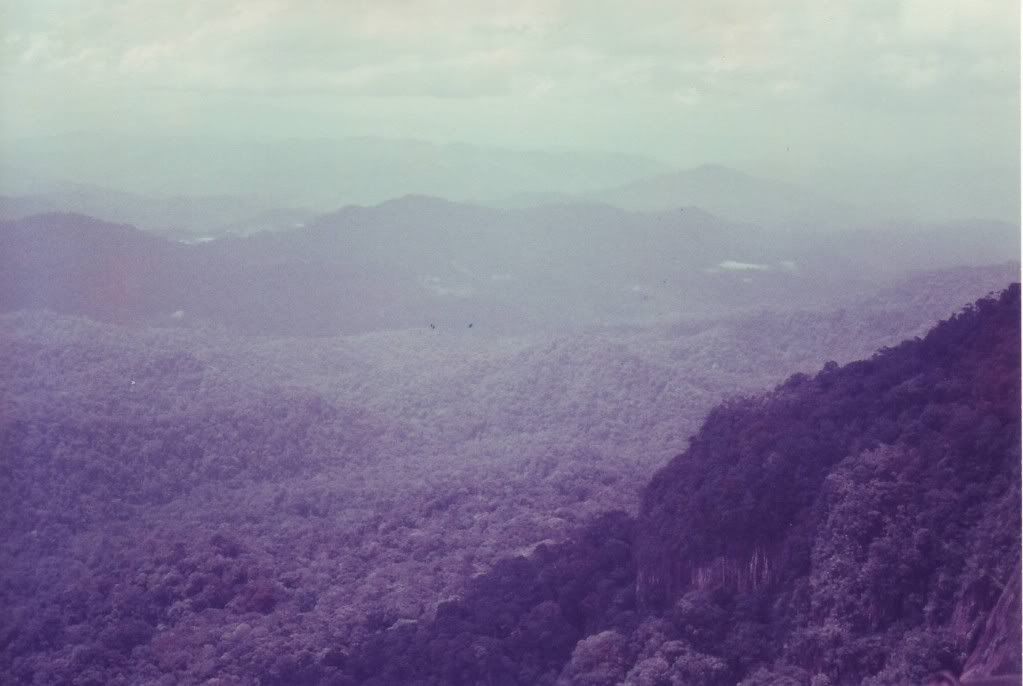
The pilots of 848 Sqdn (RN) had named the landmarks in the operational areas by naming them after their wives. So, when reporting where they were on HF, they would give their call sign and in this case of “Felicity”, say, “…on/at/going through Felicity…”. I guess it was Royal Navy humour… the Royal Air Force carried on the tradition.
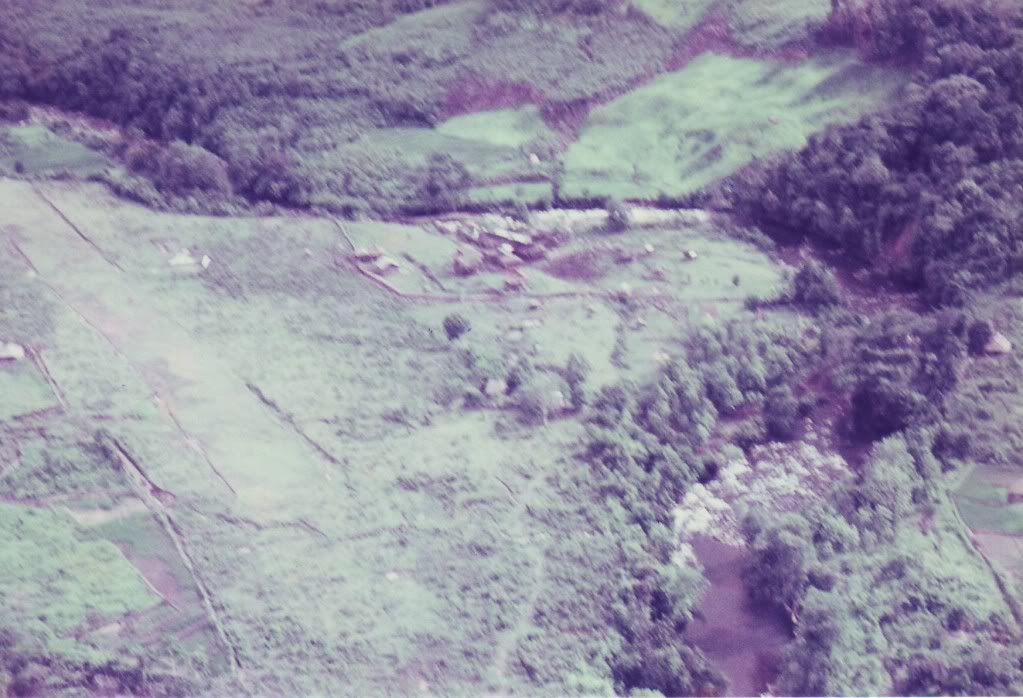
Next is of the rough airstrip at Long Lellang. I believe there is a modern airstrip there now.
This last is of Limbang town during a leaflet drop. Remember, Limbang was where the rebellion in Brunei started.
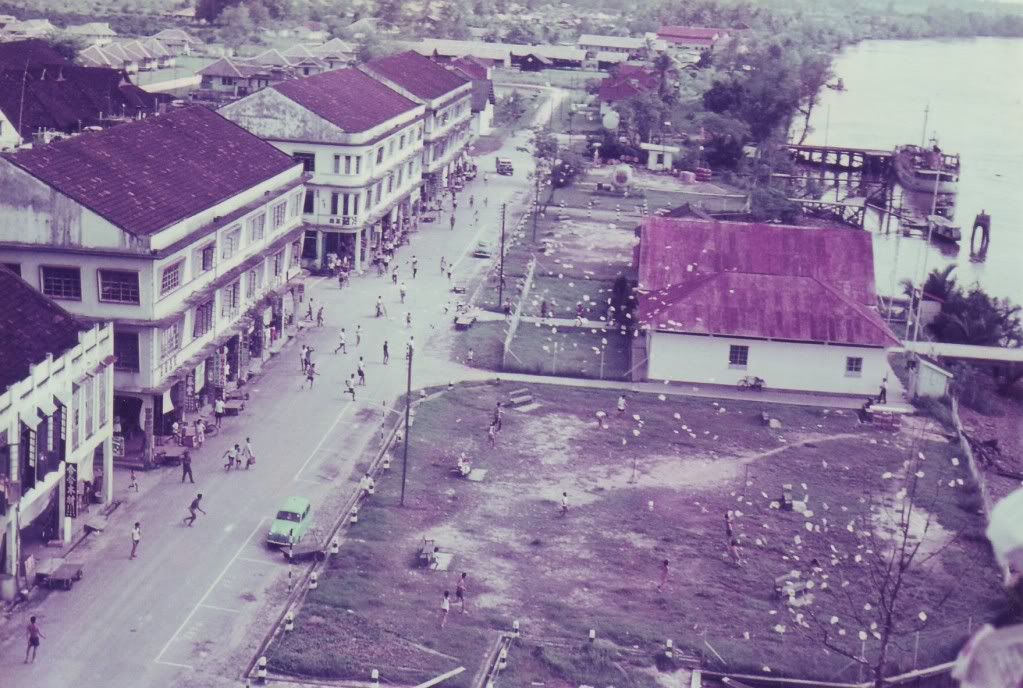
The leaflets were yellow paper with a large red cross printed corner to corner as a big “X” on the page. The Leaflet offerred various sums of money if arms and ammunition were surrendered to the authorities, no questions asked. This was at the time we were told to be on the lookout for rebels in Brunei giving themselves up by appearing on the river banks and waving “white” shirts or articles of clothing. We were issued two pairs of handcuffs with which to cuff them and attach them to the airframe. I remember the Army Officer saying at the briefing, “…and if they give you any trouble chaps, just throw them out”. Said with a smile. Nice.
RPM, Fuel Flow, TGT…
http://www.electranewbritain.com
RPM, FF, TGT…Fuel Drum Stacking….
Sycamore…
I’ve seen some horrible fuel drum usage in my time but I learned a lot from Borneo which stood me in good stead when later I worked in Papua New Guinea in the years 1992 to 2002. Drum fuel is quite often used there to refuel Commercial flights.
We didn’t tip the fuel drums onto their bases, ie; vertical drums until we were ready (and sure) that we would need the fuel therein. Obviously the logistics of getting fuel drums up to remote areas as in Borneo is a nightmare for the Supply Wallas….so we were careful and only took fuel when required for safety. Wait five minutes, do a water check and then use it if O.K..
Lifting them up required a certain technique, we are talking about 44 Gallons of Avtur (Jet A-1 to the purists), which in anybody’s book is 350 lbs. Two men was good, to do that. Usually you were on your own, particularly in 3rd Division. There you would be left all day with fuel drums and a “Zwikky” pump just to top off the beast halfway between legs from “Base to Border”. I have a bad back, which I have blamed on the Argosy, but now I come to think about it, it was half that and half the bloody fuel drums.
In respect to the dregs in the bottom of drum fuel, yes, there would be water and until people used the stack pipes correctly there would have been problems. Yet, I did see, a TUDM Alouette refuelled straight out of a drum and ‘then’ the Malay refuelling the beast did a water check, out of the aircraft low point. A backwards way of doing it. In respect to dregs, I note here (without my wife listening) that I have oft been profferred two or three delightful handmaidens by the headman of a village for the remains of a drum but decided that I would not be able to withstand the invigorating pace that would have ensued…. “Chicken Me”…
Notwithstanding that you were left on your own all day on some remote LZ in the middle of the Borneo Jungle, worst of all you would be left with a packet of sandwiches prepared by the Chinese Cook at Nanga Gaat, which as aforesaid, were always the same variety, which had been appelled by the Canadian Pilot with name of “Donkey C**k” sandwiches….so you hold these (by now “hot”) sandwiches, would look at them and make a decision as to whether you were “going” to eat them or not. Usually not.
One of the beauties of being left on your own in the middle of nowhere was the silence. Total and utter silence, not usually experienced nowadays in this insane world. Taking a leak was very interesting…I kid not that taking a leak attracted all the butterflies from out of nowhere who would be after the salt and other minerals… dozens and dozens of them…some even daring enough to land at the head of the stream…. Anybody doubting that should immediately buy a tcket and go there to experience it themselves.
So….left there to ruminate or whatever… you could get “twitchy” and on one accasion a bloody great pig about seven feet long passed through the LZ at a trot and I was too slow to c*c* the SMG and drop him. On the same LZ I heard voices one day…’C*c*’, remove mag, check full, replace mag…..ready. It was Ibans fishing…. they had caught the biggest Catfish I saw there, about five feet long. If I ever go back, that’s where I’ll go… I know exactly where that place is.
Know your enemy: “Hot” Donkey C**k sandwiches.:mad:
Know your enemy (2): “Hot” village handmaidens full of fun…. !!!:D
RPM, Fuel Flow, TGT…
http://www.electranewbritain.com
RPM, FF, TGT…More pics….
When speaking of Nanga Gaat, I mentioned Charlie the Monkey in a previous post…. Here he is:
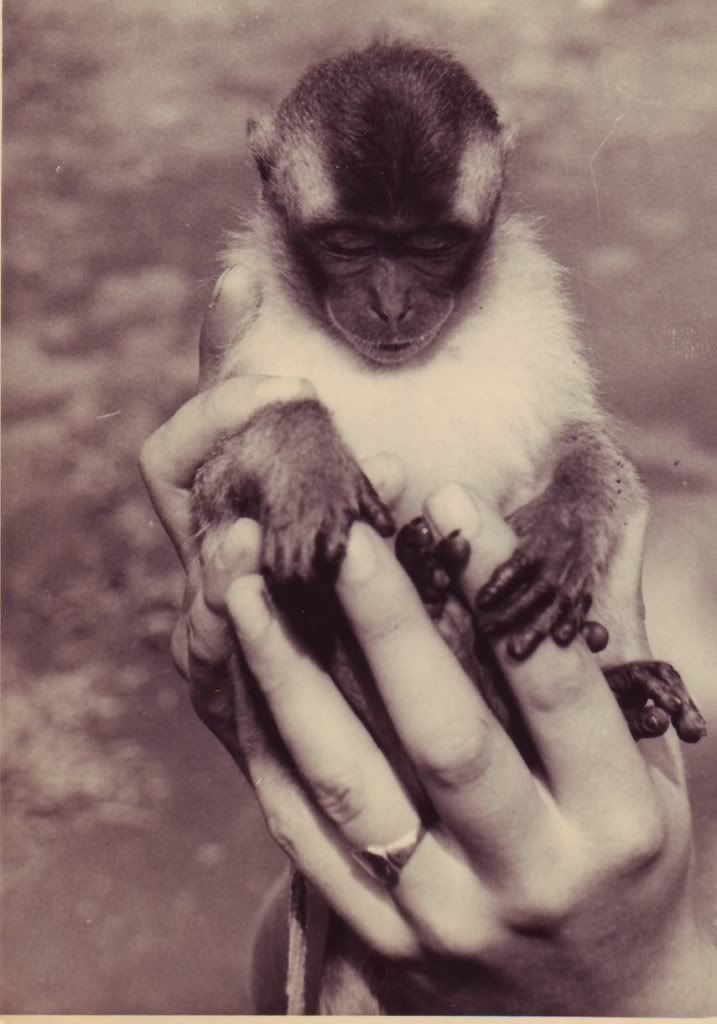
He was only small but caused a bit of trouble. He must have watched from the rafters of the SNCO’s basha as one of the SNCO’s wrote a letter with a fountain pen. Chris had a break, put the cap on his pen, put it in his drawer and went for a beer. When he got back the letter was all scrawled over and when he found his pen the cap was back on but the nib was crossed like when you cross your fingers…. Could have only been Charlie. The guys sent him aloft in a balloon one day tied into a little harness and when he got back to the ground he ran off into the jungle, it was the last they saw of him….
This is another view of Long Jawi looking NNE:
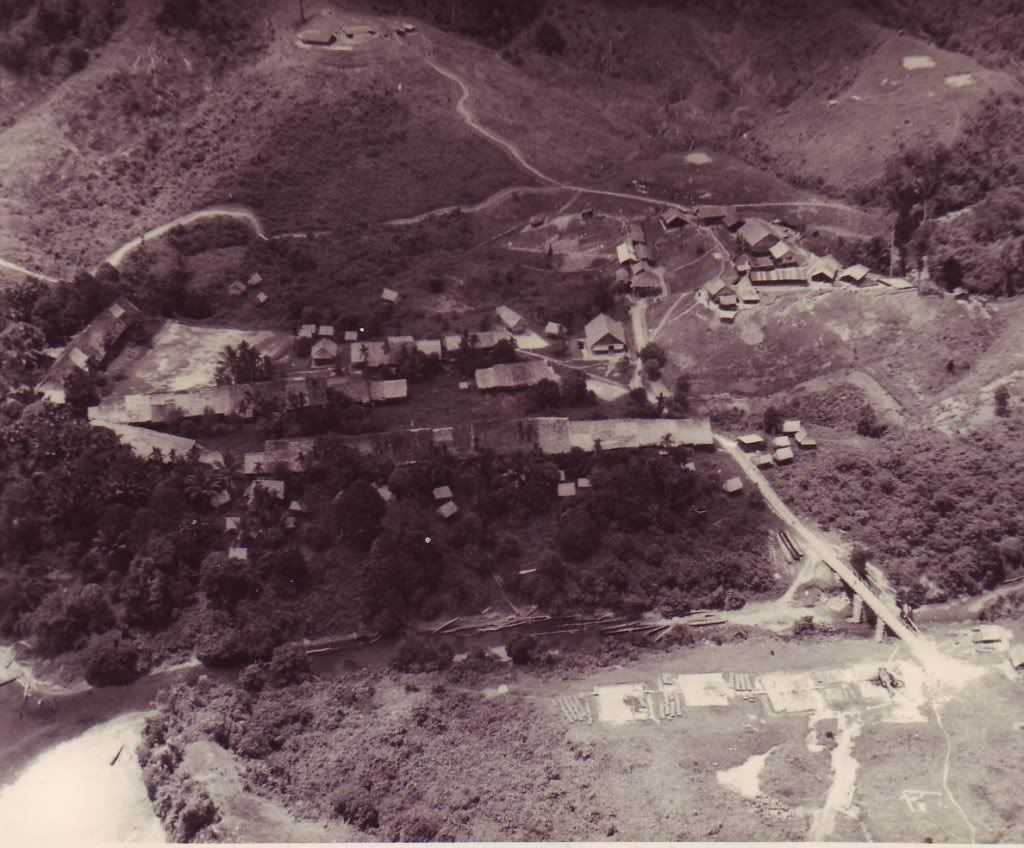
Sapulot: There was an army camp here.
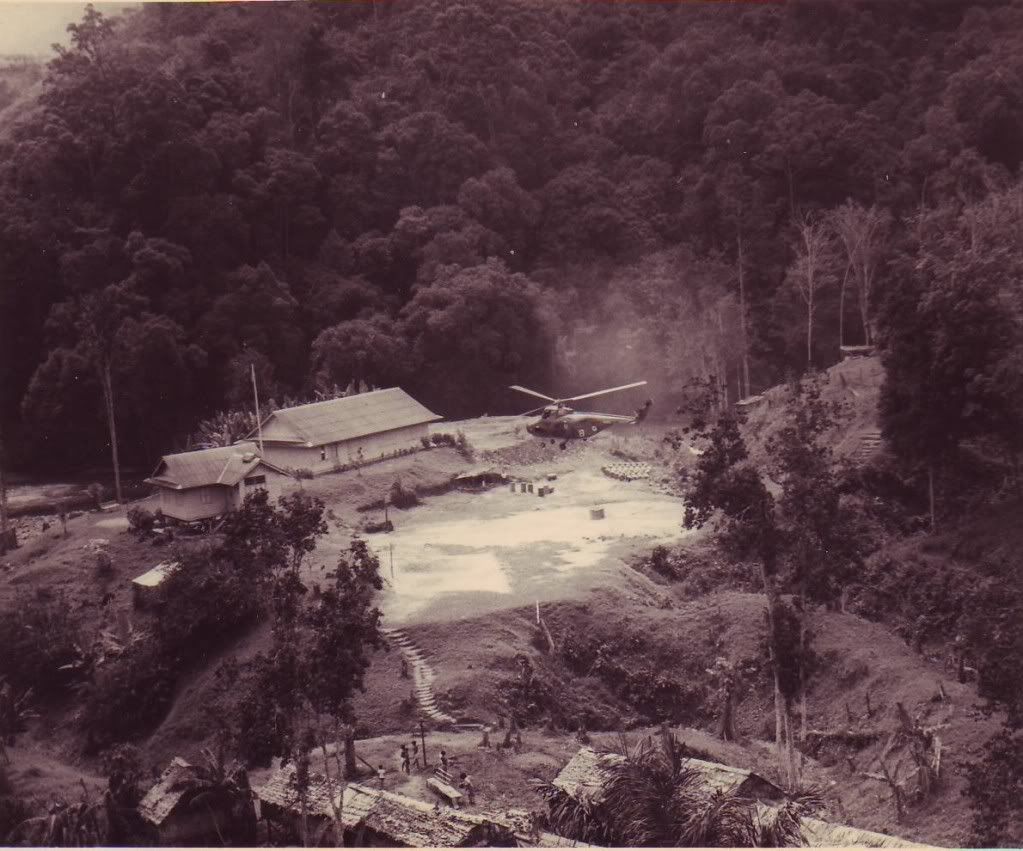
I think this is Long Seridan, beautiful little place with a permanent properly made sawn wood longhouse with a shingle roof but there was no-one there at all….
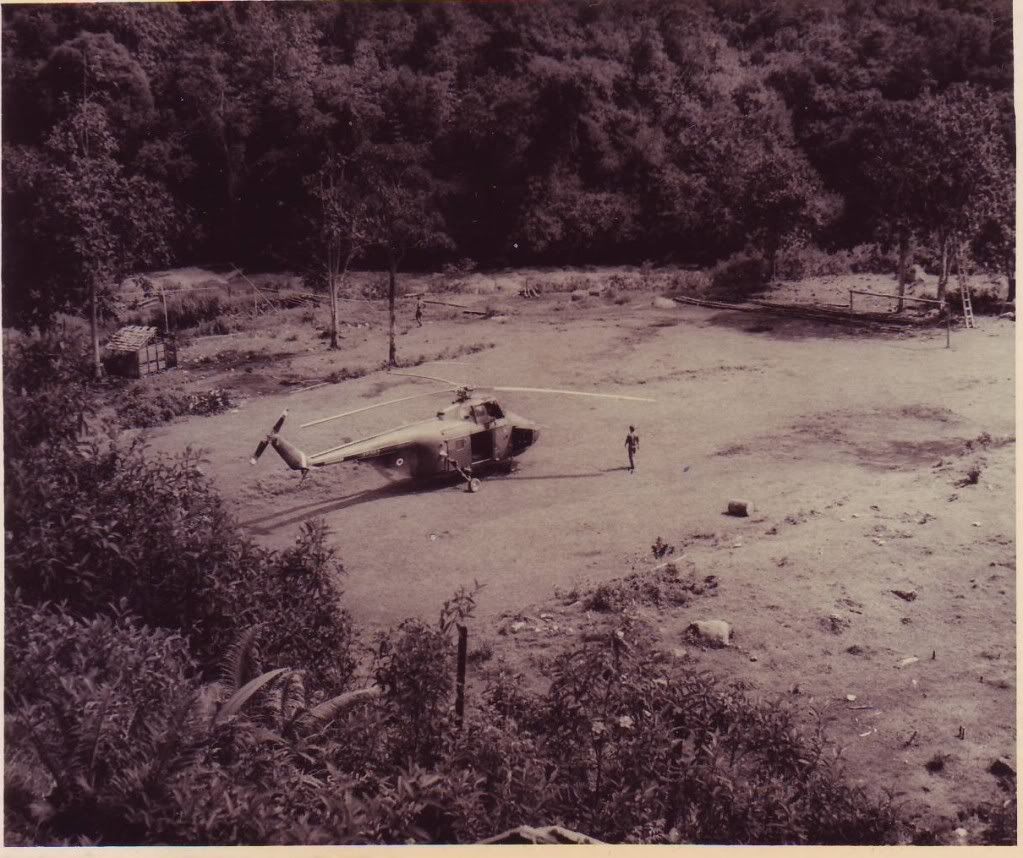
This is a typical border LZ:
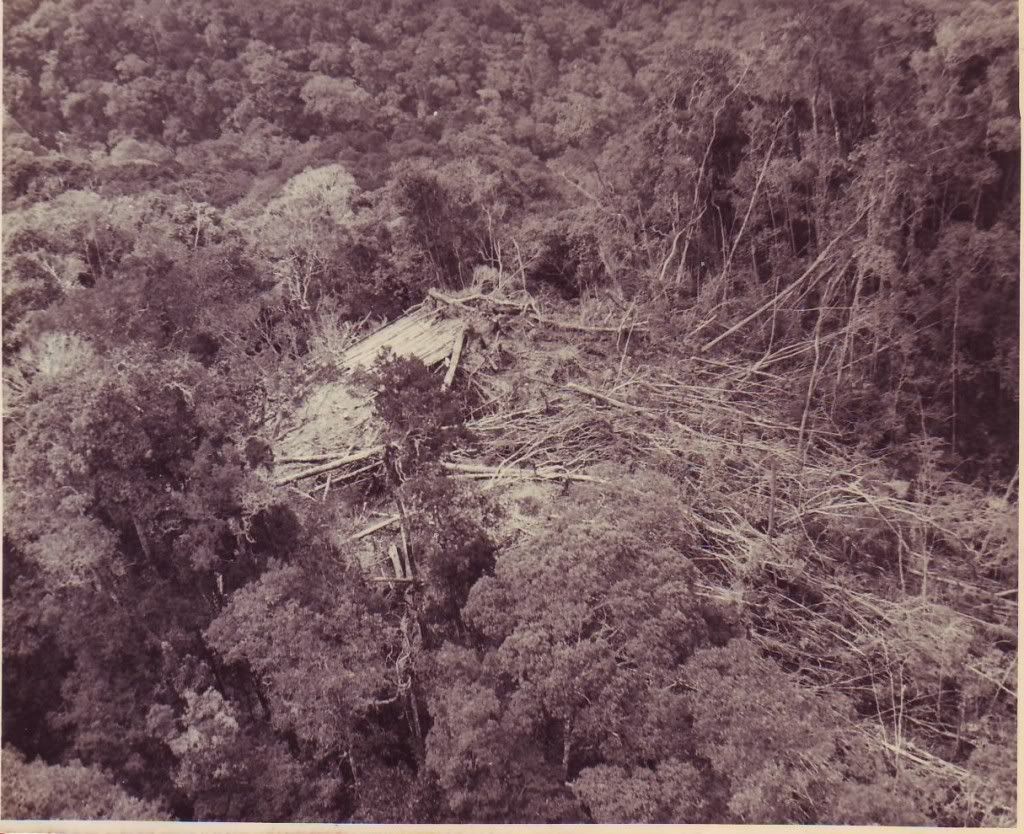
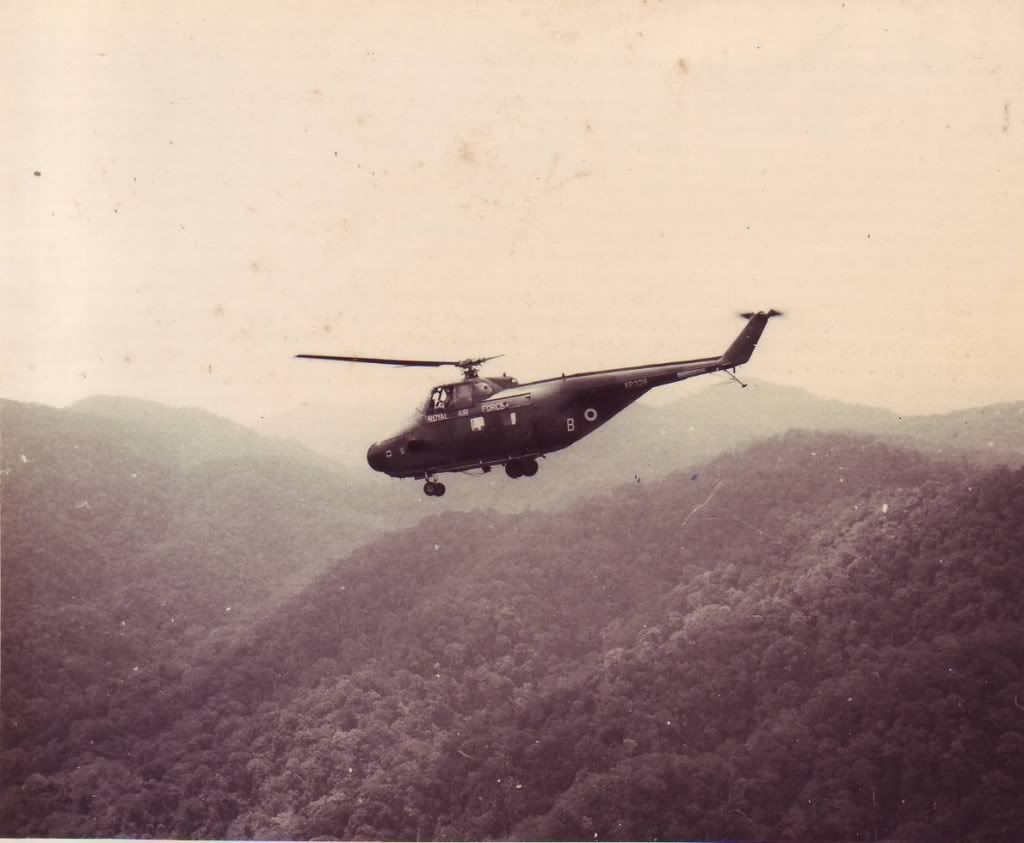
Air to Air….but if you were out there with a single chopper, single engine, limited HF Radio, no VHF comms, over 100% jungle….It could get a bit lonely…
RPM, Fuel Flow, TGT…
http://www.electranewbritain.com
RPM, FF, TGT…The No-Load Wheelbarrow…
Ken of the Alert,
Thy message has now bounded across the vast spaces of the Earth and has been received in my rams horns. Verily it is truth ! …..
You’re dead right, she couldn’t carry much more than a matchbox at full fuel but that was what was appealing about the whistling beast, you “had” to get out and stretch your legs after a few hours.
Many were the moans of former Argosy crew who were posted onto the Hercules which toils for hour upon boring hour and only weights out when carrying steel helmets ! I heard amazing feats of endurance like 14 hours, U.K. to Muharraq, Ugh ! That would have been a three day tour of the Mediterranean, with nightstops at Malta, Cyprus and and a refuel and possible nightstop in Tehran before arriving in the Land of Sand….
Plus when the beast did falter and spit the dummy, it could be “big-time”… I had a wonderful 15 day Caribbean Trainer with about three days in Trinidad and and another three or four in Barbados due to a rapidly cycling hydraulic system. The Herc crew that came to rescue us in Barbados even bought a round of beers in gratitude ! So the No-Load Wheelbarrow did reward us for our patience !
RPM, Fuel Flow, TGT…
http://www.electranewbritain.com
RPM, FF, TGT…Alertken…Thou art verily of the brains trust…
Ken of the Alert,
Thou dost speak in riddles, master…along the line of a Mandarin in high pitch or a hydraulic pump loaded with air…..
Minehead hast alas forever been of the disdain of thy three letter words known as “acronyms” which appear on my white papyrus and mine usage of these dreaded letters hast been as the number of water holes in a desert or camel twitch at sunset.
As sands also pass through mine hands I am also at a loss to retain numbers within mine cranium so I have a double difficulty plus as a result of toilage on the Argosy thy words broadcast from thine abode hast not the power to be in receipt by mine ears for I am deaf.
However, the Gods have been fruitful and have delivered two devices donated by our Gracious Prime Minister, the effervescent Kevin Rude who has gifted some rams horns which I am to adorn close to mine ears. If I had been adorned with said rams horns circa 1967, I might hence have heard fully what the Greek Prince said to mine ears when he told me: “Get thee hence off mine helicopter…” as some of his spiel was lost as I willingly departed from the arrogant eloquence….and delivered a two fingered salute to the omnipotent presence as he departed Vacuum House in Singapore…..
So therefore, wouldst thou kindly repeat thyself so as this encumbered brain can reap thine intended message…
Salute en beacoup !
RPM. Fuel Flow, TGT…
http://www.electranewbritain.com


 Sign In







