Spitfire9
We’d lend the French a couple of transport aircraft
http://www.bbc.co.uk/news/uk-20999533
Moggy
A couple of our aircraft carriers might be more useful. 🙂
Spitfire9china also have long history of aesa, it is used in the ships awacs and other stuff. also at least three fighters will ahve aesa like j10b, j20 and j31. uk only has one.
anyway point is not uk becuase none of south american will buy typhoon.
If you count Selex as UK, I think you will find they have produced a number of AESA systems and have development contracts for several more.
Spitfire9At this time the UEA is starting to try and find a buyer or buyers for there 60+ mirage 2000
It would certainly be very useful to Brazil to acquire a few since the country could maintain capability without the expense of introducing a new 4.5G type. UAE might also be prepared to part with some of its M2K’s before receiving its own new 4.5G/5G aircraft.
Spitfire9Peru is spending $140 million on upgrading the Mirage 2000 fleet and $126 million on the upgrade of the Mig 29 fleet which should see the Mirage’s though to 2020-25 and the Mig’s to 2025-30 given the age of each fleet but what then given the 1995 Cenepa War with Ecuador and on going coastal disputes with Chile. Peru needs a fighter to at lest mach those around them. Round the time 2025 Chile – Ecuador and Peru will need to start replacing there fighter fleets who will blink first what will they go for and how much will it cost them
KAI T-50 if performance is adequate?
What about HAL Tejas Mk2 or Mk3 (with M-88 Kaveri)? Flyaway cost in 2012 dollars: I guess ~ $40 million. I’m assuming that India becomes serious about building a fast jet aircraft industry and learns how to support exported aircraft effectively.
Or Gripen E? Flyaway cost in 2012 dollars: I guess ~ $60 million.
Or KAI KF-X if it turns out to be a small, cheap LO multirole aircraft?
Also at some point UAE will have quite a few M2K’s for sale so if the budget for new aircraft is not there…
Spitfire9It is all about preserving the ACCESS to these high threat areas with as little a damage to your own air-force as possible. Surely F-35’s and F-22’s will be LOST going head to head against the best SAM networks, however the point is to do it (defeat the IADS) with a comfortable loss rate ( Its all about preserving the advantage the USAF , USN thinks it has now against its current threats , for the future ) ..
What would be a “comfortable” loss rate? Obviously 0% is comfortable. Is 1% still comfortable? 2% starts sounding uncomfortable to me.
Very crude calc here… If you lose 1% per mission, that costs $75-$150 million (depending on the aircraft lost) per 100 missions flown or $750,000-$1,500,000 per mission. It seems to me that 2% or higher losses per mission gets very expensive – for similar cost you could fire 2/3/4/5 Tomahawks at the target while remaining out of range of SAM defences.
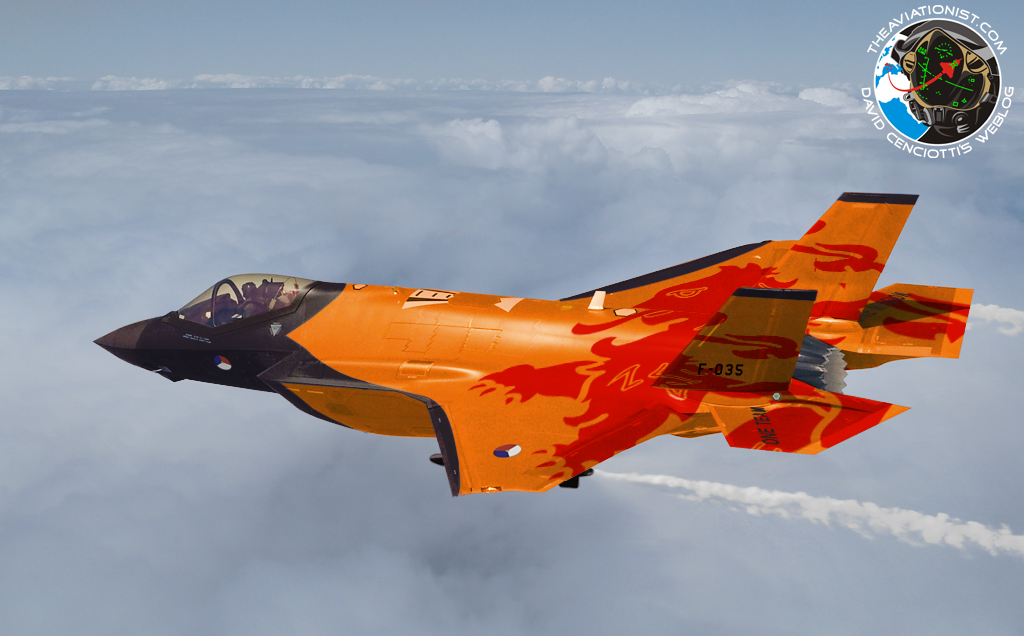
Spitfire9go dutch on him
Dutch? The Dutch don’t stick dragons on their fighters, do they? Looks more like a Swedish F-35 to me!
Spitfire9Or a push to drop the F-35.
“OTTAWA — The Canadian military has decided it will rely on the U.S., other allies and private companies for air-to-air refuelling if the government purchases the F-35 because the stealth fighters aren’t compatible with Canada’s current refuelling aircraft.
The revelation is buried in an explosive report released last week and means the Canadian military would be reliant on third parties to realize the full benefits of its F-35s — a situation opposition critics and analysts say is completely unacceptable.”
The report covers the cost of procuring and operating F-35. If it’s a cost associated with F-35, it should feature in the report. I don’t see anything conspiratorial here. On the contrary omitting this cost would undermine the value of the report.
Spitfire9why they have to wait untill 2017 to start deliveries. Tyhpoon has active production line. It should be in 3 years at maximum.
Perhaps they want an aircraft with AESA? Receiving an aircraft with Captor then later switching to AESA would be a big waste of time and money.
Spitfire9Congratulation for Eurofighter.
So I think the confirmatory deal for Typhoon now should be:
1. RAF: 3 IPA, 50 Tranche I, 67 Tranche II, 40 Tranche IIIA.
2. GAF: 2 IPA, 32 Tranche I, 78 Tranche II, 31 Tranche IIIA.
3. ItAF: 1 IPA, 27 Tranche I, 47 Tranche II, 21 Tranche IIIA.
4. SpAF: 1 IPA, 18 Tranche I, 34 Tranche II, 20 Tranche IIIA.
5. Austrian AF: 15 Tranche I.
6. RSAF: 24 Tranche II, 48 Tranche III.
7. Oman AF: 12 Tranche III.
In total: 7 IPA and 564 productional fighters (including 142 Tranche I, 250 Tranche II, and 172 Tranche III).
Please correct me if my data has something wrong, thank you.
Thanks for that. Who knows if the list might require some additions in the future? A la:
8. Kuwait AF: 20 Tranche III.
9. Qatar AF: 20 Tranche III.
Spitfire9Moving from 12 x F-16 plus 24 x Jaguar to 24 x F-16 plus 12 x Typhoon in a few years is a big increase in capability. Are other Gulf states minded to increase their capabilty, too?
A follow-on order is likely.
Another 12 in the future, as happened with their complement of F-16’s being increased from 12 to 24?
Spitfire9The UAE can sell M2K without permission, but in any case don’t need to sell them to buy a new fighter.
They started looking seriously at F-15, F/A-18E/F and Typhoon in 2010, putting Dassault on notice that it was no longer a one horse race.
They issued RFPs/RFQs to Boeing and BAE Systems late in 2010.
They publicly rejected the French Rafale bid as being uncompetitive and unworkable in November 2011.
Renewed negotiations with the French side were subsequently abandoned.
So as things are Rafale is in longer in contention.
I remember UAE issuing RFPs/RFQs to Boeing and BAE Systems. Was that really 2 years ago? I presume Boeing and BAE Systems responded long ago. What has actually happened since then?
Spitfire9Oman signed earlier this morning.
12 new, Tranche 3 Typhoons (nine single, three twin-seat) and eight Hawk AJT.
They’ll start manufacture in 2014 for delivery/entry into service in 2017.
That’s a third export customer for Typhoon, and a seventh air force operator.
A follow-on order is likely.
Moreover, that’s two out of six GCC nations now settled on Typhoon, with a follow-on from Saudi now almost guaranteed (the only question is the size of the Saudi follow-on – 48 or 72?) and with the UAE and Kuwait looking very promising. Would that be enough to bounce Qatar into following suit? And even Bahrain?
Congratulations to all concerned.
Re: UAE
I thought that UAE was not in any kind of hurry to re-equip with a more modern aircraft and disliked the pressure France brought to bear on them to order Rafale while Sarkosy was president. Can they sell their M2K aircraft without Dassault/France’s permission? If not, they cannot go down any road except Rafale, surely?
Re: Kuwait
You mention Kuwait as a promising sales prospect. When would Kuwait be thinking of re-equipping?
Spitfire9There’s no disagreement in principle, AFAIK. The Saudis accept they have to pay BAe more, both for the assembly in the UK & the support work which BAe will have to do, instead of being done in the non-existent new factory by the inactive local firm. They’re negotiating over how much.
I suspect that things were done in a less than business-like manner by the customer, putting BaE in a very difficult position.
I seem to remember that the Saudis had agreed & made an extra payment to cover some of the assembly cost.
At least the customer has started to make amends. 🙂
Spitfire9Lockheed Wins $563M Export Order for F-16s
What does the $563M cover? It cannot cover 20 new F-16’s – they cost more than $30M each, don’t they?
Spitfire9and the extended Saudi deal is nearly there but not quite….
http://www.flightglobal.com/news/articles/bae-saudi-typhoon-talks-stuck-on-price-380411/
“The so-called Salam deal, contracted in 2007, has so far delivered 24 aircraft. BAE today said that further aircraft are being built at its facility in Warton in the UK for delivery in 2013, and that outstanding issues relate to price rather than timing. The original contract prices were based on 2005 economic conditions, but a re-pricing of the 12-year contract for aircraft, support, maintenance, upgrades and training has been under discussion for two years.”
I think some of the price problem is due to Saudi Arabia being supposed to assemble aircraft after the initial 24 were assembled by BaE. I wonder how far that idea went before it was abandoned.


 Sign In