JangBoGo
I believe it’s a single one tonne warhead, according to this article Indian Agni-V Long-Range Missile Launch
You’re right, it would take a lot more than a single missile test to deter China. Now India have increased the missile’s range, they may start to focus on mobility/ deployment. There are rumours that the Agni-V is being adapted for use by the Indian Navy.
Yes, the test was with a single “warhead” and there is no immediate plans to test it with MIRV according to V. K. Sarawat, Scientific Adviser to the Defence Minister, in an interview to a news channel. There will be two more tests which will be conducted next year and the follow-on year and the plan is to induct the missile into the inventory in 2 years. So 2015 would be the year the first lot will most likely be inducted if everything goes right.
Another factor which will determine if the ICBM will have MIRV capability will be on how much advances India have done in terms of miniaturizing the N-warhead. There is no logic in having MIRV for the sake of having that capability without the MIRVs having enough destructive power to deter the opponents. Agni-5 or any other N-priority strategic missile having MIRV will depend a lot on how far India have succeeded in that department.
What India really require is a good wheeled TEL. Without proper TEL, it is going to be a nightmare in terms of deployment. China and Pakistan are far ahead in terms of their mobile systems. India have not yet even started acquiring any decent TEL.
JangBoGoFrom the comments/message….
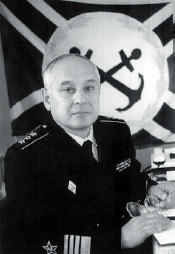
Comments: Admiral I.I. Nalyotov
Dear Reader! It is a great honour and privilege for me to write these few lines about a legendary nuclear submarine commander and a true sailor. I have consciously avoided hyperbole in this brief foreword and used every word in its true sense. Alexander Ivanovich Terenov and I commanded nuclear submarines of the same class – I a little earlier, and he a little later. We served together in the 11th Division of the Northern Fleet and carried out patrols in the middle of the Arctic, in the Pacific, and the Mediterranean, and now we are both together in the Department for Foreign Cooperation.
The K-43 is a legendary submarine, and the author writes about her exploits with great affection, as befits one who has been her Commander. This submarine had the longest, most difficult and the most hazardous career of all the vessels of her class, and stood testimony to the high degree of reliability of Soviet technology. I remember an occasion when I had dived my submarine to its working depth and was congratulating the younger sailors in the crew when I received a report of flooding in one of the compartments. We dealt competently with that emergency and surfaced the submarine successfully. Alexander Ivanovich had several similar experiences with the Indian crews – the reliability of Soviet technology notwithstanding, machines are machines.
The experience with foreign crews is of great benefit to our submariners, too. I was always struck by their dedicated approach to their training, their hunger for knowledge and their almost naive inquisitiveness. It often happened that their questions, which seemed simple at first glance, often hid deep professional ideas – at any rate, deeper than we had thought! Fate had stern trials in store for Alexander Ivanovich, as well as an amazingly wide circle of acquaintances in the navies of Russia and India. Not every submariner gets the opportunity to serve under the flags of different countries, sail in all the oceans and in practically all seas and then to write about it all. And note how simply he writes, in an amazingly readable style.
A talented person is talented in everything! Nuclear submarine Commanding Officers are handpicked specialists, and Alexander Ivanovich is one such unique professional. In life, too, he is open, without any hidden meaning to what he says. It is a pleasure to read him; it is equally a pleasure to be in his company. And now, he has unexpectedly displayed this talent as a naval author. Read his book, and you will agree with me.
I wish you, dear Alexander Ivanovich, many more creative successes and the best of naval luck!
Admiral I.I. Nalyotov Chief of Staff, Northern Fleet (1992-1996)
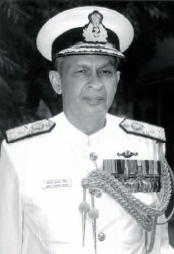
Comments: Vice Admiral Arun Kumar Singh
Dear Reader! I first met the then “young and handsome” 32 year old Captain 3rd Rank (Lieutenant Commander) Alexander Ivanovich Terenov, over 25 years ago, in 1983, in Vladivostok, where we had arrived for nuclear submarine training (1983-1986) to operate the Russian Charlie class SSGN, K-43 (later to become INS Chakra under a three year lease 1988-1991). Alexander, liked to be called Sasha, and that’s how I have referred to him ever since. By the time our 30 month training finished, Sasha, had been promoted twice over, and was Captain 1st Rank (equal to Captain of the Indian Navy).
For some of the Indian crew, this was not our first visit to the former USSR, so we were quite aware that the average Soviet Navy submariner was a simple, friendly, hardworking, hard drinking professional, with a remarkable sense of humor. What makes this book particularly readable, apart from the 80 photographs in its 300 pages, is that its written by a former Soviet Navy submarine Captain, who saw the breakdown of the USSR, and the transition of the once mighty Soviet Navy, into a much smaller, Russian Navy, which is still a very potent force. Also, many Soviet Navy personnel came to India, but few wrote about their experiences with the Indian Navy in English. In the case of Sasha, his direct association with us was over 51/2 years (21/2 years in Vladivostok and three years in Visakapatnam).
I saw Sasha in action at sea in a closed nuclear submarine environment for weeks at a stretch, and must place on record, that he was truly very professional – I would hate to be target, if Sasha was carrying out a missile or torpedo attack against me!!
In February 2001, as Eastern Fleet Commander, I was participating with my Fleet, in India’s first ever International Fleet Review (IFR) at Mumbai, where ships from many foreign navies also participated. Their were two destroyers from the Russian Pacific Fleet, who had come from from Vladivostok, under the command of Vice Admiral Alexander Vasilievich Konev (Deputy Commander-in-Chief, Pacific Fleet), who was a submariner. This Russian Admiral was very keen to meet me, so, after getting official permission, I organized a “beer and lunch” at the Submarine Base Complex, where the very emotional Russian Admiral presented me, the Depth gauge of INS Chakra. In true submarine fashion, we also exchanged our submarine badges, I took this Chakra souvenir to Visakapatnam, and installed it (with a suitable brass plaque, recording its history) inside the Indian Navy Submarine Kursura Submarine Museum, located on the beach.
Some years later, in 1999, I visited Moscow, and briefly met Sasha, courtesy the Russian Navy Chief. In 2008, Sasha, now retired, visited India, as part of a delegation, and somehow managed to get me on the phone though I too had retired – He met me and presented me a Russian language copy of his book, which is now translated into English, by Vice Admiral RN Ganesh (Retired). I vividly recall the various incidents mentioned by Sasha, since I was present, but being a thorough gentleman, he has omitted some truly awe inspiring anecdotes of “sauna, vodka and raw spirit”.
This book, is indeed a ‘must read’ for all professional submariners and military personnel. The accompanying excerpts, give a glimpse, of a bygone era, of a fantastic period of interaction between the Indian and Soviet Navies. I wish you all happy reading!
Vice Admiral Arun Kumar Singh (Retired)
Flag Officer Commander-in-Chief Eastern Naval Command (2005-2006)
Translator’s Note
When my good friend Alexander Terenov met me last year and asked whether I would translate the book that he had written about his Indian experience, I readily agreed. He had been the Commanding Officer of the Charlie class nuclear submarine which was transferred on lease by the Soviet Union to India in 1988, and I had the privilege of taking over the submarine from him and commissioning her in the Indian Navy.
This book is the story of that submarine – the K-43 in the Soviet Navy, the Chakra in the IN, which spent a small part of her chequered career flying the Indian flag, and brought the Indian Navy into the exciting era of nuclear propulsion. The story has been told from a very personal point of view, and because of this it becomes an engaging human narrative which never loosens its grip on the reader’s attention.
Alexander Ivanovich had been assigned an enormously difficult task. He had been made responsible for the sea training of the Indian crews during our training period in Vladivostok, and he excelled in this role. The three of us –Sam Daniel (the senior Indian Officer), Subhash Anand and I, the designated Indian COs, were between ten and twelve years older than he, had already commanded submarines, wore four rings on our sleeves and had experience in operational, staff, and training appointments. He, on the other hand, was a Captain 3rd Rank (the equivalent of a Lieutenant Commander in our Navy) and had narrower but much more intense experience in the Navy; the years he had logged at sea matched ours. But he dealt with this difference with rare aplomb, never feeling the need to emphasise the fact that he was in command, and while being friendly and pleasant, always carried with him the dignity and quiet authority of command.
To my mind the most difficult aspect of the task given to Captain Terenov was the training of the three COs. Most of us have at some time in our command tenures had to hand over our ships to harbour or river pilots, and have felt the unease and anxiety of yielding direct control. Alexander Ivanovich had to undergo this stress for a whole year in harbour and at sea during the period of training in the Soviet Union, and he handled this situation with a generosity and confidence that can only come from thorough knowledge and total professional competence. He had the enviable ability to desist from intervention till the exact moment it became unavoidable, and then do it in such a manner that hardly anyone but he and the Indian CO of the moment realised that he done so. I am sure I speak for my erstwhile colleagues when I say that we learnt an enormous amount from this fine Russian submarine captain.
The difficulty of Captain Terenov’s assignment during the training phase was as nothing compared to the role he had to play after the submarine was transferred to the Indian Navy. Whereas in the first instance he had official backing and clearly defined statutory authority, in the later stage his status was far more ambiguous. There is a historic sanctity to the flag being flown by a ship at sea, and there cannot be any question of jurisdiction or authority on board. Obviously the unprecedented lease of a nuclear- propelled vessel automatically meant that certain safeguards had to be in place in this aspect to enable the USSR to comply with its international obligations, which meant that a few (about seven or eight) of their personnel had to be on board all the time, in harbour and at sea. But the fact that the submarine was under the Indian flag meant that the awesome responsibility for the vessel, its personnel and its nuclear plant was clearly that of the CO. All decisions and actions were taken by the CO, his officers and his crew exactly as in any ship of the Indian Navy and there was never any doubts about dilution of authority. Fortunately there was never a dispute between the Soviet and the Indian officers on this score at any time during the three years of the lease. This is amazing considering the delicacy of the situation, and speaks highly of the maturity and tact of both sides.
Captain Terenov’s difficulty, one feels, was at a different level. From being the Commanding Officer of the submarine he had to relinquish that title and assume the new designation of “Leader of the Soviet Specialist Group”. With his wisdom and maturity he shifted effortlessly into his new role, but his narrative still conveys the feeling that he and his group sorely missed the earlier status – there can be no other reason for the conspicuously scarce references in the narrative to the Indian crews.
But it was an enormously difficult adjustment for Alexander Terenov and his specialists to make, and I wonder how many Indian officers in his situation would have handled this situation so well.
Not being an experienced translator, I have had to set certain rules for myself. The first rule was that I had to tell myself that this was the author’s book, not mine. The value of the book lies in the fact that it conveys the impressions and views of the author and of his compatriots, who were unexpectedly sent to a strange, exotic and ancient land, with little or no time to prepare themselves. The reader may sometimes not be in agreement with the views expressed; but this is understandable when talking about a country as vast and varied as India. But the book is written with a refreshing candour and it is interesting to get the “outsider view” on many things that we as Indians take for granted. On the other hand, having been present during some of the events described by the author, I am aware that there are aspects that have not found mention in it – but as he himself says, not everything can be recorded in writing. So I have made no attempt to edit, correct or add to the narrative in any manner except to meet the idiomatic and grammatical needs of translation.
The other important rule for me was that the narrative also had to emulate the author’s style, so that his personality which so strongly permeates the book comes through. This was easier said than done, as Alexander Ivanovich has used a unique story- telling technique, interspersing the main narrative with flashbacks to his own past, vignettes of history, and social and professional comments. His book is a fascinating kaleidoscope of swiftly shifting scenarios in both time and space, with colourful imagery and sudden changes in his narrative style, which is in turns professional and prosaic, romantic and ribald. And throughout he enthusiastically expresses his frank and entertaining views on the navy and submarines in the irreverent and self-deprecating manner that is so characteristic of the man. All this posed an enormous challenge to the translator, especially to a novice such as me. What helped me to finish this onerous but pleasant task were my familiarity with the Russians as a people and my friendship with the author. This book has revealed unsuspected depths of romanticism and idealism in him, and in a strange way I feel that I know Alexander Terenov better than before, now that I have translated what he lightly brushes off as his opus.
The lease of the Chakra was a landmark in international naval cooperation and stands out as a major milestone in our naval development. The successful operation of the submarine by the Indian Navy demonstrated the professional and technical skills of our sailors and officers. It also proved the soundness of the training methods of the Soviet submariners and validated the complex and comprehensive training syllabus that they had designed. At a personal level, I may say that much of the credit for the success of the programme must go to Alexander Ivanovich, whose personal qualities had a great influence on all those who were associated with him. Those who participated in this saga at any level can rightly feel themselves specially privileged to have been part of our naval history.
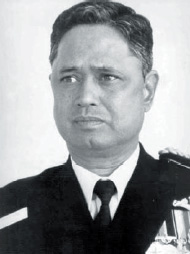
Vice Admiral RN Ganesh (Retired)
Flag Officer Commander-in-Chief Southern Naval Command (1999-2000)
JangBoGofew more…
“Even a fool can go to sea,
As for returning safe to harbour…”
Victor Konetski –
Yesterday’s Cares***
I remembered that as the Executive Officer of the submarine K-212 in 1982, I was enjoying a summer vacation with the family in the Crimea for the first time in years when I received the inevitable recall. At the time I didn’t have the slightest idea where it would all lead. The recall telegram bore the name of the Division Commander, Rear Admiral AS Berzin, and all thought of argument faded from my mind. I packed and left the sunny Crimean shores without delay.On my arrival in Kamchatka Alfred Berzin told me my task: to take over the duties of ExO of the submarine K-43 and ensure her passage to the Primorskiy Coast to be viewed by an Indian delegation. The awesome secret had already spread in whispers and everybody in the Division was aware that it had been decided to transfer the submarine to India. Little did I imagine then that within a year I would take command of this submarine and that the whole saga would extend for ten long years.
The day following Navy Day, we set course. The eight-day passage to the Primorye Coast to Pavlov Bay along the Pacific Ocean, the Kurile Straits, and the seas of Okhotsk and Japan was completed without undue incident. For a whole month we cleaned and scrubbed and painted the submarine and at the end of it the crew tiptoed around it in their socks so that the gleaming boat shouldn’t look shop-soiled! The visiting Indian delegation headed by the Commander of the Indian Submarine Forces, Rear Admiral Shekhawat (1) assessed the material state and combat readiness of the submarine, and she was then sent to the Zvezda submarine repair yard in the naval port of Bolshoi Kamen for modernisation and preparation for the transfer.
We knew that India had wanted a Project 671 submarine (NATO code name Victor), as they were looking for a boat with tube-launched anti-ship and land-attack missiles, but at that time we did not have weapons of this type. Evidently the final choice of the submarine was made after that visit to the K-43 by the Indian delegation in August 1982 (2).
This was hardly surprising, as the appearance of this class of submarine in our Navy was an unpleasant surprise for the carrier and battle-group formations of NATO. Compact, and armed with the unique underwater-launched cruise Amethyst missile, this submarine certainly complicated life for the adversary. Its short time of flight, low trajectory and lethal radius made counter-measures difficult. The submarine needed no external target indication and was capable of attacks based on self-generated target data, which overcame other disadvantages, especially in restricted seas such as the Mediterranean or in confined waterways such as the Malacca or Gibraltar Straits. Even today, having more modern missiles, we experience difficulty in exploiting the advantage of their longer range because of the absence of target data. The Charlie class submarines were thus unique, especially in those years (3).
On return to Kamchatka after completing the passage of the submarine I continued serving in the 10th Division, and in 1983 they appointed me in command of the K-43. (I learnt later that Captain 2nd Rank LZ Lupach was to have been nominated, but he was apparently wiser – evidently he was better informed.) People have often asked me why I was particularly chosen for this assignment. I always reply with the old anecdote about the young lady of easy virtue, who when persistently asked how it was that she, a Philology graduate from the Moscow State University with honours in three foreign languages had become a high-class call- girl, breezily replied: I guess I was just lucky! Of course now I permit myself to laugh it off, after the assigned task has been successfully accomplished and the crew as well the submarine have inscribed a shining page in the history of our country’s submarine fleet…
1 Rear Admiral Shekhawat was at the time the Assistant Chief Of the Naval Staff responsible for submarine matters.
2 All submarines of the Charlie Class were designed in the Central Design Bureau Lazurite and built in the Krasnoye Sormovo Yard, in the city of Gorky. The reactor was also built in Gorky in the Afrikantov OKBM.
3 The Missile system Amethyst and all succeeding anti-ship missile systems were manufactured in the town of Reutov, at NPOM.
JangBoGohttp://balancer.ru/forum/punbb/attachment.php?item=274927&download=2
Nice pic, shows extent of new or rebuilt sections of the Vik.
Good one…so finally the larger picture of all the decks..
JangBoGoAustin had posted this book preview in another forum…..
Under three flags. The Saga of the submarine Cruiser K-43/Chakra
The book is dedicated to Soviet, Russian and Indian submariners and all those who helped the legendary submarine cruiser K-43/Chakra to sing its swan song.
Second Edition, with corrections and additions
The Author is grateful to his friend Vice Admiral (Retd) RN Ganesh (Indian Navy) for carrying out the incredibly difficult work of translating the book into English.
This Book is published with the cooperation of Designer General, ÎÀÎ “SPMBM MALAKHIT” Yuri Ivanovich FarafontovThe author thanks Vice Admiral (Retired) Arun Kumar Singh, Indian Navy, Admirals A.S. Berzin, VC Visotsky, V.P. Valuev, R.A. Golosov, II Nalyotov and KS Sidenko of the Russian Navy, and also all the readers of the ? rst edition who responded so warmly to the book, and impelled me to augment my reminiscences and re-publish them.
Some of the photographs were given to me by my friends B. Blednov, V. Kuzin, V. Masyagin, Yu. Semenyuk, I Sherbinin, for which I thank them sincerely.
Preface
Nearly five hundred years ago the Russian merchant adventurer Afanassy Nikitin, the first European even before Vasco da Gama to have visited India, described all that he had seen in his memoirs titled A Voyage across Three Seas. To reach India Afanassy sailed down the great Russian river Volga, across the Caspian Sea, Persia and the Arabian Sea, and after a few years, returned by the Black Sea. We went to India by a completely different route and crossed many more seas. The first (Russian) edition was titled A Voyage across Three Seas – the Swan Song of the Nuclear Submarine Cruiser K-43, as the submarine’s role in the training of Indian submariners and her subsequent passage to India was the final shining chapter in the history not only of the submarine, but of that entire class (Project 670, or in NATO parlance, the Charlie class). And for any Russian reader, the title of the book is identified completely with India.The Soviet Union’s lease to India of a nuclear submarine, an event without parallel in any other country, has long become public knowledge through the mass media. I therefore expose no secrets, especially since this relates to matters that occurred many years ago in another country. The history of K-43, the lead boat of the class, is all the more remarkable as she spent many years in all the oceans, and ultimately served longer than other submarines of the class, under the flags of the USSR, India, and Russia. I am proud to have had the opportunity to not just to serve on this legendary submarine, but also to have commanded her in this period of her service, perhaps one of the most glittering in the peacetime annals of submarines.
After finishing the glorious story of this ship, I rather fancied myself as a writer, and unable to hold back, like the Chukcha(1). in the popular anecdote, wrote a bit about India and the Indian Navy to augment the preceding chapter. I considered at that time and am still convinced that though we have given naval training to the Indians for many years, there are many things that we can learn from them.
I would particularly like to emphasise the important role of the Indian Commanding Officers during the lease as it was on their shoulders that the responsibility for the submarine squarely lay. The three of them: RN Ganesh, SC Anand and RK Sharma along with their crews, operated the nuclear submarine independently and safely for the three years of the lease, and demonstrated the capability of the Indian Navy even then, twenty years ago, to handle the most complex technology.
It is possible that some of my observations about India’s history and the Indian Navy will sound naive to Indians and other English-speaking readers, but the book is addressed mainly to the Russian-speaking readership, for the majority of whom this is a little-known theme.
The concluding chapter about the training of submarine commanders in the United Kingdom is perhaps a little out of the overall context and is meant for specialists, but I thought it essential to include this aspect. I understand that we will never again have such training schools, but nonetheless I secretly nurse the hope that we shall be able to benefit from some of the experience of others as long as we have submarines. This experience, too, was written in blood; only it was the blood of British submariners, which does not differ in colour from ours.
The vocabulary I have employed in my narrative may have sometimes been unconventional and I hope the reader will forgive me for any transgressions; while I do need the help of a dictionary to harness the mighty Russian language; my command of sailor’s language is perfect! As we all know, one speaks as one thinks, and I have attempted to discuss a serious subject in everyday language, eschewing propaganda, military language and officialese. When I read a book or see a film about submariners where they proclaim the courageous and hazardous nature of their profession with much breast-beating I find it laughable and pathetic at the same time. All this is fine for impressing the girls and to make them gasp with admiration and wonder, but one cannot flog this cliche endlessly – after all, we volunteered for this manly profession. And if it comes to courage and risk, surely the most demanding occupations today are those of the driver or pedestrian, who are fighting a real war with the traffic on the city roads. There is the old story about a British sailor from a seafaring family who is asked if he isn’t afraid to go to sea as his father, grandfather and great-grandfather had all lost their lives there. To which the sailor retorts: And what about you – aren’t you afraid to go to bed every night, knowing that your fore-fathers all ended their lives there?
Barely a year after the publication of the first edition of the book in Russian I was forced to take up my pen again under the pressure of circumstances and the persuasion of my friends, though prior to this I had written nothing longer than reasons in writing at the behest of my superiors for some perceived infringement! What amazed me personally was that the book was popular not only with Navy men, but with people far removed from the military profession. Deferring to the numerous demands and requests from readers, I added accounts of our daily lives in India and corrected the mistakes and inaccuracies in the first edition.
January 2008 marked the twentieth anniversary of the hoisting of the Indian flag on the submarine and the commencement of the lease. She was given the marvellous name Chakra – celebrated in legends and epic poems as the fearsome weapon of the Hindu god Krishna. Later we learnt that this name would be passed on as a legacy to the next Indian submarine. History marches on and perhaps soon we shall witness a Chakra – the bright symbol of friendship and trust between Russia and India – once again roaming the vast expanses of the Indian Ocean.
When I embarked on my journey into the past, I found that some episodes of service at sea were not as easy to put down on paper as they might have first appeared, especially when one writes not for oneself, but for a wide readership. As they say in the Navy – you need to think here – it isn’t a simple task like commanding a ship! I had never thought of following the example of the many retired officers who take to writing; I had never kept a diary, and to this day I have not fully understood what exactly I have created and what to call it: memoirs (I don’t like the thought of that – it is a bit early!), a novel about the southern seas (which I like, but I don’t have the audacity!) or a log book, comprehensible to a narrow readership circle? Let the reader decide for himself. As for me, I have nothing to fear – nobody’s going to follow my footsteps.
1 A hardy and brave people, the Chukcha, who live in the far North of the Eurasian land mass are not, however, renowned for their intellectual attainments. The reference is to a story about the Chukcha who decided to write a book and announced his intention of doing so. He was questioned about his ability by skeptics, who pointed out that he had never read any great authors like Tolstoy or Dostoyevsky or Sholokhov. His reply was ‘I said I want to be a writer, not a reader’.
JangBoGoKorean satellite control center, Pyongyang, looks very good without any congestion.
ISRO can learn some from this…
JangBoGoI think that North Korea is too closed & tightly controlled for outsiders to get access to insiders in its rocket programme, or infiltrate saboteurs.
I reckon it’s just poor quality components, & programme management which gives priority to appearances over reality. I suspect that anyone who uncovered a fault which would have delayed the launch would have been in such big trouble that nobody would dare speak up about any flaw.
Poor quality components can be one reason…
But, I don’t think they gave priority to appearance. The rocket was not in the best of paint either…If the permission for international media is what you are talking about. I guess you are wrong.
I think it was a decision that arouse due to the strong propaganda unleashed by the South Korean and Japanese Govt claiming it to be a missile launch….
The decision to permit the international media to the launch site, control room and even showing off the satellite was in an attempt to nullify or at-least to minimize the affect of propaganda against the launch.
I was totally surprised with the complete lack of “guidelines” for the media persons and they wee roaming around like goats inside the control room with their cameras. In the above photo we can see a lady with camera in front of the large screen. In the videos its even more. I cannot think of any such “lawless” case inside any of the ISROs control centers during any event. The event and media tour was clearly not pre-planed in detail and was a haste decision to counter the Japs and S.Koreans
JangBoGoRussian Warships to Patrol Syrian Coast
15:02 13/04/2012MOSCOW, April 13 (RIA Novosti) – Russian warships will be continuously deployed for patrol duty off the Syrian coast in the Mediterranean, a high-ranking source in the Russian Defense Ministry said on Friday.
“A decision has been made to deploy Russian warships near the Syrian shores on a permanent basis,” the source said.The Russian Kashin-class guided-missile destroyer Smetlivy is currently deployed near the Syrian coast.
“Another Black Sea Fleet ship will replace the Smetlivy in May,” the source said, adding that several Russian warships were on their way to the Mediterranean.
“This may be the Pytlivy frigate or one of the amphibious assault ships,” he said, adding that “deployment of a Black Sea Fleet task force to the region cannot be ruled out.”
The United States, France, Great Britain, Germany and some other countries have deployed more warships to the Mediterranean since the outbreak of unrest in Syria in February 2012. More than 9,000 people have been killed in the violence, according to the United Nations. On Thursday, the Syrian government declared a ceasefire with opposition fighters as part of a U.N.-brokered peace plan.
The Russian military has repeatedly underscored the need for Russian warships to patrol the Mediterranean on a permanent basis. In Soviet days, up to 50 warships from the Fifth Squadron of the Russian Black Sea Fleet and other Soviet Navy units have been deployed in the Mediterranean on a permanent basis.
Over the winter months, a Russian task force, led by the Admiral Kuznetsov aircraft carrier, has been deployed to the Mediterranean. The ships returned to the Russian Northern Fleet’s home base of Severomorsk in February, after two-month naval exercises.
Other Russian ships currently on patrol duty in the Mediterranean are the Kildin surveillance ship, as well as the Iman tanker vessel and a floating workshop deployed near the Syrian port of Tartus.
Its a joke…..
There is no point in wishing things to have happened differently…but I want to repeat….IF and only IF the Russian MoD had used their head to channel the funds properly, they could have upgraded their Pr.1155 & Pr.956 primary combatants with decent AA package. With these ships Russian Navy could have presented a decent force in the region. Be it around Syria or the Persian Gulf.
That is what I have been saying or rather wishing when ever I mention those two class of warships.
Even half a dozen of ships based out from Iranian ports in the Gulf would have given enough power to turn around things. Iranian Navy does not have much capability. But a properly operational Sovremennys or Udaloys (aided by SSN) threatening a blockade of the Persian Gulf if Russian interests are threatened in the region would be a different matter.
They still have time to give “mission specific” upgrade for the pr.1155 rather than wasting the hulls. Upgrade it with good Shtil-I VL and 9m96e2 package and it will do good for a decade with proper maintenance.
For the Sovremennys, if the current propulsion is completely out, cut open the hull remove the old boilers and install the new KVG-3D diesel fired boilers thats doing duty on INS Vikramaditya…..give it a good system upgrade and AA weapons package and it will be good enough to put some might for 10-15 years till the new ships arrive.
But the dumbarses in the higher ups are just sitting and wasting these hulls.
JangBoGolittle bit surprised, but it happens with even the most advanced nations.
Surprised mainly because, last time the same rocket had no problems and flew further even though the mission was not successful.
some interesting news that have been flowing out from Japs are like this… in the morning, it was the rocket failed within a minute of the launch, then later-on in the day it increased to 90 seconds and the last time I heard the news, they were saying it to be around 2 minutes after launch and it reached an altitude of 120Km.
Just being curious……what is the chance & probability of American ships based in the yellow sea having capability to shoot down the rocket 120km altitude??
How advanced are the various laser or beam weapons for such missions?
JangBoGoWan,
Thanks, it was interesting as usual.
But,
Sigma <> Buyan-M
ARE THEY COMPARABLE SHIPS?!?Displacement:
550 Tons (project 21630)
949 Tons (project 21631)Length:
62 m (203 ft) (21630)
74.1 m (243 ft) (21631)Beam:
9.6 m (31 ft) (21630)
11 m (36 ft) (21631)Height: 6.57 m (22 ft)
Draft:
2 m (7 ft) (21630)
2.6 m (9 ft) (21631)
We can see from the above spec itself the displacement difference between Pr.21630 & Pr.21631. The ship that started with 550tons have grown to 949 tons and the Sigma class in its smallest variant starts at 1,692tons.
Now look again the new model displayed, it is based on the Pr.21361 but it is longer and hence will likely displace higher than the Pr.21361. I don’t know its dimensions so cant tell about its beam or draught or length. But we can assume that it will be displacing atleast 500 tons more (considering 21360 & 21361). Add that figure and what we get is a ship that is atleast about 1500 tons in displacement. So the new model has to be similar in displacement to the Sigma.
This model represent a scalable design and a perfect example from the Russian design bureau. Now the last major scalable design that we heard about was when the Pr.22350 was launched. It was then said the design was scalable to higher tonnage, so there is a chance the speculated new destroyer for RuN be based on the Pr.22350..
Vietnam has negotiated four SIGMA in October 2011 by Prime Minister Nguyen Tan Dung’s visiting to Netherlands. The Dutch Schelde shipyard in Vlissingen, Netherlands will build four Sigma corvettes for the Vietnamese Navy. The first two ships will be built in Vlissingen, and the last two will be built in Vietnam, under Dutch supervision
http://en.wikipedia.org/wiki/Sigma_class_corvette
http://defense-update.com/20111023_vietnam-negotiate-buying-four-sigma-corvettes-from-the-netherlands.htmlNoteworthy in this context:
This cooperation works both ways.
http://www.aviationweek.com/aw/generic/story_generic.jsp?channel=dti&id=news/DTISIGMA.xml&headline=Schelde%20Sees%20Bright%20Future%20for%20Sigma%20Modular%20Ship&next=20Damen has indeed acquired a yard in Vietnam: Damen SongCam Shipyard (Haiphong, Vietnam)
http://www.damen.nl/en/companies/damen-songcam-shipyardDamen Shipyards has signed an agreement with the Vietnam Shipbuilding Industry Group (Vinashin) in Hanoi, one of the larger Vietnamese state-owned enterprises, for the joint building and exploitation of a wharf/yard in Haiphong. That yard will be named Damen Vinashin Shipyard. Vinashin has designated the Song Cam Shipyard as local partner. The first phase is to be completed februari 2012.
The yard will deliver about 12 ships per annum. All orders are to date for export. The yard will gave a Syncrolift shiplift, with a capacity of 2500 ton, a finishing hall of 80 by 40 meters and various workbuildins and offices. In the second phase of the five-year plan the capacity will be extended to max. 30 workboats, tugs and fast craft per year in the finishing hall of 160 by 150 meters. The 42 hectare site also has enough room for subcontractors and suppliers.
http://www.schuttevaer.nl/nieuws/scheepsbouw-en-reparatie/nid14457-damen-bouwt-nieuwe-werf-in-vietnam.html
http://www.shipbuilding-industry.eu/shipbuilding_v2/?p=2200
http://stopwapenhandel.org/node/1138On the four ship deal:
http://www.pzc.nl/regio/9590276/Vietnam-bestelt-vier-korvetten-bij-Schelde-Marinebouw-Vlissingen.ece
http://www.omroepzeeland.nl/audio/damen-over-schepen-voor-vietnam
http://www.defensenews.com/article/20111110/DEFSECT03/111100301/Vietnam-Talks-Buy-4-Sigma-class-CorvettesDamen Group has already delivered some Damen Stan 4207 patrol vessels for search and rescue missions.
The Vietnam Marine Police also cooperated with Damen Group to build large vessels with Dutch license, such as one offshore patrol vessel 9014, one hydrographic survey vessel 6613, four salvage tugs 6412.[7][8] These vessels will be built in Vietnam by the Song Thu company.
http://en.wikipedia.org/wiki/Damen_Group#Vietnam_Marine_Police
So the deal if already sealed (?) also have to do with better package offered by the Dutch including the funds injected into the shipyard by the Dutch company…
JangBoGoNo PSU shipyard owns any of the major military ship designs. They are all owned by the naval design bureau.
In any case, Pipava does have some sort of joint production agreement with one of the PSU shipyards (forgot which one).
If GRSE have absolutely no role in the P-28 design..it also tells another thing.
JangBoGohttp://www.indiandefencereview.com/userfiles/INS_CHAKRA_ENTERS_VISAKHAP…
from IDR
Its a very beautiful photo. Its the same shot that I mentioned above which was available on the blog http://defenceexpress.blogspot.in
http://2.bp.blogspot.com/-****TTWxyH…Qk/s1600/1.JPG
(Very beautiful photo, but incomplete as the pod is out of frame. The picture is also not getting hotlinked as the adress have a $hit in it)
JangBoGohttp://balancer.ru/forum/punbb/attachment.php?item=274615&download=1
Somewhat bigger photo of the Vik.
http://balancer.ru/forum/punbb/attachment.php?item=274622&download=2
And another new pic.
Great one especially the larger variant of the photo shot from height…
JangBoGoMan attempts to steal INS Chakra documents
Source : Times of IndiaA foreign spy maybe??
If that incident is real, then it has to be the American or British or NATO spies….because, for India INS Chakra might be just a N-submarine on lease, but its a whole different stuff for the above said biggies.
INS Chakra represent one of the most advanced variant of the N-submarine of the Schuka-B class which represent the frontline Russian N-attack submarine capability. Pr.971 still is Russia’s primary SSN untill the Pr.885 takes over completely and any data on any variant on the submarine will be beneficial for the Yanks and Brits. Moreover these two have the money power and have a lot of Indians on their payroll who can pass on the accurate information to accomplish such a feat.
moreover, INS Chakra is most likely to be on par with the newest Gepard SSN in terms of newer systems though it may lack some systems compared to its Russian counterparts.
JangBoGoThe CG of the rocket flight last time was very good and I hope they release good & full video of the launch this time. Unlike the 2-dimensional visuals & updates of the trajectory that we are used to seeing in India during rocket launches, the North Korean visual representation of flight path of last launch was simulated in 3-dimension and very refreshing. I personally liked it.
Few more photos from msnbc

Rocket check up
Engineers check the base of the Unha-3 (Milky Way 3) rocket sitting on a launch pad at Sohae Satellite Station, in Tongchang-ri on April 8. North Korea has readied a rocket for a launch this week that will showcase the reclusive state’s ability to fire a missile with the capacity to hit the continental United States.

Satellite sighting
Officials show visiting journalists the satellite that they say will be put in orbit using the country’s Unha-3 rocket, on April 8 at Sohae Satellite Station in Tongchang-ri, North Korea. Space officials have moved a long-range rocket into position for the controversial satellite launch, and scheduled the launch for a window between April 12-16, in defiance of international warnings against violating a ban on missile activity.

Blast off!
A visitor poses with a soldier on guard in front of the Unha-3 (Milky Way 3) rocket sitting on a launch pad at the Sohae Satellite Launch Site, during a guided media tour April 8.

A glimpse of the control room
North Korean technicians work in the control room of the Tongchang-ri Space Center on April 8. North Korea’s long-range rocket is on its launch platform being prepared to carry the satellite into orbit. The usually secretive North organized an unprecedented visit for foreign reporters to the facility in an effort to show the launch is part of a peaceful program, not a ballistic missile program as feared by its critics.


 Sign In