 steven_wh
I sometimes wonder at how easy the EU makes it for Nigel Farage to get support for his policies on the EU. Take the following examples.
The EU has never been open about its operations, even to the extent of suppressing criticism, in a landmark case a decade ago.
The European Court of Justice ruled…that the European Union can lawfully suppress political criticism of its institutions and of leading figures, sweeping aside English Common Law and 50 years of European precedents on civil liberties.
http://www.telegraph.co.uk/news/worldnews/1325398/Euro-court-outlaws-criticism-of-EU.html
More recently, the EU has been spending money on countering views on Web blogs which it deems are critical of the EU or off-message.
The European Parliament is to spend almost £2 million on press monitoring and trawling Eurosceptic debates on the internet for “trolls” with whom to debate in the run-up and during euro-elections next year amid fears that hostility to the EU is growing.
The EU is also an easy target for UKIP when it comes to its budget. Too many items, sometimes of extremely large sums of expenditure, are either ill defined or conveniently wrapped in another budget. The recent European Budget agreement was trumpeted as a triumph for those who wanted EU expenditure held back over the next seven years. There was indeed a reduction of 1.53%, to €960billion, which got the publicity, but it is not only the amount that is to be spent which is important. The public analysis did not go into what was it was to be spent on. Some 20% of the budget, €192billion, is to be spent on the very vague ‘climate action objectives’.
Climate action objectives will represent at least 20% of EU spending in the period 2014-2020 and therefore be reflected in the appropriate instruments to ensure that they contribute to strengthen energy security, building a low-carbon, resource efficient and climate resilient economy…
http://ens-newswire.com/2013/02/08/climate-gets-20-percent-of-seven-year-european-budget/
This is basically a very large fund to be disposed of ostensibly on the now discredited notion of AGW, and no doubt also on unaccounted grace-and-favour disbursements. The fact that the EU is an open goal and makes UKIP’s job easier, is entirely its own fault.
steven_whAnother report here.
http://www.telegraph.co.uk/news/worldnews/europe/italy/9847651/Alitalia-paints-over-crashed-planes-markings.html

Everyone knows it was an Alitalia plane, what do they gain from this blatant attempt at a literal cover-up?
Steven
steven_whOf course, that doesn’t explain how an aircraft flies inverted 🙂
Provided the upside down wing has a positive AoA into the airstream, it will generate lift. Wing camber is relatively unimportant.
Steven
steven_whThere are three components creating the lift of an aircraft wing, with the most important factor affecting the amount of lift being the Angle of Attack (AoA). That is the angle of the wing relative to the incoming airstream.
It is not surprising that there is no simple explanation as to why an aircraft wing generates lift, as there isn’t one, but it helps to split it up into its component parts. It is worth emphasising the role of AoA in affecting the amount of lift generated, something which many other explanations do not go into.
Steven
steven_whDon’t mean to hijack this thread, but whilst we are on the topic of airliner wings, what is the reason for the anhedral wings on the Tu-134 & Tu154? I guess it may make the undercarriage shorter, but can’t be so efficent aerodynamically?
The weight of the body of the aircraft is below the wings on a high level wing aircraft, which would give it higher stability than a low wing aircraft with the same dihedral . Hence anhedral is the norm for high wings. If an aircraft is FBW, stability can be low as this reduces drag, most modern aircraft are designed for low natural stability.
Steven
steven_whI don’t watch soaps, talent shows, reality TV, celebrity dancing shows, nor cooking programmes. I prefer news programmes to be devoid of ego-inflated presenters and manipulated selective presentation. I like to have current affairs programmes which are not overlaid with treacly obtrusive background music and eye popping graphical swooshes. I prefer nature programmes to concentrate on the subject material and not on the famous geriatric presenter, who never tells you when a scene is faked. I like documentaries where the production team have an interest in tbe subject, or have at least actually taken the trouble to research the topic thoroughly.
From the above, you will gather that I do not think there is much value in the compulsorily extracted licence fee. You would be right.
The most serious charge against BBC is the conduct of what they regard as their flagship programming, namely news and current affairs. The process for treating a news topic is that BBC departments get together and decide an approach, to which they will all adhere. The effect of this is that subsequent events which might alter that approach never even get as far as the newsroom because they have been institutionally shut out. An example is the topic of global warming. Back in 2006 BBC had a determining meeting on this with documentary and news teams, which you might expect, but also with the heads of drama, children’s programmes, and even the head of BBC comedy. Thus, there has never since been any update on the views held in 2006, it has always been the same institution wide ‘on message’ view. This happens with other subjects too, and the workings of this policy must be against its own charter.
Steven
steven_whI don’t watch soaps, talent shows, reality TV, celebrity dancing shows, nor cooking programmes. I prefer news programmes to be devoid of ego-inflated presenters and manipulated selective presentation. I like to have current affairs programmes which are not overlaid with treacly obtrusive background music and eye popping graphical swooshes. I prefer nature programmes to concentrate on the subject material and not on the famous geriatric presenter, who never tells you when a scene is faked. I like documentaries where the production team have an interest in tbe subject, or have at least actually taken the trouble to research the topic thoroughly.
From the above, you will gather that I do not think there is much value in the compulsorily extracted licence fee. You would be right.
The most serious charge against BBC is the conduct of what they regard as their flagship programming, namely news and current affairs. The process for treating a news topic is that BBC departments get together and decide an approach, to which they will all adhere. The effect of this is that subsequent events which might alter that approach never even get as far as the newsroom because they have been institutionally shut out. An example is the topic of global warming. Back in 2006 BBC had a determining meeting on this with documentary and news teams, which you might expect, but also with the heads of drama, children’s programmes, and even the head of BBC comedy. Thus, there has never since been any update on the views held in 2006, it has always been the same institution wide ‘on message’ view. This happens with other subjects too, and the workings of this policy must be against its own charter.
Steven
steven_whfrankvw
This thread is about an air campaing, not the politics. So please discuss the campaign itself.
Well I don’t see how any military deployment can be separated out of the politics, as this will determine the force available and its terms of engagement.
In the British and French action in Libya, we were supporting the rebels against the government. In Mali, we are supporting the government against the rebels. In Libya it was necessary to first take out the government airforce, heavy armour, and munition supplies, then to provide localised specific support for the ‘rebels’. In Mali, it is mainly strategic logistics support to enhance the government’s capability, with surveillance and tactical strikes where necessary. The type and extent of air deployment and possibly the ground forces, can only follow on from the political constraints
Steven
steven_whBazv:
Therefore at the middle of 1945 it could be said that there were 2 centrifugal (British) designs and 2 axial (German) designs of 2,000 lbs plus with a production and flight history..
There were three engine designs which flew in the UK in WW2, the Whittle dual centrifugals, the deHavilland Goblin single centrifugal, and the Metrovick F2 axial which was tested on a Meteor, but never put into production. A variant of the Metrovick F2 was bench tested as a contra-rotating turbofan. The British axial was not used because it was less efficient than the centrifugals, more prone to surging, and required many more production manufacturing hours.
Also worthy of mention is the turboprop version of the Derwent, as a fourth type of gas turbine, which was also tested on a Meteor.
The Whittle designed Nene, was bench run in 1944 at its rating of 5,000lb thrust, but not used, and later copied and mass produced by the Soviet Union, in preference to their captured German technology.
Steven
steven_whThe twin-engine aircraft is planned to have a 6-8 ton payload capacity, cruise speed of 800 kph (500 mph) and a range of 2,500-2,700 km (1,600-1,700 mi.).
The cruise speed would suggest that this is not a turboprop. So the An148 or the new Brazilian KC390 with turbofans must be good candidates.
steven_whThis was a case where a media organisation used dubious or possibly illegal means to obtain personal details, to which they had no right of access. The recent Levesden report also centred on a case where a media organisation used dubious or possibly illegal means to obtain personal details, to which they had no right of access. The two are equally serious in their implications on the rights or restrictions of the media to intrude on personal privacy.
The pair of radio DJ’s did not consider that they were firstly performing a disruptive attack on the workings of a hospital. Secondly, they did not consider that the hospital employees concerned would be held to public ridicule, nor that those employees’ careers might be put in jeopardy for having been albeit unwilling partners in this incident. It is noticeable that the media in general prior to the report of the suicide, gave little thought to the effect that the repeated, virulent, and sometimes abusive commentary of ridicule emanating continually from this pair, might have on people who had hitherto quietly got on with their jobs and who were unused to coping with hostile media.
All that seemed to matter to the DJ’s was that they were getting great publicity and a few cheap laughs at someone else’s expense. It is not an excuse to say that it was ‘just a prank that went wrong’, it went on far too long for that.
Steven
steven_whThis was a case where a media organisation used dubious or possibly illegal means to obtain personal details, to which they had no right of access. The recent Levesden report also centred on a case where a media organisation used dubious or possibly illegal means to obtain personal details, to which they had no right of access. The two are equally serious in their implications on the rights or restrictions of the media to intrude on personal privacy.
The pair of radio DJ’s did not consider that they were firstly performing a disruptive attack on the workings of a hospital. Secondly, they did not consider that the hospital employees concerned would be held to public ridicule, nor that those employees’ careers might be put in jeopardy for having been albeit unwilling partners in this incident. It is noticeable that the media in general prior to the report of the suicide, gave little thought to the effect that the repeated, virulent, and sometimes abusive commentary of ridicule emanating continually from this pair, might have on people who had hitherto quietly got on with their jobs and who were unused to coping with hostile media.
All that seemed to matter to the DJ’s was that they were getting great publicity and a few cheap laughs at someone else’s expense. It is not an excuse to say that it was ‘just a prank that went wrong’, it went on far too long for that.
Steven
steven_whI stumbled across this thread as I don’t look at the airshow section but these are great ! I love the last shot. Excellent !
Reply With Quote
I find the shot of the ” Spartan ” quite brilliant !!
Thanks. It was a bit of a slack year for aviation photography me with only three events, but next year I definitely intend to do more!
Steven
steven_whA few more…
7. Tucano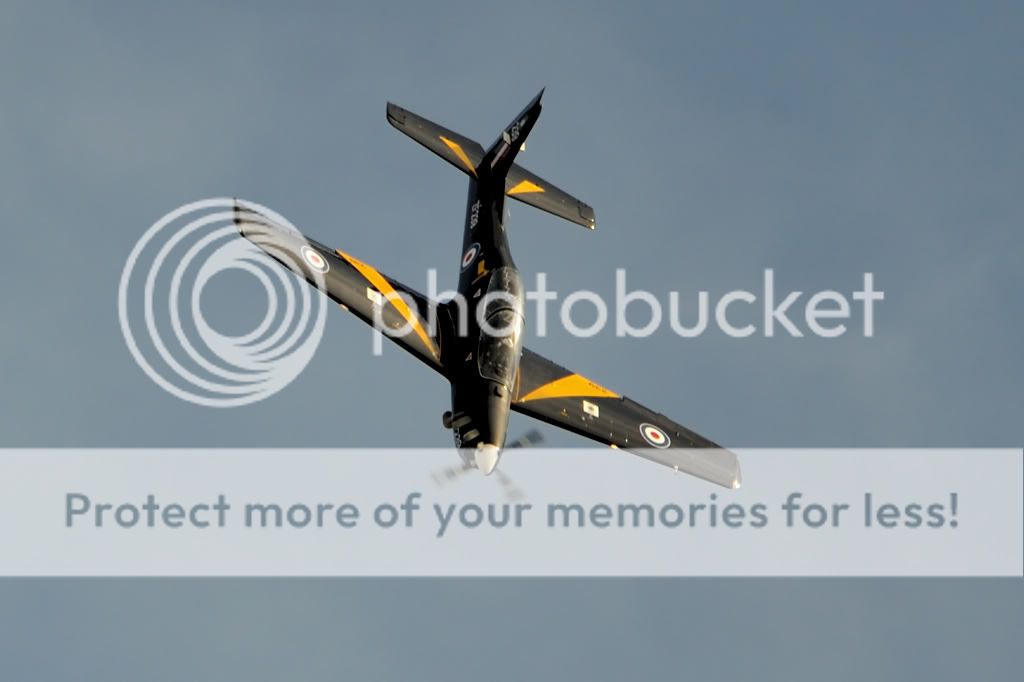
8. Formation
9. Stearman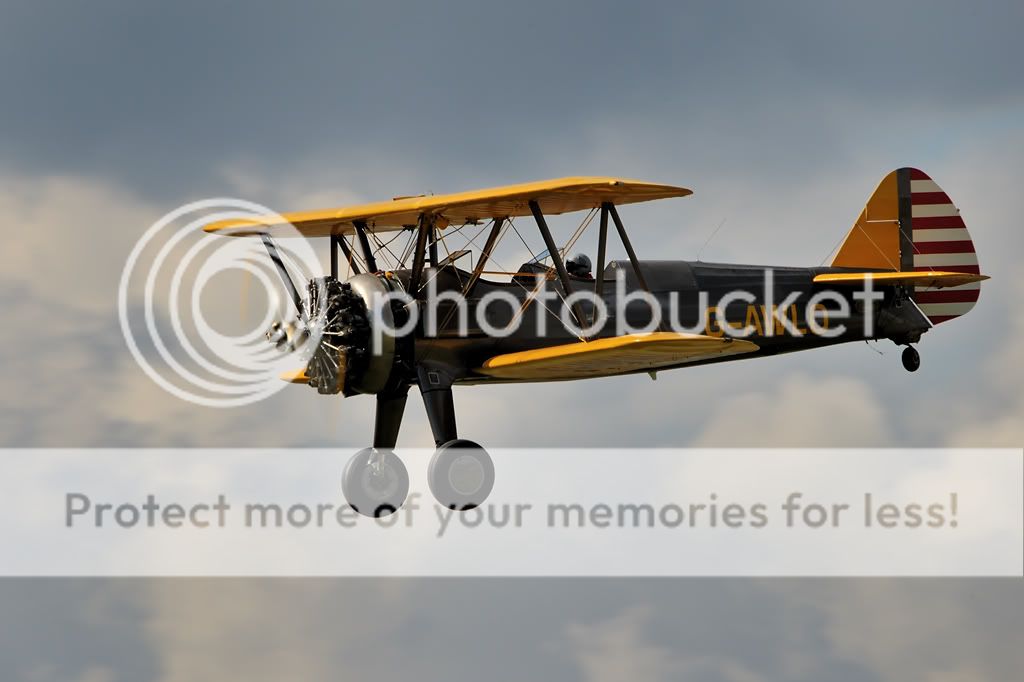
10. P51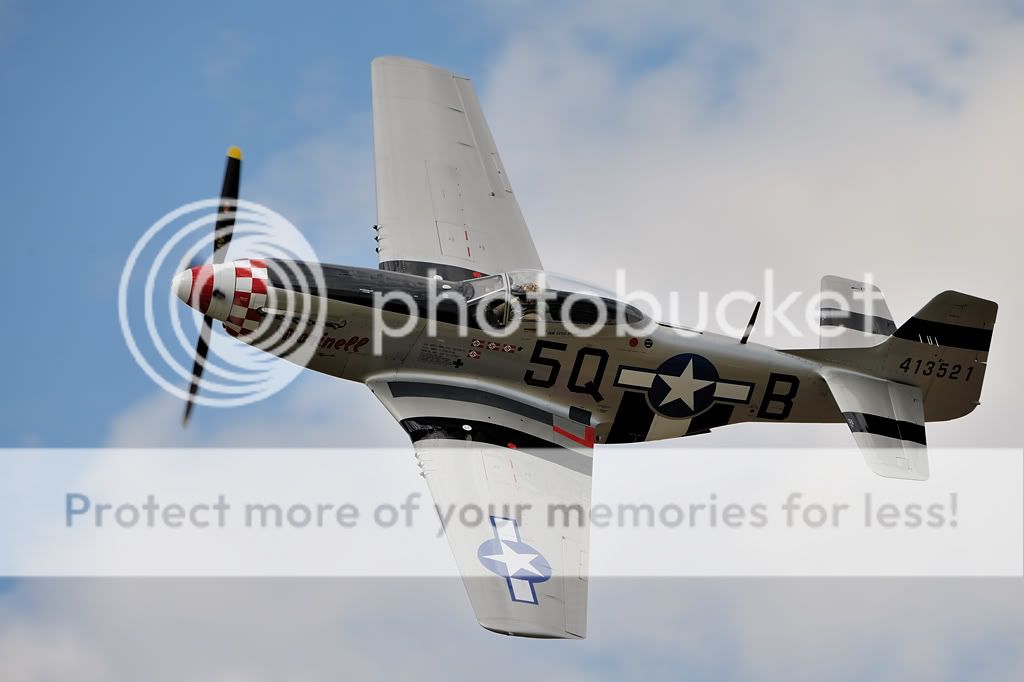
11. DC3 again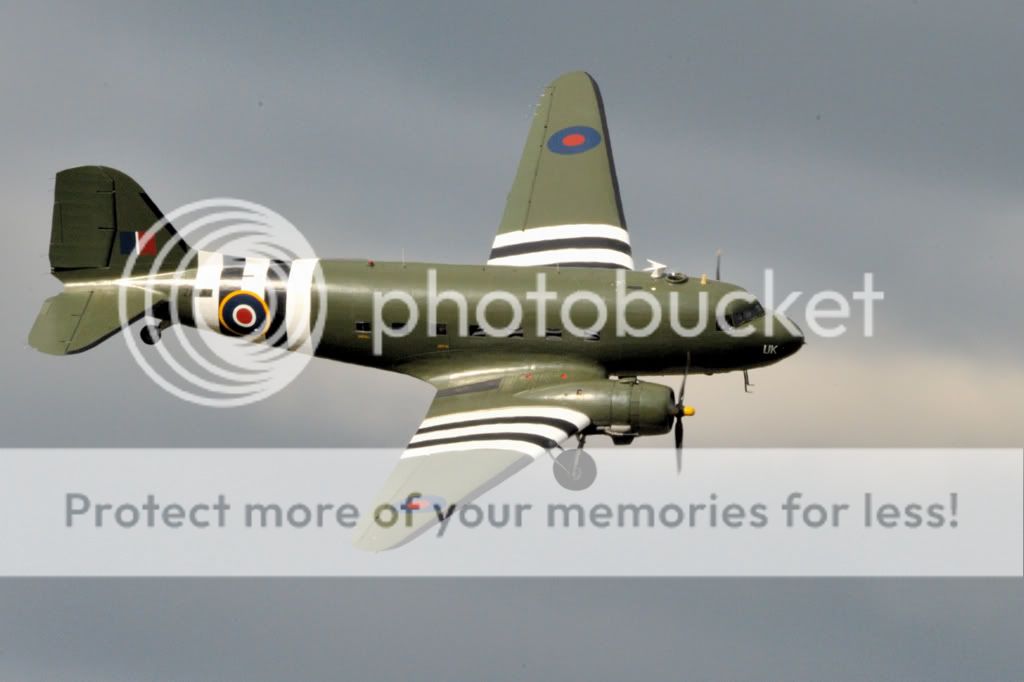
12. Vulcan again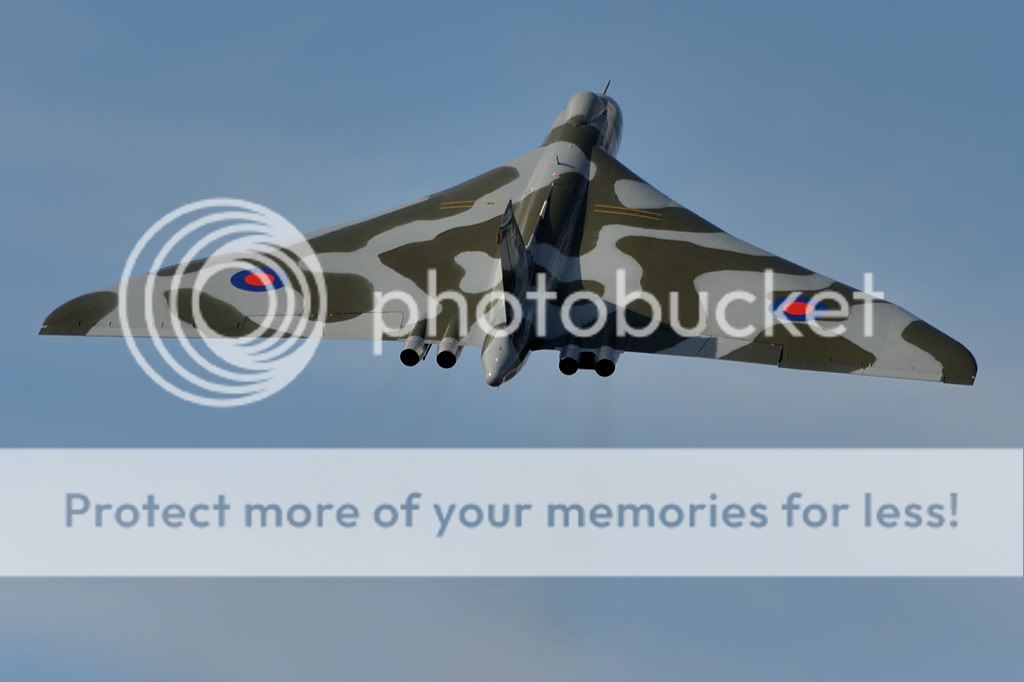
Steven
steven_whI have a Canon 500D with the standard 18-55mm lense and a Canon 70-300mm telephoto lense which came with it. What I need is some assistance with what lense I should purchase so I can take better close up shots of aircraft whilst situated in both museums and hangers when parked up close with others, without standing too far back to get the whole subject in without losing detail.
What’s wrong with your standard 18-55mm lens for close-up shots? This is about the right range for most aircraft museums and hangars. I use a 25-70 lens and that is fine for interiors at the likes of Duxford, Newark, Coventry, and the rest.
Steven


 Sign In







