 garryA
yes, what is the difference from what I have said?
The have put airplanes of the actual first line (F-22, Typhoon, Rafale and f-35) against those of precedent generation, not interested at all in making a direct confrontation between one air force against another but to explore how they can operate together in order to maximize their efficacy.
Rafale, Typhoon only join exercise very recently, previously it was F-35 against others legacy aircraft. Regardless, late F-15E is pretty comparable to Rafale and Typhoon IMHO. Cruising slower than Typhoon and probably less agility than both at low altitude but F-15E has very good radar and high altitudes maneuverability to balance it
garryAAlbeit F35 were helped by F-22 and AWACS. Are ou sure these kills were F-35? Not F-22? Still good.
Legacy aircraft have AWACs support too according to what pilots said in the recent exercrise. There was no F-22 in Mountain Home AFB practice AFAIK
garryAThe equation works now with the F-16 and can be regarded as benchmarked. Your objection confusing. The formula uses Cn (not Cl), the normal force coefficient. You surely know what that is at 90°? Sit as a passenger in a driving car and put you hand out of the window. The moment your hand palm faces flow direction you will experience the biggest force. For G load direction does not count, a strange missile at 90° to the flow will experience the biggest decelerating G loads possible.
I told you already, nose pointing is not the same as turning. You cannot consider G load from deceleration the same as G load from changing in direction.
So you get 50% lower results with your Iskander input and don’t want to talk about? Good, however in a discussion about max. G of Iskander my input is withing max. possible condition and hence applicable. But well if you want to apply favorable inputs to get ~6 G max. and call that low G capability, good.
Max possible condition depending on the dead mass and possible AoA. You think the deadmass of Iskander is 1254 kg. I think it is around 2307 kg.
You think the AoA is 15 degrees at Mach 6.5. I think it should be lower and vice versa. I can’t be bothered to argue about it with you due to the same reason that i am not really fond of talking about aerodynamic with you, it takes too much time to get a simple point across. Admittedly you did find the mistake in stealthflanker sheet by yourself (or with his help ..idk). But still. There are many things that you could easily double check before you argue with me. Such as nose pointing versus turning, the Kh-20, F-16 rear fin, the F-16 data that i put in the sheet ( since i already post that in previous page),the F-16 AoA, The SM-2 vs SM-6 design, Instantaneous versus sustainable turn … etc. It isn’t about being wrong (for example I wouldn’t really mind if you make a wrong calculation ) but rather the fact that most of your mistakes can be checked very easy by yourself. Before you wrote your argument and having me argue against.
The TVC system at the rear of the R-73 AAM gives it large G pulling ability. We don’t know enough about the capability of Iskanders gas system to dismiss it…
The side gas system is not the same as real TVC. For once TVC will provide thrust toward direction of travel. On the other hand,even if the gas system of Iskander belong to the main motor( TVC), there is still problem , you can’t expect a single stage ballistic missiles with solid propellant to have much fuel or any fuel at all for terminal stage. Because the burn rate of solid propellant can’t be changed. Unlike a jet engine ( or to a very lensser extend liquid fuel rocket ). In other words, while different design can have different burn rate, the burn rate for a specific design remain the same, always end after a certain time T. To get the Iskander out of atmostphere, reach speed of Mach 6, thrust will be very high with short burn time. Furthermore, missiles reached terminal velocity at burn out so while there could be some improvement in agility added from the TVC, there are reduction from the fact that missiles didn’t reach their terminal speed=> less lift to perform maneuver. One reason for TVC on short range AAM is that they can turn right after leaving the rail, before they reached required speed. On the otherhand,most long range AAM don’t use TVC as their motor would be burned out before they reach target most of the time.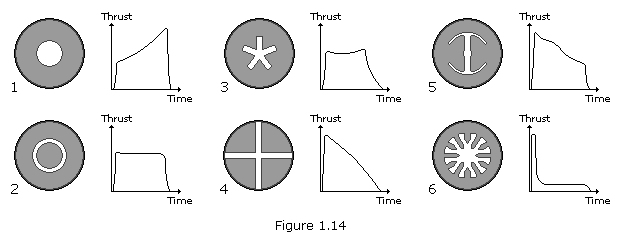
However 11G is quite good for your claim that:”For comparision, the flanker airframe ( with LERX, blended body, negative stability and what not) has CL of 1.2 at Mach 1 and AoA of 18 degrees
In short, the Iskander will need the lift coefficient around 70 times bigger than Su-27 for it to be able to pull 30G at Mach 6 and altitude of merely 24 km .”Now we have 11G (or 5,5 with your unknown input) instead of 30, but we are far away from a capability “70 times bigger than Su-27”. With that 70 times claim your probably should have expected 0,1G for the Iskander…
You still don’t seem to understand the purpose of lift equation
If you paid attention, you will noiticed that i didn’t calculate the CL of actual Iskander. I calculated the CL that it will need to perform specific maneuver that you proposed. And because the CL would be so ridiculously big, the conclusion is that such maneuver in such condition isn’t possible.
http://forum.keypublishing.com/showthread.php?142231-TPY-2-can-be-radar-OTH&p=2390546#post2390546
http://forum.keypublishing.com/showthread.php?142231-TPY-2-can-be-radar-OTH&p=2390934#post2390934
Furthermore i don’t think my input is that vague, Your input was 1245 kg ,mine was 2307 kg. Then there is also the fact that your calculation of wing area is 3 times bigger than mine (admittedly partly because i forgot and used only 1 fin). Since G and Cl related to mass and fin area, you can easily see where the different come from.
Moreover, your calculation based on CN not CL, so you will have to divide that total force into drag and lift components since they are not the same things. Otherwise you will reach the same conclusion that missiles are most manuverable when their body is at 90 degrees with the airflow. Or the conclusion that all deceleration is the same as changing in direction.
Anyway, coming back to my estimation, if i used your new value: 1234 kg instead of 2307 kg ,5 G instead of a 30 G, wing area of 0.32 m2 instead of 0.11 m2
Lift = CL* air density* 0.5*velocity^2 *wing area
1245*9.8*5 = CL * 0.046*0.5 * (297*6.5)^2 * 0.32
61,005 = CL* 27429.4706
CL = 2.22
As you can see, the required CL change significantly when you don’t have extreme value like 30G at 24 km
Change of direction maybe, but how about change of position at 2km per second? Whats really important is what a even faster ABM interceptor will need in G’s for the same direction change…
Not all anti ballistics missiles are faster, many of which are slower. Before you say how can you intercept something going faster than yourseft. Remember that ABM is like throwing a stone in front of the car running so the car will colide with it, the intercetor doesn’t actually chase their targets. Also , how do you come up with changing direction of 2 km per second ?
I have proven in this thread that the Iskander must loose something like 3,5 mach numbers until impact by either heating only or additional maneuvering, while you have never proven that the Iskander would loose most of its speed after one high G maneuver. 3,5 mach numbers excess speed sure sound like a good maneuvering margin available.
This F-16 lose 1200 Ps every second at 4G, Mach 1.85. AoA limit of F-16 is 15° so quite similar with AoA you used for Iskander. The Iskander move at 3.2 times faster than F-16 (Mach 6.5) and doesnot have any thrust to counter excess drag. How much speed do you think Iskander will lose consider that drag force raise with speed (proportional to square of velocity) and deceleration is proportional to resultant force ?.(which is why thrust is needed).
Moreover, it not just terminal speed that is important, cruising speed is quite important too. Whether you fly at last 15-20 km with Mach 6 or Mach 3 make quite a big different even if the terminal speed is Mach 3
I honestly don’t get your logic. You think Interceptor with very high T/W will depleted of their kinetic energy if their targets making maneuver as low as 1.5G , while at the same time you think that ballistic missiles with no thrust can continously make 11G maneuver without worry about significant decrease in kinematic energy.
One game are hard G’s one is a continuous position change to force course corrections to a ABM interceptor. Under the same input conditions, at 45km altitude, just 5km below midpoint apogee, the Iskander would still be able to do 0,6G continuous “bleeding” maneuvers.
whatever game you try to play, interceptors missles are the one with thrust hence sustain turn.
garryAAccording to this source http://www.blogbeforeflight.net/2017/04/uk-f-35-deployment-just-practice-not.html
The movement of eight F-35As to Lakenheath, England-the first overseas deployment of the Air Force’s newest fighter-isn’t meant to send any kind of political message, and the aircraft won’t be available for operational missions during their weeks-long stay in the UK, USAF officers reported during a telephone press conference on April 19.
The deployment, which was made over the weekend with little notice, had nevertheless been in the planning for months
…
During the deployment, the F-35s will first spend a week or so tangling with F-15Cs and Es from Lakenheath, which will be the first overseas F-35A base in a few years. They will practice both air-to-air and air-to-ground missions, 1v1 and 2v2 scenarios and “fighting our way in.and out” of simulated target areas, but will use no actual ordnance, live or inert. Further on, the F-35s will practice against British Typhoons, and possibly Dutch F-16s,
garryALet’s put the thing straight: in the exercise in question a mixed force of Typhoon, Rafale, F-22 and f-35 has beaten a mixed one made by legacy ones like F-15E and T-38 (there I’ll would call for Heritage, not just Legacy) with IADS support.
It seems that the F-35 have actually not performed any (simulated) killing, just passing info to the Typhoons via Datalink.
So, according to you the outcome is that even with the IADS support, USAF legacy forces is impotent against the mix soon to be fielded by their main European partners.
Seems I have to reconsider my judgement about my own country politicians there.
Not F-15 il you mean red flag. There were only F-16 agressors
AFAIK Previously, it was F-35 against F-15E in Mountain Home AFB https://theaviationist.com/2016/06/27/f-15e-strike-eagles-unable-to-shoot-down-the-f-35s-in-8-dogfights-during-simulated-deployment/
and F-35 was pitted against F-16 in Red flag
legacy aircraft have air defense support in both case.
garryAIts possible that they talk about different things e.g instantaneous turn and sustained turn
No, sustained turn is when excess power larger or equal zero, so the line is even lower
I don’t know why you made that graphics with missile at 90° to flow, complete nonsense. But its of course true that missile at 90° would create max. body Cn at 90°, but why this useless exercise?
It isn’t useless, the equation should work in all situation unless stated otherwise. The way the equation and their graph is presented, missiles will be able to generate more and more G as it approaching 90°, which is nonsense as lift should start reduce at 45°. I used extreme value only because it would be easy to see
I have found the error in stealthflankers spreadsheet. He has counted dynamic pressure as pascal or N/m² into the last part, the G calculation where he counted it (N) against kg. Hence the final values are wrong by the factor of 9,81, (too high).
Good to know, but that still doesnot answer the main problem: “equation shows missiles to have better maximum G when AoA approaching 90°”
So let me turn back to your initial claim for too high Cl @ 24km altitude.
Here are the corrected max. G results for Iskander @24km altitude:
2,12G for the fins @22° AoA (twice higher results can be reached for higher AoA)
8,9G for missile body at 15° AoA consistent with a shallow dive of a terminal stage at a depressed trajectoryTOTAL: 11G (This number is for evasive maneuvering for an endo-atmospheric interceptor, without the use of the gas system)
There are a few things:
a/ Our dead mass and AoA for missiles are very different. You have your reason, i have mine, and i can’t really be bothered to argue about that now. But the different even if only around 50% is rather big
b/ In atmostphere the off center gas system won’t add much for any other purpose rather for nose pointing. Same case on all missiles. So it doesn’t really belong to the discussion
c/ 11g at 24 km is very different from 30 g at 50 km or 92 g at 28 km that you proposed earlier. Moreover i havenot done the calculation, but 11g at Mach 6.5 seem like missiles change direction very slightly
The question if the interceptor is faster than the mach 6,5 Iskander-M and how much faster it is for successful interception. The faster it is the higher G it must pull for a high PK, to match the turn performance of a target that need less G load for the same turn performance. How much that is is disputed sources vary from higher G by factor 3 to 5, however I think that the higher speed compensates a low turn performance, 0,5 to 1 as additional factor might thus be enough for a high interception PK.
It really depend on how many interceptors you launched and at what point does Iskander started its maneuver. But generally without thrust ( or with much lower T/W ),very high G maneuver is not exactly the game to play. Since you will lose most of your speed after the first turn.
garryAWell they move, I was wrong about that old relikt. Your spreadsheet input is right and it can theoretically pull 25G at that speed and altitude if the airframe would be able to endure it. Absolutely no hint that anything is wrong with that formula.
According to sheet values:
A missiles with Mig-19 like configuration will generate enough lift to pull 25g at 50.000 feet
The F-16 generate enough lift to pull more than 28g at 50.000 feet. (7 times bigger than real value)
Missiles generated the most lift to pull high G when their body is at 90 degrees with the airflow
Yet, you see nothing wrong with it ? are you even serious ?
But I wonder how your friend calculated the F-16 with its conventional wings?
Try to calculate a F-16 with that spreadsheet like your friend did, want to se how you want to do it.
It was me who input the data for F-16, there was even a photo of F-16 dimension and the spread sheet there if you wish to in put data by yourself.
Weight: 22000 pounds = 9,979 kg
Length: 15.06 meters
Body angle of attack: 5 degrees
Main wing area: 27.87 square meters ( can be checked by google, take less than 10 seconds )
Angle of deflection for main wing: 0 degrees
aspect ratio for main wing : 3.09
Rear fin area: 2.97 square meters
aspect ratio for rear fin: 4
Angle of deflection for rear fin: 12 degrees
Air density: 0.1974 kg/m3
Speed: Mach 1.85
I didn’t even take into account added benefit of slat and flap yet the chart told me F-16 can generate over 28g at 50.000 feet
And tell me how F-16 provide any less lift than Kh-20 wing ?

You have some logic problems here… A G load of 28 wont be reached by the F-16 ever, because the air frame would disintegrate first. Similarly the pilot will pass out at 12G before structural limit of lets say 15 is reached.
So what are you talking about???
Nope. According to the sheet, F-16 even at 50K feet can generate enough lift to pull more than 28G with only 5 degrees AoA.We know that F-16 structure limit is 9G, pilots limit is 9G too.The available lift far excess the aircraft structure and pilots limit .That would mean nothing will stop the F-16 from pulling 9g at 50k feet. The AoA i used is only 5 degrees as opposed to 15 – 25 degrees limit in manual so you can’t babbling about AoA limit either. So tell me then, why does flight manual shows that F-16 can only pull 4g at 50K feet ? or let me repeat my previous question :what caused the reduction of maximum G load from more than 9g at sea level to 4g at 50K feet if not lift ?
Yes. If the FCS allows it to fly past 25km altitude it will fly past, SM-2 (SM-3 anyway) and PAC-2 have the necessary kinematic power. However due to decreased PK due to low aerodynamic maneuverability this might be outside their operation regime, at least all sources talking about their max. altitude tell that. You are welcome to calculate their maneuverability at 28km, why not, it’s possible that they have such a special operation mode hidden somewhere or that all sources are disinformation by the defense agency.
So why wouldn’t the FCS let the missiles fly past that ?
kinematic clearly wasn’t the problem as all standard missiles can easily reach that altitude ( SM-3 used the same MK-104 motor and MK-72 booster can even reach 500 km altitude )
According to your own calculation even the Iskander with its tiny fin and tube body can generate enough lift to pull 94g at 28km with the only limiting factor being airframe structure G limit. Airframe g limit doesnot change with altitude .So how is there any decrease in aerodynamic maneuverability at all for SM-2, SM-6 ? They will both be able to reach their maximum G limit at 28km just like they do at sea level since the lift generated will be far bigger than airframe limit
Good god… First present a adequate F-16 input for that spreadsheet. Logically the reason is the thin air which cause stall at high AoA and likely also stability problems with nose pointing/flight safety.
.
BS.
F-16 max AoA limit is 15 degrees at 9G and 25 degrees at 1G. I used 5 degrees to put in the sheet, that is not any where remotely close to the AoA limit. There will be no stall at 5 degrees AoA. Nevermind that it will be much harder for an F-16 with Lerx , flap , slat to stall.
Furthermore i present adequate F-16 input since previous page, unlike you trying to hide your inputs so no one can double check
Why have I always to go so off-topic in discussions with you? Now we are talking about the F-16..
You are the one who brought up Iskander, also the one who brought up AIM-54 and ICBM, also the one who can’t distingush between nose pointing and turning, you are not really in the position to criticize me about whether iam off topic or not.
Moreover my question is completely justifiable. You said result from the sheet make sense. Then how come it gives F-16 available lift 7 times higher than what indicated in flight manual ?. Your excuse that their formular is inaccurate for aircraft like configuration doesnot works as they give an example of Storm shadow and AGM-86 both have very similar if not the same configuration as aircraft. Your second excuse that aircraft can’t move their rear stabilizor doesnot work either since they clearly do.
garryALook garry, you have grave understanding problems here and I bet your or your friend did the same nonsense for the F-16:
What you put into the spreadsheet for Kh-20 is simply wrong! You assumed that the complete rear wing/stabilizer deflects… Thats not the case, its a conventional wing surface with flaps. This calculation model does not work in this case. Even if you would just calculate the flaps, you would have to skip the wings.Hence if the Kh-20 would deflect the whole rear stabilizer (like the T-50/J-20 deflect the whole vertical one) it might be able to pull those numbers. But this is nonsense as this model is completely unsuited for such a aircraft-like case. However you can try it with the Tomahawk, that would be a representative case.
Are you sure that the whole rear fin can’t be deflected ? 100% positive that they are fixed ?
Mind telling me what are in those photos ?
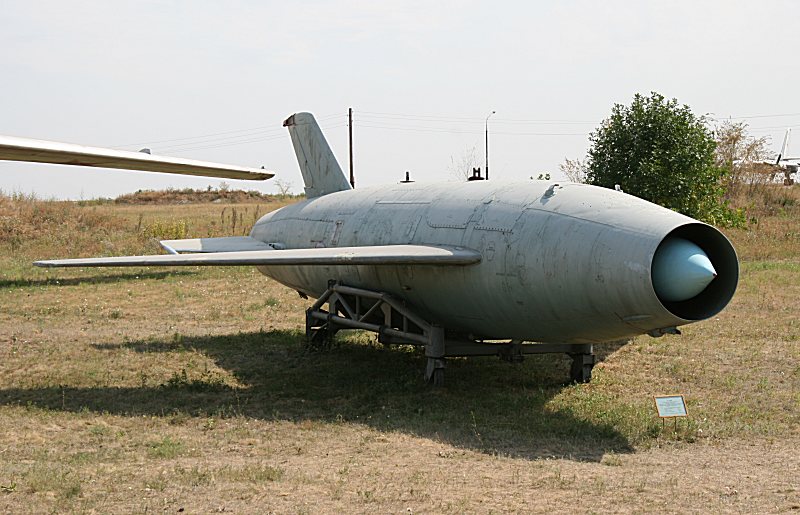
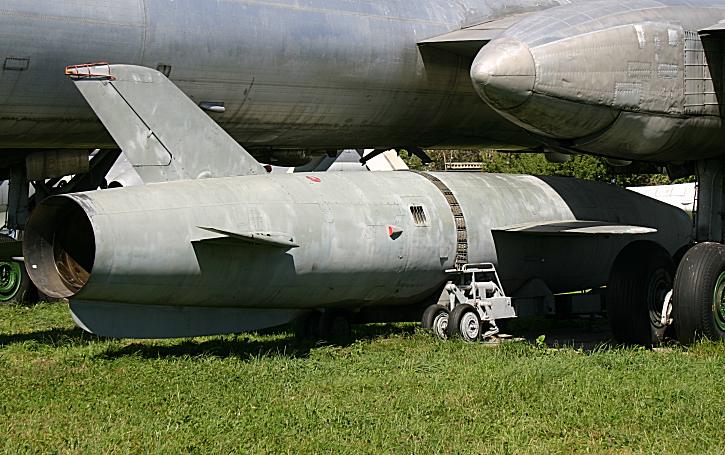
Not only that their whole rear fin can be deflected, they also have flap in the main wing.
The deflection angle i put for the main wing is 0 degrees so don’t even try to bring it in
Before you babbling about how all 4 surface need to deflect, their own example is of an AGM-65 where only 2 fins deflect and the rest are stationary
Furthermore if the model is completely unsuitable for aircraft like configuration then how come they gave Storm shadow and AGM-86 as example ?

Ok next try and this one might open your eyes: The most important limitator is the pilot, so even if airframe could do 15Gs, the human can just do 9 for limited period. So what G’s a manned airframe can do via its aerodynamic design comes at the 3 place after the two other limits…
Nice try but as usual, wrong. Flight manual indicates machines performer, not pilot limitation. If pilot is the limit factor then how come the manual show that F-16 can pull 9G at sea level?. So far it wasn’t airframe G limit. It wasn’t AoA limit.It sure as hell wasn’t pilot limit.But your sheet clearly shown that F-16 can some how generate enough lift to pull more than 28G with little more than 5 degrees AoA, not even one third of its AoA limit. You said the values make sense, so explain it then :what caused the reduction from more than 9G at sea level to 4G at 50k feet if not lift ?
So no one can know the max. altitude of those systems because they are classified and wiki numbers are wrong. The vlaue of 15km for PAC-3 is wrong too and the PAC-3MSE somehow improved that to 28km (i.e twice)?
Look I have no problems if you state that those wiki numbers are for disinformation, but also other endo-atmospheric systems around the world do not go beyond 28km (e.g S-300PMU-2 with TVC). So what kind of discussion do you want here?
The only system with altitude above that (via wiki) are the SM-6 and the Buk-M3 (TVC), both have 34km. So we could do a calculation for the SM-6 yes but not for those missiles I stated.
Point is, in reality, the agility of missiles, aircraft are not high above 30 km. That why it is often regarded as altitude limit. However, if we take your calculation as correct (in other words maneuverability was never a problem) then SM-2 , SM-6 can both easily intercept target above 30 km as both of them will easily reach that altitude and more. SM-3 used the same MK72 booster and MK-107 dual thrust rocket motor as SM-2 and SM-6, added a small third stage, yet it reached altitude more than 500 km.
There is no information for PAC-3MSE altitude either, so no reason to exclude it
As said there is a structural strength limit of the airframe. We don’t talk about 94G for the Iskander or 28G for the F-16, both are beyond airframe limits.
The Iskander might do 30G maneuvering at maximum and the THAAD KV might be able to survive 50G max.
However I doubt you get that.
No problem, let talk about airframe limit then, why flight manual indicates that F-16 can’t pull 9G at 50K feet while at the same time shows that it can pull 9G at sea level ?
garryAGood luck with applying specialized formulas for completely different problems… I take what “Tactical missile design,”s author tells over your models any day.
Too bad when your models given result 7 bigger than it actually is, and completely different in what way? do you think aircraft aren’t affected aerodynamic force or missiles with aircraft like airframe such as Tomahawk, Kh-20 ,AGM-129 does not exist?.
If F-16 is so complex why don’t you put the numbers for Kh-20 in and check the result? Unlike you, i only used 5 degrees AoA and 12 degrees tail deflection, both are extremely small value.

Good and I hope you have now understood that airframe G’s and aerodynamic G’s are not the same.Good and I hope you have now understood that airframe G’s and aerodynamic G’s are not the same.
Nice try but F-16 airframe can sustain over 9G, wrong excuse. Try again . With your calculation an F-16 will be able to pull 9G at all altitude with the only limiting factors be the airframe G limit. Flight manual data shown that clearly not the case
dia 0,914
lenght 7,28
weight 1254kg
missile AoA 10°
control surface deflection 63°
control surface area 0,16m² *2
control surface aspect ratio 0,66
speed mach 6,5
So you pumped up the speed and wing area while reduced the dead weight, no wonder why you wouldn’t want to show people your values, but whatever.
Didn’t talk about SM-6. For the others, check Wiki für max. altitude
Since when Wiki is considered a reliable source?
SM-6 is SM-2 with active seeker while retain all the control surface and motors, how exactly does it have different operating celling ?
not even LM products card has celling and max range values for PAC-3MSE, yet you somehow think such information will be available on wiki ?
It’s not about speed, at around 32km the Iskander would reach its airframe load limit with 30G. How intercept a 30G target with reasonable PK? With luck the interceptors airframe might survive 50G.
High speed is what help you generate lift, so it always matter for a missile.
And Iskander pulling 30G at 32 km ( actually 94G according to your own previous calculation) ? in the same way that F-16 will pull 28G at 50.000 feet as well ? So accurate.
garryAOnly useful in it’s context. The book Tactical missile design provides a much better quantifiable and more accurate calculation model.
It gives 28.4G for F-16 at 50.000 feet, as opposed to real life value of 4G. So accurate.Mind blow
The calculation model is only accurately applicable for missiles. There is no mean to calculate a complex geometry like the F-16. Only a tube body with fins.
You and your friends have problems to judge context and if models are applicable
So F-16 will be able to pull 28.4G at 50K feet, Mach 2 if it was a tube body with fin ?. Or the complex body lift design reduced F-16 ability to generate lift by over 7 times ? Which one is that ?
If the F-16 has a good FBW system it will limit the AoA to avoid catastrophic overload… totally off-topic again
In CAT I configuration F-16 maximum AoA limits is 25 degrees at 1G and 15 degrees at 9G. 5 degrees AoA is far from the AoA limit. Wrong excuse, try different one.
By best practice advise: take something between 0,5-0,3 * total mass. Fin area? Get some good photos and compare it with the length or diameter
Yet, you gave no values of your own so others can dobble check.
Do it yourself… The fire control system will not let missiles operate above their max. altitude (25km), they might selfdistruct.
Where do you find the information that PAC-3MSE, SM-6, SM-2 will self destruct once they fly above 25 km ? Care to cite ?
The book Tactical missile design assumes that the interceptor must have a G capability of 3 times that of the target to perform a high PK interception
Have that take into account the fact that interceptors can still retain their speed due to thrust while their targets will lose all speed ?
You don’t understand control surface deflection angle/AoA
Do I not ?or you don’t want to explain in case you got it wrong ?
garryAYou thought you were smart enough to start the numbers game. However, your simplifications were so much that they had no representation of the reality
No representation of reality yet even NASA used the equation ?
The spreadsheet of stealthflanker on the other hand used a book in which a smart guy defined the necessary model and it’s results make sense
I think you have no kind of engineering approach but want to talk about it. The AIM-120 airframe is not capable to do very high G’s, its systems will fail and it’s structure disintegrate. It might be designed to do overloads from 30-50Gs, that’s it. The airframe is thus the limiting factor not the aerodynamic capability to pull G’s. Stealthflankers spreadsheet is not failproof but as it uses the equations of a good book, I at least have not found any errors beyond that with the wing/fin area.
According to you the reason for AIM-120 not able to make those turn is that its structure is not strong enough. Fine then. How about you put values of an F-16 in the spread sheet ?
From the sheet, F-16 at 50.000 feet , mach 1.85 will be able to make a turn over 28 G with AoA of merely 5 degrees, yet in reality this is what it can do
So tell me then, what is the limiting factors here ? F-16 airframe was designed to sustain over 9G, its max controlable AoA is also far higher than 5 degrees. Let see what excuse you come up this time ?
People can put their values into the spreadsheet and get an idea, the results will be similar
And how do they know the values for dead mass and fin area that you used ?
You are wrong because you quite confidently presented a useless model to quantify the case
Oh, so now the lift equation is wrong ?
They are not cleared for those altitudes? Why should I do a theoretical training?
Are they not or you don’t want to do the calculation because it will result in much higher G values ?
As for the stall thing…. just ignore it, I have no fun to try to explain such basics
You have no fun explain it or you don’t understand what it mean ?. Given how you keep talking about it clearly indicate the later one
garryANote that my fin AoA values work for the equation of the book and spreadsheed but they would be in stall region. I assumed that at hyper velocity, newtonian impact theory is the strongest factor for Cn and hence enable post-stall operation.
Do you understand the meaning of “stall” ?
Rocket obvious has the highest CN when it is perpendicular to the airflow. So that mean, if we used your theory, missiles can turn highest G value when its airframe is at 90 degrees to the airflow ?
garryAInstead of arguing about your proposed model
Lift equation, and reference area are not my proposed model.It never was, it is official model used to measure CL. Iam not the first nor the last person ever used the equation
use stealthflankers spreadsheet which is based on a book and looks correct as far as I checked.
Do you really checked and understood it ? or do you only use it because it sound like it support your theory ?
@ 45km, the range in which it starts to come withing the slant range of the THAAD (with a assumed apogee of 50km), we get the following result for Gs pulled:
1,14G for the fins @63° AoA considering newtonian impact theory (now I know the name for what I described).
2,2G for missile body at 10° AoA consistent with a shallow dive of a depressed trajectory
TOTAL: 3,4G (This number is for a contentious maneuvering in order to reduce the kinematic power of the THAAD)
So not only the amount of G Iskander is about 10 times smaller than your proposed values, you also intentionally forget that THAAD will have thrust to maintain speed. How exactly does this supposed to “prove” that iam wrong ?
@ 37km, the range in which the THAAD KV (if modified to operate at this altitude) could reach the Iskander (still outside the envelope of PAC-2, PAC-3, SM-2), we get the following result for Gs pulled:
3,3G for the fins @63° AoA considering newtonian impact theory.
13,1G for missile body at 15° AoA consistent with a shallow dive of a later stage depressed trajectory
TOTAL: 16,5G (This number is for evasive maneuvering for an exo-atmospheric interceptor)@ 28km, the range in which large endo-atmospheric interceptors become feasable (PAC-2, PAC-3SME if somehow possible, SM-2), we get the following result for Gs pulled:
12,35G for the fins @63° AoA considering newtonian impact theory.
81,8G for missile body at 20° AoA consistent with a shallow dive of a terminal stage depressed trajectory
TOTAL: 94,2G (This number is for evasive maneuvering for an endo-atmospheric interceptor, it already exceeds the air frame structural capability by the factor of at least 3)
How exactly do you want people to double check your calculation if you don’t tell them what exact value you used for wing area, mass, speed and air density ???
Instead of trying to omitted PAC-2, PAC-3MSE and SM-2 , SM-6 from the calculation saying it is out of their evelope, why don’t you tried to put their number in and estimate how many G they could turn according to that spread sheet ? You said you checked it to be correct, yet another member came up with this
I put air density of 0.12 kg/m3 (59k feet) and missiles speed of mach 4 into the file , and it show Aim-120 can turn 78g , and able to deal with target making 16g turn ,
then I change the air density to 1.225 kg/m2 ( sea level ) and missiles speed to mach 2 into the file and it show aim-120 can turn 303g and intercept target making 61g turn
how did any aircraft evade AIM-120 if that was the case ?
garryAYour novel method will make complex geometric area measurements and experimental testing obsolete… fin area –> necessary lift = total airframe Cl… amazing
I know you are being sacastic, but i never said my methods can replace complex experiments and testing, the reason is that for a new airframe, without testing, you will not know how much lift it can generate (or in other words how many G it can pull) . Thus you have nothing to put in lift equation to find CL (lift coefficients).
On the otherhand, here, you have the Iskander with alleged 30G at 50 km, Mach 5. If you have those value, you can easily calculate the lift required to make the turn at that condition because F=ma. From that you can calculate the CL required to make the lift.
If you paid attention, you will noiticed that i didn’t calculate the CL of actual Iskander. I calculated the CL that it will need to perform specific maneuver that you proposed. And because the CL would be so ridiculously big, the conclusion is that such maneuver in such condition isn’t possible.
Take 4 fins for the Iskander, X-tail =/= +-tail
lead us to some fin Cl
It is the same thing since force at 45 degrees surface will be divided into horizontal and vertical components ( the same ways you can calculate force when banking).Nevertheless, it more about using same form of reference area actually. Technically you can even use wetted area to compare CL, but then both has to be wetted area. As a general rule of thumb, they go with wing area as reference area because it is the most simple to calculate
Btw ,it isn’t fin CL but airframe CL since calculation based on total lift required to turn 30G
garryAAha, so the Cl for the Su-27 is like that of the F-16 based on the wing area only? Not a experimentally gained value that can be confidently written in a manual? We might should do the test and calculate Cl via wings only and compare it with the manual value.
Where did i said the CL is only for the wing ?
I explicitly said that
CL of Su-27 airframe will include both its body lift and wing efficiency. Similarly, CL of Iskander airframe will include both its body lift and fin efficiency
and
Body lift, negative stability, high lift device..etc are included in lift coefficients. That why they are there. In other words, the fin area is a references, and how good the combination of fin and body generated lift is represented by the lift coefficient.
what parts of that is so hard to understand ? you free to do the test to compare it with the F-16 manual charts i posted above. But remember 
and FYI neither F-16 or Su-27 CL was for their wing only, it was for their whole airframe with wing area as reference area, the CL (lift coefficient) of NACA 64-206 airfoil on F-16 is the one below:
An equation result is only as good as it’s inputs. Your input for the Iskander are its fins and hence you only get the Cl value for the fins.
This is pure logic, you cant get anything about the airframe/body lift with that equation, no input about it, just impossible
Sigh…………….
Let put it like this
Imagine you are an aerodynamic engineer, when you have a totally new airframe, you want to know how much lift it can create in a certain condition ( or in other words, how many G it can pull).
Then you have to do actual experiment like wind tunnel or what not..etc.
From the lift value (actual force) that you measured in experiments, you can put it in the lift equation to measure the Lift coefficient (CL).
This CL values can be understood as how efficient your aircraft/missiles is at generating lift.Either with very efficient air foil or very efficient body lift or both.
After you got many value for the total lift force at different AoA, you will also get many value for the CL for different AoA. As a result from that you got the CL-AoA curve.
With the CL-AoA curves, anyone that go after you, can easily calculate how much lift your missiles or aircraft can generate for any given AoA represent on the curve. AoA is limited by speed of course
The only thing they have to do is, to take the reference wing area and multiply it with the given CL.
The whole purpose of the CL value and lift equation are to make it easier for engineers to calculate lift of various vehicles or same aircraft in various situation.
On the otherhand, if you already know how much lift is generated in a given condition, you know the reference wing area. You will be able to calculate CL. In the Iskander case, you know how many G it have to make, you know the reference fin area, hence, you will be able to calculate the required CL value for it to make the turn.
In other words, because
Lift = CL* air density*0.5 V^2 * reference wing area
If you know how much lift generated, you will be able to calculate CL values required
If you know the CL values then you will be able to calculate lift.
In short, to create a high amount of lift you either need very big wing area or extremely efficient wing (very thick, low sweep, slat.. etc) + high body lift (lerx, flat body.. etc)}. For example: there are 2 aircraft, the first has wing area of X square meter, the second has wing area of 2X square meter, however the first has CL of 2 while the second has CL of 1. They will ended up generate the same amount of lift.
Without the lift equation, and the same point of reference (wing area) , you will have to test every situation possible. Imagine, you tested the original aircraft and the data shown that at 100% fuel it can pull 9G at 10k feet. Let say, if the aircraft is at 15k feet and 27% fuel, how many G it can pull ? Do you as an engineer decided to make another test for that exact data point ?
I neglected body lift in our discussion because I knew your Iskander Cl value is just for the fins. For our discussion it would have been sufficient to just compare the Cl value of the fins, the pivot force, the force that creates the moment. No need to extend it into body lift and comparison with Su-27..
The discussion was never about the pivot force in the first place. Why do you think i have to repeatedly elaborate how a turn is made ?
Body lift, wing effeciency are all parts of lift coefficient, they are not extended parts
I appreciated your effort to contribute to the discussion. Now that I understand the lift equation, got interested and rechecked your calculation. I discovered that you took just one fin out of four for the Iskander.
My own calculation shows a Cl for Iskander fins at 30G at 24km a Cl value of 6,4. This value is 13 times lower than what you calculated.
Of course I won’t compare that Iskander Cl of 6,4 to the Cl of Su-27 because its a experimental value with body lift included and conventional outside stall region.
Actually, yes i forgot and only took 1 reference fin, but you should only took 2 fins as reference not 4 fin. The lift due to + and X configuration will be the same due to force distribution. I only take 4 fin in AIM-54 calculation because it actually has 8 fin in total). At least, you finally say something right
Nevertheless, even 6.4 is considerably bigger than CL of even air to air missiles
Btw, do you know what “stall” mean?
P/S: how is your calculation get value 13 times smaller if area is only 4 times bigger? mind writing it down?


 Sign In







