 garryA
You forgot that the motorized missile, when it falling the engine still working, it pushed the speed + the gravitational force of the earth, making the missile faster
If the motor still working all the way down to sea level then yes, but motors of ballistic missiles are generally empty when they falling down. Rocket are unlike ramjet, tuborjet or tuborfan, they burned through their fuel very quick.
The mess started with your post 67:Is the statement in bold is correct?
No. And there can be no other answer.
My statement is correct actually, CL is not only an airfoil quality in the case of specific airfoil but also an airframe qualiity in case of specific airframe. CL of Su-27 airframe will include both its body lift and wing efficiency. Similarly, CL of Iskander airframe will include both its body lift and fin efficiency. The fin/ wing area is a reference area in equation (regardless whether you calculate lift for specific airfoil or specific airframe, this is the base reference).
For example: this is CL of F-16 and YF-16 with their wing area as reference area (obviously if you use non SI unit for wing area then velocity and altitude have to be non SI too)
http://www.f-16.net/forum/viewtopic.php?f=55&t=52510&start=45
garryAYou thought you only need to consider the fin area in you Iskander Cl calculation because its body lift is negligible?
Now for dozens of posts I talk about the fins only, because your calculation is for that only and first now I have to hear from you that you considered bodylift negligible?

…………………………………..no
I never said i don’t consider body lift
This is why it is so frustrating talking to you, i literally said in the first line of #97 that
Body lift, negative stability, high lift device..etc are included in lift coefficients. That why they are there. In other words, the fin area is a references, and how good the combination of fin and body generated lift is represented by the lift coefficient
In other words instead of having different equation every time you calculate for different aircraft , airfoil, missiles. The lift equation was invented so you can have similar references factors which is the fin/wing area. The CL represent how effective the whole airframe generate lift.Which include body lift, airfoil thickness , negative stability …etc. Do you think the CL graph for Saparrow is only for the fin ? or do you think the CL chart for Su-27 is only for the wing ?
Don’t know why i even bothered when you keep twisting my words……
garryAI don;t think so ! suppose you let a rock fall from the top of a really tall building. It’s speed will change as follows:
after 1 sec – 9.81 m/s
after 2 secs – 19.62 m/s
after 3 secs – 29.43 m/s
Iam talking about acceleration rate, you are talking about speed. Those are different quantity. Iam too lazy to type down now but you can check out this video
I used this formular
garryA@garryA
falling missile remain at 1 g (g = 9.8 m/s2) and speed constant? is right ? Or vary according to its corner fall, altitude and max speed?
For example, the DF-21D missile has a cruising speed of Mach 10 at a height of 100km, a length of 14 meters and a diameter of 1 m, range 1500km, with a weight of 14 tons. So when it falls it can reach speeds on more than Mach 10? And force g will change!
Do we consider the resistance of the air and the weight of the warhead ?
Object reached terminal velocity when resutant force equal zero. In other words, when thrust – drag = 0. A ballistic missiles doesn’t have thrust but it is accelerated by the force of gravity acting on it. Since F = ma , the maximum acceleration due to gravity will be 9.8 m/s2 (a free fall). However, this will only happen in space. In atmosphere, there is drag, the faster you go the more drag you got.This drag will keep increasing more and more as you go faster, up until a point where drag equal gravity. So to answer your question, missiles doesnot accelerate at constant g = 9.8 m/s2 when they falling down. The acceleration will get smaller as time go on. The missiles will even decelerate.
garryAI did and I checked your calculations with the lift formula where you estimated the Iskander fin area and used that in the lift equation. Something does not add up if you used just the fin area of the Iskander, compared it to the whole lift of the Su-27 and dismissed the Iskander tube body lift in the calculation? Is there anything else than the velocity, altitude and fin area of the Iskander in your lift calculation that I missed?
Body lift, negative stability, high lift device..etc are included in lift coefficients. That why they are there. In other words, the fin area is a references, and how good the combination of fin and body generated lift is represented by the lift coefficient.
The bigger your wing area relative to mass , the smaller CL value you will need to perform a certain maneuver and vice versa. When i said the Iskander fin is too small, i mean that it will need very big CL to compensate, which i find highly unlikely with its tube body configuration. Most missiles don’t have CL very high, even air to air missiles
Your calculation was for that pivot force you talk about and I’m sticking to that. Your whole argumentation stated with your calculations where you only considered the fins. Your goal was to prove that they are too small to created a strong enough pivot force to turn the airframe into a AoA which then would lead to a change of direction with G loads…
No, i never once said i was calculating pivot force
in #63 the first post where i talked about G-load , i explicitly stated that
The location of the gas system relative to the CoG only matter as a pivot for nose pointing, but irrelevance to how many G the turn make.The acceleration of the turn itself have to obey F= ma equation.
See turn acceleration and force? i even go as far as saying pivot for nose pointing is irrelevance of how many G the aircraft can make
then in #72 , i explicitly stated the following
You mistaken between nose pointing and turning again. Drag caused by the air flow and it is always opposite direction of travel. An aircraft turning 45 degrees will not expose its body to the air flow by 45 degrees, it will only expose its body as high as the angle of attack it used to generate lift for the turn.
Firstly, lift equation can be applied to the whole aircraft not only the air foil ……Btw, nose pointing is not the same as turning
Then in #74 , i posted the photo below and the description of how a turn is made, carefully stated that there are 2 parts for a turn
let say you want to change direction that missiles is traveling. That bring us to the second picture below it. To change direction of an aircraft or missiles, or anything, you need to apply a force on it. So how do you apply this force ?.
The first step changing the AoA of the fins ( stabilizer in case of aircraft).When the AoA of the fin changed there will be a force acted on it due to air flow.This may be slightly confusing but if you pointed the fin up then there will be a down force on the fin and vice versa. This force will change the nose position of the missiles or aircraft. Then it is simple, very much like a pivots, down force on the tail fin will pull missiles nose up and up force on the tail fin will pull missiles nose down. You can see how it behave in following photo:
….
The problem here is you mistakenly think that the turn (chaging direction) is done once the nose of aircraft or missile is turned toward desired direction. But that is wrong. Changing nose direction without turning will look somewhat like this.If you think carefully about it, pointing the nose toward a certain direction mean the airflow has to applied an opposite force on the tail of the missiles, hence move it to opposite direction.So how it is possible that missiles moving toward something and still has their nose toward the same target?. Here is the stuff you missing. Which is step 2, look at the photo again.In the example, once the missiles nose pull up, its whole body will be at a certain AoA with the air flow. Thus, the air flow will then applied a force on the whole missiles, with much higher force than if missiles fly straight with zero AoA.This force can be thought of as 2 components :the first one is called lift, which is what make missiles changes direction toward the desired target, the second component is drag which is what slowed the missiles, aircraft down. When you keep increasing AoA of missiles the lift will keep increase up until a certain point, where it start to decrease and drag will increase. In other words, extreme AoA will not help missiles turn quicker but rather slow it down quicker
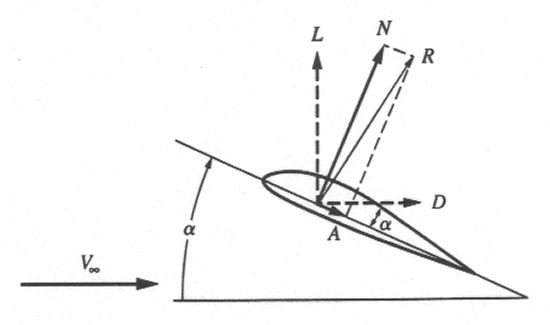
When i talked about lift and AoA, i mean the force that actually help missiles change direction not the one that slow it down, that why you can’t add CL and CN together. CN is practically the combined resultant coefficient of Cl (lift ) and Cd ( drag )
Then in #80 where i get annoyed , i said this
. I already told you the different between reaction force required to pivot the missiles and reaction force required to turn the missiles. I already told you that drag force doesn’t change missiles direction of travel but only slow it down and used to pivot nose AoA
I repeat the same thing again in #82
Moreover, it is not the reaction force on the fins that change the missiles direction of travel, it is the aerodynamic lift (reaction force) on the whole missile after the fins pivot the AoA that will change its direction of travel. This may sound super confusing, but that why i have to draw a diagram for you.
Think of any turn as acceleration toward a new direction. This acceleration is measure by G. Since acceleration is equal to force divided by mass. The minumum force you need to applied on missile body to make a 30G turn will be equal to missiles mass*G-load*9.8 .This force has to direct toward the new direction of travel
Then there is #92 right above where i elaborate turning again
If i only said it once or twice then admittely there could be miscommunication, but i emphasize that i was calculating lift not pivot force not just once but multiple times. I even said that pivots force has nothing to do with how many G the missiles can make and the G-load has to obey F=ma. I don’t know how much clearer can i be.
However I see you evolving, now you seperate between the pivot force and the airframe drag
I have always seperate pivot force and airframe drag, did you not see my photo where i draw a massive arrow for drag and lift and a tiny arrow for pivot force. Do you not think it was intentional ????
It seems you don’t realize that a continuous say 1,5G maneuver could cause equal aerodynamic losses to a 30G maneuver if it’s in denser air and over the course of many seconds instead of 1 second of an 30G evasive maneuver. This is a game to decrease/bleed the kinematic performance and envelope of the interceptor
No , missiles and aircraft has thrust so there are sustained and intantaneous turn. A sustained turn is the condition where you can conserved your speed and altitude ( basically they have excess thrust for a turn, sustained turn is where your thrust can balance the extra drag ). Even though air density is lower at high altitude, it is much easier to sustain high G at low altitude. That because, due to lower air density, you will need to either fly much faster or at higher AoA at high altitude to generate the same amount of lift.
For example: an F-16 at 30k feet can pull maximum of 9G ( which is what its CL allow it to do ) but it can barely sustain 3.9G .
.
On the otherhand, an F-16 at sea level can easily pull and sustain 9G
It’s not about MIRVs. Intercepting 6 spin stabilized low cost submunitions with 6 or more PAC-3 would be one of the worst saturation scenarios imaginable.
if it is not nuclear equipped warhead but simply bomlets then they can be intercepts by Centurion C-RAM, RIM-116, Iron dome or similar stuff, they unlikely to cause much damages given their limited size
Heck, the MGM-140 carry over 950 M74 bomblets and no one bat an eye
http://www.designation-systems.net/dusrm/m-140.html
The MBDA Apache and JSOW used to carry loads of submutions too
They interact and contribute somewhat. If you want to count them and the fins with a 8x larger fin aera – mass ratio compared to the Iskander in your lift calculation you are doing a huge mistake
On the otherhand, they are the main contributors, as previously elaborated , it is the interraction between the airflow and the whole airframe that change the direction of travel, the tail fin acts as initial pivots force. Alternatively, you can think about why wing loading is important for aircraft agility but not tail fin area.
P/s :To be honest, I don’t think we can ever reach any agreement on anything, the last post just demonstrated that not even my intention was understood. Moreover, iam so bored of talking about lift constantly, and i still have a blog post to finish. Hence this will be my last reply.
garryAIskander airframe at 90 degrees AoA looks like below, do you not see the ridiculous here ?
garryAIn your physics world 2 neighboring out of 4 fins of the Iskander @ 90° AoA where we have as you said “pure drag”, would not create a moment on the CoP/CoG. So something in your world is fundamentally wrong.
In your world, a T-50 with one malfunctioning vertical fin/stabilizer @ 90° AoA would not create a moment, but just slow it down.
Sigh…. once again, you repeat exactly what you said before, it likes you didn’t spend any time looking at the diagrams
Read here: http://forum.keypublishing.com/showthread.php?142231-TPY-2-can-be-radar-OTH&p=2389958#post2389958
I explicitly stated that a turn has 2 parts:
The first part: changing tail fin AoA, when the AoA of tail fin change there will be a moment on CoG/CoP of the aircraft or missiles that will pivot (pitch) the AoA of their whole airframe. For example : for an aircraft when the tail turn up , its nose will pitched up. If the tail is down , its nose will pitch down.This action is called the nose pointing
The second part: once the whole airframe of aircraft/missiles is at an AoA with its current direction of travel , there will be more force on the whole airframe ( simply due to higher sectional area). This force has 2 components, the first is lift, the second is drag. Drag slow aircraft/missiles down while, Lift component will pull the missiles or aircraft off its current flight path. To sum up, what “turned” an aircraft or missiles is their whole airframe interrracting with airflow when at positive or negative AoA
The fundamental different between a turn and nose pointing is the change in direction of travel.Nose point only change AoA..
In your example, the fin at 90 degrees will create a pivot to turn AoA of missiles, but whether the direction of travel of the missiles change or not depending on how the whole airframe interact with the airflow.
Nose pointing (pitch) without turning look like this:
Another great example of nose pointing without changing direction of travel is the famous cobra maneuver by Su-27. The nose direction change by 90 degrees but the general direction of travel remain the same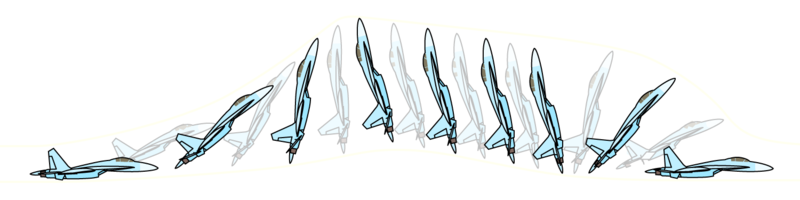
On the otherhand, turning looks like this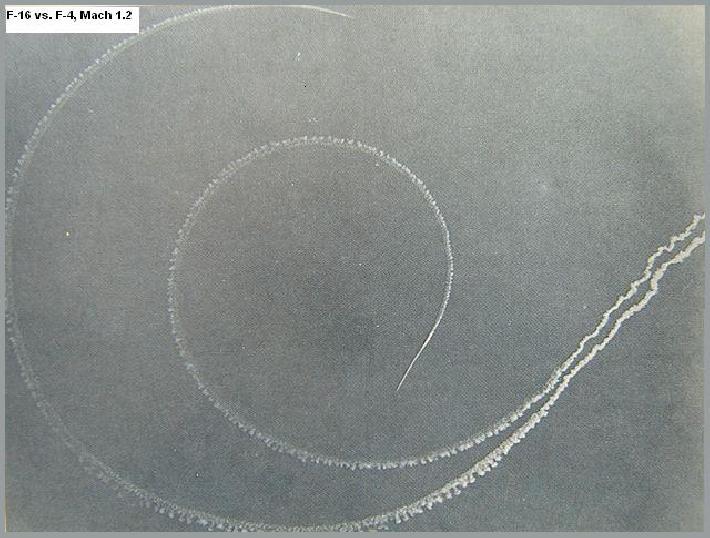
So, why did i said a flat plate at 90 degrees provide no lift. It because it can only provide a pivot to change missiles AoA not provide lift to change direction of travel.Changing AoA and turning is vastly different.
It’s about the loss of kinetic energy due to drag in dense air. Iskander maneuvers at 0,5 at 30km altitude and the interceptor needs to do the necessary course corrections in dense air.
I don’t know what make you change your stand from “Iskander can turn 30G at altitude higher than 50 km” to Interceptor can’t sustain barely 1.5 G at low altitude. But both are too extreme, if interceptor can’t sustain merely 1.5G at low altitude, they won’t be able to even point toward threat direction (consider straight up launch system). Moreover, interceptor has thrust, very high thrust while a ballistic missiles falling down only has gravity working for it
Another basic situation that can be discussed is when the Iskander releases sub munitions before entering altitudes where endo-atmospheric interceptors can work. What does the PAC-3 want to do against 6 submunitions? These questions need all to be answered by the ABM side.
I don’t think Iskander can carry 6 submutions, the much bigger missiles likes Trident and R-36 only carry 8-12 submutions. Nevertheless, the most common solution is either to destroy target before they released submutions or launch more interceptors. 1 launch vehicle of Iskander has 2 missiles. 1 launch vehicles of PAC-3 has 16 missiles
SM-2 and -6 have a start booster which they loose after a few seconds. The rest of the large missile remains the same until impact. The missile you see with its fins at the rear is what the mass-fin ratio is.
You are aware that the long wings of SM-2 and SM-6 are static? The fins at rear move.
Yes iam aware that the long fin are statics and only the rear fin move. But when the missiles is at an AoA with the air flow, the long fin will interract with the air flow to turn (change direction of travel) the missiles. Think about aircraft, why does aircraft with lower wing loading often advertised as better for maneuver eventhough the main wing cann’t move ( except for the really small parts of the slat and flap ) ?. Wing loading never accounted for tail fin area either.
The older Tochka and the Oka TBM both had high lift waffle fins. I would ask my self why they went back to the lower lift fins? Are you and me smarter? Or did they do calculations that lead them to the conclusion that based on their experience with Tochka and Oka, for required anti-ABM operations and tactics, conventional fins would be sufficient? So pardon me that I try to make sense of what we got.
There could be various reason to change from grid fin to planar fin, for example grid fins can have considerably higher radar cross section due to their extremely high number of coner reflectors (those grids).
garryAExactly. Because you does not accept Cn or drag as a usable reaction force I don’t accept your understanding of physics.
To be more direct, you are fundamentally wrong and I don’t want to argue about it with you. As you put it well, for me its also like talking against a wall.
Isn’t it funny, how my “fundamentally wrong” physics are so widely accepted by engineers?
And it not that i don’t accept drag and normal force as real force, they are real and used to pivot the AoA, however, the force component that change missiles direction of travel is lift
Aha. So lets say an Iskander manages to do a continuous 0,5G maneuver at 40km altitude via aerodynamic control. How do you think the necessary course corrections of the ABM interceptor kill its kinematic potential in that dense air?
Not much if anything at all, missiles can sustain more than 0.5G
A bold claim. How much more fin area – mass ratio does a SM-2 has over a Iskander? There is a general tendency yes but not “very high”.
An Iskander-M weight 4,615 kg, and it is single stage( meaning no discard parts of airframe to get lighter )
An SM-2 or SM-6 weight 1,500 kg , and they are 2 stages missiles ( meaning at burn out they discard parts of their airframe to get lighter, and the boost stage of SM2, SM-6 is around 25-30% of their total length with bigger diameter)
Regarding fins area, this is an SM-6 (same airframe as SM-2 but different seeker)
This is an Iskander
The standrad series has any where between 7-8 times more wing area and around 1/3 the weight, if that doesn’t translate into much better wing loading then i don’t know what will
garryAI realize why we have to repeat ourselves so many times….
You talked about highschool physics: So in your physics lift is a usable reaction force but drag not. Your lift equation with the fin area creates a Cl that can be used for generating a moment in a direction on the missile but Cn can’t be used for that. Lift force can be used as reaction force to create a moment towards the center of pressure but the higher quantity normal-force/drag is for some reason not usable…
No, there is no mine or your physics here. Physics laws are not like religions, it doesn’t change from person to person
When i mentioned high school, i mean you should know how to add up resultant force when direction is not the same because that stuff are taught at high school
Lift equation are not taught at school but if you know how to add up resultant force from 2 forces with different direction you will understand what is Cn when you look at the diagram and why it is not used to measure turn acceleration.
The reason why drag force and normal force cannot be used when measure G load is simple, normal force is simply the resultant force of both lift and drag, drag force is just like its name, literally opposite the air flow and slow down the missiles. Both drag force and normal force (normal is in fact already included drag force) doesn’t point toward acceleration direction of the turn. As a result, they doesn’t contribute toward how many G the aircraft or missiles could turn.
More so as I already agreed that air is apparently too thin at 25km for high G aerodynamic maneuvers
(fortunately for the Iskander this is also true for the ABM interceptors with aerodynamic steering/hybrids).
So SM-2 can work in exo-atmospheric conditions above ~25km?
SM-6/SM-3 has no kill vehicle altitude limitation like THAAD and can engage at ~30km?
PAC-3MSE improved the interception altitude to above ~30km?
The argumentation here is that Iskander would fly in a altitude-band where ABM interceptors have engagement problems and dive down at ~90° in the very last part of the flight.
Interceptor are launched from sea level to high altitude, as such they have plenty of time to correct their course in high density air. Moreover, system such as SM-6, SM-2 has very high ratio of wing area vs mass compared to something like Iskander or any ballistic missiles .Moreover, in reality, anti ballistic missiles missiles are launched to intercept instead of chase, so they are guided by radar to reach a specific coordinate at a specific point in time. You can imagine it like thowing a trap toward the road just so car run over it.
Regarding those interceptors listed above
SM-3 with seperate kill vehicle is for very high altitude, exo-atmospheric condition 
THAAD with moveable nozzle and mid body jet system is for high altitude intercept ,mostly exo-atmospheric condition between 40-150 km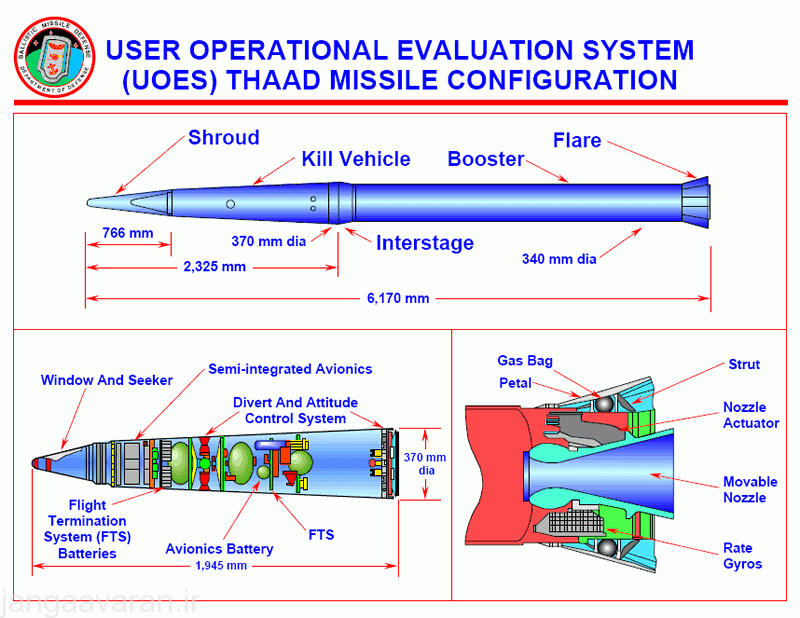
PAC-3MSE has both mid body jet system and aerodynamic fin can operate both edo and exo atmoshpheric condition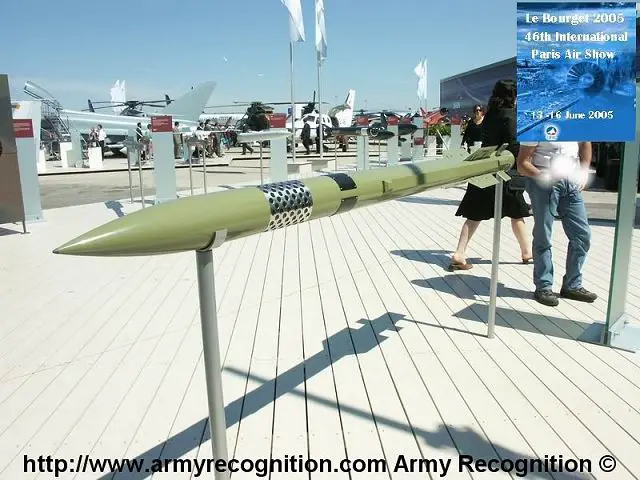
Both SM-2 and SM-6 can be used against target descend inside atmosphere since they both have aerodynamic fin
garryAThe key is Cl/Cd: The details like AoA are there. I objected that the AoA of the Su-27 Cl does not go beyond stall region while the fins of a missile might do to reach the maximum Cn value of your chart (at 90°). This changes Cl by a factor of 2.
Hence I accept the lift equation for all speeds but not the direct quantification of it via Su-27 values.
It’s up to you whether you want to understand that somewhat complex detail or dismiss it and my understanding of the issue, as I doubt I can put it more understandable than this.
……………………sigh
Maximum CN is not important, because it represents the total of lift (Cl) and drag (Cd) . To turn, you want high lift not high drag. The only thing high drag would do is slow missiles down and that is not what you want. To turn better, you want to maximize the force toward desired direction of travel.
Look at the picture i gave you, why can Cd get so high at 90 degrees while there is no AoA where Cl can get that high ?. No, not because of anything to do with stalling. It is because at 90 degree, the fin is perpendicular to the air flow.At which point 100% of normal force is drag.On the otherhand, there is no situation where 100% normal force is lift (no, there is no opposite situation where drag is 0% and lift is 100%). Furthermore, lift cannot reach value as high as drag, because that it will require the air flow perpendicular to the airframe (which will not happen)
Take out a piece of paper and draw the force distribution on it and you will see.
Moreover, it is not the reaction force on the fins that change the missiles direction of travel, it is the aerodynamic lift (reaction force) on the whole missile after the fins pivot the AoA that will change its direction of travel. This may sound super confusing, but that why i have to draw a diagram for you.
Btw when i talked about Su-27’CL at 18 degree AoA. It is not the horrizontal tail of Su-27 at 18 degrees with airflow but its whole airframe at AoA of 18 degrees. Some what like this
Now try to imagine the Iskander fly at similar AoA or higher at Mach 5
I appreciate the two calculations for Iskander at 25km and AIM-54 at 12km altitude, it showed to me that altitudes of around 15km are more feasable for aerodynamic maneuvering
I haven’t done the calculation for 15 km yet, but remember the AIM-54 is alot lighter, has very low wing loading compared to Iskander and was only done a 10 G maneuver in the 12 km case.
If it would glide between 40 to 25km for the last 200km, nothing could intercept it until it dives for last terminal phase.
1. The Iskander is said to fly a depressed trajectory, outside THAAD envelope.
what make you think not things can intercept Iskander before it dive for terminal phase ? there are still SM-2, SM-6 and PAC-3MSE
“Fin is at the AoA of 90°, drag = normal force. This is at a factor of 2 more effective than your aerofoil lift outside stall region.”
I hope I know the difference between effective and efficient and I don’t know how you got drag/normal force (reaction force) for turn.
I wonder how you can save the information of my text in such a wrong way in your memory.
It is not 2 times more effective because drag component of normal force doesnot contribute to the force required for your turn.Think of any turn as acceleration toward a new direction. This acceleration is measure by G. Since acceleration is equal to force divided by mass. The minumum force you need to applied on missile body to make a 30G turn will be equal to missiles mass*G-load*9.8 .This force has to direct toward the new direction of travel.Drag force doesn’t count because it is not the force toward desired direction of travel. I don’t know how i can make this anymore simple.
garryAI try to explain what has been witnessed in the real world with what you put against it.
US MARV testing described in the book lighting bolts is more convincing for me than a single formula. I might have not enough knowledge about aerodynamic to explain it, but of course I will question your argumentation against something that actually happened during testing.
So you should not be too offended and rather move to the other topics of this discussion if you think I’m wrong on this one out of some 10 points regarding the Iskander vs. THAAD discussion.
This one point, the lift equation could well be applicable to our case yes but your comparison to the Su-27 is the mistake of yours that gives a wrong impression, a wrong argumentation. I’m not familiar with aerodynamic equations but if you are, I wonder why you don’t get what I try to say? I just realized that the aerodynamic reaction force beyond stall region is higher than im effective lift region, your Cl value for Su-27 within effective lift region is thus not representative. Something didn’t make sense and I tried to find out why.
I don’t expect from you to try to explain the high G loads of US MARV testing and its good for me that you try your best to bring up arguments against it. However you seems to want some kind of victory out of this discussion, so enjoy it if you feel so.
I didn’t get annoyed when you are wrong. I get annoyed when you repeat the same thing again and again even though said things have been elaborated in previous posts. I already told you the different between reaction force required to pivot the missiles and reaction force required to turn the missiles. I already told you that drag force doesn’t change missiles direction of travel but only slow it down and used to pivot nose AoA, that why it is not considered. I gave you the diagram direction of the force. I even go as far as telling you the component of the force when missiles is at an AoA with the air flow. You can even draw a diagram yourself with actual force and angle value to see the acceleration direction. Adding up resultant forces with different direction is high school physics, you should be able to do it with else
The fact that you said most efficient turning is at 90 degrees shown that you didn’t even bothered to read anything i wrote at all, nor do you draw it on a paper to see the direction of the force when missiles or its fin is at 90 degrees with air flow.
Even in MARV case, i told you before that it is very different situation from what we discussing here since MARV can potentially move at Mach 15-20, much faster than what Iskander capable of. They are also lighter because they are seperate stage. The chance for them to make high G turn is much higher because they can generate more lift (due to much high speed of several Mach) and has less required force (due to lighter weight) . Just like the comparision with AIM-54, the AIM-54 can generate more lift ( due to fin area and air density ) while has much smaller required force ( due to smaller G and lighter weight ) so the number make sense for AIM-54 while it doesn’t force Iskander.
The point is, if numbers , equation and diagram can’t convince you then there is no reason for me to continues with others parts of discussion, it will just going in a circle like last time until i get bored and can’t be bothered to reply.
garryAI admire your patience
Being patience doesn’t work out quite well for me TBH.
How does he even come up with ” fin at 90 degrees equal most efficiency turning” is beyond me. It is ridiculous even in nose pointing case
garryASAAB stands that their GaN based Giraffe 4A detects stealth airplanes as far as their older Giraffe did for other fighters.
Sound like nonsense, GaN increase transmitting power but not that much.
garryAIt feels like talking to a wall trying to explain aerodynamic to you. I gave the equation, the calculation, the detail diagram explanation. But you just keep repeating your wrong idea again and again without even trying to understand where did you get it wrong. Ffs, how many times do you want me to repeat that lift equation is applicable at all speed and nose pointing is different from turning until you even consider it ???.
That it, you are free to believe whatever fairy tales you want, this was a waste of time.

garryAAs said I think the problem here is that you consider aircraft aerodynamic at aircraft speeds.
You talk about lift which does not enter stall region.
I however think that the ram air/drag on fins at hypervelocity well within stall AoA would cause a huge moment on the center of pressure. This is not aerofoil lift anymore but a offset airbreak in stall region.
Look at your chart:
At 50° AoA the combined force of lift and drag are 2,5 while 2 for the non-stall region at 15° AoA. Now I doubt that this chart is applicable for our velocities and air pressures
The lift equation is applicable at all speed because at the core, lift is basically reaction force due to Newton law, they are used to estimate missiles agility too, not just aircraft. So your argument that i only consider aerodynamic at aircraft speed is fundamentally wrong. Moreover, you still fail to graps the different between nose pointing and turning (aka changing direction). So i will try one last time. If you still don’t understand i just have to pass. Look at the photo below
The first picture is when Iskander falling straight down ( it is never the case but for the sake of simplification, just imagine your missiles falling down with angle of 90 degrees), let say you want to change direction that missiles is traveling. That bring us to the second picture below it. To change direction of an aircraft or missiles, or anything, you need to apply a force on it. So how do you apply this force ?.
The first step changing the AoA of the fins ( stabilizer in case of aircraft).When the AoA of the fin changed there will be a force acted on it due to air flow.This may be slightly confusing but if you pointed the fin up then there will be a down force on the fin and vice versa. This force will change the nose position of the missiles or aircraft. Then it is simple, very much like a pivots, down force on the tail fin will pull missiles nose up and up force on the tail fin will pull missiles nose down. You can see how it behave in following photo:
The problem here is you mistakenly think that the turn (chaging direction) is done once the nose of aircraft or missile is turned toward desired direction. But that is wrong. Changing nose direction without turning will look somewhat like this
.If you think carefully about it, pointing the nose toward a certain direction mean the airflow has to applied an opposite force on the tail of the missiles, hence move it to opposite direction.So how it is possible that missiles moving toward something and still has their nose toward the same target?. Here is the stuff you missing. Which is step 2, look at the photo again.In the example, once the missiles nose pull up, its whole body will be at a certain AoA with the air flow. Thus, the air flow will then applied a force on the whole missiles, with much higher force than if missiles fly straight with zero AoA.This force can be thought of as 2 components :the first one is called lift, which is what make missiles changes direction toward the desired target, the second component is drag which is what slowed the missiles, aircraft down. When you keep increasing AoA the lift will keep increase up until a certain point, where it start to decrease and drag will increase. In other words, extreme AoA will not help missiles turn quicker but rather slow it down quicker
When i talked about lift and AoA, i mean the force that actually help missiles change direction not the one that slow it down, that why you can’t add CL and CN together. CN is practically the combined resultant coefficient of Cl (lift ) and Cd ( drag )
Here it was my fault to request a calculation for 12km altitude while that of the Iskander was done at 24km. Indeed the airpressure at a conventional altitude of 12km is very much higher.
But again, the empirical knowledge we have about early US MARV testing could be explained by applying the aerodynamic control like described above or the maneuvering took place at well below 20km. I go for the former taking into account the high deceleration G forces.
Even if i consider you emirical knowledge to be somewhat accurate
1/ MIRV if come from ICBM can move at speed of around Mach 15-20, much faster than what Iskander capable of, they will have considerably more lift for maneuver
2/ Iskander is a single stage missiles, so it is considerably heavier than MRIV that seperated from their carrier, thus require much more lift for the same maneuver
3/ deceleration is not the same as turning
The most practical possibility is that Iskander can perform high G at low altitude, like 5 km or something similar. So it is possibly defense against something like PAC-2, PAC-3
Agreed. Hence in the context I don’t expect high drag losses due to the Iskanders tube body as you suggested, more so at those speeds/inertia and low air pressures.
Iskander has high speed and very high wing loading while Cl is low as well, so expect it to lose considerable amount of speed if attemped to maneuver.
The turn is not so important, its the load factor experienced that counts. Iskander would try to do a maneuver and create a G load that the THAAD at similar speeds can’t do and vice versa.
G load isn’t important, what important for a turn is ability to change direction
Yes and here due to the high inertia/speed the Iskanders tube body will not create the huge drag losses you suggested in order to reach 10 or 30G
inertia is irrelevance and high speed will mean more drag since the formular for drag is also propotional to speed

What you want is a reaction force that creates a moment on your center of pressure. Whether its efficient lift or brute force frag in stall region does not matter, you just need the reaction force to pull our G loads.This is conventional aircraft, sub to low supersonic thinking. For pure kinematics I just need a reaction force that creates a moment to change course, if its hypervelocity drag instead of lift, so be it.
Because you are a friend of conventional aircraft aerodynamics I have a interesting question for you: What would happen if (just) the left vertical “fin” (vertical stabilizer) of the T-50 would move to a 60° AoA position at mach 1,6 assuming that its structure would be strong enough not to disintegrate?
See reply above about nose pointing vs turning.
About your question: the air flow will collide with the vertical fin, thus point the aircraft to the same side ( if fin turn to the left then aircraft will point to the left). Once the aircraft point to same side, the air flow on the airframe and the engine thrust will make it change direction
Neither that Indian TBM nor early generation ICBMs have a exo-atmospheric gas system. On a ballistic path, anything that has a heavier nose (CoG), will come down with the nose on a strict and well defined ballistic trajectory. The decoys and other potential penetration aids of the Iskander wont change the tip CoG.
I don’t follow Indian TBM program so i don’t know abot that, but AFAIK, LGM-30 Minuteman has a gas system, so is Trident. Btw how can you know if decoys and ECM will change Iskander CoG or not when we don’t even have a photos or diagram of the alleged system ?. Moreover, without gas system, Iskander won’t be able to follow a quarsi ballistic path either.
The Iskander seems to have a peak at mach 6 and needs to slow down to mach 3 at sea level to avoid plastification/disintegration of the airframe. A good kinematic management/profile would use 2 mach numbers early on for maneuvering via fins, leave one mach number for drag losses after 25km and enter the region below 25km at mach 4 instead of mach 6, in order to keep mach 3 at impact
It more likely that Iskander if it indeed perform evasive maneuver will do so at low altitude since it clearly doesn’t have enough lift for that at high altitude.
A B-1 will almost always run away from a F-16 because of its larger fuel reserves/kinematics/endurance and this is just a example against your argumentation that the smaller THAAD KV can chase the Iskander due to its small size.
The Iskander may maneuver randomly in a profile that bleeds the THAAD KV fuel in the best way and may have a RF proximity sensor for a last ditch maneuver. In the end such maneuvering can account for many dozens of km course changes. This is a numbers game, about margins, envelopes, times, we can just talk about the basic concepts and feasibility as we will never know for sure.
I honestly, don’t see how B-1 can run away from an F-16 unless it has a few hundred km head start. Back to THAAD vs Iskander case, i don’t see how Iskander has more reserve either when it supposed to carry ECM, decoys and what not, or how is it even matter in exdo atmosphere when there is almost no air ( no drag) ?. The engagements time between a Mach 6 and Mach 8 missiles will be extremely short too so things like RF proximity sensor are unlikely to work ( and there isn’t much time to drag out many maneuvers either).


 Sign In







