 garryA
And what kind of guidance was it, voice?
Other part has a direct data link between planes enabling one to gave the other the coordinates to launch missile
T-38 probably lacks equipment for any kind of datalink other than voice. But F-15E surely has coordinate datalink capability. Moreover, accodring to pilots there was no warning from CGI and AWACs, which mean AWACs such as E-2 didn’t detect stelth aircraft either
garryAT-38 was guided by AWACS and CGI, there are F-15E in exercise as well
garryAUnfortunately I have no access to it at the moment, but I recommend it. The 30-50G numbers were encountered during reentry, there of course a part of it is due to deceleration, I’m aware of that.
Honestly, on one hand it is the lift equation and Su-27 manual, on the other hand, it is your memory. I have no choice but to go with the former here.
You misunderstood me: The AIM-54 was designed to operate at around 12km at speeds of mach 4+, there the fins still work. So that a G load would it encounter there, what do you think? Would that G load be consistent with whats possible via your lift formula? I’m quite sure the loads on the AIM-54 @ 12km and mach 4 would be 10+ and this because of the inertia of it at mach 4.
Let consider the AIM-54 then
The length of front fin is around 0.4 times total missiles length (1.6 meters)
The length of back fin is around 0.095 total missiles length ( 0.38 meters )
Missiles diameter is 0.38 meters , wing span is 0.91 meters, so the height of each fin is (0.91 -0.38)/2 = 0.254 meters
Front fin is practically a triangle so area of each front fin is 0.2 meters square
Back fin is a rectangle so area of each back fin is 0.097 meters square
=> total lift area is (0.097 + 0.2 )*2 =0.594 meters square.
AIM-54C loaded weight is 463 kg, using the same assumption that we had for Iskander ( 1/2 total weight is propellant ), the AIM-54C will be around 231 kg at burn out. To make 10G turn , the missiles will need to generate aerodynamic lift of 2,310 kg ( 22,638 Newton).Speed at burn out of AIM-54 is Mach 5
Using the same lift equation: lift = CL* air density* 0.5*velocity^2 *wing area
At altitude of 12 km , air density will be 0.31 kg/m3 , speed of sound is 295 meters/seconds ( so Mach 5 will be 1475 meters/seconds)
So 22,638 = CL*0.31*0.5*1475^2 *0.549
=> 22,638 = CL*185,134.8
=> CL = 0.122
In short, to turn 10 G at Mach 5 , altitude of 12 km, AIM-54 only need lift coefficient 1/10 times as good as a Su-27. As you see. The number make sense for AIM-54.
To put it simply a 10G turn with a F-16 @ mach 0,9 would cause a e.g 45° direction change and expose it completely to the drag. A 10G turn with a AIM-54 @ mach 4 would just cause e.g a 10° direction change
You mistaken between nose pointing and turning again. Drag caused by the air flow and it is always opposite direction of travel. An aircraft turning 45 degrees will not expose its body to the air flow by 45 degrees, it will only expose its body as high as the angle of attack it used to generate lift for the turn.
In other words, an AIM-54 turnning 10 degrees may expose more to drag than an F-16 turnning 45 degrees , if AIM-54 need higher AoA for the turn.
There is one issue with the inertia effect at high speeds, which cause much higher G loads due to the velocity for the same change of direction.
The force required to satisfy F=ma equation is the same regardless of speed. The turn rate and turn radius will change depending on speed but force required for turn acceleration is the same
Then there is another issue I tried to explain. Your formula is as it seems for a wing aerofoil lift. Beside that there is a ram-air/drag aerodynamic control method, best explained by the T-50 and J-20 vertical stabilizers: These can turn at an angle which would cause stall with a wing aerofoil, but due to ram air pressure (i.e drag force at high velocity) they can offer high steering power if necessary.
Firstly, lift equation can be applied to the whole aircraft not only the air foil. Secondly, lift is the way to call the force component that help you turn/steer aircraft toward desire direction, you can turn/ steer the fin past AoA where Cl is maximum but after that point the force that help you turn the aircraft/ missiles doesn’t increase, they reduce. Instead what you increase is the drag. Btw, nose pointing is not the same as turning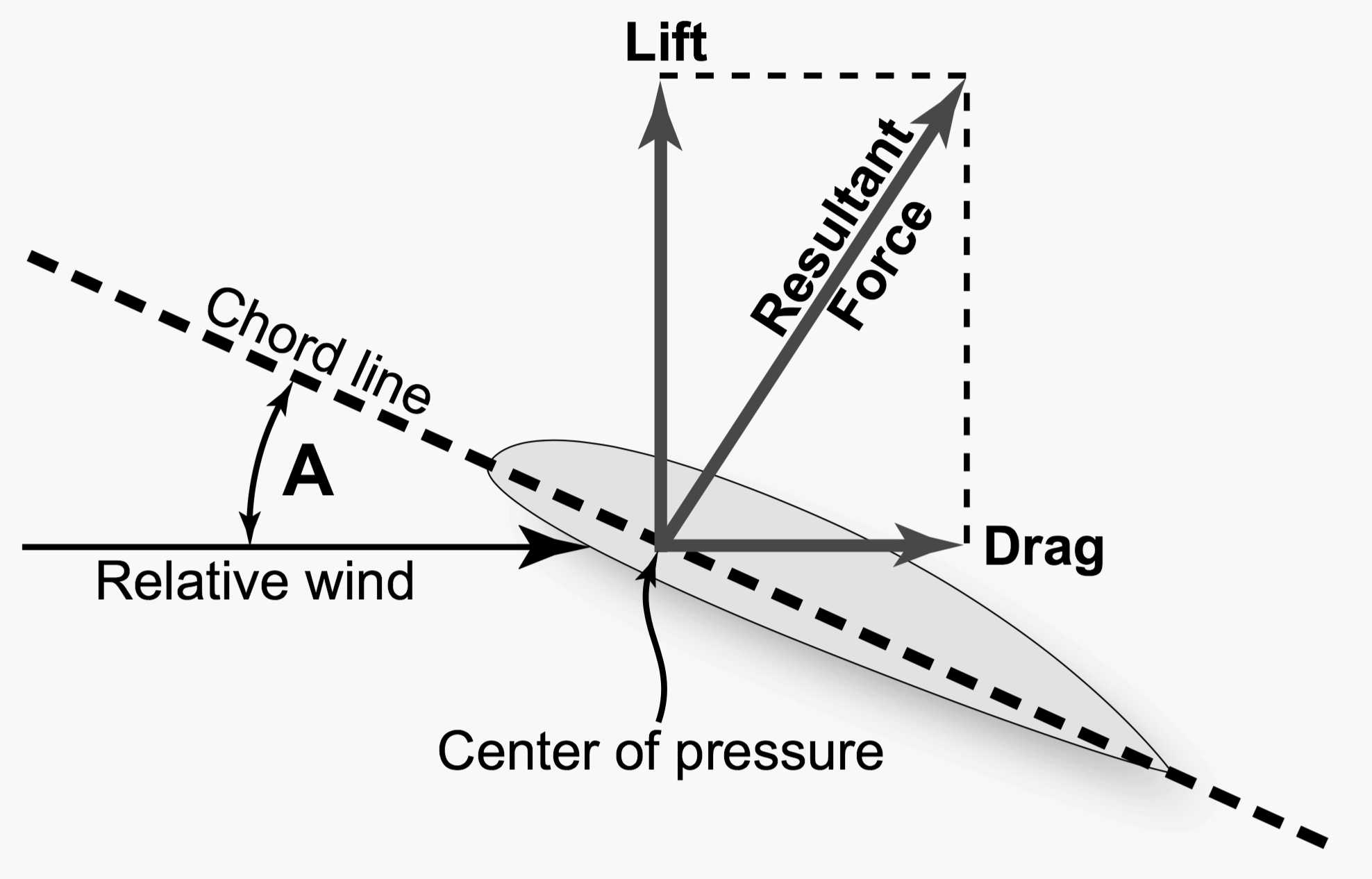
.
The space shuttle is in a orbit, without gas system gravity and drag would decide that it land on earth in 4 or 5 years. A ballistic missile like the Iskander is on a ballistic trajectory that will take it back to earth in a accurately calculated time and place accurately to seconds not months or years. It’s CoG will make sure that it will come down with the nose first.
The gas system on the Iskander has almost certainly a anti-TBM purpose.
ICBM are not in orbit and they still need a gas system. Moreover, without a gas system how can Iskander even follow a quasi ballistic path ? it require the missiles to be horizontal to the atmosphere instead of near vertical. Furthermore, if Iskander truly carry decoy, dropping them surely change center of gravity too.
The Iskander would be the bi-conic conventional here and as you see this is for a mach 12 missile and its decelerated to less than mach 3 at impact. That delta of mach 9, minus some penalties could be used for maneuvering for this missile with the right kinematic management.
I honestly don’t understand what that graph trying to say. So all ballistic missiles has re-entry speed below Mach 2 when altitude smaller than 20 km ?
Furthermore, that still not really justify wasting kinetic energy for the turn. While terminal velocity in the last few km may be similar , you still sacrificed considerable cruise velocity compared to missiles that doesn’t turn
You assume same gas system power for Iskander and THAAD? We can’t really find out which one has more endurance. I could as well say a F-16 has more endurance than a B-1 with that argumentation.
This is not about quicker, it’s about endurance and maybe endgame agility for a evasive maneuver. As said: Expect the Iskander to be detected, the THAAD interceptor launched and then it starts to deviated from the rendezvous point originally calculated and the THAAD has to follow. Now who wins that endurance game? Can the THAAD catch-up to the new impact trajectory that changes continuously? This is one, a exo-atmospheric anti-ABM scenario for Iskander vs. THAAD.
B-1 may has more endurance but it can’t run aways from an F-16. Considering there is no ( very little) air in space, endurance would be the smallest problem. Moreover, there is no way Iskander know where is the interceptor so the best it could do is maneuver randomly, unlike THAAD will only maneuver when needed . So i think THAAD should win the endurance game. TBH, i honestly doubt that Iskander carry that much fuel for its gas system either, after all the alleged ECM , decoys and what not
The velocities and inertia involved change that picture.
The Iskander will experience much higher G loads for the same angular vector change due to its high speed –> high inertia, but this also means that the final position change is also much higher due to those velocities.
The Iskanders fins will have a high drag force as reaction force beside the lift. Just due to the magnitudes higher speed compared to aircraft it will have a high steering capability even if the air density is much lower. If the air density would be much higher at 50km altitude the Iskander would just disintegrate with mach 6 drag forces.
You are really confusing between lift and drag. Drag slow you down but not helping you change direction. The force component that help change direction is called lift
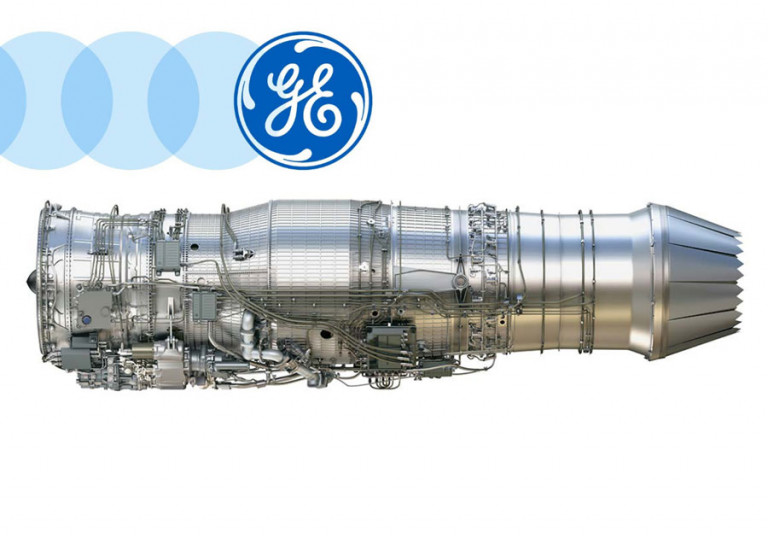
garryAAs B-I-O’s links over in the sixth gen thread show, the AETP engines are going to have very different nozzles (if their even called that), than the 2-d Non axis-symmetric wedge nozzle of the F-22 and the LOAN nozzle of the F-35.
The AETD nozzle looks just like F-35 LOAN nozzle IMHO
garryAThen I recommend you to read the book lightning bolts about MARVs.
I appreciate your effort. However I think your model is not applicable for this case. The reason is simply empirical knowledge.
As describes the book lightning bolts is a good read about early US experiences with MARVs, the G numbers mentioned there go up to 50 IIRC.
If you have the book, evidence, feel free to screenshot and upload it. I highly doubt that they mentioned a MARVs that can turn 50G but iam open to see the evidence. Btw, acceleration of speed due to booster at launch is not the same as acceleration of the turn, i think you may be confuse the two.
Then we have weapons like the AIM-54 which reached high speeds and had to perform at least two digit G maneuvers, at least even at 5 G your model would deliver impossible results.
AIM-54 (or any air to air missiles) cannot perform two digit G maneuver at high altitude like at 24 km (let alone some where like 50 km height). Moreover, the Phoenix is also said to have terrible agility after motor burned out.
Another factor that you must consider is the ratio between fin area and weight of the AIM-54, it is considerably better than the Iskander so to perform the same maneuver the AIM-54 will need smaller CL.
We have effects that have a huge impact:
– Compared to high velocity objects, low velocity objects are exposed to much lower G loads for the same turn. Hence the vector change of a high velocity object is much smaller for the same G load.
– At high velocities, the ram air effect on the aerodynamic surfaces is much higher, so the drag force. Hence a low velocity object can have the same drag force at low altitude as a high velocity object at high altitude.
– Rotation axis position of the fins can be extreme for maximum ram air pressure –> turn capability
Velocity, air density and fin area are all included in the equation. Moreover, CL of a plate can only increase up to a certain AoA , after that , you will have less CL and more Cd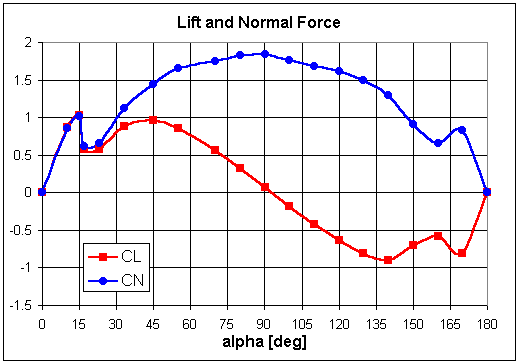
A ballistic missile with a depressed trajectory will appear later on the LOS radar horizon due to curvature of the earth. Only inaccurate OTH radars won’t have this problem, but they are useless for engagement
I don’t think the quarsi ballistic trajectory can help reduce LoS since it still have the same top point and only extended the reentry length. Furthermore, let say the altitude of the depressed trajectory is 30 km, ground radar height is 15 meters, the radar horizon would already be 730 km which is longer than maximum range of Iskander already.
A ballistic missile does come down on it’s own via the ballistic trajectory, no need for a gas system. The gas system has a different role as said.
It will eventually come down due to gravity, the gas system however is to oriented which part of it will point toward the earth, just like on a space shuttle
I put it simply: At sea level the airframe structure would have to be very robust to endure the drag forces of mach 4 and above. More or less no one is willing to build such a heavy airframe to survive mach 4 at sea level. This is the reason why TBMs like the Iskander up to a ICBM RV are designed to de-accelerate down to below mach 4 at ground impact is that this is the best weight-velocity trade-off (expect for not yet realized exotic stuff).
I can’t find any source that stage ICBM are designed to decelerate to below Mach 4 before impact, moreover, the warheads of ballistic missiles doesn’t cruise at Mach 5 at sea level, it merely comming down through the atmostphere, so likely spend a few seconds at sea level air density at most
Good and this leads us to the starting point of the discussion. Iskander vs. THAAD.
So if the kill vehicle of the THAAD has left useful atmosphere and the target, the Iskander, suddenly changes course via its gas system or still effective aerodynamic control: will the THAAD kill vehicle have enough fuel to chase the Iskander? This is the kinematic game that will leave one of the two as looser and these are among methods to counter a ABM system like THAAD.
They both got gas system, however, THAAD is smaller and has a seperate stage for its kill vehicle, it also doesn’t carry ECM or decoys.Which mean lower mass. As we already know, F=ma , so generally with same force and lower mass mean better acceleration .Thus, I find no reason to believe that the gas system on Iskander can change its direction quicker than the one on THAAD. Aerodynamic control is kinda useless above 22-25 km.
As said: The frontal cross section of a Iskander doing a 10G turn is not changing much because a small change of the vector will cause 10G load at mach 6. That for the tube body argumentation.
Secondly the impulse of the Iskander is very high with it’s mass and velocity. I think just because the speeds are magnitudes different, the comparison of aircrafts and BMs is leading you to wrong results
The AoA would pretty much depending on the air density, you will need very big AoA to turn 10 G at 50 km altitude ( if the fin even work at all ). Moreover, drag at high velocity and high AoA is much higher so the missiles will lose alot more speed than an aircraft making a turn
garryAIs that extra bump on the petal specific to the B (and therefor maybe something to do with articulation rather than IR suppression)?
I can’t see it on the A or the C, but that was a just a quick look.
Here are some very quick images I have gathered for comparison, but I am not claiming knowledge:
They are there as well, if you look carefully the spacing is between the brown and the gray part of the petal
garryAHigh G’s were witnessed by US MaRV programs too, partly due to de-acceleration and partly due to turns.
Not what I heard of
Its the high speed in the equation with ^2 that makes it possible, aerodynamic maneuvers can be done at very high altitude due to the higher speed.
The Iskander was rumored to fly a depressed trajectory and called a quasi-ballistic missile due to that. Shorter warning time due to later radar detection was one reason, but another reason is that at high speed it would remain maneuverable via it’s fins. Other missiles would have almost no function on their fins at around 50km, but Iskander could due to its speed and resulting ram air pressure.
Not long ago, i been in similar discussion about AIM-120 turn performer, i don’t mind doing it again
Let start, here is a photo of Iskander
As far as we know, Iskander is 7.3 meters in length and 0.92 meters in body diameter, it has several trapezoid fins. If you use the ruler scales in paints or pts, you can estimate the inner length of the fin is 1/10 of missiles length (0.73 meters), the outter length of the fin is 1/27 of missiles length (0.27 meters), the heigh of the fin is 1/4 of missiles body diameter (0.225 meters).Iam not saying the estimation is 100% accurate, but it surely close enough ( if you see the result later, you will find that even if the fins are several times bigger than i estimated, it still doesn’t really matter). From the photo we can see that Iskander’s fins has trapezoid shape ,so with values given earlier we can calculate area of the fins to be around 0.11 square meters
Lift as cited earlier is CL* air density* 0.5*velocity^2 *wing area
By this http://www.hochwarth.com/misc/AviationCalculator.html
let say altitude is 24 km (which is half of what you propose so that we can have some what thicker air for the missiles to turn), the air density will be 0.046 kg/m3, speed of sound at that altitude will be 297 m/sec ( so Mach 6 will be 1782 meters/ second)
Wing area is 0.11 meters squares as calculated earlier.
To make 30G turn , the missiles will need to generate aerodynamic lift of 69,225 kg ( or 678,405 Newtons)
=> CL*0.046*0.5*1782^2*0.11 = 678,405
=> CL*8,034 =678,405
=> CL = 84.44
For comparision, the flanker airframe ( with LERX, blended body, negative stability and what not) has CL of 1.2 at Mach 1 and AoA of 18 degrees
In short, the Iskander will need the lift coefficient around 70 times bigger than Su-27 for it to be able to pull 30G at Mach 6 and altitude of merely 24 km .No chance.
Before, i may have a slight doubt but now iam 99% certain that the G-load of Iskander on Wiki is BS.
The Iskander was rumored to fly a depressed trajectory and called a quasi-ballistic missile due to that. Shorter warning time due to later radar detection was one reason, but another reason is that at high speed it would remain maneuverable via it’s fins. Other missiles would have almost no function on their fins at around 50km, but Iskander could due to its speed and resulting ram air pressure
quasi-ballistic trajectory look like this
I don’t see how quasi-ballistic will shorter radar warning time, it help improve range but surely the warning time will be longer IMHO. Moreover, i don’t see the relation with ram air pressure either since Iskander is a rocket, not a scramjet or ramjet missile.
They have because their post boost vehicle does maneuver to place the re-entry vehicles in trajectory. The Iskander would have no reason for a gas system, any possibly necessary course corrections would be done in terminal via it’s fins. Hence the only reason would be to counter exo atmospheric interceptors or to change course to confuse/bleed endo-atmospheric interceptors. The gas system of the Iskander is at its TVC system.
On the otherhand, i believe that the gas system is for re-oriented the missiles nose before re-entry without the gas system the missiles will likely oriented wrong way and get burned in the atmostphere.The fins are most likely to turn missiles in atmosphere so that it follow quasi-ballistic path for extended range.
Sounds exotic. For a system without any propulsion, just with a hardened GPS guidance and hardened fins a starting speed of mach 7,5 might be possible if the heat shielding is nearly all the projectiles weight. Still a very hard task and different than missile and their airframes.
All other systems down to ICBM reentry vehicles need to de-accelerate down to around mach 3 at sea level to avoid disintegration due to thermal stress and drag forces. The Iskander is surely in that category and maybe mach 4 would be possible if it’s hardened accordingly.
The terminal velocity depending on forces vs drag relation, it is irrelevant of whether the missiles has heat shield or not. The heat shield only help prevent the air from destroying the missile but has nothing to do with the drag vs force equation.
If the rail gun project can reach Mach 5 on impact, that mean at Mach 5 the resultant force of gravity minus drag is equal zero. Unless Iskander and others ICBM are significantly more draggy, there is no reason for their terminal velocity to be limited to Mach 3 at impact.
I guess we have to first define high G in this scenario, in relation with THAAD.
How many G’s would the gas system of the THAAD be able to pull?
How many G’s can the Iskander pull if it fly a depressed trajectory in which its aerodynamic control via fins is still possible due to the high ram air speed?
Consider the design of THAAD with no fin, seperate kill vehicle with divert gas system, you can see that is is mostly a interceptor intended to intercept missiles at very high altitude where the air is extremely thin and the fin doesn’t work. So putting a high G value here for either missiles is simply nonsense

Each course changing 3G maneuver of the Iskander consumes mach 0,1 and each 10G evasive maneuver mach 0,3.
This speculation is not really helpful.
Even aircraft with their high lift design will lose significant amount of speed if they attemp high G at altitude, there is no way a tube body with fin only lose 0.3 Mach when trying to do 10G maneuver at Mach 6
garryA^ I mean the member LOL
garryAWhy i can’t see Tomcat’s photo ?
garryAYou might be a professional in one field and I an expert in another, however it would be too arrogant to think you or me can question the functioning of such a complex system such as the Iskander. If the Russians have implemented a gas system, we should expect that it’s working and this also for a useful reason. We should rather try to interpret the details of those system in a way that makes sense.
Iam not saying that Iskander can’t change direction or can’t fly to target, iam arguing that many numbers , details floating around the internet about Iskander are nonsense , just like the myth about plasma stealth that defeat everything or the jammer on Su-24 that shut down AEGIS …etc. There are tons of BS information on internet, hardly a big surprise.
I agree that 30G maneuvers with the gas system is very unlikely, I just argumented on the numbers you brought up. It’s rather likely that 30G would be possible via the fins insider layers of the atmosphere which allow 30g at mach 6 to be pulled.
I highly doubt that Iskander can pull 30G with its tiny fin and tube body either, especially consider high altitude. Air to air missiles can turn high G value only at sea level. I can’t be bothered to do the calculation now but if you put the number in the lift equation, you probably end up with CL higher than subsonic airfoil for Iskander if it want to pull 30G at high altitude (pulling 30G at low altitude is kinda too late).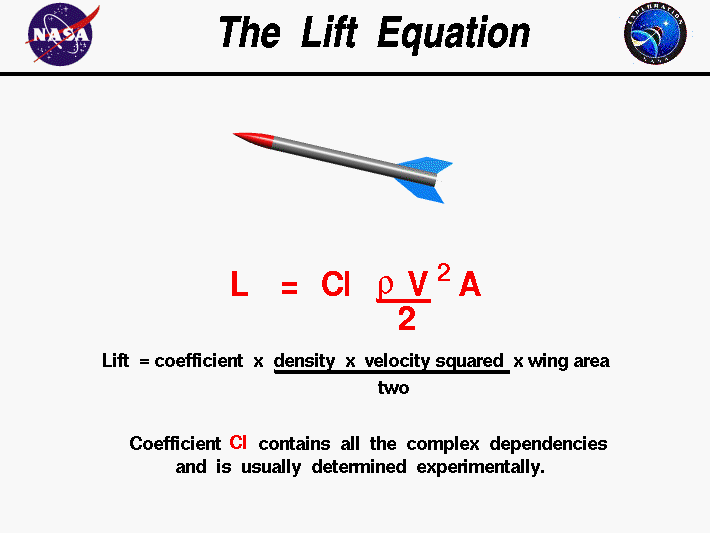
implementation a gas system is a clear indicator that it’s supposed to counter exoatmospheric interceptors.
I don’t know if Iskander has a mid body thruster or not ( since i can’t find the holes like on the space shuttle). But gas system are not indicator that it is supposed to counter exoatmospheric interceptors. For example intercontinental ballistic missile generally all have gas system in their final stage.
We talked about this. Let me put it simply: Because the velocity is not proportional to drag force, it’s with ^2. If your velocity is lower our losses due to drag will be lower. The lower earth atmosphere is so dense that mach 3 is about the highest velocity you can reach with a conventional structure/materials. So the Iskander much be around mach 3 when impacting. It must loose 3 mach numbers from its speed outside the atmosphere. Hence it may enter the lower atmosphere at mach 5 or at mach 3,5.
At mach 5 it may be at mach 3 at impact. –> 2 mach numbers loss due to drag
At mach 3,5 it may be at mach 2,5 at impact. –> 1 mach number loss due to dragSo the Iskander could bleed 1,5 mach numbers for endo-atmospheric maneuvering and end up by only 0,5 mach numbers below a non-maneuvering Iskander at impact.
Mach 3 is not the fastest impact velocity for conventional material, structure either
Rail gun for example intended to have impact velocity around Mach 5 and it has similar trajectory to most ballistic missiles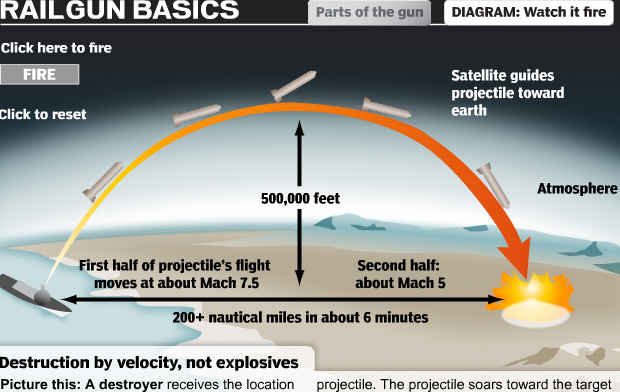
Kh-15 reach terminal velocity of Mach 5 in a dive to target.
Kh-22 reach terminal velocity of Mach 4.6 in a high altitude dive to target
AQM-37 can reach terminal velocity of Mach 5 in dive too.
http://www.designation-systems.net/dusrm/m-37.html
As a theater ballistic missiles,without maneuver Iskander can probably reach around Mach 5-6 terminal velocity in impact. Consider the small fin, Iskander will need very high CL to pull high G, high CL mean either very high AoA or very thick , lift oriented air foil. From photos we can see, there is nothing lift oriented about Iskander fin. It has low aspect ratio, high wing sweep and not much thickness if there is any. The body itself is also a tube body. So the only other option is high AoA, and high AoA generate alot more drag. The missiles likely lose 2-3 Mach from each high AoA maneuver and then it has to maneuver back to still high the right target too so will lose even more speed. While Iskander can probably change course and direction, i don’t think it can do what information on Wiki seem to suggest
garryAYou are mistakenly simplifying the case. Soviet engineers should have known what they are doing with the gas system of the Iskander. You don’t take into consideration the offset of the gas system to the CoG.The gas system of the Iskander is at a strong offset to the CoG.
I couldn’t care less if Russian engineers or US engineer do it. The location of the gas system relative to the CoG only matter as a pivot for nose pointing, but irrelevance to how many G the turn make.The acceleration of the turn itself have to obey F= ma equation. You can’t just ignore such fundamental physics law.
And yes i did simplified it for you because the F variable in F= ma is resultant force not thrust, so F actually equal thrust minus drag. But that only mean the gas system need to produce even higher thrust to perform 30G maneuver as rumored.
As for the maneuvering: it may travel at a wrong ballistic course and all the maneuvering during terminal phase will the result in the right target location
You basically propose that the gas system on Iskander has enough fuel to produce the massive thrust ( more than 75% of LGM-30 Minuteman first stage ) not just once but many times.
No precious kinetic energy is wasted. Under exo-atmospheric conditions there is no loss at all because of maneuvering as it causes no friction. In endo-atmospheric conditions speed is decreased due to maneuvering, however as the missile has to slow down anyway, the maneuvering does to some extend that what friction would have done. So you do a controlled amount of maneuvering to decease your speed to a level in which the energy is not wasted due to heatshield heat up. We have 3 parameters: Speed, heatshield temperature and gain of kinetic energy due to transformation of potential energy.
Under the exo-atmospheric condition, the side force ( especially if very offset to CoG ) will mostly spin the missiles nose around rather than changing its direction of travel. Noiticed how the reaction control system on space shuttle or satellite operate?
If the thruster is at the same location as the CoG similar configuration as the EKV, it still not “turn” the thing, but rather moving it perpendicular to direction of travel.
In endo-atmospheric conditions, speed of missiles decelerate due to drag. The formula for drag is:
when you turn the missiles, expose its side aspect to the air flow, both the reference area and the drag coefficient will increase. The side area of Iskander-M is at least several times the cross section of its nose, the Cd is much bigger too obviously. As a result, the drag will be several time bigger atleast, without main rocket operating the missiles will lose speed extremely quick, since the only things counter the drag is the weight of missiles. After the turn, you can gain some speed back through potential to kinetic energy convention but the acceleration due to gravity is rather small. In perfect condition (without any drag), the gravitational acceleration is only 9.8 m/s. When missiles entered the atmoshphere, the drag will be much higher, therefore acceleration rate is much slower and keep getting worse and worse as missiles fell down.
garryAYou guys still going on about the NEZ ?
garryAIt can pull those G values in terminal phase due to the integrated gas system apart from the solid fuel booster
The whole exo- and endo atmospheric maneuvering
9K720 Iskander-M ‘s mass is around 4,615 kg , assuming the mass without fuel is 1/2 of that, it is still around 2307 kg ( likely even heavier with all these alleged ECM, decoys and gas system on it). As a result a 30g turn required the force at least 2307*30 =69,225 kg or more than 69 tons.What sort of mini gas system giving that amount of thrust ? and for how long ? For reference purpose the first stage of LGM-30 Minuteman produce 91,170 kg of thrust or 91 tons
https://fas.org/nuke/guide/usa/icbm/lgm-30_3.htm
I don’t know about you but i don’t buy that a secondary gas system on the tiny Iskander can produce thrust more than half of Minuteman’s first stage
Moreover, how does the missiles even know when to perform the high G maneuver to dodge the interceptor?, also after the maneuver does it turn back to attack the intended target or just fly randomly in a completely new direction ?
Furthermore,in exo-atmospheric condition, a gas system perpendicular to the body will change nose pointing but not the direction of travel, unless the main rear motor still operating ( see the different between how a space shuttle pointing its nose and an aircraft turning).
The Iskander regains its speed even with shut boosters when maneuvering due to its potential energy.The Iskander can either dissipate its potential energy by heating up its heatshield via friction (SCUD), or maneuver away from its initial position, forcing the THAAD interceptor to change accordingly. Difference is that the Iskander won’t loose much of its kinematic parameters
All missiles launched in ballistic arcs can take advantage of potential energy, Iskander is no different. It basically trade potential energy for kinetic energy after mid phase, if you wasted this precious kinematic energy, it will not have enough to potential energy to compensate. Every maneuver turnning missiles relative to the air stream will waste kinematic energy due to higher drag. Furthermore, regain speed in the atmosphere would take much longer time consider the fact that the air density is much higher and it keeps getting denser and denser the longer the missiles fell back into the earth.
I talked with you about the same case in the last SAM discussion
Yes,we did and i just couldn’t be bothered to reply in the end because the discussion keeping going in circle
garryAWhich is subsequently the one reason Russia is going ahead with the R-500 missile(New Iskander),
TBH, i find that calling R-500 the new Iskander is rather misleading, original Iskander is more or less a ballistic missiles similar to SCUD. On the other hand, R-500 is a cruise missiles similar to tomahawk. Different design for roles, IMHO
Yes, but you would think Russia is currently working on a high terminal X-band system to go with future Voronezh-VP.
In other words not only rely on S-400 system for targeting solution..
That plausible, but what iam saying is that the role of TPY-2 and Voronezh-VP are very different.
One mobiles with narrow beamwidth for targeting, while the others stationary, has wide beamwidth but can see over the horizon for early warning.
garryAVoronezh radar are highly prefabricated radars needing fewer personnel and using less energy than previous generations. The ones being built in Mishelevka are Voronezh-M, also described as Voronezh-VP, a VHF radar with a stated range of 4,200 kilometres (2,610*mi). The VP stands for high potential and may reflect that it has six segments, rather than the three of other Voronezh VHF radars.
Voronezh is an over horizon early warning radar , so its role is closer to AN/FPS-118 or ROTHR rather than TPY-2, with frequency around X band, the beamwidth of TPY-2 should be more than enough for tracking and targeting
The Iskander is a maneuvering target, it has a kinematic advantage to pull G’s, plus decoys, plus ECM, different trajectories.
TBH I don’t think Iskander is an agile target, eventhough, according to some internet sources said that it can pull 20-30G. The reason is, the missiles moving at Mach 6 so the turn rate isn’t actually very high. Moreover, i highly doubt that the tiny fin can provide enough aerodynamic lift for the ballistic missiles to turn at the edge of space (mid phase). Furthermore, Iskander is a solid-propellant single-stage rocket, so it won’t have constant thrust in cruising phase like a ramjet or a turbo jet, which mean every hard maneuver will reduce speed of the missiles dramatically. Rather counter productive for ballistic missiles.


 Sign In







