 garryA
what about this picture ? It shows that TPY-2 is completely capable of scanning surface targets in China. South Korea has a lot of high mountains that can do it
China, Russia will deploy the SS-26 and DH-10 to limit the capabilities of THAAD, if war occurs, THAAD is designed to detect North Korea’s ICBM and MRBM targets rather than LACM’s. Russia and China
The red cone doesn’t touch the ground, and TPY-2 is not a ground to ground radar, it is an anti ICBM radar, so velocity rejection threshold is very high to reduce clutter.
SS-26, DH-10 , practically all ballistic missiles are what TPY-2 designed to defense against
garryATPY-2 is not a ground to ground radar and no one is going to put such a thing on Everest
garryATarget can accelerate, climb. I would assume the the difference between WEZ and NEZ is smaller in a tail chase vs other target aspects, but not the same
Fair point
That could be a Mica, or an AA-12, or a Derby, or other missiles… all of those are current medium range missiles. You are insisting on picking the longest ranged version of the longest ranged missile operable at that time. Knowing how marketers work, it is more likely they picked one of the shorter ranged missiles to make their new product sound better.
To be fair though, even AIM-7 has quite good range
garryAFive times the NEZ not five times the range.
I understand but isn’t tail chase range same as No escape zone?
garryA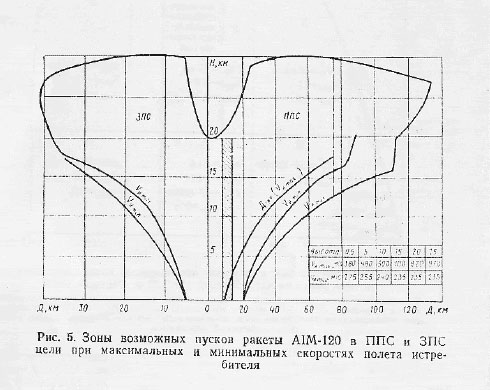
Tail chase range of AIM-120B at altitude of 10 km (32k feet) is around 20 km. If Meteor can have 5 times larger tail chase distance then that would make around 100 km. That seem to be more than enough in most case i think
garryAHigher altitude placement extends the Horizon for a given target altitude. It does not make a non OTH radar OTH capable
True that, most OTH radar use skywave propagation, but their resolution is only good for early warning
garryAI mean your calculation is wrong because you only consider one out of three variable
a- radar height
b- target altitude
c- atmosphere refractive index ( generally depending on humidity and temperature )
garryARamjet seem like the way to go at least kinematic wise
garryARadar horizon affected by both target height and radar height, since targets of TPY-2 are ICBM , its line of sight against them could be thousands of km
There are some specific atmospheric condition such as ducting that can extend radar horizon of any radar greatly but in turn will reduce accuracy significantly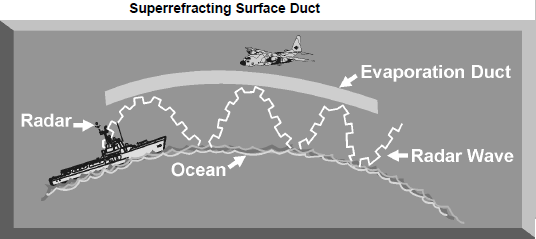
garryAI just observed that those T-38 where without any wetbags in that picture. Makes them harder to spot, adding Jammer pods would amplify that, just sayin.
Technically they can operate under support jamming from F-15E or what ever aircraft available
garryAI disagree because you are wrong on this one.. and I think I have made honest effort to support my stance by evidence.. there is nothing more behind it..
I, too, can’t read it but the switches, letters and lines match perfectly. The position matches, too.. I have checked all other panels in the F-117A cockpit before I have even started this conversation (hence the mentioned honest effort).. there is nothing else like it.. an error is very improbable..
Alright, fair enough, anyway i contacted the guy working on F-117 program and here is his respond
The RLS is no longer a system that is installed in the F-117, and all functions of it were deactivated in the early-mid 80s. Am not certain it was installed on all aircraft. In the pictures above of the antenna (that is an old diagram from early Dash 1 revisions), the left RLS antenna location was removed and faired over, while the right RLS location was replaced by the UHF LOCOMM antenna, which was the antenna used for limited UHF comms when the upper and lower UHF blade antenna were retracted. In fact, when the LOCOMM antenna was devised (previously, there was no comm ability when the blade antenna were retracted), the lower UHF blade antenna was disconnected, even though it was still in-place, and extended/retracted. It was just not hooked up to anything.
As mentioned, RLS and RWR are completely different systems. The RLS instrument panel position shown on the right side panel, was replaced by a 3-switch panel called the Antenna panel: with 1 switch for extend/retract all comm antennas, 1 switch for extend/retract Localizer antennas, and 1 UHF Top/Auto/Bottom (which antenna to use) switch. On the ICS panel, there was also an audio switch labeled “RLS” that was deactivated and had no function.
As I understand the RLS system, it was once tied to or related to the RCS recorder system that was onboard. Basically that was a system comprising of sensors tied to the aircraft’s avionics that took data from ground tracking radars to enable the RCS of the individual aircraft to be checked. The control panel for this was on the left inner console, but the instrumentation for it and the beacon for allowing tracking by ground based radars was only installed when the tests needed to be accomplished, and these were installed on the aft wall of the left weapons bay, again when testing was needed.
With regards to RWR, none was installed in the F-117. For one, with how 117 mission planning was done with regards to planning around known fixed threats (didn’t care about mobile threats) and how flying the planned black line was paramount, you didn’t want guys reacting to what they see on an RWR, and thus messing up the planned routing. But even more importantly, nothing should pop up on an RWR in any kind of tracking mode, otherwise the planning was ****e or the stealth technology was. But the biggest reason there was no RWR was that there was no way to incorporate it. RWR antenna of the time were “nubs” that would have to be installed on both sides of the nose and both sides of the tail. This couldn’t be done on the 117 airframe without seriously messing with the RCS of the airframe, so none was ever installed, as it was determined it should not be needed.
garryAWhat do you mean weren’t classified?
I mean like their existence and name wasn’t denied
garryAFrom Atlantic trident exercrise
Flying back to Langley, the experience was an eye-opener. I have been covering the Raptor and the F-35 since beginning of both programs. It is one thing to intellectually grasp the power of stealth, but seeing it in action makes one a believer—our flight had no idea, no warning from the AWACS or GCI that we were about to be hit until it was all over. It’s nearly impossible to fight an enemy you can’t see
“If the pilots of both {F-22/35} could carry a 9mm and open the canopy inflight, they would have 15 more kills per sortie,” the senior Air Force official told me. “It’s like fighting Mr. Invisible.”
http://www.scout.com/military/warrior/story/1775189-flying-against-the-f-22-and-f-35
garryAI am not going to argue, here is the F-117A manual, go and find me a panel which looks the same
This one ? Or could be this
Idk, they all kinda look similar for me.
what exactly is my agenda
I don’t know, maybe just to side with flateric , may be just to say iam wrong because we always disagree….etc. That is my perspective, i know you will disagree, like you always do. But have been here for a while it very hard for me to believe you don’t have agenda.
Yes, it was only used in test and not installed, that is why it has found itself in the flight manual, in the simulator and why I have shown you two independent pics of a RLS panel installed in the cockpit
I know it exist in manual , that what the article mentioned. Your pictures i still don’t really buy it because it too blurry for me to read what written on the panel
because it was classified?
AN/APR-50 (B-2) wasn’t classified , ALR-94 (F-22) wasn’t classified , ASQ-239 (F-35) wasn’t classified. They are all arguably much newer and more important why suddenly F-117 ? especially when it already retired?
garryAIt is the RLS control panel, you can be quite sure.. there is no other panel on the F-117 with the same layout and the location matches perfectly..
The location seem to match indeed, but then again, neither me or you ever sit in the F-117 cockpit to be sure if no other panel look the same. As far as i can see the electric and computer panel look rather similar
I am not having any agenda here
Nah, i dont buy that. You always deny having agenda even when it is clear that you do.
I think that until the rework the RLS sensors remained there, why would one go to such lengths to remove it if you simply can refuse to deploy it?
Or the fact that it can only take snapshot and increase aircraft RCS significantly when in used lead to it only used in test and not installed. Also even when undeloyed there are still gap between panel thus increase surface diffraction, that why the hatch was later sealed. Why would Sherm and Brown lie about a retired program?


 Sign In







