 garryA
While we’re at it, do you have any information on the f-35’s AESA? hornetfinn on F-16 did an estimate proposing a 350-450 km det range vs 0 dBsm on the APG-81
I haven’t read it, but i think that an over-estimation. If i recall correctly, APG-81 tracking range is like 160 km against targets with RCS around 1 m2
and this sort of information is hard to find. GarryA, if you’re here, you can look at the article I linked that claims the APG-77 has 100 mi operating range, but there’s no RCS figure attached to it so we can’t determine whether or not I can dig 400-500km vs 0 dBsm ranges out of the APG-77v1. Been trying.
In the link you gave me, that 400-450 km figure is cued maximum range, max range is often against targets with RCS between 10-100 m2 depend on producers
It’s actually pretty radical, and suggests that with radar advances like photonics for noise reduction and GaN, current X-band stealth can be partially defeated; an estimate suggests that future photonics radar would be able to get 100 km detection vs -50 dBsm.
Regarding photonic radar, according to what said in these 2 articles
http://www.nature.com/nature/journal/v507/n7492/full/nature13078.html
http://spectrum.ieee.org/tech-talk/aerospace/aviation/laser-makes-more-accurate-radar-system
in photonic system you can reduce internal noise of the system by 10 times ( 10 dB ) because analog hardware components such as mixers, amplifiers are replaced by two optical resonant mode-locked laser and a photodiode sensor, thus detection range will increase. While that no doubt very good , it is no where from a counter stealth system with face recognizition from 500 km aways like some journalists claimed. Personally, i see it as similar to the change from PESA to AESA ( rely on reduce internal noise for better detection range ).
On the otherhand, GaN rely on better transmitting power for range improvement.
With both photonics and GaN , radar detection range will certainly improved alot. However, i don’t see those technology as the death to stealth. In fact, they make stealth become even more important given that technologies like GaN can easily be implemented on jammers which synergy signifiantly better with a low RCS assets. Longer radar detection range also help stealth aircraft deal with threat from optical sensor much easier.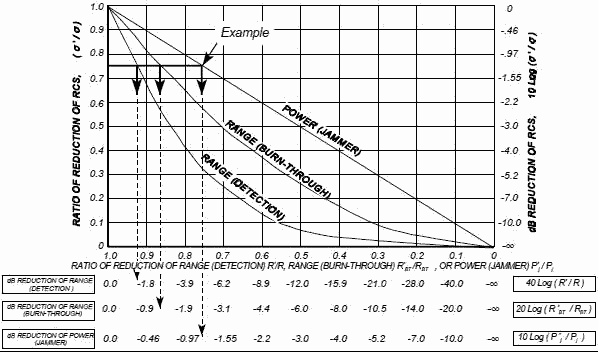
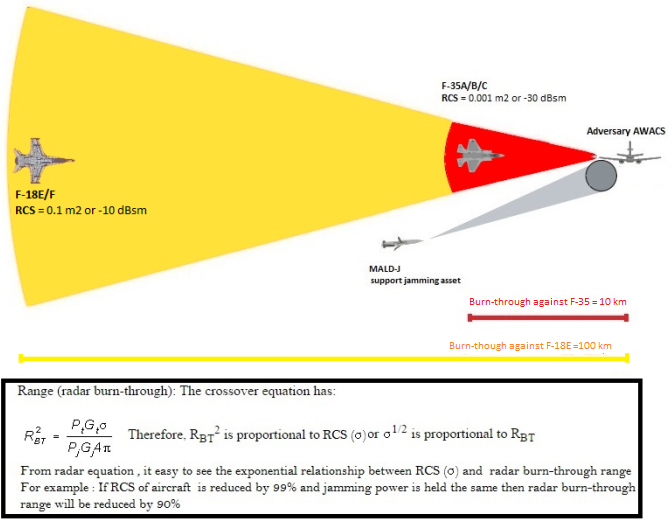
For instance, consider this:
http://www.panashield.com/emc_absorbers.asp
The RAM in your article is pyramid RAM used in anechoic chamber ( you can look at absorber depth of around 50-70 cm), it looks like photo below. You can’t put such things on fighter aircraft or even surface ship
RAM for aircraft must be much thinner ( unless it is a part of aircraft structure like fibermat) ,likely something like this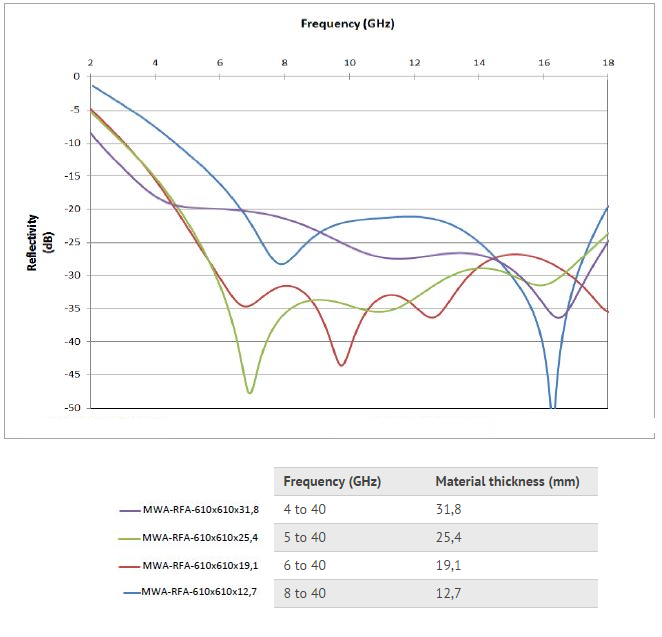
or this
garryANo one says there that they would have to be back to pre-stealth aircraft, just that actually the rate of advancement of radar technologies are actually superior than the ones of stealth and that sacrificing even more aircraft performances (because at the moment a multiband VLO plane would mean just a flying wing) trying to match them seems me just a recipe for troubles and a lot of money of time wasted.IMHO the point of maximum technological/tactical advantage of VLO technologies is even actually being trespassed and it would further deteriorate as time passes by.
Iam not sure why would you think so. The whole point of stealth is so that you can detect, attack adversary before they can do the same to you.It doesn’t matter if radar can detect stealth fighter from longer distance today than it did in the past. As long as , stealth technology allows VLO fighters to detect/target SAM before getting targeted themselves then obviously it done its job. There are technologies to improve radar detection range of ground radar, but most if not all of them can be put on stealth aircraft as well.Missiles range and jammers are also improve in capabilities. So in that aspects , there are improvement on both side.
Think of it as 2 snipers trying to find each others.Regardless of optics that you use, it is always better to have camouflage than not to have it. While kinematics certainly has its usefulness, i personally think it is of lesser important nowadays given the fact that aircrafts can’t fly faster or higher than top of the line SAM. There may be some new trend when we finally have DEW though
The photonic radar other great advantage is that it is software defined, meaning the band of emission can change at will spanning from low band to millimeters one in just one fitting, that would even be lighter than actuals.
Not really, while photonics radar can give you a wide bandwidth with lower internal noise, others physic factors that limit capabilities of low frequency radar will be the same. In other words, if you try to make a photonic low frequency radar that fit on fighters, it will still has terrible resolution.
garryAAFAIK, Too narrow spacing between T/R modules may cause the system to have bad overheat or mutual coupling
garryAF-117 (or B-2, or X-47) FLIGHT PERFORMANCES with its own level of stealth (that’s is still better than the ones of F-22 and F-35, it seems)
AFAIK, according to USAF both F-35 and F-22 have better stealth than F-117.
CNT RAM aside their shape should still deal with low band better since they have fewer sharp edges.
Moreover, there are better edge treatment new stealth platform
So, please let’s get a look what are being said in this same forum about GaN AESA, Photonic Radar and Software defined radio emission to get just a glimpse to what will be introduced in the field of radars in the next 5-10 years
Regarding photonic radar, according to what said in these 2 articles
http://www.nature.com/nature/journal/v507/n7492/full/nature13078.html
http://spectrum.ieee.org/tech-talk/aerospace/aviation/laser-makes-more-accurate-radar-system
in photonic system you can reduce internal noise of the system by 10 times ( 10 dB ) because analog hardware components such as mixers, amplifiers are replaced by two optical resonant mode-locked laser and a photodiode sensor, thus detection range will increase. While that no doubt very good , it is no where from a counter stealth system with face recognizition from 500 km aways like some journalists claimed. Personally, i see it as similar to the change from PESA to AESA ( rely on reduce internal noise for better detection range ).
On the otherhand, GaN rely on better transmitting power for range improvement.
With both photonics and GaN , radar detection range will certainly improved alot. However, i don’t see those technology as the death to stealth. In fact, they make stealth become even more important given that technologies like GaN can easily be implemented on jammers which synergy signifiantly better with a low RCS assets. Longer radar detection range also help stealth aircraft deal with threat from optical sensor much easier.
garryAVery detail , i love it.
garryA70% increase is decent you say ?
what would it take for you to say its a quantum leap then ?
Like 3-4 times different in detection range
yes, those are two unlucky customers that ordered the day before GaAs became obsolete,
same story as with F-35.
PAK-FA otoh got the timing right
doesn’t N036 Byelka use GaAs also ?
garryAMost people claim that it didn’t need it and it wasn’t worth the potential stealth compromise. Neither of which are true apparently.
The side arrays are still quite unnecessary, mostly useful for SAR but f-22 isn’t really A2G oriented. So it is easy to understand why they cut it to reduce cost
The IRST would be a good add on with the amount of stealth platform in the future
garryASAAB GlobalEye is GaN based, and will have 70% more range than the previous GaAs version.
It is also able to detect stealth aircrafts at much larger distances
70% increase in detection range is quite decent, but i dont see it really change the situation much versus stealth, say for example if before you detect stealth platform from 25 km then now with GaN that number gone up to 42 km, still much shorter than the distance that a stealth platform can detect conventional assets.
garryARussia has two type of Zhuk-A radar
Zhuk-A (FGA-35) = AESA GaAs
Zhuk-A (FGA-35 3D) = AESA GaNJapan similar
J/APG-1 = AESA GaAs
J/APG-2 = AESA GaNAnd China
KLJ-10 = AESA GaAs
KLJ-7A = AESA GaN
AFAIK, all those are GaAs radar except J/APG-2
Distinctively through its appearance, AESA GaAs has a number of striking microchips on its surface, while AESA GaN is a flat surface.
both of APG-77/81 are GaAs tech ?
the spike you saw on radar aperture are T/R modules, which is a requirement for any AESA or PESA regardless whether it is GaAs or GaN. The flat cover on top of some AESA is just a cover to prevent modules counts and has nothing to do with the T/R modules themselves.
garryAWhy will any one buy stealth aircraft after GaN radar. .
GaN is not some magical material that makes physics irrelevant
garryASlottet?
Doesn’t the BARS array move sideways?
That kind of aperture is called the slotted array.
garryAYes and no.. the size of the zig-zags is specifically aimed at X-band wavelengths.. for different wavelengths it might work less effectively, in certain cases even make the whole radar return worse..
Not quite, the main reason that make very low frequency radar more efficient against stealth than higher frequency is : when the object size approach a certain ratio with the wavelength, most of target return be creeping wave return and surface discontinuities scattering rather than specular return. Serrated edges are designed to reduce negative effect of both.
From X band down to L band, aircraft is still in optical region in respect to the radiowave so surfacewave matter little compared to specular return.
garryAzig-zags, dimensions of edges, inner structure, RAM characteristics
Serrated edge canwork for a very wide bandwidth because it deal with surface wave return rather than specular return.
LM CNT RAM has a massive bandwidth as well.
garryAAgain, you raise some very good points.
It is great that you take the time to post here, you are definitely raising the level of this forum (as do several others, I hasten to add…). I appreciate it very much!
Thanks for your kind words , i appreciate it.
The idea that ten times the power equates to ten times the range displays the technical ignorance of the person who posed it.
It is JSR after all. Iam not even surprise anymore
garryAI am curious: Why did you not yet put JSR on your Ignore list?
I didn’t argue with JSR to convince him. I argue with him so that new posters doesn’t get mislead because of what he said. Similar reason why i would sometimes argue with KGB or blackadam
Good points, however to my knowledge all F-35s in the foreseeable future will be flown by “friendlies”; the main threats to face the Erieye ER would be the PAK FA and perhaps also the J-20, both with assumed RCS lower than the standard “4. gen” fighter but significantly higher than the F-35. Thus the F-35 comparison is probably only of academic interest.
But they may have very long range AA missiles like R-37 or something similar


 Sign In







