 garryA
That is your opinion not scientific and engineering fact based on Russian systems
No.
garryASu-35 has only 50% more power than MIG35 but radar capability is atleast twice if not more. 10 times more power should produce 20 times more range .
Su-35 and Mig-35 radar do not have the same gain. There are other factors such as internal noise of the system can be improved for better radar range too, but consider everything else equal, 10 times transmitting power only get you 1.78 times the range.
garryAso 10 times more powerful A100 should be able to track F35 at 2000 km.
No, radar wave travel 2 ways. As a result, when you use a radar that is 10 times more powerful ( or 10dB increase) the detection range will be improved by 1.78 times. To get 10 time the range you need at least 80 times the transmitting power ( without taking into account loss).
garryAAccording to the posts on the previous page the previous version of Eireye would be able to detect a cruise missile 350 km away. I believe RCS of a cruise missile is commonly put at 0.5m2. For the Eireye ER detection range for an object having 1/10 of the RCS will be detected at the same range as for the previous version of Erieye.
This means that Erieye ER should be able to detect an object with RCS of 0.05m2 at 350 km.
Lowering RCS by factor 10 reduces detection range by 44%. Thus F-35 which is assumed to have rcs in the range of 0.005m2 (http://www.globalsecurity.org/military/world/stealth-aircraft-rcs.htm) would then be detected at a distance of 200km.
Reduce in radar cross section will affect not only detection range but also burn through distance to a much greater extend
a 10 dB RCS reduction will decrease detection range by 44% and burn through distance by 70%
a 20 dB RCS reduction will decrease detection range by 68 % and burn through distance by 90%
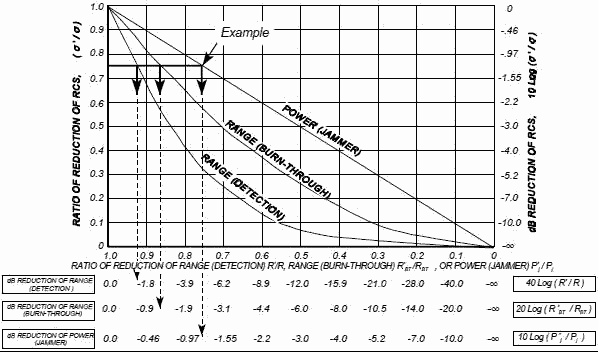
Assuming that Erieye ER can detect a cruise missiles with RCS around 0.05 m2 from 350 km , it will be able to detect an F-35 with RCS around 0.005 m2 from 200 km
But in reality there are jamming as well ( from EW pod or AESA radar or MALD-J or towed decoy..etc ), let say because Erieye is a very modern system so jamming isn’t very effective, so it can burn through the jamming and still track the cruise missiles from 300 km ( only 15% reduction in tracking range) , if we take F-35 RCS as 0.005 m2 ( or 10 dB smaller than the cruise missile ),then using the same jamming system, it can get 70% closer to Erieye ER. In other words with jamming support, F-35 can get within 300*30/100 =90 km from Erieye ER. It reasonable to assume that BVR will be effective against AWACs at that kind of distance.
garryAA soft turn that only consumes excess potential energy as described, not a hard U-turn.
A soft turn will not have you get into the deflection angle of stealth aircraft. You yourself described it as a ring around the asset. The missiles need to take a very steep dive/turn
Aircraft roll will change the spikes of deflection, fluctuations. The gimballed seeker would realign if RF gets too low
Iam struggle to imagine how the gimballed seeker has anything to do with the RCS spike here.
SAGG guidance would override if changed aspect creates a echo on the radar which is stronger than that of the SARH seeker.
Assuming that the spike either turn toward the radar or the missiles but what if it isn’t ?
You will always lose energy if you maneuver. Thrust and potential energy can compensate that loss. You talk about drag and should be aware that a diving mach 5 SAM at 25km would slow down to something like mach 3 down to sea level, just due to drag (or you consumes it for maneuvering and slow down =less drag losses)
Let say missiles moving at Mach 5, you made a steep maneuver that reduced the speed to Mach 3, now the thicker air at low altitude will reduce that speed even further down to Mach 2 and lower. If you consume energy for unneccesary maneuver then you have less to fight against drag at low altitude. Eventhough, drag at lower speed is lower, your net energy/ speed would still be reduced if you made a maneuver
Pardon, my fault, I wanted to say for total stealth effect, the RCS reduction, is only for at best 1/3 due to RAM, rest is deflection scattering.
That just a guess , we dont have enough information to conclude how much effect shape has and how much effect RAM and RAS has, it depends alot on frequency too
However I express my doubts that operational feasible RAM coating could create a -30 DBSM reduction, even in x-band (it would mean a 10m² head-on F-15 would get a RCS of 0,01m², it would become a F-117 class VLO asset)
Higher performancer RAM are thicker ( can be a few mm thick) so may not be suitable for conventional aircraft that wasn’t designed with them from the out set, some RAM such as fibermat can be used as structure too so they need to be intergrated from start. Moreover, there are place that not sutable for RAM such as engine fan blade, missiles seeker , missiles fin( corner reflector). Conventional asset also lack edge treatment so they also suffer more from surfacewave scattering. Band width of shaping may be wider too
Bear in mind that by VLO deflection, scattering is concentrated in are more confined space than a conventional design (free to go in any direction).
that mean they has very few strong spike as opposed to conventional aircraft with many small/wide low level spike.
Furthermore I reject the idea that spikes are necessary for a home on the target, lower amplitude scattering could be sufficient, more so due to the mentioned concentration effect.
All Stealth aircraft have aglied edge, so it is likely that their spike are concentrated in very narrow angle instead of evenly distributed.
At least I don’t know how you determined that spikes are necessary, not knowing the illumination RF energy levels and seeker sensitivity.
That the whole point of stealth design is it not ?, if radar/missiles can easily detect energy even from low spike scattering then what the point of deflect radar wave toward some specific angle ?
The 10% deflected RF energy is too high? Your reduction value of 99,9% would mean that 0,1% of the RF energy would be deflected. I don’t expect such a drastic effect by RAM and think that deflection is responsible for the biggest part.
The point was rather about what amount of RF energy is necessary for the SARH seeker to be able to home on target.
The shaping can easily responsible for 25-35 dB reduction, RAM take care of another 15-20 dB reduction in RCS
VHF resolution is sufficient to determine the vector and used, in relation to radar and seeker vector, to correct the doppler shift.
Your explaination is very vague and doesn’t seem to address the question.
Say you have a massive VHF radar, your beam width is about 2 degrees, that is about few km of space at long distance. You will get return from both the chaff and the aircraft at the same time ( in fact even gound return if aircraft is low enough) , so how to you distingush without Doppler shift ?.
radar and seeker vector is irrelevance in this case IMHO
Illumination beam is very wide for brute force S-400 like systems at those long ranges, certainly larger than the VHF resolution.
Wide illumination beam is a horrible horrible idea, not only that the energy level would reduced significantly but you also reduce the accuracy of your missiles at the same time.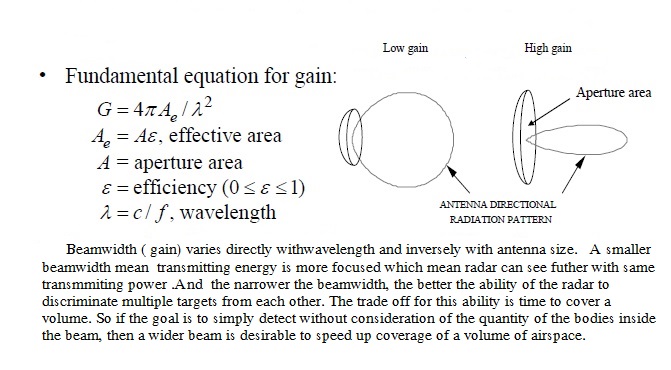

garryAI think its enough for a rather soft positioning turn.
A soft turn is a turn with very small angle, if you want to get into reflection spike of VLO aircraft, a shalow dive is not sufficient, and what if the aircraft roll ?
these are high velocity missiles with dual pulse/sustainer motor, having something like Mach 4 or 5 during end of coast phase, entering terminal. During the terminal dive they initially gain velocity, but as air becomes denser this gain stops and the potential energy starts to heat up the missile (drag) and slowly decelerate it. So instead of heating up the missiles nose, aerodynamic control fins can decelerate the missile by maneuvering. Hence there are even good chances that no net energy will be lost at all during the positioning maneuver.
You cannot perform a maneuver without losing any energy if you have no thrust left. Any meneuver that attempt to change missiles direction will also present missiles side body to the air flow, thus cause more drag than normal. More drag mean losing more speed.
We are dealing with X-band here, a very good band for RAM effectiveness. Subtract the RAM absorbing effect from the total RF illumination on target and you get the deflected RF energy. For adverse conditions I guess you agree that RAM will never be able to absorb 1/3 of that total RF illumination energy on target. The rest will be deflection and this is what the bi-static SARH has to work with..
RAM can absorb alot more than 30% of radar energy. In X band some RAM has absorb rating around 20-30 dB which is around 99-99.9%.
The rotation axis of the ring will always point towards the illumination radar with the VLO freely in the center of the ring. Then changes of aspect of the VLO asset will create fluctuations as some faces deflect energy better away from the ring area than others (as you said in the water tube example). However overall and general deflection scattering pattern will be somewhere in the ring and from there expand outwards
The reflection in the ring is not evenly distribulted, you have some high RCS spike , you also have some low RCS spike , and those points are also on different plane. Imagine you need to position your missiles at red or black circle
Also bear in mind that its not discrete high energy spikes. The F-117 might would create such spikes but modern VLO assets have high number of deflection surfaces/geometries.Hence the deflected RF energy will be quite evenly distributed
That debateable, F-117 has way too many sharp edge and facet when view from front.
Just a simple comparison, knowing the RF energy losses relative to distance and systems such as the S-200.
The S-200 sits on its launcher when its illumination radar starts to paint a fighter sized target at 150-200km. Still on the ground its missile seeker receives the reflections and locks on target before launch. Now we don’t have 200km distance but 20-30km at best and when taking into account non-linear (^4) energy/range relation we can very well assume that under adverse conditions 10% of RF illumination energy would be sufficient to establish a lock at 20km instead of 200km. For adverse condition consideration I didn’t even take into account that the total travailing range of RF energy for S-200 is 200km x 2 = 400km, while for the S-400 its 250km + 20km = 260km, again not taking into account closure of target during engagement period. Under real conditions much less than 10% would be sufficient if you ask me.
But where do you get that 10% value from while the RCS reduction effect of both shape and RAM can be much bigger than 10 dB, especially at X band
The bi-static receiving position is designed to be in the direction of deflection lobes and the gimballed seeker will help it catch the strongest ones.
What ? , how ? the missiles literally would be outside of the lobes if the aircraft roll slightly
– The Tombstone high Resolution X-band beside sensor fused S- and VHF band radars (Big Bird and Nebo-SVU) will distinguish between chaff as well as the SAGG picture of the SAM seeker
For MTI I get the VLO asset’s vector via VHF band, missile vector via x-band engagement radar (radar position/vector is also known), calculate the correction factor for the misleading lower doppler shift.
VHF resolution cell is too big so it wont be able to distingush between the aircraft and chaff that very close to it.
X band can’t see the F-35
I cant see the relation with missiles vector either
Moreover, how wide you want the illumination beam to be ?
garryA4. The missile has the absolute kinematic superiority to position itself to any position necessary relative to a F-35, the JSF will never win that game (engagement wont last long enough).
.
Getting into position is one thing, get there and still have enough energy to intercept and neutralise target evasion is another story
garryAThe position maneuver is not as hard in real scale as you may think. The potential energy in altitude delta should be sufficient to avoid any velocity loss in scale of one mach.
Almost all BVR missiles follow a ballistic arcs, the potential energy is not as much as you think, and they are not free either. Missiles basically trade fuel for potential energy when they climb in boost phase.
Long range heavy SAMs are designed to have excess kinematic reserves. The potential energy is better used for a positioning maneuver than heating it up by friction.
Even long range SAM would coat in terminal phase, and with high weight and big size they do consume a significant amount of enrgy to do a U turn. Normally the excess energy will be used to help missiles intercept the target that change direction, however, in your case you waited it on a U turn maneuver.
It potentially neglects stealth for a SARH seeker with SAGG guidance and a advanced networked IADS
I just cant see how it can neglect stealth given both the missiles profile and the guide method are rather impractical
RAM, well what fraction of total stealth performance is due to RAM?
That hard to say, different RAM operate differently , but the absorbing capabilities could be extremely high depend on the frequency
( 3 dB is about 50% , 10 dB is about 90% ..etc )
My scattering pattern is naturally a simplification but for adverse conditions, its unlikely that the deflected waves point that far to the opposite direction of the illumination radar. Its there to show the basic principle.
My graphic is intended to simplify the situation in order to show that scatter/deflection lobes (likely >50% of illumination RF energy) can only be at a certain torus like position around the aircraft, with the axis of the torus pointed towards the illumination radar, not randomly anywhere. This axis aligned torus would fluctuate in RF energy scattering with changes of the VLO asset direction/aspect. . Not necessarily, could be a steep lateral attack still within the frontal half (my graphic shows adverse condition with a very high deflection performance of the VLO design).
Iam not entirely sure what are you trying to say by ” torus position “. As in a ring in horizontal plane or azimuth plane ??
Generally the location of high RCS spike, would be slightly toward the 30-35 degrees from the nose and to the side, kinda like the butterfly, but they dont just cover the whole area like when you look at the photo top down. You have to imagine the 3D image of them.They are like many spike on a hedgehog. To get your missiles in position is a similar job. a slight change in direction and the high RCS spike isn’t there anymore
However even if the RF energy scattering in the torus area is down to 10% of total illumination power on the aircraft due to changing aspects, its sufficient for terminal SARH seeker lock-on
where is that 10% number came from and how do you know if it enough or not ?
I think you know that a gimballed seeker can search for fluctuating scatter spikes without the need to change the course of the missile. This also means that if spike signals are getting weaker, the gimballed seeker can position itself to where the spike is computed to moving to or search for a new spike (all in context of a redundant SAGG system).
The gimbal seeker would be useless if the reflection lobes doesn’t point at the missiles position at all.
No. As said, the concept is about a higher tier sensor to have detected the VLO asset in the first place. Hence target vector would be known. This was a out of the head concept for a MTI function for the case, I have no technical radar document at hand now with a MTI function description that would fit for this case, pardon this vector correction method of mine is all I have at the moment.
As i understand it ,basically, you want to rely on a VHF radar ( say NEBO SVU ) to get a rough position of target, then use another radar to illuminate that space.Then guess the location of the reflection lobes. Then launch a missiles toward the target. The missile then do a U turn to get in the reflection lobe.
The VHF radar wont help your missiles distingush the chaff or the airframe simply because its resolution cell is too big for that
The reflection from illumination radar wouldn’t help much because of the low Doppler shift due to radical velocity of the aircraft in respect to radar.
So iam not quite sure what MTI method do you propose here.
garryA@garryA
Yes its coasting but we are talking here about high mach numbers of 3 and above in terminal phase. Some depletion by some additional maneuver will decrease the speed but not most of the speed. Even if speed is decreased from mach 3 to mach 2.
Well , no. Once your missiles is coating, you would have to expect a decrease of 1 Mach or even more for every hard turn. A hard U turn would likely decrease your missiles speed from Mach 4 down to Mach 2 or lower, then any further maneuver from the aircraft will decrease your missiles down to subsonic speed
the lower speed also increases the effective turn rate for the same max. G pulled
It depend, because lift is also a function of velocity so if you go slower, it is likely that you won’t generate enough lift for the same max G.
Again, its a detail that would not decrease the PK significantly to question the concept
It is not a detail, flight profile is extremely important for anti air missiles.
As said you have to deal with a redundant SAGG guidance here. Should maneuvering really come close to break the lock of the gimballed SARH seeker, command guidance can take over and in worst case use coordinates of the senor asset that has detected the VLO asset in the firt place, to use the large proximity warheads of heavy SAM for a last dich kill effort. However, in bi-static operation we have good chances for the illumination radar to pick up echos, caused by the SARH seeker evading VLO asset.
If you can get the missiles close enough for its warhead to be effective by third party sensor then there is no point for the SARH to start with. By using SARH , you already exposed yourself to significant threat from anti radar missiles. Moreover, if you can get missiles close enough for its warhead to work then the terminal ARH seeker will work too
I think you really over simplified the scattering pattern of VLO assets that they either face the missiles or the ground radar, while that not really the case in reality
The idea is to make use of existing, mature SARH technology which coincidentally (potentially) has a natural effect of bi-static operation which could be effective against VLO assets. IIR for BVR is not as mature and ARH could be judged to be not robust enough (F-35 RSC now claimed to be that of a pea). The idea of a ARH SAM/AAM attacking a VLO asset from above where the RCS is expected to be significantly higher sounds reasonable, but the idea that you could basically neglect stealth via bi-static operation and see it crystal clear sounds more promising.
Even if the method work in some rare occasion, it still doesnot neglect stealth because there are effect of RAM as well.Moreover, the missiles will have much lower PK if it always have to make maneuver just to get in position then chase the target
The deflection pattern is strongly dictated by the illumination radars position. It is not as random, even in maneuvering, as you expect. I have prepared a simplified graphic to make it more clear. What you expect to be a lock breaking change of the deflection lobe, are expected to be lobe fluctuations by me, not a cancelled deflection lobe.
It may looks very simple to do in your graphic, but that is only because the graph is not to scale and you are drawing in 2D.
Firstly, your missiles has to make very hard turn to get in the reflection lobes (assuming you know where it located), this is a energy consuming maneuver , even worse when it is in terminal phase
Secondly, you changed missiles intercept profiles from head on to tail chase , thus reduce effective range of missiles more. Even without any turn involved, the tail chase range is already much shorter than head on intercept range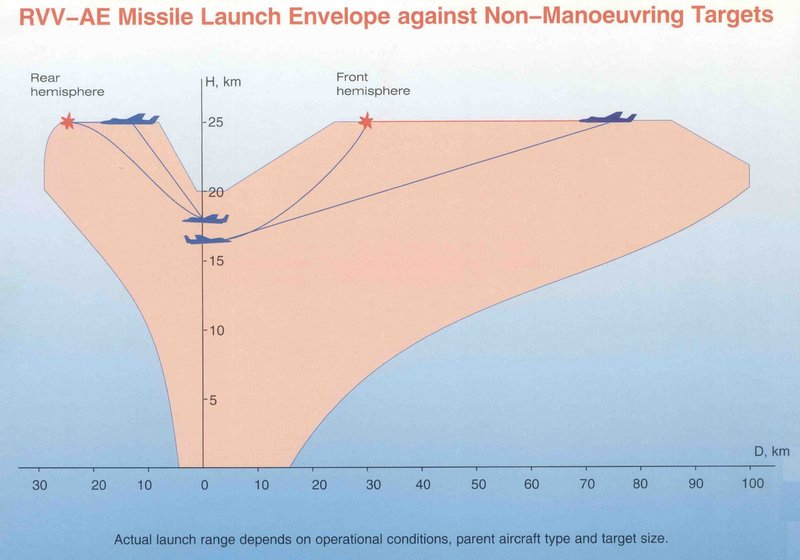
Last,you only think about reflection lobes of VLO asset in a 2D images thus create the impression that it will need to turn a significant angle to point the lobe aways from the missiles while in reality a slight roll would do the job
Look at the nose and try to imagine the reflection lobes in 3D form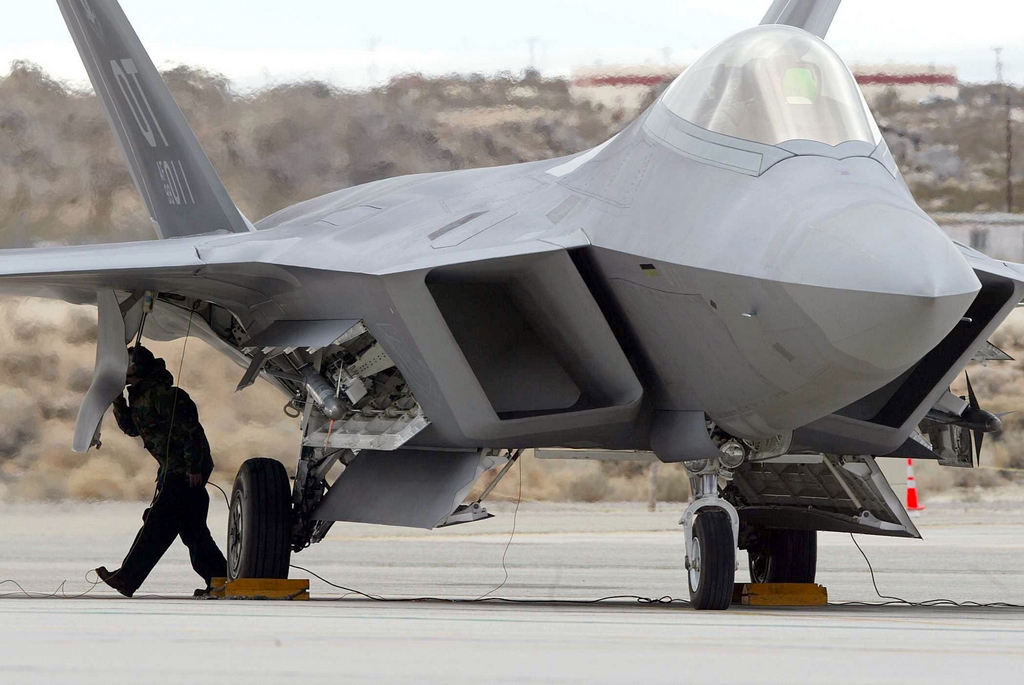
With digital technology, I could think of a computed correction factor determined by the vectors of radar, seeker, target
Technically you can determine that target is moving by consider it in the range gate, but for that the reflection has to come back to the ground radar, while it not really the case here
sophisticated MTI methods.
sotiphicated MTI method such as what ?
garryABasically yes. A command guided flight profile to bring the missile in a position relative to the target where this bi-static operation is possible.
Very impractical, a U turn like that would deplete your missiles of most speed it has build on the way to target. Especially consider that the terminal phase of most missiles is coasting. Unlike in the movie , BVR rarely make more than 1-2 hard turn at long range. Moreover, high velocity mean very big turn radius as well
It changes, yes, however these changes would be classified as fluctuations, the general direction band does not change. The position of the tube is a driving parameter, stronger than the change in deflection angles via change of aspect.
If I understood you correctly, you claim that a change of aspect could basically completely change the situation and the seeker lock would be brocken. I think a change in aspect would only de- or increase the deflected RF energy for the positioned seeker, not strong enough to break the lock.As said, the VLO asset deals here with a redundant guidance principle; if it changes aspect to avoid the SARH bi-static operation, it turns away its optimized face from the illumination radar. This in turn gives the illumination radar a chance to pick up the VLO asset on its own and a SAGG guidance is so dangerous because it weights the situation and can instantly switch between command guidance and SARH guidance.
Iam not the best at drawing but let say the quadrilateral is the stealth aircraft, the red lines is radar rays. Point A and B are the main lobes of the reflection. You can see that once the shape change its aspect, the location of the main lobe will change very significantly, and just because the main lobes isn’t at its original angle anymore doesnot neccesary mean will point back at the threat radar
The missile of the system I described would fly a lofted energy optimized trajectory for ~80% of the range and then go for a positioning maneuver and then terminal SAGG guidance. There could be cases that due to angle of attack of the illumination radar and the stealth design, the biggest portion of the RF energy would be deflected to and downward direction. Hence for such a bi-static operation, it could be necessary to attack from e.g 45° off the boresight of the VLO asset in vertical and horizontal planes. But well, these are just details.
Those are extremely important detail because unlike a ship, an aircraft can change its aspect very quick and are agile enough to evades missiles launched at them. Anti ship missiles can use very complex maneuver to approach target because their target hardly move at all or move at very slow speed. An anti air missiles trying similar approach will likely deplete itself of energy to intercept target ( or PK will be reduce alot)
This blind operation is the key for this concept to work. You know your own coordinates, you know the target coordinates (via other sensor assets), you know the mainlobe illumination area at given target distance and you know that you have robust communication links to all involved assets.
If you already has the location of target then what the point of using this method ? , why not just use ARH missiles + datalink ? or IIR missiles?
Its not about hoping, you know that there certainly is a VLO asset at the provided coordinates and you know that the redundancy of your guidance system will either result into a detection and view of target via the bi-static positioned SARH seeker or force the target to change aspect and expose itself to your illumination radar during terminal phase. You are also sure that the SAGG system will instantly chose between the redundant inputs, optimally.
I said it is hoping because you literally want the SARH missile to home on the main reflection lobes of a complex moving target. Not only that you have to guest/estimate where the main reflection lobes is , you also have to hope that it either point at the missiles or at your radar. Then your missiles have to perform maneuver that really cost energy. Moreover, target can change direction too, thus making things even more complex. To be honest, i cant see how this is better than just use IIR missiles or active radar missiles
As for range: You always have the coarse target coordinated via the other sensor assets, otherwise the concept does not work. Other sensor assets would provide a sufficiently accurate target position/range for mid course guidance up until terminal phase
Then use IIR missiles, much more reliable
The concept is also not about covering every possible aspect, the direction band where RF energy is deflected is limited. A 45° position above/below and 45° to the side of the target is a good candidate together with the gimballed SARH seeker.
That is before target start to change direction, once it does then you have so many possible aspect to think about
The illumination radar of the S-400 is sophisticated, with large computing resources, I don’t think it would fall for chaff.
A SAGG system with networked multi-band and high resolution sensors, could very be well able to distinguish between chaff and VLO asset. Whether a state of the art FMCW illumination radar would not be able to provide a modern seeker with a useful doppler shift via side reflections is questionable.
Doppler shift doesn’t depend on how modern your system is though.
garryAas you know, i knew it was bs from the start,
on contrary the AESA angle on US fighters are canted upwards to deflect echo upwards rather than back to front or downwards, meaning its rcs is higher from above
It isn’t BS
1/ the nose cone of stealth fighter like F-22/F-35 use frequency selective surface so not all frequency can penetrate it and not being absorbed
2/ a canted aperture means a higher number of T/R modules can be put on them thus , longer radar range
3/ Kinda obvious that order of priority would be down >up simply because ground radar are far stronger than aircraft or missiles seeker. However that doesn’t mean they ignore that completely
garryAThat’s why doppler radars have been invented to be able to do look down shoot down right?
Doppler effect is not only useful in look down/shot down, even when radar look up , it still help reduce side lobes interferences
garryAsource that the aircraft designer has in any instance taken into account that a missile would be descending towards the a/c
Why wouldn’t they when air to air with loft trajectory have existed for decade ?
The nose shape also indicate that radar wave will not be deflected straight up
garryAsource ?
Source for what ? that BVR missiles like AIM-120 use a lofted trajectory ?
Even HUD has indicator for loft angle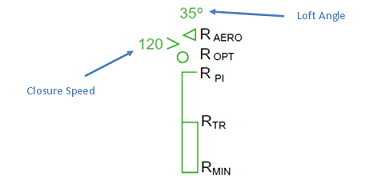
garryAThe whole tirade about the F-35 is just carefully prepared and orchestrated sales campaign. Still, anyone with the last pieces of sanity is getting their fingers off and starting development of their own design (Russians, UAE, China, Korea, Japan, Turkey, Indonesia..). Guess why..
Korea , Japan , Turkey all buy F-35 AFAIK.
Moreover, what is the indicator for countries with ” sanity” ?


 Sign In







