 garryA
LPI might work well against 80-90s era threats. Hardly against the Su-35.
Not all LPI is the same, it very debatable whether APG-81 LPI is very effective against modern ELINT or not
The range of the IRST system largely depends on the optics, not the sensor resolution.
Better resolution mean better ID range
garryAYes it will maneuver at the last phase agreed. But the concept does not change, there will only be more RCS fluctuations. As said a good stealth design deflects radar waves from a threat radars boresight. A ideal all aspect design would do this at every aspect with the same performance. Let me make a simple example: A car on a turntable is sprayed by a high pressure firefighting tube –> the deflected water around it will fluctuate at different aspects but the position of the tube dictates most of the deflection behavior/direction.
I honestly dont get what are you trying to say ? Both the shape of the car and the position of the tube will dictate the deflection angle of the water, not just the tube position.So if the car turn obviously the defection angle change too
A typical energy optimized trajectory via autopilot updated missile up-link with a dive down maneuver at terminal phase (at long ranges) or a climb from below (short ranges) would likely do it. Energy cant be eliminated; the deflected RF energy (minus the RAM/RAS absorbed portion) will be a strong signal, in quantity about the same amount of RF energy reflected by a conventional design.
Normal BVR always climb at initial phase and dive down at terminal phase.So this have been taken in to account of stealth aircraft designer. But if you want your proporsal to work, your missiles need to dive down target but from side aspect , not from front. And the major problem is that if target change direction then the location of their spike will change also
I explained this in the first post of this thread. The basic idea is to use other sensor assets input into the IADS/GCI to enable a x-band attack system to do something it would be otherwise unable to do via this proposed bi-static effect.
Your explaination isn’t sufficient
You cant just blindly illuminate a space then launch missiles randomly at the blind space and hope that the there would be some reflection from something there and the missiles can home on the reflection to target.
There are plenty of problems:
1/ Rule of engagements
2/ Chaff , decoy
3/ Do you launch enough missiles to cover every possible aspect that target can have high RCS spike ?
4/ When to launch the missiles if you are not intended to measure range?
Above I explained the behavior of a ideal all-aspect stealth design, it always deflects the waves away from the boresight of the attack radar. This will probably never be realized. The weaker the design gets at different sections, less waves are deflected and can travel back into the direction of the emitter, causing fluctuations at the SARH seeker. However a SAGG guided missile will also benefit from aspects where less RF energy is deflected because the ground based fire control radar will start to receive echos and use command guidance if seeker lock has been brocken.
The problem is you assumed that once aircraft turn aspect with low RCS toward the missiles, it will present the fire control radar with a high RCS spike. But that is not neccessary true.
Lets put it simple, a good stealth design deflects more RF energy into direction where a potential bi-static SARH seeker/receiver can be positioned.
A bad stealth design deflects less into presumably safe directions and sends back echos to the attacking radar boresight.
A SAGG guided missiles makes use of both of this worst and best case scenarios and the fluctuations between them.
Stealth aircraft are generally have bow tie signature, meaning most of scattering is to the side, and they have low frontal and tail aspect RCS. Theoretically you can put a receiver so that it always be at the side of target, and thus take advantage of their design, but side aspect generally mean less Doppler shift, which mean seeker has to deal with higher level of clutter and harder to distingush target from chaff/ ground return.
The kinematic penalty would be negligible because its limited to terminal phase
Well, no. How exactly to you imagined the missiles fly profiles would be ?. Fly directly at target then make an U turn to approach it from the side ?
CW designs such as the HAWK/SA-6 seekers have no doppler range measurements. Even if your argument is right and a modern FMCW illumination radar would have problems to create the necessary doppler shift of such deflected waves: A SAGG based system will have analytic means to distinguish between chaff and target.
The reason radar can distingush between chaff and target is due to Doppler shift. Doppler shift is created due to the radical velocity of target and the transmitter.

garryA@garryA
I think a change of aspect or direction of the VLO asset would not change to overall situation. First there is the question whether it would be worth the risk to change direction after the attack has been detected by sensors and the most optimized face (front) has been directed to the threat emitter.
It changes the situation alot if you think about it.
1/ If missiles are launched at aircraft then it is expected that pilots will try to dodge them. They will not maintain a constant course
2/ The high RCS spike is very small and often concentrated to the side so your missiles will have to approach target from very awkward angle, which isn’t good for kinematic either
3/ When do you know when to launch your missiles if the signal is too weak for your fire control radar to detect target in the first place ?. If the signal is strong enough for radar to detect then why need bi static ?
You may be thinking about a sudden maneuver that would suddenly break the lock of the SARH seeker. But any change would just reduce the amount of deflected RF energy e.g if the VLO asset exposes its least optimized face to the threat emitter, so that more RF energy is sent back to the radar and hence less is deflected to the bis-static positioned SARH seeker.
Not very practical, you are assuming that all high RCS spike and low spike aspect are covered by main fire control radar and SARH missiles.
The deflection angles of VLO assets are confined
The deflection angle is not confined because it will change depending on what direction the aircraft pointing at
As for cutter levels. I’m not sure if doppler shift is a necessary effect in such a bi-static operation mode. The seeker just tries to get more RF energy, i.e it steers to the position/direction that offers this together with all the SAGG inputs. Range calculations are not essential and if, the performance of digital MTI (in SAGG guided missiles inside the ground based engagement radar) has greatly improved in the recent years, this should not be a dealbreaker.
The only effect of Bi static configuration is that your receiver can be put at location/ aspect where there is strongger reflection. However, the problem with Doppler and the need for range measurement is still there. They don’t just disappear.
Without Doppler processing , missiles will missiles everytime VLO aircraft release chaff. Without range measure your missiles will suffer in kinematics because it cant take advantage of lead intercept
garryAFirst, what do you think that the F-35 would have such a great advantage?
The Su-35 also has RCS reduction measures, unlike the F-15 and F-16 used in the Red Flag AFAIK.
F-16 and F-15 both have RCS reduction measure, notably the Have Glass program with Golden canopy and Ironball paint.
Have Glass covered insertion of RAM into the inlet duct and on other elements of the airframe, addition of a metalized canopy and foam behind radar. Have Glass consisted of two separate programs:
the radar cross section reduction-oriented Pacer Mud that led to creation of the radar absorbent material called FMS-3049 and
the infrared signature reduction-oriented Pacer Gem that resulted in incorporation of the new top coat paint (FMS-2026) matching the shades of the current paint.
The new RAM was implemented on 60% of the structure, generally on selected upper and lower surfaces, where 10-20mils of RAM was sprayed, adding about 100kg of weight to the aircraft.
if the F-35 would shoot itself in the foot using just LPI mode i.e. so forfeiting the doppler effect.
LPI mode is achieved through frequency hopping , PRF jitter and pulse compression. They don’t really affect Doppler effect
Same can be said with all those things you list: they are not a F-35 exclusive, about all current production fighters have something similar.
And no, a difference of -10db means not a ten time greater detection range, actually it’s less than the double.
1/ There is way more than 10 dB different between radar cross section of F-35 and Su-35
2/ -10 dB in RCS mean about 44% reduction in detection range, about 70% reduction in burn through range and 90% reduction in jamming power required.
garryAwouldnt su-30 in turn be able to ID f-35 if -35 are radar active ? on top of locating it that is
LPI radar aside, you still have problem of generating fire solution by ESM.
At best, Su-35 can geolocate the single transmitting F-35 by RWR and triangulation between multiple Su-35. On the otherhand, F-35 groups will know about every single Su-35 by using radar and share datalink
and why would EOTS have a longer range at which it can ID su-30 then the other way around ?
Higher resolution +smaller aircraft.
garryA@Marcellogo
I think its possible that SARH SAMs and AAM with missile up-link course updates until terminal phase are more effective against stealth/VLO targets than the same for ARH seekers. As said, they work effectively as a bi-static radar. Given that the main technique of stealth/VLO designs is a geometry that avoids radar waves to directly bounce back to the radar receiver which sent them, –> the waves must be deflected into a other direction. This other direction where the RF energy is deflected to, can be exploited by a bi-static radar, which a SARH/SAGG/TVM guided SAM/AAM effectively is. Its auto-pilot/INS can position it via course updates at a position or angle where the radar waves are most likely deflected to, do a sniff maneuver in terminal phase, catch the RF source and home on it.
This bi-static feature is only present in SARH missiles, a ARH seeker must rely to be guided close enough to the target to receive a echo. Hence I think this property of SARH missiles have kept them alive for operators which have to face stealth opponents and not only the reduced cost/technology. To really exploit this possible effect against stealth targets, an advanced system and IADS such as the S-400 is necessary.
There are a few problems with your proporsal:
1/ what if VLO asset change direction ? since they are designed with very narrow RCS spike in mind, their reflection spike can get out of missiles FoV very quick
2/ Reflection from side aspect RCS has very low Doppler shift, so missiles seeker will have to deal with much higher clutter level
garryAhttps://defenseissues.net/2015/06/16/airborne-irst-properties-and-performance/
Did you just quote from Picard ???????. Really ?… may as well quote from JSR for the same level of accuracy
Doppler radar modes are mode for look down shoot down.
That is incorrect. Fighter fire control radar is almost always in Doppler mode, otherwise their screen will be saturated with side lobes reflection.Iam just gonna quote myself here
Radar1
Radar2

garryAI had read that
Manufacturers info is more accurate than third-party websites
I am a bit surprise that the detection range from the front is only 1/3 the range from behind but that’s probably true.
The jet exhaust is much hotter than the wing leading edge or the nose.
garryAfrontal cross section of f-35 isnt too dissimilar to su-27+,
Frontal cross section of F-35 compared to some medium size fighter in clean configuration :
JSR…. enough said. Weigh overriding the 50% of posters who have him blocked (that they have to read when u quote him) with the merits of this discussion.
My bad.
garryAthose are downgraded export figures.
No, it isn’t.
garryAThe Su-35 features a upgraded variant of the OLS, touted as being able to detect non AB aircraft at 50km head on, and 90 from the rear. Plus it has a laser range finder.
AFAIK, according to manufacturer, head on detection range is about 35 km for OLS-35 (su-35) and 15 km for OLS-UE (Mig-35) . Laser range finder distance is about 15-20 km against airborne targets

garryAHas any context to these kill ratios been published?
Like:
Exact type of plane that was pitted against f35?
Who was attacking, who was defending?
Outside sensors (awacs, ground based radar) in play?
Exact numbers of planes on either side per skirmish?
After watching the video , it seem like they pit 8 Blue air against 20 Red air. According to the general Red air has jamming and SAM support. Not sure whether they had AWACs or not.
Red air are most likely the 64th and 65th Aggressors Squadrons, consist of F-16 and F-15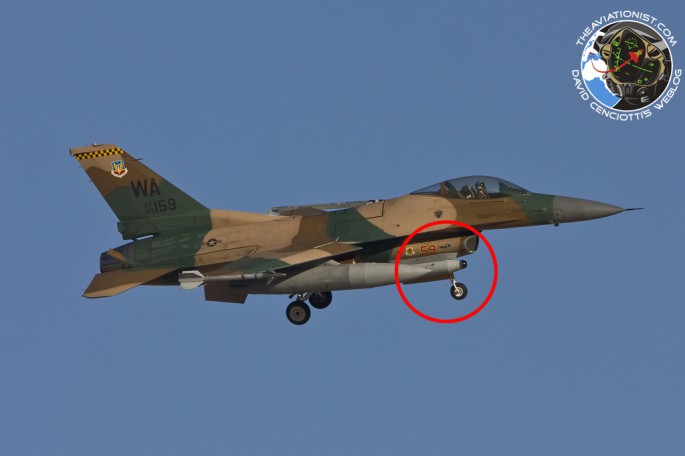

garryAnotice how you didnt contradict me, since i stated >1000 km, and you stated 200-300 km,
so what causes you to say “no” ?
Firstly, 300 km > 100 km. Secondly, angular accuracy of ELINT system are generally significantly inferior to an Infrared system.
according to this guy, that uses DAS on a, if not daily, so at least monthly basis,
he can guesstimate that if its some really big thing that DAS display on the ocean, its most likely a boat,
since murphy dictate he isnt lucky enough to see a whale
I like how you dont have any others evidence other than that short paragraph that you keep posting over and over again. Not only that , you also discreetly selectively quote only a certain part that support your view while ignoring any other parts that going against it. Why dont you mentioned the part where he said DAS can detect a jeep driving through the desert if he fly low ? or when he said his helmet is only second generation and there are a third generation coming up with better camera ?
http://www.dailymotion.com/video/x34aznl
FYI , this is a boat , doesn’t take a rocket scientist to realize that it has lower Infrared signature than ICBM
Moreover, just because an Infrared system has lower resolution than human eye does not mean they can’t be used for targeting purpose at longer distance. Fire control radar and ELINTS system mostly has much lower angular resolution than human eyes, yet they are still being used for targeting purpose
garryAI said that the col was comparing the su 30 to the Raptor. You replied by making it look like, to someone who didn’t watch the video, that I posted the wrong video or something because you made it look like the F 15 vs the su 30 was the central topic of the video. When clearly it wasn’t.
You mean at 3:35 where the general imply how much better Raptor is than Su-30 by his hand gesture or at 9:22-9:29 where is said Su-30 sustain turn rate is no where close to Raptor ?. The video literally go against what you are trying say
The subsequent obscurantism that the col went on to say about fuel tanks, F 15’s, pilots and tactics does not take away the main point and reason why I posted the video. Which is, that the USAF col said that an su 30 can do anything that a Raptor can do at an airshow. (Indian pilot in a su 30. Not Russian pilot in an su 35)
You did not said ” the su-30 can do anything Raptor do at airshow”. If that was the case i wouldnt have reply. You said ( and i quote word for word) :
when India was flying their various 4th and 4.5 gen fighters with the Raptor, the USAF said that the only thing that could play with the Raptor in dogfighting was the su 30’s.
No where in the video that the general mentioned such a thing. Not even remotely close.
garryAlike i stated: triangulation works well on the modest <100 km ranges that is A2A,
but not on the >1000 km away ballistic launch
Well no, triangulation has been used in ELINT system to geolocate ground SAM for ages. Geolocate ground threat from 200-300 km isn’t unheard of . It all depending on the baseline length and angular accuracy of the seeker.Your pictures have no indicator of how big those angles are, or what the value of the baseline length.Moreover, Infrared seeker, even the bad one has ways better angular accuracy than radar.


 Sign In







