 garryA
Distance of 5960 km, 8 hours of flight, the average flight speed of 745 km / h. Seven air refueling, on eight sites 745 km.
Suppose that the plane refueled at 50% fuel in the tank. It turns out (8382 kg / 2): 745 km = 5.63 kg / km…F-35A 8382 kg : 2200 km = 3.81 kg/km or 8382 kg : 1850 km = 4.53 kg/km…
F-22 9367 kg : 2500 km = 3.75 kg/km[ATTACH=CONFIG]247976[/ATTACH]
When they do these kind of transatlantic flight, they dont wait until plane run out of fuel or going down a certain percentage, they will refuel pretty much whenever they can to keep fuel percentage very high, some where like 70-80% just to be safe
garryAWatch out for your hands…
Rafale: combat radius 1659 km (896 n miles), range 3300 km (3 external fuel tanks), 1659 : 3300 = 0.5
F/A-18: combat radius 1511 km (816 n miles), range 3300 km (3 external fuel tanks), 1511 : 3300 = 0.46
F-35: combat radius 1391 km (751 n miles), range 2200 km (no external fuel tanks), 1391 : 2200 = 0.63
Eurofighter: combat radius 1383 km (747 n miles), range 3700 km (2 or 3 external fuel tanks), 1383 : 3700 = 0.37
Su-30MKI: combat radius 1348 km (728 n miles), range 3000 km (no external fuel tanks), 1348 : 3000 = 0.45
Gripen: combat radius 930 km (502 n miles), range 2778 km (3 external fuel tanks), 930 : 2778 = 0.33
As said before combat radius depending on specific mission profile such as altitude, speed, loiter time, combat time, weapons load
Range of flight 2,200 km – the official information from Lockheed. Really can be smaller – 1,850 km.
Maximum take-off weight of F-35A with external fuel tanks 31750 kg. internal fuel 8382 kg. The relative weight of 8382 kg Fuel: 31750 = 0.26Realistically attainable takeoff weight of F-35A:
13290 (empty) + 100 kg (pilot) + 8278 kg (or 8382 kg fuel) + 89 kg (cartridges) + 6307.6 kg (weapons) = 28065 kg or 28169 kg
6 GBU-31 + 2 AIM-120C + 2 AIM-9X = 6 * 969 kg + 2 * 161.5 kg + 2 * 85.3 kg = 6307.6 kg8382 kg : 28169 kg = 0.298
Aerodynamic quality – 8.8 (calculation). Consumption – 0.7 kg / kgs * hT-50
fuel weight of 11,000 kg, maximum takeoff weight of 34,000 kg. The relative fuel weight of 11,000 kg : 34,000 kg = 0.32
Aerodynamic quality – 12.2 (calculation). Consumption 0.62 kg / kgs * hFlight range without external tanks 3000 – 3500 km
With two external fuel tanks 4000 – 4300 km
Firstly, what the heck is aerodynamic quantity??? , Secondly, TSFC changes with altitude and speed, there isn’t a fixed figure, it is a curve
garryAI’m not an expert on Chinese engines as I once was on the Russian equivalents
Can you define the word :”expert “here?. Do you mean that you read alot about Russian engines or do you mean you worked on them? kinda strange to me that as an expert you dont know simple basics fact like thrust and TSFC changes along with altitude and speed
,
my bet (from core temps and mass flows) is still roughly the F404-GE-402 equivalent of late model F/A-18C with 19,000lbf.
You talking alot about core temperature, mass flow and what not, but can we see any actual number or source?, all seem like baseless speculations IMHO
much more on the back end of the jet (where it is least wanted because of boom carry through constraints on sticky-outie burner tubes
I disagree, AFAIK, even though weight increase isnt a good thing, back end weight increase still preferred to front end weight increase, ( shifting CG towards the back give you negative stability and what not)
Indeed, IMO, the baseline for even a small (F/A-18C class) twin is 26,000lbf from an F414EFE or PW7000 core, similar to what we were looking at in the A(F)X. This means a honking good sized fuel fraction in the .32/.35 area which means, for a 30,000lb EEW, 45,000 Mission weights, you are looking at a minimum of 9,600lbs of fuel for Typhoon DCA level performance and probably closer to 16,000lbs for an F-22 equivalent, OCA, mission capability. That’s gonna need _at least_ F/A-18E lengths in the 60ft range.
Like Mig-31 said, seem to me like you just put a bunch of numbers and acronym together here. How exactly do you come up with the fuel fraction from engine thrust?
IMO, you’re still going to end up on the short end of the stick when it comes to absolute altitude and SCM performance because you cannot build an 840 square foot win onto a 55ft airframe (not within an F-22 configuration anyway)
IMHO, you cant speculate on absolute altitude and supercruise performance of fighters only base on wing area (or even wingloading). Supersonic and high altitude performance depending alot on specific engine design, it’s dynamic thrust and so on. Take for example :Mig-25 has very high wingloading and low T/W but it can still fly much higher and faster than Su-27, Mirage, F-15… etc
but within these constraints and given the questionable utility of high end supercruise against a high-cold transmissivity backdrop for IRST.
Dont you mean IRST performance again high – cold background?, gotta say you have very strange way of forming a sentence
.
They can modify the fuel volume a bit, because they have airfields out the Yangtze and this allows them a Luftwaffe approach to ‘migratory’, (shuttle legging) recovery and relaunch
So you want J-31 to glide back to base?
while protecting their tankers behind a wall of indigenous S-400 clones in a bastioning system for OCA recovery role over the Black Ditch.
I dont see how S-400 or any other kind of SAM would be relevant in offensive counter air missions, given the fact that most of these missions would be done in adversary territory
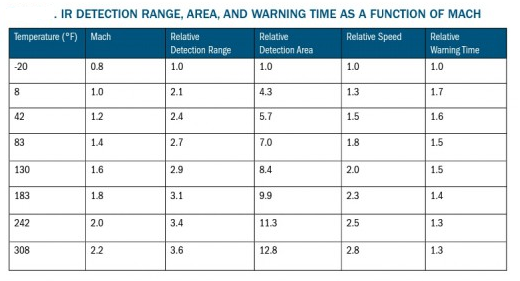
Mach 1.3 gets you out of the transonic burbles with a cleaned up flow and that’s about ashigh as you can go before stagnation shock gives you away to QWIP optics
This is wrong, sonic shock already appears at mach barriers and it already affects IR detection at that point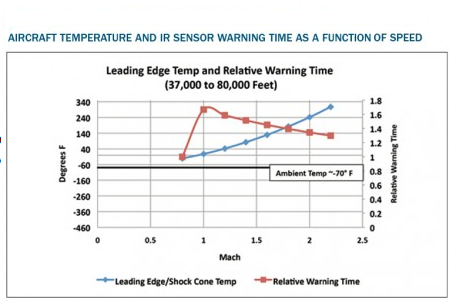
. If you assume six PL-12 or especially PL-15, and the possibility of coping SACM for a 4+4 or 5+2 configuration,
TBH, it kinda bug me how you assumed that J-31 will carry 6 PL-15 even though there isn’t any solid information regarding J-31 carrying capacity or the kinematics of the PL-15, yet at the same time you assumed that F-35 will be in strike configuration
you will most assuredly beat the subsonic F-35 to pole and shoot-shoot-look engagement counts
How come?
while _keeping in mind_ that it doesn’t necessarily matter whether we can use scintillant scatter and 2D ISAR to pull out VLO threats
Again, it does seem like you just merge some terminologies together without understanding them. How exactly is ISAR relevant here in picking out VLO asset? it simply a method to improve resolution and allow the radar to see the shape of target using its movement ( it is SAR but for moving target), ISAR doesn’t increase the amount of reflection coming from target at all
if our missiles cannot see them without MEMS-AESA (See Britain and the Meteor with AAM-4 seeker cooperative technology exchange program in Japan)
As i understand, here you implies that normal RF seeker of AAM, SAM will not see VLO aircraft and the AESA seeker will always see them. That is kinfa funny, because stealth doesn’t mean invisible, you can see stealth aircraft with even the most primitive radar seeker. The only concern is range, at what distance the seeker can see VLO assets, will it be long enough to give the missles time to turn?, Given the fact that detection range is proportional to signal-noise ratio, i kinda doubt that missiles seeker (AESA or not) can see F-35 from more than hundred meters ( in jamming environment of course).
because ‘fire control LO’ is just that good, and you have a real potential for wolves scattering among the sheep and raising real hell when the sheep have no SRM bootknives
Are you suggesting that the Chinese will put J-31 within visual range distance from F-35 to form receiver node for multi static arrangement and F-35 will not attack them because it doesn’t have WVR missiles?, So like J-31 will fly only 1000 ft from F-35????
You don’t ever want to get so close to a threat, while flying on a wing which honestly has the same supercruise at 40-50K capability as the F-22 that someone -can- look right down your inlet
With the exposed fan on X-32, you dont even need to stay on its frontal for the radar beam to get into its fan. And i dont quite see how X-32 will get the same supercruise capability as the F-22, given that if it go forward like X-35, the requirement would be the same, so they will use a high bypass version of F-119
Because of their size, it is also likely that the weapons bays would have been compatible with SLAM-H which means that if things got really ugly, the USN would have just stood off 200nm with send-a-bullet-not-a-boy LO+lolo, sneaky-indian, tactics.
Why would anyone care about SLAM or SLAM-ER when JSM and JSOW-ER both have far longer range and much better stealth characteristics?
don’t believe it. This is a core based on the 2+ F119 with a monster fan and a 51″ case diameter compressor section, like the F101. It runs hotter. It has more thrust in both AB and Military. And yet you want me to believe that it has greatly improved TSFC.
To begin with, can you give us the source of all the fan and compressor diameter? as far as i know the exact diameter of compressor is still classified
Secondly, big fan section compared to the core section will give better more economical fuel consumption because unlike the turbine, the fan section moves big mass of air at slow speed to generate thrust. A higher core temperature will improve fuel efficiency also.
What I can tell you is that in the time frame since I first posted the above, Wikipedia has removed the .889pph TSFC figures for the F135 and now the only way you can see the data point is via the Way Back Machine of historical page edits which they keep. Mind you, they did not replace it with a figure that is a little more friendly to their agenda. They just removed the TSFC figure altogether. Which suggests that the original figure is the correct one and they would rather we all drink bleach and forget than be caught in ANOTHER lie. A lie implicit to the .7pph figure of the F100 series which they would have to erase half the internet to remove.
I believe that you making up the deleting part, but nevertheless TSFC isn’t a constant value, so it is not actually matter
https://www.grc.nasa.gov/www/k-12/airplane/sfc.html
The value of TSFC for a given engine will vary with speed and altitude, because the efficiency of the engine changes with atmospheric conditions
You cannot launch a supersonic anything from an F-35 because the inwards toe-in prevents the opening of the doors above 1.2 and 1.2 is the absolutely _minimum_ threshold for transonic clearance as about 30% of the airframe is still sheathed in mixed flow.
This is wrong too, F-35 can launch missiles at maximum speed
garryANow let’s look at close combat as the wings. Instead of the clipped/modified deltas of the F-15/16/22 which have superb stall resistance, they are basically F-5/F-18 tapered trapezoids, shoved as far back as possible to keep transonic drag rise under control
Can you give us the source for this assessment? kinda the first time i heard that tapered trapezoid have lower transonic drag than delta, it sound like a made up theory to me
and reliant upon forebody lift off the weapons bay area to compensate. The problem with this is that you have a staggerwing effect
That sound weird, never in my life that i have read about that, seem like we read some very different aerodynamic books, can you point to a source a again please, kinda the first time I heard that body lift cause stagger wing effect
. Even without opening the weapons bays to completely destroy the high-pressure aeros while prepping quickdraw missiles,
This sounds strange also, AFAIK, opening the bay will create a better high pressure area because it would be harder for the air flow to get on top of the wing
.
Added to which is the close coupling between the F-35 tails and the wings which denies the option of (2` up LEF) ‘trimming in the tails’ to set the turn and (on the F-16) gain rather than lose 100sqft or so of effective lift as a genuine 9G capability.
You think F-35 cant put 2 stabilator up at the same time??
May not mean much in a HOBS environment you say, but then again F-35 doesn’t have a HOBS missile or the ability to add one without directly effecting it’s already incredibly limited internal strike mission payload.
Aim-120 is actually HOBS missiles too, in the future there will be CUDA or SACM, alternatively AIM-9X can be carried on the wing tip too with some minimum RCS increase
And its a long, long, ways from your 6nm NEZ last-AMRAAM to the 4,000ft of 25mm gunzo followup.
AFAIK, minimum range for AIM-7 is 2000 ft, and it’s warhead is like twice the size of the one on AIM-120
On the F-35, the effective lift differential and lack of vectoring to trim the jet in results in a split lift curve as the reason why the jet is running at ‘transitional’ alpha limits around 20-23 units, when most jets are only entering this regime at 27 and it has a direct effect upon FLCS authority to continue pitch rates as the jet nears TRO territory and the flight controls have to start limitering thrown to keep the ‘carefree’ handling.
what exactly is the “split lift curve” we are talking about here? AFAIK CL is always a single curve along various AoA since it already taken into account the whole aircraft shape
We have a jet that is dedicated to BVR with only two internal missiles in a typical strike role
why do we compare f-35 in strike mission with others aircraft in interception mission? and where is the F-35 in escorts configuration?
and those missiles having inferior performance compared to the R-77MD or the Meteor or the PL-15
Last time i checked F-35 will carry Meteor too and neither PL-15 and R-77MD is in serial production yet, unlike AIM-120D
_despite_ the fact that SSPK drops alinearly with range
One advantage of stealth is that you can get pretty close to target before attacking
_before_ you add (SAP-514/518, GaNi) EW effects.
One should remember that it is much easier ( lower power) to hide a stealth platform with jamming and much more effective too ( shorter burn through distance )
We have a jet which, at 60% internal fuel (7G max turn) and _zero_ bay weight (5,000lbs off the front end) cannot beat an F-16D for pitch rate or stabilized loaded roll, despite the latter having two bags and a -100 engine.
This is a lie and you know it, no mentioned about the 60% fuel, unless you think an F-35 with 60% fuel can stay on air as long as F-16 with 2 bag
and let not forget the problem with anti spin logic
garryABase acceleration factor of an F-16C.50 is about 29 seconds.
That is wrong, to accelerate from mach 0.8-1.2, with drag index of 50 ( 6 aim-120 and 2 emplty pylon) F-16 at 20K lbs base acceleration is 36 sec, at 24k lbs, it need 45 sec, at 28k lbs it need 54 sec
.
But whereas an F-16 can drop 2X 370 gallon tanks and 4,000lbs of A2G and thus approximately 10,000lbs of gross weight to go from a ca 45K platform to a 27K equivalent; the F-35 cannot and indeed _must not_ due to it’s enhanced radius requirements (300 vs. 584nm) .
This is also wrong, F-35 is the same as every single fighter can dump fuel, and if F-16 drop its external fuel tank, a major part of its combat radius will be cut off too
.
As a result it as a weight and thus Ps cripple, despite having nominally as much IRT as the Viper does in full burner.
This is some extremely wild and baseless speculations given the fact that the thrust graph of F-135 and the E-M graph of F-35 is still classified
.
It is further compromised by a 50″ F135 carcass diameter, closer to that of the 55″ F101 on a B-1B than the 46″ of the F110 on the Viper
I haven’t actually checked the accuracy of your claim about the fan diameter, it is likely that it is also wrong as the first 2 claims, but using simple math
50-46 =4
55-50 =5
so if we assumed your claim is true ( which i really doubt after reading the first 2 d then F-135 is still closer to F-110
.
This is the true ‘STOVL penalty’ in action as the F135 fan is sized to a zero airspeed (no ram augment) requirement to sustain 18 out the back and while still retaining enough residual torque to spin up another 18Klbf out of the SDLF up front. Big fans need big compressor sections with massive pressure rise and from that equally powerful LPTs to keep all the spools turning.
This is kinda sound BS, tbh, big fan doesn’t require big compressor sections, the engine fan for commercial airlines are massive but i dont see their core as being big at all
.
The Stochios required to keep all this in balance in turn require enormous core temps (3,600`F) as FUEL. Which is why the engine has a .889pph TSFC.
As far as i know TSFC of F-135 is still classified, and since TSFC change with speed and altitude, i wondered what exact points in the envelope do you pick that TSFC from?
.
And all this leads to more gas,
Generally bigger fan sections relative to the core will result in better fuel consumption, that why engine of new commercial airlines getting bigger and bigger
.
Now look at the weapons delivery method: 12nm lay down of GBU-31/32 is about 6nm better than the GBU-27 on the Roach
Apart from GBU-31 and GBU-32, F-35 internal weapon bay can also carry JSM ( range 300 nm) , JSOW-ER ( range 550 km) , SPEAR (100 km) , SDB II ( range 70 km)
.
but is still utterly worthless in a netcentric GBAD condition where you have NEBO or Skywatch cueing very high power EPARs like Gravestone which can easily acquire the F-35 from 20-25nm out, using pencil beam search. And don’t tell me about how bad longwave is. The Russians have digital waveform processing (i.e. front and back end) which gives them perfectly useful, 3D, air search out to 200nm or more.
Digital processing cannot and will not solve the main problem of low frequency, which is very wide beam width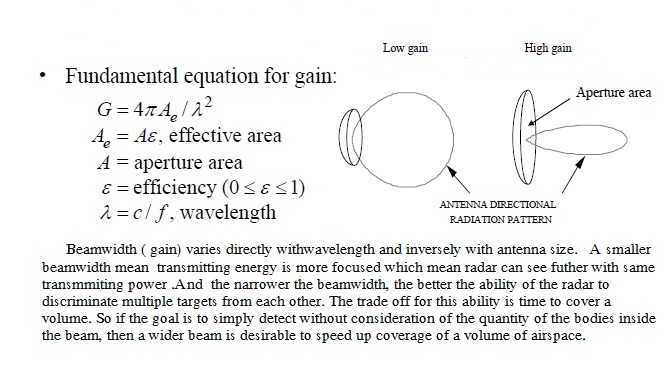
. This has to do with physics, the only way to reduce beam width at very low frequency is getting an enormous aperture, which can easily be detect on SAR mode of APG-81, EOTS or satellite picture
.
Compare this to an F-16 which has options on 40nm JSOW, 50nm SDB-I/II and 360nm JASSM-ER
This is a moot point as explained above, F-35 can also carry JSM, JSOW-ER, SPEAR and SDB i/II
.
as well as advanced tail and expendible GaNi decoys
Actually F-35 can carry expendable towed decoy too, it is called ALE-70
.
and massive standoff support jam which _will not be able to accompany_ an F-35 force going to full depth. .
F-35 can either jam adversary radar by APG-81 or ALE-70 or ASQ-239 or MALD-J.. etc, F-35 doesn’t need a massive jammer because jamming power requirements is directly proportional to RCS. Moreover burn through distance will decrease along with RCS too, so that is another advantage
.
Indeed, let’s look at the F-35 radius shall we? If you take IRT as 27Klbf and Flight Idle as 60% of that or 16.2Klbf, and assume you tank before crossing the fence, you are functionally talking about .889 X 16.2 or 14.4Klbs of fuel burn to crawl along at 300 knots. Remove 2,000lbs from the total fuel load as unuseable fuel coolant and another 3,000lbs as combat reserve for 550 knot transit of the last 50nm to the target and you are talking with an 800lb ullage swing, you are talking about exactly 1hrs flight time or 150nm, in and out.
This is why the (Australian Program Award announcement) ‘700nm combat radius’ was a lie. And the currently stated 584nm combat radius is ALSO a lie.
This is a very laughable attempt at speculation. Firstly, engine thrust that you saw on Wikipedia are just sea level, Uninstalled static thrust, when the engine is installed inside the aircraft, there will be thrust lost due to the intake, engine thrust also change dramatically along with altitude and speed too, here is an example of F-100 thrust curve.
Secondly, TSFC also changes along with speed and altitude so you cant just take some random value of thrust and some random values of TSFC to estimate combat radius
.
Because, when added to the low shot counts
AFAIK, F-35 in block 5 will be upgraded to carry 6 AAM internally
.
and the very poor acceleration performance (closer to Hornet than Viper),
Do you know how long a Su-27 with 4 AAM will need to accelerate from mach 0.8-1.2 at 30K feet? ( hint : not much different from F-35)
And given the massive heat of that hot core (second only to the DF30-6)
Both D30F6 and F-135 engine have very high bypass ratio
compared to others fighters aircraft , so the heat from the core will be cooled significantly by the bypass air. Moreover, iam not aware that they published any figures regarding the exhaust temperature of F-135 vs others aircraft engine, so it kinda a wild and baseless speculation to say that it will have higher exhaust temperature than other jet engine ( especially low bypass one) just because the core temp may be higher. We also dont have the scale to measure the increase in infrared radiation base on the temperature increase.
you are going to be visible and NCTR ID’d, the instant you light the blower.
In good weather, look up, and tail aspects, no doubt. Other conditions? that very ambitious
Because QWIP level IRST can see the burner plume out to 50nm FQ and 80nm RQ and will see you, even in military, by 15nm at the latest.
If you don’t mind, please tell us how or where did you get these numbers from, they seem very randomly picked IMHO
If they get a hot track with no RF, they can cue their IRBIS into pencil mode
I dont think the so called pencil mode of fighter’s would be helpful at all against something that was designed to hide from AWACS and Ground based radar. Moreover, there is a certain physical limitation for beam width of radar with aperture of a certain size and a certain operating frequency range, and since radar already use narrow beam in velocity search, i dont think the so called “pencil beam” would be really as helpful as people like to think
it to MCG (much bigger) ARH weapons (Izdeliya 810 etc.) into parameters from roughly twice the distance you can expect an AIM-120C7 to go in
izdeliya 810 is still in development phase AFAIK, it very dubious at the moment to claim that it will surely get higher range (let alone double) again fighter target than missiles like AIM-120D, Meteor or the in development T-3
. And if they use Shooter:Illuminator, with a trailing honcho, the lead missileers (who can be at 650+ and not worry since they have the power and the gas and everyone sees them on radar anyway) will not only get dominante pole control but be able to pump out the sides of the fight so that your long range shots PK completely tanks.
Please kindly explain why the F-35 side wouldn’t do the exactly same thing?
garryAyes Freddy: how can you come up with the very suggestion F-35 is more draggy than PAK-FA ?
sounds like heretic mischief to me !
While PAKFA is longer, it also have bigger wing area aka more friction, i just dont see how it can get 5600 km range
garryAF-35A range of flight 1850 – 2100 km, radius 35% range 650 – 735 km
Su-30MKM range of flight 3000 km, radius 1050 km
that is wrong, combat radius depending alot on specific conditions of mission profile such as combat time, loiter time, altitude, speed, load out.. etc
garryA@adam I appreciate that you brought that here but
IMHO You should just posted the link instead of Control +C then Control +P the whole thing. This just look weird af without all these pictures and high light in the original post
garryAwhen you don’t have any technical rebuttal than comment become nationalistic.
Range is key criteria so that it can be parked outside most cruise and billistic strikes from multiple platofrms. its a highly technical field to design such thing at places outside the cost inflation of rest of population economics. it cant be built in private enterprizes nor foreign help or diversity. that works in olympics but not in this field.
Normally , i couldnt careless about your trolling but F-35 range on internal fuel is 2220 km , if PAK-FA can travel 2000 miles longer that would bring its range to 5440 km ,not a chance.You outright lying
garryAT-50 has twice the supersonic range of Flanker and more than likely the sensors power and altitude will overwhelm anything just like MIG-31BM2.
Please take your nationalistic comment else where JSR.
garryAuse dual band seeker, that’s a different technology compared to IIR but fits the same scope.
Two colors IR seekers is inferior to IIR seeker ( just saying )
garryAWhat you need to complicate? We are not begging for money from Congress!
The radar sees the goal in front, he is interested in the average value of this angle. And all the rest can be left to specialists in radar systems.
I dont need complicated value but your average value is very misleading because it is too vague ( for the reason i have explained in my last post )
Ukrainian scientists? Who is it?
Just see Russian – Syria thread
loads of radar scattering graphs there that can tell a more details story ( Yes, i know that even them cant tell us everything because we don’t know capabilities of specific RAM and RAS, we can only simulate shaping )

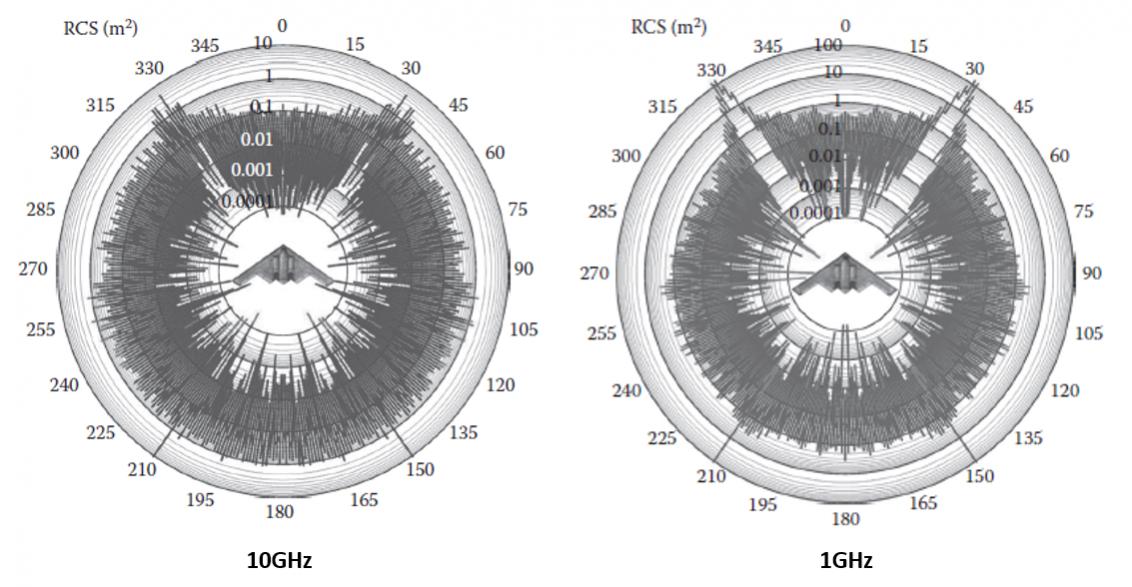
garryAThere are official data for certain types of aircraft. For example the Su-27, the minimum RCS – 5 m2, the maximum RCS – 15 m2.
Russian experts (Lagarkov, Poghosyan and others) claim that the EPR of F-22 – 0.3 m2. This is the minimum value for a modern fighter.
Formulas in line 94 and 95 give the same value.http://vivovoco.astronet.ru/VV/JOURNAL/VRAN/03_10/STELLS.HTM
That is a bit too vague to say the least IHMO
EPR could either mean the whole 360 degrees all around or 120 degrees front, or 60 degrees front or, 30 degrees front ( and then there is azimuth factors too) , nevertheless such average estimation would include so many high RCS spikes that isn’t actually pointed at threat radars when aircraft flying toward them, thus giving the wrong impression toward effective RCS that the radar will see. The value also seem significantly higher compared to various computer simulations ( done by Chinese and Ukraine scientists) and manufacturers claims
garryAThe task – to compare the aircraft on the basis of the available data. characteristics that can not get officially calculated . Even these simple methods allow to obtain satisfactory results.
I know what you mean ,but what iam trying to say is : those rows i listed doesnt look like available data or involved any forms of simulation , calculation
garryADozens?
Personally , I think it would be quite pointless for you guys to argue with Scar because it seem like he already made up his mind, keep on arguing will only mean more insults are thrown around.


 Sign In







