 garryA
This (MTM) is a palm sized uncooled monocular with a 28mm objective with 1.05x fixed mag, what’s your point? You’d need an object of a size of a starship in order to observe it @ 30+ km and it has nothing to do with the sensor rather than with the optics…
And you claimed I had no clue, gimme a break..
The point is if you observed an aircraft in full afterburner from a few hundred meters then obviously you will see it, even with naked eye, it say nothing about the effect of IR reduction on the aircraft or the sensor capabilities. With the same optic you can also observed a truck or a human at that distance, does that mean they all give off equal level of infrared radiation and will all be detected by IRST from same distance ? obviously not
garryAI am not judging the drag of the F-35 by its looks rather than the published acceleration times up to M1.2 and its inability to supercruise..
ability to supercruise has alot to do with dynamic thrust of the engine which is dependent on the ability to recover pressure of the air intakes and the engine design so drag isn’t the only factor, nor it is the most important .
garryAWhat is wrong is to think high engine temperature does not affect exhaust at all. Or that accelerated by passed air flow does did not increased temperature above ambient. So in the end you are to compare signature of high by pass as a large more persistent IR glow with hot spot in the middle, Compared to low by pass more intense but localized hot spot. IR reduction technic on latest notably consisting in by pass of a air flow at ambient temperature to temporarily hide the exhaust plume.
Not sure what exactly you trying to say with “localized” vs “persistent” here, do you somehow believe that low bypass engines have smaller IR spot?
and yes bypass air will be hotter than ambient air but still far cooler than the core of engine
A large body (wet surface )displacing at velocity in a compressible fluid will always produce more friction and aerodynamic temperature variation, than a smaller body .
and do you have a 3D model to prove that F-35 have bigger wet surface area than let say a Typhoon or Rafale with missiles and weapons pylon?
garryAI might throw that same ball of confusion back to you here..?? are you now claiming Mig-25 and Mig-31 is severly hampered by drag.. by comparison to what??
you said drag can’t be overcome by huge jet engine, reality is there are various massive jet that can fly much faster than small jet, all have to do with their intake and engine design.
Not even sure if the Mig-31 has a favorable T/W ratio.. so what gives?
neither mig-31 or Mig-25 have favorable T/W ratio
even if they both are quite large vs most other jet fighter, the Mig-25/31 airfoil tickness, sweeptback angle, shape, size, nose/cockpit design is favorable.Much more vs F-35.
You keep talking about air foil thickness and what not, so how thick is Mig-31 wing? how thick is F-35 wing? exact number please
if cockpit and wing sweep angle were the main factors then Mirage 2000 would easily beat Mig-31 in a contest of speed, reality is very different though
beside sheer thrust, the engine operative efficiency => Turbofan and air intake design.
exactly
.
IMO, F-35 is a short stubby, fat design,
again, you keep saying that it is fat, stubby design but compared to what? frontal cross section of f-35 is smaller than su-27, F-15, PAk-FA and similar to rafale, f-18, Typhoon, Mig-35 and the like, so i don’t see from where did you get the conclusion that F-35 has much higher drag because it fatter
even its wings are unfavorable drag related.
the catch is at what speed?
You didn’t read my post it would seem..
For a F-35 to stay on mach 08-09, its right in the bitchy transonic speed regime where drag coifficent is quite high.. Good luck staying there without usage of AB.. one small course change or nose up and it have to plug in the blowers.. PakFa should just as easily stay at mach 1.2 without any AB.
That is F-35 with AB, PakFa without AB. Which has higher IR-signature?
According to official information F-35 can maintain speed of mach 1.2 for 150 miles without the use of afterburner but somehow you come up with the conclusion that F-35 need afterburner to maintain mach 0.8-0.9
.AB => negative IR-signature.
Fly supersonic => negative IR signature too
if at mil thrust, F-35 can only fly subsonic and while fighters such as PAk-FA can fly at supersonic speed, that mean F-35 will have to spend majority of its time subsonic while PAk-FA can enjoy cruising at supersonic, PAk-FA will enjoy better kinematics for missiles, but that also mean PAk-FA will have higher IR signature majority of the time too, due to simple fact that it flying faster. You cant have your cake and eat it too
garryAJust like here, the F-22 observed by MTM which is an uncooled amorphous silicon sensor with 320×240 FPA, extrapolated to 640×480 display (VGA)
and the sensor is about 1 km aways from the F-22 in full afterburner , in reality if your IRST can only detect enemy at that distance then you are pretty much death
garryAWhen ever i see someone trying to downplay drag issue, i get slightly upset.. :/
Drag is a physical law that can’t be bypassed by a huge jet engine..
Mig-25 , Mig-31 disagree
if F-35 has more drag from thicker wing foil and a fat airframe, then it will start getting higer IR signal.
this is rather confusing , F-35 have thick airfoil and fat airframe compared to what ? Mig-35 ? F-22 ? PAK-FA ? Su-35 ? F-15 ? or F-18 ?
or do you want to compared it to EF-2000 , Rafale ?
If you say F-35 have fatter airframe than the one like F-5 or Mig-21 then sure , but compare it to modern fighter then not really ( well may be apart from the gripen C )
You want F-35 to fly supersonic, then say goodbye to low IR signatur all together..
this is the same for all aircraft , if you fly at supersonic speed , your IR signature increase significantly , supercruise or not , an EF-2000 or Rafale or PAK-FA supercruising will surely have higher IR signature than an F-35 cruise at mach 0.8-0.9
Yes the F-35 has lots of dry thrust, note the F-35 still can’t cross transonic speed without AB( well it might, but it will take forever and is not a clever thing to do from a fuel fraction point of view.Do you see my point?
actually i dont quite get yor point here
garryAOne need to temper, given the huge engine running at higher temperature than most,
F-135 have high inlet temperature not exhaust temperature .A common misconception is that engine turbine inlet temperature is also proportional to exhaust temperature, that is wrong however, in reality turbine inlet temperature does not reflect the engine case temperature or even the exhaust plume temperature. It simply means that the gases entering the turbine is at a higher energy state and the engine will yield more gross energy per drop of fuel or air entering the combustor(s). That energy however, is extracted to do work first by the high-pressure turbine, then by the low-pressure turbine before going out the tail pipe at a given velocity. The final temperature depends on how much energy is extracted to drive the compressors and the fan, and how much bypass air is mixed into the exhaust. The F-35 has twice as many low pressure turbine stages which in theory will extract more energy. It also has a bigger and higher pressure ratio fan which adds energy to the exhaust as well as introduce relatively cold air into the mix. The exhaust plume temperature and engine case temperature can never be derived from the turbine inlet temperature alone
and a draggy frame generating more friction than most..
at transonic , yes it have high drag but not at it’s common cruise speed
only ever compared to older jets with the same thrust, thrust is really just heat converted into propulsion, and thrust is proportional to heat generated
that is wrong ,there are 2 ways for a jet engine to generate thrust : either moves a small mass of air at high speed or moves a large mass of air at high speed ,the small mass of air moving at high speed will have higher infrared signature. F-135 have very high bypass ratio compared to others fighter engine , so it will likely have lower exhaust temperature , the trade off of engine with high bypass ratio is that they often not working very well at high speed or high altitude
garryAAgreed completely.. Nothing to argue about here..
Here we disagree.. There are absolutely zero indications about the F-35 having lower IR signature than others.. Not even LockMart claims that, so where do you take it from? Mk1 thermal eyeballing?
Here we disagree, again, how do they know that? Mk1 RCS eyeballing?
It’s exactly these completely unsubstantiated claims which create all those tensions regd. the F-35 vs. the rest of the world
I dont understand your way of thinking at all , so how do you know Mig-35 have lower RCS than f-4 or B-52 ? is it not of it’s smaller size and feature such as saw tooth , RAM ? while f-4 and b-52 have none ? ( or by your own word MK1 eye ball ) , why the same logic not applied to F-35 when it’s have various IR reduction feature while most others fighters have none ?
garryAWell, you can bicker about semantics but somehow I don’t expect you to call the MiG-35 a stealthy design because it has RAM paint and zig zags around the radome.. So why this sudden double standard when it comes to the F-35? Can you folks finally learn to evaluate the F-35 using the same critical eye you love to use on others?
whether Mig-35 is a stealthy design or not , the question you should ask is “relative to what ? ” , if you compare the Mig-35 to something like F-4 or B-52 then it sure as hell is a stealthy design , if you compare it to something like F-16 or F-18E then they are very similar , If you compare it to something like F-35 then obviously the Mig-35 isnt stealthy at all.
Similarly because F-35 implimented alot of IR reduction measuare compared to others fighters so it not that far fetched to call it a design with IR stealth in mind , if tomorrow we have a fighter that give off zero heat signature then at that point people wont considered F-35 stealthy in IR anymore
Ah, so they are not retarded and know what they are doing.. please remind me that next time PAK-FA and its intakes are being discussed.. Thanks..
people only said that the exposed engine fan blades may lead to PAK-FA have inferior VLO characteristics compared to F-35 or F-22 , but no sane men would say PAK-FA have no RCS reduction measuare , on the other hand what you said about F-35 was :
There are no IR suppression measures to speak of..
garryAExactly.. And similarly with the F-35, it wasn’t intentional..
TBH , i couldnt careless if it was intentional or not , if it works then it works ,irrelevance whether it was considered by engineers at the start or not. However, if you want people to take you seriously , you need something to support your point , you cant just say IR reduction wasnt considered on F-35 at all without any evidence
That’s a gross oversimplification.. If you reduce temperature of a leading edge by say 100deg, you might have reduced the IR radiation from that specific part by half, but that alone means preciously little, you might not have reduced the overall radiation by more than a fraction of %..
the leading edge isnt the only part that have heat exchanger , and the topcoat covered the whole airframe too , and designers arenot retarded , obviously they will focus on the part that give off heat the most.
garryAWow.. Just now I am beginning to understand the design of the Flora.. built with IR stealth in mind before IR guided missiles were developed
obviously it wasnt intentional , but obviosly the Flora will have smaller IR signature than if it’s pipe was exposed
similar case happened to the de Havilland Mosquito , the designer didnt intended to make it harder to detect by radar , however the fact that it was made from wood still make it harder to detect on German radar
It’s simple.. The temperature of an aircraft is not uniform, different areas emit at different wavelengths. Any “IR suppression technique” as you might call it works for a specific part (say leading edge cooling)..
which is why aircraft use more than 1 kind of IR reduction measuare
As a result, the overall signature changes very little, only at some wavelengths typical for that specific part. I am not even sure if a missile would even notice a difference.
on the contrary ,reduction of temperature by 100 degree reduce Infrared radiation by around 50%
garryAThat’s obvious.. except reduction of skin temp is of little practical use when you have a 1500+ Kelvin hot nozzle attached right behind it..
From front the view to the nozzle is blocked from most angle , even from the side the view is blocked due to the stabilizer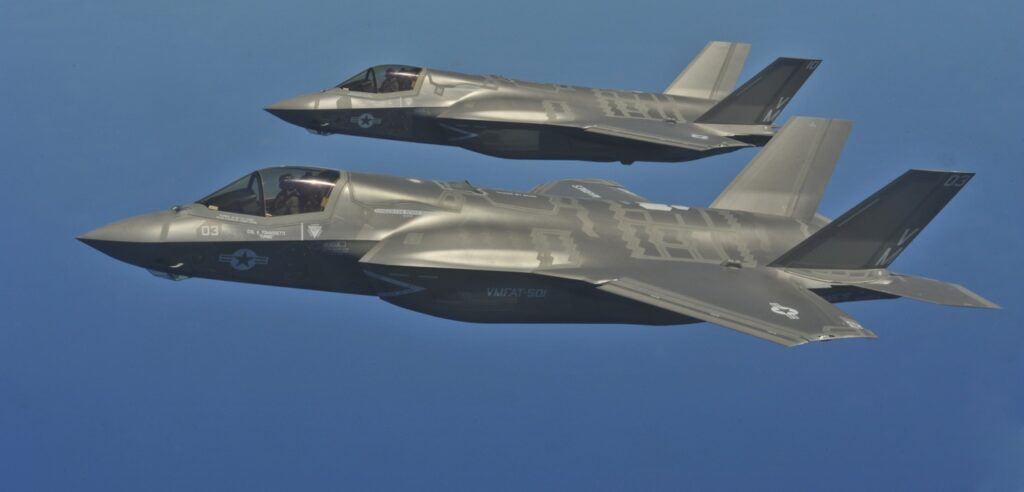

Don’t say… and how exactly have you reached that conclusion?
because you said this : “The heat reduction paints have been developed decades ago, nothing new here either, but even a reduction to half is not very significant against sensors with << 0.1K resolution, let alone reduction for some wavelengths only” .
garryAThe heat reduction paints have been developed decades ago, nothing new here either, but even a reduction to half is not very significant against sensors with << 0.1K resolution,
lower temperature mean less infrared radiation , less radiation mean less travel distance , less travel distance
moreover background temperature isnot constant either
let alone reduction for some wavelengths only..
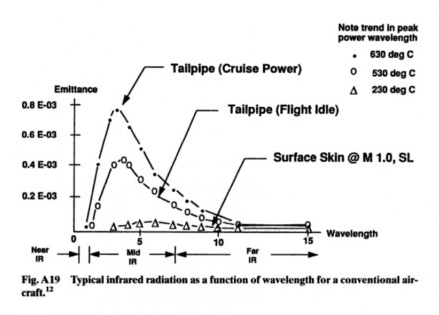
No offence but i think you dont actually understand why the paint reduce signature in long infrared wavelength only . The main reason is object at different temperature will emit infrared radiation at different frequency , aircraft airframe at cruise speed simply doesnot get hot enough to emit short infrared wavelength
garryA, whatever that means… “special coatings” meaning what exactly? Maybe a paint capable of miraculously dissipating energy while staying cold…
the ToPcoat paint has very good heat dissipation capability , on f-22 it was able to reduce IR signature of airframe skin in long infrared wavelength by more than haft.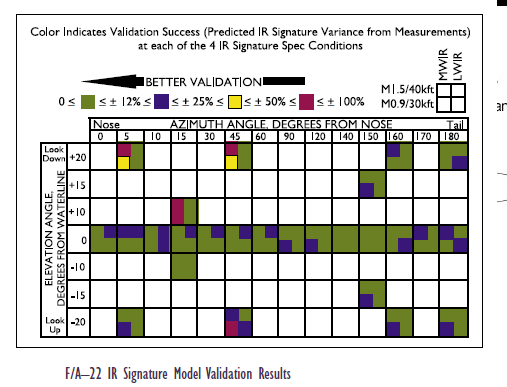
and to be fair , aerodynamic heating is not that high especially at subsonic speed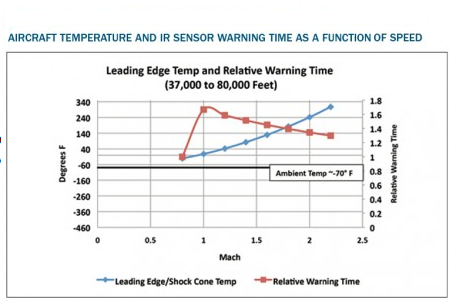
The techniques described in your link are pretty primitive, sorry to say that.. What exactly are we dealing with here? “advanced cooling system”
Or “mixing the exhaust with cold air” which basically translates to turbofan instead of turbojet… Is that it?
F-35 use fuel as heat sink for leading edge , it also have various open vens to cool down the fuel and avionics using ambient air ,engine bypass air also used to cool down avionics
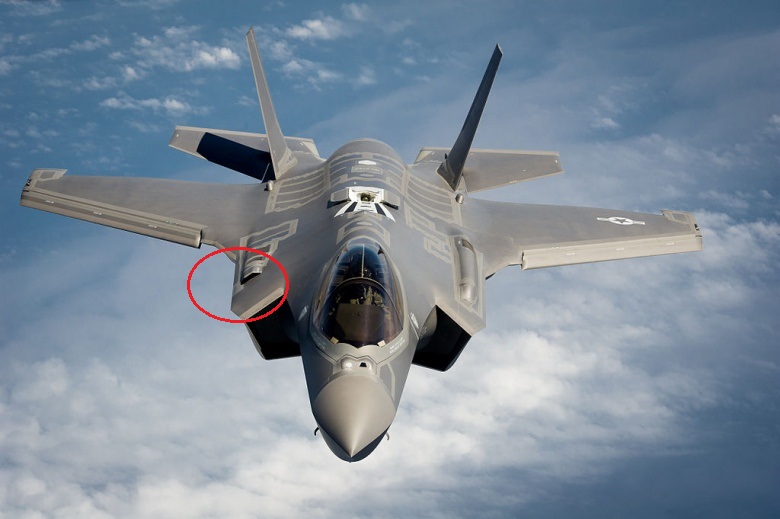
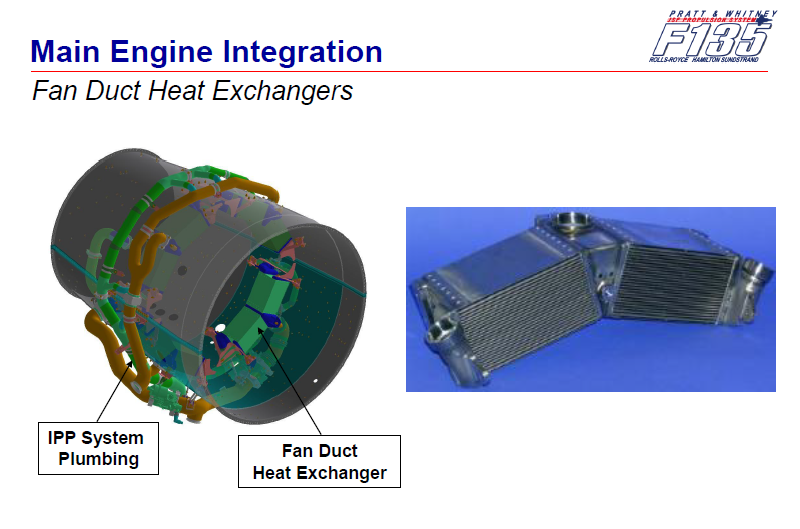
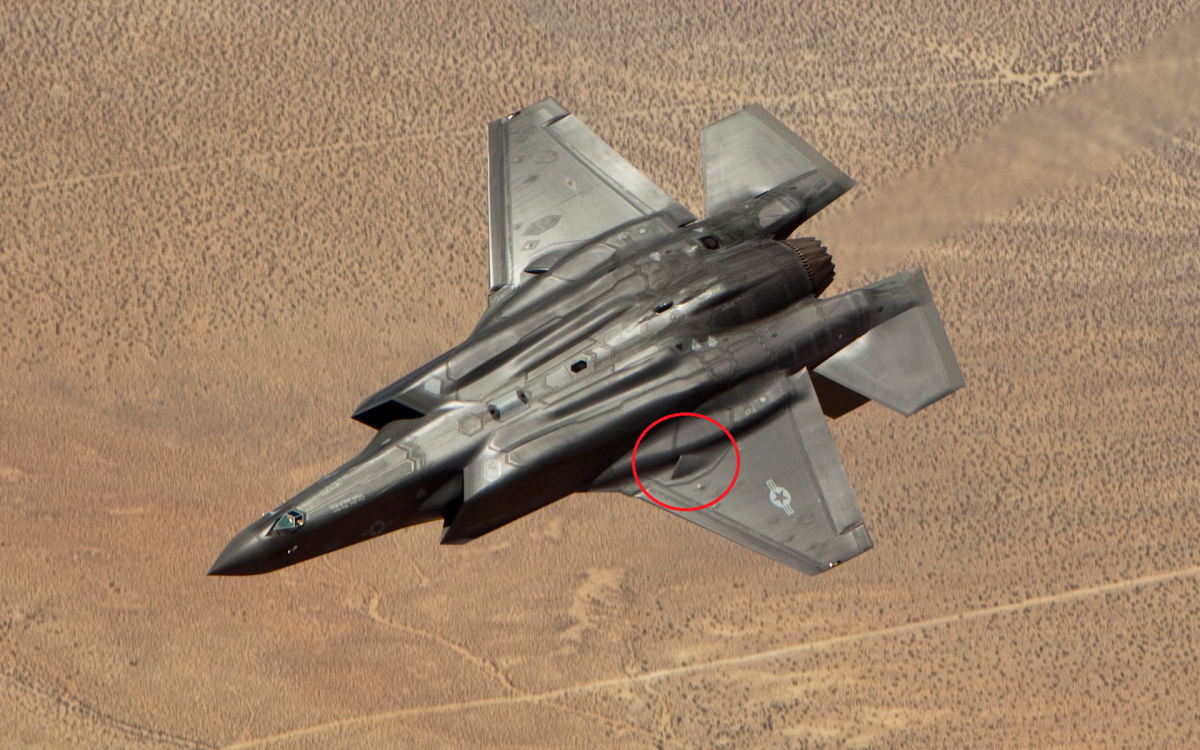

Heat is there and it can’t be simply dissipated without a notice.. If you concentrate on deletion of thermal hot spots, then you get a larger warmer object. What have you achieved? What can an IR missile detect first? A 0.1 sqm area of 1000K or a 3sqm of 250K?
material with good heat dissipation capability will have lower temperature when subjected to similar heating time , also because IR sensor finding target through contrasting of target temperature with the environment , a bigger target with similar temperature with environment will be often harder to find than a smaller but hotter target. The temperature of the background is very important . For example : Infrared photo bellow show 2 C-130 fly in 2 very different background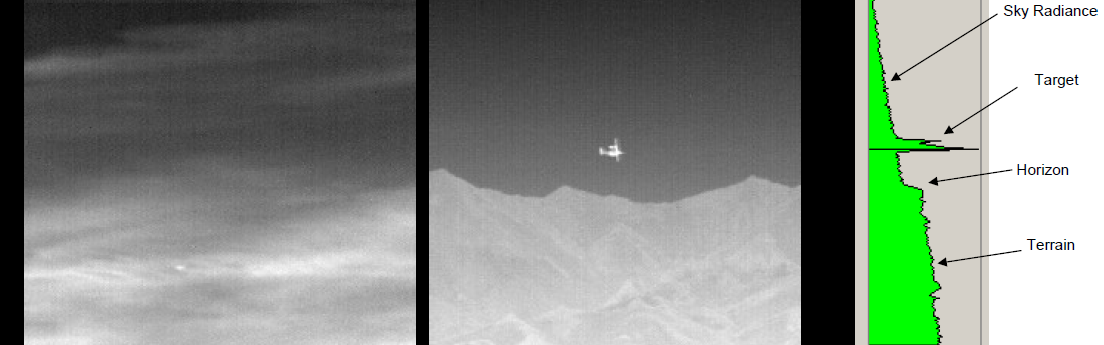
garryAThe F-35 seem to turn very quick
https://www.youtube.com/watch?v=7XeViHEWzLk
From 2:44-2:51 ( or 7 seconds) , it finished a 180 degrees turn, that equal to average turn rate of 25.7 degrees/second


 Sign In








