 mig-31bm
you forgot to link
http://www.f-16.net/forum/viewtopic.php?t=7081
oh yeah , too busy copy and paste hahaha
mig-31bmThe Meteor, if you distill it down to the basics, is very much like a VFDR AMRAAM. The seeker, warhead and guidance will be of similar capabilities and yield. What’s different is that it is a ducted rocket missile (it is technically NOT a RAMJET even though people like to call it that *see note*). In fact, when the meteor was being planned Raytheon offered a VFDR AMRAAM called the FMRAAM as an alternative to the european program. The motor for such an application, was actually funded and developed (circa 2002) by Aerojet alongside other projects such as the MARC-282 (13.5″) and MARC-290 (10″) VFDR motors. However, currrently the US armed services have other priorities and there do not seem to be a lot of immediate interest in mounting a VFDR motor on the AMRAAM to extend its reach beyond the 100~150km bracket of the AIM-120D.
Note: Ramjet vs Ducted Rocket — The biggest difference between the two is that a true Ramjet ignites and burn its fuel using the compressed air from the intakes alone — like a jet engine minus the rotational compressors. A Ducted Rocket burns its fuel using independent oxidizers then introduce the already ignited but fuel rich exhaust gases of the rocket based pre-combustion to the intake air to be burnt completely. The advantage of ducted rockets is that it can easily be made solid fueled (as is the case with the Meteor) and it never needs to be re-ignited should it momentarily flame out due to intake problems. The disadvantage of Ducted Rockets is that the missile is carrying at least part of the oxidizer it uses and hence as a lower energy content than a true RAMJET. FVDR — Variable Flow Ducted Rocket — refers to a Ducted Rocket with the ability to meter its fuel rich combustion exhaust into the main combustor and/or the intake airflow. The Meteor is a VFDR. In the case of the Meteor, the missile burns the solid sustainer grain in a pressure vessel separated from the main combustor by a pintle valve. It works the pintle valve to meter is right amount of fuel rich exhaust to the main combustor depending on the air density (altitude) and thrust desired. To the best of my knowledge its air intakes are fixed.
to sum up from my understanding , if the missiles are at the same size then
Ramjet = long range , high cruise speed , not very maneuver , perform bad at high altitude
Solid fuel =maneuver , not effected by high altitude , short range , low cruise speed
VFDR rocket = maneuver (better than ramjet but not as good as solid fuel ) , perform better at high altitude than ramjet but not as good as solid fuel , longer range and cruise speed than solid fuel but not as good as ramjet
mig-31bmto sum up from my understanding , if the missiles are at the same size then
Ramjet = long range , high cruise speed , not very maneuver , perform bad at high altitude
Solid fuel =maneuver , not effected by high altitude , short range , low cruise speed
VFDR rocket = maneuver (better than ramjet but not as good as solid fuel ) , perform better at high altitude than ramjet but not as good as solid fuel , longer range and cruise speed than solid fuel but not as good as ramjet
mig-31bmNow it’s much better after this elucidation above.
Maybe someone could inform Aerojet Company to rectify its statement to prevent that some other fool besides myself also misinterpret the meaning of the article because misjudged a single word like: throttleable.
I could mention that it was misled because the beginning of the article as:
After I have been reading two lines such idiot like me could be tired and regardless. I also understand that the article was not meant for someone like me, but as far I known many good projects have been canceled in all fields in reason of conflicts generated by erroneous interpretation, once the fact of someone has been in charge to approval or not some project could not be assurance of …
I believe the intention was to make a comparison with anti radiation missile Kh 31P which were also used in different setup as missile target by the U.S. Navy.
In fact the Kh 31P( AS 17 Krypton) has been equipped with ramjet propulsion of liquid fuel, and it could be throttleable in order to obtain a better range at different altitudes in which it could be released by aircrafts.
However a disadvantage of the liquid fuel from Kh 31 could be that it can not be stored for long, as in the case of solid fuel, so it is only fueled prior to a mission.
here probably the answear
The Meteor, if you distill it down to the basics, is very much like a VFDR AMRAAM. The seeker, warhead and guidance will be of similar capabilities and yield. What’s different is that it is a ducted rocket missile (it is technically NOT a RAMJET even though people like to call it that *see note*). In fact, when the meteor was being planned Raytheon offered a VFDR AMRAAM called the FMRAAM as an alternative to the european program. The motor for such an application, was actually funded and developed (circa 2002) by Aerojet alongside other projects such as the MARC-282 (13.5″) and MARC-290 (10″) VFDR motors. However, currrently the US armed services have other priorities and there do not seem to be a lot of immediate interest in mounting a VFDR motor on the AMRAAM to extend its reach beyond the 100~150km bracket of the AIM-120D.
Note: Ramjet vs Ducted Rocket — The biggest difference between the two is that a true Ramjet ignites and burn its fuel using the compressed air from the intakes alone — like a jet engine minus the rotational compressors. A Ducted Rocket burns its fuel using independent oxidizers then introduce the already ignited but fuel rich exhaust gases of the rocket based pre-combustion to the intake air to be burnt completely. The advantage of ducted rockets is that it can easily be made solid fueled (as is the case with the Meteor) and it never needs to be re-ignited should it momentarily flame out due to intake problems. The disadvantage of Ducted Rockets is that the missile is carrying at least part of the oxidizer it uses and hence as a lower energy content than a true RAMJET. FVDR — Variable Flow Ducted Rocket — refers to a Ducted Rocket with the ability to meter its fuel rich combustion exhaust into the main combustor and/or the intake airflow. The Meteor is a VFDR. In the case of the Meteor, the missile burns the solid sustainer grain in a pressure vessel separated from the main combustor by a pintle valve. It works the pintle valve to meter is right amount of fuel rich exhaust to the main combustor depending on the air density (altitude) and thrust desired. To the best of my knowledge its air intakes are fixed.
so basically Ramjet missiles are less maneuver and easier to flame out thus replace by solid fuel , ducted rocket are impossible to flame out , better sustain er than solid fuel and not restricted in maneuver like pure ramjet , but it can not sustain long range as good as ramjet
mig-31bmbtw regarding attack object at high altitude and speed
“Raytheon officials say they haven’t researched the ASAT mission and have no opinion about its feasibility. They do note that the AMRAAM derivative isn’t as large or near as energetic as the Raytheon SM3 that shot down an errant NRO satellite earlier this year. However, they note that if launched at Mach 0.85 at 30,000-40,000, the new, 358-lb. missile becomes much more capable against objects at altitudes of 30 kms. or more.
The Air Force general was much more blunt.
“If you put the missile in an F-22 and launch it at Mach 2 and 60,000 ft. while in a zoom and at a 45-degree angle, you’ve got an ASAT capability against spacecraft in low-earth orbit,” he says
mig-31bmI’d never heard anything restricting it to subsonic release either, and it would specifically defeat its purpose and mission aims.
i cant exactly remember where i read it , i will try to find it now , probably not subsonic but not much faster than mach 1 , probably mach 1.2 or sth
mig-31bmregarding performer of Ramjet R-77 ( meteor ) here is what i can find , not sure how accurate it is
think of the Meteor (or the FMRAAM if it was developed) as an AMRAAM with an approximately 2.5x better sustainer. That is basically the performance difference. That applies only to the sustainer though, which is ~ 1/3 of the Meteor’s Motor Volume. With that comes the ram drag of the intake system, a slightly less efficient booster stage due to the inability to incorporate a proper nozzle and a little bit of wasted space occupied by the interstage valving assembly — all of which are not present in a pure rocket.
In essence, the same performance as a VFDR (Variable Flow Ducted Rocket; aka Solid Fuel Ramjet) can be achieved if one simply doubles the the sustainer volume. This will require that the motor be about 33% longer with the overall dimensions of the missile unchanged. The question really is whether increasing the propellant fraction to this degree is harder or whether implementing a VFDR is harder.


The important thing to understand is that while VFDRs have about 2.5 times the IpSec of a Solid Rocket, only about 1/3 of a VFDR missile’s fuel is actually burned in VFDR mode. About 2/3 of it is expended traditionally with the motor functioning as a pure rocket to get the missile to VFDR operating speeds (~Mach 2.5).
it seem that using ESSM booster with an aim-120 front end will be better ?
Fit — ESSM based solution fits with space to spare.
AMRAAM = 3.65 m (longitudinally)
AMRAAM = 12.5″ (vertical depth)
3 x AMRAAMs occupies 2.75+7+2.75+7+2.75+7+2.75 = 32″ (laterally)ESSM = 3.66 m (longitudinally)
ESSM = 10″ (vertical depth)
3 x ESSMs occupies 10+10+10 = 30″ (laterally)Weight — approximately 550 lbs
ESSM = 620 lbs
AIM-7P front end = ~220 lbs
Mk134 10″ Motor = ~ 400 lbs (including tail control section and strakes)AMRAAM = 335 lbs
AMRAAM WPU-6/B motor = 157 lbs (published weight;Raytheon)
AMRAAM finnage & tail control assembly = ~30 lbs
AMRAAM Front end w/warhead = ~148 lbs (335 – 157 lbs – 30 lbs)AMRAAM-ESSM Hybrid = 400+148 = ~550 lbs
Propellant Weight = ~320 lbs (est. 80% of 10″ motor section weight)
Propellant Fraction = ~58%Performance — Pretty darn interesting!
Assumptions:
IpSec of motor = 250 seconds
Drag-Coefficient = ~0.7 (w/frontal reference area; big fin hobby rockets ~0.75)
Frontal Reference area = ~0.06 sq-m (0.051 for 10″ body + 0.009 for fins)
Air Density at 12,000 m = 0.232 kg/m^3
Speed of Sound at 12,000 m = 300 m/sGross Delta V = 10 x 250 x LN(550/(550-320)) = 2180 m/s = ~Mach 7.3
In an all boost configuration the missile may reach about Mach 7.3 (gross) above launch velocity. Actual burnout velocity will vary depending on trajectory — hence air drag or fractional gravitational acceleration/deceleration.
Drag at Mach 3 (Newtons) = 0.5 x P x V^2 x Cd x A = 0.5 x 0.232 x 900^2 x 0.7 x 0.06 = 3,946 N = ~887 lbs
With 3/5 boost + 2/5 sustain propellant graining:-
Gross Delta V (@ end of boost phase) = 10 x 250 x LN(550/550-192) = 1,073 m/s = ~Mach 3.6
Approximate post boost velocity (w/Mach 2.0 release) = ~Mach 5.1+ (Delta V corrected at 88% factor for drag loss high altitudes)
Approximate sustainer burn time (@ 887 lbs thrust) = 128 x 250 / 887 = ~36 seconds.
OK, so… as an all boost missile this weapon is estimated to be kinematically capable of going up to Mach 8.4+ on a high altitude ballistic trajectory with a Mach 2 release.
Alternatively, it can also be grained to be capable of reaching Mach 5.1+ and keeping its sustainer lit to overcome ~Mach 3 drag levels for about 36 seconds. Mach 3.5+ is the velocity the weapon will reach with a very low speed launch or a very low altitude transonic release. With a high speed launch such a boost sustain weapon with go to about Mach 5.1 and slowly decelerate while always staying above Mach 3 for the duration of the sustainer burn. Total motor time (boost + sustain) will be about ~45 seconds.
mig-31bmMakes you wonder how no one has come up with a solution to the problem.
i dont really think you could come up with a solution for that problem , it just physics , missiles are affected significantly by the air density
Where did you get the idea AIM-54 required subsonic release? Its predecessors were launched in tests up to Mach 2.8 and suffered not. And AIM-54 prototypes were tested in F-111B using supersonic speeds.
i dont remember where i read it , but was something like AIM-54 launched at speed > 800 knots will have percentage to fly up ward and hit the aircraft thus it never launched at speed faster than that
mig-31bmI remember for the F-117 they wanted to add external pylons to carry extra bombs using RAM paint.
I wonder whether this could be done on missiles. I doubt it would work on supersonic missiles, but perhaps on subsonic missiles it would work, in particular for the SEAD role.
if i remember correctly it was the F-117B project right ?
btw how much Kg do you think painting RAM on these missiles would weight
mig-31bmDo all missiles suffer from this problem?
yes , all supersonic missiles does
doesnt really make different for the subsonic missiles i think
mig-31bmbtw do anyone know , what are the approximate RCS of these missiles such as
JASSM
JSOW-ER
SDB II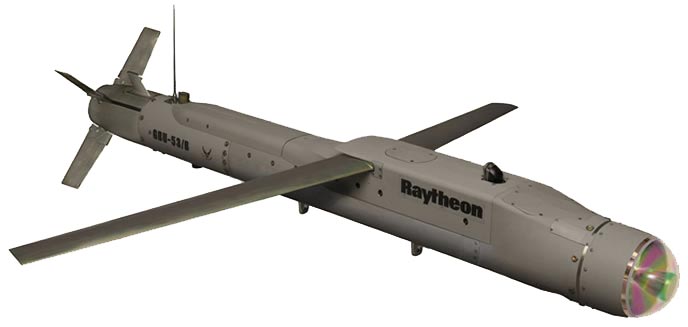
Aim-132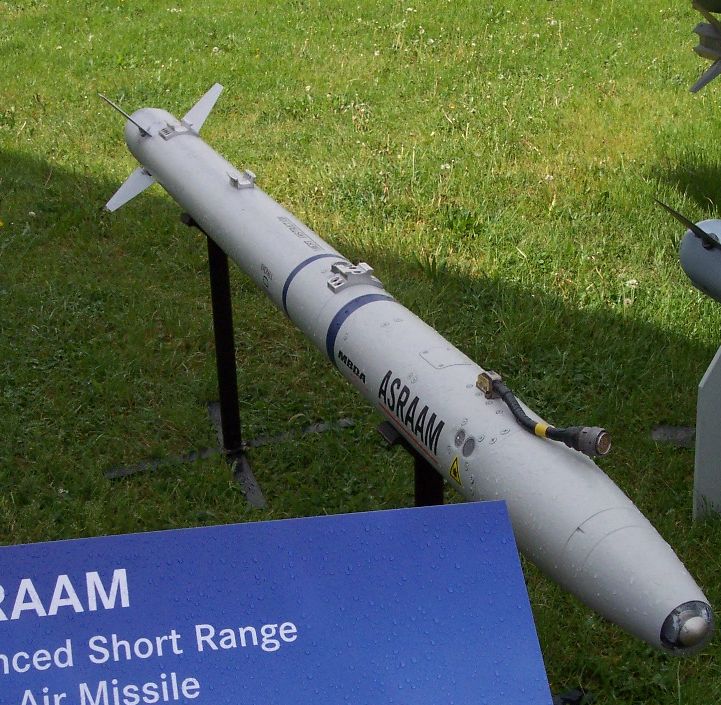
KEPD tarus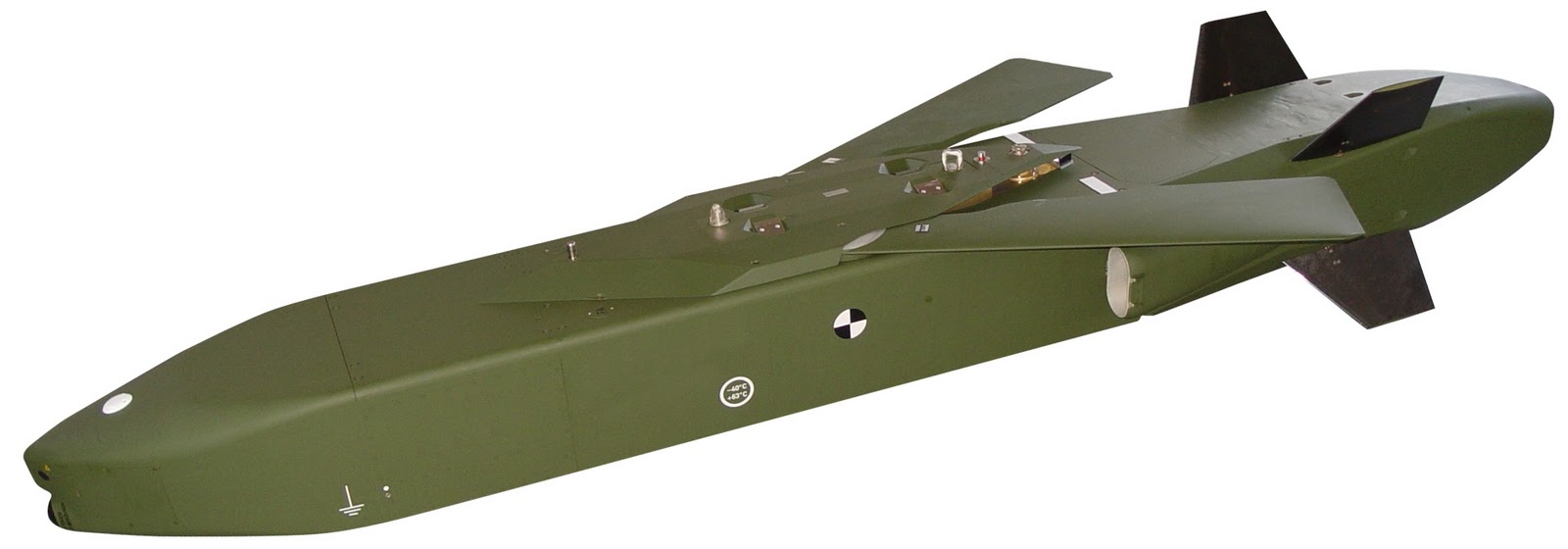
all i know is that AGM-84 and AGM-88 have RCS about 0.1 m2 at x-bands
btw why KEPD tarus have perpendicular side ? , wasnt stealth design avoid perpendicular part ?
mig-31bmAccording to MBDA, Meteor has solid propellant…
http://www.bayern-chemie.com/ramjet.htm
And they tested succesfully gel propellants (in flight) in 2009…
http://www.bayern-chemie.com/gel.htm
So hardly a world first…
no i mean world first ramjet AAM , in production , solid propellant is for the booster
mig-31bmalso subsonic release of missiles at 60-50 k feets still benefit the missiles much more than mach 1.4-mach 2 release of missiles at 30-40 K feets
mig-31bmTheoratically possible, but imagine; a Su-35 flying at 12000 m @ M1.5+ will need so little AOA that it will be flying closer to its Cd0 (at given mach number). With the zoom climb and associated speed loss, its likely to come down stalled. Such action would waste great amounts of energy, and would not be practical.
I don’t have exact data for Su-27 for various payloads, but I can examplify how ceiling of F-15/16 changes with varying weight/drag. What matters is, such ceiling with missiles will certainly happen subsonic speeds, at supersonic at M1.3+ with 10 missiles, level flight altitudes will be much lower, around 12000m.
i dont quite get it , even the F-35 have flow to 50,000 ft level fly and it basically a snail compared to su-27
On November 14, during setup for a 45,000 ft test point, AF-4 flew to 50,000 ft, the design altitude limit. This is the first time F-35 has flown to 50K.
about zoom climb many aircraft can zoom to very high altitude
F-4 zoom to almost 100 k feets
During the proving phase of the McDonnell Douglas F-4 Phantom II, on December 6, 1959, an early version of the aircraft (the XF4H-1) performed a zoom climb to a world record 98,557 feet (30,040 m) as part of Operation `Top Flight’.
sukhoi T-43 ( basically a mig-21 ) zoom to 90 k feets
Soviet Sukhoi T-43-1 prototype. Commander Lawrence E. Flint Jr. accelerated his aircraft to Mach 2.5 at 47,000 feet (14,330 m) and climbed to 90,000 feet (27,430 m) at a 45-degree angle.
i dont get it why it so hard for su-35 to zoom to 60k feet , launch it’s missiles then come down , it have much more power (T/W ) and less drag than most aircraft listed above
Not related to weapons, but should be related to airframe weight. I don’t have data, but logical estimate is at 50% fuel, it should be able to pull whatever Gs its capable of pulling. Speaking of performance, MiG-31 can achieve M2.83 with 4xR-33 + 2xR-40 thats I all know.
Assuming MiG-31’s level flight envelope behaves similarly to MiG-25 (which I have data); MiG-25 achieves its ceiling around M2.5; ~23000m at 24tons, 21500m at 28 tons with 4xFAB-500s. At 35 tons, its ceiling is approx. 15000 meters, achieved at ~M1.5.
So with full fuel and weapons load, MiG-31 should reach around 15000m, with decrased fuel to 50%, it should easily exceed both 20000m and M2.5 marks with full missile load.
what make the mig-25/31 able to fly at much higher altitude than other aircraft ? i know they are much faster but they also have much higher wing loading compared to su-27 ? arent that kind of compensate for the other
It depends on how negative SEP aircraft has at its maximal instantenius turn. For example, MiG-31 takes 65 seconds to complete an 360 turn at M1.4. This data means it has 5,53 deg/s turn rate, requiring it to sustain 4,2Gs. With maximum 5Gs, its instantenious turn drag is not that different than what is sustaining. With different speed/altitude combinations it may, or it may not lose speed/altiude. On an extreme example, a MiG-31 sustaining 5Gs at a certain speed will also be pulling its max. instantenius turn.
but at high speed , high altitude instantenius turn have significant effect on speed and altitude isnt it ?
Assuming both types will be able to carry it? BVR Advantage still belongs to MiG-31, IMHO.
assume su-35 carry ramjet R-77 and Mig-31 carry R-37
then which one will have advantage if the launch distance are : 200 km – 160 km -100 km – 70 km ? , assume both aircraft zoom to about 50-60k feets before launching their missiles too
vs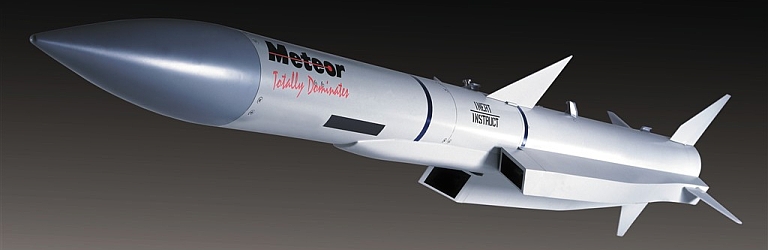
btw
Aim-54 cannot be release at speed > mach 1 because the missiles will flow upward and hit the aircraft , is there similar restriction on R-33/37 ? cause they seem to have similar aerodynamic design
mig-31bmExactly and they’re heavier too, F=ma.
wait wasnt they have higher thrust as well ?


 Sign In







