 mig-31bm
Wing area and Missile ?!?!!!
Does the H2K missiles employ large wings or thick airfoil ?
but h2k missile have other mean to control missiles other than their fin
due to 180 tiny pulse solid propellant rocket motors mounted in the forebody of the missile (called Attitude Control Motors, or ACMs) which serve to fine align the missile trajectory with its target to achieve hit-to-kill capability
mig-31bmThe Kh-31P uses one of three alternative seekers designated L-111, L-112, L-113. There are reported to allow attacks against the Nike Hercules, HAWK, Patriot, and Aegis. The follow-on K-31PM uses the new multiband L-130, developed by the Avtomatika CKBA.
.
wait whatttt , wasnt the Aegis system use AESA radar and Patriot use AESA radar as well ?
mig-31bmMost of the early ARMs are used against fire-control radars such as ‘Fan Song’, so faced only a slow-moving main beam and sidelobes. But in practice, as I have already said, a reflector-type antenna tends to spew low-level signals is most directions, and it is this radiation rather than narrow sidelobes that gives the ARM a near-constant but fluctuating signal, even if the antenna is rotating.
then how come many AGM-45 , AGM-78 in vietnam war were missed because the enemy radar turn a few degree away ?
The UK has retired Alarm, but still seems reluctant to talk about the capabilities it had.
With HARM we are on more solid ground, but you need to be aware that there are two advanced variants – the AGM-88E mentioned by Lukos and used by the US Navy, Germany and Italy, and the USAF’s HARM Control Section Modification (HCSM) upgrade.
Fitting the HCSM upgrade on existing -88B or C missiles adds adds a new GPS satellite navigation receiver, a fibre-optic gyro inertial measurement unit (IMU), and a digital flight computer able to merge data from the IMU and seeker.
It is similar to the earlier HDAM (HARM Destruction of Enemy Air Defense Attack Module) upgrade, which added GPS guidance and a fibre optic gyro system, and allowed missiles to attack a target whose geographic co-ordinates were known, but which was not currently radiating. So this would have no problem in coping with rotating antennas.
The AGM-88E AARGM is an AGM-88B/C upgrade that retains the airframe, warhead and rocket motor but adds a millimetre wave (MMW) radar and digital anti-radiation homing (ARH) passive seeker, a Global Positioning System (GPS) receiver, as well as a Weapon Impact Assessment (WIA) transmitter and an Integrated Broadcast Service Receiver (IBS-R) used to transmit battle damage assessment data back to the launch aircraft before the missile detonates.
The MMW radar gives improved target discrimination during the final attack, and can operate in conjunction with the ARH seeker to counter RF shutdown tactics. Used in a stand-alone mode, it can guide the weapon to a non-emitting time sensitive target. So if an AESA threat proved problematical for the ARH seeker, if its position was known from elint or overhead imagery, it could be attacked using MMW homing.
Giving the missile an INS allows the user to specify a target zone in which emitters can be attacked, as well as ‘no-go’ zones in which emitters are not to be attacked. It also adds some other capabilities, such as passive ranging, but I’m not sure how much of this is in the public domain.
i dont really get what you are trying to say , so can their actually anti radar seeker home on AESA radar or not ? ( assuming MMW radar and GPS dont work )
mig-31bmNot sure what you mean. Earlier ARMs guided by looking at the side-lobes to aim themselves but with rotating radar, this was problematic. ALARM tried to counter this by coming down from directly above.
why the early ARM aim at the side lobe but not the main lobe or the back lobe ? if the radar rotating wasnt it still the same because you still got radiating signal from the radar all the time ? why cant the missiles just home on it ?
Not if it’s an aircraft because you don’t know range accurately enough and so far bearing accuracy of RWR is an order of magnitude or so lower than for radar even for the best systems*, so it doesn’t provide useful targeting parameters. You don’t know the altitude of an aircraft and you don’t know range. You know the altitude of a SAM radar, because it’s on the ground, which gives you range via triangulation with ground, and after firing it probably won’t move, so even if it shuts down terminal homing will work. And aircraft radar could shut down, and it could move and you don’t have accurate targeting parameters in the first place because of the range/altitude issue, so there’s a lot more guess work.
*I’m even assuming that interferometry works against AESA here.
what is interferometry ?
btw how about find the elevation of enemy aircraft by IRST and find their altitude that way ? (you now the angle between your aircraft and enemy by IRST , you know your own altitude => know their altitude by triangulation )
mig-31bmWasn’t it the beginning of that discussion? That missiles with small wings are unlikely to maneuver well at high alt? Otherwise your entire discussion is pointless, with 3,4 m2 wing area and 490 kg weight right off the rail, R-33 has 144 kg/m2 wing loading which less than half of any aircraft flying. BTW, I’ve also calculated the wing areas of AIM-120A and R-27RE. Their wing loadings are 176 and 159 kg/m2 respectively. With their propellent expanded, and weight reduced to half, these numbers should be halved also
wow i never realised that missiles actually have much lower wingloading than aircraft
By the way, now that we roughly know the wing areas; calculating by their wing loadings and taking Clmax=0,5 for M2.0+ thin airfoil;
At 18000m, missiles can reach following Gs at M2,0; M2,5; M3.0 and M3.5 respectively:
R-33S: 7,3G; 11,4G;16,5G; 22,4G
R-27RE: 6,6G; 10,4G; 14,9G; 20,3G
AIM-120A; 6G; 9,3G; 13,4G; 18,3GWhat is more interesting is AIM-120A (with greater wing area than AIM-120D) has 9,95 deg/s turn rate and 5946 m turn radius at M3.5, but R-33 missile has 10,4 deg/s turn rate and smaller turn radius of 4846m at M3.0; So even if arrives much slower, it should have better Pk than AIM-120D for the above discussion.
For a target at 24000m (as in MiG-31) G ability of those missiles at same airspeeds as follows:
R-33S: 2,8G; 4,3G; 6,3G; 8,58G
R-27RE: 2,52G; 3,9G; 5,7G; 7,77G
AIM-120A; 2,29G; 3,5G; 5,1G; 7.0GEven at overly optimistic terminal speed of M3.5; those missiles have following turn rates, and their turn rate covers following distance difference at 1km, 5km and 10km respectively:
R-33S: 4,6 deg/s; 80m/s; 401m/s; 802m/s
R-27RE: 4,16 deg/s; 72m/s; 362m/s; 724m/s
AIM-120A: 3,74 deg/s; 65m/s; 326m/s; 652m/s
.
can you calculate the same number for R-77 , Aim-7 and Meteor too?
mig-31bmTrue for MiG-31, but not for Su-35. It has ceiling around 18000m, so with 10+ missiles and high fuel load, it should shrink to 15000m. That is pretty much the lift limit, Su-35 will have no great acceleration or maneuverability there. For any ordinary fighter, 12000 m is a good altitude.
iamnot saying sustain high altitude , but like to zoom up 60K feet , release missiles then come down , so that missiles dont have to climb much or fly in thick air
Su-35 is really big air plane , not sure if carry 10 r-77 really affected it that much , how about mig-31 ? it carry much heavier and more draggy missiles and 2 aircraft about the same size
5G is the supersonic limit for MiG-31, IDK about its subsonic limits. Its possibly talking about sustained turn, but I am talking about instantenius turn when pulling 5Gs.
but instantenius turn reduce speed and altitude significantly isn’t it ?
is the 5Gs limit of mig-31 is with or without weapon ? , what is the limit when it loaded with 6 R-37 , 2 R-40 , 2 R-77 ? ( all pylon have missiles )
~60 seconds burn time looks pretty logical to me. Rocket burn is determined by design of engine. If you want quick acceleration right off the rail, you want a short burn motor; assuming specific impulse remaining same, increasing propellant burn rate should increase F accelerate missile to its max speed in a few seconds, which is wanted for VWR missiles. Like lukos says, rocket engine thrust is not affected by the increase of altitude. So for long range missiles, its desirable to reduce burn rate, where missile accelerates slowly but reserves some propellant for high altitude so missile will continiue generating thrust in thin air to reach longer distances. Sustaining M4.5 is not a correct term, a R-33 should reach M4.5 perhaps 40 seconds after its launch. On the negative side, this requires some minimum launch distance, where missile could gain some airspeed to have maneuverability to shoot down its target.
but 60 seconds seem like even longer than a ramjet engine ,wasnt ramjet supposed to have much much longer burn time than solid fuel ? ?
btw i dont really think R-33/37 have problem with minimum launch distance because Mig-31 can fly very fast ( mach 2.8 ) so missiles can fly really fast when release
btw Phoenix have problem with max speed that it can be release because if F-14 fly faster the missiles will fly upward and hit the airplane , do R-33 have the same problem ?
BTW This discussion is not relevant at all; Lets make it more relevant by saying;
R-27RE max range = ~120 km. R-33S max range = ~200 km. I say,
a)R-33S fired at 100 km againist Su-35, has significantly higher Pk than a R-27RE fired at MiG-31BM at same range.
b)R-33S has much better terminal maneuverability than R-27RE at high altitudes, after both flies 100km distance.Reasoning: R-33S has better sustainer, lower wing loading, better warhead, and its more or less at middle of its launch envelope.
how much the situation change if we take in to account ramjet R-77 ( assume it have same performer as Meteor )
mig-31bmALARM wouldn’t have a problem against a spinning radar, because it came down from directly above.
what i was trying to say is if side lobe and back lobes radiate that my then why system like tor-m1 spinning their radar to evade ARM ? isnt that kind of useless ?
AGM-88E theoretically doesn’t have a problem with any ground target. If you can detect the radar and give the missile a GPS/INS co-ordinate it can track both passively and actively with MWR terminal seeker, so even if the radar shuts down, it can still be homed in on.
i was trying to ask if the radar homming seeker on Agm-88 and alarm , KH-31 could home on an AESA radar ?
Fighters are fast and could be at any altitude. Ground radar is usually stationary, or at least very slow and, somewhat obviously, on the ground, which makes range determination easier.
if you know your own altitude + elevation of target isnt it really easy to determine their altitude too ?
still dont understand why enemy aircraft moving make it hard to determine range , wasnt the computer can do it in like a fraction of a second ?
mig-31bmWhy do they fly spiral paths? I think you should reconsider your statement.
dont see aim-120 rolling at all
https://www.youtube.com/watch?v=fpJSviD8D4k
by contrast RIM-116 is rolling
https://www.youtube.com/watch?v=Zdp9llrBLnA
spiral paths happened to missiles using Laser beam-riding like 9K121 Vikhr
https://www.youtube.com/watch?v=NyabIb2QxuU
mig-31bmYes, the object being tracked will be the main lobe when the radar is actually observing it.
The polar diagram on the diagram you posted is a theoretical example of the sort of result you would get from a reflector-type antenna, but a real-world polar diagram would be a bit untidier than the theoretical version. I know of one real-world antenna whose polar diagram showed that at one narrow band of frequencies, emitted almost as much energy in its backlobe as in its main beam!
side lobe doesn’t seem to affect old radar That much, I mean system like Tor-m1 ( not use either pesa or AESA) evade anti radar missiles basically by spin their radar around if their side, back lobe radiate that much then that would be useless?
btw
does radar homing missile like Alarm and agm-88 work again AESA radar?
Why ESM system can be used to geolocated ground radar but not enemy fighter? (alq-213, alr-67)
AN/ASQ-239 Barracuda are said to be able to do single-ship geolocation, is that a myth?
mig-31bmA rolling cylinder with angle of attack provides significant lift. The body itself provides lift. Even the old Red Eye manpads used rolling airframe for lift. Some modern missiles have nearly no wings for this very reason, yet still pull 40G.
most Anti air missile don’t roll, except Rim-116
mig-31bmPeople get hung up on turn radius too much. An intercepting missile does not follow the same path as your aircraft or anything like it. As a Mach 2.5 aircraft dives and banks, it picks up a huge lateral and downwards speed component forcing the missile to turn sharply and rapidly increases the distance the missile has to travel. It’s also difficult for the missile to lead and track as it’s speed slows down. If the aircraft then adjusts the turn and dives steeper, the missile needs to make a fairly big correction again. At the extremes, the aircraft may end up going faster than the missile, after which an intercept is unlikely.
If the aircraft speed is low relative to that of the missile (e.g. subsonic), the lead and adjustment is minimal by comparison.
it obvious that missiles not follow the same path as aircraft but you can see from page 2 that even at mach 2.2 the turn radius is 34 km ( likely same for dive and bank )so high speed mean you will go much closer to target =enemy missiles have much more energy left to lead and track , and at very high speed like mach 2.5 it really unlikely that aircraft can make rapid changing in direction caused that likely break their wing
mig-31bmIt would only be easy if the receiver that is listening of the signal was in the main beam of the radar. The relatively large sidelobes present in the polar diagram of a conventional reflector type antenna radiate enough energy to make detection (and ARM attack) relatively easy, but this is not the case with an electronically scanned array. PESA and AESA sidelobes are minimal.
wait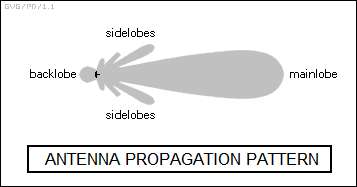

if the AESA radar is tracking an aircraft does that mean the aircraft is in main lobes any way ? so what you mean is that it would be easy to detect if the aircraft have RWR ?
mig-31bmRamjets most certainly can work at 100,000 feet without exotic fuels. And who told you fins are worthless at this height?? They have value.
missiles fin are pretty tiny compared to fighter wing ( proportion to their body size ) , missiles also have alot higher wing loading
Ex :

vs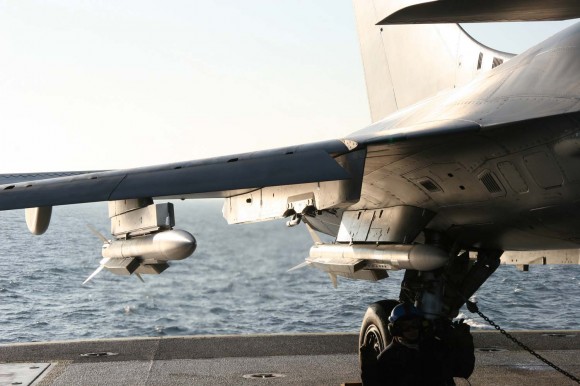
that why i say at high altitude missile are quite useless
mig-31bmThe question is interesting but it may have several different answers.
In fact the SAM with ramjet propulsion as SA 4 Ganef and SA 6 Gainful were replaced by SA 12 Gladiator / Giant and SA 11 Gadfly that has been boosted by solid fuel rockets .
but wasnt all ramjet missiles have solid fuel booster too ?
all so as far as i know Ramjet missiles have far better cruise speed compared to normal missiles of the same size , ( it also need to carry less fuel because oxygen are taken from atmosphere
The reason might be that the MiG 25BM had a mission to destroy surveillance radars and AWACS even in this case the Kh 58 missiles would be launched by MiG 25BM at a speed of Mach 2.8 and an altitude of 22,000 m( 66.000 ft), which would allow the missile Kh 58 could reach at least 250km ( 140 NMI).
While Kh 31P would be launched at lower altitudes and speeds by Su 24M and the fomer MiG 27K against fire control radars and jamming aircraft’s ( EF 111A and EA 6 ) , which in this case would be more indicated the ramjet propulsion, however the estimated maximum range would be less than 120km ( 65 NMI).
In this case I do not have any information about such testing with Kh 31P had been launched by MiG 25BM in the same conditions of the Kh 58.
However it could be possible to assume that a missile with ramjet propulsion has been obeying the same parameters that an aircraft with supersonic capability, ie, that the ratio between the engine and the air intakes has been optimized in ratio with the altitude at which it will operate, and thus are the reason for the complex air intakes with variable geometry in the same way that the engines with control thrust.
Because the legacy ramjet missile has been known so far has lacks these two features, those ramjet missiles has been restricted to be launched for max altitudes, since it ramjet propulsion need of the Oxygen from the air atmospheric to the combustion of the ramjet propellants.
In this case the higher altitude is lower the concentration of Oxygen in the Atmosphere, which will decrease the thrust from the ramjet propulsion, what will leave at the reduction of the final speed obtained by the missile with ramjet propulsion, in the same way consequently will decrease the range of the missile and maneuverability of the same in the final approach of the target.
The low density of the thin air from high altitude could be an advantage for missiles with solid or liquid fuel rocket in reason of the great reduction of the aerodynamic drag, however for missile with legacy ramjet propulsion this advantage has disappeared due to drastically reduction in the concentration of Oxygen from High Atmosphere.
i understand your point that low oxygen affect ramjet missiles performer but even MiG 25 , mig-31 are said to be able to fly at 60-70K ft ( low fuel load ) and they use turbojet engine then it would be safe to assume that Ramjet engine operate well at these altitude too , their engine probably not work at 100-120K ft but what the point ? , at these altitude missiles fin doesnt work anyway so they are basically useless
btw doesnt ramjet dont have variable geometry because they dont have moving part ?
mig-31bmbecause it loses half the missile after the booster separate, a shorter lighter missile maneuver much better
I don’t know but that isn’t always true
Ex: ESSM obviously more maneuver than RIM-7
AIM-9, IRIS-T are more agile than Starstreak
BTW do you know why modern SAM stop using ramjet engine? there used to be so many kind of Ramjet SAM Ex: SA-5 gammon, Talo, Sea Dart


 Sign In







