 mig-31bm
well, except if youre about to kill someone, or someone are about to kill you,
i dont doubt that the F-16 increased speed for the shot, but the MiG ?
the mig probably didnt know it was fired at, or it would not have been a head-on shot,
so why would it be on a/b ?
may be it prepared to launch its R-77 too
mig-31bmNot sure Meteor seeker would be that bigger tha NCADE. After all it is a tweaked up Mica sensor and we know mica uses two types of sensors…
look at the pic you will see how much space does the electronic components on Meteor take compared to NCADE
Meteor use Aster seeker not Mica I think
mig-31bmah, now i see, yes, this 2 stage missile is a good way of combining high agility with long range,
i admit i didnt look at the pic until now, this missile is too long to fit in F-22 tho.
This missile promises higher agility than meteor
NCADE is the same size+ same center of mass as aim-120 and actually lighter so it will fit in all aircraft carry aim-120
btw why you think it have higher agility than meteor…?
mig-31bmI wonder which one have better kinematic Meteor or NCADE…
Meteor use ramjet engine but NCADE have a lot more space for fuel because it use IR seeker
mig-31bmyes, but no fighter launches a missile at mach 3-4, how do you accelerate ?
it will sustain mach 1, which is around stall speed, so the only thing it can hit is earth
no no no the 25 seconds burn time is from the second stage of NCADE, the first stage is a shorten Aim-120 booster ( you can see in the picture that it have 2 part)
so basically Aim-120 booster will accelerate the missiles to mach 4, and higher altitude, after that the second sustain stage will ignite
( it will sustain at least mach 3.5 I think because it was designed to intercept ballistic missile so it need to be fast)
mig-31bmAs part of the NCADE risk-reduction program, Raytheon and partner Aerojet tested an advanced hydroxylammonium nitrate thruster that provided more than 150 pounds of thrust for longer than 25 seconds.
this amount of thrust does not accelerate a missile, its a sustainer
sustain mach 3-4 for 25 seconds is pretty neat , and it not even a ramjet missiles
mig-31bmthanks a lot @mig,
what it says is that, at the range of 30 miles from the target, the F-15 jettisoned the tanks,
then climbed to 33k ft while simultaneously accelerate to M1.4, before launch.How much did the F-15 close distance to the target while accelerating to M1.4 ?
he says ‘still 15-16 miles away’ meaning ~13 nm , ~24 km
We also see that the pilot chose to accelerate to mach 1.4 for better launch parameter,
on top of that it was a top-down shot with the F-15 at 33k ft and the MiG-29 at 6000 ft
in spite of some forum members insistence of M1.2 being the highest speed an F-15 ever used in combat
when you think about it , altitude seem to be more important than release speed , because no matter the launch speed of the aircraft there will be a speed that missiles cannot excess due to drag, for example : at sea level an aircraft moving at mach 2 and another one moving at mach 1 , both release Aim-120 probably have the same range ( i dont think Aim-120 can excess mach 4 on sea level anyway )
By contrast , if the pilot detect enemy sooner he can climb to higher altitude before launching his missiles
The time it takes for a missile to lose 25% of its velocity after burn out at supersonic speeds.
Never @ > 100,000 m (~300,000 ft) ; in space
~150 seconds @ 24,000 m (~80,000 ft)
~70 seconds @ 18,000 m (~ 60,000 ft)
~25 seconds @ 12,000 m (~ 40,000 ft)
~10 seconds @ 6,000 ft (~20,000 ft)
~5 seconds @ Sea Level
aim-120 have burn time of about 6 seconds, F-15 was at 33k ft so probably 15 secs after burn out it will lose 25 percent of it’s speed , at that altitude Aim-120 probably useful again agile target for total of 21 seconds after launch (in that time it can fly about 28 km from the aircraft ) so that probably why most aim-120 isnot at long range .
However stealth aircraft have advantage of detecting enemy from long range , thus they can zoom to much higher altitude Ex : 50,000-60,000 ft before launching their missiles thus gave their missiles longer effective range.
another thing to think about is that Aim-120 have quite short burn time about 6-7 seconds , but modern missiles in the future (aim-120D , T-3 ) will have much longer burn time ( mean their effective range is longer ) Ex : NCADE is said to have burn times > 25 seconds , Meteor have ramjet engine to burn all the way to target ..etc
mig-31bmBurn time.
how long does R-33S and AIM-54C burn for ? , i cant find any info about that
all i know is that Aim-120A motor burn for about 7 seconds , NCADE motor burn for longer than 25 seconds , meteor may be better than that ?
http://investor.raytheon.com/phoenix.zhtml?c=84193&p=irol-newsArticle&ID=999828&highlight=
mig-31bmWhen did this occur and what was the target ?
i’d like info on this event thanks
24-MAR-99
F-15C
C. Rodriguez
MiG-29
Fired: 1 x AIM-120C Range: 30-20nmi
Hits: 1 Kills: 1
Notes:
26-MAR-99
F-15C
J. Hwang
2 x MiG-29
Fired: 3 x AIM-120C Range: ~17nmi
Hits: 2 Kills: 2
Notes:
Hwang was second shooter of a pair of F-15C’s. His wingman “Boomer” McMurray fired one AIM-120C at ~18nm which missed. Hwang fired two AIM-120C from ~17nm which both hit destroying both target aircraft. Follow the link to Hwang’s account of the engagement.
http://books.google.com.au/books?id=UECKO451kAwC&pg=PA80&lpg=PA80&dq=24+march+1999+aim-120+rodriguez&source=bl&ots=XRUkXNaH3g&sig=M7ljnnM6V0sD03LmAYTJekVOoYM&hl=en&ei=i4CiTqq5Au_zmAWk0IWWCQ&sa=X&oi=book_result&ct=result&resnum=4&sqi=2&ved=0CDIQ6AEwAw#v=onepage&q=24%20march%201999%20aim-120%20rodriguez&f=false
18-JAN-93
F-15C
Unknown
MiG-25 Foxbat E
Fired: 1 x AIM-120A Range: ~27nm
Hits: 1 Kills: 0
Notes:
An F-15C Eagle from the 36th Fighter Wing at Eglin, was said to have not downed a MiG-25 Foxbat E after firing 1 x AMRAAM and 1 x AIM-7 Sparrow at it. Other information says the MiG might have actually fired a missile at the F-15 and then landed. A Hughes memo (19Jan93) states that:
“Launch was at a confirmed MiG-29 from Eglin F-15 on 18Jan93. Launch range was 27 nm at shooter altitude of 35K. At 17 nm, he shot a Sparrow at the same target”. Other reports say he launched a Sidewinder AIM-9M at it in close. Hughes is sure that the AMRAAM got the kill.
AWACS was uncertain of the results. There was smoke observed and the Iraqi SAR alert was sounded. Not confirmed.
http://www.sci.fi/~fta/1993-ops.htm
Generally accepted that up to 2008 there have been 10 AMRAAM kills.
Totals:
17 fired for 10 hits – Pk 0.59
3 definite WVR shots for 3 kills gives Pk(WVR) 1.0
14 likely BVR shots for 7 kills gives Pk(BVR) 0.5
mig-31bmI cannot speak for lidar, but a leading seeker designer has stated that using MM wave rather than centimetric wavelengths is of no help when trying to engage a stealth aircraft.
from what i can understand while MMW radar may not work again Stealth aircraft , they may be useful again a stealth destroyer , vessel or a stealth tank
Ex :
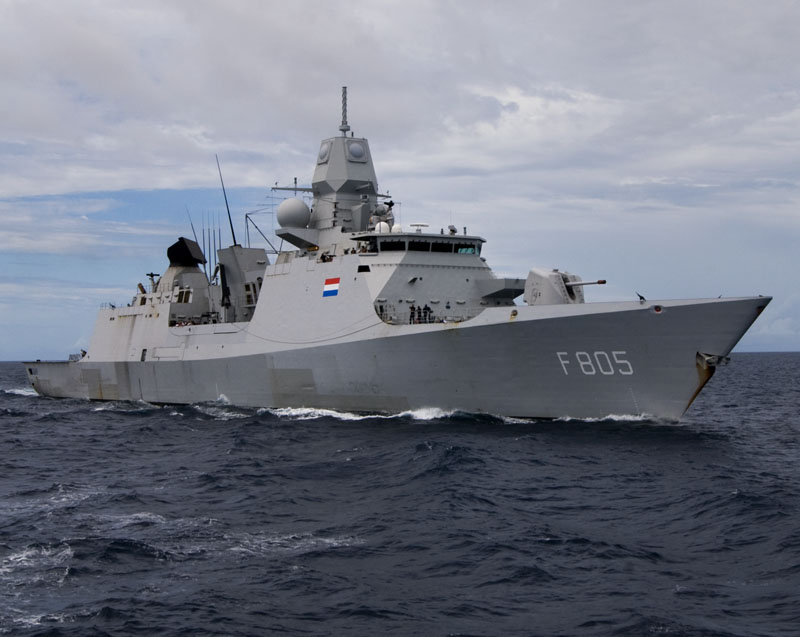
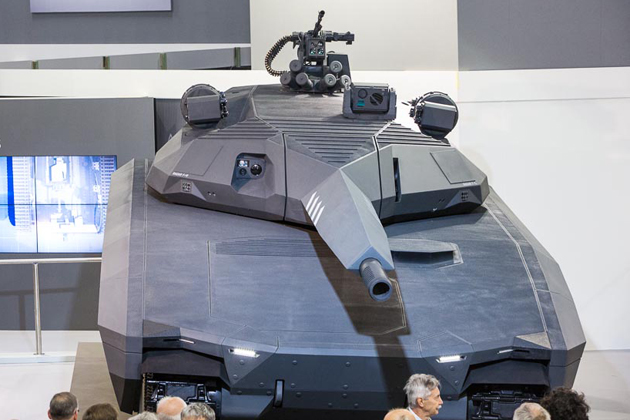
these assets while dont have very low RCS like stealth aircraft , they operate in very high clutter environment ( sea , land reflect radar wave ) thus make them invisible to radar ( because radar have to reduce gain again sea-ground target ), they also have reduce IR method in them ( and they dont really have high IR signature like aircraft ) that make them invisible in infrared as well , but MMW seeker can solve that problem , because they can actually see the 3D picture of target thus less affected by clutter , it also less affected by jamming
mig-31bmNo the heavier missiles like R-33S and AIM-54C do long burn rocket fuel-powered flight upwards of 100,000 feet then coast during the terminal phase.
from what i know , small missiles like Aim-120 ,aim-7, agm-88 , meteor do exactly the same thing they fly to higher altitude and then dive down the target , may be not the same altitude but they all do a ballistic arcs , cant see what exactly the different here
For long-range engagements the Meteor would fly a lofted profile with the sustainer
mig-31bmTo get those long ranges these smaller missiles require a ballistic flight pattern. You don’t necessarily get much direction change early or it dramatically kills its energy.
isnt that the same for all kind of missile ?
mig-31bm-Su-35 fires second R-27RE at 65 km. MiG-31 puts 15 degree angle to reduce its closure rate, and missile will fall short.
-Su-35 fires third R-27RE at 40 km. MiG-31 puts 60 degree closure angle, and missile will lack necessary terminal speed to reach MiG-31.
.
this sound abit too agile for a mig-31 i think , i always imagine it abit like SR-71
mig-31bmBTW since Meteor’s NEZ was to be three times as large as that of AIM-120C is it safe to assume that it maximum range is 3 times bigger as well ? ( like 300 km ? ) caused the public figure maximum range for AIM-120D is 180 km , and as Meteor is a Ramjet missiles of the same size so it may be logical for it to have longer max range ?
Meteor
Aim-120
NCADE ( range 160 km )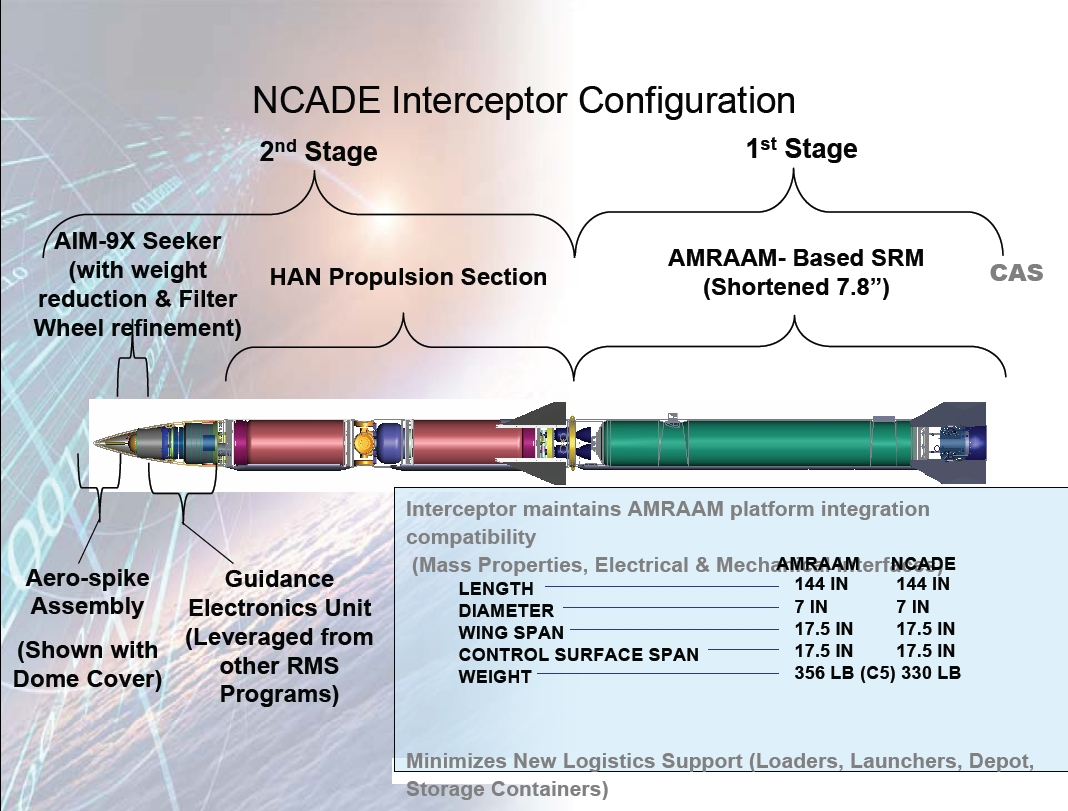
mig-31bmhere is good paper explaining LPI Radar and ESM radar detection
http://www.scribd.com/mobile/doc/231936174#fullscreen
Radar systems work by sending out a signal and then listening for its echo off distant objects. Each of these paths, to and from the target, is subject to the inverse square law of propagation. That means that a radar’s received energy drops with the fourth power of the distance, which is why radar systems require high powers, often in the megawatt range, to be effective at long range.[1]
The radar signal being sent out is a simple radio signal, and can be received with a simple radio receiver. It is common to use such a receiver in the targets, normally aircraft, to detect radar broadcasts. Unlike the radar unit, which must send the pulse out and then receive its reflection, the target’s receiver does not need the reflection and thus the signal drops off only as the square of distance. This means that the receiver is always at an advantage over the radar in terms of range – it will always be able to detect the signal long before the radar can see the target’s echo. Since the position of the radar is extremely useful information in an attack on that platform, this means that radars generally must be turned off for lengthy periods if they are subject to attack; this is common on ships, for instance.
Turning that received signal into a useful display is the purpose of the “radar warning receiver” (RWR). Unlike the radar, which knows which direction it is sending its signal, the receiver simply gets a pulse of energy and has to interpret it. Since the radio spectrum is filled with noise, the receiver’s signal is integrated over a short period of time, making periodic sources like a radar add up and stand out over the random background. The rough direction can be calculated using a rotating antenna, or similar passive array using phase or amplitude comparison. Typically RWRs store the detected pulses for a short period of time, and compare their broadcast frequency and pulse repetition frequency against a database of known radars. The direction to the source is normally combined with symbology indicating the likely purpose of the radar – airborne early warning, surface to air missile, etc.
This technique is much less useful against AESA radars. Since the AESA (or PESA) can change its frequency with every pulse (except when using doppler filtering), and generally does so using a pseudo-random sequence, integrating over time does not help pull the signal out of the background noise. Moreover, AESA radars may extend the duration of the pulse and lower their peak power. This makes no difference to the total energy reflected by the target but makes the detection of the pulse by an RWR system less likely.[2] Nor does the AESA have any sort of fixed pulse repetition frequency, which can also be varied and thus hide any periodic brightening across the entire spectrum. Older generation RWRs are essentially useless against AESA radars, which is why AESA’s are also known as ‘low probability of intercept radars. Modern RWRs must be made highly sensitive (small angles and bandwidths for individual antennas, low transmission loss and noise)[2] and add successive pulses through time-frequency processing to achieve useful detection rates.[3]
AESA radars can be much more difficult to detect that they can broadcast continually and still have a very low chance of being detected. This allows such radar systems to generate far more data than traditional radar systems, which can only receive data periodically, greatly improving overall system effectiveness.
i think the best way to jam an AESA radar is just to use power full barrage noise jamming


 Sign In







