 mig-31bm
Its not a matter of prediction, but kinematics. R-27RE has maximal range of 117 km, but againist a fighter that is closing in at same altitude, its effective range is 65.5 km. At a tail chase againist a fighter, its 16,5 km.
i know R-27RE are used at the moment but how about modern future missiles Ex: ramjet R-77 ( may be same performer as Meteor ) and RVV-BD ( probably same as R-37 )
Lets assume for a second both flies at 12000 meters;
12000 meters is only 39.370ft but since they both detect the other from 300-400 km isnt it more logical for them both to climb to higher altitude + accelerate to very high speed before launching missile to give their missiles more energy ? EX : 18000 meters ( 59055ft )
At 5Gs @ 2500 km/h, MiG-31 will have 4 deg/s turn rate, and 10km turn radius. It this bad? Not at all, as missile has to slowly turn with the MiG to plot an intercept course. To put it this way; 15 seconds is what it takes to give 60 degrees angle to target, getting immune to many types of missiles it fires and still maintain radar lock. 45 seconds is what is required for a 180 degree turn and retreat at will. 7,5 seconds is what it takes 30 degrees climb angle to achieve 347m/s climb rate at 2500 km/h, and furter 12,5 seconds (for a total of 20 seconds) to get from 18000 meters to 22340 meters.
here is what i can find
http://img3067.imagevenue.com/img.php?image=38572_MiG31vsF14_122_482lo.jpg
MiG-31 and F-14A are compared at M1.4@5km, M1.4@10km and M2.2@17km. The data given from top:
> thrust/weight ratio
> sustained load factor (g)
> instantaneous load factor (g)
> sustained turn rate (deg/sec)
> instantaneous turn rate (deg/sec)
> sustained turn radius (km)
so basically at 17km ( 55774ft ) the turn radius of mig-31 is about 34 km rather than 10 km (probably mig-31 can only turn 5Gs at slower speed ? )
maintain at least M2.5+ airpspeed to catch its target.
The time it takes for a missile to lose 25% of its velocity after burn out at supersonic speeds.
Never @ > 100,000 m (~300,000 ft) ; in space
~150 seconds @ 24,000 m (~80,000 ft)
~70 seconds @ 18,000 m (~ 60,000 ft)
~25 seconds @ 12,000 m (~ 40,000 ft)
~10 seconds @ 6,000 ft (~20,000 ft)
~5 seconds @ Sea Level
so it seem that if fighter climb higher before launching their missiles then their missiles can remain fast for really long
Add to that, I completely ignored the fact MiG-31 will be firing its own missiles too. So it begins by; Su-35 fires its missile at 110 km, MiG-31 detects this illumination via RWR, fires its R-33S. R-27RE momentarily touches M4.5 then after a few seconds booster deplates and missile glides 60-70% of its flight. R-33S sustains maybe 80-100 km of its flight at M4.5. What happens? R-33S reaches target first, and
sustain for 100 km at mach M4.5 is equal to about 65 seconds , are you sure R-33S rocket burn that long ? wasnt it a solid fuel rocket ? , normally i only heard rocket burn for maximum of 6-7 sec
mig-31bmassuming the mig-31 use autonomous missile, it can bank away from return fire,
and at such speed a missile is going to have to aim so far in advance for intercept point as to point towards Jupiter,
-the missile will not intercept
I understand that higher speed mean missiles have to aim farther ahead, but to be fair it also mean very big turn radius for aircraft thus easier to predict
mig-31bmGiven the number of advanced long-wavelength systems appearing and their ability to interface directly with SAM units, the F-35 is a hilarious waste of time. The T-50, not so much, as the US has never really put much effort into VHF-band systems. You need big-ass transmitters for one, making them unsuitable for airborne or naval use.”
-Sean O’Connor (SOC).
I will have to disagree with this
SPY-1 and THAAD radar seem very good to detect low RCS target, while US don’t have many VHF radar, their air defence system are pretty decent ( very powerful radar), another thing is that t-50 likely go in service much latter than f-35, so I won’t say either f-35 or T-50 more useless than the other
mig-31bmThere are an awful lot of bad assumptions here. A MiG-31 doing Mach 2.5+ in a dive and shallow turn from high altitude will do more to cause a missile problems than an aircraft at low altitude pulling 9g. The time factor is being ignored.
If the move is performed right, the MiG will be flying across the path of the missile almost perpendicular at Mach 2.5+. That isn’t an easy intercept at all. It puts a serious burden on the missile’s tracking, turning and energy reserves.
can you explain clearer I don’t really get it, how can they perpendicular
mig-31bmTrue, but that is circumstential. If pilot wants, MiG-31 can always stay slow to M1.2 at 17000 meters, and dive to 13000 meters to gain M2.0+ speed then climb if necessary. From the MiG-31 pow, it should never allow target to shoot back succesfully.
the problem is after reach mach 2.0+ it can’t really turn, so probably take a while to climb to altitude with very shallow angle
mig-31bmA very old,old jibe against the R-33, mentioned many times in this forum over the years. But the R-33 and the AIM-54 are 2 different missiles. For a start one is semi-active, the other, with a fully active radar homing head.
I was talking about their aerodynamic
mig-31bmThere is indeed likely to be a resonant effect and VHF frequencies, but it would be naive to assume that this has been ignored by engineers involved in designing low-observable aircraft and missiles.
There is, to the best of my knowledge, nothing in the public domain on low-observable techniques for use against VHF radar. However, at a recent defence exhibition, I saw a document (not in the public domain) that indicates that such techniques exist and have been fielded.
While some Russian companies do cite a range capability against the F-117 for some of their recent VHF radars, the fact that the US do not make their low-observable aircraft available to these companies for the purpose of radar tracking trials, we must assume that these claimed performance figures are little more than theoretical estimates based on Russian estimates of the F-117’s radar cross section.
one technique that I have heard of is to increase the size of the object ( but that only work for big aircraft)
I don’t know what kind of tech you reffer about but it kind of unlikely that f-22 and f-35 have such technology in them even if they exist because these 2 aircraft was designed a long time ago
mig-31bmwow, thats like double guarantee that AESA cant get detected isnt it ?
in theory you could if you know the partten but I think that would be like guessing WPA2 WiFi password
mig-31bmA quick look at their images will tell the above statement is not true;
R-33 (490kg)
look so much like PHOENIX though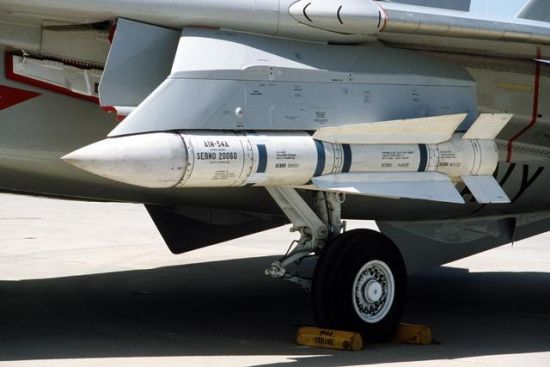
mig-31bm[QUOTE=obligatory;2164110]long range missiles would normally be optimized for…long range, meaning comparably smaller fins for less drag,
but in turn this increase wing load which make the missile less maneuverable,
guessing those large long range missiles have in the order of 3 times the wing load of short range missiles
designed to engage other fighters.
/QUOTE]
to be fair they doesnt really turn at all , all they do is used speed of mach 3-4 and dive down the target , only kind of AA missile that i actually see turning is the short range one
https://www.youtube.com/watch?v=ywPD8t4OL4A
https://www.youtube.com/watch?v=P8vqqelqo3M
mig-31bmYou can not fool physics. Higher speed means friction and friction means heat. Heat must be discharged somewhere. If you keep the heat inside the whole aircraft will radiate heat or it will overheat with all it’s high tech inside. This is insane for modern aircrafts. This means you have to get rid of the heat and this can be gathered by IR-sensors. Nothing radiating is invisible. Even LPI radar you can spot with modern latest technology and sensitive broad band ESM gear. If your opponent knows you are there, but he doesn’t know where, he can take adequate measures to spot you. For example switch on bistatic/multistatic radars, long wavelength radars and EO sensors. IMHO even today a real stealth aircraft is an absolute silence aircraft with no radiations and no heat footprint.
actually they have managed to make a tank invisible in infrared
http://www.huffingtonpost.co.uk/2014/03/31/pl-01-stealth-tank_n_5061795.html
AESA radar cannot be detected by ESM not only because it is low power beam but also because it transmit in unpredictable pattern thus ESM system cant recognize it from background noise
mig-31bmThere is no ‘probably’ – To the best of my knowledge, Hostage made no such statement. In the article I read, it is the journalist who is making the statement, not Hostage.
“Widely believed” might be more accurate than “well known” in terms of the usefulness of stealth at VHF frequencies. The degree to which the effectiveness of low-observable technology is reduced at VHF frequencies has been the subject of much speculation, but no-one recognised as an authority on low-observable technology has made any definitive statement on the subject.
how about F-117 cased , and the resonant effect at VHF frequency , isnt that the reason why all military force design modern low frequency radar to detect stealth fighter
mig-31bmNo. High speed is not useful for stealth aircraft. Speed means warm-up of the surfaces and that means stealth is useless because the aircraft can be spotted by IIR-sensors. The hotter the surfaces (the higher the speed) the longer the range it can be spotted by IIR-sensors.
A stealth fighter is stealth when it doses not emit any radiation. No radar, no ECM, no heat radiation, no communication…
that is wrong
for stealth fighter now , they still have radar but LPI radar , they obviously have heat radiation because they moving through the air
and spotted by IIR sensor doesnt mean much if you cant target it ( limit by the LRF range about 40-60 km ) so fast speed could be useful for stealth fighter if they was trying to run away
mig-31bm.
However; for a theoratical discussion in an open zone; I would put my money on MiG-31BM due to several factors:
Speed. Means; a) greater boost own missile range. Combined with R-33S missiles with already better range, this ensures first shot. b) doubled energy state which can be used for missile evasion, climb or other maneuvering. Even a 60 degree turn after firing a BVR missile -to reduce closure rate- will waste energy. c) allows MiG-31 can disengage at will.
Excess power: At its engagement speeds of M2.0+, MiG-31 possibly has far better specific excess power than Su-35 does at ~M1.4, again aiding with energy management, and allows MiG-31 to disengage at will.
Maneuverability; Surely MiG-31 is limited to 5G when supersonic, but it can sustain turns better than Su-27 and possibly Su-35 at high Mach numbers.This translates to me as “while both sides have little chances of hitting each other, Su-35S has even less chance of hitting MiG-31.”
to be fair the high speed of mig-31bm do bring some disadvantage when target shot back though ,
1-very big turn radius ( like 30 or 100 km at mach 2.4 if i dont remember wrong ) make it actually have to come very close to target even after launching the missiles
2-fast speed kind of reduce reaction time alot
but yeah i do agree with the part that high speed of Mig-31 + R-33 is alot better at BVR than Su-35
Btw i think they replaced R-33 and R-37 with sth called RVV-BD
R-77 is replaced with RVV-SD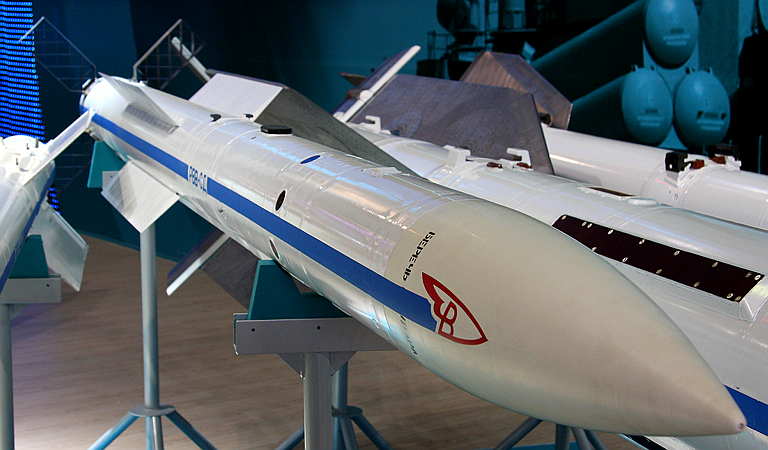
mig-31bmI can do even better.
Foxhound was design for the sole purpose of being an constant threat to Bomber, AWACS and Tanker platforms. But not fighters, it is designed to zoom around them alltoghter.
Whereas the Flanker IS designed to engage fighters. Its called Airsuperiority.
mig-31 cannot dogfight obviously but there no reason why it can’t use missiles to attack other fighter from BVR,


 Sign In








