 UAZ
UAZReally, Iran would be better to invest in advance Russian SAM’s. That said, Iraq had some of the best intergraded SAM Networks at that time. Yet, the US and its Allies ran over it like a freight train…………:diablo:
True. SAMs are a cost/effective investment. But, best for air-defense is a well integrated and coordinated SAM/fighter duo.
As for the Iraqi defenses in 1991: They had nothing but old and compromised complexes like SA-2, SA-3 and SA-6. No modern SAMs like the S-300 (SA-10), BUK (SA-11), S-300V (SA-12) was sold to them. Having said that, even older SAMs are not to be underestimated. They still can do some damage. During operation Desert Storm, the Iraqis managed to shoot down many of the latest F-14,15,16, 18 and Tornados with their elderly SA-2 and 3s.
Iran’s current SAM network is not much better than Iraq’s back in 1991. The only modern SAM they have is the recently acquired TOR (SA-15) which is only a short-range system.
UAZJust like Garry mentioned, the main reason for launching SAMs in pairs is to maximize the probability of a kill.
Statistics for an old S-125 (SA-3) are something like 75% chance of a hit for 1 missile. 95 % for 2 missiles and 98% for 3 missiles launched. By increasing the number of missiles launched simultaneously at the same target you maximize the probability of a hit. Note that the probability will never be equal to exactly 100%.
Of course, action taken by the targeted aircraft (evasive maneouvers, ECM, chaff, etc.) reduce those probabilities.
There are 2 other secondary reasons why SAMs are launched in pairs (or multiples).
1) A SAM complex has a relatively small window of time/space to shoot at an enemy plane. Second chances are rare. Since there is always the remote chance of a missile malfunctioning, better use more than 1 missile.
2) A hit by a SAM does not necessarily mean a “kill”. The targeted aircraft may be able to return to base with repairable damage. Smaller short range SAMs have small warheads. Larger SAMs are typically designed to explode in the vicinity of the target. Additional hits improve the probability of an actual “kill”.
UAZThis and never was a discussion about chronology.
Guess who started with the chronology. Your own post:
Funny history tells a different story- or maybe you missed thee cold war.
:rolleyes:
yes there are cruise missiles in the US Nuclear detterent, but they are in increasingly small numbers and in order to have intercontinental capability they are carried and luanched by very expensive and complex bombers.
The US has and is still considering civilian design Boeing airliners as cruise missile launchers to replace the 50 year old B-52s:rolleyes:
Development of cruise missiles capable of penetrating well defended air space is a more technically challenging task
Yet during operation Iraqi Freedom, a lowly/elderly/unworthy SILKWORM cruise missile penetrated the best US air defenses and crashed into a mall in Kuwait city:rolleyes: I guess the allied air defenses were too busy shooting down their own aircraft :rolleyes:
BTW, Regulus was replaced by ICBMS, or have you never heard of Polaris?
I call them SLBMs :rolleyes:
UAZAcquired from where? Last time I checked both North Korea and Iran were under pretty tight arms embagos.:rolleyes:
“Where there is a will, there is a way”. Those “rogue” nations will find a cost-effective way of launching their missiles from a suitable platform (sea/air). It is just easier to do that with a cruise missile. Doing the same with an ICBM(or even a SCUD) presents a much greater challenge.
And yes, yes, yes, the ICBM is more difficult to stop. We are not disagreeing on that point.
UAZJust answered you own question question, when was it retired? what was it replaced with- oh yes thats right ICBMs. Incidently what was it launched from- thats right a submarine, which had to be designed built and developed.:rolleyes:
You missed my point.
I am saying chronologicaly:
-Regulus came before ICBMs
-V1 before V2
-Cruise missile before ICBM
…and BTW, cruise missiles are still in the US nuclear arsenal. ICBMs have not replaced the cruise missiles.
:rolleyes:
UAZThats why the US and the Sopviet Union focussed on ICBM’s up until the 80s.
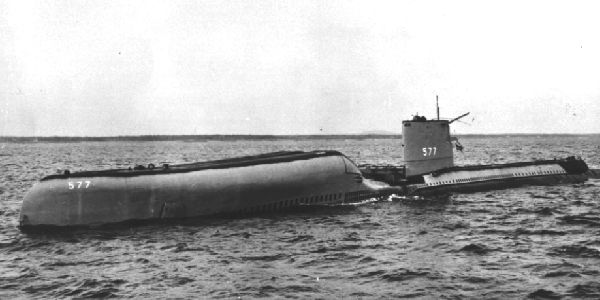
Not exactly. The SSM-N-8A Regulus cruise missile was the nuclear deterrent weapon employed by the United States Navy from 1955 to 1964. It was retired once the Polaris SLBMs became available.

UAZ1) Yes you did qoute out of context.:mad:
2) I was pointing out that you were qouting out of context and explaining the context the comment was actually posted in. As a newbie you need to learn to stop making ridiculous comments about points.:mad:
Disappointing…
Up until recently a basic developed Scud could penetrate pretty much any defence system- as was shown by Gulf War 1 ……Secondly for cruise missiles to have a truly intercontinental …..
Yes, but the SCUD is not an ICBM. Since you are talking about a cruise missile with intercontinental capability, you should find a better example to illustrate your point.
Secondly for cruise missiles to have a truly intercontinental capability they have to be tied either to warships or aircraft, both off which also have to be designed, developed and built
…or simply, acquired.
UAZWow qouting out of context I see
Nothing is quoted out of context:dev2:
Being the newbie here, I must thank you for not ignoring my posts and taking the time for replying 🙂
Try reading the bit about how a simple cruise missile has less chance of penetration than a simple ICBM.
Read my post carefully. I already mentioned that it is more difficult to stop an ICBM. You don’t score points by repeating the obvious:diablo:
The point being that a vast amount of technology is required to create a worthwhile cruise missile compared to a simple ICBM.
Which one do you think needed more research/development/technology/cost/finances/maintenance/manpower/manhours/etc. : The Tomahawk cruise missile or any US ICBM?
Just look at the thread about the AS-19 Koala.
Couldn’t you find a more complex cruise missile 😀
UAZSorry but it appears that you missed the part where the RAF was able to to achieve significant results in intercepting V1’s where as the V2’s were unstoppable. Thats why I mentioned the cold war.:rolleyes:
No, I am well aware of what (and what not) the RAF and British AAA accomplished:p
I never disagreed with the part of your previous post where you mentioned that ballistic missiles are more difficult to intercept.
What I don’t agree with you is in your previous post where you are implying that ballistic missiles where easier to develop and came first.
This part:
Cruise missiles are easier to develop are they? Funny history tells a different story- or maybe you missed thee cold war
That’s why I brought up the V-rockets.
UAZCruise missiles are easier to develop are they? Funny history tells a different story- or maybe you missed thee cold war.:rolleyes:
Sorry, I didn’t want to get involved in these discussions but it seems that you have missed WWII.
The German V1 cruise missile was easier to develop and came sooner than the ballistic V2 rocket.
UAZThanks.
What happened to that last Su-24?
UAZFew pics from the SAM version of the R-77 (SLAMRAAMSKI)


Don’t know yet if it is going into production.
UAZHi
and now new pictures .one for SU-22M3 and the others for SU-24 with SU-22M3 from 2001 army show.
I believe they are all Su-22.
AFAIK, The Iraqis did not have any Su-24s in 2001
UAZI believe this is the source :
http://www.strategypage.com/htmw/htproc/articles/20070614.aspx
UAZ[QUOTE=Otaku;1126880]
Hi UAZ, any word on the ramjet R-77M?:cool:
Nothing new. We may see something at the MAKS 2007 show in August.


 Sign In







