 SpudmanWP
it’s not just about “today’s planes are better” which would be quite simplistic, but simply to say that for countries that have limited budgets
I think that when the South Korean & Canadian bids come in, it will be a stark wake-up call to a lot of people. Up until now, costs associated with various programs could not be directly compared with any degree of accuracy due to the conditions of the cost varying from source to source.
These upcoming bids will be the first time (if the details are released) where a direct apples-to-apples comparison can be made. The Japanese bid could have been, but the details were not released. We can’t even compare the FMS announcements since Boeing chose to only offer the electronics ($40 mil per plane) through FMS and the rest (Airframe, engines, etc) through DCS (Direct Company Sales).
What cannot be disputed is that being a part of the F-35 Partnership has a better potential for long-term offset stability, will offer faster, cheaper, & better upgrades, and will offer better security 30 years from now than current 4th gen assets.
SpudmanWPIt’s not just about peer enemies, but up-and-comers also.
Iraq in 1991 was not a “peer”, but “Package Q” failed just the same.
Before you say “but today’s planes are better”, so are today’s IADS. It does not make sense to incrementally improve fighter design because you are always neck and neck with the threat. This is primarily due to it being much cheaper and faster to improve an IADS than it is fighter design.
Here is a graphic that puts it in perspective. I know it’s simplistic, but the takeaway is that it is much more expensive, in monetary and pilot cost, to prosecute ANY target with 4th gen rather than 5th gen assets.

SpudmanWPSure, Lots of info… IF you want to pay for it 🙂
SpudmanWPYou assumed (as do most of the F-35 fanbois) that only Ku-band or X-band radars on the enemy aircraft count!
They have been the only ones demonstrated to work. Show me a working LW fighter radar (with actual track data) and we can revisit the issue.
There are. Get used to it.
I was talking about in the AO. ANY radar can detect ANY plane, it’s just a matter of range.
So your basically saying, this much vaunted (and very very expensive), first day fighter is unable to operate until others reduce the keypoints of the IADS to rubble?
I was speaking of other F-35s, not other assets. Those SEAD F-35s could use a combo of NOE, PGMs, CMs, etc to degrade the IADS enough to let the rest of the package through to the target.
Oh yes, because only one side has secure datalinks… and remote transmission is obviously impossible.
A secure datalink does not mean an undetectable datalink. Right now, MADL is the only directional datalink in operation (besides the IFDL) . Try again.
Why? Is that not exactly what IRST is for?
Radar is still the dominant sensor and required if you want to get a range to target beyond 20km (per OLS-35 specs). If you try and use multiple IRST tracks to triangulate the position, then that means “going active” with your datalink.
http://i619.photobucket.com/albums/tt271/SpudmanWP/Misc/ols35_zps1cb7701b.jpg
SpudmanWPMaybe they should come out with a Cost Per Mission (CPM) model.
What does it cost to destroy target X at range Y guarded by assets Z?
The CPM model should include everything involved (all assets like IFR, ISR, etc).
SpudmanWPisn’t the F-16 around 2-4000 USD?
That does not even cover fuel.
SpudmanWPHere is the new CodeOne link
http://www.codeonemagazine.com/article.html?item_id=58
Don’t forget that X-35 flew with a DSI in 2000.
SpudmanWPThat is not a pic of a supersonic F-18, unless you think that a B-2 can do it too 🙂
http://www.fluids.eng.vt.edu/msc/gallery/conden/pg_sing.htm
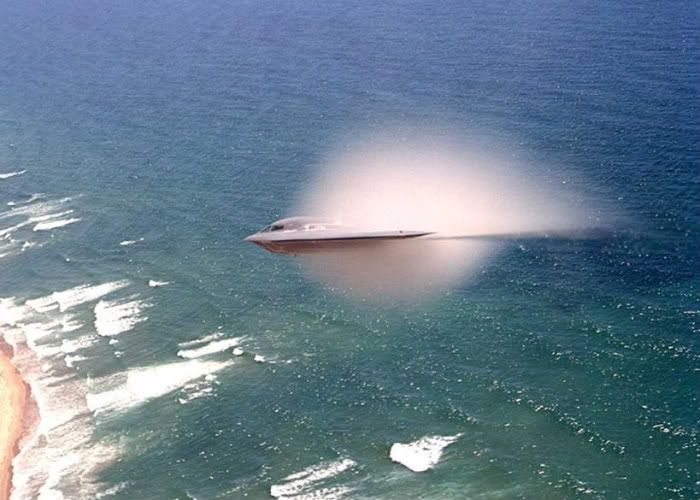
or a 747 on takeoff 🙂

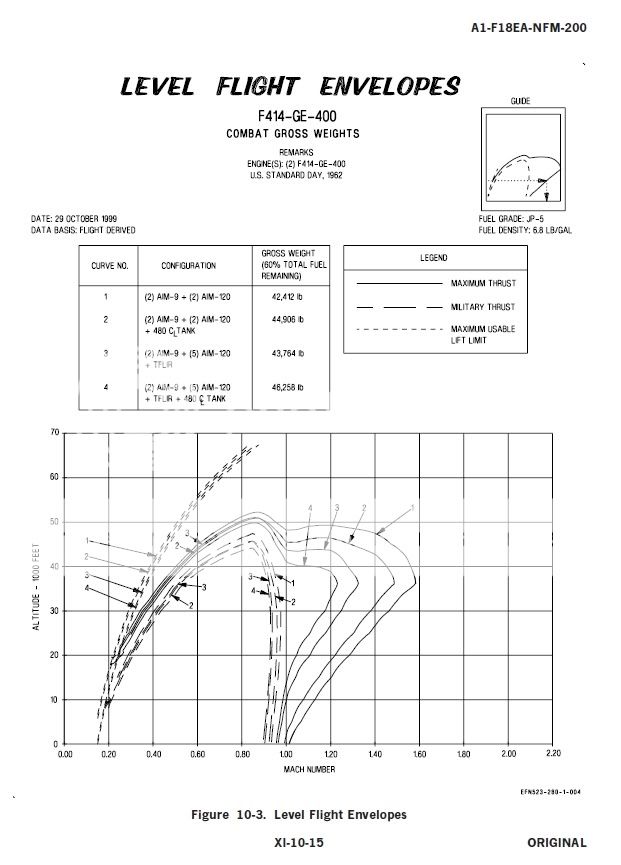
SpudmanWPThe SH cannot get to m1.8 armed (not even with conformal only missiles), let alone with funbags or a FLIR/IRST.
SpudmanWPIn what universe would anyone send a SAG out with no air cover ?
B-52 as a MPA is a bombed idea
MPA != “Maritime Attack”
Don’t forget that most navies do not have air-cover away from their own shores.
I did not say that the B-52 was “the” solution for Maritime Attack, just “a” solution.

SpudmanWPIt’s not just about being caught off-guard, but being able to project power globally, on short notice, without having to have a CBG in the area.
SpudmanWPThis seems quite absurd. As already mentioned by obligatory, the B-52 adds no value to this mission. The LRASM, would have enough SO range to be launched by existing assets that can do so much silently and with better SA.
The B-52 could actually bring a lot of capability to this mission.
It’s already cleared for MALD, has massive range, and is not dependent on a CBG. It can be anywhere, at anytime.
For SA, it can depend on other assets (as would most launch platforms for LRASM, otherwise what’s the point of LRASM’s range) like drones, satellites, F-35s, or subs in the area.
Think of it this way:
Without much warning, a SAG is approaching a friendly area and there is no way to vector a CBG to the area (either unavailable or way too far away). You can load up a B-52 from CONUS, Guam, Diego Garcia, etc and get it to the area ASAP. It would bring its own decoys & jammers (MALD & MALD-J) and a load of LRASMs (or Harpoons now). Multiple launch capability allows for an overwhelming attack style to have the best chance of success.
SpudmanWPYour GCI either vectors you, or even better, uploads a position and flight path (albeit, not a very precise one) of the F-35. [something Saab had back in the 80s]
You then approach from a beneficial angle, probably from the F-35’s flank, using offboard and passive sensors to develop your track to a point where you can light off missiles (with radar guidance by a lead aircraft and launches from “trailers” approaching from the front of the F-35 if necessary)
Re-framing your augments I see 🙂
You started out by claiming that an enemy fighter would see the F-35 at 200 miles and now you say that it would require GCI and a ground based LW radar… Well at least you’re being honest.
If there were an LW radar with the capabilities to detect & track the F-35, several things would/could happen.
1. That LW radar site would be the receiver of multiple attacks early on before other F-35s would be openly operating in the area. These attacks would likely involve NOE, multiple SDB, Spear3, Cruise Missile, and other various tactics to ensure that the radar site is taken out.
2. Assuming that the site does get a vague idea of the F-35’s track, any communication with the vectored fighters will likely give them away.
3. The vectored fighter will have to go active since the F-35’s track is vague in nature. The F-35 will likely detect this and react by one of the flight turning to deal with the treat. At this point its RCS drops considerably from the initial track and the vectored fighter will no longer know where it is at. The vectored fighter is now likely being hunted and does not even know it.
4. The airport that the vectored fighters came from will also be getting a lot of attention prior to F-35s openly operating in the area.
My point is that you cannot assume that the F-35s will come blindly into an area where they know where the LW radars are and know where the vectored fighters will be coming from without addressing those threats.
SpudmanWPFighters: FA-50
Trainer/Coin: SuperT
Transport C-130J
ASuW/MPA: C-130 MPA version
Awacs: EC-130V
Yes, they are all C-130 for a reason. They are cheap, longer ranged compared to jets, ease of maintenance, rough field handling, and are easily upgraded.
SpudmanWPI knew this was going to come up. I have made distinctions between trace and track for this reason, and also used “see” for this reason.
So back to the statement.
You’re “assuming facts not in evidence” as NOBODY has ever made a claim to be able to detect “see” an F-35 from another fighter platform at 200 miles.
btw:
Detect = Knowing that something is out there but not knowing where exactly and you can’t do anything about it (no weapon usage)
Track = Knowing where it is and where it’s going (track is good enough for weapons)


 Sign In








