 SpudmanWP
@SpudmanWP
I don’t see any physical limits to launch an AHEAD successfully vertically except for gravitation looses.
The Millennium CIWS uses AHEAD and is certainly ready to handle plunging AshMs.
Sorry I was not clear enough. I was postulating that an attack on the main S-XXX system while being defended by a dispersed PDS will not have an effective engagement. When the PGM is not headed directly for the PDS the AHEAD rounds are attacking the PGM from a side angle.
Being that is from the side the gun has to track harder to lead the PGM. Also, the AHEAD round will not have an effective ‘stacking’ effect where if the PGM misses one shrapnel ‘disc’ it runs into the next one which is virtually on an identical flight path.
SpudmanWPThe AHEAD rounds would be nearly worthless to a plunging PGM. For AHEAD to work the PGM has to fly into the AHEAD round after it explodes but a plunging PGM is flying a perpendicular route, not a merging route.
SpudmanWPF-15, no
F-16, likely
MiG… not even in the same class of aircraft
Supers, maybe
Gripen, likely
Typhoon, no
When you look at baseline prices you get the above. Throw in all the sensors that the F-35 carries that the above do not (or would have to have more cash added to pay for) and it skews even worse.
Throw in the survival rates in combat (and it’s associated replacement cost) and you begin to understand why many governments worldwide want the F-35 despite the initial pricetag.
SpudmanWPYes, however reaction times of networked Pantsyrs are like that of a CIWS of course. They have independent search and track radars as well as optical systems.
Which all will be affected by the reduced detection range against a VLO airframe. IIRC, all those Russian PDS optical systems are for backup to the tracking module, not as an independent search device.
Future advanced IADS assets will have ESM systems around which could calculate the location of the F-35/22 while new generation TI systems could track them at distances which are longer than the SDB max range.
How is an ESM supposed to get a return from a fighter that is running silent? The F-35&22 don’t need to go active in order to detect the S-XXX and can verify the target coordinates via EOTS or SAR (active single scan).
Once angle tracking is established an S-400 could launch the missile in theory while concentrating the Tombstone engagement radar on that point at max. Power output until the missile SARH seeker gets a return.
So you are going to ignore all other F-35/22s? In that case you are toast. btw, the F-35 has an EODAS mode called YATO (You Are The One). It will let that pilot know that the missile is headed towards him and allow him to take evasive maneuvers. Don’t forget that the SARH missile itself can be jammed.
Active jamming at anything less than 75km distance to the SAM system could become very dangerous.
The NGJ will likely stay outside the SAM engagement envelope. Any AESA jamming will only be as needed.
In networked systems the high power Nebo AESA could pass necessary target coordinates to the Pantsyrs, jamming such a low-band brute force system could become very difficult for a MALD-J
The purpose of the MALD and MALD-J (along with the NGJ and AESA based jammers) is to buy just 10-20 seconds of time while the SDBs perform their dive from high altitude. This ingress from high altitude allows them to be higher than the PDS units can engage (especially with guns)
Any decoy can be analyzed via radars, ESM and foremost modern TI systems. One a MALD had been identified it will be ignored by future highly automatic IADS.
Your talking about a lot of “future” stuff here. While the NGJ & JDRADM are not here yet, they are funded and in the prototype stage. Beside, their lesser cousins (ALQ-99 & AARGM) are here and will do just fine.
A JDRADM approaching an S-400 would close directly into the low-band AESA, with the detection range increasing disproportionally, exponentially. If there is any small echo the Pantsyrs TI system would check to coordinates and classify the threat, giving it high priority and launching missiles against it.
The JDRADM can execute the same plunging attack as the SDB and enjoys a much smaller RCS than the SDB. Reaction times for the PDS units will be reduced even further than if it were a SDB (high speed ingress and lower RCS).
While risking the launch platform. The benefit of the F-22-SDB combination is the release range and the VLO benefit; to threat the reaction time of modern PDS you need to close to a dangerously close distance against Nebo low-band systems.
Are you saying that the NEBO can engage a F-22 or 35 from 50+nm away… good luck backing that claim up (especially in the presence of heavy jamming form NGJ, MALD-J, and F-22/35 jamming as needed).
Arranged in a smart pattern and the right distances would neither pose a real angle problem for the radar/optical systems nor for the gun systems. Modern (also old) AAA systems can shoot vertically and the PK will remain high because it’s completely automatic.
Thy may shoot vertically, but they cannot look (with sensors) vertically at a target approach at near mach speeds.
You missing the main point. For your S-XXX to survive, every one of the inbound SDBs, HARMs, and JDRADMs has to be intercepted. That is the true impossible task.
SpudmanWPGPS is useless against an enemy with a GPS-jamming-capability.
Tell the Iraqis that.
http://www.aviationweek.com/aw/generic/story_generic.jsp?channel=aerospacedaily&id=news/gps.xml
For a jamming system to be effective it has to position itself between the transmitter and the receiver. For GPS based bombs that is a position between the bomb and space. No such jammer exists.
The DoD has been developing GPS anti-jamming technology since the mid 1990s.
http://defense-update.com/products/g/gps-aj.htm
http://www.aero.org/publications/crosslink/summer2002/06.html
The SDB itself has been designed with a jammed GPS environment in mind.
SpudmanWPFYI, there is now a GPS aided wing kit for the WCMD system to increase standoff and accuracy.
SpudmanWPWhen you consider the following, an SDB attack on a S-300/400 system has a good chance of success:
1. The VLO airframe of the launching platform will allow a launch of the SDB from a closer range and will limit the reaction time of the Point Defense System (PDS).
2. The F-35 is pre-wired for NGJ which can seriously degrade the radars of the PDS.
3. The F-22’s or F-35’s AESA radars (F-22 Inc 3.1 with it’s jamming will start to be installed next year) can also support the jamming of the PDS radars.
4. MALD-J can be launched to arrive in the target area to provide additional jamming of the PDS target tracking radars.
5. MALD can also be used to confuse & overload the PDS systems.
6. JDRADM can (2018 timeframe) add a high speed & VLO aspect to the engagement thereby reducing the reaction opportunity to almost nill.
7. The SDB can be launched from a very high altitude (50,000+ ft), glide to say 20k ft, then pitch over into a vertical dive (bunker penetration flight profile). This will be beneficial in several ways.
A. The high speed of the approaching SDB will reduce the reaction opportunity of the PDS.
B. The PDS is limited in their radar acquisition angle, ie they cannot see directly above themselves.
C. The high speed of a plunging SDB will make a guns defense impossible and necessitate the use of the missiles which have a very limited supply.
Now I know that not everything I proposed is perfect and will work every time. But, I do think that when you take the system as a whole (VLO launch platform, SDB1&2, plunging attacks, NGJ, launch platform AESA jamming, MALD, MALD-J, JDRADM), I think the likelihood of the SAM destruction is good.
SpudmanWPThey have not even announced the cause of the crack that was found. As was said before it could be from a problem with the test rig itself or the way they conducted the test.
When they do find the cause and if it is a problem then they will do two things:
1a. Redesign the spar for future builds or
1b. Reinforce the spar on all future builds
2. Apply that reinforcement to all existing F-35Bs (either during assembly or at a scheduled maintenance period).
SpudmanWPThe REQUIREMENTS for the JSF were different than what was demonstrated (an thought capable) before SWAT. The purpose of SWAT was not to lower the requirements, but to lower the weight in order to meet requirements.
The requirements for the JSF program started with JIRD-1 (then 2 & 3) and finalized with JORD. JIRD-1 was released in 1995 and covered, among other things, the payload capacity of each model.

Surprising to me was that the CTOL version shared the STOVL’s requirement of only 1000lb internal bombs.

This was the case even after JORD was released and did not change until after the F-35 was selected and the final (or so they thought, ie pre-SWAT) design was known. Looking at all the JSF related SAR reports supports this continuing requirement of only 1000lb internal load in the F-35B.
Here are all the JSF SAR reports from 1996 to 2007 directly from the DoD.
http://www.dod.gov/pubs/foi/reading_room/09-F-1079_JSF_SARS_1996_Present.pdf
A good read in to the early stages of the JSF program (prior to X-35) is here. It also goes into why the F-35C had a 2k but the A&B only had a 1k requirement (internal). One of those reasons was that they were working on a 1k penetrator (JAST-1000) that would allow them to not need a 2k weapon. JAST-1000 development has yet to produce a dedicated 1k class penetrator.
http://www.jhuapl.edu/techdigest/TD/td1801/steidle.pdf
SpudmanWPSeveral US powered weapon systems were derived from bombs. It’s not a new idea.
AGM-123A
AGM-130
JSOW-ER
AGM-12 Bullpup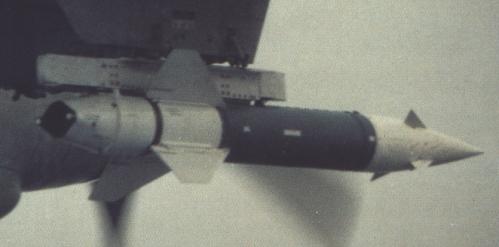
As far as a laser guided weapon doing a vertical strike, I seem to remember LGBs in Desert storm doing this, but I could be wrong.
…. I did find this PDF that states back in 2001 that LGBs were doing vertical strikes.
http://www.dtic.mil/cgi-bin/GetTRDoc?AD=ADA393861&Location=U2&doc=GetTRDoc.pdf
Also, any weapon designed as a “penetrator” would by definition have to attack vertically.
SpudmanWPA possible delay in IOC has nothing to do with carrying capability. Now your just grasping at straws.
btw, The review that says that there might be a delay states that it will be due to software development issue and that there has not been any significant hardware issues.
—-EDIT—-
One last note, the original JSF requirement for internal bomb load was 2x1000lb bombs (not 2×2000). It is unfortunate that they could not have the increased carriage, but they did not lose anything off the original requirement.
SpudmanWPThey reduced the internal loadout in order to save weight and make room for the liftfan. It’s not my personal claim that on 13 Mar 2009 (several years after they changed the config) they stated the shipboard bringback as 5000 lb. If you have anything post-2009 stating a smaller than 5k lb bringback, please post it as the last two years have been sparse in the area of published F-35 info.
Page 31 of http://www.aviationweek.com/media/pdf/JSF_Program_Update.pdf

SpudmanWPNo, that 5000lb is from a 2009 presentation. Nothing says that the bringback has to be internal only.
SpudmanWPThe F-35B has a 5000 lb shipboard bringback if it lands vertically, more if it does a STOL (like the Brits were thinking of for their carriers), and even more if it does a conventional landing (but not on a carrier as it has no hook).
STOL landings are part of the the flight computer programming and were demonstrated prior to the vertical landings.
SpudmanWPYou might want to read those specs again:
<br />

                           Y9                           KC-390<br />

Crew:                      4				2<br />

Cargo cabin size: (l/w/h)  16.2m/3.2m/2.35m (121.82 m3)	12.68m/3.35m/2.94m (124.89 m3)<br />

Max take-off weight:	77,000kg			81,000kg<br />

Payload: 		25,000kg			23,590 kg<br />

Cruising speed: 	600~650km/h			954 km/h (mach 0.8)<br />

Cruising altitude: 	9,000m				10,973 m<br />

Range: Ferry range  	7,800km				6,000 km<br />
The KC-390 has half the crew, can do aerial refueling (both take and give), can take larger cargo (size not weight), goes higher and goes much faster. What it does miss on, it only misses by a little (1,800km ferry offset by refueling and 1,410kg payload)


 Sign In







