 talltower
Other additions to the list:
F-111 Aardvark – Fort Worth, TX, USA
Shenyang J-11B – Shenyang, Liaoning Province, PRC
Dassault Mirage series, Rafale – Bordeaux, Aquitaine region, France
JAS 39 Gripen – Linköping, Östergötland, Sweden
talltowerDate: Thursday, April 8, 2027
Location: Pacific Ocean
Combatants: 4 x F-22 Raptors, 1 x E-3 Sentry AWACS, 8 x Su-47 Berkuts
This video highlights the scenario where the F-22 Raptor loses its stealth advantage through LF radar.
Guess how I took those screenshots?
Shift + Print Screen, Paste to Paint, select the screenshot, remove everything, save as JPEG image.
talltowerCouldn’t have said it better myself 😉
Fit the Raptor with 8 GBU-39 SDBs or 2 AGM-88E HARMs and it’s rockin’ ready
for a Wild Weasel mission.

GBU-39 SDB

AGM-88E HARM

Wild Weasel patch
talltowerGod damnit, couldn’t the US NRO at least give us a grainy satellite photo of this rollout? 😀
No, because the rollout will take place in an indoor facility, most likely the KNAAPO aircraft plant, where the president, PM, defense minister and commander of the VVS would give their speeches prior to the unveiling, when the curtains draw back and a hazy smoke fills the stage then fades away to reveal the very plane everyone has been so enthusiastically been waiting for.
At least the NRO can take snapshots of the PAK FA in its test flights. I bet you don’t know when a U.S. spy sat managed to take a snapshot of a Tu-160 Blackjack.

One thing is for sure: if they wanna keep a secret, they can.
Of course they can, to the degree that revealing a state secret (such as the MiG-15 in Stalin’s days, or today’s PAK FA) is punishable by execution.
talltowerWe have manpads like the Stinger, we have slightly heavier manpads like the Mistral, but how would one go about creating a truly heavy manpad – something that would have the range/altitude envelope of a, crotale missile. Or, at least, something that could reach a target 10 km away, 6 km high up.
Also, as a proper manpad, the whole system needs to be compact and light enough so a unit of soldiers could carry it on their backs, assemble it within a minute or two, fire it off a monopod if needed, then scoot off from the firing position within 30 seconds. Yes, early warning is an issue, to make full use of such a large engagement envelope, but lets leave that aside for now.
Now, i ask of you to disregard the ‘why such a requirement?’ “why the need for it?” bit and just go along with it. Engineering wise, design wise – what is the best course of action here?
What strikes me as pretty much a given – is that the missile must be carried in parts and assembled on site. How much of an issue is that, design wise? Can a system be made where, ideally, we have two sealed containers, one with first half of missile, other with back of the missile, and all the soldiers need to do is connect the containers and push a few levers so the mechanism inside assembles the missile in a quick and precise fashion? To make things even more complicated – the whole process should be reversible, in the case the missile doesn’t get fired.
How much would such containers weigh? How much would missile parts weigh?
I’d assume the front part would house the IIR seeker and all the electronics, the fuze and the warhead while the end part would be rocket fuel and steering mechanism. What is a realistic weight limit one person could carry around?Perhaps a three soldier unit would be enough? Two carrying parts of the missile plus a third guy carrying all the ancilliary equipment?
Alternatively, if weight limits would be too low, is it plausible to pull of a three part missile? Even a four part missile? Perhaps rocket fuel could be made into several parallel cylinders?
Alternatively, if we stick to a two part missile – what is the best range envelope we could achieve, sticking to weight limits?
That would lead to a MANPAD ‘too heavy to carry’. It would become a full-sized SAM system in the end.
talltowerNo they didn’t, but they did produce the following V/STOL jets:
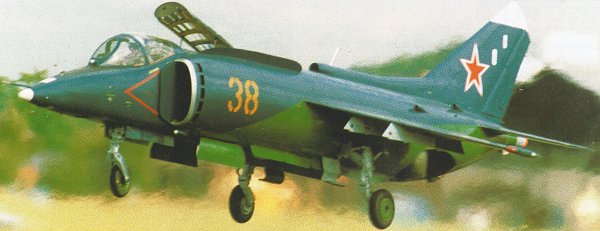
Yak-38 Forger
.jpg)
Yak-141 Freestyle
The Yakovlev Yak-141 Freestyle was the world’s first supersonic V/STOL jump jet prior to the advent of the F-35B Lightning II.
talltowerIran Reaches Out
Article from Strategy Page
Iran Reaches Out
December 23, 2009: Iran recently conducted another successful test of its long range (2,000+ kilometers) solid fuel ballistic missile (the Sejil II). Apparently, Iran plans to build hundreds of Sejil IIs, and even longer range missiles, over the next six years. There are apparently also plans to build up the supply of mobile launchers for many of these, to make them even more difficult for anyone to spot, and destroy. Solid fuel missiles can be launched without preparation. This is critical, as the liquid fueled missiles take hours to prepare for launch, and spy satellites pass over Iran frequently enough to spot this. Iran is believed to have over a hundred older, liquid fueled missiles, and production of these will apparently cease. But in the meantime, Iran continues to build silos for its long range liquid fuel rockets, so they can be prepared for firing (fueled) without that being detected by satellites.
The Sejil IIs can reach Israel, and is not really a surprise, and Iran is known to be working towards a longer range missile that can reach Europe (an air freight shipment of parts for a North Korean missile with that kind of range, was recently intercepted in Thailand, before it could reach Iran). A year ago, Iran tested a new IRBM (Intermediate Range Ballistic Missile) called the Sejil. This was a solid fuel missile. Two years ago, Iran had a failed test of a solid fuel ballistic missile it called “Ashura.” The Sajil appeared to be the Ashura with a new name, and modifications that make it work. Even then, the big question was, who did they get the solid fuel manufacturing technology from? There are many potential vendors (North Korea, Pakistan, Russia, China, or even stolen from the West). The Ashura test failure last year involved some problem with the second stage, not with the solid fuel rocket motors. Iran has been manufacturing solid fuel for smaller rockets for over a decade, but had not yet developed the technology to build larger, and reliable, solid fuel rocket motors. Israel believes that Iran got the advanced solid fuel technology from Pakistan or North Korea.
For the last five years, Iran has been producing Shahab 3 IRBMs. This missile is basically 1960s technology, with the addition of GPS guidance. Russian and North Korean missile technology has been obtained to make the Shahab 3 work. This has resulted in a missile that apparently will function properly about 80 percent of the time, and deliver a warhead of about one ton, to a range of some 1,700 kilometers, to within a hundred meters of where it was aimed. By world standards, this is a pretty effective weapon. A solid fuel version of this missile would be, if the solid fuel was of reasonable quality, about ten percent more reliable than liquid fuel, and easier to hide and launch.
Iran has continued to refine the Shahab 3 design, and conduct test firings. Israel appears to be the main target. Iran has threatened Israel with destruction, rather openly and for several years. Shahab 3’s could be fired with high explosive warheads, and hit, with enough accuracy, to kill mostly Jews, and not Israeli Arabs or Palestinians.
Israel has threatened to retaliate with nukes if Israel is hit with chemical or nuclear warheads. Israel has Arrow anti-missile systems that can stop Shahab 3s or Sejil IIs, but only a few at a time. If Iran launched a dozen or more Shahab 3s or Sejil IIs simultaneously, some would get through. If Iran had several hundred Sejil IIs, they could launch most of them at Israel, using high explosive warheads, and do a lot of damage. Israel could respond with its own Jericho II missile, but this system was designed for use with nuclear weapons, and Israel apparently only has 20-30 of them. Israel could respond with air strikes, and cruise missiles from submarines in the Persian Gulf or Indian Ocean. But, again, this would appear as a limited response to massive Iranian missile attacks. An Iranian attack with nuclear warheads would kill a large number of Moslems, and even radical Iran might be put off by that, because Israel would likely respond in kind.
A large number of IRBMs could also be used to intimidate nearby Arab countries, as these missiles could damage oil production facilities. If Iran gets nuclear weapons, it would take 5-10 years to develop the complex engineering required to create a nuclear warhead that would survive the stresses of missile launch, and detonate as intended over a distant target. Russia or China might provide such engineering secrets, but given the warlike pronouncements and radical politics of the Iranians, probably not.
Source: http://www.strategypage.com/htmw/hticbm/articles/20091223.aspx
talltowerArticle from RIA Novosti
Russia could start 5th generation fighter tests by year end
Russia could start tests of its fifth-generation fighter in late 2009 or early 2010, a deputy prime minister said on Wednesday.
“We are not making any New Year presents, but flight tests will start in the very near future,” said Sergei Ivanov, who oversees the defense sectors of industry.
He said on December 8 the trials would begin in 2010.
Deputy Defense Minister Vladimir Popovkin has said the fighter, which has been under development since the 1990s, will enter service with the Air Force in 2015.
Russia’s only known fifth-generation project is Sukhoi’s PAK FA and the current prototype is the T-50. It is designed to compete with the U.S. F-22 Raptor (so far the world’s only fifth-generation fighter aircraft) and F-35 Lightning II, but has yet to take to the skies.
The T-50’s maiden flight has been repeatedly postponed since early 2007 for unspecified reasons.
However, in August 2009, Russian Air Force Chief Alexander Zelin said that there were problems with the engines and research was ongoing.
The PAK FA is believed to possess advanced avionics, stealth capability, a ferry range of 4,000 to 5,500 km, and endurance of 3.3 hrs; it is armed with next-generation air-to-air, air-to-surface, and air-to-ship missiles, and has two 30-mm cannons.
MOSCOW, December 23 (RIA Novosti)
Source: http://en.rian.ru/russia/20091223/157334042.html
Article from ZeeNews
Russia to commence flight tests of FGFA
Moscow: Russia will soon flight-test the fifth generation fighter aircraft (FGFA), which is developed along with India, a senior cabinet member said here today.
“In the end of December-beginning of January, we are not making any New Year presents, but flight tests will start shortly,” Deputy Prime Minister Sergei Ivanov said.
Under an agreement signed in October 2007, India has also joined Russia in the project based on Sukhoi’s PAK FA project and the two nations are in negotiations to finalise the commercial contract for the deal.
At least three prototypes of FGFA have been made by the KNAAPO aircraft plant in Komsomolsk-on-Amur and several Indian teams have visited the facility in the country’s Far East near the Chinese border, sources told.
The FGFA is to compete with the US F-22 Raptor and F-35 Lightning II and the Russian Air Force plans to induct the futuristic fighter from 2015.
According to the local media the FGFA is to be equipped with the ‘artificial intellect’, advanced avionics and stealth capability.
With several mid-air refuellings it could cruise for hours at the supersonic speed.
PTI
talltowerThe only problem with changing your Browser is having to re-instate all your favourites again!
If the browser allows, you can import (copy) your bookmarks from your current browser to your new one.
I am experimenting with the no-longer-updated Netscape Navigator 9.


talltowerThe only problem with changing your Browser is having to re-instate all your favourites again!
If the browser allows, you can import (copy) your bookmarks from your current browser to your new one.
I am experimenting with the no-longer-updated Netscape Navigator 9.
talltowerHow about using a locally provided SIM card?
My dad used one when my family traveled to Vietnam for a month.
talltowerHow about using a locally provided SIM card?
My dad used one when my family traveled to Vietnam for a month.
talltowerSukhoi PAK DA next-gen supersonic bomber.
talltowerTalltower, like all its peers, the Sukhois have an extensive array of BITE for their maintenance.
Your statements about untrained/unskilled (relatively) personnel being able to maintain operate Sukhois are quite wrong. Su-30/35 maintenance relies on a lot of skilled capabilities including ATE for avionics and NDT methods for the structure.
I don’t know where you got this from:
Thus Sukhoi would want to do away with a computer-based maintenance system and let the ground crew maintain and repair the plane the old-fashioned way with a repair manual, toolkits and some spare parts.
..but you want a modern fighter with state of the art avionics, you best prepare to spend the big bucks on infrastructure and personnel.
I must be seriously mistaken by now.
It looks like the Cold War stereotypes of low-tech Soviet era aircraft (like the MiG series of fighters prior to the Fulcrum) don’t apply to today’s Russian Sukhois.
These days, the Russian airmen need a whole lot more than just toolkits and repair manuals. They need also umbilical connector cords and Panasonic Toughbook type maintenance computers.
The computer parts in those jets are designed to withstand all kind of harsh enviroment, that’s the same with all military jets all over the world to day.
Obvious Sukhoi ground crew are not wandering around with some laptop outside in -20 blistering cold winds.. or heavy snow falls they would have to do this in closed environment like hangars etc etc.Hmm.. Those new 117-S engine does run on full FADEC software right?
So this would mean there is an plugin station port for the engines alone right?
Also for the flight recorder!
When the the new Radar are installed next year on those Su-35S, it think they will have a system plugin station in the Aircraft much like the F-22, perhaps not to the same extend but never the less..Why do i get the impression that some folks here think Russia are still stuck in the 90’s..?
Thanks
It’s because we were imbibed with the Cold War stereotype of the reliability and ease of maintenance, at the expense of short service life of Soviet combat aircraft.
The MiG-21 was like the AK-47 of jets. The MiG was so low tech to a degree it did not run on computers (which meant immunity to EMP), it had less maintenance and operating costs per flight hour compared to Cold War Western fighters, and was maintainable even for elementarily trained airmen, often from the peasant farms of second or third world countries.
The Su-35 Flanker and the Su-50 PAK FA are different beasts, different machines altogether. The airmen need the level of training rivaling that of a first-rate air force along with use of state-of-the-art computers, sufficient knowledge on how they operate (because they now have computer-based maintenance systems, like the Raptor) and require a decent amount of care.
Sukhoi Su-35
By Sergei DrobyshevSubj: SU-35: AIRCRAFT OF THE 21st CENTURY
by Sergei Drobyshev
Head of the Regional Policy and Marketing Department, KnAAPO
Via Easy Tartar………
The cockpit of the Su-35 boasts an up-to-date display system, which comprises three CRT indicators, head-up display, display system computers, and the computers of an integrated information system. All the required information is provided to the pilot on electronic indicators. The contents of the information frames can be changed to suit the pilot needs with the aid of the keyboard, while the data can also be altered automatically in the information frames depending on the flight conditions.
The integrated information system allows the performance of a ground serviceability test of the entire equipment and location of troubles to an individual plug-in unit. In case of in-flight failure, the indicator of the integrated information system will provide the pilot with a text message about the failure and recommendations on how to correct it or will dictate further actions. The message is also duplicated by voice.
Talltower, you’re going to hurt KnAPPO’s feelings with your wild claims.:eek:
So the Flanker has entered the digital age?
How surprising.
When the first generation of Su-27 Flanker fighters entered service with the VVS and PVO-Strany in the mid 1980s, the Flanker was in the analog age, with one CRT cockpit display, a HUD and over a dozen gauges and switches. The avionics were fairly advanced then, but look primitive today.
talltowerBulava Blues Blocks More Boreis
Article from Strategy Page
Bulava Blues Blocks More Boreis
December 22, 2009: Russia has delayed, for at least a few months, starting construction of their fourth Borei class SSBN (ballistic missile nuclear subs, or “boomers”). Russia wants to have the new Borei class boats replace the current Delta IV class SSBNs. The first Borei is already in the service, but not yet commissioned, and two others are under construction. The problem, and unofficial reason for the delay, is the inability to make the new Bulava SLBM (Sea Launched Ballistic Missile) work. The latest Bulava test was a spectacular failure (which lit up the pre-dawn sky of northern Norway, for all to see). This was the seventh failure out of 13 tests. Some insiders quietly complain that only one of the 13 tests was an unqualified success. The situation is dire, if Russia wants to maintain an SLBM capability.
The reason for is that only eight of the twelve existing Russian Delta IV SSBNs are available for service. The Delta IVs are getting old, and have only about a decade of useful service left. Currently, it appears that the navy will get only eight Boreis. These new boats are expensive, and the navy wants to build some other expensive warships as well (carriers and attack subs).
There were many delays just getting the first of the new Borei class SSBNs built. This boat, the Yuri Dolgoruky, was launched nearly two years ago, and there were further delays in undergoing sea trials this year. Major delays were introduced because of an accident on a new Akula SSN (nuclear attack sub) a year ago. There, a sailor hit the wrong switch and accidently triggered a fire suppressant system in a compartment where several dozen people were sleeping, killing twenty of them. The safety system was poorly designed, making it too easy for someone to do what the sailor did. Such design problems are common in Russian ships, and the additional months of inspections and modifications for the Borei is another attempt to eliminate such problems. There were also some problems with welds on the hull, and with the nuclear power plant.
The Yuri Dolgoruky was supposed to have been launched over three years ago. But there were technical problems that caused more delays. Construction of the Yuri Dolgoruky began thirteen years ago, but money shortages, and technical issues, slowed progress.
The first three new Borei Class boats will be based in the Pacific. During the Cold War, most of Russias SSBNs were based in the north, at several bases east of the Norwegian border, and facing the Arctic ocean. But now Russia is spending over $350 million to expand and improve its submarine base on Kamchatka island. This will enable its new SSBNs to threaten China, as well as the United States.
The Boreis are the first new Russian boomer to enter service in 18 years, and the first new Russian sub design since the end of the Cold War. The second ship in the class, the Alexander Nevsky, is nearing completion. Construction on the third, the Vladimir Monomakh, began over two years ago.
The Boreis are closer in design to the Delta IVs, than to the more recent, and much larger, Typhoon boats. The Boreis are 558 feet (170m) long and 42 feet (13m) in diameter. Surface displacement is 15,000 tons, and 16 Bulava SLBMs are carried. Work on the Yuri Dolgoruky was delayed for several years because the first missile being designed for it did not work out. A successful land based missile, the Topol-M, was quickly modified for submarine use. This “Bulava” was a larger missile, cutting the Boreis capacity from 20 to 16 missiles. The boat also has four torpedo tubes, and twelve torpedoes or torpedo tube launched missiles. The Borei also sports a huge sonar dome in the bow.
The Boreis have a crew of 107, with half of them being officers (a common Russian practice when it comes to high tech ships like nuclear subs). Each of these boats will cost at least two billion dollars. This high cost, by Russian standards, is partly because many factories that supplied parts for Russian subs were in parts of the Soviet Union that are not now within the borders of present day Russia. So new factories had to be built. All components of the Boreis, and their missiles, will be built in Russia. A dozen (or eight) of these boats probably won’t be completed for at least a decade.
The government has insisted that the Bulava will be made to work, no matter what it takes. The only alternative is to redesign the Boreis to use the existing R-29RM Sineva SLBM. Sineva is the last liquid fuel Russian SLBM in service, and is used in the current Delta class SSBNs.
This would cost billions of dollars, and delay the Boreis entering service by several years. To many, switching to the older, but more reliable, Sineva missiles seems like a reasonable move. Liquid fuel missiles are more complex than solid fuel missiles, even though they use fuel that can be stored for long periods inside the missile. Unable, for a long time, to develop the technology for solid fuel rockets, Russia made the most of this, and developed some very effective “storable liquid fuel” rockets. It was only near the end of the Cold War that Russia finally mastered the solid fuel rocket construction techniques. But only one solid fuel SLBM entered service, the huge, 90 ton R-39, for the massive Typhoon SSBNs (which are being retired because they were so expensive to operate.)
Borei boats have missile tubes designed to hold the Bulava (which is 12.1 meters long and two meters in diameter.) The Sineva, is 14.8 meters long and 1.8 meters in diameter. The additional length of the Sineva would require substantial revisions in the existing Borei, and the two under construction. The existing solid fuel SLBM that works, and is carried in the larger (and being retired as too expensive to operate) Typhoon, is the R-39, and it is huge (16 meters long and 2.4 meters in diameter.) Much too large even for a rebuilt Borei.
Many Russian officials believed that the root of all these problems was the flight of so many skilled engineers and scientists from Russian defense industries after the Soviet Union collapsed (and sales promptly dropped over 90 percent). The smart people quickly found lucrative jobs in other industries, and there has been little new blood in the last two decades. The same thing happened on the manufacturing end. During the Soviet period, defense industries had the cash to attract the most skilled manufacturing staff. No more. And the dismal Bulava test performance is yet another result of this brain drain.
Source: http://www.strategypage.com/htmw/htsub/articles/20091222.aspx

Bulava SS-NX-30 SLBM
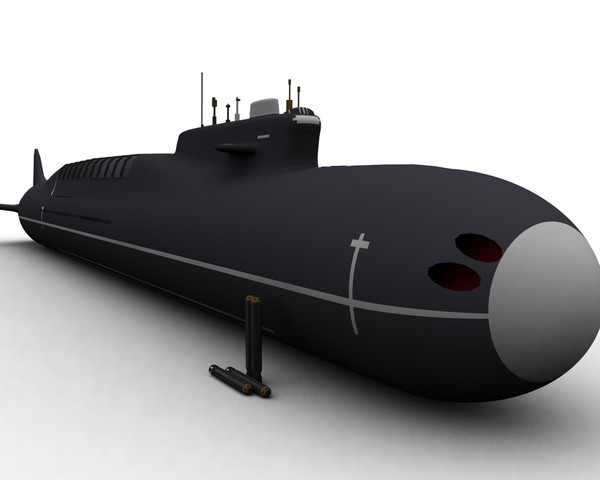
Borei class submarine


 Sign In







