 talltower
All-moving vertical stabilizers
The T-50 PAK FA has all-moving vertical stabilizers similar to that of the Northrop YF-23, compared to the traditional rudders on the F-22 Raptor.
What advantage does that give the PAK FA in terms of maneuverability? What potential disadvantages are there with all-moving vertical stabilizers?
My point of view is that the T-50 would have a marginal edge over the F-22 in the horizontal plane (can flat-spin on a dime). Also, the stabilizers would also detach easily if not mounted tightly to the airframe.
talltowerI wonder how many 10 year olds could torture and kill a 2 year old?
good point, Laviticus, a horrible thought. The crime was terrible….beyond belief and inexcusable. At 10, you know what is right and what is wrong. Jamie and his family are the victims…..a sentence his poor mum, dad etc have to live with every day. The duo got lenient sentences and at least one appears to not have grasped how lucky he is to have a second chance…..something the victims never had.
What you should know is that Jon Venables and Robert Thompson had a history of animal cruelty as kids prior to killing James Bulger.
That explains why the torturing and killing of animals blurred their ability to distinguish right from wrong. Nearly every murderer of all types, e.g. serial killers, has a history of animal cruelty prior to killing their human victims.
Let’s put ourselves in the shoes of Jon Venables and Robert Thompson. What if we were them?
The horror image drawn by Jon Venables just weeks before he killed James Bulger
Jon Venables learned how to kill by watching R-rated horror movies with his father Neil. He then drew scary drawings of himself slaying people with machetes.
talltowerI wonder how many 10 year olds could torture and kill a 2 year old?
good point, Laviticus, a horrible thought. The crime was terrible….beyond belief and inexcusable. At 10, you know what is right and what is wrong. Jamie and his family are the victims…..a sentence his poor mum, dad etc have to live with every day. The duo got lenient sentences and at least one appears to not have grasped how lucky he is to have a second chance…..something the victims never had.
What you should know is that Jon Venables and Robert Thompson had a history of animal cruelty as kids prior to killing James Bulger.
That explains why the torturing and killing of animals blurred their ability to distinguish right from wrong. Nearly every murderer of all types, e.g. serial killers, has a history of animal cruelty prior to killing their human victims.
Let’s put ourselves in the shoes of Jon Venables and Robert Thompson. What if we were them?
The horror image drawn by Jon Venables just weeks before he killed James Bulger
Jon Venables learned how to kill by watching R-rated horror movies with his father Neil. He then drew scary drawings of himself slaying people with machetes.
talltowerFighter’s delay ‘won’t hurt Australia’
Article from Nine News
Fighter’s delay ‘won’t hurt Australia’
A two-year delay in the Joint Strike Fighter (JSF) entering service in the US Air Force won’t adversely affect Australia, the government says.
The fighter isn’t scheduled to become operational with the Royal Australian Air Force (RAAF) until 2018.
A spokesman for Defence Minister John Faulkner said Australia has always adopted a cautious approach to the issues of what the JSF would cost and when it would be delivered.
He said Australia’s plans to acquire the JSF featured cost and schedule buffers to deal with the program restructuring recently announced by US Defense Secretary Robert Gates.
“If the USAF IOC (initial operational capability) date is deferred from 2013 to 2015, Australia retains considerable schedule buffer as IOC for the RAAF is planned for 2018,” he said.
“This allows additional time for the JSF to mature before it enters RAAF service.”
US Air Force Secretary Michael Donley said in Washington on Wednesday that the JSF, scheduled to be in US service by 2013, would not be ready until the end of 2015.
Senator Faulkner’s spokesman said the delay hadn’t been officially confirmed.
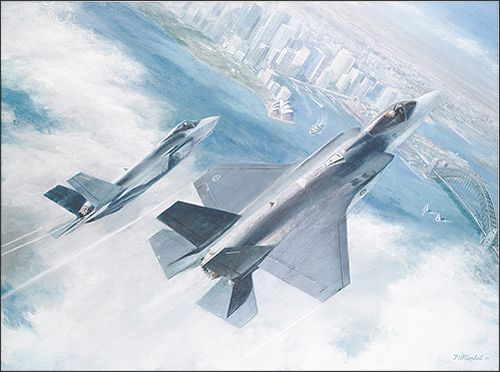
The Lockheed Martin F-35 Lightning JSF is an advanced fifth generation combat aircraft that will replace Australia’s ageing F-111 strike bombers and F/A-18 Hornet fighter-bombers.
The JSF project has faced frequent criticism along the lines that the aircraft will be expensive, will arrive late and won’t be as good as promised.
Under current plans, Australia will buy a 14 JSF aircraft plus the infrastructure required for initial training and testing, at an estimated cost of about $3.2 billion.
Australia’s first two aircraft are scheduled to be delivered in the US in 2014 for initial training and operational testing.
In 2012 the government will decide on additional aircraft to make up three operational and a training squadron, totalling 72 aircraft. The first squadron will be ready for operations in 2018.
A fourth squadron, taking total aircraft to about 100, will be considered later.
Australia Defence Association executive director Neil James said the JSF program had been in trouble for some time, with considerable technical, schedule and financial risk.
“This will push back its introduction into Australian service probably by the same amount of time, if not longer,” he said.
“It was originally supposed to have been in Australian squadron service in the 2013-15 period.
“We have said all along we’d be surprised if it occurred before 2017-2018 and that appears to be a more realistic assessment now by the Americans.”
Source: http://news.ninemsn.com.au/article.aspx?id=1019811

talltower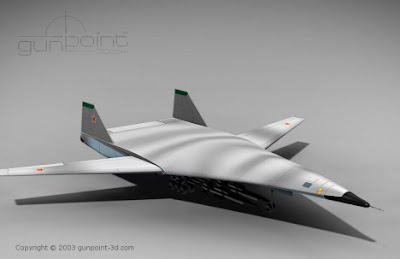
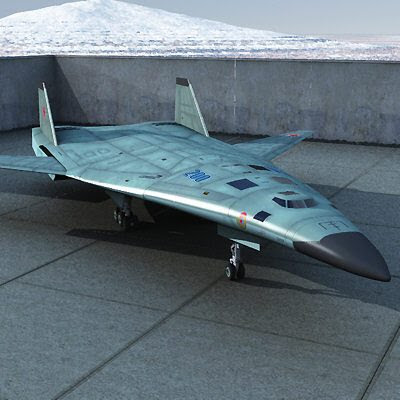
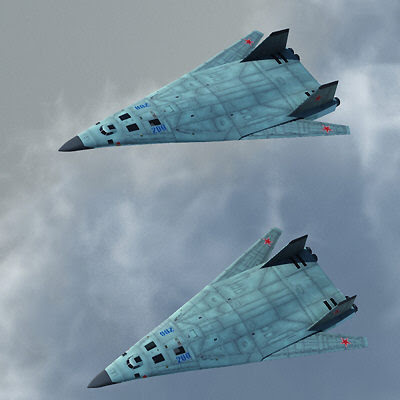
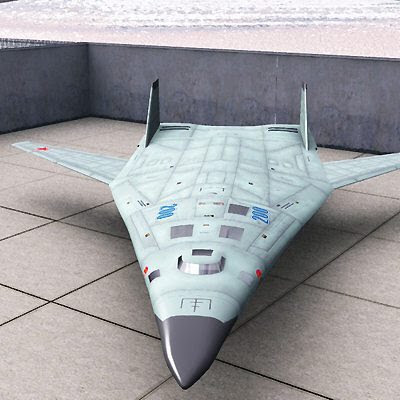
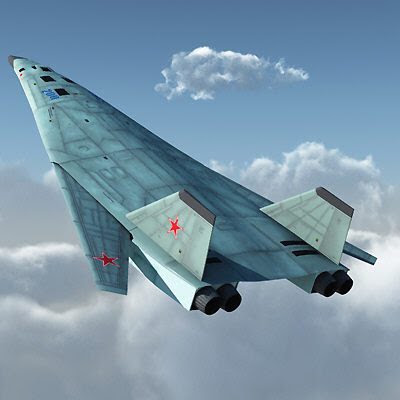
Conjectural PAK-DA drawings.
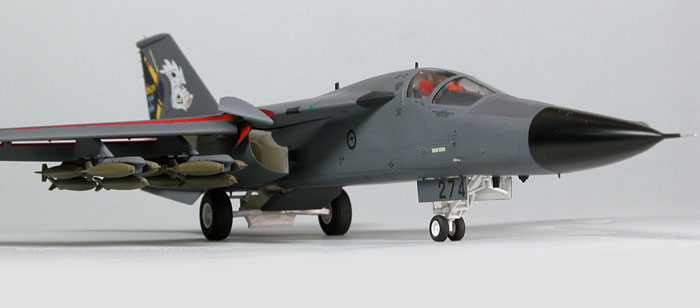
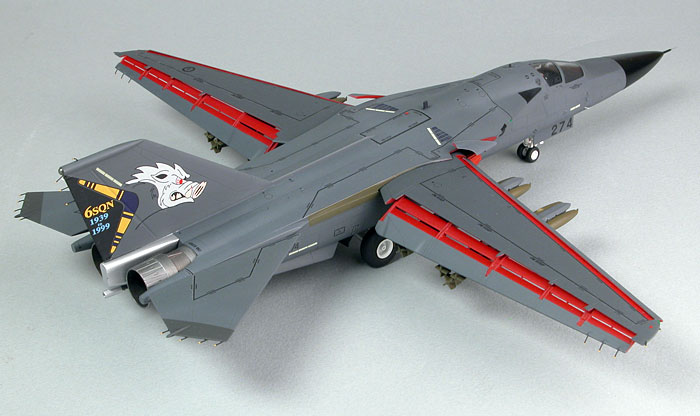
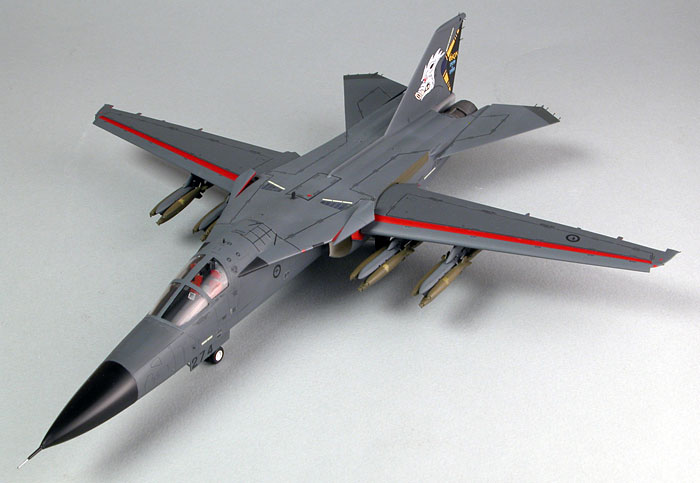
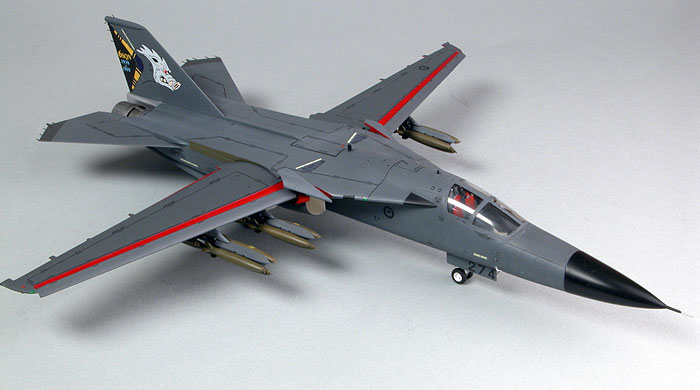
talltowerRAAF F-111G of the 6th fighter bomber squadron.
talltowerAfter Long Delay S-400 Triumf Finally Get to the Field
Article from Defense Update
After Long Delay S-400 Triumf Finally Get to the Field

The Russian S-400 Triumph air and missile defense system was officially inducted into Russian army service – the first two systems have entered operational service with the air defense regiment stationed at the Military Space Defense joint command in Elektrostal, the Moscow Region with additional two scheduled to be deployed by the end of 2010. More systems will be delivered later, along with next generation S-500 currently in early development stage. The Russian Air-defense command is hopeful to achieving full operational capability protecting strategic sites throughout Russia with the new systems by 2015.
The S-400 started its way in 1999 as the S-300PMU3, developed by Almaz Science and Production Association. Russian defense officials claimed in 2006 the missile has been inducted in late 2006 and was due to become operational later in 2007. Suffering from teething problems, this milestone has been delayed three years, allowing designers to work on the ‘baseline system’, awaiting the completion of the full capability version, by early 2010.
Triumf, a new air defense missile system based on the heritage of the S-300 is considered one of the world’s most advanced SAM, is capable of destroying any air target, manned and unmanned, as well as cruise and ballistic missiles, within a range of 400 kilometers (250 mi) and an altitude up to 30 kilometers. It is capable of intercepting medium range ballistic missiles (fired from distances up to 3,500km).
The S-400 is considered effective against all types of manned and unmanned aerial targets, including ‘stealth’ aircraft and Early Warning and Control (AWACS) and other electronic support platforms flying hundreds of kilometers from the protected sites. The system is claimed to be three times more effective than its domestic or international counterparts. Since Moscow have added the S-400 to its export portfolio last year, several countries expressed interest in the system, among them Saudi Arabia, Turkey and Gulf countries.
Field transportable, the S-400 Triumf can be rapidly deployed. The system comprises two radars – an area search and target acquisition radar and separate fire control radars. Other elements include the command and control vehicle, communications segment and fire units, carrying four missiles each. The missiles are vertically launched from the launch containers. The S-400 radar, command and control and support vehicles share similar automotive platforms with the S-26 Iskander M while the fire unit employs an independent, eight wheel bed hauled by a 4×4 truck. Unlike its S-300 predecessors, the Triumf is equipped with an active, homing seeker and therefore, can be employed beyond the range of its guidance radar.
Russia is also working on a new class of air defense systems, designated S-500. The new system development is expected to be completed by 2012. The missile is designed to intercept primarily medium range missiles – what Russia considers ‘a new type of threat’. The S-500 is expected to have an extended range of up to 600 km and simultaneously engage up to 10 targets. The system will be capable of destroying hypersonic and ballistic targets. S-500 will be a successor of the S-300 developed in the 1990s and operate in tandem with the S-400 currently entering service with Russian air defense forces.
Source: http://defense-update.com/features/2010/february/triumf_fielded_19022010.html
talltowerUSAF Chief: F-35 Could Breach Nunn-McCurdy Limits
Article from Defense News
USAF Chief: F-35 Could Breach Nunn-McCurdy Limits
By JOHN REED
Published: 18 Feb 2010 16:46
ORLANDO, Fla. – The F-35 Lightning II fighter jet program might breach the Nunn-McCurdy limits on unit cost growth, said U.S. Air Force Gen. Norton Schwartz, the service’s chief of staff.
“I would say it is a possibility and maybe even [be] likely,” Schwartz told reporters at the Air Force Association’s air warfare symposium.
Schwartz did not say what changes might be in store for the program if it does breach the limits set in the Nunn-McCurdy statute.
A spokesman for JSF program leader Lockheed Martin said the company had not been informed of any breach and was working to keep costs down.
On Feb. 1, Defense Secretary Robert Gates announced a dramatic reorganization of the JSF program that included firing the Pentagon’s JSF program manager, extending the jet’s test schedule until 2015, shifting billions into F-35 testing, cutting procurement funds for the plane, withholding more than $600 million from JSF-maker Lockheed Martin and firing F-35 program manager Marine Corps Maj. Gen. David Heinz.
Earlier this week, Deputy Defense Secretary William Lynn announced that the program would be one year behind schedule, despite the reorganization.
“The development was originally projected to last an additional 30 months; we think with the additional test aircraft, it will be closer to a delay of about 12 or 13 months, but I can’t give you the cost numbers,” The Australian newspaper quoted Lynn as saying during a Feb. 15 speech at a shipyard in South Australia.
Neither Schwartz nor Lynn said what this means for the F-35’s delivery schedule.
Just yesterday, Barbara Westgate, the Air Force’s deputy chief of staff for strategic plans, told reporters that the service would receive the jets “when we need them” despite the restructuring.
Right now, the U.S. Marine Corps is set to get its first operational F-35s in 2012, the Air Force in 2013 and the U.S. Navy in 2014.

Source: http://www.defensenews.com/story.php?i=4505009&c=AIR&s=TOP
talltowerIndia Unveils Shaurya – Submarine Launched Missile
Article excerpt from Defense Update
India Unveils Shaurya – Submarine Launched Missile
One of the new weapon systems on show was the Shaurya missile – a submarine-launched medium-range ballistic missile, capable of carrying one ton of a conventional, or nuclear armed warhead over a range of 750 km. The Shaurya is specially designed for the new Indian submarines, offering India ‘second strike’ capability, significantly adding to the country’s strategic deterrence. Together with the Agni III missile, that has a range of 3500 km, Shaurya could reach all major cities in mainland China, like Beijing, Nanjing and Shanghai, when launched from a submarine off the China coast. It can also cover all the area of Pakistan from off-shore positions in the Arabian Sea. India’s first nuclear-powered submarine, INS Arihant is currently under construction and could be equipped with the new missile. Shaurya was developed in parallel to the K-15 ‘Sagarika’ ballistic missile, built with significant help from Russia.
Source: http://www.defense-update.com/products/s/shaurya_missile_170210.html
talltowerRussian Raptor Killer is a “Game Changer”
Article from the Weekly Standard
Russian Raptor Killer is a “Game Changer”

The end of air supremacy?
BY Michael Goldfarb
February 17, 2010 9:32 AM
In an open-source assessment of Russia’s Sukhoi PAK-FA, aka the Raptor Killer, Air Power Australia concludes, “once the PAK-FA is deployed within a theatre of operations, especially if it is supported robustly by counter-VLO capable ISR systems, the United States will no longer have the capability to rapidly impose air superiority, or possibly even achieve air superiority.” Moreover, the Obama administration’s decision to kill the F-22 air superiority fighter in favor of the multi-role F-35 Joint Strike Fighter may prove disastrous, as “the F-35 Joint Strike Fighter struggles to survive against the conventional Su-35BM Flanker… Against [a basic-model] PAK-FA, the F-35 falls within the survivability black hole, into which US legacy fighters such as the F-16C/E, F-15C/E and F/A-18A-F have already fallen.”
When the Obama administration killed the F-22, Secretary of Defense Robert Gates made the administration’s case in a speech before the Economic Club of Chicago. Gates explained that F-22 was unnecessary because nobody else was anywhere close to fielding an aircraft comprable to F-35, let alone F-22:
Consider that by 2020, the United States is projected to have nearly 2,500 manned combat aircraft of all kinds. Of those, nearly 1,100 will be the most advanced fifth generation F-35s and F-22s. China, by contrast, is projected to have no fifth generation aircraft by 2020. And by 2025, the gap only widens. The U.S. will have approximately 1,700 of the most advanced fifth generation fighters versus a handful of comparable aircraft for the Chinese. Nonetheless, some portray this scenario as a dire threat to America’s national security.
If the Russian’s had flown the PAK-FA nine months ago, you have to think Congress would have rolled the White House to keep the F-22 line open, which it almost did anyway. As it is, the line will close at the end of this year, and all our eggs, and all the eggs of our allies, will be in the F-35 basket, at the mercy of a program that’s way overbudget and has no chance of being completed on time. By the time F-35 does go into service in any significant numbers (if that ever happens, and it didn’t in the case of F-22), it may be obsolete — if the Russians can actually produce the Raptor Killer in any considerable numbers.
Can the Russians produce the PAK-FA in considerable numbers? The Russian defense industrial base is in sorry shape (think the Shkval torpedo that likely sunk the Kursk and the Beluva submarine-launched ballistic missile that has offered Moscow one spectacular embarrassment after another). But if the Russians can get the PAK-FA off the ground despite all that, maybe it’s not as hard to build a fifth-generation fighter as the Pentagon thinks.
Still, why should we assume the Chinese won’t likewise be able to fly a fifth-generation fighter sooner than our projections anticipate? The Chinese are already working on their own fifth-generation fighter, and Russian arms sales to China are dwindling. Would Beijing pay for this kind of technology? Would Moscow sell it? I wouldn’t want to bet America’s air superiority on the assumption that they won’t.
The Obama administration and its liberal base wanted to kill the F-22 because, they argued, it was unnecessary. Even if Air Power Australia is wildly overestimating the PAK-FA’s capabilities and wildly underestimating the combat potential of the F-35, the Russians are flying a fifth generation fighter! How long can it be until the Chinese builds a “handful” of them?
The balance of power between the White House and Congress has shifted drastically in Congress’s favor over the last nine months. Maybe somebody in Congress can prevent the closing of the F-22 production line at the end of this year.
Source: http://www.weeklystandard.com/blogs/russian-raptor-killer-game-changer
talltowerPilot visibility – Raptor and PAK FA

F-22 Raptor rear-hinged canopy.
If you look at the PAK FA pictures, it has a framed sliding canopy.
The frame may obstruct the pilot’s view from above and the hump may obstruct rear visibility, whereas from the Raptor, cockpit visibility is better with a bubble frameless canopy.
talltowerhttp://www.ausairpower.net/APA-NOTAM-150210-1.html
http://www.ausairpower.net/APA-2010-01.html
Sukhoi T-50 PAK FA – the F-22 Raptor’s nemesis
Although it has recently made its first flight, guess how long the Raptor would retain her crown as world’s most dominant air superiority fighter when the PAK FA enters service as the Su-50 ‘Firefox’.
I’d guess pilot skill, avionics and weapons systems would determine the difference.
Later this decade, when these two 5th Gen fighters square off against one another, the PAK FA would be vying to snatch the crown off her American rival, the F-22.
What do you think?
talltowerGermany Upgrading Its CH-53G Helicopters
Article excerpt from Defense Industry Daily
Germany Upgrading Its CH-53G Helicopters
From 1971-1975, 110 “CH-53G Mittlerer Transporthubschrauber” derivatives of the CH-53D Sea Stallions were built in Germany. Though they share the CH-53E’s ability to lift medium-heavy loads, including up to 2 of Germany’s Wiesel armored infantry support vehicles, the CH-53Gs lack the 3rd engine and additional features of the improved CH-53E Super Stallions that have been operated by the US Marine Corps since 1981. A 2002 decision set a future force goal of 80 CH-53G and upgraded CH-53GS helicopters in the German Army, via modernization and life extension projects.
Which leads us to the current modernization project, even as Germany and France prepare their European Heavy-Lift Helicopter project for introduction around 2020. That effort is also surrounded by more urgent modifications, including one set that aims to create longer-range combat search and rescue capabilities…


talltowerRaptor Beware: Russia Test-Flies PAK FA Sukhoi T-50 5th-Generation Supercruise-Capabl
Article from Defense Review
Raptor Beware: Russia Test-Flies PAK FA Sukhoi T-50 5th-Generation Supercruise-Capable Low-Observable/Stealth Fighter Aircraft. Look out F-22.
By David Crane
defrev (at) gmail (dot) com
February 1, 2010
On March 29 of last year (2009), DefenseReview published a story stating that we disagreed with the cancellation of the F-22 Raptor program, and calling for at least 1,000 Raptors, total, to be built and fielded. This is because we knew that advanced Russian and Chinese Gen 5 (5th-Generation) fighters have been under development for quite some time, and will likely pose either a grave military threat to the United States or undermine our power around the world when dealing with Rogue Islamic states/countries.
Well, three days ago, the AFP and other international news sources reported that the Russians have just test-flown their latest 5th-Gen, low-observable/stealth fighter aircraft, the Sukhoi PAK FA ((Prospective Aviation System of Frontline Aviation) prototype, called the T-50, for 47 minutes. Under development since the 1990s, the PAK-FA/T-50 is billed by the Russians as matching up well against the Lockheed Martin F-22 Raptor. “It’s going to be no worse than an F-22. I’ve been in an F-22 and I know,” said Anatoly Kornukov, ex-commander of the Russian air force.
Like the F-22, the PAK FA Sukhoi T-50 fighter is capable of supercruise, and should significantly outperform all of our 4th-generation fighters like the F-15, F-16, and F/A-18 series aircraft.
The PAK FA Sukhoi T-50 is scheduled to be fielded in 2015, so let’s hope that all of our F-22s are at least outfitted with a helmet targeting system like the Boeing Joint Helmet Mounted Cueing System (JHMCS) or a helmet similar to the VSI F-35 Joint Strike Fighter Helmet Mounted Display System (HMDS), allowing F-22 pilots to target enemy fighters with off-boresight missiles like the AIM-9X Sidewinder and at long range with beyond-visual-range ramjet missiles like the MBDA METEOR BVRAAM (Beyond Visual Range Air-to-Air Missile).
God only knows how many PAK FAs the Russians are going to build, so let’s also hope that 187 Raptors are enough. For the record, Defense Review doesn’t think 187 is NEAR enough–not even close. Unfortunately, we’ll probably find out who’s right, us or Secretary Gates, eventually. We sincerely hope he’s right. If we’re right, and war eventually breaks out, the U.S. military, and specifically the Air Force, may very well be in for a rude awakening, finding itself at the losing end of a numbers game where swarming tactics, a ruthless game of attrition, and distinctly-Russian chess-like strategy are utilized by the Russians and Chinese militaries. Oh, and good luck defending our huge and very visible multi-billion dollar (above-the-surface) aircraft carriers, ’cause we’ll need it.
talltowerMaiden Flight for Russia’s New Stealth Fighter
Article from Defense Update
Maiden Flight for Russia’s New Stealth Fighter

Sukhoi T-50 PAK-FA made a successful 47-minute maiden flight on Friday 29 January 2010, taking off from Komsomolsk-on-Amur Airfield in Russia’s Far East, adjacent to the manufacturer’s site.
The aircraft was flown by Sukhoi test-pilot Sergey Bogdan. Sukhoi, the aircraft designer is expecting to complete flight testing and enter serial manufacturing by 2015, anticipating orders for at least 400 aircraft for the Russian and Indian Air Forces.
The flight went successfully meeting all its assigned tasks. “In the course of the flight we’ve conducted initial evaluation of the aircraft controllability, engine performance and primary systems operation. The aircraft had retracted and extracted the landing gear. The aircraft performed excellent at all flight-test points scheduled for today. It is easy and comfortable to pilot”, – said Sergey Bogdan.
After the initial test flights in Komsomolsk-on-Amur, the next test flight program is planned to take place in the Moscow and Astrakhan regions.
The new fifth generation stealth fighter, known by Project Code Name T-50 PAK-FA (Advanced Tactical Frontline Fighter) is designed to compete with the US stealth fighters such as the Lockheed Martin built F-22 Raptor and F-35 Lightning II.
Russia has been developing its newest fighter since the 1990s. India had joined the program in October 2007 and is expected to share 25% of the development cost. India will also be responsible for modifying the aircraft into a two-seater trainer and special-mission fighter, addressing specific Indian Air Force requirements.
The T-50 is expected to have an endurance of 3.3 hours, and a ferry range of 5,500 km. Its armament consists of new air-to-air and anti-ship missiles in addition to two 30mm cannons. The T-50 is powered by a pair of Saturn 117S engines – these modified AL-31F engines produced by NPO are rated at up to 14.5 ton thrust and are now also powering the new Su-35 multirole fighters.
According to the manufacturer, PAK-FA possesses a number of unique features, compared to previous generation fighters, as it is combining the functionality of both attack aircraft and fighter plane. The 5th generation fighter is equipped with brand-new avionics suite, integrating “electronic pilot” functionality, as well as an advanced phased-array antenna radar. This significantly decreases pilot load, allowing him to focus upon the completion of tactical missions. New aircraft on-board equipment allows real-time data exchange, not only with ground-based control systems, but also within his flight team. According to AviationWeek, the T-50’s avionics suite to be supplied by the Ramenskoye Design Bureau will include six processors and display suite; the full-scale phased-array radar is under development at the Tikhomirov NIIP design bureau.
Composites application and innovative technologies and aerodynamics of the aircraft, are measures applied to decrease the engine signature, providing for an unprecedented small radar cross-section, in optical and infrared range. This significantly improves combat effectiveness against air and ground targets at any time of the day, in both visible and instrument meteorological conditions.
PAK-FA program advances Russian aeronautics, together with allied industries, reaching an entirely new technological level. These aircraft, together with upgraded 4th generation fighters will define Russian Air Force potential for the next decades. “Sukhoi plans to further elaborate on the PAK-FA program, which will involve our Indian partners. I am strongly convinced that our joint project will excel its Western rivals in cost-effectiveness and will not only allow strengthening the defensive power of Russian and Indian Air Forces, but also gain access to a significant share of the world market”, – said Mikhail Pogosyan, Sukhoi Company Director General commenting on the launch of the flight test program.
Source: http://www.defense-update.com/newscast/0110/news/PAK-FA_300110.html


 Sign In







