 talltower
Upgrading the Admiral: Russia’s Kuznetsov
Article excerpt from Defense Industry Daily
Upgrading the Admiral: Russia’s Kuznetsov
Russia’s “heavy aircraft-carrying cruisers” have received a lot of unfavorable attention from India’s snake-bit deal to refurbish the Admiral Gorshkov; in fairness, however, the Russians haven’t had much more luck with their own ship. Launched in 1985, it was not commissioned until 1995 – and since then, it has endured extremely long dockings and seen only limited deployment. When it’s operational, the The 55,000t Admiral Kuznetsov is a big step up from the smaller Kiev Class’ combination of Yak-38 Forger V/STOL (Vertical/Short Take Off and Landing) jets and naval helicopters, flying navalized SU-25 close air support fighters, multi-role SU-33s, or MiG-29K jets.
Natural resource exports have eased Russia’s budget woes, and the country wants to maintain carrier capabilities as it tries to rebuild its damaged defense industrial base. The current plan intends to begin designing a new carrier class in 2012 – and to dock the Kuznetov once again, in order to make major design changes and fix some long-standing issues.

Source: http://www.defenseindustrydaily.com/Upgrading-the-Admiral-Russias-Kuznetsov-06305/#more-6305
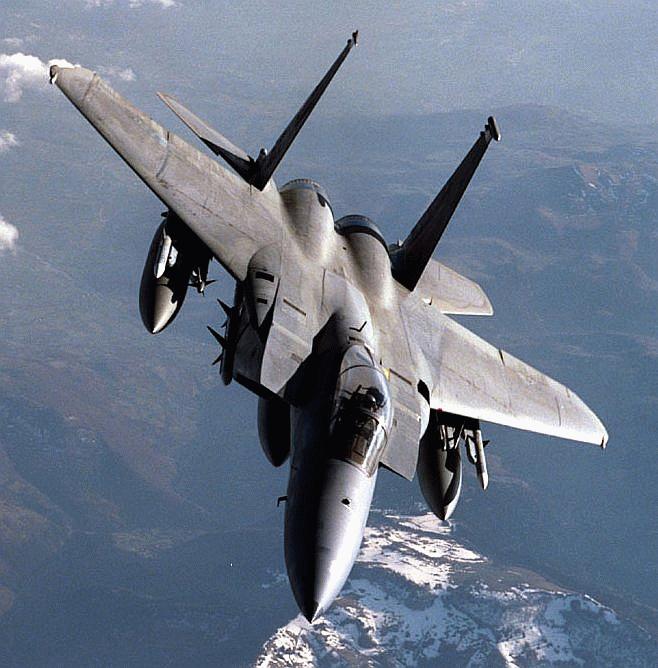
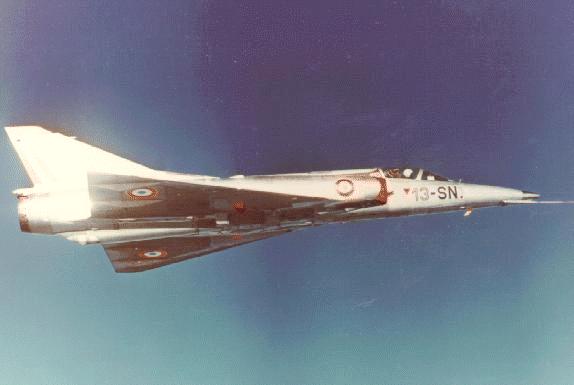
talltowerThe F-15 Eagle, F-22 Raptor, JAS-39 Gripen and the delta-winged Mirage family.


talltowerUSAF Tanker program – Round 3!
Article from Defense-Update
USAF Tanker program – Round 3!
In a third attempt in nine years to replace its current 50-year-old planes, the U.S. Air Force will release the Request for Proposal (RFP) for the USD$35 billion aerial tanker competition. The Air Force is hopeful both the Boeing Company and Northrop Grumman/EADS will bid for the work. The Northrop/ EADS team won the Air Force contract in the last competition, but following a Boeing protest, the government cancelled the contract. Northrop has said the team will not bid again unless changes are made to the draft RFP released in September. The RFP, scheduled for publication today, lists 372 requirements the bidders should address within 75 days. The Pentagon will announce its decision by September this year.
For EADS, competing for the KC-X is a strategic goal and one that it wasn’t ready to give up easily. However, the schedule suggested by the Pentagon was too tight for it to re-enter. EADS asked the Air Force for a 90-day extension and, on March 31, 2010 the Pentagon partly agreed, announcing that if EADS formally expresses an intention to compete, the bidding deadline would be extended 60 days – not 90. Bidders will be requested to submit their proposals by July 9, 2010, instead of May 10th. On its part, the Air Force could meet the original deadline the Air Force will expedite the bid evaluation process to ensure production of the tanker begins in early fall. EADS said it will evaluate this proposal.
Both competitors argue that orders will support and protect around 50,000 jobs across the USA, regardless of the origin of the aircraft itself. (Northrop’s proposal is based on the Airbus airframe, designed by Airbus in Europe) Boeing support rely on Kansas, Iowa, Connecticut, Illinois, Maine, Missouri, Oregon and Utah while Northrop Grumman’s supporting states include Alabama, where it had planned to assemble its tankers, as well as its neighboring states of Georgia, Florida, Mississippi, and Louisiana. Support for a split buy of Boeing and Airbus tankers is also a possibility, although such a decision is claimed to most expensive to the taxpayer.
In general terms, the two platforms – Boeing 767 and Airbus 330 represent two different approaches to the mission, one aimed at lower cost per platform and higher versatility of the fleet while the other capitalizing on more economical use of the entire air refueling assets.
In the previous round the Air Force opted for the larger Airbus, that offered better economy over the program’s entire life cycle. Boeing argued its could offer larger aircraft but the Boeing 767 provided a lower cost platform that better conformed with the requirements set by the Air Force for the competition. Boeing said it could offer the 777 with similar capabilities to the A330 if this was the type of aircraft the Air Forces require.
Source: http://www.defense-update.com/newscast/0210/news/tanker_program_24022010.html


talltowerLeaders not impressed by new Russian fighter
Article from Air Force Times
Leaders not impressed by new Russian fighter
By Bruce Rolfsen – Staff writer
Posted : Tuesday Mar 23, 2010 20:17:36 EDT
The flying debut of Russia’s answer to the F-22 Raptor isn’t wowing Air Force leaders.
Dubbed the T-50 or PAK-FA, the fifth-generation stealth fighter jet made its maiden flight Jan. 29 — 47 minutes over eastern Russia — and has flown at least twice since then. The twin-engine jet will replace the MiG-29 Fulcrum and Su-27 Flanker, both fourth-generation front-line fighters.
The first operational T-50s should be delivered in 2015, the same year the Air Force expects its first F-35 Lightning II. Also a fifth-generation fighter, the F-35 has a single supersonic engine and stealth capabilities.
“I didn’t see anything … that would cause me to rethink plans for the F-22 or F-35,” Air Force Secretary Michael Donley told reporters Feb. 18 at the Air Force Association’s winter conference, held in Orlando, Fla.
“Russia has a robust [aircraft industry],” Donley added. “This is not a surprise in that context.”
The PAK-FA resembles the F-22 — distinctive tilted rear tail fins and all — and has many of the same high-tech features, including digital avionics, a phased-array radar and communications equipment to link the fighter to command and control centers, according to the Russian news agency Tass.
The Air Force ordered the last of its 187 F-22s in 2009. Russia has not had a new fighter in nearly 20 years; the Indian air force is also sponsoring development of a version of the T-50.
“It looks like a plane we’ve seen before,” Gen. Roger Brady, the air boss for NATO and commander of U.S. Air Forces in Europe, said at the conference.
Gen. Gary North, commander of Pacific Air Forces, made clear his impression of the fighter: “I guess the greatest flattery is how much they copy you.”
Still, the four-stars wonder whether the T-50 will live up to its fifth-generation billing.
“I don’t know if it’s really a fifth-generation aircraft,” Brady said. “What I do know is that it’s very clear that they’re working on a fifth-generation technology.”
For Brady, Russia’s push on the development front signals that the U.S. cannot settle for the status quo.
“The key is, we must continue to do fifth-generation and sixth-generation research and put money against it because other people clearly are,” Brady said.
North added that the Pentagon must ensure fourth-generation jets such as the F-15, F-16 and F/A-18 are continually upgraded.
“If we’re not going to buy more, what we’ve got to have is the very best that our sons and daughters go out to fight with,” he said.
In tandem with the T-50 project, Russia is developing a long-range bomber.
“We won’t limit ourselves to just one new model,” Prime Minister Vladimir Putin said March 1. “We must start work on a prospective long-range aircraft, our new strategic bomber.”
Source: http://www.airforcetimes.com/news/2010/03/airforce_russian_fighter_032210w/
The USAF generals are starting to make a critical mistake here: They are underestimating the capabilities of the T-50 PAK FA.
The F-22 pilots would ultimately learn about their first-class adversary the hard way.
talltowerMaybe Medvedev could sell the Serbs Su-35 Flankers. That’ll scare the hell out of NATO. (/sarcasm)

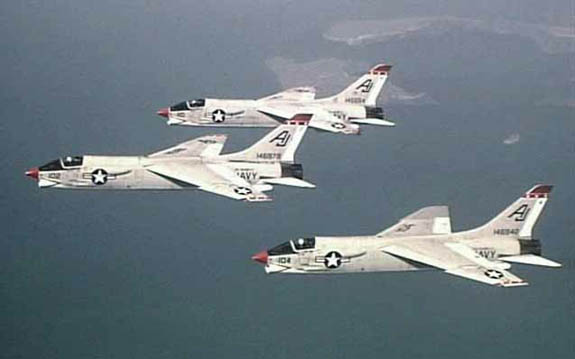
talltowerF-8U-III outperformed F-4 in most air superiority parameters (knowing what we know now, it probably would have topped out at M2.8 instead of 3). However, it might have been just as difficult around the boat as previous models, and that couldn’t be countenanced. It is doubtful that lack of a 2nd seater contributed to that, especially since Navy F-4s did not have flight controls in the rear . But, F-4 was more versatile, could support a larger radar dish, had much lower workload, could carry a larger warload, etc. In the air superiority role it was “good enough”, but its versatility was outstanding. If the Navy could have gotten both, they certainly would have, Crusader III was unquestionably the best fighter they never bought up to that time. However, since they only could afford one, they definitely made the right choice.
Think of it this way: While setting aside whatever your personal opinion of the War itself for a moment, ask yourself this: How would the US air effort in Vietnam have fared had the US had Crusader IIIs, instead of Phantoms?
Crusaders were the better dogfighters than Phantoms, because they were gun-equipped with 4 Colt Mk 12 20mm cannons (Navy B and J model Phantoms were solely missile-equipped).

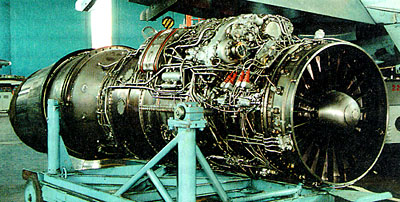
talltowerPratt & Whitney F100-PW-229
Saturn / Lyulka AL-31F
talltowerMarine Aviation has no Other Option but Wait for JSF
Article from Defense Update
Marine Aviation has no Other Option but Wait for JSF
The U.S. Navy and Marine Corps are running out of fighters. Heavy wear and tear over nearly a decade of war in Iraq and Afghanistan has depleted the two services’ combined fighter force. Purchases of new planes have been delayed by controversial planning decisions. As a result, U.S. maritime forces operate at elevated risk. Robotic systems could help mitigate this risk, but the Navy has resisted adopting pilot-less aircraft.
The U.S. Navy also has shortage of fighters, primarily F/A-18C/Ds. Together, both services are currently short by around 50 aircraft, but this so-called “fighter gap” could deepen to an estimated 125 aircraft by 2017 before the new Lockheed Martin F-35 enters service in large numbers. The naval fighter gap first appeared around 2006, when the Marines decommissioned two fighter squadrons flying F/A-18D and AV-8B, owing to unexpected fatigue issues. The Hornets, in particular, were worn out from repeated deployments to western Iraq, where the two-seat jets were in high demand for forward air-control missions. The Marines planned to recommission the squadrons once their F-35Bs fighters become operational.
Some analysts argue that the drones could represent a radical improvement over existing capabilities. A Unmanned Combat Aerial System (UCAS) like the X-47, scheduled to perform carrier deployment evaluation in two years could deliver more firepower over greater range and with fewer losses than the F-35 – and could do it sooner, and potentially more cheaply. The Air Force has already realized this advantage – in 2010, the Air Force will buy more armed drone aircraft than it buys fighters.
To help the Navy through the widening fighter gap, Congress doubled F/A-18E/F production for 2010, to 18 copies. More new Hornets could follow as older planes are decommissioned or transferred to the Marines. Some analysts have proposed the Navy advance plans for unmanned fighters, as another alternative to the F-35. The Marines don’t fly the E- and F-model Hornet, and have no concept of operations for drone fighters. Realistically, the Marines can only wait for the F-35, while their existing fighter force continues wasting away.
Source: http://defense-update.com/features/2010/march/marineaviation_01032010.html


talltowerBoeing unveils a new B767 Derivative ‘NewGen Tanker’ for U.S. Air Force Competition
Article from Defense Update
Boeing unveils a new B767 Derivative ‘NewGen Tanker’ for U.S. Air Force Competition

Boeing has unveiled today the ‘NewGen Tanker’, the aerial refueling aircraft being proposed for the U.S. Air Force KC-X tanker competition. According to Dennis Muilenburg, president and CEO of Boeing Defense, Space & Security, the Boeing NewGen Tanker will satisfy all mandatory Air Force requirements and offer an American-made tanker that will be capable, survivable, and combat-ready at the lowest cost to the taxpayer.

The NewGen Tanker will use a fly-by-wire controlled refueling boom with higher capacity. The distinctive blended winglets are also a new feature, expected to save over 4% in fuel consumption.
Boeing considers the NewGen Tanker to be the optimal airframe size, to deliver the most capability for the lowest cost to own and operate. A wide body, multi-mission aircraft based on the proven Boeing 767 commercial aircraft, it is updated with the latest and most advanced technology and capable of fulfilling the Air Force’s needs for the transport of fuel, cargo, passengers and patients.
The multi-mission aircraft is named NewGen because it includes several state-of-the-art systems to meet new requirements, including a digital flight deck, featuring electronic displays derived from the new Boeing 787 Dreamliner, featuring a display area 75% larger than the commercial A330, considered to be the competing platform on the KC-X bid. The new Boeing aircraft will also be fitted with new-generation fly-by-wire boom, with an extended refueling envelope and increased fuel offload rate, expected to meet the Air Forces’ requirement for increased efficiency and higher refueling rate, compared to the KC-135. NewGeb will be providing simplified refueling operations, reduced workload for the aircrew and improved safety and reliability. While being computer-controlled through the fly-by-wire system, Boeing stresses that “the new tanker will be controlled by the aircrew, which has unrestricted access to the full flight envelope for threat avoidance at any time, rather than allowing computer software to limit combat maneuverability.”
Boeing argues its new NewGen Tanker will have an advantage over the larger and heavier Airbus airplane, as it will be cost-effective to own and operate. Since the lighter B767 platform burns 24 percent less fuel than the Airbus, the NewGen Tanker is expected to save more than $10 billion in fuel costs over its 40-year service life. The Air Force released its final KC-X Request for Proposal on Feb. 24. Boeing will deliver its proposal by May 10, within the 75-day period set forth in the terms of the solicitation. The Air Force is expected to announce its decision later this year.
The new blended winglets introduced in this model will improve the aircraft performance by reducing drag. These winglets were first introduced on the Boeing Business Jet (BBJ) and Next-Generation 737-800 in 2001 and were certified on the B767-300ER in 2009. Flight test data demonstrated, that blended winglets lower block fuel and carbon dioxide (CO2) emissions by 4.4 percent on the 767. Blended winglets also improve takeoff performance, allowing deeper takeoff thrust derates, resulting in lower emissions and lower community noise. An airline that recently began flying 767-300ERs with blended winglets anticipates that each airplane equipped with the winglets will save up to 500,000 U.S. gallons of fuel annually, depending on miles flown. The airline plans to install winglets on its entire 58-airplane fleet of 767-300ERs, which could result in a total savings of up to 29 million U.S. gallons of fuel per year and a reduction of up to 277,000 tons of CO2 emissions annually.

Blended winglets such as those added to the NewGen Tanker are expected to save fuel, reduce carbon dioxide emissions and improve takeoff performance.
Northrop Grumman announced on Monday (March 8th, 2010) its decision to pull out from the Department of Defense for the KC-X program. The company claim the structure of the source selection methodology defined in the RFP clearly favors Boeing’s smaller refueling tanker and does not provide adequate value recognition of the added capability of a larger tanker. “We have decided that Northrop Grumman will not protest.” Wes Bush, Chief Executive Officer and President of Northrop Grumman Corporation stated.
“While we feel we have substantial grounds to support a GAO or court ruling to overturn this revised source selection process… but taking actions that would further delay the introduction of this urgent capability would also not be acting responsibly.” Bush added. The decision paves the way for DoD to proceed awarding Boeing the sole source contract for the +50 billion multi-year program. But Bush calls DoD to bargain and play it tough despite having no alternative but buying from Boeing. “We call on the Department to keep in mind the economic conclusions of the prior round of bidding as it takes actions to protect the taxpayer when defining the sole-source procurement contract. In the previous round, the Air Force, through a rigorous assessment of our proposal, determined that it would pay a unit flyaway cost of approximately $184 million per tanker for the first 68 tankers, including the non-recurring development costs. With the Department’s decision to procure a much smaller, less capable design, the taxpayer should certainly expect the bill to be much less.” Bush concluded.
Following Northrop Grumman’s decision, the Pentagon is assessing its plans and could accelerate the selection. The Pentagon was expecting the bids by mid-May, and planned to make a decision and award the contract by September. This schedule could now be shorten by several months.
Source: http://www.defense-update.com/products/k/kc_x_newgen_04032010.html


talltowerThey’ll build that many if they can find buyers would be a more accurate headline. Libya and Vietnam aren’t going to buy 300 each, and how many third world air forces can afford large numbers of $100+ million aircraft?
Only prospective PAK FA customers are:
Problem is, they can only buy a squadron of them, and put their best pilots or honchos in the cockpits.
talltowerWhatever the opinion, Jon Venables and Robert Thompson are ineligible for the death penalty, for two reasons:
Anyway, we have heard nothing from Robert Thompson since his release, and since he’s done the time, he’s free to live the rest of his life. (I’m not defending these kid killers BTW, only acting within the law)
talltowerWhatever the opinion, Jon Venables and Robert Thompson are ineligible for the death penalty, for two reasons:
Anyway, we have heard nothing from Robert Thompson since his release, and since he’s done the time, he’s free to live the rest of his life. (I’m not defending these kid killers BTW, only acting within the law)
talltowerRussia to make 1,000 stealth jets, eyes India deal
Article from Reuters India
Russia to make 1,000 stealth jets, eyes India deal
By Gleb Bryanski
NEW DELHI (Reuters) – Russia will build more than 1,000 stealth fighter jets within four decades, including at least 200 for its traditional weapons buyer India, the head of plane maker Sukhoi said on Friday.
Sukhoi test-flew its long-delayed fifth-generation fighter at the end of January, and Moscow said it would be able to compete with its U.S. F-22 Raptor rival built more than a decade ago.
Sukhoi said last week it hoped the fighter, codenamed T-50, would be ready for use in 2015.
“If you talk about warplanes of this type, there is definitely a market for it if we produce more than 1,000 jets,” Sukhoi director Mikhail Pogosyan told reporters on the sidelines of Russian Prime Minister Vladimir Putin’s visit to India.
“We have all grounds to believe that there will not be tough competition on the world market,” he said.
He said Russia would produce more than 1,000 of the planes within 35 to 40 years.
After the test flight, Putin said Russia had plenty of work to do on the plane.
Analysts say Russia’s plans for a joint venture with India to produce the stealth fighters will likely be watched with unease by India’s uneasy neighbour Pakistan and regional rival China.
Pogosyan said an agreement on joint output of the jet with India was still in the works and did not say when a deal might be signed.
“I believe that more than 200 planes will be delivered (to India),” Pogosyan said.
“I think (Russia’s) defence ministry will buy no less than this amount,” he said. About 600 of the planes would be sold elsewhere, he said.
Analysts say several nations, including Libya and Vietnam, have already expressed interest in the fifth-generation fighter.
“Apart from America, the only other fifth-generation project is Russia’s, while the Europeans have given up such plans,” Pogosyan said.
“Probably the Chinese will try and promote such a product, but I think they face an immense amount of work to make their product competitive,” he said.
Source: http://in.reuters.com/article/topNews/idINIndia-46877820100312?sp=true


talltowerPentagon confirms cost of Lockheed Martin’s F-35 up by 60-90 per cent
Article from Domain-B
Pentagon confirms cost of Lockheed Martin’s F-35 up by 60-90 per cent
Inspite of strenuous efforts by the world’s largest defence contractor, Lockheed Martin, to contradict reports that the Joint Strike Fighter programme was heading for substantial cost and time overruns, it has now been confirmed in Pentagon testimony before the US Congress’s Senate Armed Services Committee that the cost of the programme has increased 60 to 90 per cent in real terms since 2001.
Even as the Pentagon steps into overdrive trying to reassure stakeholders, which are three armed services of the United States and eight partner nations that it will take all required steps to deal with the problems, Congressional auditors have said the program was likely to haemorrhage in terms of costs and suffer time overruns.
The F-35 Lightning II is a single-engine stealth fighter designed primarily for ground attack roles. It is meant to form the backbone of American and allied air forces over the next several decades.
The US Air Force, the US Navy and the US Marine Corps plan to buy 2,443 of the planes. Eight allied nations have also invested in the programme, and though not committed to buy any, are ready to purchase hundreds of additional planes.
The JSF project has eight partner countries and two Security Cooperative Participants (SCPs). The partners include the United Kingdom, Italy, Netherlands, Turkey, Canada, Australia, Denmark, and Norway. The two SCPs are Israel and Singapore.
The latest cost and schedule estimates are likely to embarrass not just Lockheed Martin, but the respected defence secretary, Robert M Gates, who promoted the new jet at the expense of another costly defence acquisition, the F-22 Raptor air dominance fighter.
Christine H Fox, a top Pentagon official said at Thursday’s hearing that the estimated price of each F-35 had jumped to $80 million to $95 million, as measured in 2002 dollars, from $50 million when Lockheed Martin was awarded the contract in 2001. This would equal to $95 – $113 million for each plane in current dollars.
Secretary Gates recently fired the general in charge of the programme and announced measures aimed at getting the programme back on track.
Michael Sullivan, an analyst at the Government Accountability Office, said the programme could eventually cost $323 billion, near to double the original $200 billion estimate. He also said that though recent changes could help ease problems, ”further cost growth and schedule extensions are likely.”
Source: http://www.domain-b.com/aero/mil_avi/mil_aircraft/20100312_pentagon_confirm_oneView.html

talltowerT-50: Russia’s secret fighter jet with ‘human intellect’
Article from MSN India
T-50: Russia’s secret fighter jet with ‘human intellect’
We can expect a real breakthrough when the Russian-Indian collaboration on the creation of a fifth-generation prototype aircraft based on the experimental T-50 starts to become a reality.
A fifth generation combat aircraft has taken to the air in Russia. This plane is as yet unnamed it is just known as the T-50. Following its maiden flight earlier this year, the aircraft has now reached the flight testing stage.
Traditionally fighters are divided into generations, but often one aircraft combines characteristics of both current and future machines. Generally speaking, the first generation includes the subsonic jet aircraft which appeared after the Second World War and which has cannon armaments
(MiG-15 and the MiG-17 are best known examples of this type).
The second generation are supersonic fighters carrying missile weaponry; for example, the MiG-19 and the MiG-21.
The third generation is aircraft with more powerful engines, improved radar and sometimes altered wing geometry. In the USSR, examples of this are the MiG-23 and the MiG-27 and in the USA, the F-4 Phantom.
The fourth generation is aircraft which have new on-board equipment, powerful radar and a wide-ranging armament system, including everything from 30mm cannons to guided missiles and smart bombs. In the USSR, these aircrafts are the MiG-29 and the Su-27, and in Western equivalents are the F-15, the F-16, the Mirage 2000 and the Gripen.
The development of the fourth generation proceeded rapidly. Based on the “old” MiG and Sukhoi models, fighters such as the MiG-29SMT, the MiG-35 and the Su-35 came into service, and these were almost as advanced as fifth generation aircraft. What defined them was their exceptional maneuverability. This was on account of their vectored thrust engines and phased array radar systems, their multirole capability and the replacement of the basic gunsight with computer displays and other innovations.
The idea of building a combat aircraft for the 21st century was conceived in the USSR and the USA simultaneously. Work began at the end of the 80s. The demands placed on the fifth generation are significant. The aircraft should have a supersonic cruise capability, low radar signature, a powerful radar system providing a foreshortened view, a computerised “brain” capable of controlling the flight and correcting any input errors of the pilot.
In terms of appearance, the T-50, or as its still known the PAK FA (Perspective complex of front aircraft), is similar to the Raptor. But it may turn out to be much better and more economical. It is impossible to compare the features of the two aircraft, since everything to do with the T-50 is still classified information. But there are a few things that can be discussed. With its supersonic cruise speed, the Raptor can enter a combat zone quickly. But what’s next? Then it has to transfer to subsonic speed so as to be able to open the doors of the armament store and utilise the missiles which are hidden in the belly of its fuselage. Russian aircraft designers were the first in the world to manage to solve the problem of opening the armament store doors and releasing a missile when in supersonic flight.
As far as the electronic “brain” is concerned the avionics of the fifth generation are also of a high quality, and at the moment they are being tested on the Su-35 and the MiG-35.
When the Russian-Indian collaboration on the creation of a fifth-generation prototype aircraft based on the experimental T-50 starts to become a reality, then we can expect a real breakthrough.
Thanks to this, the Su-30MKI came into existence, the best heavyweight aircraft to date. It is hoped that through the combined efforts of Russian and Indian specialists, the PAK FA will be filled with the latest equipment and fitted out with the best armaments. The main task is to finance and activate flight testing of the T-50. And then in three years, the VVS will receive the first consignment of these fighters for experimental use in the forces. From 2015, the world market for heavyweight combat aircraft will be filled with only Russian-Indian aircraft.
The T-50 will incorporate the latest developments in a military fighter, including low visibility, supersonic cruising speed and highly integrated control systems. It will be able to fulfill military tasks in any weather conditions and at any time of the day and use runways only 300-400 metres in length.
Source: http://news.in.msn.com/internalsecurity/features/article.aspx?cp-documentid=3671564&page=0
A computerized AI brain?


Bet this thing can fly like the EDI UCAV from the 2005 movie Stealth or some other unmanned combat air vehicle.



 Sign In







