Camaro- 650kg is indeed very heavy for an aricraft radar- its a little heavier than the AWG-9 for example, and more than twice the weight of the APG-63. The SU-27s N001 will be around 400kg, so its a noticable increase. The “belt-and-braces” approach of electronic AND mechanical scanning is one reason.
Compared to the MiG-31’s Zaslon at 1000kg(!) its not so bad of course.
Phazotron’s Su-27-sized radars are 270-300kg.
DRDO was initially assigned the development of five avionics systems (MC, DP, RC,PSP and RWR) under the development programme named as Project `Vetrivale’. By March 1996 Government of India decided to purchase the SU-30 aircraft from the manufacturer and made a formal commitment. Keeping in view the development and delivery schedule of SU-30 aircraft, Rs. 6 crore was sanctioned to ASIEO in July 1996 to commence the development work pending formal allocation of funds for Project vetrivale. According to Audit , the delegation during their visit to ADE/ASIEO in February-March 1996 held extensive discussions with DRDO and the technical specifications of the sub-systems to be developed were finalised and their delivery schedules arrived at. The Ministry of Defence granted the formal approval to the Project `Vetrivale’ in December 1997 at a cost of Rs. 100 crore. Subsequently, the cost of the Project was reduced to Rs. 76.8 crore due to removal of PSP from the project on account of inability expressed by DRDO to develop it in time.
This is definitely saying DRDO were initially supposed to be developing both the radar computer (RC) and the signal processor (PSP), but subsequently abandoned the PSP.
Thats what I was thinking of.
There was a plan to replace the PSP at the very beginning of the program, but it has obviously not been part of the plan now for a while.
THIS is why the SAR resolution is restricted. The Ts200 is a first generation PSP developed in the late 80s USSR for the N011 radar. In Phazotron’s terms its like the PSP of the original “Zhuk”. Phazotron now use a modern design PSP with western processors for “Zhuk-M” and “Kopyo-M”, which is notably faster and hence able to give better resolution.

plawolf- at the same time Russia was also working on hypersonic recce and bomber aircraft. Mikoyan had a Mach 4+ project, 301 and 321, which was recce and bomber respectively. Other projects were Tupolev’s 260 (M4+) and 360 (M6+), (Tu-160 successors) plus a variety of NASP/X-30 inspired aerospaceplanes like Tu-2000 and others.
7,000km range is at Mach 2+ of course.
Ermm…it was cancelled in 1993……..
The US had lots of bombers, the Russians wanted to stop them. Building more Tu-160s would hardly have helped in that task!
Well, it was the successor to the MiG-31, with greatly increased range and internal weapons carriage. Thats like saying why bother with the F-22 when you have the F-15 😉
thats the smallest engine for size of plane I’ve ever seen!
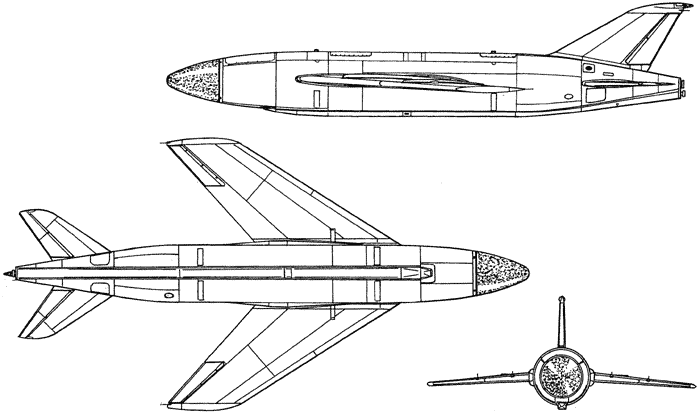
KSR-2 (AS-5 “Kelt”)


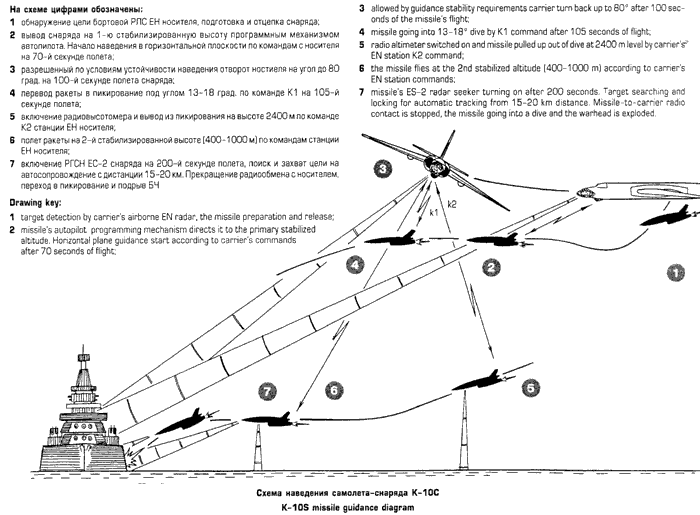
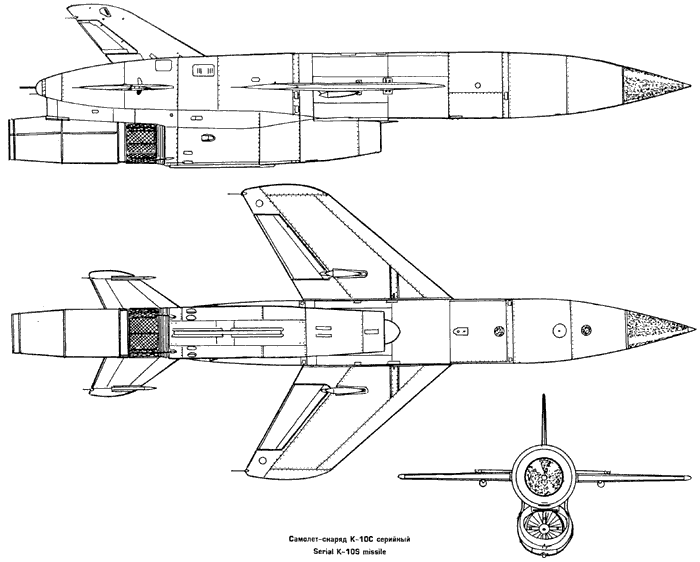
K-10S (AS-2 “Kipper”)


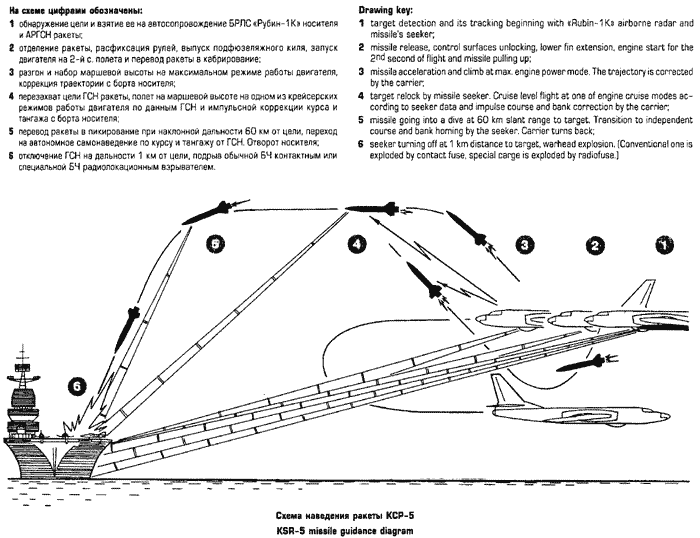
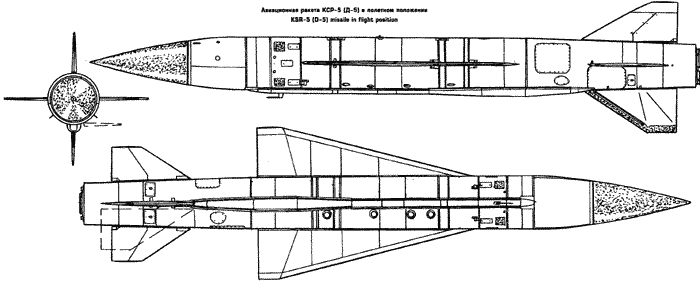
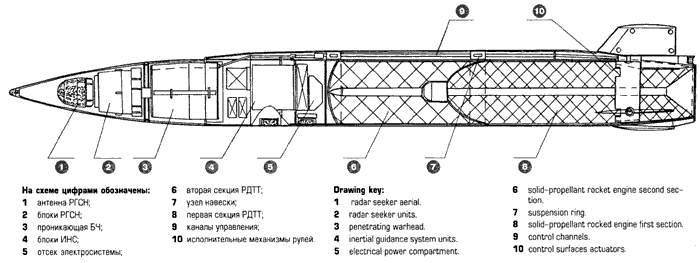
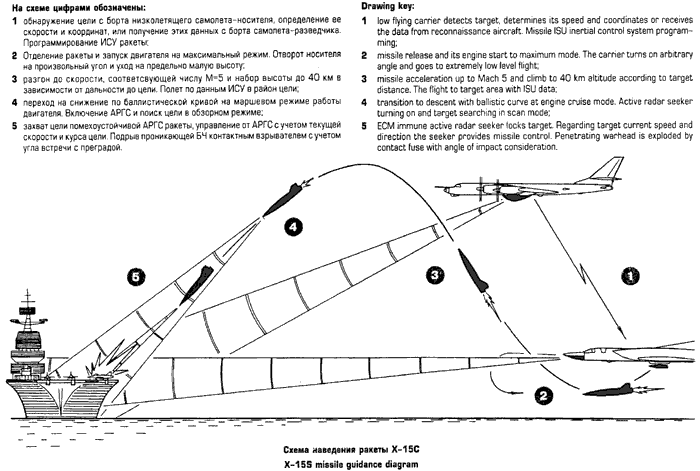
KSR-5 (AS-6 “Kingfish”)

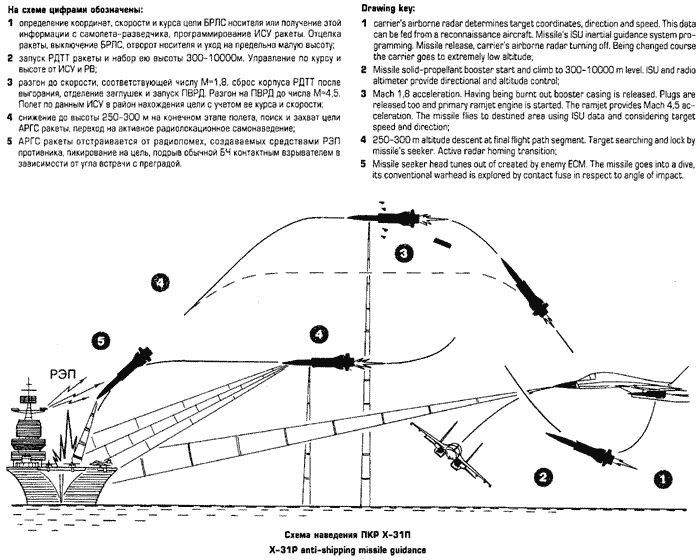
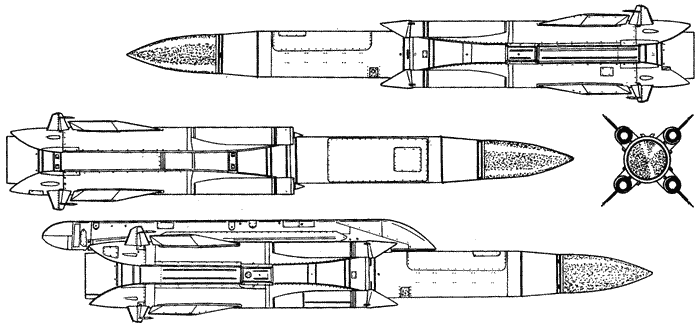
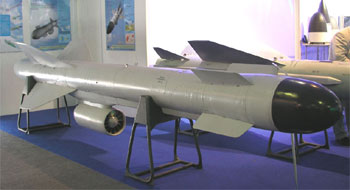
Kh-31A


This version replaces the pop-out “whiskers” with fixed fins