mark_pilkington
Haven’t seen the old girl for a few years, so can’t comment. I’d like to see a comprehensive restoration/conservation as per G-George in Australia rather than anything piecemeal.
At an Australian Aviation Museum Network forum at the AWM last year (BAPC equivalent), those in attendance were given a unique and detailed presentation by the AWM curators on the history of G for George and its various refurbishments, including the AWMs own work, and the aircraft still retains its original wartime paint as it carried when delivered to Australia.
it has been over-painted a number of times, but the AWM has painstakingly rubbed down through the layers at various locations to identify the location of markings and stencils, as well as for colour matching, and have then applied new markings and paint over the top in line with those findings.
An important focus was not to achieve an “airfix” uniform shade of colours or pattern line up, but to reflect and reproduce the different paint finishings from the various replacement parts the aircraft carries due to in service replacement or field refurbishment, resulting in a patchwork quilt of differing black and camo finishes and camo lines that do not match at every join line- ie those effects and outcomes are intentional and deliberate and based on evidential research.
I would expect that AWM research from G for George would be available to, and informing the work being undertaken at the RAFM on S for Sugar.
G-George is also now largely complete internally, but had suffered souveniring over its many years in storage in the hands of the RAAF.
G-George and S-Sugar are the most significant of the 10+ surviving lancasters given they are both combat veteran early mark 1 versions with long wartime operational service, and suffered the wear and tear such service and replacements would cause on factory fresh paint finishes.
They didn’t look like airfix kits in service, and don’t need to do so in museums either.
The current hotrodding approach to super polishing P-51s with mirror like finishes by some within the warbird community is not “more accurate” simply because it looks neat and pretty, or as if its leaped off the front of the airfix box, or rolled straight out of the factory.
Here is the presentation material from the AWM website showing the research methods and the finished outcomes.
http://www.awm.gov.au/media/conference/bigstuff/papers/treatment/paint_pearce.pdf
regards
Mark Pilkington
mark_pilkingtonGet your coat! 🙂
Fascinating stuff. I was rather saddened to read that they’re considering abandoning the restoration because it ‘only’ has an RAAF, rather than Canadian, history though. 🙁
OMG, its the end of the Warbird Industry as we know it (or as was seriously threatened the last time this forum discussed categorising restorations in terms of provenance and originality), yet heres a serious and respected flying museum/collection apparently openly recognising and admitting some aircraft are nothing more than new build “reproductions” and only one step away from being dreaded “replicas” because they are all new metal but at least have a data plate on them.
(I wonder if that holds true with a reproduction data plate as well?)
Worse, the author has the audacity to dare to even categorise such restorations into 3 levels – I’m sure the phones will again be running hot, demanding that such things are taken down off this forum so as not to bring the Warbird Industry to an end.
Smiles, and its refreshing to see out there is the real world such concepts of provenance, significance, identity and originality are being taken seriously by parts of the Warbird Community and permitted to be expressed on their own museum/collection website, despite the Doomsdayers.
In relation to the derelict Spitfire fuselage there is clearly no dispute its original but battered, but its identity and provenance has justified its acquisition and deep restoration to its current owners.
Well done to serious researchers willing to re-assess identity and provenance and be the bearer of bad but truthful news, even better, well done for a serious warbird collection to admit and acknowledge it publicly – a win for the rivet counters.
And a very healthy and refreshing change to the past practice of some, in re-birthing restored airframes as other identities or even new-birthing new-build reproductions as originals with provenance.
regards
Mark Pilkington
mark_pilkingtonIs the Avro Lancaster at Hendon, S-Sugar, in original and preserved wartime condition? Was it rolled straight out of service into preservation? Or did it go through several lives and then get restored to the current condition? Just wondering.
S for Sugar demobbed from operational service with Australian RAAF 467 Sqn in 1945 as a Museum Exhibition asset at Waddington, and then moved to Scampton in 1959 and became the gate guardian in 1960 still in its wartime colours.
It was then repainted back as Q for Queenie of 83 Sqn from its earlier wartime service.
Used as a source of spares for the BBMF Lancaster in its earlier lives, Q for Queenie joined the RAFM collection in 1970.
Restored with new Perspex, it was repainted as S for Sugar in 1972 on its display inside the RAFM.
A real mark I wartime combat veteran Lancaster, one of only two such survivors and 3 mark I’s surviving.
Its sad that the UK had such a hard post war recovery that a few more RAF Heavies including Lancasters, Halifaxes and Stirlings could not be found good homes.
But what is missing in quantity is made up with quality, S for Sugar is a very significant WW2 airframe.
Built / delivered in June 42 under a Manchester contract but completed as a Lanc, it joined 83 Sqn at Scampton, and flew its first operational sortie in July 42, and joined RAAF 467 Sqn in August 43.
Here is its very impressive history as documented by the RAFM.
http://www.rafmuseum.org.uk/documents/collections/74-A-12-Avro-Lancaster-R5868.pdf
regards
Mark Pilkington
mark_pilkingtonFor those who expressed interest in MacRobertson Air Race memorabilia here is my latest win on evilbay:
An official Race Programme issued by the Royal Aero Club

Regards
Mark Pilkington
mark_pilkingtonTerrific post Mark! 🙂
I haven’t been to Port Moresby at all, let alone to have a look in the Museum there. Unfortunately, the collapse of the airline I was working for in 2001 stole that opportunity away. 🙁
I can only go by what other people have told me and from what I remember (fraught, I know!!) from photos I have seen of it in much happier times, as it has deteriorated significantly now.
There are some pics of A20-13 online:
http://www.pacificwrecks.com/aircraft/wirraway/A20-13.html
http://www.adf-gallery.com.au/gallery/Wirraway-2A20-13
But they are not detailed enough to confirm CA-1 configuration?

It also looks like someone has been quietly swapping parts out, as these look suspiciously like Ceres tailplanes with their wider leading edges.

I cant recall who it was who advised me it wasn’t a CA-1, (Mr IW most likely?) but of course until its confirmed I’m only relying on rusty memory.
The other idea I have had mulling over in amongst the detritus in my head, is possibility of any wrecks/remains in either South Africa or Zimbabwe. From memory, a lot of the Harvard Mk 1s were sent there as a part of the ETS.
I think a number of us have probably had those thoughts and discounted them as likely to have been scrapped long ago, but South Africa had those Ventura’s sitting on farms for years and elsewhere in Africa there were those early Fireflies waiting to be recovered until relatively recent times.
Either way, to me, the project would certainly be possible, it just needs someone with the time, ca$h and madness to do it. I’ve got the madness, but not the other two prerequisites….:D
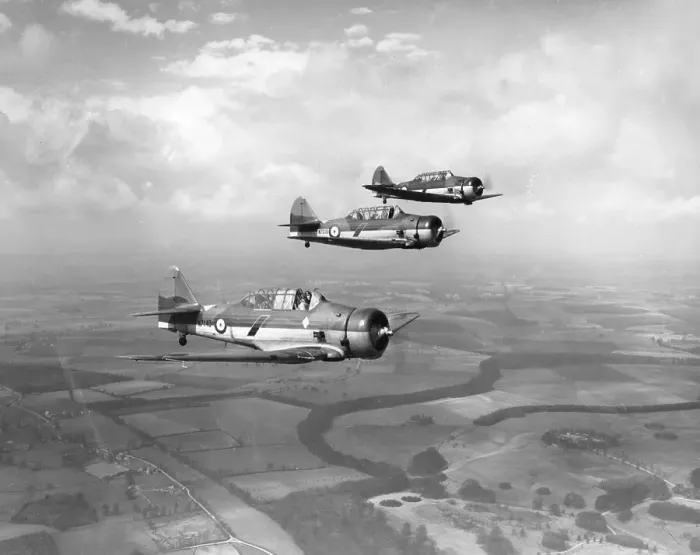
I know the UK CAA doesn’t have an experimental category and that would mean some creative paperwork and an ID would need to be established for a hybrid T-6 to claim to be a Harvard Mk I, but given (I recall?) that a Tora “Zero” flew in the UK, surely a T-6 “modified” (even with steel tube fuse and fabric side panels) could be flown in the UK?
Of course other than money, parts and time, such an outcome would seem relatively straight forward to achieve in Australia or the US under more liberal certification arrangements?, but the type is not likely to generate the same interest as it would in the UK?
Equally however, it would be possible to do the same thing in the USA and produce a very nice looking pre-war BC-1 or SNJ-1?
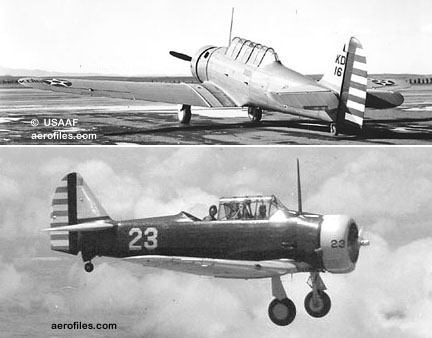
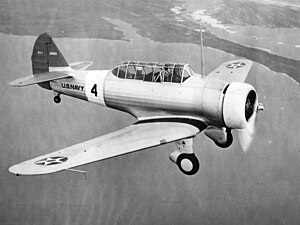
Although I would be happy enough to own one of the skytypers SNJ-2s and have it in the pre-war USN colours. (although one of those in two tone British camo and yellow undersides with roundels and RAF serial would easily pass as a Harvard Mark I on the Duxford flightline for most people in anycase, despite its solid side panels, tapered wing and full monocoque rear fuse and would be a fairly simple CAA paperwork).


Regards
Mark Pilkington
mark_pilkingtonAh, but not all Wirraways are same! 🙂
There are six different models of the Wirraway – the CA-1, CA-3, CA-5, CA-7, CA-9 and the CA-16. The CA-1 fuselage frame is the closest to the Harvard Mk 1. The CA-3 and subsequent forward fuselage frames have larger tube diameters, especially the longeron tubes.So, back to our hypothetical Harvard Mk 1 build. I know of only three surviving CA-1 frames. Two airframes are pretty well complete and are in museums – one in Port Moresby and the other at Moorabin. The only other frame I am aware of is bare.
Nonetheless, I would still like to see a Harvard Mk 1 brought back to life. 🙂
*Now where are my winning lotto tickets….*
I would agree the CA-1 as the earliest of the Wirraway family, is closest to its NA-16 parent, and therefore its Harvard Mark I sister, the CA-1 also had the ribbed skin fin which was deleted in later model Wirraways.
https://en.wikipedia.org/wiki/North_American_NA-16
While the CA -1 is the closest surviving Wirraway variant I’m not sure I would be keen to see one of the two complete survivors or any other complete Wirrway consumed into a Harvard I reproduction, nor would I be keen to see a complete Yale similarly “consumed”.
I personally think you could create a quite convincing flying reproduction using a T-6 airframe as the starting point and substituting in certain other essential components.
(Paul have you visually confirmed A20-13 is actually a CA-1, as had heard Tom King has simply repainted a much later example to represent that early identity)
Of course a museum in Sweden consumed both a Wirraway and a Yale to create a very convincing SK-14 (NA-16-4M) static reproduction in the 1980s.

With the Wirraway donating its fuselage and the Yale donating its fixed undercarriage centre-section and wings (I understand the Wirraway wing later returned to Australia).
Of course a complete and original NA-16 still survives in Hondura’s although sadly preserved in outdoor display.
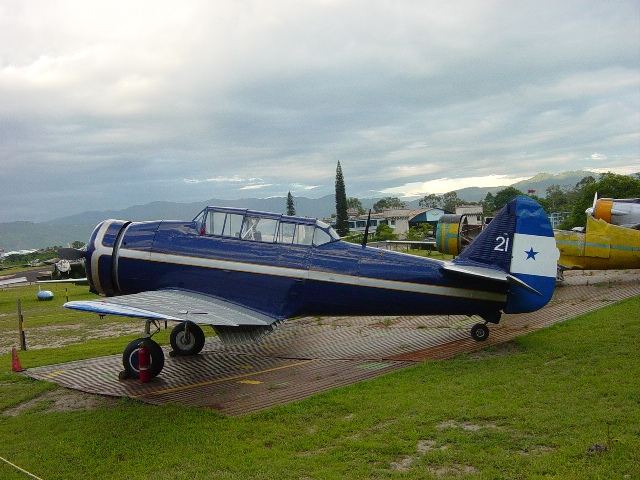
Surely a flying Harvard Mark I hybrid project could be achieved using the following?
T-6 Forward Fuselage steel frame
Wirraway rear fuselage steel frame (or new build based on Wirraway)
Wirraway rear fuselage monocoque (or new build based on Wirraway)
Wirraway fuselage cap strips and fabric side panels (or new build based on Wirraway)
T-6 and Wirraway capstrip castings (or new build based on Wirraway)
T-6 fuselage furnishings including flight controls (Rudder pedals/ Control Column yoke)
New build Harvard I instrument panel and electrical side boxes
T-6 windscreen and sliding and fixed rear Canopies
T-6 Wing Centre-Section
T-6 tapering trailing edge wing outer panels (with new rounded wingtips)
T-6 Tail group with modifications as required to fit Wirraway rear fuselage frame.
SNJ-2 Square bottom Rudder (or T-6 modified based on SNJ-2)
T-6 QEC engine and prop ie Firewall forward
T-6 undercarriage
Someone questioned my earlier post relating to using T-6 Windscreen and sliding canopies and rear framed canopy, the Wirraway windscreen has curved lower mounting frame, and the canopies do not have the same vertical dividing bars ie they are substantially different in anycase – and hence the T-6 style is much closer to the Harvard I style.
Most if not all of the above would seem do-able?
The T-6 is obviously close enough to its NA-16 ancestor to form the basis of a Harvard hybrid.
While a pursist museum outcome would seek Wirraway or Yale Wing outer panels with straight trailing edge and round wingtips, for a flying outcome I would argue a set of T-6 tapered trailing edge wing panels, and new made round wing tips would suffice.
There is already a convincing Boomerang in the USA based T-6 parts, there are also numerous T-6 conversions into convincing NA-64, NA-44 replicas and of course the Tora Tora Tora replicas.
There are restorers in Australia repairing Wirraway rear fuselage frames (I’m sure one could be manufactured new – even to incorporate mounts to suit the T-6 tail group).
Similarly they are making new build capstrip sets, castings and rear fuselage monocoques.
Fabric side panels are being repaired, I have no doubt the same restorers could fabricate new ones.

[img]http://www.rafmuseumphotos.com/image/harvard_i_aircraft_of_2_sfts_raf_4…]

IE A Harvard Mark I flying reproduction could be created from plentiful T-6 parts sourced from the USA ie Lance Aero tc, and incorporate the essential visible differences of the square rudder from the SNJ-2 and the steel tube rear fuselage and fabric side panels from the Wirraway.


The very light framing of the Wirraway canopies can be compared easily in the photo above, the curved lower frame is not so obvious in that photo but is in the photo below.

Regards
Mark Pilkington
mark_pilkingtonOld aircraft hangar seen at Hamilton Airport. Anyone know the history? WW2?
[ATTACH=CONFIG]217780[/ATTACH]
It bears great resemblance to the US built “Butler” transportable hangar of WW2.
The elements that support that are:
1. The style of the doors and overall ratio of height/length/width
2. the Office and Toilet skillion attachment along the length of the building wall
the missing elements are the windows along the main side wall, but I suspect they may have well been subsequently sheeted over?
We had these in Australia and one still survives (although again relocated and modified from its original site at CAC in Port Melbourne) at Tyabb airport in Victoria)
The attachment has a picture of that building for comparison.
regards
Mark Pilkington
mark_pilkingtonThe thing with spraying is that unless you get 100% coverage of all the parts it will continue to corrode no matter what ! Whilst its possibly more time consuming to break it down into smaller components and physically clean and treat each item by hand would probably be quicker in the long term and more cost effective. There are going to areas in the airframe where to stand a chance of stopping the corrosion it will need derivetting.
David,
I don’t think that is necessarily correct.
In October last year I attended an Aviation Museum National Network forum in Canberra (Australias equivalent to the BAPC), which included a workshop presentation by the Curator of the AWM inclusive of a presentation of the techniques used to preserve their Japanese Oscar which had apparently been recovered from brackish swamp in PNG.
In 1984 the Australian War Memorial (AWM), Royal Australian Air Force and Royal Australian Navy recovered a crashed Japanese Army Air Force Nakajima
Ki 43 II “Oscar” fighter aircraft from Papua New Guinea. The aircraft had crashed at the end of an airfield and had been sitting in swampy ground since 1944, and had subsequently corroded and suffered extensive deterioration. In 1996 electrolytic treatment development for corroded composite metal artifacts had reached the stage where it was feasible to electrochemically treat “Oscar ” without needing to breakdown the aircraft into small separate components. An above ground swimming pool was erected and filled with a solution of citric acid, sodium hydroxide and water.An electrolytic cell was formed by using expanded stainless steel mesh as anodes and making the aircraft the cathode. An applied potential of approximately 1.15 volts, (with respect to a mercury sulphate electrode) was administered for one month.
Electrolysis was followed by a further polarization in fresh water for one week to remove the chemicals. Upon removal from the pool the aircraft was cosmetically treated to remove flash rust and finally coated with wax. During the treatment samples were taken from the pool to monitor pH and concentrations of dissolved chloride, iron, copper and aluminium.
I have seen the fuselage on display recently in the AWM, some 27 years later, and its still there.
http://www.awm.gov.au/collection/REL/12326/


The AWM has in its collection a number of corroded aluminium alloy/metal composite objects that were recovered from aqueous saline environments. Such
objects can continue to corrode quite readily after being removed from aqueous environments, even in relative humidities below 35% due to chloride contamination in crevices and the prevalence of bimetallic couples. (Evans, 1960)A method for stabilizing corroded aluminium/copper alloy objects by using an amonnia-ammonium sulphate buffer in deionized water was developed by MacLeod in 1982. The method works by dissolving copper corrosion products and precipitated elemental copper. This method works well when there is only one alloy involved, but is not satisfactory when other alloys and metals, particularly copper, are part of the object.
In 1991 the AWM (in conjunction with Electricit� de France and Research School of Chemistry, Australian National University) began developing an electrochemical method to treat corroded aluminium alloy/metal composite objects.
The method was based on doctorate thesis work by Degrigny in 1990.
Research has been supported by donations from The International Group for Historic Aircraft Recovery (TIGHAR) and the Historical Aircraft Restoration Society (HARS).
The method is still being developed and perfected, but has reached the stage where treatment of large composite aluminium/metal objects is feasible and can be confidently carried out with minimal risk to the object. (Adams, 1992 and 1993, Hallam et al 1997)
Over the past five years the size of objects treated has ranged from small pieces of aircraft and ship fittings through to largely complete aircraft engines. This paper describes the treatment of a wrecked and corroded Japanese WWII Nakajima Ki-43 II Hayabusa (Peregrine Falcon) fighter aircraft. This was the latest and largest aluminium alloy/metal composite object to be electrochemically treated with the new method at the AWM.
I have also seen the Hudson Engine on display in the AWM that is referred to the passage above.
http://wamuseum.com.au/collections/maritime/march/fallenangels/degrigny/fockewulf.html
The protective coating selected for long-term conservation of the engine was the wax Dinitrol 4010, which is widely used by aeronautical companies for storing engines prior to installation. This product, which consists essentially of metal-organic compounds and polymers in a white spirit-type solvent, is very similar to the Dinitrol AV 5B used in 1991 by the specialists at the AWM to protect the Pratt & Whitney engine of the Hudson I A16-19 [10]. It is applied in spray form (average thickness per coat: 40�m); it is transparent and has no effect on steel, aluminum, rubbers and plastics.
Note: these processes do not restore camouflage markings to bare metal, do not fit out stripped cockpits and restore the object to factory fresh condition, they instead conserve the rotted structure in its current form, as an artefact or relic.
This is where the lack of value in the Do-17 seems to arise, some people seem to expect or assume the outcome is a restored and camoflauged aircraft on its wheels with the look its props are ready to spin and to have the appearance of being capable of flight – where as – like the hurri-wreck and the Gladiator, and even the Halifax, this Do-17 will at best remain a conserved wreck – recognisable as the wreck of a Do-17, but still a wreck.
But that’s its “truth”, it is the wreck of a combat veteran of the BoB, as found some 70 years after the event, and the sole survivor of the type.
The Halifax is much the same, its a well preserved wreck largely reflecting its fate after crashlanding on a ice capped lake, after attacking the Tirpitz, its not a post war example restored in wartime colours, its not a training hack, wearing combat colour scheme., its the real McCoy – preserved rather than restored.
It cant fly, and doesn’t look like it could fly, and you cant “smell” the “authentic” cockpit aroma that a Dick Melton Spitfire reproduction might claim to have?
But its “real”, its provenance is beyond dispute – It was “there”.
Regards
Mark Pilkington
mark_pilkingtonI ask would anyone want to keep and display a Taliban IED to show what sort of weapon blew someones loved one to pieces?
Thats what I think of that Dornier and all axis aircraft! Just my opinion I don’t expect you to share it.
Allied aircraft are a different thing they destroyed evil regimes in Germany and Japan and I hope they are preserved and commerorated along with those who died for our freedom. Without their ultimate sacrifice I would probably not be able to write this.
So clearly your view is to erase all elements of the loosing side of any war your on the right side of, ie commemorating only the Victors?, on the basis that the history of man doesnt need to record or retain anything of that other side? Yet wisdom acknowledges those who do not learn from history are bound to repeat it.
I’m sorry but I think you are confusing the purpose of recovering and preserving the Do-17, as being to commemorate the enemy?, and apparantly have a significant issue with that, and apparantly the preservation of any axis aircraft more generally?, regardless of their condition?
The Australian War Memorial in Canberra, is a bonefide sacred National Memorial to Australia’s wartime servicemen and fallen, not just a military service museum (as against the purpose of the Royal Air Force Museum) or an Aviation Museum, its prime purpose is to honour and commemorate Australians who have served and died for their country.
However it displays examples of WW2 axis aircraft including German Me-109, Me-163 and Me-262, in original but complete condition, along with a restored Japanese A6M-2 Zero and the corroded but conserved remains of a Japanese Oscar. It also displays a Mig-15 of the Korean War, and a Pfalz DXII and Albatros DVa from WW1, along with many other military weapons/vehicles/uniforms captured from the enemy, – even a Japanese midget submarine, etc from the various conflicts that Australians have fought and died in, and it continues to do so from Afganistan and Iraq, along of course with representative military material used by Austalians.
http://www.awm.gov.au/visit/aircraft-hall/
https://www.awm.gov.au/visit/anzac-hall/over-the-front/
In fact I wouldnt be surprised to find the AWM has acquired and preserved a Taliban IED given its major role against Australians in both Afganistan and Iraq, and being one of the primary causes of injuries and deaths of Australian servicemen in those conflicts, and have certainly collected similar from the Viet Kong and NVA.
edit: in fact they have already done so
Date: October 22 2012
David Ellery
An Australian War Memorial media viewing of improvised explosive devices recovered from Afghanistan was cancelled at short notice this morning following confirmation that a 24-year-old Special Air Services Regiment soldier had been killed in a blast overnight.
The viewing, to coincide with the launch of a book detailing the way in which many of the items in the AWM collection had been acquired, was also intended to publicise an exhibition highlighting the sophistication of the deadly devices to be held in 2013.
Of the 39 Australian soldiers killed in Afghanistan since February 16, 2002, 14 have been victims of land mines or Improvised Explosive Devices.
Highly sophisticated in design, despite the use of “garden shed’’ materials including plastic containers and home-made phosphate based explosives, the IEDs are a hallmark of the Afghan conflict and have claimed far more civilian lives than foreign troops.
Last night’s victim, whose name has not yet been released, is the first Australian to be killed by an IED since Private Matthew Lambert’s death on his first tour to Afghanistan exactly 14 months ago on August 22, 2011.
Six of the 10 Australia’s to have been killed since then were the victims of so-called “green on blue’’ attacks by renegade Afghan soldiers.
An AWM spokesman said today’s function had been cancelled “as a mark of respect for the (digger’s) family following the sad news this morning. The IEDs will be on display at some point in the future. The date of their display is yet to be confirmed’’.
The AWM has its origins in the collecting of WW1 artifacts from 1916 onwards by Charles Bean the official war historian, and the concept of the AWM was in place in 1920 and exhibited in the Melbourne Exhibition Buildings until its permanent home in Canberra was built and opened in 1941.
The survivors of those Wars assemble each Anzac Day in April and each Armistance Day in November, and commemorate honour our fallen, (and to be acknowledged by we fellow Australians), in this sacred place and have done so since the 1940s when it was built, and neither their returned service organisations, nor they individually, do not complain/object to these objects from their enemies being preserved and displayed in “their” sacred War Memorial.
This is not done to elevate the “evil regimes” of Germany and Japan, or to commemorate them, it is to record both sides of the war that young Australians died in, so future Australians can know and learn from that.
I therefore certainly dont share your view and opinion in regards to worth of recovering and conserving the Do-17, a combat veteran of the Battle of Britain, (not only an important air battle in UK history but also world history), and consider your opinion to be wrong, mis-placed, and mis-guided, although I do appreciate your an ex-serviceman and may have strong personal feelings on such issues.
However I consider I’m entitled to oppose that view even though I’m not a returned veteran and you may be, as certainly my father and many others were and are, and having seen and heard their views of the AWM, I’m happy to side with their views.
I therefore accept their collective position and acceptance of the collection, preservation and display of enemy objects, weapons, uniforms vehicles and aircraft in our National place of commemoration. I think the majority of Australians who visit the AWM would also share my view, not yours.
However its not just my view, or my percieved view of my fellow Australians, its actually the intented purpose and charter of the AWM as it was set up to be nearly 100 years ago.
The Australian War Memorial combines a shrine, a world-class museum, and an extensive archive. The Memorial’s purpose is to commemorate the sacrifice of those Australians who have died in war. Its mission is to assist Australians to remember, interpret and understand the Australian experience of war and its enduring impact on Australian society
http://www.awm.gov.au/about/origins/
Guiding ideas
In keeping with the sombre commemorative tone of the Memorial, Bean was from the start concerned that it should not be seen to be glorifying war or triumphing over the enemy. He urged Treloar and others not to speak about “trophies”, preferring the term “relics” instead. He also urged that captions and text should not use derogatory terms, such as Hun or Abdul (German and Turk were preferable).In the 1950s Bean drew up a list of exhibition principles, suggesting among other things that the galleries should “avoid glorification of war and boasting of victory” and also “avoid perpetuating enmity � for both moral and national reasons and because those who have fought in wars are generally strongest in their desire to prevent war”. In general, the former enemies should be treated as generously as were Australians. The exhibitions also needed to be made interesting, for example, by presenting relics as objects with their own story rather than as just examples of a type. Bean also thought of the future: “exhibits [should be] so described and displayed as to be understood and interesting seventy-five years after the events.”
Some of these issues became an area of dispute in the early 1950s when some swords surrendered by Japanese generals at the close of the Second World War were taken off display, as being tokens of surrender and thus violating the principle that the Memorial should not be in any way a monument to victory. After a public outcry, however, the swords were put back on display.
I dont wish to go off topic any further into this issue, or need for a debate to commence between us over this issue.
I’ve made my views known and I will leave you with the above to contemplate, your views and position have been made known a number of times, and of course your welcome and entitled to them.
But its out of the water, and at RAF Cosford, and there’s little point repeating ongoing opposition to that situation in here, or in this thread/forum?
I would suggest you exercise your democratic right, and write to your MP if your not happy with the situation.
Regards
Mark Pilkington
mark_pilkingtonNow I’m confused. What does a 10year old recovery of a Ju52 wreck have to do with the price of petrol?
Exactly!
It would be far more appropriate to be asking what the 10 year old recovery of an underwater wreck has to do with the price of fish- not petrol.
Smiles
Mark Pilkington
mark_pilkingtonThe data plate is not the main constructor’s plate, nor does it carry the aircraft W.Nr, and has no relevance to the identity of the Dornier.
Yes I acknowledged that in my post, and edited it later to confirm that, however the relevance in that article isn’t so much the photo, but the apparent quote from the RAF Museum? Which implies the Manufacturers data plate has been found and identifies the serial?
When raised from the seabed, the surviving data plate still attached to the fuselage confirmed the plane’s identity as: Dornier 17 Z-2 Serial No 1160 of 7 Staffel, III Gruppe/KG3 (7th Squadron of the 3rd Group of Bomber Wing 3), Coded 5K + AR, just the museum’s research had indicated.
Which implies a dataplate quoting s/n 1160 has been found?
Of course that quote may be inaccurate, and it would be good to see it confirmed directly from the RAF Museum website and even better evidenced from the plate itself, but surely we aren’t going to accuse the RAFM of dataplate restorations smiles.
They have assumed the a/c to be 5K+AR based on records of the wrecks in the area, that particular wreck apparently had no MIA’s associated with it and so could be recovered.
While it might turn out to be a different wreck, I suspect the RAFM would now happily admit that -if indeed its identity was not 5K+AR, rather than fabricate a story to backfit?, or maintain the original claims or theory?
I’m happy to accept the RAFM’s word that it is 5K+AR, if the articles quote is from the RAFM.
regards
Mark Pilkington
mark_pilkingtonAccording to
The identity is
“Dornier 17 Z-2 Serial No 1160 of 7 Staffel, III Gruppe/KG3 (7th Squadron of the 3rd Group of Bomber Wing 3), Coded 5K + AR,”
Apparantly confirmed via the a/c nameplate fitted to the wreck as per the linked article
When raised from the seabed, the surviving data plate still attached to the fuselage confirmed the plane’s identity as: Dornier 17 Z-2 Serial No 1160 of 7 Staffel, III Gruppe/KG3 (7th Squadron of the 3rd Group of Bomber Wing 3), Coded 5K + AR, just the museum’s research had indicated.

(The image above comes from the article, but I’m not sure its the dataplate referred to in the article, or a parts identity plate?)
edit: that plate “surfaced” back on @page 17 and was discounted then as a parts sub-assembly identity plate – so we are still relying on the RAFM’s confirmation of identity.
So its now a question of “how” it became inverted rather than “could” it become inverted?
So the options remain:
– Flipped during landing
– Tidal / sea action washing it off the bank and turning over in deeper water
– Sand movement action over time
– Military towing/dragging the wreck into deeper water
Either way, it now seems 5K+AR ended up, “inverted”.
Regards
Mark Pilkington
mark_pilkingtonSo if the surviving crew of 5K+AR state they (belly) landed on the dry sand of Goodwin Sands and the recovered Dornier doesn�t exhibit the sort of damage we�d expect to see from that (and was located inverted)…
…then the recovered Dornier isn�t 5K+AR?
I haven’t seen the reports of 5K+AR to confirm it belly landed on dry sand rather than in shallow water on a sand bar? (so I’m assuming others have?)
but I guess if it did the question arises – what happened to that one?
why hasn’t it been a favourite picnic destination by the Goodwin sand-cricket players for many years
Did it get salvaged?
Did it get blown apart? by the Military as a target or to remove it as a shipping danger?
Did it get dragged off the bar by the Military into deeper water?
Did it get washed off the bar by sea and storm action?
If either of the last two, couldnt 5k+AR still be the inverted a/c recently recovered, “even” if its absolutely certain it bellied in and remained upright?
Hopefully an identification of the wreck will be forthcoming soon?
regards
Mark Pilkington
mark_pilkingtonMark – there is nothing negative in this:
‘
‘donation to a cause if often a way of directing money that otherwise would just go straight in tax with possibly no tangiable benefit to your cause and company image.’Using my rudimentary Corporate Tax knowledge – the Corporation Tax is levied against the amount remaining after running costs ,wages etc.
Therefore a donation or gift shouldn’t be liable for tax in any way if its charitable.I am not sure if companies can gift aid their donations as well .The American’s use the 501C system which is better as you can donate something like a vehicle to a community group and get a tax write off for the amount against personal Federal tax
David, I’m sorry if I mis-interpreted your words, or motive for posting that comment.
You are correct, Companies expenses are netted from income before the taxable income is assessed.
Expenses relating to sponsorship with advertising benefits would therefore not be taxed at all.
However it would be expected they would be accounted as Expenses not Donations.
Either way, spending 100% on Sponsorship expenditure or 100% on Donation, still ends up being a deduction from the taxable income, and therefore not taxed, but all that does is reduce the amount paid in tax by the taxable amount of that expenditure or donation,( ie in Australian corporate tax rates – 30%).
ie that would still leave the owners forking out 70% out of their bottom line and 30% from the taxman (based on Australian corporate tax rates.)
In Australia we have the Cultural Gift Program, where a “cultural” object can be formally valued and donated to a museum, and the audited value taken as a tax deduction by the donor, this is open to both private individual donors and corporate donors.
The US 501c donation process allows either cash or assets to be donated, and for its value to be netted off the taxable income, but again Netting off 100% of that expense or donation still has the donor forking out the balance of the value from their bottom line and the tax man forking out the rest at the tax rate in avoided tax payments.
“Unfortunately” the move to shift taxation from income tax to expenditure tax (ie the UK’s VAT or Australia’s GST) results in lower income tax rates for individuals and corporates, and hence the level of avoided tax value in a donation reduces and the “incentive” to donate also reduces.
Hence my concern at the various posts seemingly ungrateful or cynical at Wargamings efforts.
Regardless of them being advertising/sponsorship expenses, or tax deductable donations, and any tax benefit in either, Wargaming is still reaching into its own pockets to help fund the preservation of an important BoB relic and sole surviving Do-17 wreck.
They deserve recognition and thanks for their efforts.
Thanks Wargaming.net
regards
Mark Pilkington
mark_pilkingtonI think people are forgetting that companies that trade in the U.K have Corporation tax liabilities. Therefore if you passion happens to be old aircraft and vehicles a donation to a cause if often a way of directing money that otherwise would just go straight in tax with possibly no tangiable benefit to your cause and company image.
I’m not up with UK corporate tax rates or donation tax deductibility, but if its anything like Australia then I’m not sure companies in the UK get 100% tax write off? for such donations?
In Australia the tax deductable donation is simply deducted from gross taxable income, with the remaining net taxable income being taxed at the corporate rate – in Australia that’s 30%.
So then the effective tax saving is at the company tax rate- ie if its 30% tax rate they are still donating the other 70% as more than if they had just let the tax man have it.
Corporate Donations are hardly then simply a cynical tax dodge.
Its sad that a corporate benefactor to British aviation heritage cant simply be acknowledged and appreciated for doing so, I guess there must be so many of them lining up that discouraging some doesn’t really matter?
Perhaps if the corporate sponsorship and funding of this Dornier is causing so much heartache – it might have been better to simply leave it in the sand to rot away?
Again, my own view is that the RAFM and Seatech are to be applauded for such a recovery, and those who have assisted or are assisting in kind or in cash are also to be applauded.
If a sponsor gets his logo on the News on the side of a truck during the delivery phase – surely that’s no great crime?
from my view on the opposite side of the world – well done to wargaming.net – keep up the good work.
Regards
Mark Pilkington


 Sign In