 mark_pilkington
Bruce said the pics were taken on the barge, so they were taken under the control of the RAFM (by one of their contractors?) so it’s perhaps reasonable for them to ask for them to be removed.
As a reader of these forums and an enthusiast of aviation heritage and preservation I am very pleased the RAF Museum pursued recovery of this last known surviving DO-17.
I am very thankful to the HLF, private and corporate sponsors and anyone else who helped fund that outcome, or otherwise assisted.
I am more than happy that this recovery project attracted that funding now, before its target was too far gone to be recovered.
I am more than happy to see an in-complete and badly corroded combat veteran and last surviving BoB Dornier be recovered and conserved “as is” than not have one at all.
I am more than happy to see “Wargaming” banners all over the transportation if they are funding it on that basis – and more than happy that “recovering old aeroplanes” is attractive enough for at least one corporate player to sponsor –
“seriously” – if we keep wingeing about such things, then the prospect of a Stirling wreck recovery from the North Sea will remain just that.
I am happy enough for the RAFM to request restriction of publication of un-authorised photos taken within their recovery site ( ie on the barge).
I am also more than happy for Mods and KP to agree to that request.
Its not as if the RAFM isn’t providing adequate photos and information on this recovery in anycase?
Perhaps we can all just be satisfied its been recovered?
Perhaps we can all just be happy someone put up some cash to help it being recovered?
Well done RAFM and Seatech for the recovery.
Good on Wargaming for stepping up with sponsorship.
Thanks to KP and the mods for providing us with the forum to follow the story.
Regards
Mark Pilkington
mark_pilkingtonI think you will find the Harvard mk 1 is quite closely related to the Wirraway and BC-1 which along with the BT-9 had steel tube rear fuselages (even through to the SNJ-1), where as while the Yale has a similar early wing, it has a full monocoque rear fuselage more in keeping with the later SNJ-2 & evev T-6/SNJ-3 fuselages.
However the Yale does use the early wing, but with fixed gear not retractable gear.
I personally think a Wirraway fuselage frame would form a better Harvard mark I starter kit than a Yale, even though T6 windscreen/canopies would be more appropriate.
A Wirraway steel tube frame with Wirraway fabric side panels and T6 internal furnishings, fitted to a T6 wing could provide a flying Harvard mark I outcome relatively easily even though flying with the later wing.
Using a Yale as the basis would still leave you to solve the solid metal rear fuse and fixed undercarriage.
Regards
Mark Pilkington
mark_pilkingtonI think many of us were concerned as to how much structure really was left to be able survive the lifting process, let alone remain intact to resemble an aircraft once removed from the sand, especially once Plan A with the extensive cradle was superseded by Plan B, but I don’t think any of us were suggesting to leave it there or considered it not worth the effort.
The RAFM and their Seatech contractors were clearly the only ones onsite and able to judge its intactness and structural integrity, and the results of the Plan B lift are there for all to see.
However despite it being a very corroded, salt impregnated, and stripped structure, its still the only known surviving D0-17, and one with actual combat history in a very significant air battle of WW2, of immense importance to the UK, but also world history, and so clearly then worth trying to preserve.
Well done, and Hats Off to the new management of the RAFM in identifying this a/c for survey and recovery, planning it, gaining funding and now succeeding. A long process awaits to try and stabilise it, to conserve it long term, and then comes the project of placing it on display.
Regards
Mark Pilkington
mark_pilkingtonDeepest Sympathy to family and friends, may he live on through “Just Jane” as a fitting memorial to him and his brothers.
Regards
Mark Pilkington
mark_pilkingtonDavid,
Before his widow partially cleaned up the site the images were all used as discoveries by S C-T and his Sea-Tech/Dive the World to try to gain money to investigate more.
It was the front of a fraud and used photos grabbed from other publications without copyright and used to describe aircraft types and locations that they could never be.
This was Rob Rhor answer to the P-47
http://forum.keypublishing.com/showthread.php?24445-Dive-the-World-shamHe also appeared here to defend the photoshoped Sunderland in Windemere Sonar
http://forum.keypublishing.com/showthread.php?27408-Sunderland-in-Lake-WindermereWhat is now correctly shown as privateer in Lake Washington was widely hawked about here as a Stirling in the North Sea
Another long runner was the Spitfire Floatplane
http://forum.keypublishing.com/showthread.php?73611-Of-legends-rumours-and-urban-mythsDefiant in Loch Ness
http://forum.keypublishing.com/showthread.php?107322-RAF-Museum-DefiantHe used a variety of posting names on here to seemingly give support to the above threads from both male and female personalities.
Allison Johnson was one of his female posting names here for classic Troll actions
http://forum.keypublishing.com/showthread.php?60412-Spitfire-P8187-in-Fresh-WaterI know of at least one dive team who he duped trying to take him to court to recover costs. He had claimed to have dived and located the Sunderland of an elderly relative who was then present on board the funded expedition when he claimed to have seen the skeletons of the crew still inside.
A character who still leaves a very bitter taste in my mouth for his actions and lack of any human respect to the fallen who he saw as a way of funding his diving.
The site remains a copyright breach of numerous publications.
Ross
I do have to say I was a little surprised to see the Dive company recovering the Goodwin Sands Dornier for the RAFM is called Seatech!
http://www.rafmuseum.org.uk/blog/seatechs-role-in-saving-the-dornier/
http://www.seatechdiving.co.uk/
But after the double-take – its not to be confused with Sea-Tech Consultancy Services Ltd – ie Sea-Tech Exporation / Divetheworld!
Had things taken a VERY different path it may well have been?, given there was clearly an interest and desire to be involved in such recoveries, along with apparent diving and scanner skills?
However “Sea-Tech” / “DivetheWorld” / “SteveCT” was not only clearly the source of, (rather than simply the victim of), misleading material, but also a very sad case of “Walter Mitty” taken to its end conclusion.
Its therefore hard to know if it was simply the case of fraudulent money making scams, or part of an elaborate and un-fetted Freudian follies to try to break into aircraft recovery, or a bit of both? But for a period of time in the early 2000’s the lakes and oceans of the world were seemingly yielding treasures from the deep, such as a rare bubble nose ME-262 in a lake in Germany, a Sunderland in Windemere and even a rare Spitfire floatplane.
Clearly someone with a some problems, which got out of control and overwhelmed himself to the point of very sad consequences.
http://groups.yahoo.com/group/vintage-and-warbirds/message/3005
I was diving in a lake in Northern Germany and we found an Me262 variant with a
bubble nose that had been pushed into the lake. I am currently trying to get
together an expedition to raise it but have a bit of a problem finding a
sponsor. I was on a skydiving holiday and the airfield we were using was an
ex-fighter base from WWII but on a day when the wind was too high to jump a
friend of mine and I went diving in the lake and there they were. I think it
was pushed in there to stop it falling into allied hands.Steve
If riding in a plane is called flying then riding in a boad is swimming.
If you want to experience the element you have to get out of the vehicle.
http://www.divetheworld.com
Steve Carmichael-#imson wrote:
> I have a video of the aircraft on the bottom. It was obviously pushed in
there as there is no crash damage and the plexiglass in the nose is still there
and unbroken.
>
http://www.warbirdinformationexchange.org/phpBB3/viewtopic.php?p=6373
RARE WARBIRD DISCOVERED � INVESTORS WANTED � I run a diving company in the UK and my divers have discovered an intact Spitfire which was converted to a float plane in a fresh water lake in the UK. Serious investors required to conduct salvage operation. Investors will take ownership of the aircraft on recovery. � Contact Steve Carmichael-#imson – SEA-TECH EXPLORATION LTD located Banbury, OX United Kingdom � Telephone: 0779320#### � Posted August 11, 2004
There was an excellent thread discussing this Spitfire Float-Plane where SC-T described running his hand along the float to confirm its existence, but it was unfortunately deleted by a Mod.
http://archive.warbirdinformationexchange.org/archives/post37927.html
EXPEDITION TO SEEK OUT WARBIRDS IN FRESHWATER LAKE ? ANNOUNCEMENT ? The Cumbrian lakes in the North of England have been the site of crashed aircraft ever since aircraft were invented. We are seeking sponsors to help us search these lakes with side scan sonar. Any aircraft that are found will be handed over to the sponsor should they so wish. ? Contact Steve Carmichael-#imson – SEA-TECH EXPLORATION LTD located Banbury, OX United Kingdom ? Telephone: 0779320#### ? Posted April 19, 2004
And here is his KP female alias – “Allison” in full flight promoting his activities, as was an apparent habit of many of his aliases.
I know there are a lot of divers who log on here so I thought you may be interested in this. The guys who run divetheworld.com are going to be arranging a diving trip in the South of France and spend a week diving warbirds. The area around Marseille is littered with the wrecks of WWII aircraft and they have made contact with a dive operator in the area to dive them. The dive operator is the guy who found the P38 that was flown by Antoine de Saint-Exupéry who wrote the book “Little Princes”. Check out the divetheworld.com forum where there is an area called Aircraft Underwater and there is a thread about the week. If you’re interested just put your name down and when they get details and prices they will let everyone know. I will definately be going as it sounds like it’s going to be a great time. At the moment they are just seeing what interest there is. 😀 😀
Ali
For those who still find it hard to believe “Allison” really was SteveCT, simply compare the photo Allison presents as “her” skydiving in post #23,
and the image of SteveCT “himself” skydiving – posted on this tribute page.
And of course, “Allison” hasn’t posted again since 2007, despite being a prolific poster of over 400 posts in “her” time.
Apparently debate within his own Dive-the-World Forum started to un-mask his multiple identities, as well as disclose complaints from investors -who had apparently responded to the various barnstormer advertisements etc, and it all became too much.
Unfortunately the fantasy world finally collided with the real world – with very sad results for everyone.
So leaving the Windermere-Sunderland, the Spitfire Floatplane, and the bubble nose Me-262 all still sitting out there in the lakes just waiting to be “re-discovered”, or perhaps better left to “lie where they are” to feed the urban myths.
Perhaps it is ironic karma that Seatech is the name of the group recovering the RAFM Dornier?
Regards
Mark Pilkington
mark_pilkingtonGrateful if anyone could ID these items from Australia :
1. Mystery latch, heavy duty, p/n 22350 SH 126, p/n 22350 1417 D95, insp 6S 107, tecalemit grease nipple, anodized aluminium, 7 inches/ 180mm long, looks 1940’s British.
2. Reportedly Bristol Bulldog bracket, post it note A
3. Some sort of gun mount, sight mount, Anson (?), post it note B
4. Crunched up, rusty bomb carrier, pre Universal A type (?), suit 250lb – long enough (?). Has horizontal tubes above it to suspend from under wing. I know RAAF Hawker Demon (1935) had lugs under wing for Universal type carrier so I suspect this is pre 1935. Photo of RAAF Westland Wapiti attached showing setup for parachute training – timber cross block holding chute in place. Nice way to train.
5. Two versions of the same thing – one rusty with chain, same piece in green. Some form of trim wheel control, yoke transmission, suspect Westland Wapiti by look of cog shroud.
Thank you
2 – I recovered substantial remains of Bristol Bulldog A12-7 in the 1990’s and I cant say this piece leaps out as looking like Bulldog construction? – it could just as easily be Anson – can you provide more pics of it.
3 – I would agree this looks like the Avro Anson gun mount on the port side of the nose next to the pilots seat.
5 – These are the chain pulley mounts for the manual undercarriage retraction of a mark I Anson, they are mounted on the leading edge of the main spar, either side of the fuselage.
Regards
Mark Pilkington
mark_pilkingtonGiven that the plan A cradle was built but unable to be fitted with the a/c in situ, I thought the second best option would be to slightly lift the a/c with the plan B cradle – assemble the plan A cradle under it, or lift the a/c onto to it pre-assembled nearby, and then transfer the main lift and removal back onto the plan A outcome, and not rely on lifting the a/c structure itself.
Surely delicate removal of the engines where they sit and seperate recovery might make plan B less stressful on the lift?
I do however appreciate that visibility and conditions might not support that type of activity being undertaken.
The three biggest risks appear to be:
1. a/c comes apart when it unsticks from the seabed, probably indicating significant structural weakness across the entire structure.
2 a/c comes apart as it rises under water due to the weakened structure holding on to heavy weights such as engines etc, or is still carrying significant sand weight inside? (apparantly under control?)
3 a/c comes apart when it rises out of the water as the dry weight is much larger than the bouyant weight.
Hopefully the experts have considered and addressed all of those issues and the recovery will be a success.
But anything seems better than abandoning it to rot away where it is, clearly we were never going to see a restored to airworthy/taxiable/ factory fresh static outcome unless its condition absolutely surprises us all (as did the P40L in Italy recovered from being buried under sand in shallow water just off the beach)
, ie this Do-17 was always going to be conserved sea wreck, and as long as all the parts are recovered and it doesnt disintergrate through being pulled apart in the lift, it will yield an identifiable relic of a Do-17 for the future, even if its not on its gear and it a suitable new paintscheme.
Good luck to the RAFM and I hope its a successful recovery.
regards
Mark Pilkington
mark_pilkingtonThe prototype Heron was sold by the RAAFA museum at Bull Creek WA a few years ago to the International Airliners Museum in Hallam Victoria.(a one man / one aircraft – private collection)
The private owner passed away last year and the future of the aircraft was uncertain and caught up in the sale of the deceased estate.
The uncertainty has recently been resolved and the aircraft has changed hands to another private owner with the intention of ongoing preservation as a static airframe.
While I am aware of this, I am not able to speak on behalf of that private owner to advise of his long term plans and intentions.
Regards
Mark Pilkington
mark_pilkingtonNewnes Aero Engineering is a pre-war 39 part weekly booklet and often found in a 3 volume hard cover set and has a number of chapters on aircraft production that use the Oxford as the subject.
It comes up occasionally on ebay, or from specialist bookshops
http://www.aviationbookhouse.co.uk/bcats/cattechnicalpage2.htm
Seperately, and I think in the last 2 years, someone posted a set of UK wartime production photos here in KP that included a large number of Oxford factory photos.
Edit: November 2011 – Pondskater > http://forum.keypublishing.co.uk/showthread.php?t=113300
Regards
Mark Pilkington
mark_pilkingtonAnyway I’m happy to find my intuition is well founded – that it is aeroplane part and not from an army land vehicle!!!
I think your intuition worked very well Nicko, and perhaps your original photo didnt really show that the radiator tank had an aerofoil shape for any of us to visualise what you could see in it, but well done for persisting!
Of course this puts the radiator tank back from the early 1920s, where as the round steel tank has stamps from the late 1920s, and I am still not sure the AIF stamps are likely to be air force related by 1928?, or that one’s resolved identity proves anything about the other?
Two of the plaques on the fuel tank are each with statements ‘TESTED BY…’ and ‘PASSED BY…’ (One being with the AIF 3 stamp), and the date; one plaque for 1927 and one for 1928.
I don’t believe that a land vehicle fuel tank would undergo that level of maintenance control in that era.
Is it possible the plaques are actually repair patches, with the test and passed markings stamped into the repairs themselves, and that instead of being evidence of yearly inspections that they are consecutive repairs of a leaking tank?
This tank is made in Carlton Victoria, and so not original equipment for a DH9 built in the UK, but it might be worth now exploring what the oil tank for a DH9 looks like in case this was a locally made replacement?
So it appears you have a very eclectic collection of parts with some if not all from aircraft, but spanning from the early 1920’s, possibly late 1920’s??, late 1930’s and 1940s?.
Is it possibly an ex trade school set of items?, do you know anything about how they came together into one pile?
Again well done for persisting, I look forward to you resolving the riddle of the round oil tank.
regards
Mark Pilkington
mark_pilkingtonWasn’t aware that it was ever lost. After all, it has been sitting at Bamaga’s only airport for 67 years.
Yes, its hardly lost, or “just found”.
Not only was the crashsite known and recorded during the war, and its not where it crashed, its sitting at the RSU where it was stripped for components. It features in the photos of most visitors to the airport, and is on a well beaten 4WD tourist track.
The wreck is well known and is on the Qld Heritage List.

http://www.publicworks.qld.gov.au/sites/qldwwiiplaces/pages/Places.aspx?PlaceCode=QWWIIHP-76
See page 29
http://www.ehp.qld.gov.au/cape-york/pdf/cypwh-booklet.pdf
Regards
Mark Pilkington
mark_pilkingtonCan anyone help me identify these parts – what aircraft/ what propeller? All parts are thought to have come from the Sydney area.
Fuel tank: 2 ft long, 20 in diameter; nominally, say, 25 imp gallons. Manufactured:
[INDENT]AS Mills & Co
Manufacturers
130-32 Queensbury St, Carlton [Melbourne][/INDENT]
Dates on plaques: 1927,1928. Inspector’s stamp: AIF 3Radiator fluid tank with the impression of lettering that reads ‘Fill … with radiator fluid …’
Thanks.
I personally think the first two items are not aviation related but Australian Army related.
The AIF stamp on a locally produced fuel tank would seem to clearly suggest “Australian Imperial Force” inspection. rather than the “AID” stamps more associated with aviation.
By 1928 the RAAF was seperate from the Army and would not be likely to be using Army/AIF nomenclature.
The Radiator tank seems to be camouflaged and again more at home on a military vehicle than an aircraft,
I assume both are steel tanks rather than aluminium?
In the late 1920’s the Australian Army had Armoured cars carrying machine guns, these may relate to those, equally it may relate to ground power units used for balloon winches, or other field needs such as power generation.
regards
Mark Pilkington
mark_pilkingtonNext thing you know they’ll start calling aircraft ‘ships’!
RB
Well they are an Aero “Nautical” Society!
or to placade the US perhaps thats an Airnautical Society,
(and does the “nautical” mean they are still promoting flying boats smiles)
regards
Mark Pilkington
mark_pilkingtonI wonder how many of the aircraft that were over the Japanese convoy on March 3rd 1943 still exist?
Thats an interesting question?
I have to confess I havent seen any serious research of that issue, but here’s some thoughts?
RAAF Survivors?
The Catalina A24-14 was sold after the war to KSAS but certainly doesnt exist anywhere today.
I dont know the details of the 8 Beauforts from 100 Sqn RAAF, but clearly they are numbered A9-300 or earlier to have been delivered into service by then, and only two survivors have numbers prior to that, A9-13 had left 100 Sqn for 1 OTU long before it went to NG, and A9-141 did not fly with 100 Sqn, so it would seem no Beaufort participants could survive?
The 30 Sqn Beaufighters would need to be numbered A19-102 or earlier to have been in service by then, and only one survivor exists within that number block, being the mark IC A19-43 now in the NMUSAF, which I understand is a 30 Sqn veteran, so it “may” have participated?, but I havent seen any reference to its involvement?, and I thought its operations were documented somewhere?
There were 22 Sqn Bostons involved in diversionary ground attacks of nearby Japanese airfields and later attacks against the remnants of the Convoys.
In March 1943, these would only have been the original ex Dutch DB-7’s so the only survivor from those is A28-8 “Jessica” at the RAAF Museum, so it “may” have participated?, (and I would have thought it likely to have?) but again I havent seen any reference to its involvement?
USAAF Survivors?
The US 5th Airforce had:
B-24 shadowed the fleet on the 1st of March, unless this aircraft is one of the partial wrecks left in PNG its probably safe to say its long gone.
B-17’s participating (only PNG survivors being Swamp Ghost and Black Cat Pass) but I dont think either of those are recorded as being involved?
B-25C1 Commerce Destroyers, with their skip bombs, – I am not aware of any of these surviving?, even as derelict wrecks in PNG?
A-20 Bostons – These supported the RAAF Beaufighters and B-25’s in the main attack.
There are a number of Bostons recovered from PNG including one from Tadji in the mid 1970’s and the BigNig etc recovered by the RAAFM, to my understanding all of these PNG survivors are A20G models (excluding the RAAF DB-7 above) and I understand these may have been delivered into service after the Battle of the Bismarck Sea?
So I suspect other than wrecks none of the US B-24, B-17s, B-25s or A20’s survive today?
P-38 Lightnings – These provided aircover to the bomber force over the convoy.
A few P-38s have been recovered from PNG and perhaps one of these did participate?
Japanese Survivors?
I’m not sure its well documented “which” aircraft participated let alone “survived” the battle itself? (50 to 60 zeros were claimed to have been shot down), but I understand air cover was provided to the convoy from both Rabaul and Lae?, and there seems few if any survivors ever recovered from those two locations (other than the two seat Zero of Kookaburra Publications came out of Rabual Harbour?), perhaps there is a wreck remaining in northern PNG that holds a secret or two?
So perhaps one or two aircraft do survive, subject to examination of squadron operational records, with the most likely being the RAAF Museum DB-7 from 22 Sqn?
regards
Mark Pilkington
mark_pilkingtonGiven we are now nearly 70 years after the end of WW2 and the capability of aluminium structures to survive intact and recoverable within the sea for that period is unlikely.
Some Unlikely recoveries still occur, including this near intact P40L of the beach in Italy.
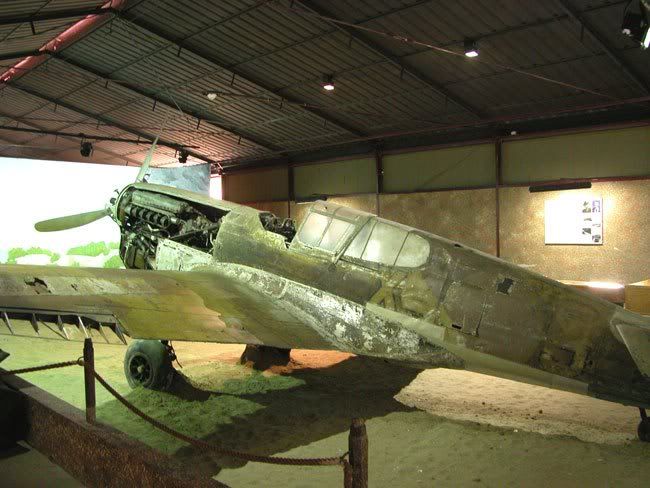
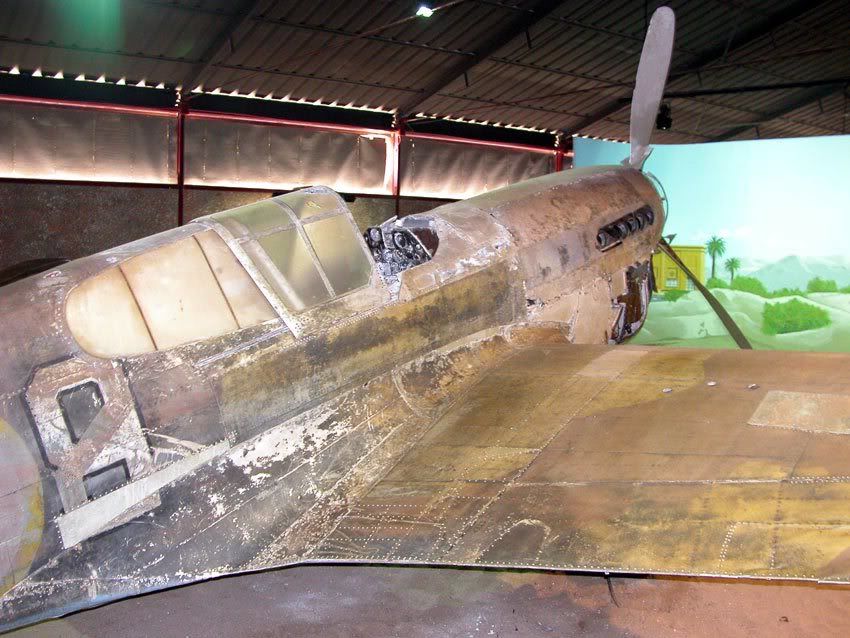
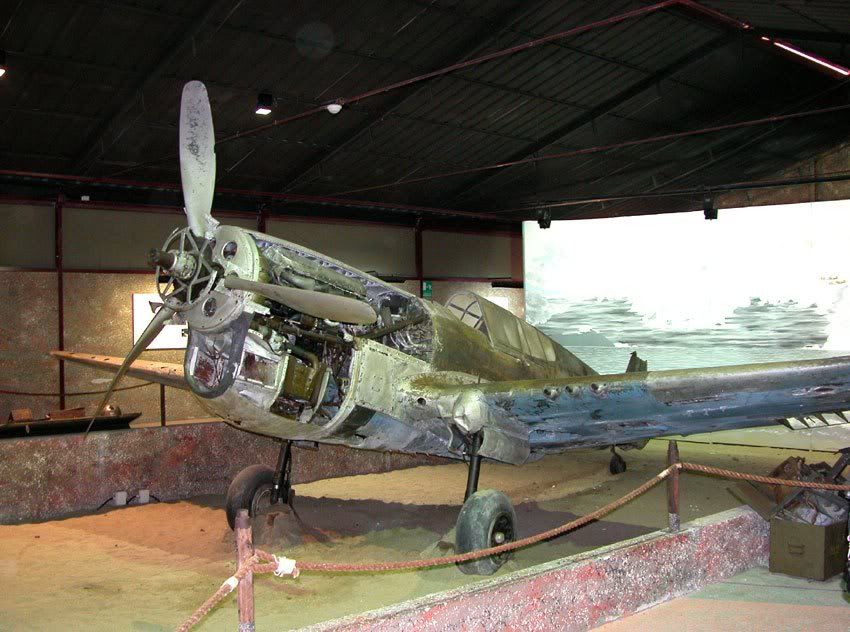
I understand this recovery underwent freshwater flushing and oil coating, but no electrolytic treatment and consequently has started to fizz rather badly?
But it does show what can survive in the beach shallows in the oxygen depleted silt and sand.
Regards
Mark Pilkington


 Sign In







