 mark_pilkington
google finds reference to a Bristol Freighter of Silver City Airways carrying the name?
G-AIME – c/n 12795 ‘City of Exeter’
Leased by British Aviation Services from The Bristol Aeroplane Company Ltd on 16/07/48
Returned to The Bristol Aeroplane Company Ltd in 1949
Purchased by Silver City Airways on 21/11/50
Transferred to Air Kruise on 09/02/56
Returned to Silver City Airways on 01/10/57
Transferred to British United Air Ferries Ltd on 01/01/63
Withdrawn from use at Lydd in October 1963 and broken up at Southend in May 1964
Regards
Mark Pilkington
mark_pilkingtonMiss Winnie Pooh? – I knew this was an April fools joke, winnie was definately a very macho dude and would never have undergone a change operation. After all, he was a Canadian bear.
Warren
She (he) is a former Canadian Lumberjack and so Winnie’s feminine preferences are therefore well known and evidenced, it is unfair to bring the gender ambiguity of research team members up as distractions to their serious exploration work.
smiles
Christopher Robin
TIGGER Project Leader
mark_pilkingtonI saw through it straight away, the aircraft was travelling east, yours young man is travelling west… :p
Its typical of non believers to use false information to try a discredit serious archaeological and undersea wreck exploration work, such responses are typical of those suffered by groups such as ourselves on forums such as these.
Its a well known phenonemon that water goes down the plug hole in the reverse direction in the southern hemisphere ,and hence a east travelling aircraft ditching off a South Pacific Island will always rotate 180 degrees from its original heading due to that effect (ie facing due west) as it sinks prior to becoming completely buried from view under the sandy floor of the seabed (and only detectable by sophisticated digital image enhancement or the presence of FBI chalk lines).
Hence it is clearly the Electra of Earhart because she was travelling east and this wreck is facing west, exactly as would be expected due to the plug hole effect.
Anyone with any experience in exploring deserted islands for evidence to prove the implausible would know of such phenonemons and how to consider them in assessing evidence, and therefore recognise the significance of this discovery.
smiles
Christopher Robin
TIGGER Project Leader
mark_pilkingtonThinking bigger guys -the IWM was given an A-10 – F-111 -U-2 -Huey- F-15 amongst other things from the U.S government.
The actual pounds,shillings and pence of the deal is irrelevant when the Liberator is effectively a memorial.
As I understand there are the following basic survivors
USA
B24A CAF* (flying)
B24A Whittington (stored wreck)
B24D USAFM
B24D Atka Alaska (insitu intact wreck)
B24D Hill AFB Museum (composite restoration)
B24M Castle AFB
B24J Collings* (flying)
B24J Pima
B24J Weeks
B24J Barkdale
CANADA
B24J Rockcliffe
INDIA
B24J Poona
AUSTRALIA
B24M Werribee
UK
B24L RAFM (RAF a/c)
B24M AAM Duxford (USAF a/c)
ie out of the 15 current survivors, 8 ie more than 1/2 are still on display in museums in the USA.
I would have thought as a memorial to American aircrews serving in B24’s in the European war theatre that transferring one from outside display in the US to the UK for restoration and indoor display in US markings is an excellent outcome and serving a totally different purpose to the only other B-24 in Europe being the RAF Museums Liberator IV in RAF markings reflecting service in the far east.
I suspect it is far better protected in Duxford compared to Lackland Texas, I am sure far more people see it, and those people are better reminded of the debt owed by Europe to the USA and those who flew such aircraft to help liberate them.
It is far more fitting that such a internationally important memorial to American airmen is undertaken with real airframes than fibreglass mockups, the reverse is true of gate guardian duties in an outdoor display.
The USAF has a significant number of aircraft on external display at USAF Base “museums” and clearly not all of these will be provided with undercover display outcomes in their current locations and risk being lost if otherwise simply left outside indefinately and the time will come when hard decisions will need to be made in regard to rare WW2 and other types within those external displays, the recent scrapping of a B52 in the US being but one example.
Surely it is better to put efforts to ensure the long term future and maximum survival of US B-24s by transfer of the outdoor Castle B24M to the NASM and ensure the outdoor Barkdale B24J goes under cover at Barkdale as against complaining about the move of the outdoor Lackland B24M to undercover display at Duxford, given the horse has bolted and seemed the best outcome in anycase?
regards
Mark Pilkington
mark_pilkingtonMark,Excellent post, my late father was a ENGFITT with 100SQN and served with the Squadron at Tadji till the end of the war. He gets mentioned in Colin Kings excellent book “Song of the Beaufort” and also seen in a couple of the books photographs. His greatest dream prior to his death was to view
A9-557 at the AWM as he had worked on this A/C on many occasion whilst he was at 100SQN. Regrefully, his dream was never realized.
That is a shame, she looks wonderful, I got a private viewing in October last year.
regards
Mark Pilkington
mark_pilkingtonQUOTE=D1566;1862821]I seem to remember reading somewhere that only two RAAF Beauforts were lost in air to air combat; one shot down by a Ki45 and the other by a B24 (!) Anyone confirm or disprove this?[/QUOTE]
The first DAP Beaufort flew in August 1941, and was one of a batch of 180 ordered by the RAF for use in the Far East, but when Japan entered the war in December 1941, it was agreed that all Beauforts would be taken over by the RAAF for the defence of Australia,becoming its most successful and important medium bomber.
The first 50 examples built in Australia were designated as Beaufort mark V aircraft, differing from the Bristol Beaufort mark I built in the UK due to the installation of Australian built, American designed Pratt and Whitney engines, but with the Bristol B4 mk1E turret, and an aft firing cupola gun fitted under the nose. The remainder of the first 180 examples ordered for the RAF were finished as mark VI, VII and VA models, with various differences to the original mark V aircraft such as an extended fin, addition of two guns fitted in gimbles in the nose, deletion of the under nose cupola gun and variations in propellor and engine fitouts.
The definitive Australian Mark VIII Beaufort was the most numerous built, with 520 examples numbered from A9-181 to A9-700, and fitted with a new Bristol B1 mark V dorsal turret and later the B1 mark VE, they had a significantly different rear fuselage shape to accomodate the higher mounting of the later turrets.
When production ceased in August 1944, a total of 700 Beauforts had been built. These aircraft served with numerous squadrons including Nos 1, 2, 6, 7, 8, 13, 14, 15, 32, and 100 and established an impressive operational record in operations against Japanese forces in New Guinea. They attacked shipping in all areas of the South-West Pacific and sank cruisers, destroyers and submarines, as well as bombing and strafing inland supply dumps and troops. They were also used for routine convoy protection and coastal reconnaissance.
Most of the Beauforts were phased out of service soon after the war, and today only three remain in various condition in Australia, with one being rebuilt to fly in Queensland and another in storage with the AWM, while another two exist in overseas collections.
I have been reading the book “Song of the Beauforts”, which is the history of the first of those 10 operational squadrons, RAAF 100 Squadron which was formed in 1942 from the remanents of the RAF 100 Squadron Q Flight which had received the first Australian built Beauforts.
The book does mention the liberator incident along with two other aerial engagements, there is no mention of any aircraft being confirmed down by enemy aircraft fire, but of course some aircraft went missing without details of the cause, and this is the experience of only one of ten operational squadrons, however the book does raise the possibility that A9-188 was lost to a night fighter during a night raid on 20 May 1943.
During a search for the lost aircraft the next day remains of the aircraft were spotted by the crew of A9-191 about 1/2 a mile of the coast of New Britain and at the same time 6 zeros were seen rising from the nearby Gasmata airstrip, resulting in a half hour closing chase until the zeros’ broke off due to apparant low fuel.
On 12 July 1943, a 100 Sqn aircraft A9-225, operating from Milne Bay was patrolling the Solomon Sea between Bougianville and New Britain when it approached a USN PB4Y Liberator.
It is remarked elsewhere in the book that the twin engined Beaufort had a passing resemblance to the Japanese twin engined Betty bomber.
The USN report into the incident claimed both aircraft fired at each other, but in anycase the Beaufort was shot down and the USN Captain was able to identify the ditched aircraft and downed crew as “friendly” and dropped a raft and lifejackets and reported their position.
Despite searches by 100 Squadron the dingy was not located due to weather until 26 days later on 6 August 1943, some 93 nautical miles from the ditching location when it was briefly spotted through a break in the cloud with 3 of the 4 crew still visible, however it was never again sighted and rumours persisted of the dingy making it to a Japanese held island near New Ireland and the survivors being beheaded.
Other aerial encounters include A9-208 on 20 July 1943 while patrolling in the same area as the aircraft above came across an enemy convoy consisting of a Carrier, three Cruisers and five Destroyers and was challenged by 3 Zekes.
After transmitting position of the convoy the Beaufort turned to base trying to outrun the Zekes but was subject to a closing attack from the rear. One Zeke was damaged with visible smoke pouring from it and broke off the engagement while the other two pursued the Beaufort which took violent evasive action and headed for a lonely cloud, where it evaded the pursuing zekes for 20 minutes. On return to base it had lost part of the tailplane and had 64 other bullet holes.
A much earlier and more surprising account is provided in the book of A9-38 encountering three enemy fighters while commencing a run on a destroyer in a convoy off New Britain on 1 December 1942.
The crew had earlier heard the mayday call of a B-17 as it was attacked and shot down by zeros and wondered what chance a Beaufort would have?
The Beaufort has a crew of 4, the pilot, who has access to the two wing guns, in this early aircraft they would be 0.303 brownings, the Bombaimer who had access to two 0.303 Vickers guns in the nose gimbles and a single 0.303 Vickers gun in the aft firing undergun. The Navigator had access to two 0.303 Vickers guns one each operating through beam hatches, and the wireless air gunner in the turret, this early aircraft would have had twin 0.303 Vickers guns in the turret.
The 3 zeros flew along the port side the Beaufort just as the Navigator opened his beam hatch, one Japanese pilot 40 yards away had an amazed look on his face and then all three raced ahead, the Beaufort pilot headed for a cloud while the zeros turned for an attack head on. The Navigator fired at the incoming aircraft from the nose and the turret fired at them as they returned for a beam attack, one aircraft was hit by fire from the turret while a second was hit by fire from one of the beam guns, resulting in two destroyed and the third breaking off the attack, remarkably there was no damage to the Beaufort.
While the Beaufort was slower than the other medium bombers in the Pacific theatre such as the B-25 and the A-20 Boston, the crews considered it more maneuverable than both.
I suspect there may be more Beauforts lost to enemy aircraft in the stories of the other 9 operational squadrons but I cant find evidence of any others in the book on the RAAF 100 Squadron.
Much maligned due to early losses from trim tab failure and a mixed performance as a Torpedo Bomber in the Pacific due to rushed training and failures of the American sourced torpedos, the Beaufort never the less performed very well overall in the Pacific in anti shipping, low level bombing and army support.
Beauforts participated in the defence of Milne Bay, the Battle of the Bismark Sea and numerous attacks on the Japanese stronghold of Rabaul, they were the backbone of RAAF bomber squadrons until arrival of the B-24 in RAAF service.
Beauforts undertook the first and last attacks by an Australian made aircraft and noted british aviation writer William Green wrote of the Beaufort, “This bomber’s part in the defeat of the Japanese forces in the Southwest Pacific was probably of greater significance than any other single aircraft type in the RAAF”.
regards
Mark Pilkington
mark_pilkingtonHas anyone have any WW1 rotary engined spark plugs. I have recently been to the Shuttleworth collection, but their rotaries it seems have not the correct plugs in them as they are so scarce.
Any photos woulld be welcome, as I have been offered, 2 supposidly WW1 rotary spark plugs, but the seller is not 100% certain.
I cannot find anything relating to these engines either.(Not enough depth in Google).
Jim.
Lincoln .7
I’m not sure if your still looking for one, and I’m not sure this one really is still available, but I found this for sale online:
Unusual RFC Royal Flying Corps Rotary Engine Spark Plug:
$78Original very rare WW1 vintage aircraft engine spark plug in good condition. Constructed of steel, brass and ceramic, this has got to be one of the most attractive spark plugs ever made! There are no markings on the plug but an identical one I have says Joly, a French maker. An exceptionally rare plug which would without doubt have been made for use with early WW1 rotary engines. Measures 65mm in height and is in good overall condition.
International buyers Welcome!
Payment by Paypal preferred.
Shipping in UK by 1st class recorded at £4 and International by Signed For at £10
Regards
Mark Pilkington
mark_pilkingtonIs it not the case that your first and sixth pictures above show the twin-gun “angular” FN.54 installation? (but from the side, so the second barrel is obscured) All the other pictures presumably show the “earlier” blister mounting?
For what it’s worth, one of the options on the ancient Airfix model kit of the Blenheim IV is an angular under-nose turret similar to that in your first picture, with twin guns. Is this the FN.54 again?
The last picture is definitely Blenheim V, which as I understand it had a totally redesigned nose with a totally new rear-facing gun mounting.
I’m not an expert on Blenheims or FN Turrets so I wasnt willing to make definitive statements about the first and sixth pictures but they did seem to me to be different to the other “blister” type installations and yes personally I did wonder if they were the angular FN54, however I was hoping the photos and debate might encourage more expertise and information to be provided.
It would seem from Air Ministry’s very detailed post that the Blenheim V also had the FN54 or FN54A, but with a large fairing forward of the turret itself, and from his excellent drawings and details from various manuals he has confirmed my suspicions that the single gun blister “under-defence gun” were an in house Bristol design, perhaps slightly different in their Blenheim and Beaufort implementations depending on the size/shape of the parachute escape hatch?
regards
Mark Pilkington
mark_pilkingtonNo problem Emile
Heres a photo of a Blenhiem IV with its rear facing “chin” turret

Heres a photo of an Australian built Beaufort with its rear facing “chin” turret.

I’m am yet to conclusively evidence the design/manufacture of this “chin turret”?
The calling of this as a turret might be misleading, the official Bristol name appears to be under-defence gun.
in my CD copy of AP1580, the Air Ministry Manual for the Beaufort I & II, the introduction mentions “in certain aeroplanes a single-gun under-defence installation firing aft is fitted to the floor of the nose”
and in section 2 – paragraphs 17 and 23 again simply refer to it as the under defence gun can be mounted to fire aft, with 600 rounds in belt, and that the gun and its faired cupola take the place of the parachute escape hatch.
Seperately the manual provides detail on the various dorsal or mid upper turrets, and specifies their make and model.
Figure 5 shows a sighting mirror rather than a periscope, and show the installation consists of little more than a gun, triggers, mirror and shell feed fitted into a modified version of the frame of the escape hatch, leading me to suspect that it isnt a Fraser Nash turret as such but a Bristol own development, particularly as the manual doesnt reflect it ibeing an FN type in any way?
In Australia this gun was intended to be installed on the first 180 aircraft (Beaufort mark V, VI and VII’s) but in practice they were removed from many of the later examples and simply replaced with a standard hatch.
In the Australian DAP Beaufort this was always only a single gun installation, and given the embargo on shipping parts and materials from the UK most of the components other than those supplied for 20 airframes, were locally built.
I had assumed the Beaufort and Blenheim IV installations are of a similar design? although examining the two photos above the Blenheim photo seems to show a more elaborate or substantial design.
Perhaps the Blenheim IV utilised a FN54 design and Bristol replaced it with an in-house design in the Beaufort –
I dont have access to a Blenheim IV manual to compare its entries for this gun position?, and I havent seen any photos to independantly confirm what the FN54 or FN54A looks like?
I wonder if the Canadian Bolingbroke ever operated with the under chin turret, I cant seem to find any photos of RCAF aircraft with it, and none of the preserved Blenheim/Bolingbroke aircraft in museums in Canada, Europe or the UK seem to have one fitted?
Equally none of the currently restored Beauforts in museums in the UK or Australia display an under defence gun, but I am aware of one in existance for a future museum restoration.
Google provides this interesting comment from former RAF Blenheim crew?
http://users.cyberone.com.au/clardo/blenheim_armament.html
To cover the otherwise undefendable rear lower-quarter blindspot, a number of versions of rear-firing chin-mountings were offered in production, ranging from a perspex blister mount for a single Browning, to the final angular Fraser Nash FN 54 twin-Browning mounting. These suffered several problems, not least the complex belt path (leading to frequent stoppages) nor yet the cramped (aptly named) spade-grips in the now cluttered space for the Navigator: perhaps worst of all, the armament was aimed by periscope. Len Cooper’s page shows an excellent view of the FN54 mounting: see Mark IV Helwan Jan 1942
.
does this imply the FN54 is twin browing, and the earlier blister mount with a single browning is not an FN54? and therefore a Bristol product and similar to the Beaufort installation? – unfortunately the claimed “excellent view” of the FN54 mounting referred to yields a pretty inconclusive photo?, and is captioned on that page as “not” being the final angular FN54?

This is an early model Mark IV, with the single Browning Perspex nose blister. Another little puzzle, this one: apparently coded LY (below) which would make it a member of 14 Squadron at that time. 211 took the rather later model with the angular Fraser-Nash FN54 twin chin mount to the Far East.
This comment suggests the photo is an early mark IV with the single browning nose blister as against the “later model” with the angular twin mount FN54?
google finds these various photos of Blenheim IV ‘s showing the installation.


all of those above seem quite different to the original photo (is this the elusive FN54?, or just the single gun installation missing its surround?)

I’m personally of the view that the perspex covered single gun installation is the same design on both the Blenheim and Beaufort aircraft.
Blemheim IV
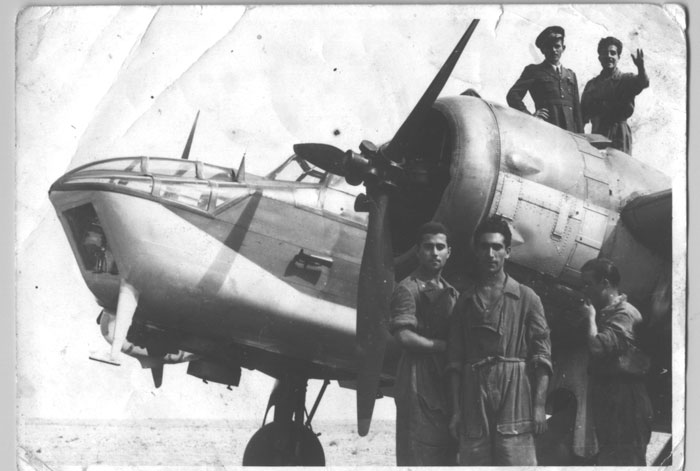

Beaufort
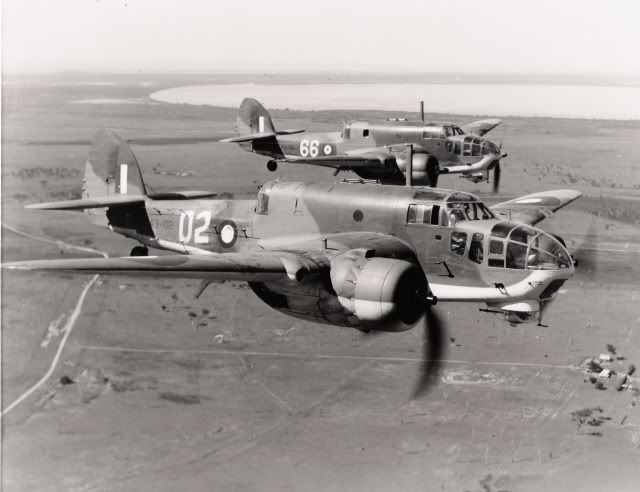
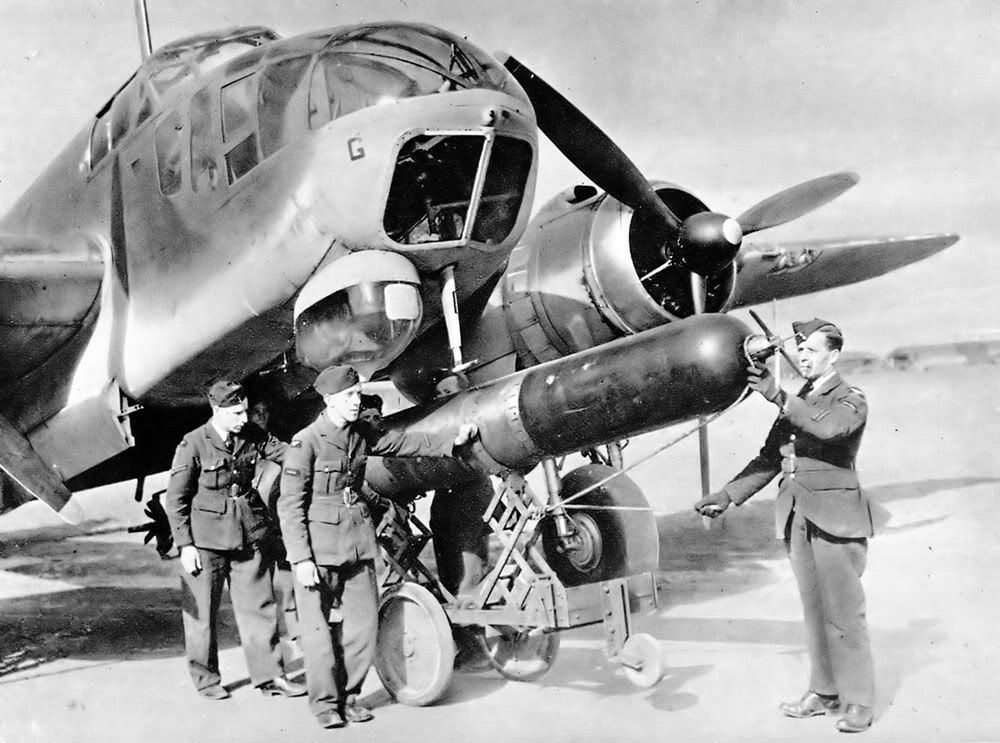
and I do wonder “what” this is on this Blenheim V? is “this” the elusive “angular twin gun FN54?

Googling the Blenheim V yields the following:
The Blenheim was originally built in England in 1934 as one of the first executive planes for the proprietor of the Daily Mail, Lord Rothermere, who wanted a fast plane capable of carrying six passengers, a pilot and a co-pilot. Equipped with two Bristol Mercury engines, the Bristol Type 142, as it was then called, was 30 mph faster than the RAF’s new biplane fighter, the Gloster Gauntlet. Bristol designed a military version of their new aircraft, the Type 142M, which the Air Ministry ordered 150 of in the summer of 1935, and a second order for 434 more in July of 1937. The Type 142M, or Blenheim I, as it was now called, had a bomb aimer’s station in the nose, an internal bomb bay, and a dorsal machine gun turret for self-defense.
The aircraft saw several minor modifications in power-plant, electronics and defensive armament resulting in the Type 149 which would enter production in the UK as the Blenheim Mk IV. By 1939, most Blenheim 1s had been replaced in Britain by the new Mk IV. The Mk Is continued to serve as trainers and a number were converted into night fighters.
Various attempts were made to improve the defensive armament of the Blenheim Mk IV. Twin guns were installed in the dorsal turret and various rearward firing installations were fitted below the nose to cover the blind spot.
The next version of the Blenheim to enter service was the Type 160D which became the unloved Mk V. By the time the Blenheim Mk V entered service in mid 1942 it was hopelessly underpowered and outclassed compared to its adversaries in the Mediterranean and Far East theaters. Designed to meet specification B.6/40 for a close support bomber the Mk V had a solid nose housing four .303 machine guns with 1000 rounds of ammunition each. A new larger and more effective BX dorsal turret was installed mounting twin machine guns. Other changes saw the installation of paired doors to replace the large aprons fitted to the undercarriage legs of earlier marks. In all other respects the new aircraft resembled the Mk IV. Two prototypes were built and production was to be undertaken by the Rootes factory.
The machine gun solid nose section was replaced in favor of a glazed bomb aimer’s position when the role requirement was changed to that of medium level bomber. A blister with a rear facing pair of machine guns was situated under the starboard section of the nose; the front portion of this blister formed the foot-well for the navigator
The Blenheim Mk V was first proposed in early 1940 as a heavily armoured ground attack aircraft. As originally designed, it replaced the normal Mk IV nose with a solid “ducks bill” nose, containing four .303in machine guns. It would use engines optimised for low altitudes, and carry 600lbs of armour.
The need for a ground attack aircraft quickly disappeared in 1940 after the collapse of France. Work continued on the Mk V, under the name Bristol Bisley, but now with a navigator/ bomb aimers position located in the new nose. This was not an ideal compromise – the new nose was so cramped that the navigator had to be given a footwell, just in front of the rear-firing Frazer-Nash turret, hidden inside the turret fairing.
Is it possible the FN54 was only used on the Blenhiem V?, and the earlier designs are in house Bristol designs?
OR
is the single gun bubble enclosed gun installations seen on the Blenheim IV and Beaufort above examples of the FN54, and the angular gun on one photo of the Blenheim IV a twin gun FN54A and the Blenheim V showing the same twin gun hidden behind the foot well?
All very confusing, there must be a Blenheim expert on the forum somewhere???
Regards
Mark Pilkington
mark_pilkingtonThe Bristol Blenheim IV and the Beaufort I and V all had the undercupola remotely controlled, often described as a rear facing Frasier Nash FN-54 or FN-54A “Chin Turret”, although I have seperately read that it is a Bristol own design and built turret.
The turret was permanently rear facing, operated by the Navigator and aimed via a periscope.
The Frazer-Nash FN.54 and FN.54A turrets were jettisonable in the event of an emergency allowing the crew to use the lower fuselage emergency escape hatch.
1 × 7.7 mm (0.303 in) Browning trainable rearward-firing machine-gun in a remotely controlled Frazer-Nash FN.54 chin turret,
or
2 × 7.7 mm (0.303 in) Browning trainable rearward-firing machine-guns in a remotely controlled Frazer-Nash FN.54A chin turret. The turret could rotate 20 degrees to either side with a depression of 17 degrees.
http://www.pilotfriend.com/photo_albums/timeline/ww2/Bristol%20Blenheim.htm
regards
Mark Pilkington
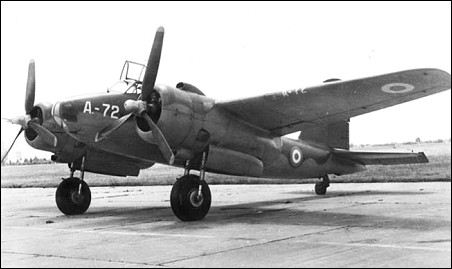
mark_pilkingtonMark, are those photos for real? or is this a “fool Someone like me”?
If real what engines were used?
The aircraft looks kind of neat with the round engines.Thanks
Warren
Hello Warren
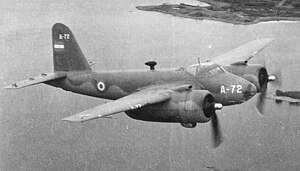
Its a real aircraft, designed, built and operated in Argentina, it has timber construction similar to the Mossie, but due to a shortage of engines was fitted with P&W 1830’s Twin Wasps.
My “pondering” of its DH 102 parentage was however only in jest, I dont think there are any design relationships other than perhaps “inspiration”
more details here> http://en.wikipedia.org/wiki/I.Ae._24_Calquin
They didnt do such a convincing job on their DH Hornet “look-a-like”.

smiles
Mark Pilkington
mark_pilkington.
Maybe when they couldnt get the engines they wanted for it they just fitted some cheap war surplus radials and flogged it off to a DH subsidiary in some South American banana republic somewhere?

smiles
Mark Pilkington
more details here> http://en.wikipedia.org/wiki/I.Ae._24_Calquin
mark_pilkington2 HS748’s survive in preservation in Australia of the 12 originally operated by the RAAF/RAN from 1967 to 2004.
One is A10-601 (c/n 1601) was one of ten that flew with the RAAF as Navigation Trainers until its retirement into the RAAF Museum at Point Cook in 2004.
The second is N15-709 (c/n1709) and was one of two operated by the RAN, it was sold to TAG Aviation and departed Australia in 2001 for Norwich UK, only to return in the same year for intended Australian freight operations, it was retired into the Australian Aviation Museum at Bankstown in 2003.
Regards
Mark Pilkington
mark_pilkingtonI personally was happy to see this thread get locked, it was being dominated by an irrelevent debate over the merits and viability of constructing a “Metal Mosquito” , somewhat an “oxymoron” which seems a very pointless exercise from an aviation heritage point of view?, and something I couldnt see “ever getting off the ground” or certainly not gaining any donations from myself.
There are active airworthy wooden Mosquito projects already underway that prove it can be achieved with the relevent source of parts, expertise and funding, equally there are active “recreation” static projects to bring back from extinction the DH Hornet, AS Whitley and Short Stirling.
None of these projects seem to attract the opposition this proposal seems to be receiving?, despite some of the work ahead, even for static outcomes.
The 13 have put their money where their mouth is and formed a website to seek and gauge support to the proposal.
“IF” the 13 can become 1,300 or 13,000, and raise a relevent level of funds between them and beyond that from public donations, acquire a project set of parts (from the US/Swedish holdings?) and access the NZ expertise, then it would all seem possible, even if currently not considered probable?
But I would agree with Stan,
if someone doesnt “Dream it”, it will never “get off the ground”.
Good luck to them!
regards
Mark Pilkington
mark_pilkingtonI personally was happy to see this thread get locked, it was being dominated by an irrelevent debate over the merits and viability of constructing a “Metal Mosquito” , somewhat an “oxymoron” which seems a very pointless exercise from an aviation heritage point of view?, and something I couldnt see “ever getting off the ground” or certainly not gaining any donations from myself.
There are active airworthy wooden Mosquito projects already underway that prove it can be achieved with the relevent source of parts, expertise and funding, equally there are active “recreation” static projects to bring back from extinction the DH Hornet, AS Whitley and Short Stirling.
None of these projects seem to attract the opposition this proposal seems to be receiving?, despite some of the work ahead, even for static outcomes.
The 13 have put their money where their mouth is and formed a website to seek and gauge support to the proposal.
“IF” the 13 can become 1,300 or 13,000, and raise a relevent level of funds between them and beyond that from public donations, acquire a project set of parts (from the US/Swedish holdings?) and access the NZ expertise, then it would all seem possible, even if currently not considered probable?
But I would agree with Stan,
if someone doesnt “Dream it”, it will never “get off the ground”.
Good luck to them!
regards
Mark Pilkington


 Sign In







