Number One
Keith
Correct. The reigning air race champion each year uses the Race Number 1. People can choose their own numbers. The Bulldog I fly is Race 44.
Chilbolton was also used by Supermarine for the Belgian Spitfire contract. Could it be there?
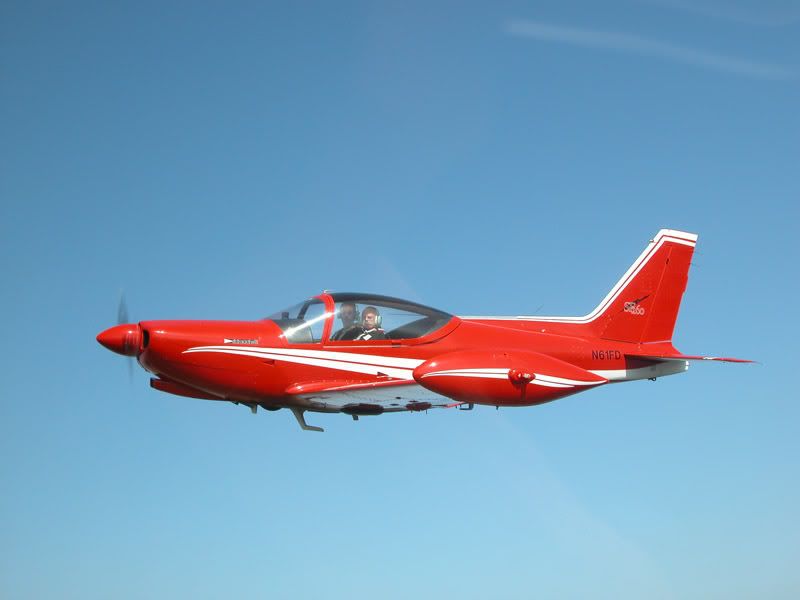
Canopy became detached and hit the fin – hence the forced landing. This aircraft was the British Air Racing Champion last year and had just been repainted.
A pic from when it first came over from the US.

Squadron Leader Pujji is one of the veterans attending the North Weald Gathering on 25 April, so come along and meet him!
Dora, Emil, Friedrich and Gustav are the German phonetic letters for D, E, F and G – like Delta, Echo, Foxtrot and Golf nowadays. In this case they refer to different marks of aircraft, so a Bf 109E was known as the Emil.
Yes, I wear gloves. And flying boots rather than trainers!
Having spent a couple of days at the World Aerobatic Championships at Silverstone, it was apparent that there is very little to choose from between the various aircraft types which were all represented at that level of competition. It was very definitely down to the skills of the pilot.
What did surprise me was that the French team were using Extra 330SCs rather than CAP232s. As they won everything, the Extra must be regarded as the top dog at the moment.
Blue skies.
Yes, I was flying the Pup 150 when we had an engine failure downwind at Lydd. The airfield is surrounded by lakes, drainage channels and banks, interspersed with small fields, so I had to try and choose a spot to give me the best chance of not ending up in one, which meant a curving approach right down to about 10 feet above the ground.
For obvious reasons I’m not going in to any more detail. Everyone will have to wait for the accident report. It’s been a traumatic couple of days and I still feel pretty low. At least while plummeting earthwards I heroically turned away from the nearby nuclear power station!
The reason the air racers were ‘late’ was the result of a Eurostar ultralight being the first off. The pilot didn’t want to fly at full throttle because of his Rotax engine SOPs, so his declared race speed was only 86.6 mph after the practice octagon in the morning.
He took off at exactly 3pm French local time. The number two aircraft in the race, an AA-1, took off nearly 20 minutes later, and we were sitting on the runway burning fuel all this time. The fastest aircraft in the race – a Baron – took off at +37:28. His race speed was 240.09 mph. There were 24 aircraft in the race.
We saw the Stearman heading towards us and wondered what was going on. There was a huge amount of turbulence from the terrain and other aircraft, so an interesting couple of minutes flying until we could get clear of Dover.
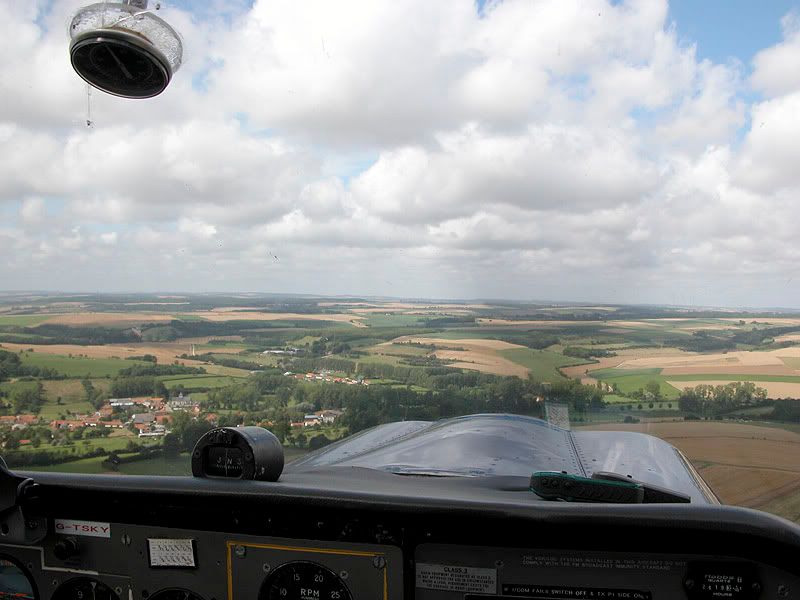
You can see the two official GPS units we carry for the race data sitting on top of the instrument panel in the pics.
The overall organisation seems to have been fairly chaotic. The air race had been planned for months and the timings worked out. The original route was over Blériot Plage at Calais, with the agreement of the mayor. Then other officials got involved and said no, so a new last-minute route was planned via Cap Griz Nez.
On the Saturday morning it was not clear whether there could be a race at all because of the French microlights, so we had to practice for a closed five-point course at Abbeville. It was during practice that we were told the would be a race, with a route modified yet again.
The final route flown was Abbeville – BNE VOR (Boulogne)- Dover, coasting out to the east of Cap Griz Nez. It was only the huge amount of behind-the-scenes work by the RAeC race team and our French hosts at Abbeville that enabled this to happen.

Spitfire burst a tailwheel tyre taxying out at Lydd.
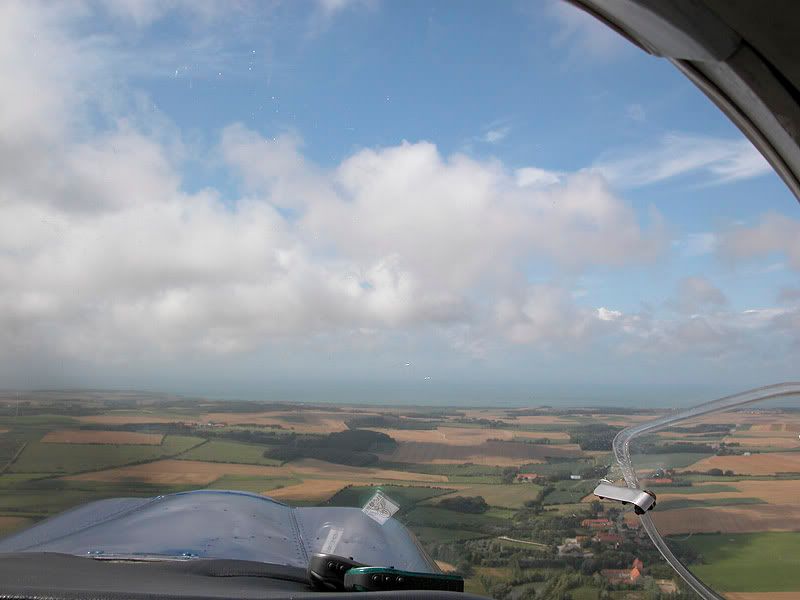
The view of the air race finish line overhead the Coastguard Station from over the Channel. Designated finish height 800 feet.


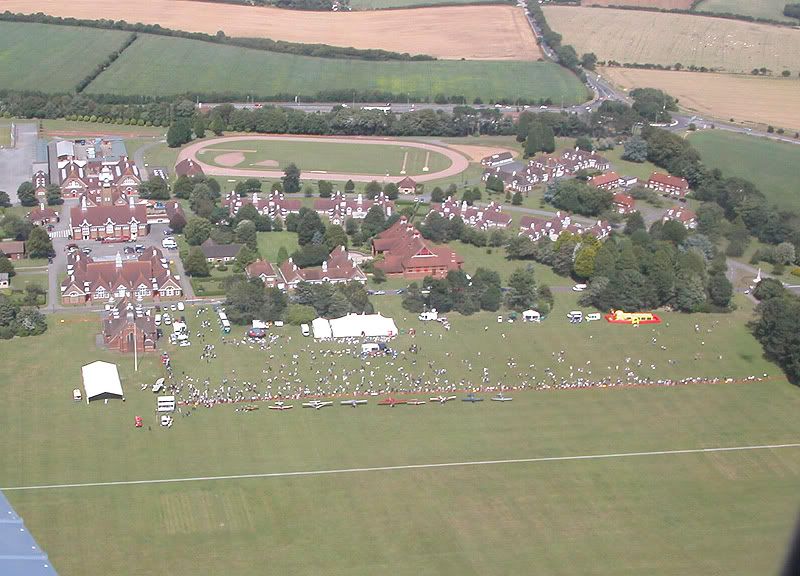
The temporary strip at the school

Race height over France was 500 feet, so quite exciting poling along from Abbeville…


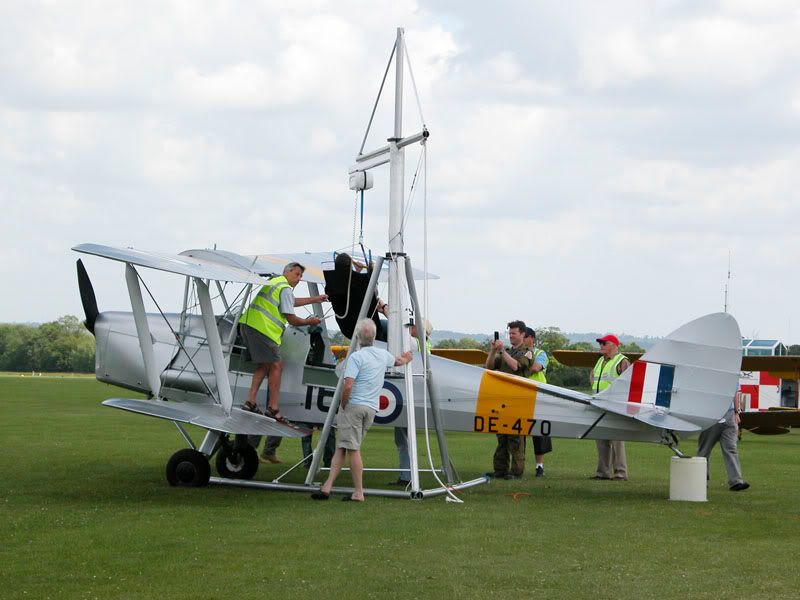
A great day at Halton yesterday. I took a Chippie flight in the afternoon. The visibility was stunning and it rounded off things off nicely. One of the charities being supported this year is Help for Heroes. They had a special winch rig to get the disabled servicemen in and out of the Moths. Well done to all concerned. Looking forward to next year.


The irony is that Standard Oil supplied IG Farben with the tetraethyl lead technology in 1936 when the RLM ordered an expansion of synthetic aircraft fuel production in Germany. In return, Standard got IG Farben’s synthetic rubber technology under their patent swap agreement.
The Merlins did a pass across North Weald. The Gnat pair and the Aerostars in their Yak 50s were out practising too. Nice yellow Jungmeister in for a visit.
The missing turning point was at Brentwood. It was put up again later in the morning. We don’t leave vulnerable ones up overnight any more. I put the Chelmsford one back up on my way to North Weald first thing.
At Leicester last year one was trashed and the dayglo bits stolen – I had a spare in the boot of my car and got it put up about two minutes before the first aircraft arrived. The Brentwood team were threatened with physical violence on Saturday. Fortunately the individual involved was restrained by his mate. I was lucky on mine and had people who stopped for a chat because they were interested in what was going on.
Glad you got the RV sorted. Seemed to be taking the turns nicely from where I was standing.