lukos
lukosWhy every normal topic becomes F-35 topic?
Can’t we stop this behaviour?
Culprit indentified.
http://forum.keypublishing.com/showthread.php?134607-Eurofighter-Typhoon-discussion-and-news-2015&p=2225863#post2225863
lukosI give you that, a system with full spherical coverage and ability to use telescopic optic would be tremendously useful.. The problem is that you cannot see a distant target with a short range 360-deg system and thus you don’t know where to pinpoint your long-range optics.. For that you always need to use some kind of active system (unless the target is emiting).
A good idea but such system can never be perfect due to limitations in FoV vs range…
That why the likes of Selex ES have no doubt been brought into it to develop an IRST type system for NG. I believe the likes of PIRATE has a scanning type arrangement that uses the long range optics and as scanning pattern. No one is suggesting a 360-deg telescoping system, just explaining why Selex ES and NG have teamed up, although BIO has suggested something in the works at the end of his post:
http://forum.keypublishing.com/showthread.php?134607-Eurofighter-Typhoon-discussion-and-news-2015&p=2226377#post2226377
lukosHave you compared datasheets? Can you provide the sensor sizes of EODAS compared to DDM-NG?
Readily accessible at MBDA. Only does MWS, all other capabilities are mentioned as ‘future possibilities’.
http://www.mbda-systems.com/mediagallery/files/ddm-ng_datasheet-1424428103.pdf
lukosYou can contact the authors and tell them they are dubious and that their photos are fake, I got no problem with that..
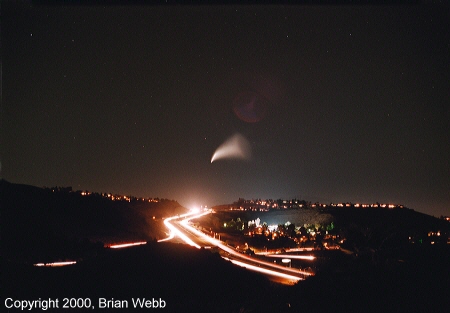
http://www.spacearchive.info/vafbview.htm
It’s not the same thing though, that affect is more than just the plume and it’s absolutely huge relative to what the F-35 was tracking even with the 10x zoom magnification. That Minotaur haze blotted out half the sky.
lukoswhat gives you the idea the non-magnified DAS IR sensors on F-35 can pick up heat sources that other IR sensors can’t ?
MAWS by definition pinpoint direction of heat sources
Information datasheets basically. DDM-NG is not programmed with the sensitivity to do it because false alarms are a big enough problem for first gen passive MAWs, distinguishing between aircraft and false alarms requires a lot more computing power, which currently the DDM-NG back-end is not capable of.
lukosThe thing is, in actual combat operations, the combat system would be almost certainly programmed to ignore events like a ballistic missile launching hundreds of km’s away, because they would only serve to distract the pilot with information which is not relevant to his mission.
I imagine it would actually depend on how much is going on. If all hell is breaking loose in the first 100km, then the system will likely not bother the pilot with stuff happening in the next country over but if all is quiet, it probably will.
lukosThat’s a Falcon 9 – i.e. something 50% larger than the biggest military ballistic missile ever operationally deployed. Short of the sun, IR targets don’t come much easier than this.
What stands to reason is that if it was as simple as all that there would not need to be air-to-air modes for EOTS on the F-35 and neither would EODAS manufacturer NG find it necessary to acquire distribution rights to PIRATE, me thinks.
At the moment they don’t have the telescopic optics part. I’m sure there is more to it in terms of how you operate the two together. I already shown details for the Sun vs a Rocket, you can play around with rocket size a bit in the calculation but it makes no difference. And please remember that space is a vacuum so IR attenuation is nothing like what it is in the atmosphere.
EOTS is needed for even better range and identification. It’s also needed for ground target lasing.
Well, according to lukos NG is only a few minor mods away from turning EODAS into a credible alternative to the likes of PIRATE 😉
Never said that, you’re making stuff up. Selex ES has obviously been enlisted for a reason.
I don’t think the idea is to necessarily bother the own-ship pilot with this info but automatically contribute TBM detections to an early warning and launch site location network. Which is an eminently sensible capability that should make Scud hunting a great deal easier – the problem only starts when people confuse the ability find an enormous SLV at hundreds of miles (or a representative TBM at indeterminate range) with searching for and tracking *other aircraft* at long ranges.
Depends what ranges we’re talking about. 800nmi – no way it could see an aircraft at that or even half that, but circa 25nmi isn’t inconceivable, especially if it’s in afterburner.
The problem is that when you combine EODAS with telescopic optics in order to achieve better range, you will inevitably lose FOV. So, instead of spherical coverage you will end up with something like this.. I don’t think that would be too useful..
[ATTACH=CONFIG]237533[/ATTACH]
Which is another reaosn why they have both on the F-35.
You undoubtedly lose FoV with telescopic optics, never debated this.
lukos
Fourth stage from a Minotaur rocket seen at more than 1,500 statute miles (2,414 kilometers) away.
Night time. Dubious source? The direction of the plume seems wrong. Also appears to be viewing some kind of ionising interaction.
lukosGreat information. Brilliant post, thanks.
lukosi judge the IR MAWS sensors on Rafale/F-35 to be on pair, so with sensitivity for false rate set equal,
they would pick up objects equally
Except DDM-NG is MWS only. DAS picks up other aircraft and ground fire/surface targets.
Dont take my word for it, google F-35 chief test pilot Beesley
“DAS is basically missile launch detectors, beesley said”
test pilots don’t always have an in depth knowledge of aircraft systems:
lukosSurface temp of the sun is about 5800 Kelvin. No idea of the exhaust temp of this missile.
The Corona is 5.8 million Kelvin, which can still be seen even in an eclipse.
https://en.wikipedia.org/wiki/Sun
nope
Nope what, everything stated was factual.
lukosCorrect. Apparent magnitude of a rocket launch is much greater.
Mathematically incorrect.
Distance vs Size Ratio
20m long ICBM
(800×1.852x1000m)/20m = 74080:1
The Sun
149,600,000,000m/696,342,000 = 215:1
https://en.wikipedia.org/wiki/Sun
This of course ignores the fact that the sun is a few million degrees C and can blind people if viewed directly. No one ever got their eyes damaged from a rocket exhaust 800nmi away. Commonsense people, commonsense!
lukosDDM-NG works at 390 000 Km. 😀
[ATTACH=CONFIG]237522[/ATTACH]
A rocket exhaust is not a star. Already explained this. DDM-NG doesn’t track aircraft, it’s MWS only.
lukosAs has been noted by others, the human eye is able to perceive starlight over interstellar distances. DAS’s ability to register an ICBM’s exhaust at 800nmi says exactly nothing.
An ICBM exhaust is not a star, and is neither star-like in size nor brightness, unless the warheads go off. The human eye certainly can’t see rocket launches at 800nmi, nor can they see stars in the day time, nor continue to track a rocket even after burn-out based purely on residual heat. Nor do they see infra-red, which explains why their distance detection of hot objects is nowhere near as good.
in case our so-called “engineer” missed it, passive detector “range” is about contrast generated by a source with its surroundings… You can see pics of various IR self protectong suites showing moin or sun in the picture… which is abviously way further away than the “800nm BM” you brag about
when one talks about range, it is usually about “useful range”, meaning something you can actually usefully define (have a clear useful picture of it), not just some “super-shiny glare” against a cold background.
Now you’re bring ID into it, which isn’t the same as detection, and that’s where telescopic optics are useful. But for mere detection and location, highly sensitive sensor apertures and processing are sufficient.
lukosMost of that is from one person though….:dev2:
You can’t count.


 Sign In