 lukos
lukosHe doesn’t think it equates.
Hence why its considered highly inaccurate in his ratings (1/10).
Okay so if I write that I think:
2 + 2
roughly equates to:
(Number of legs on a centipede)^(0.25) + [(Number of craps a honey badger takes per day)/2]
and rate it with accuracy (1/10), that would be okay with you?
lukosIt could depend on what the scenario was.
As it turns out, empty and unloaded aircraft aren’t terribly useful when it comes to performing tasks the military may actually be interested in.
Yes and which aircraft will be affected more by added weight? The heavier aircraft with the higher TWR or the lighter aircraft with the lower TWR?
I don’t think thats what happened at all.
I think you again tried to be a smart-**** and failed miserably.
Yeah….. the problem is that I’m talking to people who don’t understand maths or physics. Between you, Andraxxus and JSR a thread is doomed to failure. If you can’t look at this, in conjunction with your own link, and find a problem with it, you should stop posting:
http://forum.keypublishing.com/showthread.php?130883-fighter-agility&p=2150284#post2150284
Rafale instantenious turn rate 30,26 deg/s (On a big assumption that Rafale uses same airfoil as Mirage 2000, which Soviet information booklet gives Clmax of 1.05; Assuming close coupled canards improve this by ~15%, and assuming Rafale would need ~800kg of fuel for 500 km range, 10300kg + 1,2Cl +45,7m2 wing area gives such result) (Accuracy 3/10)
Rafale sustained turn rate 24,2 deg/s (On the same assumption Rafale behaves similar to Mirage 2000, which has 19,26deg/s STR, increase in 11% wing area will increase the drag by same amount and 59% increase in thrust will improve STR, , So 19,26*1,59/1,11/1.14 is the overall ratio) (Accuracy 2/10)
Rafale climb rate 370 m/s (Same assumption, same ratios above, 285m/s is the climb rate for M2k taken from wiki; 285*(59%-11%)/14%) (Accuracy 1/10)
Why has he used the Mirage climb rate for axial velocity?
What the hell is he doing with those percentages?
How does he even get the answers he gets with the calculations he’s posted?
Wrong numbers, wrong method, wrong execution.
If I take something simple like 4-2 for T-D. The answer is 2. If I multiply T by 1.59 and D by 1.11, the answer is 4.14, not 1.48 x 2. And V increases in accordance with the square root of the T-Wsin(AoC) difference anyway, not the T-D difference. It’s nonsense from start to finish.
lukosAlways heard 315m/s for Eurofighter, but these measurements depend on altitude (not only lift, but engine and air intakes efficiency), climb profile etc. comparing planes assuming they have a similar Cd, No body lift , No canard effects on lift, no idea of wing profile etc. Is not very relevant.
Well no but that’s why this thread had failed from the moment Andraxxus posted. At least I’ve vastly improved the mechanics of the mathematical approximations being applied.
I mean, seriously, look at this:
http://forum.keypublishing.com/showthread.php?130883-fighter-agility&p=2150284#post2150284
Rafale instantenious turn rate 30,26 deg/s (On a big assumption that Rafale uses same airfoil as Mirage 2000, which Soviet information booklet gives Clmax of 1.05; Assuming close coupled canards improve this by ~15%, and assuming Rafale would need ~800kg of fuel for 500 km range, 10300kg + 1,2Cl +45,7m2 wing area gives such result) (Accuracy 3/10)
Rafale sustained turn rate 24,2 deg/s (On the same assumption Rafale behaves similar to Mirage 2000, which has 19,26deg/s STR, increase in 11% wing area will increase the drag by same amount and 59% increase in thrust will improve STR, , So 19,26*1,59/1,11/1.14 is the overall ratio) (Accuracy 2/10)
Rafale climb rate 370 m/s (Same assumption, same ratios above, 285m/s is the climb rate for M2k taken from wiki; 285*(59%-11%)/14%) (Accuracy 1/10)
He’s used the climb rate of an M2K as the axial velocity and used some horribly perverse witchcraft involving arbitrary percentages as a multiplier. How he thinks that equates to this I have no idea:
http://web.mit.edu/16.unified/www/FALL/thermodynamics/notes/node100.html
I may have guessed a climb angle (AoC) and a Cd and assumed zero AoA but at least my calculations are mathematically and mechanically coherent apart from that.
Your attachment is broke by the way.
lukosFor the Rafale C i found an “official” figure for the climb rate on the website of the Ministry of defense: 304 m/s, but I dont know in what configuration. Presumably this is not clean and with only 800Kg of fuel so the figure should be higher in this configuration.
http://www.defense.gouv.fr/jeunes/equipement/bourget-2011/articles/fiche-technique-du-rafale
That doesn’t surprise me for a climb at full internal fuel load. The figure most often for the Typhoon is >315m/s for the same full internal fuel load.
lukosWhen calculating using energies, you don’t consider the force of weight, but rather the drag induced as a result of flying that weight. That is then ratioed by the weight for excess power.
http://web.mit.edu/16.unified/www/FALL/thermodynamics/notes/node100.html
That link is telling you exactly the same thing as my post except in this case the plane is going directly up, so there are no sine thetas and:
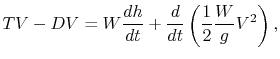
simplifies to:
(T-D)*V = W*V
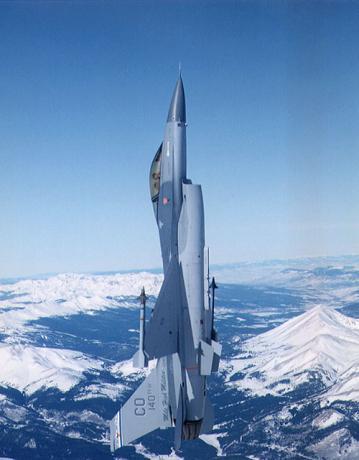
because the d/dt KE term = 0 (last term in equation) since at peak climb rate, all forces are balanced and v is constant so KE isn’t changing. Furthermore, because the aircraft is assumed to be going vertical at maximum climb rate dH/dt = V.
Aside from that, the V value he’s used is actually the climb rate (dH/dt) for the Mirage 2000, which isn’t appropriate even in the case of a non-vertical climb anyway. You would have:
(T-D)*V = W*dH/dt (Delta KE is still zero because its a stable climb, not a zoom climb).
Where T-D-Wsin(AoC) = 0
So V = { [T-Wsin(AoC)]/[kA] }^(0.5), (k = 0.5 x Cd x A x density)
So V would rise in proportion to the Thrust – component weight difference, rather than being an arbitrary number plucked from a Mirage 2K, which was how he ended up with the ridiculous event of a Rafale beating a Typhoon on climb rate and multiple other mass anomalies and crimes against physics.
Okay given that I got this far, **** it, I’m performing a calculation that I swore not to do!
Cd – assumed 0.015
Density – assumed 1.225kg/m3
AoC – Assumed 60deg (aircraft to horizontal)
Typhoon
T = 180,000N
A = 51.2m2
W (10% internal fuel) = (15,500 – [0.9 x 5,000]) x 9.80665 = 107,873.15N
V = { [T-Wsin(AoC)]/[0.5 x Cd x A x Density] }^(0.5) = 429.015m/s
D = 86,578.94N
(T-D)*(V/W) = Vsin(AoC) = dH/dt = 371.54m/s
Rafale
T = 151,240N
A = 45.7m2
W (10% internal fuel) = (14,000 – [0.9 x 4,700]) x 9.80665 = 95,810.9705N
V = { [T-Wsin(AoC)]/[0.5 x Cd x A x Density] } = 403.221m/s
D = 68,265N
(T-D)*(V/W) = Vsin(AoC) = dH/dt = 349.20m/s
Let’s at least do pseudo-physics correctly.
lukosYES THEY ARE. They are far more reliable than *ANYTHING* out there. They are the results of comprehensive testing done a)by the manufacturer b)for the pilots who fly them c)on scientific grounds; not better worse; XX amount performance by YY aircraft at ZZ altitude in AA air conditions BB. In fact they are the single FACTUALLY RELIABLE source, as they are inherently objective, no reason to pimp up, or undermine a performance. Its about what aircraft can do, or can’t do.
By definition, if you are estimating something, you fill unknowns with assumptions, ratios etc etc etc. I dont claim they are accurate, in fact I am the first one to say its inaccurate.
Again I never quoted an official data about them, so I rate my estimates with low accuracy; Go and look at the dictionary meaning of “estimate”
I don’t say that, you are -once again- showing your ignorance; what greater instantenious climb rate means greater excess power at 1G state. It could translate to better acceleration or climb at an instant, but an acceleration from X to Y speed or X to Y altiude is an average value.
Frankly, I dont care s**t about which one has higher STR. I run the numbers for the defined condition and I post them here. Dislike them? Your problem. Only thing to verify is F-22 flight manual, which none of us have. You can run your own estimates by timing 360 turns of F-22 in airshows, -which are not impressive either- And I will listen. No, some BS spread by a clown general doesn’t count, its SUBJECTIVE IDEA.
Once again, If I have the flight manual, I take the data from it, I have no reason to use wiki. Oh wait, I will spam this post with pages from the manual -WHICH I HATE DOING-, lets see who is flawed;
F-15C Empty weight;
[ATTACH=CONFIG]229864[/ATTACH]Why not? Is Typhoon a divine product that no other aircraft can be better than it?
Then why don’t you do your own?
Yes, more than bull****
Problem is, we are not talking about LOADED F-15C or loaded F-22. I have no problem accepting there will be conditions, where F-22 could outperform F-15C. TVC has nothing to do with ITR or STR.
Negative stability was also present in F-16 and Su-27. It does have impact, I don’t deny that, however, TBH I have no means of implementing that into my estimates. So going estimating F-22 by using F-15 or Rafale by Mirage2k may not be exact, but a) but I don’t have anything better. b)such way of estimating (by ratioing things) is never supposed to be accurate anyway.
Here we go again.
I’m not replying in detail because you’re always at fault for these kind of threads. You use false maths and figures followed by verbal diarrhoea when people disagree.
“You can run your own estimates by timing F-22 turns at airshows.” – That was my favourite one right there.
lukosYour way of thinking is correct, but resulting mathematics is, as usual, wrong.
-Energy = Force * Distance
-Energy gain rate with respect to time = dE/dt = Force * Distance/dt
Force = Thrust-Drag
distance/dt = Velocity
Potential Energy = mass *g*Height.
Potential energy gain rate = dE/dt = mass * g*dH/dt
Equalizing energy gain rate to potential energy gain rate gives us dH/dt = (Thrust-Drag) * Velocity / (mass *g)
this climb rate in m/s gives *specific* excess power; simply by multiplying with “mass*g” will give dE/dt, energy gain in Joules.
Again, no; “Thrust – Drag” affects climb rate linearly.
Wrong!
Force = T-W-D = 0 (not T-D)
Assuming a vertical climb it’s just a straight forward matter of equilibrium. A body with no resultant force on it continues at a constant velocity, that constant velocity being the climb rate in this case
–> D = T-W
D = k x A x V^2
k is a constant determined by Cd x density etc.
Hence [(T-W)/(k x A)]^(0.5) = V = Climb rate.
You’ve made a simple problem complicated and wrong.
Your own equations even tells you this if you look carefully.
(T-D)*V = W*V
Vs cancel giving T-D = W
In this case dH/dt is velocity. You’ve decided however that the velocity should be different to dH/dt and should instead quite arbitrarily come from a Mirage 2000 and then be used to contrive dH/dt.
You have been deemed by a court of law as mentally incapable of understanding the consequences of your equations. You are hereby sentenced to a lifetime ban from using mathematics.
lukosIf systems like Spectra, DASS, ALR-94, Khibiny or EWS are capable to confuse, disturb or neutralize even large shipborne radars
Please tell me this doesn’t relate to the Voice of Russia/David Icke Su-24 story.
With the AAQ-37 system you could guide the missile to the target via datalink anyway and the IIR seeker on the ASRAAM is immune to RF jamming and it can be fired from BVR.
An ARH seeker typically goes active in the last 10s of flight, with heavily coded RF pulses – that’s not an awful lot of time to UF the situation.
lukosDid you notice that Andraxxus gave his own estimate of accuracy based on available data. For all the planes you listed he gave very low level of accuracy and that is more than fair. Where do you see a problem?
The problem is that he bothered at all. He effectively ranked unknowns based on total bollox and didn’t even do it with a nod to basic physics in the absence of figures, hence why some aircraft are definitely out relative to each other. E.g. F-22 lower STR than F-15. How? Using flawed empty weights from wikipedia for the F-15. Typhoon lower climb rate than Rafale? How? Using weight as a denominator as if working out an acceleration, when in fact climb rate involves a state of equilibrium where T-D-W =0. No account of rate of climb being a velocity and therefore involving a squared relationship to drag. They’re the most bafflingly incorrect calculations I’ve ever seen. Wrong inputs, wrong methodology.
If I was working out a climb rate, which I wouldn’t, I would start with T-W. The difference is then taken up by the drag force, which is proportional to velocity squared. So it would go something like:
New figure = Old Figure x (1+[[(T%-W%)/D%]^{0.5}])
lukosI find it amusing that every few months some kid with a physics textbook in their backpack determines that BVR missiles “don’t work,” and that essentially the entirety of the engineers and military officers of the world’s air and air defense forces have got it all wrong. :very_drunk:
Some healthy skepticism is just that… but when you find yourself reaching a conclusion greatly at odds with essentially the entire community of experts with access to the real-world specifications and test information… it is probably time to question whether you are on the right path. (and no, the effectiveness demonstrated by long retired missile designs in a conflict 50 years ago in SE Asia is not predictive of the effectiveness of modern designs in battles not yet fought)
There are differences of opinion about exactly how 21st century air to air combat would play out between technologically advanced forces, but all meaningful players recognize that BVR missiles, stealth, radar, and networking will be major drivers of outcomes.
Completely agree. Even if only 1 in 3 BVR missiles work, that’s still 2 enemy planes gone for free. Even if only 1 in 6 works, that’s still 1 enemy plane gone for free. Even in Vietnam AIM-7s managed almost as many kills as AIM-9s (60 vs 80) despite having only a third (AIM-7D) to a half (AIM-7E2) of the Pk and some pilots became aces on just AIM-7 kills.
lukosFrom that list, there’s no official data on the:
F-22;
F-35;
Typhoon;
Rafale; or
Gripen.
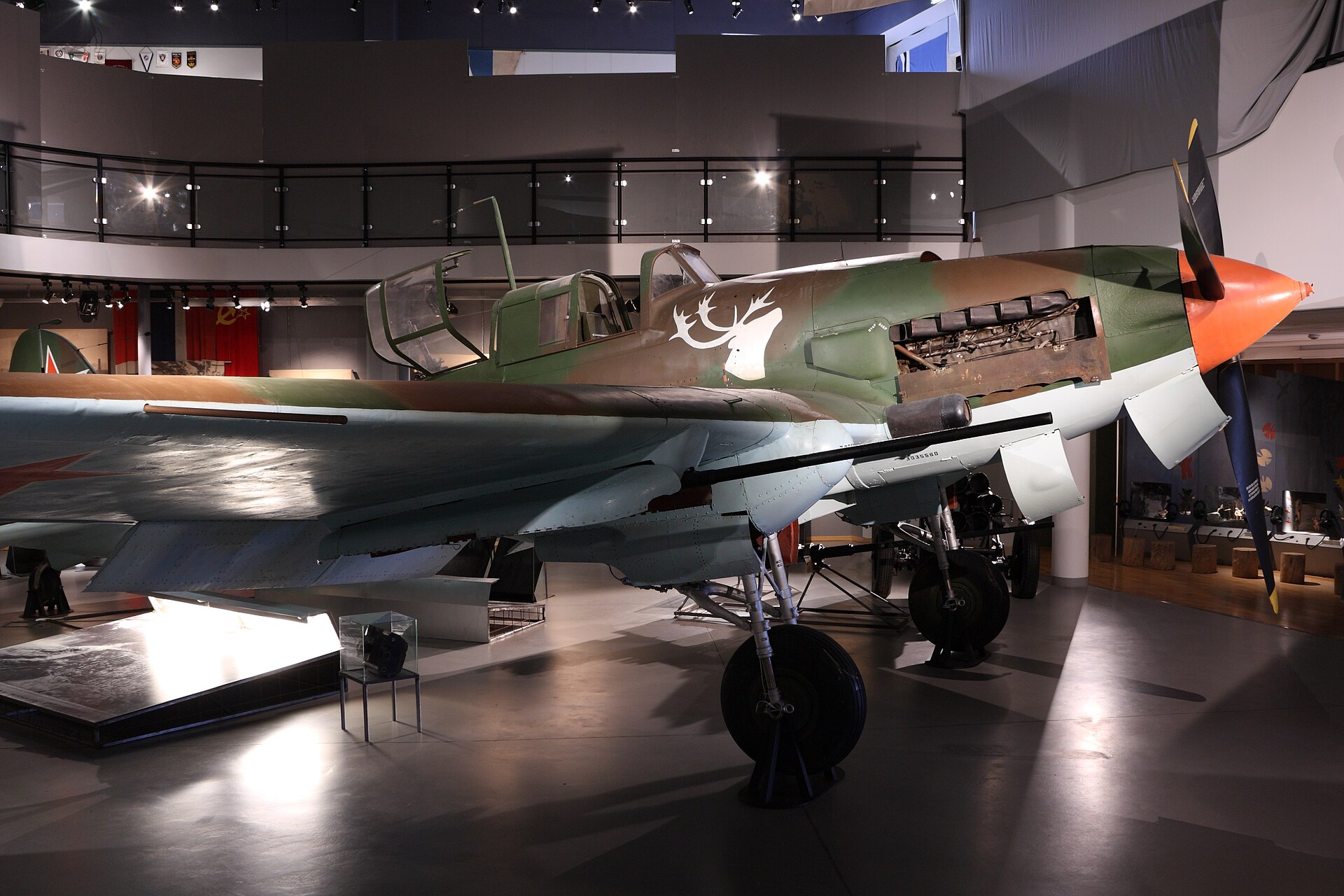
lukosIL-2, now that’s where it’s at.
lukosIf it flies, it has a manual.
Oh yeah, got a manual for a woodpecker?:highly_amused:
lukosMay be this widely acknowledged facts are simply well placed propaganda? In reality we know nothing about the real facts. Thus it’s better to check official data from time to time…
The problem is that the wing loadings are the same (in fact the F-15’s wing loading is probably higher if you take the loaded weight of an F-15C), the Raptor is a generation later and probably has a far more optimised lifting design, plus the TVC on top of that. So it’s not really even a well placed assumption. At 8:15 in this video the guy also states about 28deg/s STR for the Raptor. Is it bull****? Seriously questionable at 20,000ft but he’s wearing a USAF flight jacket vs a random guy on the internet.
lukosAre flight manuals completely reliable sources of an aircraft’s flight performance parameters? what is the purpose of any kind of user-operator manual anyway?
Andraxuss has access to the the F-22 and F-35’s flight manuals?:confused:
I’ve never seen a flight manual for at least 4 of the NATO aircraft in that list and I don’t believe one exists within the public domain to date, although there are obviously ones somewhere.


 Sign In







