FBW
FBWDevelop their own.. or join some already existing development program..
Such a program exists in Europe in its infancy. Nothing to support this, but I would expect Germany to join the U.K.-France FCAS initiative before considering the F-35. Would seem a bit duplicitous to be pushing EU agenda, then buying US. (Brexit aside)
FBWSounds like the F-35 has a sale coming unless Germany just shrinks their fleet. It doesn’t have any real competition for the Tornado replacement.
Would be suprised if Germany pulls the trigger before the early 2020’s. Then again Mrs. Merkel seems a bit more twitchy toward her eastern neighbor as of late. Defense spending is about as popular in Germany as balancing the budget is among US politicians.
FBWAnd to interrupt this fascinating, ahem, conversation pitting a professional opinion and sources vs. half-baked opinions, actual F-35 news:
https://www.reuters.com/article/us-lockheed-fighter-germany-exclusive-idUSKCN18D13X
Germany asking for classified briefing on F-35.
FBWSAAB stands that their GaN based Giraffe 4A detects stealth airplanes as far as their older Giraffe did for other fighters.
And quantum radars are going to be fielded in China soon, and laser carrying USAF fighters are just around the corner. Claims are one thing, doing so in an operational environment is an entirely different matter. GaN radars are becoming operational in the US, Thales has theirs, etc. Would you expect Saab to claim that their new product cannot detect LO aircraft? Surely wouldn’t help sales.
Are we to believe that none of the nations pursuing LO aircraft (manned and unmanned) are aware of limitations of both RF low observability and the means to detect LO aircraft? Existing radar can detect LO aircraft, the questions are: how reliably at what ranges, how accurately can they track the target, how do adverse atmospheric conditions and realistic operational scenarios in a hostile EW environment impact the ability of the radar to detect “stealth”.
I “personally” don’t think there is one panacea that will make the pursuit of LO aircraft irrelevant. Even if there is a steady degradation in the detection margin for LO aircraft, that margin will still be decisive near term in real combat conditions. Perhaps the days of the F-117 flying through the face of overlapping radar coverage and SAM sites based on route planning and LO alone are over (or never really existed), but LO aircraft aren’t a “silver bullet” anymore. They are integrated with the other assets, capable of utilizing the greater standoff ranges of weapons like GBU-53/B, SPEAR, and will always benefit from stand-off jamming assets to a greater degree than aircraft will a large signature not to mention the EW capabilities of the aircraft themselves. The significance of the PCA program possibly having a complementary PEA platform or component shouldn’t be lost in this conversation.
FBWeedless to say, the T-38 and F-15E in this case are absolutely not a viable placeholder for planes of an air force that utilize a similar sort of direct data exchange from the early eighties…
So, it was more an USAF legacy aircraft against modern NATO 4,5 and 5 gen planes thing.
The F-15E is absolutely a high end threat. They are still being exported as a first class multirole fighter. They are every bit an equivalent to modern Flanker variants in capability. I’m sure a few would scoff at the idea and claim that Su-xx is more maneuverable or whatnot. Reality is that as a weapon system the F-15E is every bit the equal, whether x or y can turn a bit tighter at certain altitudes/speeds.
FBWIt’s a crap article from “National Interest”, hardly worth discussing other that his direct observation of the fight in the T-38’s, the rest is classic clickbait. Majumdar’s editorializing about the F-35’s kinematics aren’t worth discussing. The articles of National Interest have one purpose, generate revenue with sensational headlines such as:
The Simple Reason Why America’s F-22 Stealth ‘Raptor’ Would Crush Russia’s PAK-FA in a Fight
Here is an article from The Aviationist from another writer who flew as an observer in Atlantic Trident:
https://theaviationist.com/2017/05/05/we-flew-red-air-against-f-22-raptors-f-35-lightning-iis-rafales-and-typhoons-in-atlantic-trident-17-heres-how-it-went/
Direct observation, writing about the experience without the Majumdar “opinion” additions.
FBWThe AETD nozzle looks just like F-35 LOAN nozzle IMHO
– probably because it was a tech demonstrator.
Yeah, looks like they used a similar nozzle for the demonstrator mockup. They’ve already stated that the nozzle would have to be modified for engine. One of BIO’s links talks about the AETP nozzle being part of the airframe (solving some of the LO design considerations that have to go into nozzles, as well as reduced drag) on a new platform, and the “longest lead item”, likely meaning it hasn’t been determined.
The AETP project is “sized” for 45,000 lbs of thrust using the F135 as a benchmark. It will be interesting to see what comes out of the PCA study (based on the current assumption of a new platform): one engine vs two, weight assumptions, speed/range requirements. The current prototypes were said to be too wide for the F-35 engine bay. I don’t think it’s a given that the AETP engines will end up in the F-35.
P&W was to be testing an F135 with a third stream as part of AETD. If I ever run into my friend again who was part of the F135 project, I’d like to ask about the F135 growth potential. It’s early, but we could see an engine come out of AETP that is specific to the PCA program and a derivative of the F135 as part of the planned F-35 propulsion upgrade (especially if GE’s engine is chosen for the PCA).
The waters appear to be a bit muddied on all this, probably because the requirements/platform details aren’t finalized.
FBWB-I-O, is there any indication that the AOA started in January is still on track for July presentation of findings?
FBWThere were several associated patents in the development of LOAN nozzles. Both Ge and UTC developed the axis symmetric nozzle technology with reduced radar and IR observability. Some of the UTC patents associated with the development of technologies which led to the F135 nozzle can be seen at the bottom of this one:
https://www.google.com/patents/US6398129
[ATTACH=CONFIG]253259[/ATTACH]
As B-I-O’s links over in the sixth gen thread show, the AETP engines are going to have very different nozzles (if their even called that), than the 2-d Non axis-symmetric wedge nozzle of the F-22 and the LOAN nozzle of the F-35.
FBWIs that extra bump on the petal specific to the B (and therefor maybe something to do with articulation rather than IR suppression)?
I can’t see it on the A or the C, but that was a just a quick look.
The nozzle of the B is different from that of A&C (it is shorter for one).
In any case, the patents that I posted a few years ago during a nozzle debate describe the cooling ejectors for the divergent flaps and seals (which is what you are seeing in the picture) . I will see if I can find the correct one again.
Here is the GE patent for their similar Axis symmetric nozzle:
https://www.google.com/patents/US6983602
FBWIs that an optical illusion due to petal arrangement or some kind of chemical injector for IR signature reduction?
It is for IR reduction, but it’s not any sort of chemical injector. They are cooling air ejectors for the divergent flaps. The F135 incorporates ceramic nozzle flaps with ejectors and pathways for cool bypassed air.
No idea why most seem to have some red insert (ground protecton?).
FBWIronic, rare earths can be mined in Canada and Australia (or US), but those pesky environmental laws make it expensive (and toxic). People don’t want to pay 1,000 US for an IPhone.
Having a sole source supplier seems a bit risky considering the use of rare earths in military applications.
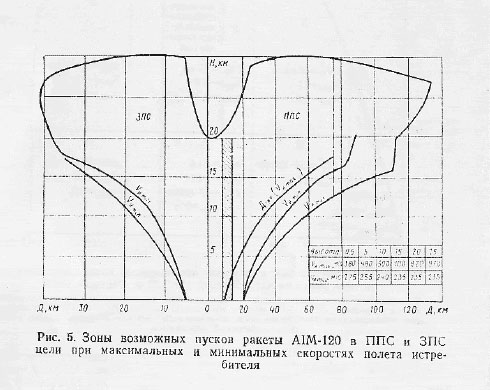
FBWI found an image to illustrate the point I was making above about Rmax 1, Rmax 2, and NEZ:
[ATTACH=CONFIG]253118[/ATTACH]
FBWI understand but isn’t tail chase range same as No escape zone?
Target can accelerate, climb. I would assume the the difference between WEZ and NEZ is smaller in a tail chase vs other target aspects, but not the same.
FBW
Tail chase range of AIM-120B at altitude of 10 km (32k feet) is around 20 km. If Meteor can have 5 times larger tail chase distance then that would make around 100 km. That seem to be more than enough in most case i think
Five times the NEZ not five times the range.


 Sign In