 MiG-23MLD
There is a reason why LERX is designed in the way you see it in the way now with a whole bunch of fighters today. I don’t think anyone out there agrees that a squared form is the ideal shape of a LERX. LERXs today are very carefully crafted and designed devices and working with vortices is a very delicate matter. The shape and the form of the vortices dictate if it is actually useful or detrimental as sheer turbulence.
In terms of raw speed and altitude, few can match the F-15. However, the majority of aircombat is expected to take place around the low to medium altitudes, and at subsonic speeds. Rather than being a jack of all trades when it comes to A2A, the F-16 choose to focus on where it counts based on experience. The F-15 was already on the boards when many of the lessons from Vietnam have yet to be learned, but the F-16 came later fortitiously after these lessons were impressed.
Nothing wrong with being focused on one task. The F-15 was on its way to becoming a monster until John Boyd came and the entire concept was overhauled with his ideas, EM theories and KISS principles among them. The F-15 isn’t going to be the great plane it became if it wasn’t one of the corner personalities of the light weight mafia. One thing I like about the F-15 over the F-14 was that the F-15 was brutally and elegantly simple.
I totally agree with you, the F-15 is simple and elegant, its wings are too simple, however its simplicity is well based, it has even variable wing camber .As a fighter the F-15 is not as advanced as the F-16 or MiG-29 and is far less advanced than the Eurofighter or Rafale.
However let`s remember the F-15 is basicly a MiG-25 without the drawbacks and a MiG-25 perfected for dogfights, as such the F-15 is one of the fastest fighters ever built and one of the most agile, this was difficult to achieve because the aircraft can deal with its original rivals to beat, the MiG-21, MiG-23 and MiG-25, such a great achievement for a simple aircraft.
Other fighters might be agile but lack speed, or fast but without agility, the F-15 has both.

MiG-23MLDOn a stable non-fbw design, high AoA is a no-go area.
Imho, its for airshows anyway. It wasnt a design priority for most western fighters.Well, the F-16 got a new radar with several upgrades, the F-15 still has the same one with MSIP upgrade. Though im not sure how much A/A performance was improved with MSIP.
But thats A/G stuff for upgraded F-16As. The F-15 got none of this because it wasnt needed.
I think F-15A is Maverick capable anyway.
I think we need to try to see what was what the americans and Russians had in mind when they designed the F-15, F-16 and the MiG-29 and Su-27s duos.
First we need to see commonality was one driving factor, for example the F-15 and F-16 are powered by almost the same engines and originallly were designed to use the same powerplant, in the MiG-29 and Su-27 commonality was even more evident, the MiG-29 is a scale down Su-27 and carries the same weaponry and up to a degree avionics
When the F-15 was designed it was named Eagle and the F-16 fighting Falcon, the F-16 was the main dogfighter while the F-15 the killer of any enemy fighter that scaped or was beyond the weapons range of the F-16.
Same was the MiG-29 and Su-27 in fact Fulcrum means basicly the mainstay of the Russian air force and the name Flanker a killer that basicly flanks the Fulcrum and as the F-15, it kills fighters that scaped the weaponry of the MiG-29.
however one of the main advantages of the F-15 and Su-27 is that these two fighters can execute CAP missions more autonomously than the F-16 and MiG-29 thanks to longer range and can scort strike aircraft deep into enemy territory
The F-18 as the Su-27 have evolved to wipe out the competition, the F-18 was at the begining of its carreer the fighter that was supposed to suplement the F-14 now it has basicly replaced more aircraft in different roles, it has replaced the A-6 and the F-14; the Flanker like the F-18 has done something similar, the Su-33 eliminated the MiG-29K in the Russian navy, is intended to replace the Su-24 in the form of the Su-34 and as the F-15E has been made the basis for the russian equivalent of the strike Eagle.
this tendency has been used also in the JSF, in few words an airframe that can become multitask just by modifying it.
Basicly the F-18 is replacing the entire fleet of aircraft that the US navy deployed in the 1970s with exception of the E-2s; the F-14, the A-6, the A-7, the prowler and as the Su-27 is trying to do in Russia, it seems the US navy will be entirely equipped with F-18s until the arrival of the JSF
MiG-23MLDIts nice we have MiG-23MLD here to explain in great detail and obsfucate everyone. It really provides a crystal clear picture for the rest of us to appreciate.
crobato-
I’m pretty sure high AoA was not such a problem with the F-15, especially from the F-15C forward. The lerx is a low tech way of achieving what the F-15’s complicated air intake was designed. The real key of the F-15’s arrival was its brutish turning ability that was itself eclipsed by the F-16 and pretty much every air superiority and light fighter since. Few modern aircraft still match the F-15 in raw altitude performance, certainly not any of the light fighters, and the ones that do are even more specialized.
As for Harpoons and Maverick, the F-15 wasn’t tasked with those for a reason. It was much cheaper and more effective logistically to put them on the true maritime and ground support aircraft, respectively. Its only after the dawn of the multi-role fighter that one would even consider it on an F-15, which both options are available on today’s F-15E if the consumer wants it integrated in. The F-15 was really only an air superiority fighter up until the F-15E.
Thanks buddy, it is nice to exchange ideas specially when you like aircraft.
MiG-23MLDFunny, the MiG-31 is two-thirds heavier than the F-15C.
The Tornado is heavier than the F-15C. 😀I’d rather put the F-15, Tornado and F-18E in the medium to heavy class and the Flanker series, MiG-31 and F-14 in the super heavy class.
But thats just for fun anyway.Another way to put it: The F-17 with good performance evolved into the F-18 with mediocre performance which evolved into the F-18E (that should rather be F-24) with poor performance. At least in aerodynamics.
You are wrong the Tornado is not heavier than the F-15; the Tornado`s max weight is 27986 kg while the F-15C`s max take off weight is 30844kg. the F-15E is even heavier with a max take off weight in the range of 36,741kg, it is true the Panavia Tornado should be consider a heavy weight in the class of the F-4E and the F-18E
The MiG-29 and Eurofighter have a max take off weight in the range of 22000kgs, the heavy weight are in the range of 30,000 or more such as the F-15, F-14 and Su-27.
The F-18E is a good aircraft it has most likely the smallest RCS of all the fourth generation fighters, it is armed with AIM-9Xs and can carry several AIM-120, is more or less agile and can carry a larger load than the F-18, in few words it will shoot down an F-17 even with the fact it might be slightly less agile than the F-18C
MiG-23MLDFirst off, the F-15 has undergone plenty of refinements so its not possible to say it didn’t need them. Secondly, the F-15C is very useful because it dictated the need for aircraft to account for them. They’d rather tangle with the Mirages and F-16’s of the world than the F-15C’s. And they’d much rather face SAMs than any airborne defense. By your same logic you may as well take it one step further and point out that air defense guns have down more aircraft than interceptors, fighters, and SAM’s. It is because the latter are given far more opportunity than the aforementioned. Isreal showed Syria what happens when you ignore air superiority and try to maintain an air campaign. Hell, even both Iran and Iraq willingly suffered the same short-sidednesses due to their bravado-minded leaderships.
MadRat
Of course the F-15 has advantages over the F-16, that is the reason the americans bought them in a hi-low mix, but in combat armed with almost the same weapons, they are pretty much the same technology, in 1982 according to Israeli reports the F-15s and F-16 did indeed share the kills in a ratio close to 1:1.
Of course air forces prefer the F-15 in terms of range and payload, in the fact it can carry more AAMs with better thrust to weight ratio.
As a fighter bomber also is better, thanks again to better thrust to weight ratio.
There are three main weight categories among the fourth generation aircraft:
A) Heavy weight fighters such as the F-15C/E, Su-27, Su-30MKI, MiG-31, F-14, F-18E.
B)Medium weight fighters in the class of the F-18C, MiG-29, Eurofighter Typhoon, Rafale and Panavia Tornado ADV.
C)The light weight fighters are Mirage 2000, F-16, JAS-39, J-10, LCA, Ching Kuo, and JF-17
The F-16 is a light weight fighter that can be loaded even heavier than the typical take off weight of a MiG-29A, however light weight fighters are intended to be cheap versions of the heavy weight fighters and affordable answers to the defence paradigma of affordable aircraft with the best technology of the time.
Of course you can not compare a heavy weight fighter in the niche it fills with a light weight fighter, however the light weight fighters usually are dogfighters because they carry mostly short range missiles while many heavy weight fighters are good interceptors but bad dogfighters in example the MiG-31.
For example if a MiG-31 and a J-10, or F-16 clash and face each other in the air, the R-33 and R-37s will be the only things the MiG-31 will let them see, very likely the MiG-31 will attack at BVR combat and will avoid dogfights.
Same is the F-15 and Su-27; the Su-27B for example carries six AA-12s or AA-10s and four AA-11 the MiG-29 will only carry two AA-10s, of course newer variants can carry up to six AA-12s such as the MiG-29K.
Since dogfighters have more chances of getting in a close combat melee, the MiG-29 and F-16 were more agile than the Su-27 and F-15.
However the lates variants of Eurocanards can carry better BVR combat AAMs and this gives them really good chances against heavy fighters however the heavy fighter always will carry more BVR missiles and this makes them long range killers rather than pitbulls that kill at short range.
Now a fighter like the F-18E offers the best compromise in terms of stealth, missiles and payload making it the best multirole fighter in terms of stealth, weaponry and agility among the fourth generation.
The F-18E epitomizes the fact how a light weight fighter became a heavy weight fighter, the original F-17 Cobra was a light weight fighter, its next evolution came in the F-18A, a medium weight fighter that ended up as a heavy weight fighter in the form of the F-18E due to a need for payload and the fact that missiles like the AIM-9X made agilty less primordial for defence than stealth and BVR AIM-120s
from light weight to heavy weight, from YF-17 to F-18E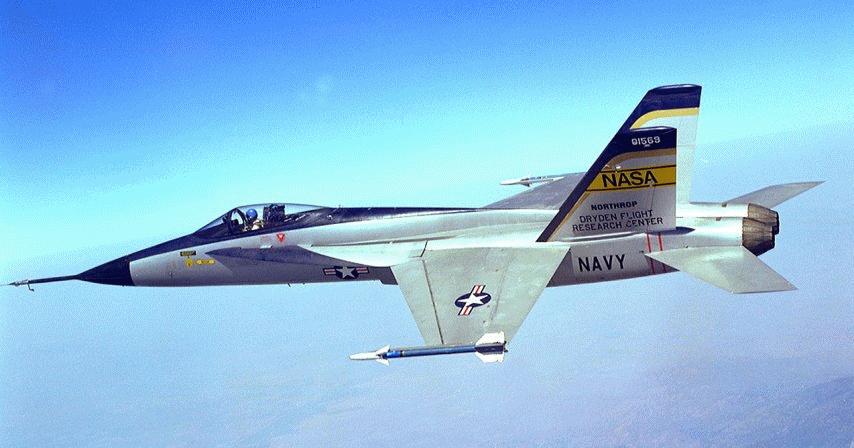


see that the YF-17 at max take off weight, weights almost the same as the F-18E`s empty weight and a F-18E weights at max take off weight more than two YF-17s
MiG-23MLDOf course, the bigger and more powerful engine, the more fuel it would require. The impact cascades into every facet of the design.
I am aware of that fact, but if it is true that the engine is one of the main reasons aircraft have become much, much heavier and bigger, adaptability to new roles has made them too increase their size and weight.
For example, the Su-27 has turned from a heavy weight fighter into a light tactical bomber in the class of the F-111, the Su-34 and Su-33KUB are two good examples of aircraft that have suffered mutations from the original Flanker B in order to adapt themselves to new tasks and this has increased their size and weight.
The F-18A also suffered a similar transformation however less drastically than the big head Flankers, adaptability as in nature makes an aircraft more successful, the F-18, like the F-4 and MiG-23 are aircraft that have been designed to take on several roles from tactical fighter to tactical bomber, a similar transformation happened to the Su-7 and successive derivatives.
The Mirage III mutated a lot too and spawned many new aircraft, when an aircraft becomes adaptable it also becomes sucessful and classical, one of such examples is the B-52.
Sucess in the battlefield makes an aircraft classical too.
MiG-23MLDYes, very true. One reason why small fighters grow in size in the first place, is that the engines they are build around of, keeps growing bigger and more powerful. Ever since the Sopwith Camel, the general idea of designing a fighter is to build an airframe around an engine. Same with the Me-109, same with the F-16, and same with the JSF.
There is also a greater dichotomy between weight and size.
The F-35 weighs nearly as much as an F-15 but is physically a lot smaller. The F-16C weighs two tons more than a JF-17 and yet the JF-17 is nearly the same length. For that matter there is only a foot of difference in length between the JF-17 and the F-35, but the weight is like 5 to 6 tons different. Of course the wings are much bigger on the F-35 and so on, but not enough to account for that 5 to 6 tons. The difference is attributed to a lot of other things, much bigger and heavier though far more powerful engine, as well as all sorts of avionics and structural reinforcement crammed into it. The F-35 is a lot denser than the F-15, which itself is a pretty beefy airframe.
Well another thing that is related to the increasing size is fuel, nowadays fighters carry as much fuel as the combined total weight of two or three WWII fighter aircraft, and sometimes even up to the combined total weight of four WWII fighter aircraft.
This increase in weight is related to the increase in range, payload and speed
that has continuously push up the design specifications of each new fighter.
The MiG-21 for example was three times faster than a P-51, the F-16 has better range and payload and is faster than a MiG-15.
Avionics also play an important addition of weight, the typical radarless fighters of WWII can not be compared to a modern aircraft that even can carry one or two radars.
Variable geometry wings also added weight and more complex inlet designs with variable geometry shock ramps increased weight, it is true each generation has been gaining weight rather than loosing it.
materials also have added weight in an alarming way, the A6M Zero weights 15 times less than the MiG-31, and the MiG-31 weights more than a B-17.
When we look at the Su-37 we amaze to see it has more aerodynamic control surfaces than an average WWII fighter, it has a pair of canards, a pair of taiplanes, a pair of vertical fins, a pair of ventral fins, a pair of wings, this contrasts with the very simple pair of wings. the pair of tailplanes and single vertical fin of the Spitfire or the P-51.
This is evident even in modern fighters the F-18A is lighter than the heavier F-18E, same can be applied to the lighter F-16A and the much heavier F-16C.
MiG-23MLDSounds like you need a basic course on air-to-air combat.
The F-15 offers a radar with a much greater detection range. It is also faster, and it can operate very high, which means the missiles being fired at BVR range such as AIM-7 or AIM-120 get more kinetic energy thus more range meaning your F-16 despite being armed with AIM-120’s of its own still cannot launch its weapons at the same range as an F-15. Thus, the F-15 not only gets first look with its longer-ranged radar, but it has time to get into a better firing position (i.e. high altitude and high speed), and thus get the first shot, and likely the first kill.
In close obviously the tables are turned, but the whole point of BVR combat is to ensure that the enemy doesn’t get close enough to deal any damage to you.
The F-16 is a very capable air-to-air fighter don’t get me wrong, but in an overall sense the F-15 is a better air-to-air performer. It was designed to be an air superiority fighter though while the F-16 was originally designed as primarly a daylight AIM-9/guns dogfighter.
Both are good at air-to-air combat, but the F-15 is better in an overall sense.
Phantom II
I want to ask you what is the difference in range? 10 miles, 4 miles 3 miles?
also what is the RCS of the F-16 and the F-15, and what is the ranges their radars can detect both aircraft?
The F-16 i guess has a smaller RCS and this eliminates the difference in launch speed up to some degree, but please present me reliable math or reliable papers that can help to determine the range accurately.
MiG-23MLDAn F-15 loaded for A/A combat is certainly faster than an F-16 with the same loadout. Its not about Mach 2+ capability, but about acceleration and speeds to M1.5 or so. A loaded Viper will struggle to reach that speed.
Missile range doesnt need to be the same because the F-15 with its larger more powerful radar can probably detect the F-16 earlier in an ecm environment.
In WVR, size is a problem yes. But the F-16 is not generally more agile than the F-15. It depends and the F-15 will set the rules more often than not so it might well be in the better position.The F-15 carries the AIM-9X, while the Gripen doesnt carry the Meteor.
Eagle
The F-15 does not offer great advantages if it is armed with the same weapons you can arm an F-16, also modern air forces usually have AWACS, modern F-16s also have good radars, the only difference is this, the F-15 can carry more weapons and a larger payload, that is the reason you have the F-15E and not the F-16XL operational.
Effectively the Gripen has not operational the Meteor, however it is not a paper project, and it has fired it, true it is on tests and trails, and up to now not operational but the reality the F-15 has not comparable weapon unless of course they buy something similar or get newer versions of the AIM-120 with longer range.
The F-15 also is big and is not a stealthy aircraft it has a big RCS so it won`t hide so easily at BVR
MiG-23MLDThat’s a really one crazy spin. I find it very interesting that the CFTE has gone into exploring the subject of post stall recovery.
For the J-10 to recover from a stall. all you need is to get airflow into the canards again. Canarded aircraft are in a better position to do that because they can get fresh airflow into the canards compared to getting wake from the main wings to the elevators.
Frankly I was surprised that pilots were testing spin and stall recovery procedures on the JJ-7. The MiG-21 design is not well known for its stall and spin recovery behavior; ask the many pilots who met their fate. The Fishbed is extremely vicious once that started; the CFTC pilots must have guts made of forged steel to do that.
Everything depends in the interaction between the canard and wing vortices and their interaction in the flow fields that might cause wing stall and longitudinal instability at pitch up, the interaction of the forebody vortices with the vertical fin; and the interaction of the forebody vortices with the canard vortices that can create flow separation, forebody vortices burst and assymetrical yaw movements that will difficult stall spin recovery.
Canards also have a pitch up natural movement that in some instances can affect the longitudinal stability and increase the asymetric yaw movement caused by the forebody asymetric vortex separation and burst at high AoA.
however the J-10 with the canard dihedral must have some degree of benign roll an lateral stability and good interaction between canards vortices with the vertical fin.
But all modern aircraft have relatively good stall spin recovery
However during stall spin recovery caused by the assymetric vortex separation some aircraft experiences engine stall and this has caused several accidents in aircraft like the F-14
MiG-23MLDAny AAM can be evaded with the right battlespace management. The F-15 will dominate the F-16 unless the latter enjoys superior battlespace management. Why? Because the F-15 will have the better eyes and intangibles like range and speed that the F-16 cannot match. Any pilot that foolishly gives up their intangibles will be beat, true, but one-on-one the F-15 should be able to win more than a 2:1 advantage. And with the F-16 Block 60’s now in the price range 80% of the F-15E, even a 1.5:1 advantage is more than significant. This is why the F-15 will always be the big dog compared to its little pup sibling, making a comparison really pointless. IMO both are going to be classics on their own merits.
From my point of view, the F-15 is not better than the F-16, the only real advantage i see in the F-15 is speed, but for an F-15 to fly at Mach 2.2 means also spend fuel like crazy, yeah of course the speed is better than being slow, but the weapons in air to air are the same, same missiles mean same range for the weapons and same chances, perhaps at BVR well the F-15 might have a small advantage but there are no advantages in WVR, the F-15 is bigger, easier to spot and less agile, however with the same weapons both aircraft will have almost the same odds.
In the 1980s miniaturization made the F-16 capable of carring and firing the AIM-120, there is very little advantage for an F-15 in having AMRAAMs if the F-16 can also carry it.
Now in 2007 the Gripen is totally different, it will beat the F-15 any time armed with Meteors, will beat it too if it has ASRAAMs and the F-15 only carries AIM-9Ls, i mean weaponry makes the difference, in turning capability the Gripen can also fight better than the F-15, so in few words better weaponry means better avionics.
The F-35 will beat both the F-15 and Gripen due to stealth and at short range the ASRAAM or AIM-9X that it carries will shoot down any time any 4.5 generation fighter.
If the J-10 fights so good it could become a legandary fighter here is a digital video of a J-10 dogfighting and F-16
source http://www.youtube.com/watch?v=rg4us7OM-_0&mode=related&search=
MiG-23MLDThe F-15/F-16 hi-lo mix was intended for the A/A role only which became obsolete pretty fast. The real hi-lo mix in the USAF is the F-16 vs F-15E (and F-117 if you like) in A/G whereas A/A is F-15 business.
F-22/F-35 is more of an A/A + A/G mix than hi-lo.And no, the F-35 is not light in terms of the 5th gen fighter. Gripen is light.
Eagle
What i meant is the trend is to create lighter aircraft does not mean they are lighter than the previous generation, for Example a MiG-21 is 6 tonnes lighter than an F-16, considering that means that a MiG-21 is the light fighter and the F-16 the heavy weight fighter, the P-39 aircobra is several times lighter than a MiG-21, and the MiG-21 is definitively several times heavier than a BF-109.
The JAS-39 is not fifth generation aircraft, it is a 4.5 generation aircraft, to be a fifth generation fighter any aircraft need the 3 S`: Supercruise, Stealth and Supermaneuvrability, the JAS-39 has not the 3 S`.
The F-35 is a single seat version of the F-22 optimized to be a multirole, but in the air to air it is definitively a lght weight fighter in the fifth generation specially when it can carry ASRAAMs and AIM-9Xs
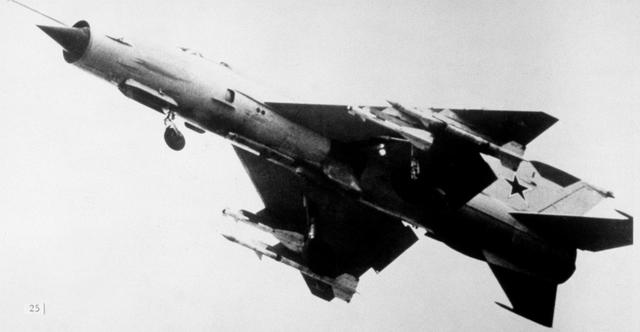
The MiG-21 max weight is 18,080 lbs. max
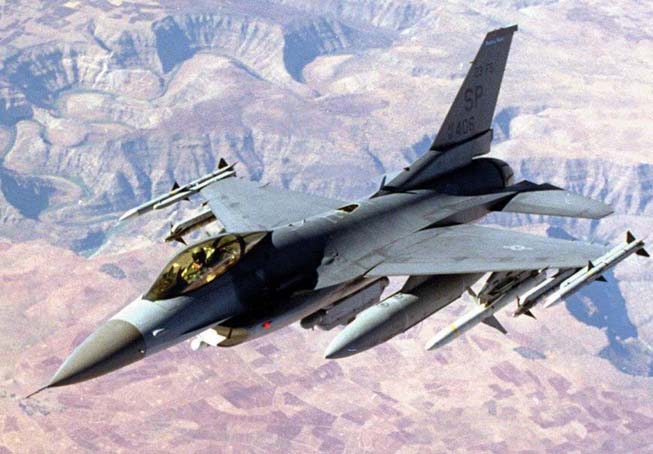
the F-16 max weight is 37,500 pounds 16,875 kilograms

the Spitfire max weight is max. 6,786 lb 3,078 kg

Max Takeoff 50,000-60,000 lb
(22,680 kg)
MiG-23MLDWell, I think the F-16 has suffered from the beginning of being underestimated. It was first seen as a cheap way of filling the ranks in the role of a simple WVR day fighter. When it proved itself to be more capable than most had thought, it got upgraded to take on more roles. It would have been better if they had realised that from the beginning, because it should been easier to upgrade it then.
But the F-16 hasn’t been given so many chanses to prove itself. The USAF has mostly pitted the F-15 in A2A while F-16 has got the job to haul bombs. Personally I think it’s because they’re not interested in giving a good record to a plane so many countries outside the US operate. 😀But the F-16 is on it’s way out and you will get your fighterbombers in the F-35, with emphasis on bomber.
For the US it might be correct. Less and less countries might be willing to support American military actions by letting them operate from their air bases. And the longer distances give less sorties per day and require bigger payloads per sortie. But for the rest of the world the lightweighter is a better option today than before. Remember that todays lightweighter is as capable as yesterdays middleweighter. Look at the B-17 from WWII and it’s payload.
I think the term like weight fighter should be classify according to the generation each aircraft belongs, for example a F-16 is heavier than any WWI bombers or a Eurofighter is as heavy or even heavier than WWII bombers and definitively the Su-27 is heavier than a B-17 and an F-16 is heavier than a He-111.
The F-35 is a light weight i guess in terms of the fifth generation.
I think the USAF has taken the best approach to tackle the light weight and heavy weight fifth generation dilema, the F-22 and F-35 are basicly the modern incarnation of the F-16 and F-15 hi-lo mix.
Europe instead has taken the road of light and medium weight fighters instead of a heavy weight and a low weight fighter and has duplicated the medium weight fighter having the Rafale and Eurofighter at the same time.
China has basicly duplicated the F-16-F-15 hi-lo mix.
Russia instead is persuing a different path similar to the US they want a light and heavy weight stealth fighter.
the Tu-16 for example is much heavier than the heaviest WWII bomber, the B-29, and definitively the Tu-16 is not classified as a heavy bomber among the 1950s and 1960s bombers, the Tu-22M is for example two times heavier than a B-29, and the Tu-160 is four times more heavier than a B-29
to put an example, the LaGG-1 was almost 6 times lighter than the MiG-23, and the Albatros D.III is 10 times lighter than a MiG-21 and 14 times lighter than the JAS-39
MiG-23MLDTango III
Cool thread i really like it, keep the good work:)
MiG-23MLDWe have to look at them seperately and find out through reevaluation.
Legendary fighters may not be classics but neither classics need not be legendary fighters.
Legendary covers the plane’s role in history. but it has no regard to a plane’s flyability, which I think is important for being a classic. An Me-262 is legendary, but is it really flyable? Would you prefer to fly this over, let’s say, the LaGG-5 which is a lot less known?
Technical breakthroughs are not also the point for classicity, or even for legendary status. Waht technological breakthrough is there for the Mitsubishi Zero or F-6F Hellcat?
Its not about nationalism but about concept. Planes like the JF-17 and the Tejas may yet mark the much needed return to the light, cost effective fighter to the world which the US and Europe has so abandoned (except for the Gripen). Throwing money and electronics into bigger and heavier planes isn’t my idea of being a classic. For many countries, there is just simply a limit in affordability, and there is a point in overdoing it. When a plane is tagged and dies by an ARH missile, it does not matter if it costs 20 million, 60 million or 200 million. And numbers still matter. Two 20 mIllion dollar fighters with ARH missiles have a seriously better chance of killing a 50 million dollar fighter with ARH missile than the other way around. Especially with technological equalizers like ARH and WOBS missiles.
As for the F-16, I know you hate it but it does seriously prove the viability of small is better concept, along with John Boyd’s EM theories, with transient performance as the centerpiece. You cannot get around that less mass means better transient performance, something a light fighter will always have over heavier jets.
The plane is considered an outsider by the USAF and the whole concept is maintained by a vocal few and not by the mainstream of the USAF, which is advocating bigger and more expensive jets. And yet, the plane became the bread and butter of the USAF. It has proven to be the most cost effective, the best bang for the buck of the teen fighters, and one cannot even say that the much more expensive F-15 and F-14 can win a dogfight against one, even against the much maligned F-16C with its high wing loading. Historically it has done the most missions, had the best mission rates.
Sure it looks like the US did its best to proliferate the F-16 around the world. Afterall, Reagan wanted to push its flyaway costs (in 80s dollars) to less than 8 million, and he got it.
But it really didn’t have that much of a competition other than the Mirage 2000, another classic but isn’t really cheaper. All the other US/Euro/Russian competition have been bigger and more expensive to maintain jets. What the rest of the world wanted, including many countries in NATO, is an affordable light jet, and after the F-5E, the F-104, the MiG-21, the Mirage III and the Mirage F-1 is gone, who else is left. The field is suddenly down to two, with no cost advantage to the other. MiG-29s and F-18s are not replacements for light jets, though they have advantages on their own right.
It maybe debatable to some that the F-16C to be a classic, due to its weight, despite being a tough bird. But for me, the F-16A certainly earned that right,. and even today, an F-16A is still very hard to beat by much more modern, much more expensive and electronics jets in BFM combat.
While one talks about technological breakthroughs not being worthy anymore, that for me is hardly an issue. What many modern designs have in common is learning from hindsight. Does refinement count? Yes. Today’s designs are much safer to fly, much more maintainable and easier to fix, for pilots, much more user friendly, and overall, much more reliable and can be counted to be both available and reliable when the mission calls.
The Ching Kuo for example. In the end, probably a mere footnote in fighter history. Yet, it has one of the best safety records for any fighter aircraft. For all the years in service, only two attrited and probably both due to pilot error. Compare that to how many pilots died on the F-104 and the MiG-21.
Here is another fighter. Many will still debate about it being a classic. Many hate it. I call it the Rodney Dangerfield of fighters.
The F-18 Hornet. Judge it by you will. Why? The plane has a great safety record, mission availability and reliability rates. It is robust, and Northrop designs some of the best landing gear in the business. An F-18 will live better on short grass strips better than any of the teen jets and most US fighters in history. Even when brutally damaged, the plane is tough and still gets the pilot home.
Some of the aerodynamic ideas are brilliant, such as using the LERX to route air into the intakes at high AoA. Jack Northrop knew his stuff when he designed these features in the YF-17. Others are questionable though, as Northrop shared Kelly Johnson’s interest on trapezoidal wings. Like the F-104 and the F-5, the YF-17/18 has straight, very thin wings. But unlike the Starfighter which is very long in length and has very short wingspans, the wave drag on the F-18 would have fallen into the wings at a much lower speed than the Starfighter’s. Combined with the LERX, this raises the drag on the planes, which affects their range and top speed. The less than spectacular TWR didn’t help much either. USAF doctrine requires the ability to “dash” out of troublesome situations, but the speed of the F-18 meant it cannot do that, and has to stick around and fight. For the latter though, it is blessed with the best maneuverbility and high AoA characteristics of all the teen jets. The jet is the best example of the point to kill philosophy.
The LERX also creates buffeting effects on the tail which threatens to break the rudders prematurely. That teething problem proved to be solved with brute force, adding a fence on the LERX which even improved high AoA behavior, and reinforcement on the tail.
So here is a jet less than spectacular in looks, design and technology. Yet when it goes down to the details, did many things right. Do we consider it a classic because it is truly one of the most dependable around? Or not a classic because it is a bit too plain and just not sexy enough?
i would consider a classic becomes a classic because simply they represent a time period.
The P-51 is a classic why? well it represents the US power in Europe during WWII and without it bombing Germany would had been much more more difficult and perhaps it would had even changed the war outcome.
The MiG-21 another classic why? combat record, innovation and producibility in just one airframe became synonimous of Russian jet.
The MiG-15 and F-86 other classics why? well they represent the best korean war fighters.
The F-4 another classic why? simple this epitomizes the best of american aviation technology in the 1960s.
To be a classic an aircraft has to have changed History, there is no other requisite, the aircraft has to have something that makes it stick out from the rest of its generation in order to be consider the best of the crop and generation.
From the fourth generation the most famous fighter is the F-14, it is an icon of the cold war in the 1980s, american pop culture inmortalized in two very famous movies and a TV program: TOP GUN, FINAL COUNT DOWN and JAG, definitively the F-16s and F-15 have better combat record and they have been built in larger numbers but the F-14 definitively is more popular in the minds of more people.
In historical terms the Tomcat is less important than the F-16 or F-15, however the Tomcat is a synonim of 1980s US naval aviation and naval power and as such one of the best.
Classics define an epoch and the F-14 is one of those fighters that has everything, beauty, power and fame and in combat well it performed satisfactory. In fact even the Russians acknowledged the F-14 killed MiG-25s during the Iran-Iraq war.

Undoutedly other fourth generation aircraft have starred in several movies, yeah the F-15 in Japan, the Su-27 in Russia, the MIrage 2000 in France all of these aircraft have starred local movies but non have have become classic movies as Top Gun or Final count down have.


 Sign In







