MiG-23MLD
You know, most modern aircraft have highly controllable yaw, thanks to large rudders. The ECDs got huge rudders, and other aircraft are augmented with ventral tail surfaces.
Typhoon has demonstrated very fast, yet very sharp turns and climbs (high AoA even at speed).
Crobato
The Cobra is performed mostly because the Su-27 and MiG-29 have aerodynamic hysteresis, the Su-27 from 35 deg to 60 deg AoA starts having assymetric vortex yaw movements, the assymetric vortices do form and burst at high AoA, nevertheless there is a delay in the reaction, so if the Cobra is achieved is because it lasts very few seconds and in this conditions the assymetric yaw movements do not have enough time to have a real effect in the Su-27 when it performs the Pugachev Cobra.
The LERXes and forebody in both the Su-27 and MiG-29 do generate low preassure vortices that allow a degree of hysteresis when they perform the Pugachev cobra, so if the Eurocanards and J-10 do not show the Cobra means either they have kept it secret or they can not do it
By the way crobato the figure i gave total lift is for the max lift coeficient canards and tailplanes can generate and this does take in consideration the static margin.
The differences between aft-tail and canard configurations’ maximum lift capability is again related to the trim constraint. There exists one position of the center of gravity for which each surface carries maximum lift. This optimal static margin is shown in figure 11. Nearly neutral stability is required for canard designs while static instabilities from 0 to 20% are necessary for aft-tail designs

So as you can see canard designs have more compromises than tail delta designs because
The maximum trimmed CL of the configurations discussed previously (normalized by the maximum section lift coefficient) is shown in figure 10. As with total drag, the aft-tail configurations retain a small advantage over canard designs. Again, the maximum attainable lift coefficient is insensitive to tail aspect ratio while canard designs’ CLmax varies strongly with aspect ratio. The highest CL is achieved by configurations with tail spans of 20% to 40% of the wing span. These are, conveniently, the same designs with lowest drag. The situation is less favorable for canard designs. Although small canards of high aspect ratio produce least drag, large canards of small aspect ratio achieve the highest CLmax. Moreover, the sensitivity of CLmax and drag to canard aspect ratio leads to greater compromises in each of these areas than would be required for an aft-tail design.
MiG-23MLDLol. The reason why Pugachev cobra can be done in some planes is because these planes do not have FBW AoA limiters.
Su-27 and MiG-29 are not controllable when they do the Cobra, they are in fact, relying mostly on momentum.
Again, the Eurofighter graph does not show the Su-27 and MiG-29 having superior sustained turn rates to F-15, Rafale and Typhoon. Rather they fall behind. You seem to forget that LERX do add drag and wake over and under the wing area, which is a reason why the F-15, which lacks true LERX, has a high sustained turn rate, along with its high TWR. Also Typhoon and Rafale has very high roll rates (over 250 deg/sec) and I doubt that Su-27 and MiG-29 can match that, as short wingspan deltas tend to have very fast roll rates.
Which is true. So let’s just build Cessnas and arm them with Python 5.
Man it is not a matter of LERXes or canards only it is a matter that the Cobra is achieved because beside the MiG-29 and Su-27 can reduce significanty the wing stall at high AoA, also they have controlability at yaw, having canards does not mean you have automatically control at Yaw, the X-31 suffered yaw assymetric movements that limited the use of thrust vectoring at high Angles of Attack, the cobra was achieved thanks to the fact they found the Su-27 recovers its self from yaw uncontrolability at high angles of attack, see the Su-27 and MiG-29 do not use thrust vectoring to control forebody vortex assimetry, that can lead to assimetric yaw movement, to do the Cobra you need the airplane to remain controllable at yaw, and the MiG-29 and Su-27 are very controllable at Yaw during the 120 AoA cobra maneouvre.;), and in that can explain why you have not seen any Eurocanard doing the Cobra, and i guess the LERXes and forebody in the MiG-29 and Su-27 have some thing to do in that.
MiG-23MLDLol and yet the same article shows that with relaxed stability, the tailplane also has no advantage over the canard.
Which does not show the effects of instability.
Lol. You are once again making generalities. Canards like the one in the Lavi are already 5m2 in area. Its still smaller than a tail plane but a tailplane has to compensate for the main wing backwash. 5m2 is still quite large by any means.
And your memory is always conveniently short that canard deltas still have rear aileron controls. In other words they can trim from both ends of the aircraft.
Crobato
I am not making generalization i am just supporting the Russian and american fourth generation aircraft philosophy based in tailplanes and LERXes.
For example the Pugachev`s Cobra is achieved thanks to the fact the Su-27 and MiG-29 have excellent control of the high AoA asymmetric vortex yawing movement, this and inertia keep the MiG-29 and Su-27 controllable during the Cobra, the Su-27 and MiG-29 with their tailplanes still can do the job and be controllable at high AoA and during the Cobra, the MiG-29 and Su-27 still can use the Pugachev cobra in a turn to point their noses, so, the Eurocanards and J-10 still won`t have any real advantage over the LERXed Russian fighters in a turn, the Eurocanards and J-10 might have better instantaneous turn rates and therefore quicker initial turns however their turn rates bleed energy and thanks to the Pugachev Cobra and excellent sustained turn rates they have, the MiG-29 and Su-27 can reduce the initial advantage the Eurocanards have.
Now Crobato if you are honest any nation having good missiles will erease any superiority, in fact the Equatorian Kfir C10 armed with Python IV can kill a J-10 armed with AA-11 or Python III even despite the J-10 might be better than a F-16 in agility
In this modern times misiles are as important as agility and for that reason it is true the Eurofighter armed with Meteor, ASRAAM or the Gripen with IRIS-T and Meteors are really the best fourth generation aircraft in the world.
The Pugachev Cobra is achieved by the Su-27 and MiG-29 thanks to excellent control of the high AoA yawing movement, this is a good aspect of their designs and they achieve this without thrust vectoring nozzles, see that even a X-31 was lost to high AoA yawing movement, and having canards does not mean you can control automatically the nose induced vortices that created the high AoA yawing movement
MiG-23MLDAnd so, 2% to 3% increase in drag? And for what, stable static designs? This is more like a comparison with a Kfir with its winglet and a Mirage III without the winglet.
Read your own article carefully, and somewhere down the line it also says this
“Relaxing static stability results in canard and aft-tail designs with very similar performance.”
This is actually what you get with modern relaxed stability designs.
Sorry but the tailplane is affected by the wake of the main wing, thus it needs to be bigger to compensate what a smaller canard can do.
And canard deltas in practice, still have rear ailerons for control.
Not necessarily under high speed conditions (e.g. high transonic and supersonic).
Not in reducing drag or preventing vortices from bursting in higher angles of attack.
Crobato
I read the article very well, and it shows you that as an average canards have more drag due to the wake they produce, i have proved to you canards do affect the lift of the main wing in both articles they prove you the wing suffers from the wing and the interesting of you is you change all the time your basic defence claiming this or that without any base beyond the seudo expert opinion that even claims the studies from NASA are amateurish works
You can claim this and that but what base or article have you given? nothing only opinions that have no emprical niether experimental base, in few words Crobato you pretend that you know better but definitively all these NASA studies have experimental data that you do not provide.
A)Canards when deflected reduce the wing`s lift and the canard downwash reduces the wing total lift (proof canards experimentally have shown thet total lift of the wing and the canard does not equal to the sum of both airfoils` combine lift and their combine lifts sum totals a smaller than the sum of their individual lifts)
B) canards can not be used with Flaps
C)Canards sometimes are uncapable of trimming the airplane due to their smaller size (proof Su-27 can still do the Cobra at 120 deg with tailplane)
D)Canards do produce buffeting
E) canards usually do have more drag than tailplanes and this increases when the distance between the canards and wing increases too
F)in fact even with relaxed stability the canards shows no advantage over the tailplane
Did you prove canards do not produce drag? no you did not, did you prove that canards and taiplanes of the same size and aspect ratio have different drag? no you did not, did you prove that a canard of the same size of a taiplane with the same aspect usually creates more drag. no you did not, the study shows you that canards and taiplane of the same size, usually the canards prodeces more drag due to the wake the produce rather than the tailplane that is downwashed by the wing.
and you forgot this graph
and from the same webpage see what they say
The differences between aft-tail and canard configurations’ maximum lift capability is again related to the trim constraint. There exists one position of the center of gravity for which each surface carries maximum lift. This optimal static margin is shown in figure 11. Nearly neutral stability is required for canard designs while static instabilities from 0 to 20% are necessary for aft-tail designs.
Figure 11.
The relative importance of these two performance indicies (CLmax and drag) depend on the aircraft’s design mission. A design intended for high speed flight with a strict stalling speed constraint would be strongly affected by the maximum lift capability of the design while the comparisons of relative drag with fixed area applies more directly to an aircraft constrained by climb rate requirements.
Thus, the optimal design is influenced by the intended mission — especially for canard designs with their greater sensitivity to aspect ratio changes and the large difference between the design with highest CLmax and the design with least drag. A typical compromise might consist of a canard design with equal wing and canard aspect ratios with bt/bw = .5. This design would achieve a CLmax of 72.5% that of an aft tail design with the same wing and tail areas and with bt/bw = .4. The drag of canard and wing would be 107% that of the wing/tail combination. Savings in propulsion system integration, fuselage layout, control system simplicity, etc., could conceivably lead one to favor the canard configuration, but in this example the initial aerodynamic compromise is large.
This Crobatro proves you that the canard configuration does in fact have lesser Max lift coeficient than an average tailplane.
MiG-23MLDThe MiG-23 is something, like the Starfighter for different reasons, somewhat borderline as a classic. On the plus side, its known to be tough, durable, versatile, packing much wallop in a small package. Its fast down low, with tremendous thrust, ability to land and takeoff in some very tough airstrips. Rugged landing gear.
On the other hand, its not truly maneuverable or agile in the F-5/MiG-21 sense, and its not a plane well complemented by its pilots for its visbility, avionics and ease of use qualities. The maintenance of the VG wing also makes it difficult and expensive to manage in the long run. For that reason, the MiG-23 falls behind the MiG-21 in this index. In many countries using both planes, the MiG-21s were clearly outlasting them.
Reviewing some past planes.
A-4 Skyhawk. Definitely a classic. Strong, simple, and robust. Cheap and easy to maintain. The plane got it right the moment it came off the drawing boards just shortly after the Korean War. And its still in service in a few countries like New Zealand upgraded with the APG-66. That’s one amazing service record. While it is made as an attacker, its freakingly good roll rates, nimbleness and agility gave it fighter like qualities, which can enable it to hand out some nasty surprises against fighters considered more powerful and far more modern, including the F-14 and F-15. At a time when before the teen Fighters era, this was probably the one or two planes that can go toe to toe with MiGs in a close all balls fight.
F-5 series. Classic all over. Again, simple and robust planes with superb agility, easy to maintain, and well complemented by its pilots. Nice clean lines to boot. Very nimble, great roll rates, capable of pulling tighter turns than most aircraft of its generation. For a simple plane it has a tougher than average landing gear that enable it to take off and land in airstrips that would give problems to other USAF aircraft. As a fighter, it is extremely light, though not well powered. Quite capable of handing out a surprise against more modern fighters.
F-104 Starfighter. Somewhat borderline. Another simple and robust plane. Fairly easy to maintain, but that engine is smokey. Very nice clean lines that is good to the eye, and very good provisions for adding radar and stuff. For a small fighter, has some very competent radar capabilities. Pilots seem to have a bang flying it. Great low level interdictor. On the negative side, as a total career, the plane is infamous for its attrition rates, and the plane does bite major once it is pushed to the edge. For that reason, it falls behind the Skyhawk and the Tiger II.
MiG-19/J-6. Incredible maneuverbility, probably the best of the open mouthed MiGs, and its looks belie a well above TWR for a plane of its generation. In the 3 cannon J-6 incarnation, probably one of the most powerfully armed gunfighters. Its combat record seemed to favor well compared to other MiGs. In exercises in the PAF, the J-6s have demonstrated some nasty surprises against F-16As, as well as Iranian F-5s (prior to the Revolution). The USAF is said to have sampled a PAF J-6 and in conclusion, caused to rewrite its threat level, even higher than the MiG-21.
On the negative side, this plane is extremely difficult to fly. Even PLAAF Korean War ace Han De Cai called it difficult. The plane is also horrendous to maintain compared to the single engine MiG-17 and MiG-21, calling for regular replacement of parts, linkages, lines and engines. Thus borderline or lower in the classic status, below the MiG-17 and MiG-21.
F-8 Crusader/A-7 Corsair. I am trying to gather more data here, but this fighter, not so often discussed, may have the makings of another classic, as it fits in many of the criteria. Great firepower, maneuverable, yet simple and rugged, pleasant to fly with not so many vices.
Harrier. More and more I look at this plane, and I am figuring out, overrated. The one outstanding feature is the VTOL quality, and it looks to me, it got lucky facing Argentinian Mirages low on fuel and with only rear aspect AAMs. Speed is below average, and its not the easiest or the most pleasant aircraft to fly. From the anecdotal observations, the plane is also a pig and a pain to maintain. It comes to me more of a machine that was in the right place and in the right moment.
Jaguar. An unrecoganized classic and one that should be spoken more of. Hatched in 1969, its still going strong, quite a remarkable service record and length. Despite being a nonfighter, the Jaguar has offered some major surprises even against F-15s in exercises. It lacks the sophistication of the Tornado, or the VTOL qualities of the Harrier, but I think its a more balanced design than the other two, in terms of simplicity, ruggedness, punch, cost and capability. The plane seems to get better the closer you look at it.
Another plane that I’m looking at pushing more to the classic category is the BAe Hawk, an advanced trainer with fighter like qualities and can dish it out.
The MiG-23 was not as bad as portraited in terms of agility, for example at 5000 mtrs the MiG-21 has worst turn rate than the MiG-23
In 1967, the Defense Intelligence Agency secretly acquired a single MiG-21. Comparisons between the F-4 and the MiG-21 indicated that, on the surface, they were evenly matched. At a speed of Mach 0.9 at 15,000 feet the instantaneous turn rates of the two planes were nearly identical, at 13.5 deg/sec. At Mach 0.5, the MiG-21 held the edge at 11.1 deg/sec versus 7.8 deg/sec for the F-4.
If we compare this data with the known data for the MiG-23ML we can see the MiG-23ML is more or less an agile aircraft for a third generation aircraft, we know from the MiG-23 manual that the MiG-23ML starting from a speed of 900km/h at 5000 meters of altitude, it will take 23 seconds for a MiG-23ML to execute a 360 degrees turn at a wing sweep angle of 45 degrees, this will disaccelerate the MiG-23ML to the speed of 490km/h this gives an average sustained turn rate of 15.6 deg/sec much higher than those achieved by the MiG-21 and F-4 at the same conditions.
At 1000 meters and at 980 km/h the MiG-23ML pulls a Max instantaneous turn rate of 16.7 deg/sec and a Max sustained of 14.1 deg/sec.
We can see quit easily the MiG-23ML is slightly more agile than the MiG-21 and F-4.
MiG-23MLDAdding 2 cents with my very limited knowledge..
Anyone who thinks a certain aerodynamic design doesnt has drawbacks is heavily mistaken.
Each aerodynamic design comes with sacrificing one thing for another.
However a mixture of best performance versus design is chosen which is very much impossible to determine without wind tunnel data.Also one thing is to be noted that Aircraft manoevearality though is often discussed with measurement of STR or ITR on a given flight conditions or in terms of specific excess power, Turn performance do matters quite a bit on many more factors one such is energy requirement while turning a aircraft.
The energy cost of turning a given aircraft through a given angle under a specific flight conditions is the energy required to overcome its air resistance per unit mass per unit turn, also known as sometimes by specific energy of turn.
Here is a good paper that discusses “Energy turn rate characterstic of an aircraft and turn performance”
You are totally right, for example
Aircraft with canards do have advantages and disadvantages, for example in the plus side is that the aircraft has two centers of lift and you can use a smaller canard airfoil to trim the aircraft nevertheless sometimes the smaller canard might not be able to control an instable pitch up movement due to its small size and in that situation a tailplane can be better and more useful because it is bigger, tailplanes also due to the wing wakes might be uncapable of controling a pitch down movement, in General modern aircraft with or without canards do have their advantages.
Canards also do rest lift from the wing and create buffeting.
Tailplanes also thanks to the wing down wash wake might experiment lower local AoA and become more effective at relatively small negative tail deflections angles for trimming the aircraft however at supersonic speeds the aerodynamic center shift will induce a need for bigger negative tail deflection angles.
source http://www.aoe.vt.edu/~mason/Mason_f/ABMSThes.pdf figure 38
Among the 4.5 generation we can find that tailplanes are enough to control an aircraft at high AoA, the pugachev cobra shows us that, the MiG-29 and Su-27 with LERXes have excellent AoA, the Eurocanards have excellent instantaneous turn rates, better than the MiG-29, Su-27, F-15, F-16, F-18 however have lower or similar sustained turn rates to the MiG-29, Su-27 and F-16.
Thrust vectoring in modern tailplane fighters have proven to give better agility than aerodynamic controls and LERXes have proven to be as good as canards.
The Russian triplanes are a compromise that show us canards and taiplanes have drawbacks and advantages and using both you can get excellent agility as the Su-35 show us becasue both sometimes are uncapable of triming an aircraft
MiG-23MLDYou are the one in a friggin denial binge. You never answered the question. You keep showing figures and charts that don’t answer the question? Who do you think you’re trying to fool here, huh? Where is your proof that vertically offset canards affect the main wing lift?
The article does not cover it. I looked through the article and I don’t see it. And you can’t point out them either. Find the page and the paragraph. The charts in article covers mainly coplanar close coupled arrangements, an arrangement that is not in existance with any canard military aircraft in the world. This work seems more in relation to the X-36 than with an actual military fighter.
the Figure 3.10 covers drag too, yeah Crobato they cover in the figure 3.10 (b) Drag, the figures 3.10 (a) and (b) cover lift and drag respectively and it shows you very clearly that the high canard off set has the best lift and the least drag at high AoA, so if you do not understand the any canard produces drag and a wake is simply because you are simply denying a reality just to save face, yes buddy any surface in front of the wing will rest lift to the wing, and will produce a wake that will affect the wing lift.
The high off set canard is the best configuration when you pitch the aircraft because the vortices it generates cover the upper surface of the wing, however since the wing in reality does not generate more lift, the total lift is not proportional to two airfoils and is less lift than the total sum of both airfoils individual lifts due to drag and wake the canard generates in front of the wing, in fact you will see that that Wing losses lift and more if you deflect the canard and you pitch the aircraft at higher AoA.
In this paper they show you wing is affected by the canard
Because of the unfavorable interference of the canard on the wing, asymmetries appear in these curves. The best aft-tail designs achieve 2% to 3% lower drag than canard designs, and although in each case relatively high aspect ratio tail or canard surfaces are preferred, the drag is insensitive to the aspect ratio of aft-tail. Canard designs suffer large penalties in drag with low aspect ratio canard surfaces.
source http://aero.stanford.edu/Reports/MultOp/multop.html
here i prove you that aircraft with canards have more drag than aircraft with taiplanes due to the fact the wing losses lift due to the canard wake


MiG-23MLDAnd if you read the article it is talking of a coplanar canard. Boy, 6 degrees of deflection, you think that’s big?
Boy, you think that a mere 6 degrees of deflection is a big thing do you?
You know, you are using a theoritical model trying to justify universals.
Take a look at Figure 1.4, and you can see he is using nothing but a coplanar canard layout.
Which makes this study irrelevant when it comes to high offset or biplanar canards.
None of it shows relationship to the size and sweep of the canards, the size and sweep of the main wing. What makes you think this would be relevant to something like the Su-30MKI or Su-33? These would require their own seperate analysis, which may not apply here.
Oh, and I read it, and all it talks is a coplanar canard.
So, where is the drag on the biplanar canard against the main wing which you so claim about?
The article has little relationship with actual designs.
The 3.10 graph makes very simple comparasion between the coplanar configuration and the non coplanar ones, they say that the high canard had better lift at high AoA, but of course Crobato for you is better to deny things to excuse your self, the study clearly explains that canards at cruise speed or in few words 0 deg of AoA do impose drag on the wing and in Chapter 5, they explain you that even deflecting the canard will increase lift in the canards but decrease lift in the wing.
Now the only excuse you can find is the article is too generalized, but not buddy the article gives you enough examples and comparations of coplanar and non coplanar canards.
Canards are good because they give more lift at high AoA and do help because an airplane with canards has two centers of lift and one ahead of the center of gravity, also the canard vortices do delay the stall of the main wing nevertheless they come with a cost of drag due to the canard wake and this reduces the total lift of both airfoils (canard and delta wing)
In fact if you look at the Figure 3.19 you will see that the high canard creates vortices at relatively low AoA and they help the wing while the Low canard does not create a well formed vortices due to the fact their vortices impact below the wing reducing the lift of the wing even further
MiG-23MLDNice thread keep the good work Tango III:D
MiG-23MLDI’ve been asking you this again and again, and you keep pointing to the same article that does not claim that the canards affect main wing lift.
This is not an issue about coplanar or biplanar. This is an issue where is your proof that the biplanar arrangement of canards affect the lift of the main wing of the aircraft, which does not say any of that. Your article even goes to say coplanar canards has benefit of leading edge vortices over the main wing, so I really question you.
Crobato
You pretend you have read the article and you pretend the article does not say it well buddy what about if you read the chapter 3 in the 3.2 figure where it clearly states that the canard rests lift to the main wing, however since it also has lift of the canard the total lift is almost unchanged below an AoA of 6 deg compared to the canard off configuration, however after 6 deg of AoA the canard on aircraft exhibits an increase in lift compared to the canard off aircraft.
If you use the little bit of logic and read the article you can understand that since both configuration have the same lift at angles below 6 deg of AoA despite the canard on has the extra canard area and lift you understand the drag is resting lift to the total lift area of the canard on configuration.;)
The Canard on configuration is getting only more lift after 6 deg, use the logic a J-10 or Gripen also have down wash and their canards do rest lift from the wing however the J-10 and JAS-39 at high AoA have an extra lift.
The Fig 3.3 even gives you the proof that the wing in a canard on gives you less lift than in the canard off configuration
http://ntrs.nasa.gov/archive/nasa/casi.ntrs.nasa.gov/19960047050_1996071178.pdf
check the chapter 3.1.1

Read the article and you will understand why the J-10 has canard in a high position, the fig 3.10 (a) shows you the high canard such as the one of the J-10 has better lift drag ratio than the coplanar canard on the Su-33, and that is the reason the J-10 has an offset non coplanar high canard configuration above its wings
MiG-23MLDBull which of these NASA studies showing biplanar canard downdraft flowing underside of the main wing huh?
Oh, and somehow LERXes and deflected elevators don’t create drag huh? Which one creates more drag, a bigger elevator or a smaller canard? Which requires greater deflection to achieve the same authority?
You also seem to conveniently neglect the data you yourself posted, that the canard vortices, even produced from the leading edge, has a positive effect on the plane’s lift.
And less you forget, a canard delta does not need a high deflection on the canard for a tighter turn. It can simultaneously deflect both canard and aileron, creating two simultaneous forces on opposites ends of the plane’s fulcrum, one pulling the nose up, and another pushing the tail down. Add the plane’s relaxed stability.
When did the MiG-29SE has a sustained turn rate of 23.5 deg/s? From the Formin book? How does the number seems creeping up, from the 22 deg/s you mentioned previously? And you seem to conveniently forget that the Gripen has a lower TWR, and continue to neglect that TWR is a major factor in STR.
The Typhoon study showed canard deltas are capable of equal to better sustained turn rates period.
Crobato
Did you read the paper? they clearly say depending in the canard position with respect the wing they get better high AoA handling, the coplanar arrangement at high AOA has less lift and more drag, they indeed say the low canard offset position at high AoA does not improve the wing lift in fact it has more drag and less lift, this is because the wing is above the canard plane and the canard low preassure vortices at times get underneath the wing and thus reduce the wing`s lift .
Question for you Crobato have you seen a combat aircraft with offset non coplanar low canards? the answer is not you have not, the J-10, Eurofighter, Kfir, Mirage NG, Viggen, S-47, MiG-1.44, B-70, T-4, Concord, Tu-144, Rafale, Gripen, X-31 all of these planes have high canards offset from the wing plane; the X-29 and Su-33, Su-30MKI, Su-35 Su-37 and Su-34 have the coplanar arrnagement
X-29 with coplanar arangement

The reason for the coplanar arrangement is this position offer less drag in over all conditions.
Su-33 with coplanar canards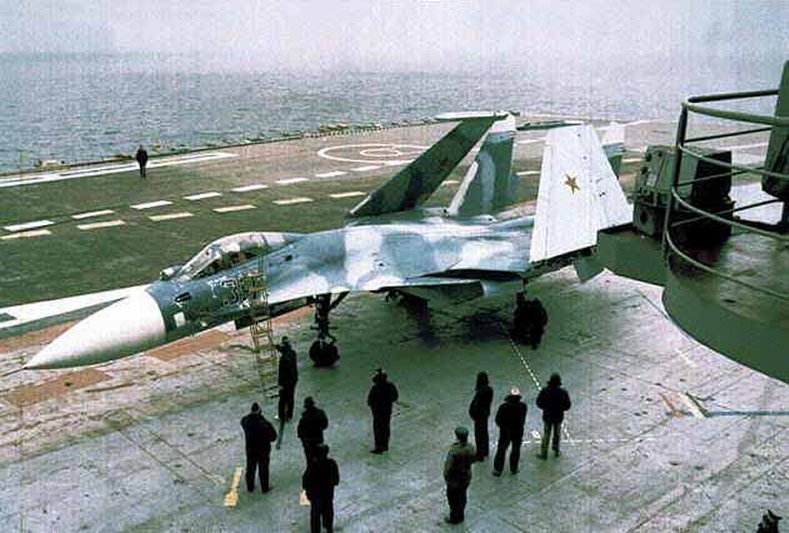
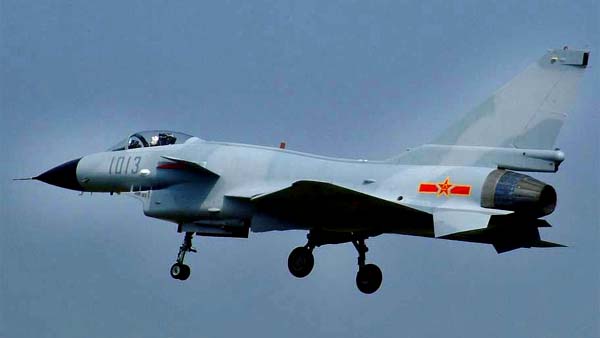
J-10`s high canards offset from the wing plane, are typical non coplanar canards, at this position the canard is above the wing plane, and at high AoA exhibits greater lift than the coplanar arrangement or the low canard where the wing plane is above the canard
SAAB AJ-37s with high canard offset from the wing plane

In fact the Rafale has its canard very close and above the wing in a much better position than those of the Eurofighter Typhoon, since canards are more effective controling the wing vortices when the canard is close to the wing, same can be said about the J-10 or Gripen, nevertheless the Eurofighter`s canards allow more freedom with respect the lift aerodynamic center and gravity center relation.
In fact Crobato this is the low canard, the MiG-8 has a non coplanar offset low canard where the canard is below the wing plane

MiG-23MLDThis debate is really getting on my nerves….:mad:
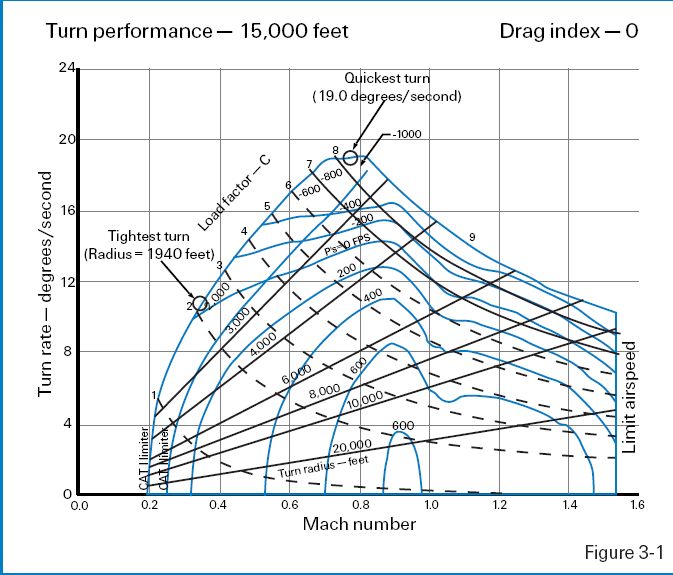
Angle of Attack is connected to the STR as well as the L/D and Ps, it is one of the most important flight parameters because L/D depends on Cl and that depends on the AOA, which at the end mean pulled G`s. Of course you have to get the optimum among all those parameters such as lift/drag/AOA and Ps/altitude/engine settings, but the same deals for the speed. Explain why the STR increases and then decreases with speed, see graphs below.
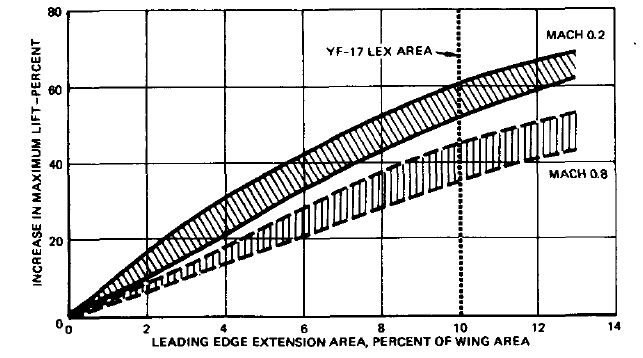
You are going to be surprised, but the LERX/WING on the Mig-29, Su-27,F-18 works the same way as double deltas, where the vortex system created on LERXs decrease wing`s actual AOA and produce a non-linear gain of the lift. Call it whatever you want a compound, hybrid, double delta, LERX plus WING…etc The same way behave canards, but with more effectiveness at critical AOA because they are better adjusted to main wing AOA.
Look at the graph below, it shows the effect of leading edge extension size on maximum lift.
I totally agree with you, the AoA is related to the L/D ratio and lift is one of the things that influences a turn since it counter balances two forces during a turn: gravity and drag and it helps thrust to keep an angular velocity.
However each fighter has different wing platform and different aerodynamics, these of course will affect the turning capability besides thrust and engine reliability will affect also the turning capability.
Flight controls also play another part, but undoutedly the MiG-29 and Su-27 show excellent turning capabilities and both can use the Pugachev`s cobra while turning and in this maneouver we see very clarly AoA is basicly a variation of turning.
MiG-23MLDMig-23 is an interesting fighter, but the vastness of other soviet choices that dwarfs this plane and the, namely the mig-21 which is still operational till this day.
The MiG-23 is a classic in Russia already, the Russians consider these aircraft deserve to become aviation munuments and contrary to many Soviet types the MiG-23 was the equivalent of the F-4 in the Soviet Vietnam, in few words, the Soviet Afghan war nevertheless the Soviets lost very few MiG-23s during that the Soviet Afghan war; the MiG-23 played several roles, from bomber to scort fighter either bombing or protecting soviet bombers form Pakistani aircraft.
For Russian HIstorians the MiG-23 did an excellent work over the Afghan skies.
MiG-23MLDCrobato, you are trying to argue with a brick wall. Been there, done that.
hehehe two fools do not make a genious, however a smart person does not need the company of others only the company of the truth and in this case i have this source buddy a NASA study on canards.
http://ntrs.nasa.gov/archive/nasa/casi.ntrs.nasa.gov/19960047050_1996071178.pdf
MiG-23MLDYou are the one who don’t know anything. you got this fictional and fantastic concept that canard backwash will affect the underside of the wing on a biplanar layout.
There is no proof of this whatsover.
Even if you deflect the wing, the canard wash still flows over the main wing, and the low pressure areas actually serve to enhance lift.
Canard backwash is something of more concern to the rudder of the aircraft as opposed to the main wing, which is why these rudders are fairly large and well strengthened.
BS. LD ratios has nothing to do with compound sweep. The lifting area of LERX is too small to offer significant lift, when compared to canards. The sweep of the LERX do not improve the straightline ability of the aircraft. In fact, for straightline performace, its better to have NO LERX, and a fixed geometry of the main wing.
LERX plus main wing do not make a compound sweep wing. In order to justify the concept of a compound sweep, the inner sweep change should at least be 40% to 50% of the wing span. Otherwise the bigger part of the wing should be considered the main sweep of the wing.
That’s BS and you know it. At high AoA, the plane does not travel on the same direction as the nose. It will be seriously angled, so the backwash will travel up over the plane even more.
You don’t get it do you. What does AoA has to do with sustained turn rate?
Look at the F-15 there. It has very good sustained turn rates, but it really lacks true LERX design (the extension on the wing root does not qualify as a true LERX) that is intentionally engineered to create laminar vortices over the body. Its not a plane intended for high AoA, and everyone knows that. But its sustained turn rate is as good or better than planes with higher AoA like the F-18.
AoA is seperate from sustained turn rates. In fact, with every wing, once the AoA reaches 25 degrees, you begin to get more drag from lift, and the ratio of drag rises as lift lessens as you increase AoA. To have optimal turn rate, plane has to be around 20 to 25 degs AoA. That does not disadvantage canard deltas at all or even an unstable tailless delta so long it is not forced to put a high angle on the aileron trim that can cause drag.
Crobato
The greatest of you is you do not concord with NASA and their studies of canards what i have said to you is based unpon aerodynamic studies made by NASA, Canards do create drag when they are deflected, what happens is you do not study the effect the canard vortices have upon the wing, niether you consider what happens when the canards are deflected in pitch and lift, in fact for high canards deflections the center of lift moves outboard and backwards making the whole configuration unstable due to the downwash of the canard upon the wing in few words nose heavy.
The reality is Crobato that the MiG-29SE has a sustained turn rate of 23.5 deg/s and the Gripen only one of 20 deg/s and that is a better proof that canard delta aircraft have regular sustained turn rates and the LERXed wing of the MiG-29 is good for sustained turn rates


 Sign In