 MiG-23MLD
March 2, 1949 – Lucky Lady II: This Boeing B-50A makes the first nonstop around-the-world flight
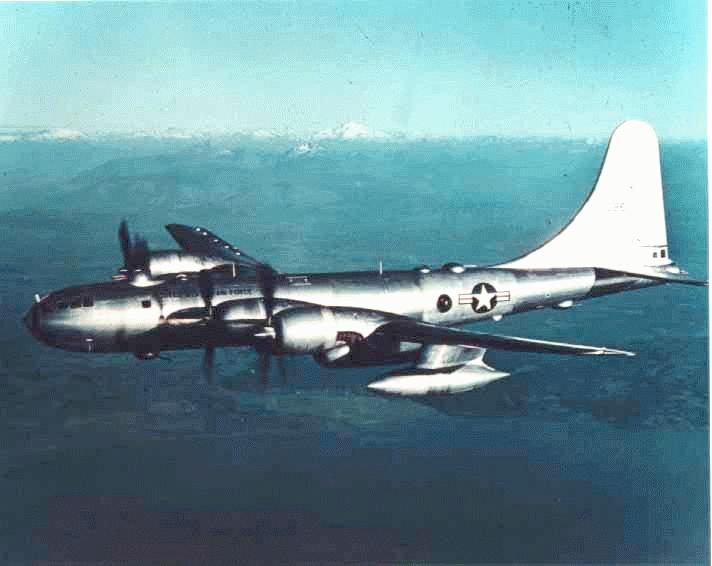
First round-the-world nonstop jet plane flight. Maj. Gen. Archie J. Old, Jr., USAF, led a flight of three Boeing B-52 bombers, powered with eight 10,000-pound-thrust Pratt & Whitney Aircraft J57 engines around the world in 45 hr., 19 min; distance 24,325 mi; average speed 525 mph (completed Jan. 18).

1942–1945
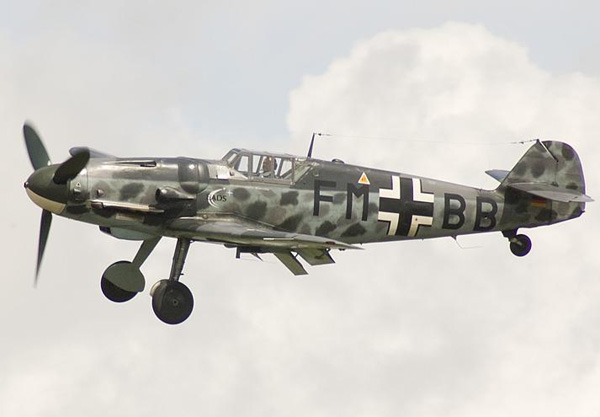
Top-scoring fighter pilot of any war. German Luftwaffe ace Maj. Erich Hartmann scored 352 victories all while flying a Messerschmitt BF 109 during WWII. He was involved in 800 dogfights, and flew 1,425 missions. Maj. Hartmann survived the war.
MiG-23MLDOne thing that should be made clear – TVC is no substitute for good aerodynamic control.
When in a turning dogfight, you want all the thrust you have pushing you forward (high energy states), you don’t want to bleed it off with a 20 deg thrust vector manouvre.
Alot of people in here are disregarding canards on the basis of TVC – whereas a canard equipped aircaft will still have a better sustained turn performance than an elevator equipped one (all other things being equal).
I think here also many people think a canard equipped fighter is the best machine, however the evidence does not prove it.
Let`s start with the facts
Pugachev Cobra: MiG-29 and Su-27 execute this maneouvre, both aircraft have LERXes and tailplanes theoretically many claim the canards will give good agility at high AoA however the MiG-29 and Su-27 have LERXes and have excellent behavior at AoA of 120 degrees in fact the Pugachev Cobra was performed first in a LERXed aircraft not in a canarded one.
Consider that in the late 1970s and 1980s already there were aircraft with canards such as the AJ-37 Viggen and IAI Kfir
Can the Eurofighter and other delta aircraft emulate the feat? well i have seen the F-22 and F-16 MATV performing the Cobra but these aircraft have not canards just tailplanes and thrust vectoring 
Cobra Turn: Su-35
This aircraft has canard and tailplanes.
Kulbit:Su-37, F-22 and Su-30MKI these aircraft have canards, tailplanes and thrust vectoring with the exception of the F-22 that only has tailplanes and thrust vectoring

Helicopter: F-16MATV this aircraft has thrust vectoring and tailplanes also X-31 can do it it has canards but also uses thrust vectoring
Boomerang: MiG-29OVT this aircraft has tailplanes and thrust vectoring 3D to be exact
Double Kulbit:MiG-29OVT same as above it uses thrust vectoring and tailplanes
According to the Book by Andrei Foming Su-27, the Rafale and Eurofighter sustained turn rate is 22deg/s and the Su-27 has a sustained turn rate of 21deg/s
The instantaneous turn rate for the Rafale is 24 deg/s and the Su-27 has a instantaneous turn rate of 27 deg/s
The Max angle of attack for the Rafale is 32 deg while the Su-27 has a Max angle of attack of 30 deg.
The JAS-39 has a sustained turn rate of 20 deg/s and an instantaneous turn rate of 30 deg/s according to the book Superfighters by AIRTIME, the MiG-29 has a instantaneous turn rate of 28 deg/s and the improved MiG-29S Fulcrum C has a sustained turn rate of 23.5 deg/s
as you can see Canards do not offer anything substantially better against thrust vectoring or LERXed aircraft and consider that basicly thrust vectoring is aided by aerodynamic surfaces.
The proof is thrust vectoring is enough for an aircraft with tailplanes to perform maneouvres such as the Helicopter and the Boomerang
When we analize the MiG-29 and Su-27 we see these aircraft are very sophisticated, for example they have fuselage blending, the F-16 and F-14 have it but the F-16 has not pancake and the F-14 has not LERXes, the F-18 has LERXes though but this has not fuselage blending and pancake, the Su-27 and MiG-29 also have ventral inlets intakes, the F-16 has also a ventral intake but it does not have twin vertical fins, the F-15, has vertical fins mounted on tail booms but lacks pancake, LERXes and other characteristics in few words the MiG-29 and Su-27 are more advanced than the average fighter of the fourth generation and the proof is the Su-35, Su-30MKI and Su-37 have even canards and can do maneouvres that other fourth generation can not perform.
Canards by themselves do not make superfightes, in fact the AJ-37 and Kfir are inferior to the MiG-29A and the MiG-29OVT performs maneouvres yet to be seen on canarded aircraft like the Eurofighter, Rafale, Gripen or J-10
MiG-23MLDIts really a matter of finding the most appropriate turning circle vs. roll rate performance as I mentioned to you.
The F-16 and the Su-27 are similar, but the MiG-29, F-18 and even the JF-17 belongs to another group. There are two distinct LERX designs, one has an inward curve like the F-16, and the other has an outward cobra like curve, like the F-18.
What I heard is that they have an instant turn rate of 31 degs and over (Gripen, Rafale, Typhoon and even the J-10).
The previous reason why deltas bleed energy fast is because they need greater trim to achieve the same turning circle. This trim creates greater drag. However, this is only true of tailless deltas, but not tailed or canarded. They will not produce a small turn circle however, due to the small wingspan, but they can produce a higher velocity against a circle with a larger turn radius.
Crobato
A Delta still stalls even with or without canards, however the canard is a safety device and an extra wing so helps the delta aircraft, thrust vectoring is better and has been proved, the MiG-29 can make the “Double Kulbit”, and “Boomerang manoeuvres, these show the MiG-29OVT AKA MIG-35 won`t have any trouble dealing with any Eurofighter, Rafale, JAS-39 or J-10,
See that the MiG-29OVT has not canards and still is better than the canarded Su-30MKI.
>
http://www.youtube.com/watch?v=qx2Bgw2e8Zo
When we see the Boomerang and double kulbit well at least a kulbit performed by the Eurofighter, Rafale, J-10 or JAS-39 Gripen we can say canards are better than thrust vectoring
MiG-23MLDYes, yes, but AoA and turn rates are two very different matters. You can achieve a very fast turn rate even with a shallow AoA by the speed of your outer circle.
But where is the proof that the MiG-29 has better sustained rates than the Typhoon? The JAS-39 isn’t a plane with exactly a very good TWR you know.
No. The degrees are chosen because they offer the best balance between longitudinal stability (stability along the plane’s length), which produces the turning circle, and lateral stability (stability along the plane’s width), which produces the roll rate. If the wings are swept forward, the turn is at the tightest, but the roll rates are the lowest. If the wings are swept backward, the turn radius is much bigger but the roll rates are fastest.
In actuality, the F-15 and the F-16 are considered “clipped” deltas. The F-22 is actually a diamond, which strongly resembles the delta concept except that the wing root extends further backward of the wing tip. Su-27 and MiG-29 are considered semi deltoid due to the length of their wing root.
I think the F-18 is considered trapezoidal, something that is only shared with the Starfighter.
Crobato
As you can see the MiG-23 and F-14 have their best turns at the mid sweep position of 45deg and 55 deg respectively, the mid sweep position is where both fighters have their best center of lift and center of gravity equilibrium with respect the lift drag ratio.
The LERXed wings in the MiG-29, F-18, F-16 and Su-27 are very similar, the LERXes are basicly the fixed non moving part of the variable geometry wing in an F-14 or MiG-23, it is the part of the wing with the highest swep, like a LERX, the swinging part of the wing swep at 45 deg or 55 deg is like the main wing of the MiG-29 or F-18, that is the reason LERXes have been used.
Up to what i have read the Rafale has a sustained turn rate of 22 deg/sec and same is for the Eurofighter, yes both fighters have an instantaneous turn rate of 30 deg/s or maybe slightly more, however like all deltas they bleed energy fast and loose agility.
MiG-23MLDI kind of doubt that MiG-29 has better sustained turn rates over Typhoon. The Typhoon has higher TWR ratio while carrying more fuel to boot, which means it can use its afterburner longer. LERX adds to drag, but canards can be trimmed to avoid that. Typhoon’s under surfaces add to the lift. It is news to everyone here that the MiG-29 has better sustained turn rates than the Typhoon when the MiG-29 does not even demonstrate that against the F-16.
Crobato
The center of gravity and the center of lift are two aspects that determine agility, at airshows it has been proven by the Russians since they started bringing their fighters to the West regularly, how agile their fighters are, the center of lift and the center of gravity move in a swing wing, the wing platform and swept also determine agility, the delta wing is not exactly the best wing for low speed due to the limitation it has at high AoAs, a double delta wing with a foreplane canard fixes that up to a degree, the Gripen is a good example
The JAS-39 Gripen has a instantaneous turn rate of 30 deg/s and a sustained of 20 deg/s, compared to the MiG-29 is not overwhelmingly better since the MiG-29 has an instantaneous turn rate of 28 deg/s and a sustained turn rate of 23 deg/s, same is the Kfir against the MiG-23, the Kfir has an instantaneous turn rate of 18.9 deg/s and an sustained turn rate of 9.6 deg/s; the MiG-23 has an instantaneous turn rate of 16.7 deg/s and a sustained turn rate of 14.1 deg/s
The Delta wings even with canard does not mean a sustained turn rate better than fighters with less swept leading edges, the MiG-23 and F-14 for example achieve their bests turn rates not in the delta or 72 deg swept in the MiG-23 case and 68 deg for the F-14, but in the 33 deg or 45 deg sweep wing position for the MiG-23, and 55 deg for the F-14 which are good because offer the best drag/lift ratio and the best center of lift and center of gravity distance.
If you look at the MiG-29s, F-15, Su-27, F-18 and F-16 their wings are not deltas, the F-22 has not a delta wing too, delta wings are not good for everything, and the numbers say it.
MiG-23MLDNot at low speeds no, but at very high speeds, only the F-22 can match the Typhoon and Rafale.
Putting TVC with delta canard, and you have a result that pushes the envelope farther than anything before, like the X-31 project. They don’t call it super maneuverbility for nothing.
The advantage of canard + TVC is that you have two forces, each acting seperately at opposite ends of the craft. Compared to LERX, canards are variable and can be trimmed to regulate the vortice form, such as preventing it from turning into pure turbulence which can occur at extreme angles of attack.
Disadvantage of adding canards into an existing plane design like F-15 or Flanker is the additional weight and drag they ensue, not to mention the possibility of cutting into the stress lines of the plane and the space they consume. Thus they have to be carefully considered and find a balance between the pros and the cons.
At some point maneuverbility becomes redundant because the human body cannot take it anymore. Thus we begin to pursure other considerations; structural integrity, layout, space for stores, etc,. Every fighter design is more than a compromise than we think, resolving a balance between aerodynamics, structural strength and storage space.
If you really like to see super maneuverbility taken to the highest possible levels, this will not be achieved by current manned fighters, but a future generation of unmanned fighter drones.
Crobato
I can not assure you if the Eurofighter is more agile than the MiG-29 or Su-27 at high speeds because number one, just looking at the MiG-29 and Eurofighters specifications we find they are not very different, both fighters have similar wing areas, similar acceleration,weight, thrust weight ratio and the MiG-29 is even faster than the Eurofighter.
While the Eurofighter has a canard, the MiG-29 has LERXes and extensive fuselage blending, up to what i have seen, the Eurofighter has better corner velocity, and therefore has more agility at very low speeds and the MiG-29 gets only even a higher speeds thanks to a better sustained turn rate at higher speeds beyond the corner velocity and nearing the transonic range.
If you look at the MiG-29 you see it has the LERX root just before the windshield cross sectiont cut, so the LERX in the MiG-29 adds lift well ahead of the main wing aerodynamic center (Center of lift), this helps in the same way a canard does, it keeps the airplane nose light enough, remember the F-111 was a heavy nose delta aircraft but the F-14A added wing gloves (canards) to eliminate the heavy nose that characterized deltas when they reach supersonic speeds and the center of lift moves rearwards.
A heavy nose made the F-111 less agile than the F-14A.
The all moving tailplane in the MiG-29 gives enough response to the MiG-29 at least at Mach 2.35.
A MiG-29OVT has improved engines, thrust vectoring and newer electronics, so i do not see why it has to be inferior to the Eurofighter except perhaps in supercruise and the Su-35BM i would not say it might not include supercruise.
MiG-23MLDTango thanks, this thread is excellent:D 🙂
MiG-23MLDDo you think that if the Typhoon ever got thrust vectoring its canards could be removed?
It is not easy to say that, first because the Typhoon has been designed with the canard in mind from the begining of its inception, the gravity center in the Typhoon has been located thinking with the canards in mind.
The reason why the Su-30MKI has canards are the following:
First, the canards offer a safety net for the Su-30MKi. When an aircraft with canards stalls, it loses lift on the canards before the wings. When this happens the nose of the aircraft drops down and the aircraft will increase its speed and regain control. This makes the Su-30MKI easier and safer to fly. Having canards also adds to the lift of the aircraft. A rear tail has to be angled slightly down so that it produces downward force acting against the lift created by the wings. This is necessary to balance out the moment about the center of gravity that the wings create. Canards need to produce lift to balance the moment that the wings create. Then thrust vectoring allows to the Su-30 MKI to fly at much higher angles of attack and lower speeds but traditional control surfaces (ailerons and elevator) lose their effectiveness at higher angles of attack. As a result, the canards will also be used to maintain control of the aircraft in these flight conditions, specially in the post stall agility envelope the Su-30MKI achieves
http://www.engr.wisc.edu/studentorgs/floatn/merlin/aircraft_design.htm
consider too that LERXes have the following characteristics
At high angles of attack highly complex separated flow fields dominate. Aircraft which exploit this region, primarily fighter aircraft, often feature highly swept lifting surfaces (canard, wing and wing leading edge extensions (LEX)) which tend to encourage the development of tightly bound vortices. Not only are the vortices themselves complex (in terms of their trajectories and breakdown locations) but the interaction between the various vortex systems on realistic configurations makes prediction of their behaviour extremely difficult.
The shear layer that develops from the leading edge at high angles of attack tends to wrap into a tightly bound vortex that has a high local velocity and hence low pressure. This so called vortex lift makes a very significant contribution to the total lift for highly swept wings at high angles of attack. At some downstream position, dependent on angle of attack and past motion, the vortex suffers from a rapid deceleration and expansion of the vortex core known as vortex breakdown.
http://www.flumes.ikp.liu.se/aero/projects/highangle_en.xf
See that the Su-30MKI and Su-35/37 have canards, LERXes, taiplanes helping the wing, besides ventral fins and dorsals fins
MiG-23MLDWhat you are saying is also subject to altitude. Given enough height, a U-2, a B-52 or even B747 will out turn a MiG-21. At some altitude the Typhoon and Rafale would outturn the MiG-29 because of the enormous lifting areas of the two, added with the lifting area of the canards.
Where canard deltas truly excel is in supersonic maneuverbility, the faster they go, the better they are. Canards do not face the downwash from the main wing, and achieve more control authority for the same size. When it comes to supersonic maneuverbility you need every inch of your control surface. Have you figured out the reason why planes moved to all moving tailplanes (Super Sabre, Super Mystere, MiG-19) once you achieved level supersonic flight?
Please Crobato why you do not see is the LERXes also generate lift ahead of the main wings aerodynamic center of lift and the MiG-29 generates more lift because about 40% of its lift is generate by the fuselage-wing blending.
Same is the Su-27, in the Su-27 you can see that they needed to add canards for post stall agility, but they retained the tailplanes.
The Russians and the americans saw that with good thrust vectoring control in the form of 3D vectoring nozzles well you do not need canards in fact the Su-35BM already has deleted the canards and looks like a conventional Su-27B.
The double delta canarded aircraft like the Eurofighter Typhoon or Rafale are not known to be as agile as the F-22, MiG-29OVT or Su-30MKI.
MiG-23MLDWhat potential increase in RCS? This really hasn’t been proven. What tailed planes do offer is a better use of space, since the control mechanisms do not have to be in the center of the fuselage, which can get in the way of your stores, or in the case of the Typhoon, in the nose, which can get in the way of your avionics.
Very much so. When you have both canards and wing contributing to positive lift, as opposed to just wing alone, for a given turn, you can trim less, reducing drag and improving turn rates.
Both canards and LERX generate vortices for control at high AoA. But in cruise, the canard can tuck into a neutral position, reducing drag, while the LERX remains a lump in the airstream.
Can be reduced by design. Typhoon open canard delta reduces the wake over the main wing by its sheer distance. The J-10 uses another system, where as the canards are dihedral and the main wings are anhedral. From a forward point of view, the plane looks like an X. This forces the wake to move over the fuselage and away from the main wings. This means however the rudder has to be big to compensate for the wake. A small strake that runs all along on top at the spine of the fuselage, also helps smooth the airflow.
Not if you spaced the canards properly either by distance (Typhoon) or lateral configuration (J-10, Rafale).
Tailplanes are affected by the downwash of the wing, which is why to achieve the same control authority, the tailplanes have to be bigger than the canard. Bigger tailplane, more drag, more weight, and bigger mechanism to move them, which also adds more weight.
TVC offers better control authority over low speeds, but as speed goes higher, the advantage goes to aerodynamic control surfaces. For their very fast flying Python 5, the Israelis chose not to use TVC altogether. While control surfaces do create drag from the trimming, TVC on the other hand, reduces thrust by parasitic losses when it is vectored offbore.
I wonder why they stuck to a nonassisted delta layout when just about everyone in the world has abandoned it.
Not true. Burt Rutan clearly has a different opinion on this.
These advantages also go with other canard layouts as well. Check with Mr. Rutan.
Lets not forget the Israelis. The Japanese also centered many of their ATX proposals around a delta canard.
We have done an extensive thread and one that is much better discussed in detail than this thread in Paul Martell’s site, which is however currently having some issues. But when the forum is restored, you can check out
http://www.secretprojects.co.uk.
Preferably on a different plane to reduce wake over the main wing. As you can see with the J-10, Rafale and Gripen, the canards are also turned dihedral (shallow V shape when viewed from the front) for this reason. The Typhoon is the exception with anhedral (like a shallow inverse V) layout for canards, but the canards are moved further forward, keeping distance from the main wing, and the anhedral canards may even route some air into the engine intakes.
The LERX has some advantages too, one is it generates lift and vortices without the canard wake downwash, the idea that the MiG-29 for example is inferior to a Canarded aircraft is not exactlty true, for example the JAS-39 Gripen has a lower sustained turn rate, and the Eurofighter and Rafale barely are equal of the MiG-29A which is not the best MiG-29 variant interms of sustained turn rate.
If it is true that the Eurofighters Rafale Typhoon and Gripen offer better instantaneous turn rate that is not in all the expectrum of speeds and heights.
LERXes also are used in the MiG-29 and Su-27 to redirect air to the ventrally positioned inlets intakes and this position enhances AoA handling
The tailed MiG-29OVT easily can beat a canarded Eurofighter, Rafale, Gripen or J-10 in terms of super agility.
Same applies for the F-22, that is the reason the F-22 uses thrust vectoring instead of canards.
In the case of the Su-35 and Su-30MKI canards alone were not deemed good enough by themselves and the Su-35/37 and the Su-30MKI still use tailplanes and these aircraft are also more agile than the Eurofighter, Rafale, Gripen and J-10.
MiG-23MLDYeah, and because MiG-engineers find canards crappy, their proposal for a next generation fighter looks that way: http://en.wikipedia.org/wiki/Mikoyan_Project_1.44
Let us say something very important a company has no monolithic design philosophy, there are different opinions and configurations studied and discussed within their design board.
The MiG 1.42 for example is a more complex machine than the Eurofighter or Rafale, and it is more similar to the S-37 Berkut because it has more control surfaces than the europeans delta designs, in fact we can call it a triplane rather than a double delta.

when we look at the rear of the MiG 1.42 we see at the end of the wing and between the tail booms and fuselage, there are two control surfaces that have the fuction between flaps and elevators (tailplanes) also consider it has hinged ventral fins and thrust vectoring.
The MiG-29OVT achieves that with a simple LERXed tailplane configuration with thrust vectoring.
the Istrevitel 2000 did not have canards and looked more like a shafaq


MiG-23MLDi think that there is a missinterpretation about all of the cannards-rcs, if you put huge cannards to a standar desing -like that xperimental f-15- you increase rcs, because now you have more surfaces that move, but if you keep the same number of surfaces -delta cannard- you dont increase the rcs
the f22 dont have cannards…..bad idea for supercruiser -too much drag over the wing and fuselage-
Idiots are the guys that started with that cannards-bad rcs issue….-that myth have now many years-
One of the most important aspects relating the canards are their sizes and their position, if it is true a non stealthy aircraft can have more freedom in what respect both aspects a stealthy aircraft with platform alignment would find harder to position and size the canard with respect the main wing
Tailplanes are behind the downwash of the wing, they do not affect the wing aerodynamics as the canard does and are less difficult to position on a platform alignment arrangement, with thrust vectoring the americans cured the disadvantages the tailplane drag/trim causes to the aircraft handling
MiG-23MLDHe should have told the designers of the Gripen, Rafale and Typhoon! Man, those guys must be IDIOTS!
The guy said something that is true, any and i say any aerodynamic or technological solution has advantages and disadvantages, canards have both, why the F-22 has no canards? why the MiG-29OBT has no canards? consider that the MiG-29OBT is the most agile Russian fighter jet ever produced, even better than the Su-30MKI, the F-22 is the most sophisticated fighter currently in service, both fighters do not use canards.
The Russian designers from MiG also said that they could disregard and eliminate canards if they could get 3D thrust vectoring, both the F-16 and MiG-29 have experimented thrust vectoring with 3D nozzles and they did not use canards
The canard is not absolutly better than the tailplane and the proof is the Su-30MKI, Su-34, Su-35 use tailplanes
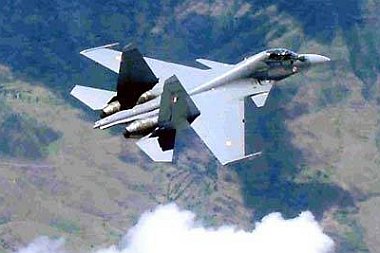

In the 1980s canards did offer the best agility in a small airframe, with relatively large wings, the European and Chinese aircraft settled for canarded delta wings, the Russian were in between the americans and europeans with their triplanes, however it seems the F-22 and MiG-29OVT have set a trend where thrust vectoring will leave canards obsolete

source
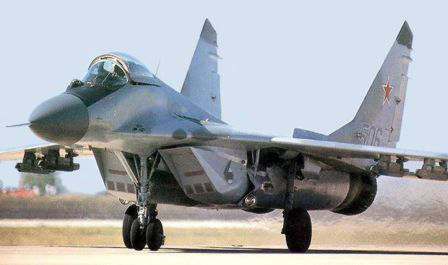
MiG-23MLDThe MiG-29 is the world’s first aircraft fitted with dual mode air intakes. During flight the open air intakes feed air to the engines. While moving on the ground the air intakes are closed and air is fed through the louvres on the upper surface of the wing root to prevent ingestion of foreign objects from the runway. This is particularly important when operating from poorly prepared airfields. .
The Vuia-1 was the first monoplane aircraft to fly in the world, with a high-wing.
MiG-23MLDUhm, can someone explain to me why canards increase an aircrafts RCS?
Surely its still two wings in tandem, only smaller ones in front… what difference does that make to a radar?
You need plaform alignment, theoretically canards can use planform alignment, Yakolev designed an aerodynamic model with canards with plaform alignment


 Sign In








