 MiG-23MLD
Back to school…
http://www.lerc.nasa.gov/WWW/K-12/airplane/elv.htmlA horizontal control surface, whether in the rear (tail) or in the front (canard) generates a force to counter the nose-down pitching moment of the wing.
In a classic statically stable configuration, the horizontal tail produces a down force to counter the nose-down pitching moment of the wing. This down force added to the weight of the airplane means the wing must be larger in size and weight.
In a canard configuration, the canard produces an up force to counteract the nose-down pitching moment of the wing. This up force can be used to offset some of the airplane’s weight resulting in a smaller, lighter wing.
The bottom line is a canard configuration can produce a smaller, lighter wing than a traditional statically-stable tailed airplane. In fighters, smaller and lighter is good because it reduces drag while increasing acceleration and range.
(Note that similar results can be achieved in a relaxed stability tailed airplane).
Canards are a 1980s fashion, the MiG-29OVT has LERXES that produce Extra lift and lift wake vortexes, however good thrust vectoring eliminates the need for extra canards ala Su-30MKI, Su-35 or Su-34.
This proves that thrust vectoring has left canards behind, the F-22 also has no canards.
The center of lift supersonic rearwards shift is balanced by the lift produced by the canard foreplane ahead of the aerodynamic center and contrary to the tailplane that rests lift with the trimming drag, canards enhance trim/drag ratio.
However the canards generates a down wash that also rests some lift to the main wing and can not aliviate the pitch down force generated by the wings flaps.
The Su-30MKI uses both and ensures the Su-30MKI has the best of both worlds despite the aircraft generates more drag.
The MiG-29OVT enhances the agility by non aerodynamic devices and reduces drag without the need of canards, drag and the extra weight
MiG-23MLDThe 11th August marks the 20th anniversary of the Westland Lynx helicopter setting a new world helicopter speed record of 249.1 mph (400.87 kph). Although other attempts have been made, 20 years on Lynx retains the title as the world’s fastest helicopter.

MiG-23MLD
The Mi-12 is the largest helicopter ever made

MiG-23MLD
The Focke-Wulf Fw 61 is regarded as being the first helicopter of the world which could be deployed for practical use

VS-300 was America’s first practical helicopter and the first successful helicopter in the world to perfect the now familiar single main rotor and tail rotor design.
MiG-23MLD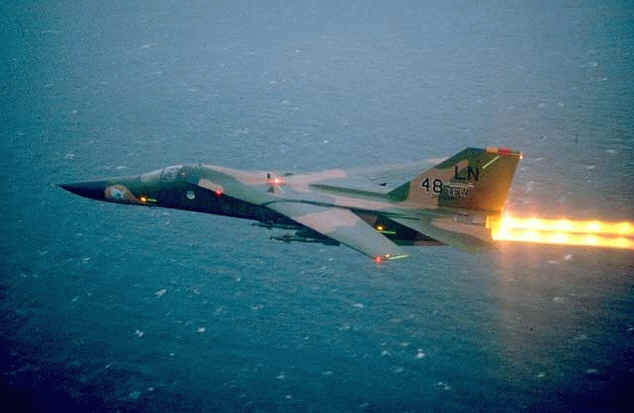
The F-111 was the first aircraft to have a terrain following radar, afterburning turbofans and operational sweep wings
MiG-23MLDCanards are more efficient than elevators at generating a pitch up moment on the aircraft, so in a turning dogfight, energy bleed is less.
Conversely, the wake of a canard does disrupt the flow over the main wing, compromising cruise aerodynamics somewhat.
So:
Dogfight – canards are better
Cruise – elevators better
Stealth – don’t know [but I don’t really see how canards significantly increase RCS compared to elevators]
LERXes have a similar use and work similarly and in the case of the MiG-29OVT and Su-35BM there is no need for canards thanks to thrust vectoring, reducing the drag and creating better fighters than the canarded 4.5 generation
MiG-23MLDThis is the aircraft i think if it would had been built in operational numbers would had changed the term V/STOL

MiG-23MLDMay 30, 1995
The Boeing 777 jetliner becomes the first airplane in aviation history to earn FAA approval to fly extended-range twin-engine operations (ETOPS) at service entry.
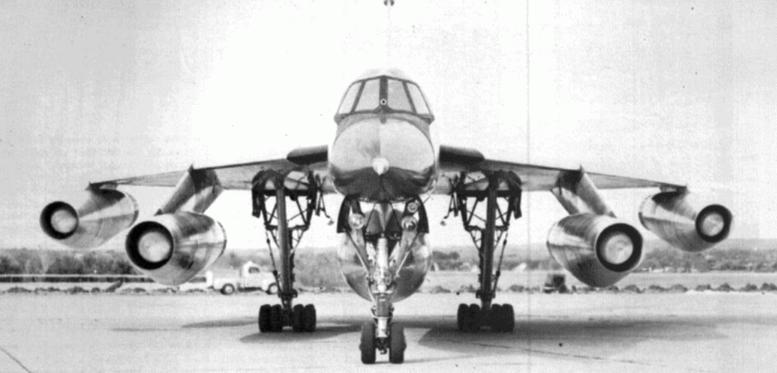
Significance of Type: The B-58 Hustler garnered a number of “firsts” during its relatively short service career. It was the first supersonic bomber, the first bomber to reach Mach 2, the first aircraft made of stainless steel honeycomb sandwich and the first aircraft to have stellar-inertial navigation. The B-58 also set more world speed records than any other type combat aircraft.
MiG-23MLDPython 5 Gets First Kill
August 22, 2006: Three years after its introduction, the Israeli Python 5 air-to-air missile finally got its first combat kill. This happened on August 7th, when an Israeli F-16 was sent to shoot down a Hizbollah UAV off the coast. The target was an Iranian Ababil. This is a 183 pound UAV with a ten foot wing span, a payload of about 80 pounds, a cruising speed of 290 kilometers an hour and an endurance of 90 minutes. Using GPS guidance, it could deliver about 60 pounds of explosives to a prominent Israeli government building in Jerusalem or Tel Aviv. The Ababil normally carries a variety of day and night still and video cameras. Hizbollah is now using the Ababil as a cruise missile.
The Israeli company Rafael introduced the Python 5 air-to-air heat seeking missile in the Summer of 2003. The Python 5 can go after a target anywhere around the launching aircraft. The missile is an improved version of the 1993 Python 4. The Python 5 has the same weight and dimensions (295 pounds, ten feet long and 6.4 inches in diameter) as the Python 4, but uses much improved electronics and computing capability. The Python 5 sensors are immune to flares and can track very small targets (for a heat seeking missile), like helicopters, single engine propeller driven aircraft, cruise missiles and UAVs.) The missile is much more effective in cloudy or misty conditions. It also has an improved warhead and proximity fuse, making a kill more certain.
This incident makes it easier to sell the Python 5, because it has proven that it can take out small, and increasingly common, targets like UAVs.

1914 Short – British aircraft manufacturers. The Type 184 seaplane was the first aircraft to carry a torpedo and, during the World War I Gallipoli campaign, was the first aircraft to sink an enemy ship with a torpedo.
MiG-23MLDThe light and eye analogy is often used to explain active and passive systems and it is quite effective. However its just a simple illustration. To paint a picture of the task the Kolchuga would in countering a wartime strike by F-22 type aircraft the F-22 is actually a single star against the background of an entire galaxy of stars and the problem you face in trying to localise it is that it is moving and as you say it is constantly changing colour. Against the confused background therefore it becomes much harder to localise with any certainty.
It is true what you are saying, however everything depends in the sensitivity the RWR has and the processing power the Kolchuga has, do not forget that the Kolchuga also is helped by the S-400 radars and AWACs in the vicinity.
The Americans are predicting that most likely the Russians won`t be able to develop radars capable to track the F-22 at an operational and practical distance.
Consider that even with simple visual means you can distinguish a comet from a planet, a Star from a supernova, The kulchuga has not so difficult task as it is throught, the Kolchuga only needs a good processing power and good algorithms.
What the Russians are saying is as likely as what the americans are predicting
MiG-23MLD“Buddy”, during the recent exercise in Alaska (I posted an article from AvLeak) the Raptor travel 150 Nmiles in supercruise to the tanker, refueled, then supercruised back to the loitering area, wher it remained in subsonic speed waiting to engage ennemy fighters. Considering than in an attack mission, the Raptors won’t remain over the target, the tankers can wait for them even farther. So the tankers can remain outside the SAM reach. As for AWACS and similar: the AWACS can’t help a Raptor in destroing a SAM. A JSTAR can help, but its detecting range is somewhere ~ 300 km, so it will be in danger against an S 400. OTOH, a Rivet Joint can assist the Raptor from a safe distance. As for kolchuga, it won’t locate an AESA aircraft or a datalink transmission. As I said a plane like the F 15E, F 16 would be in most cases detect by a system like Kolchuga, but not a plane that just use datalinks to receicve infos, or uses AESA radar. I can’t indeed name any sophisticated weapons used by Vietnam against the French, but against US, I can name at leats two: SA-2 and MiG 21.What has to do Osama in a thread named “the f 22 as a strike aircraft”? Is the missison of an RWR to find terrorist, or intel should have found him by now? If you have criticized CIA, I would agree, despite the fact that, again, the subject discussed here is different.
In these conditions, I would quote from the definition of internet trolling: Trolls can be existing members of a community that rarely post and often contribute no useful information to the thread, but instead make argumentative posts in an attempt to discredit another person, more often than not based on what they thought was said rather than what was actually said by the other person, concentrating almost exclusively on facts irrelevant to the point of the conversation, with the intent of provoking a reaction from others…A troll is a person who approaches a board with the specific intention of stirring things up, either with no particular motive or provocation in mind, other than to be purely destructive or if the motive or provocation is against the ethos of the board
Aurcov
The question remains niether you or me know the real capabilities of the Kolchuga and S-400 team, why? well the Russians say they can track any stealth aircraft, second the Kolchuga detects radar emissions and any thing emanating radio waves can be tracked, the questions is how good is the software installed in the Kolchuga, how fast it can triangulate the position of any radiation, you are claiming something contradictory on one hand you claim the F-22 can use all the time its radar something that means it will be detected, in the other hand you are claiming it does not need data link let us see this source:
http://www.faqs.org/docs/air/avf22.html#m4
When operating as a radar, the APG-77 transmits waveforms that change from burst to burst, and are sent at random frequencies. Such a changing signal is very difficult for an enemy to detect and analyze. If the enemy does manage to detect the signal, he or she must then try to get a radar lock on the F-22 so it can be attacked. The F-22’s stealthiness makes this tricky in the first place, but to make matters more troublesome, the AESA also analyses the enemy’s radar and sends out a jamming burst to disrupt the lock. The AESA then goes on to other tasks until the enemy radar begins its lock cycle again
This is theory should make a jamming proof radar, however it still emmits radar signals and as long as it emits radar signals it creates a distorsion in the electromagnetic background surroundings, the Kolchuga only needs to see a constant electromagnetic source to triangulate the F-22 position, yes the F-22 while it is a source of radar waves can be tracked specially since some radars will work as an emitter of radio waves to the multi static recievers of the kolchuga system and wll also detect the scattering of the radio waves from the F-22 fuselage planform.
If it true the F-22 can supercruise without afterburner, other aircraft can cruise at supersonic speed even with afterburner in example the MiG-31 and in our days the MiG-31 has very long range missiles, it does not need to get so close to the F-22 or the AWACS, Tankers or JSTAR it only needs to fly at Mach 2.35 and fire the R-37 at the AWACS JSTAR or tankers, for a F-22 to catch a MiG-31 is not going to be easy because the MiG-31 can loiter close to the SAMs protection umbrella
specially in a time with missiles like the KS-172 novator with a range of 400km
To explain you how the Kolchuga works is very easy, imaging the Kolchuga is an eye and the APG-77 a lamp, the lamp (APG-77) changes the color of the light it emmits every five seconds, it goes from red to white, white to blue and so on all the colors of the rainbow even moving the lamp you will be able to see the lamp
Now imaging the F-22 is a mirror, if you face it in a 90 degrees angle you can see your face, if you incline it to 40 degrees or 150 degrees you wont be able to see your image well some parts of the image will be areased or difficult to see however while you have several persons at different angles with respect the mirror you can have a better image of the object and you can compare what every body saw. that is the way the Kolchuga works the difference it does not work with light but other frequencies of the electromagnetic spectrum;)

MiG-23MLDWas that before the B-1B came into service in the early 80s?
Up to what i know the MiG-31 was the first aircraft
MiG-23MLD
The P-51 Mustang was the first aircraft designed to use laminar flow airfoils.
MiG-23MLD
Was it the first aircraft with a Landing gear? The Dayton Wright RB-1 of 1920
here are some of its advanced characteristics:
The pilot was entirely enclosed in the fuselage, which was of wooden semimonocoque construction. The cantilever wing was constructed entirely of wood an employed leading- and trailing-edge flaps. These flaps in effect provided variable camber so that the airfoil section could be adjusted to its optimum shape for both high-speed and low-speed flight. This extremely advanced feature did not appear on production aircraft until the development of the jet transport in the 1950’s. The landing gear on the Dayton Wright racer retracted into the fuselage in very much the same way as that used in later Grumman fighters of the thirties and forties.
http://www.centennialofflight.gov/essay/Evolution_of_Technology/landing_gear/Tech16.htm
MiG-23MLD😀
-What has AWACS to do with F 22 atacking SAM sites ???? JSTARs yes, Rivet Joint yes, but an AWACS has nothing to do with this.
-an AESA radar does not need to emit shot burst; instead it can emit continuosly, and still unafraid that it will be detected (not in 10 years anyway); the sort burst is how datalinks work, and yes a short burst is enough.
-I repeat again, you have a distorsioned perception on how a mobile SAM works. It will not work while traveling; it will remain imobile for hours searching for targets, than relocated–plenty of time to hit it.A SAM radar will not emit “short bursts”, if the operators really want to detect and track something usefull for the SAMs 😀 . And I said it again Kolchuga does not emit–it’s apassive system.
Aurcov
You forget to remain loitering in an area as you claim you need aerial assets, such as tankers, AWACS and other aircraft that can provide information JSTAR, yes buddy those systems are vulnerable to the S-400 and Kolchuga, also the kolchuga can be used by the S-400 as a homing system before it start using its own guidance systems
read http://forum.keypublishing.co.uk/showthread.php?t=25285
So the S-400 also uses stealth.
Any radiating system interferes with the electromagnetic surrounding electromagnetic background that is what the Kolchuga uses to detect data link, AESA is used to fool jamming systems however it does not mean that physically won`t modify the surrounding background electromagnetic spectrum, that is the reason the F-22 uses radar silence and data link.
So the S-400 is more stealthy than you think.;)
a promising trend as passive radiolocation is certainly of great interest to highly developed countries. But the Ukrainian Kolchuga radar, with all its technical and operational characteristics taken together, has no analogs anywhere in the world. And in its basic parameters it surpasses all known means of the same or similar purpose.
The 800-km detection range has been achieved only by the Ukrainian Kolchuga. The best the U.S. AWACS can do is 600 km, while the ground-based complexes Vera (Czech Republic) and Vega (Russia) can reach out up to 400 km – half what the Ukrainian complex can reach. The Kolchuga’s lower limit of the working frequency range is 130MHz and is the lowest of all analogs. For the AWACS it is 2,000 MHz, for the Vera it is 850MHz, for the Vega it is 200MHz.
But where the Kolchuga has the greatest advantages is its ability to identify accurately radio objects thanks to unique algorithms and hi-tech equipment. In particular, the mean square deviation in frequency measurement – the most informative parameters for identifying types of spotted radio objects – is 0.4MHz in the Kolchuga. It is 0.5MHz – 1.0MHz in the Russian Vega, 1.0MHz in the U.S. AWACS, and as much as 3.6MHz – 21.0MHz in the Czech Vera. The maximal duration of detected impulses, measured by the Kolchuga, is 999.0 microseconds, versus 99.9 microseconds for the AWACS and 200 microseconds for the Vera. And the impulse repetition period can be measured by the Kolchuga up to the maximum of 79,999 microseconds, while no analogs can perform such measurements longer than 10,000 microseconds. As a result, the number of detected radio objects that the Kolchuga can classify is practically unlimited, which can not be said about any known analogs. The Ukrainian station has advanced algorithms and software programs for analyzing, systematizing, generalizing, and storing information about all radio objects and parameters of their signals. And the data already collected in the database can be used to identify newly detected radio objects and can be correlated with data obtained from other reconnaissance sources


 Sign In







