MiG-23MLD
For your information, Kolchuga is a passive system that could work against classic airplanes like F 15E and F 16 that emit continuosly (TACAN for navigation, following terrain radars to penetrate at low level and mechanical scan for SAR). An F 22 can be near such a system, but if the Raptor does emmit only short burst (AESA radar or datalink), Kolchuga will not locate it.
Also, a radar could be highly mobile–and indeed the radars of the Russian double digit are–but it still had to stay some time in a fixed place. It could be turned-off, but once geolocated (in GPS coordonates) they are in trouble. As I said, all the GPS goodies will target the radar site.
BTW, what Russian system do you know that can “nullify” any datalink used by US/NATO ????????
The question is if the target is mobile, like the Kulchuga system or S-400 little burst of radar or data link are not enough, specially since the S-400 can kill AWACS, what a nation like Russia and China can do is force any F-22 attacker to rely more on their own radar and data link, why because mobility means the targest won`t be in the same location all the time, mobile targets means you need update the cordinates of the targets constantly, also remember contrary to Iraq, Russia and China have more places to hide their weapons than Iraq that is a flat desert.
The Kolchuga and S-400 play the same game the F-22 does, short time emissions and mobility that is stealth applied against the F-22
remember since the F-22 attacks at higher altitudes can not use terrain following since it doesn not use it, so it is confined to relatively high altitudes where there is not need for terrain following radars increasing the likeliness it will be shot down and located
MiG-23MLDMig that isnt really a practical thought IMO , why is russia developing PAKFA if they have nukes? We cannot simply eliminate all Tactical fleet just because there is the presence of strategic weaponry. Also one nations tactical weapon can be a Strategic Pain in the A$$ for the other nation 😀 Like it would be if the F-22 was used against say iran !!
Regards
I guess Russia is interested in developing the PAK FA simply because in order to have tactical effectivines they need a counter part in the international markets and the technological scene.
Can the F-22 shot down a Balistic missile like the SS-27 Topol?
can the F-22 destroy all the Russian and Nuclear nuclear submarines and cruise missiles?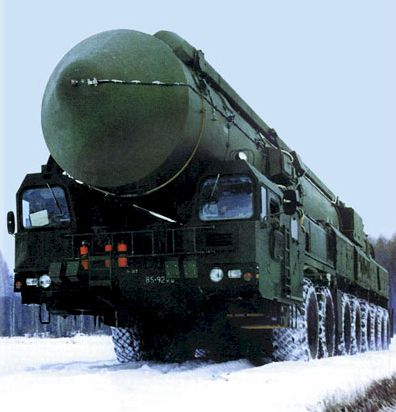
can the F-22 stop nuclear shells?
In few words the F-22 can not do that, it only is useful as a tactical weapon and as an initial striker but definitively won`t stop a nuclear counter offensive
MiG-23MLDAs the optical sensors are coming into play, so does Active camouflage emerge as a counter. The Bird of Pray demonstrator is already 11 years old.
If Optical sensors advanced so much, how long before they make a new “special paint” job on the Raptor?You sound like a person that actually believes that advantage in warfare is not achieved with new technology and weapons systems….:D 😀 😀
No, its people like you running the US Senate. The ATF program would never get funding.
You remind me of General McCarter in the Corean War:A guy that wanted to nuke Chinaat every oportunity
What you don’t seam to realize GarryB is that is any country uses Nuke, it will looses the war immediately, either because the whole world will turn on them or because there will be no world to live at.
Directed Energy Weapons are the future not Nukes. And F-22 is again the best choice because of its operating altitude.
lantinian
What he is saying is true not even having F-22 will stop nuclear submarines to remain a viable counter attack, the F-22 is not an strategic weapon but a tactical one, any nation armed with nukes can fire their missiles if they feel threated, and in the case of Russia and China these two nations can simply hide their strategic weapons easily in their huges territories and their nuclear submarines launch a counter attack at the moment notice, sweep their territories will be difficult and fruitless and only one or two nukes are enough deterrement for the western nations to press their governments to stop any agression against them.
The F-22 was concieved as an offensive weapon against non nuclear powers.
MiG-23MLDS300 and S400 batteries are similar in architecture since S400 is a product improved S300. Search radars are set up to scan 90 degree quadrants, target tracking/illumination radars are for midcourse/terminal guidance. Each operates at a distinct set of frequencies and are not easily confused for other systems.
HARM has gone through some serious upgrades in the last 10 years. Before a HARM or other SEAD weapon is launched, SIGINT will geolocate the emitter and a SAR/ISAR picture will be painted to comfirm the target. The emitter’s coordinates are uploaded into the HARM’s PNU and it follows a trajectory to the target area. Even if the emitter is turned off, the HARM will fly to the coordinates uploaded into the PNU. This allows targeting during a pop-up maneuver and launch of the HARM from behind intervening terrain where the S300/400 cannot target the HARM shooter.
The most effective jamming techniques are not apparent to the system being jammed. Thus there is nothing to trigger a HOJ response.
That network of stuff is also S300/400 Achilles heel. If it emits, it will be geolocated and will receive the attention of a salvo of PGMs. The attacker always has the advantage. If he cannot finess a PGM onto the target, he will saturate a zone in the SAM’s defenses and PGMs will get through. You can pretty well guess the attacker’s prioritization, first the control van, second the sector search radars, third the trackers/illuminators, lastly the TELs.
That’s what makes F-22 the ideal SEAD asset. It does all its stuff from 60K+ feet and can ignore IR SAMS like other trashfire. Once the radar emitters are rolled up, there isn’t much left that can effectively cue an IR SAM.
That’s why HARM was fitted with the PNU and :dev2: evil Americans spent so much money adding SAR and ISAR modes to APG-68/70/73 for legacy jets and had those modes built into APG-77/79/81 from the beginning.
Man there is something you forget, mobility, yes buddy mobility is a factor you are not considering, The S-400 is a mobile system, can operate with Kolchuga passive radars that also are mobile and work as multistatic recievers, these systems togather with the R-37 launched by MiG-31s will attack AWACS and use their systems to nullify data link added that mobility will make the system difficult to target and detect because mobility and radar rotation makes these system difficult targets even for the F-22 since the radar stations switch off and on and change positions making them highly effective against any attacker

First S-400 missile regiment to go on combat duty in Russia
12:51 | 27/ 02/ 2007
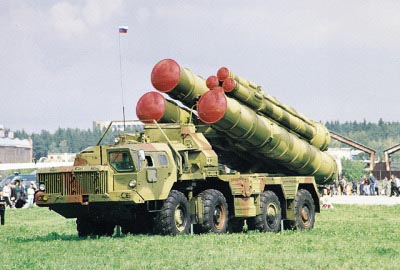
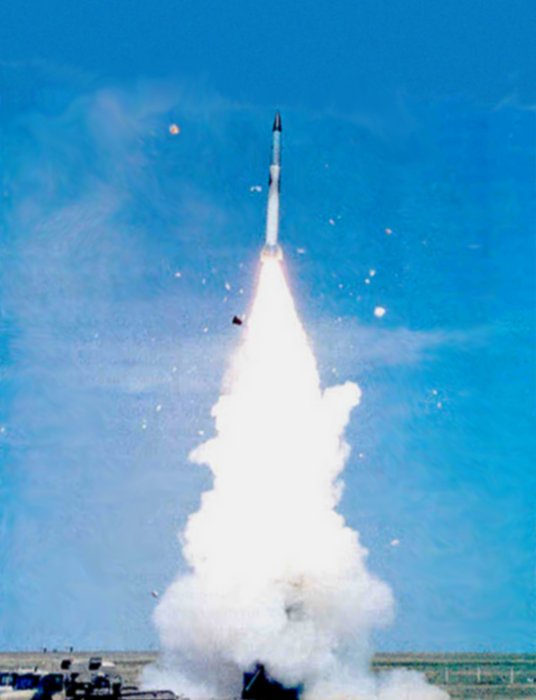
MOSCOW, February 27 (RIA Novosti) – The first air defense regiment equipped with new S-400 Triumf ground-to-air missile systems will be put on combat duty in the Moscow Region in the middle of 2007, a manufacturer said Tuesday.
The Military-Industrial Commission, which answers directly to the Russian president, meets Tuesday to consider prospects for a fifth-generation air-defense system and building aerospace defenses in the country.
“The [new] regiment will have more [missile] batteries than regiments currently equipped with S-300 air defense systems,” said Alexander Lemansky, chief designer at the Almaz Science and Production Association.
Lemansky said new S-400 systems considerably differ from S-300 systems by their effective firing range, firing capacity and other parameters.
S-300 (SA-10 Grumble) anti-aircraft missile system was designed to protect military and industrial facilities from mass air strikes. A missile launched from the system can travel at a speed of 2,000 meters per second and is capable of hitting a target at a distance of 150 km (93 miles) flying at a height of up to 30 km (19 miles) and at a speed of up to 10,000 km/h (6,215 mph).
“The effective firing range of the new [S-400] system is twice that of the previous S-300 [system] and its firing capacity is more than double,” Lemansky said.
First Deputy Prime Minister and former defense minister Sergei Ivanov, who oversees defense-related sectors and chairs today’s meeting of the commission, earlier said new S-400 Triumf ground-to-air missile systems were adopted for service in late 2006 and will be placed on alert duty later this year.
http://en.rian.ru/russia/20070227/61304735.html
check this
S-300 (SA-10 Grumble) anti-aircraft missile system was designed to protect military and industrial facilities from mass air strikes. A missile launched from the system can travel at a speed of 2,000 meters per second and is capable of hitting a target at a distance of 150 km (93 miles) flying at a height of up to 30 km (19 miles) and at a speed of up to 10,000 km/h (6,215 mph).
and later they say
“The effective firing range of the new [S-400] system is twice that of the previous S-300 [system] and its firing capacity is more than double,” Lemansky said.
MiG-23MLDThe sense of beauty, as well as cuteness, is inherently biological. We consider what is beautiful, is what makes a sexual mate that will pass better biologically fit offspring. Cuteness on the other hand, is designed to instill parental instincts of protectiveness to the young.
When we apply “beauty” to aircraft, is because we unconsciously see biological forms within these aircraft.
For example, unconsciously, many aircraft have a penile shape. You have the nose and the radome suggesting one thing, and the side intakes suggesting the nuts. A penile shape stands for male virility and strength.
The body curves on an aircraft suggest another. Things like fuselage blending and area rule reinforces the unconscious suggestion of the female body and waist.
Our biological instincts are also triggered by animal shapes and forms, perhaps as a genetic memory. We do fear the look of a certain shapes, like the predatorial look of a shark, and this fear leads to respect, which inevitably leads to a beauty of its own. Some planes may trigger this genetic memory with their suggestion of a predatory appearance. The intake of an F-16 is sharklike, and the nose like the beak of a raptor. The eyes are often drawn into these features. Open inlets for example, like planes in the fifties, suggest an animal’s mouth.
It can be said that even the plane’s designers are increasingly drawn to animal forms once we have become more interested with aerodynamics. And the first lesson when people didn’t know much about aerodynamics was to look at birds, which provided the primary intuitive model. So intuitively and subconsciously, we continue to blend animal forms into aircraft.
The third sense of beauty is something else, besides sexual and animal forms. It is the form of mathematics. Our minds are triggered by seeing perfect mathematical forms. like triangles, angles, and of course, in seeing symmetry. Engineering creates its sense of beauty in mathematical forms, planes no exception.
I do agree with you but i would like to add, beauty is in many ways what we want to see in something, and engineers are not exception, chief aerodynamicists like their aircraft simply because they build them according to the criteria they think what is a good aircraft.
It is obvious Marcel Dassault, Kelly Johnson, or Artem Mikoyan liked their aircraft, they might have liked some of their designs more than others however they liked what they thought what was a good aircraft.
Love is understanding, when we like a design we might like what we understand of aerodynamics.
And since knowledge is historical people tend to love aircraft mostly due to the success they achieved historically and what was needed in a historical period.
Another thing that influence what we like, it is pride, in the case of the pilots, mechanics and designers well they like their own aircraft, in the case of average people nationalism plays a big part in what they like.
It is likely that Europeans like european aircraft and americans like more american aircraft etc etc, and a F-15 pilot very likely will prefer the F-15 over other designs
Aircraft are beautiful also by their own, they are flying machines and everybody likes flying, also the adrenaline rush people feel thinking in dangerous missions influence what poeple like, many prefer fighters rather than bombers for example fighters are a representation of danger and some people are adrenaline yunkies, bombers are less exciting to many for such reason.
Some poeple also like fighters simply because male competition for territory and females is represented by the rush of beating another guy in the air.
This might be a bit primitive but like sports, fighter aircraft take all the male competition and the intrinsic human competitive spirit to struggle with each other.
In general i think few aircraft are ugly in reality all aircraft are beautiful if we understand why they were built like they were and if we fly them we make like them according to what they can do in the air
these are some of my favorite aircraft




MiG-23MLDI’m 99% sure you are right 🙂 – Otto Lilienthal, Percy Pilcher etc. etc.
Actual first flight date claims (however you judge it) are a bit of a red herring,
if contribution to aviation is measured by subsequent impact .
It can be reasonably argued that the Wrights and indeed the U.S.A., contributed very little indeed to the practical implementation of early aviation. Furthermore the absence of much evidence of American designed and manufactured airframes, even less of aero engines, during the time of First World War and indeed beyond provides convincing support to the situation persisting for a couple of decades.
Undoutedly it will depend in what are your national feelings but it is undoutedly the US at least has promoted the Wright brothers as the first people who achieved manned powered flight, Brazilains will say Santos Dumond to put an example but saying the US were not in the forefront of aviation from the begining is not true the US are and have been always since 1903 in the forefront of aviation and in 2003 are still the leading nation in aviation despite they have fearce competition by other nations.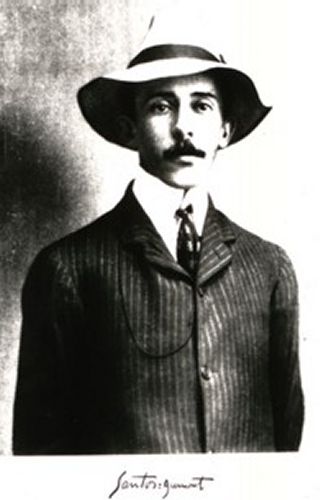

http://www.first-to-fly.com/History/History%20of%20Airplane/santos_dumont.htm
The N007 Zaslon radar was the first electronically scanned phased array radar to enter service in the world and the MiG-31 the first aircraft to have an operational scanned phased array radar
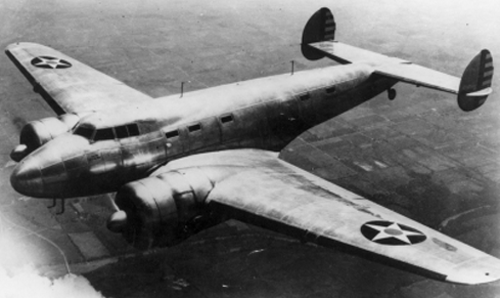
MiG-23MLDthe first successful enclosed cabin, pressurized airplane, the Lockheed XC-35 made a major contribution to the advancement of military and commercial aviation
Here are some of Honeywell`s firsts
1910s
First autopilot flight controller (Sperry Gyro Stabilizer) – 1914
1920s
First navigation system (Pioneer Instruments Earth Inductor Compass) – 1927
First modern instrument-only flight (Sperry Horizon and Directional Gyro) – 1929
1930s
First directional system (Sperry Gyropilot & Sperry Radio Direction Finder) – 1933
First automatic direction finder (Pioneer ADF) – 1936
First all-aluminum aircraft intercooler (B-17) – 1939
1940s
First surge protection valve for oil coolers (P38) – 1940
First heat exchangers for cooling pressurized cabin air (Stratoliner) -1940
First volume production of cabin pressure regulators (B-29) – 1941
First elliptical oil cooler -1942
First in the perfection of an air expansion turbine for aircraft cabin refrigeration (F-80) – 1944
First dual-differential cabin pressure control (F-80) – 1945
First air cycle ECS (Constellation) – 1945
First panel-mounted line of avionics equipment for general aviation aircraft – 1945
First conception and development of low-pressure pneumatic starting system for main jet engine (XP5Y/R3Y) –
1946
First production commercial cabin pressure system (Constellation) – 1946
First cabin-pressurization system (G Pressurization System for Bell X-1 Experimental Aircraft) – 1947
First engine-driven cabin air compressor (Constellation and Convair 240/340) – 1947
First aircraft air turbine starter capable of giving unlimited starts (XP5Y) – 1948
First “push-button” flight across Atlantic (Douglas C-54 with Bendix Automatic Engine controls) – 1948
First production of air turbine auxiliary drive for aircraft (XP5Y) – 1949
1950s
First solid-propellant electro-hydraulic power system for missiles (CF100) – 1950
First ram air turbine for aircraft emergency power – 1951
First all-pneumatic temperature control system (F-11F) – 1952
First combined auxiliary power and refrigeration unit – 1953
First airborne operated and started auxiliary gas turbine using main engine augmented air (C-133) – 1954
First commercial weather radar system (Bendix RDR-1) – 1954
First transistorized autopilot (Eclipse-Pioneer PB20 on USAF C-133) – 1954
First gas turbine engine (T53 & T55 helicopter engines) – 1953/1955
First fully optimized central air data system (F4H (A3J) – 1955
First production turbine accessory power unit for missiles (Nike Hercules) – 1956
First aircraft-type vapor cycle cooling system (Electra) – 1956
First cabin air turbocompressor (707) – 1957
First stainless steel plate fin heat exchanger (F-101) – 1957
First manned rocket launched vehicle environmental system (X-15) – 1958
First manned space vehicle oxygen system (Project Mercury) – 1959
First combined bleed air and shaft power gas turbine aircraft auxiliary power units (GTCP85) – 1959
1960s
First multi-contoured surface oil cooler (707) – 1960
First infrared cryogenic cooling system (F-14) – 1960
First complete pneumatic air cycle ECS (727) – 1961
First complete ECS for three-man, two-week Apollo spacecraft – 1961
First closed-cycle cryogenic cooling system (OV-1) – 1962
First completed JetStar.(AiResearch) – 1962
First use of gas turbine APU for commercial aircraft (727) – 1963
First development and production of a jet fuel starter for self-start capability for fighter aircraft (A7D) – 1964
First HS125 to U.S. market (AiResearch) – 1964
First extravehicular life-support chestpack (Project Gemini) – 1965
First supercritical cryogenic helium storage system on the moon – 1966
First gas turbine hydrant shipboard system for starting USN aircraft (CVA66) – 1967
First integrated APU/ECS for commercial aircraft (DC-10) – 1967
First production of full-authority APU electronic control system (747) – 1968
First production helicopter air cycle ECS (Huey Cobra) – 1968
First testing of a practical TCAS system – 1968
First Inertial Navigation System (INS) in a business aircraft (AiResearch) – 1968
First digital air inlet control system (F-14) – 1969
First production application of Air Cycle Machine Foil Bearings (DC-10) – 1969
First production application of fluidic control (DC-10) – 1969
Steering System–Actuator for the Lunar Lander – 1969
1970s
First integrated jet fuel starter/airframe-mounted accessory drive system (F15) – 1970
First rotary actuator for leading edge system (F-16) – 1971
First flight-weight electron beam gun – 1972
First corporate Boeing 727 (AiResearch) – 1972
First high-bypass turboshaft engine (TFE731) – 1972
First application of air bearings in military air cycle air conditioning (A7E) – 1973
First on-board oxygen generating system – 1973
First mechanical rotary actuator for trailing edge flap system (747-SP) – 1974
First business jet turbofan engine (TFE731) – 1975
First turbofan to fly over 55,000 feet – 1975
First production hydrazine EPU (F-16) – 1976
First digital system for General Aviation (BX-2000 VHF NAV/COM system) – 1976
First production of military load compressor APU (F-18) – 1977
First digital electronic cabin pressure control system (Sabreliner 65) – 1977
First production military bootstrap air-condition system using air bearings (F-18) – 1978
First rotary actuator for primary flight control (F-18) – 1979
First fully automatic, dual channel, micro-processor-based digital cabin pressure control system using converging nozzle valves for B757/767 – 1979
First sub-freezing high pressure water separation ECS (B767/757) – 1979
First 731 HS125 engine retrofit (AiResearch) – 1979
1980s
First turbine power pack (AGT1500 for M1 Tank) – 1980
First production digital micro-processor-based temperature control system (757/767) – 1980
First digital micro-processor-based, full-authority APU controller (767/757/A310) – 1981
First air turbine cartridge starter system for production fighter aircraft (F-5G) – 1981
1990s
First Integrated Bleed Air/Cabin Pressure Controller (B777) – 1991
First Integrated Vapor Cycle/Air Cycle/Thermal Management System (F-22) – 1993
First air bearing motor/blower for space application (ISS CDRA) – 1994
First FAA certification for Forward Looking Wind Shear weather radar system (RDR-4B) – 1994
First direct digital controlled motor for space actuation (ISS IMCA) -1996
First oil less, variable speed vapor cycle (F-22) – 1999
First FAA certification for Forward Looking Wind Shear weather radar system (RDR-4B) – 1994
2000s
First production integration of ECS/APU/thermal management/electric power into single system (JSF) – 2002
First integrated APU/ECS controller/control (Hawker Horizon) – 2002
First titanium heat exchanger (JSF) – 2003
First high accuracy, fuel pump metering, “pump-on-demand”, fuel control (PTMS) -2003
First modular aerospace control (MAC) – 2003
http://www.honeywell.com/sites/aero/technology/industryfirsts.htm
MiG-23MLDThe most cursory examination of the work of earlier pioneers such as Maxim ( one of whose propellers is in the Science museum in London) and Stringfellow (1848) will disprove that fallacy.
A lot of early work on aerofoil propellers was derived from hydrodynamic knowledge well established for ships’ propellers – where many of the basic charactersitics were identified.
That many pioneers chose for various reasons to ignore this work is another issue.
I do not deny there is a possibility these two persons could had a similar design or idea, however the first ones to have used an airfoil practically into a real flying machine and used it with a twisted airfoil as a propelling divice that today we call it propeller, well undoutedly the Wright brothers are ought to be called the inventors of the modern propellers specially when they used a primitive wind tunnel.

Stringfellow`s model effectivelly shows a properller, but what The Wright brothers brought was a propeller based upon an airfoil twisted so the inner part would spin faster in relation with the rotation of the propeller so giving an even lift across the whole propeller blade, the propeller was not a Wright brothers`s invention but only the twisting of the propeller blades
The Wrights knew they had to get maximum thrust from a very small engine. They settled on a propeller design with an airfoil cross-section. They twisted its blade so the pitch was high near the hub where it moved slowly, and lower out at the tip
source http://www.ctie.monash.edu.au/hargrave/stringfellow.html
MiG-23MLDAre you having us to believe that the HSS-1 (Seabat) didn’t have a dipping sonar ?
I do not know if it did or not have a dipping sonar i know it had a sonar though, if it was a dipping sonar well my appologies too, if the S-58 was the first to have a dipping sonar well it is interesting too.
MiG-23MLD
F6U-1 Pirate the first jet aircraft with an operational and mass built afterburner, the production F6U-1, the first production afterburner
With the advent of the first turbofan jet engine in the world, the Rolls-Royce RB.80 Conway several aircraft civil and military benefited with this event, among them the Boeing 707 and the VC-10
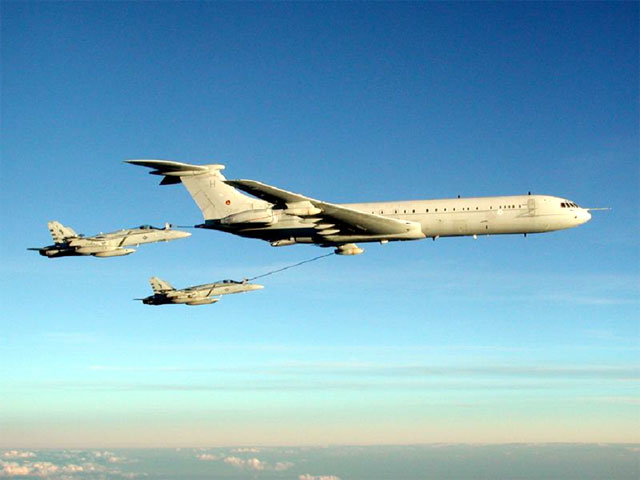
The first afterburner turbofan was the TF-30 used on the F-111 and F-14A


MiG-23MLDQuote:
Originally Posted by MiG-23MLD
1924 S-29A the First twin-engine airplane capable of flying on one engine and First all metal aircraftEr , Shorts Silver Streak of 1920?
Quote:
Originally Posted by MiG-23MLD1958 S-61 First helicopter with dipping sonar
Quite an achievement as the S-61 didn’t fly until March 1959.
In any event preceded, amongst others, by the Bell HSL-1Quote:
Originally Posted by MiG-23MLD1973 CH-53E First three-engine helicopter
Sud Aviation might disagree with their Frelon, first flown in June 1959I won’t go on.
Effectively, you are right the Super Frelon was flown in 1962 and was the first three engined Helicopter, my apollogies.
Source
here are some Eurocopter`s wold firsts
1955
Firsts turbine helicopter developed in cooperation with Turbomeca. ALOUETTE II.
1959
First anti-tank helicopter. ALOUETTE III with AS11/AS12 anti-tank missiles.
1962
First three-engines helicopter. SUPER-FRELON.
1967
First rigid rotor hub. BO105 Rotor Head.
1968
First composite main rotor blades “fenestron” tail rotor. GAZELLE SA 341 – Franco-English Program.
1974
First composite “STARFLEX” hub. ECUREUIL Rotor Head.
1988
First B.M.R Bearingless Main Rotor. BO108 Prototype.
1989
First heliborne surveillance radar. HORIZON System on COUGAR AS 532.
1997
First “Fly by Wire” transport helicopter 100% composite airframe. NH90 European development program
You are right the S-61 flew in 1959 however it still was the first helicopter with dipping sonar
In December 1957, the US Navy gave the go-ahead to a new programme for a very high performance helicopter with advanced technology, to replace the outdated S-58 (HSS-1). Sikorsky was approached again and submitted a project for a big twin turbine aircraft with a boat-type hull and retractable landing gear for amphibious operations. The aircraft had all-weather capability, a good choice of weapons loads and four hours’ endurance. The project was designated S-61 and the HSS-2 prototype flew on 11 March 1959. The prototype was followed by seven pre-production aircraft (YHSS-2) which successfully completed service trials in 1960. The US Navy ordered the first ten S-61B/HSS-2 for delivery starting in September 1961. The helicopters were later redesignated SH-3A Sea King. One of the first production models set up a world speed record of 339 km/h on 5 February 1962.
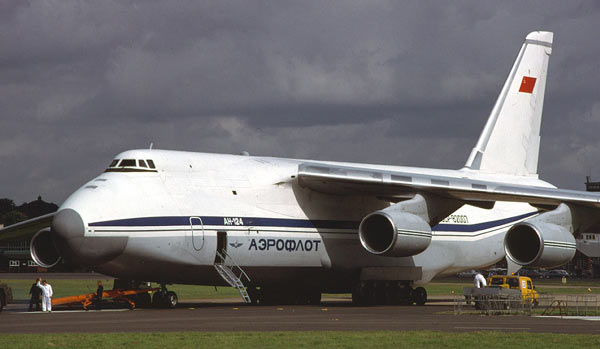
MiG-23MLDThere are two aspects to mention about the C-5 launching the Minuteman missile, One it was only a test and second the An-124 can do the same in fact there is a commercial use of the An-124 as a platform for satellite launcher rockets
This is the link to the Russian An-124 satellite launcher
http://www.polet.ru/EN/slaid05.shtml
http://www.airlaunch.ru/
http://www.airlaunch.ru/Images/SWF/SLV_Ejections.swf
So the title of the heaviest combat aircraft is not exactly hold by the C-5 but by the Tu-160
MiG-23MLDThe McDonnell XF-85 Goblin was the smallest jet-propelled fighter ever built. It was designed to be dropped from a bomber, perform its mission, and then return to the mother ship. Two were build in the late 1940s.


MiG-23MLDSome Helicopter firsts
1909 H-1, Igor constructed his First helicopter “This machine was a failure to the extent that it could not fly. In other respects it was a very important and necessary stepping stone.”
1910 S-2, Igor Sikorsky Flew for the First time
1911 S-5, Igor’s First pilot license issued from the Imperial Aero Club of Russia
1912 S-6A won First place in the Moscow Aircraft Competition, pilot Igor Sikorsky
1913 S-9 First monocoque fuselage constructed in Russia
1913 S-10 establish a Russian Aviation Record flying 500 kilometers in 4 hrs and 56 min
1913 S-12 First Russian designed aircraft capable of a loop
1913 S-12 Established a Russian Altitude Record of 3,680m
1913 Igor Sikorsky flew the S-21 “Grand” the World’s First successful four-engine plane
1913 S-21 set a World’s Record for duration and literally set one World’s Record after another for a four-engine plane with each fligh
1913 S-10 & S-11 won First and Second place in the Petrograd Military Competition
1914 S-27 set two World Records for payload and flight duration
1914 S-27 with pontoons was the largest seaplane built in the World
1916 S-27G with 880 horsepower was the largest plane produced in the World
1923 Igor founded his Sikorsky Aero Engineering Corporation
1924 S-29A the First twin-engine airplane capable of flying on one engine and First all metal aircraft
1925 S-29A the World’s First airplane to broadcast a radio musical program in-flight
1926 S-29A the World’s First airplane to show a motion picture in-flight
1929 S-37 First airplane to fly over the Andes Mountains
1929 S-38 extensively used in pioneering Central and South American air routes by Pan American Airways
1929 S-38 Piloted by Charles Lindbergh inaugurated air mail service between the United States and the Panama
1931 S-40 “American Clipper” was the Worlds largest airliner produced
1934 S-42 First production aircraft with wing flaps which allowed high flight speeds and low landing speeds.
1934 S-42 Established ten World Records, of which eight were set on one flight. This flight of August 1st vaulted the United States into First place holder of World Aviation Records
1935 S-42 inaugurated the First transoceanic air service, flying the first airmail from Honolulu to the mainland.
1937 S-42 made the First regular airline crossing of the North Atlantic Ocean and pioneered the transpacific route to Asi
1936 S-43 Established four World Altitude Records
1937 S-44 is the World’s longest-range commercial aircraft. Only aircraft to have flown commercial scheduled non-stop across the north and south Atlantic. This was the last fixed-wing aircraft built by Sikorsky
1939 VS-300 First single main rotor helicopter successfully produced in the World and literally set one World’s Record after another with each flight
1940 Igor Sikorsky is awarded Connecticut Helicopter License No. 1 1941 VS-300 breaks the World helicopter endurance record, 1 hour, 32 minutes and 26.1 seconds
1941 VS-300 fitted with rubber floats was the World’s First practical amphibian helicopter
1942 Igor Sikorsky’s book, The Message of the Lord’s Prayer, appears in print
1942 XR-4 World’s First production helicopter is delivered and this is the first cross-country flight of a helicopter in the United States
1943 R-4 First mass produced helicopter
1943 R-4 First helicopter to land on a ship – Bunker Hill
1944 XR-4 First helicopter Mercy Mission piloted by Commander Frank Erickson
1944 R-4 First Combat Rescue using a helicopter piloted by Lieutenant Carter Harman
1945 R-5 First helicopter equipped with armament
1945 S-51 First Civilian Rescue using a helicopter piloted by Dimity “Jimmy” Viner
1945 R-4 is the only helicopter to serve in World War II
1947 S-51 piloted by Jimmy Viner performed the First Navel Rescue
1947 S-51 Los Angeles Airways started the World’s First helicopter airmail service
1948 S-51 First amphibious assault with a helicopter
1949 S-52 established a World Helicopter Speed Record of 129.5 mph
1949 S-52 First helicopter to perform a loop
1949 S-52 World’s first production helicopter with metal rotor blades
1950 S-51 First helicopter to be equipped with a three-axis automatic flight-control system
1950 S-51 first helicopter to be air-towed by an airplane
1950 S-51 holds all the World recognized international helicopter records
1951 S-55 First helicopter to retrieve an aircraft
1952 S-55 First anti-submarine warfare helicopter
1952 S-55 First helicopter to fly across the Atlantic Ocean establishing a World Record
1952 S-55 First helicopter equipped with pre-tracked interchangeable rotor blades
1953 S-56 established World Speed and Altitude Records
1953 S-55 is the only transport-type helicopter certified by the Civil Aeronautics Administration for commercial operations
1953 S-56 First helicopter with a five-blade main rotor
1953 S-56 First helicopter with automatic blade and tail folding
1953 S-56 First helicopter with power-operated loading
1953 S-52 First turbine-powered helicopter
1954 S-59 with turbine powered set a World’s speed record of 156.005 mph and a World’s altitude record of 24,500 feet
1955 S-56 First production twin-engine helicopter
1955 S-56 First radar equipped helicopter
1956 S-58 First helicopter approved by Navy for instrument flight rating
1956 S-58 First helicopter to use an automatic flight control system
1956 S-58 First helicopter with automatic hover positioning system
1957 S-58 was used by President Eisenhower to become the First American President to use a helicopter built specifically for his needs
1958 S-62 First helicopter with a amphibious hull
1958 S-61 First helicopter with energy-absorbing landing gear
1958 S-61 First helicopter CAA certified for automatic stabilization
1958 S-61 First helicopter with dipping sonar
1959 S-58 The First helicopter to be used for power-line construction
1959 S-60 First helicopter with aft-facing control station
1959 S-61 World’s largest amphibious helicopter
1959 S-61 First helicopter that could both search out and destroy enemy submarines
1960 S-62 made Los Angeles Airways the First carrier in the World to use a turbine engine helicopter
1960 S-58 was the First helicopter to fire a radio-controlled missile
1960 S-61L First helicopter designed specifically for airline use
1960 S-55 First aerial recovery by helicopter of parachute
1961 S-58 First helicopter to retrieve an U.S. astronaut, Commander Alan Shephard, America’s First man in space
1961 S-61L was the World’s First Multi-turbine helicopter certified for passenger transport
1961 S-61 made the fastest helicopter crossing of the country (average speed of 150 mph)
1962 S-61 established a World helicopter speed record of 210.65 mph, This was the First time a helicopter traveled faster than 200 mph on a established course
1962 S-61 established five helicopter World Speed Records
1962 S-64 First production flying crane helicopter
1962 S-64 First production helicopter with aft-facing control station
1962 S-64 First helicopter with a fly-by-wire control system
1964 S-65 First six-blade main rotor
1964 S-65 First helicopter with a suction fuel system
1964 S-65 First helicopter with a collective bias-droop compensation control
1965 RH-53D First production mine-countermeasures helicopter
1965 S-61F First experimental compound helicopter with a full complement of aircraft control surfaces
1965 S-61 First aerial refueling of a helicopter from a standard tanker airplane
1965 S-61 Rotor-Prop First helicopter to demonstrate conversion of tail rotor to propeller
1965 S-61 made the First nonstop, transcontinental, flight setting a World’s record for distance of 2,105 miles
1965 S-61N made the First transatlantic crossing by a commercial helicopter
1965 S-64 claimed three World’s Altitude Records
1966 S-64 First helicopter with engine inlet particle separator
1968 S-65 First large helicopter to loop and roll
1968 S-65 First titanium-spar rotor blade
1969 S-65 First helicopter with an infrared suppressor system
1970 S-65 First helicopter transpacific crossing
1970 S-67 First prototype gunship with wings and dive brakes
1970 S-67 set a World Speed Record
1970 S-67 First helicopter with swept-tip rotor blades
1971 S-70 First helicopter with a canted tail rotor
1973 S-69 First to fly the Advancing Blade Concept (ABC)
1973 S-70 First successful flight of an all composite, bearingless tail rotor
1973 CH-53E First three-engine helicopter
1973 CH-53E First seven-blade main rotor helicopter
1977 S-76 First helicopter designed for civil transportation
1980 S-70 first helicopter qualified to fly into know moderate icing conditions
1984 S-75 First all-composite airframe (ACAP) 1985 First helicopter with single-pilot research cockpit, fly-by-wire, sidearm controls, voice interaction (SHADOW)
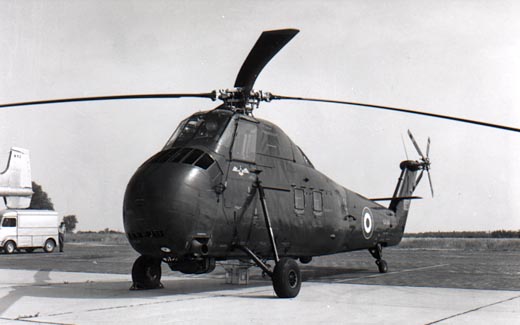

Source http://www.sikorskyarchives.com/timeline.html
source
Even so, the XP-86 was only able to achieve supersonic flight while in a dive. The first jet-powered aircraft to do so in level flight was another product of North American Aviation, the YF-100 Super Sabre.
MiG-23MLDAnd what about this one?
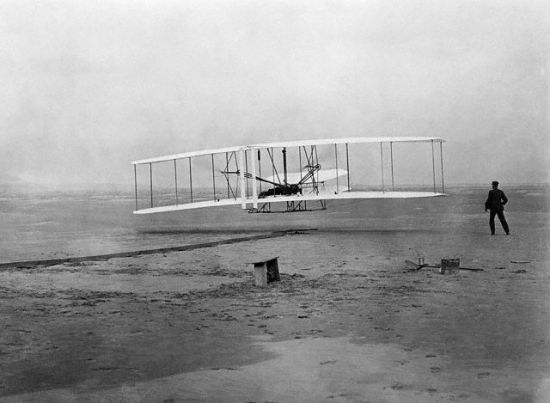
17th December 1903! First manned & powered flight
Wright Flyer I
One of the most important achievements the wright Brothers gave to aviation was the modifcation of the propeller with a twist, so propellers as we know them were invented by the wright brothers
The Wrights knew they had to get maximum thrust from a very small engine. They settled on a propeller design with an airfoil cross-section. They twisted its blade so the pitch was high near the hub where it moved slowly, and lower out at the tip.


 Sign In