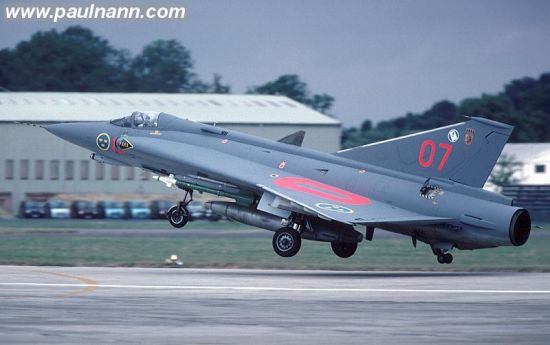
MiG-23MLD
Then why are you claiming Jewish superiority? Why do you repeatedly claim something on the other side of the world is Israeli just because you’re a Jew?
Israel denies any passing of the Lavi to China.
All five Lavi are accounted for in Israel not China.
You are basing everything not on facts but your assumption that the Jews are somehow so superior that even a plane that flies in China and only in China is Jewish.
That makes no sense at all.
One, the money came from US. Two, transferring anything to China would make the fiscal situation in Israel WORSE because it would result in the cutting off of American aid.
If you have such an expensive plane that depended on American funding and aid then how in hell would China be able to afford it when it doesn’t have American funding and aid?
A small nation that have a very limited aviation industry.
No doubt there were transfer. reasonable.
Reasonable.
Idiotic assumption based on your desperation to claim the J-10 as Israeli and to enhance your feeling of ethnic superiority.
The direct ancestor of the J-10 was the J-9. That was the direct lineage.
The Lavi could not be made in Israel which has all the American standard machine tools and infrastructure available to it but somehow it was made in China? Bullsh1t.
There might be Israeli technology passed (or American technology betrayed) to China.
But how can a plane made in China made with Chinese, not American parts, be the Lavi? How could a plane built from entirely different infrastructure with a different engine in China be the Lavi and not new plane or a development of the J-9?
Golden Dragon you are misunderstanding what i am saying. not all cultures have the same concept of what is progress niether all cultures consider life has the same goals.
The Jewish people are one of the oldest cultures and one culture that has set many of the modern standards of what we usually call progress at least in the Western world.
This has allowed that many jews have become important scientists and inventors.
Physically speaking the Israelies or jews are not different to any other human, however the Jewish people consider education an important aspect in their lives and science an important aspect of human life.
This has allowed that Israel has one of the highest number of scientist and researchers as percentage of their population.
The Lavi has israeli technology that is a reality and the Lavi was not a failure, the fact that Israel gave technology to China is already a fact, what is usually unknown is how much IAI Lavi technology they gave.
SIBNIA affirm they gave a lot of the IAI lavi technology, the US the same.
MiG-23MLDSo I see. Your main point is to claim that Jews are superior. So the J-10 must be Israeli :rolleyes:
Jews are so superior that even a failed design like the Lavi that Israel can’t productize and which the US didn’t want (even though it is paid for by Americans) would somehow become a plane in China when the Chinese infrastructure was not set up to create planes requiring American parts and technology?
Then how come you supermen didn’t simply build the Lavi and induct it into the Israeli air force?
How come they need to lie to its friend and protector, the US?
Wouldn’t such smart people know that it is suicidal to betray your friend and protector for a few billion dollars?
Why you answer to your self start talking to me.
First Jews and Israelies are humans like any one, commit mistakes like any humans, do evil deeds like any one have good virtues like any one, do good deeds like any one else, all humanity is the same.
The IAI lavi was transfered because IAI need to recover all the investment poured into the Lavi.
Israel has the technological capability to build aircraft but was uncapable of financing the Lavi due to political opposition by the US and economic troubles.
Israel is a small nations and has had help from the US and France.
China needed to catch up the fastest it could so technology transfers were needed.
Israel has been involved in the J-10 progam that is not a secret neither something israel denies.
The IAI Lavi is a product of Israeli and american technology, Israel built 60% iof the Lavi and the US suplied 40% of the Lavi components.
Israel denies passing all the IAI Lavi technology but not passing some of it.
Severl times the US complaigned Israel passed the IAI Lavi technology to China some of which was US tech transfer to israel.
Russia`s SIBNIA claimed the J-10 is more less a Lavi Variant.
Conclusion: The IAI Lavi is the direct ancestor of the J-10, the J-10 has been modified to acomodate a new engine and fill newer requirements.
MiG-23MLDCool.
So your whole point in arguing the that J-10 is the Lavi is to ignore facts and claim the superiority of the Jews over other races.
:rolleyes:
It is not matter of racial superiority, it is a fact that great scientists have been jews and these have links to the state of Israel, many have imigrated to Israel, so if you think Israel is uncapable of designing a plane you are wrong, of course Israel is a small country and has had help form the US or France but definitively it has the capability to develop aircraft
MiG-23MLDCockpit full of American systems? :rolleyes:
If China had the same amount of technology and funding from the US then yes, the Lavi could be built in China. But China is embargoed from American parts and infrastructure. So how could the Chinese made use of the Lavi design? Does the Lavi design magically create American subsystems and parts that you see in those pretty pictures?
Sorry Strevitel.
You are so desperate to call the J-10 an Israeli plane that you refuse to see that the Lavi is a failed plane in Israel which Israel never put into production.
That the US never made use of the design even though the Lavi was funded by Americans and was created out of American technology and American parts.
You are using all sorts of conspiracies theories to link a failed project in ISRAEL to a plane in CHINA.
Two different countries. Two different cultures. Two different languages. And two different aviation infrastructures.
Sorry, the J-10 flies in China and only in China. And you are so desperate to call it Israeli that you are forgetting the known facts.
1. Israel denies the Lavi was ever passed to China,
2. The Lavi never made production in Israel and the US never made use of it either,
3. Israel has NEVER developed a fully Israeli plane,
4. China cannot produce an American plane like the Lavi. Otherwise we would see the F-16 in China.
Yes Mister Goldie bearcat, tigershark
The only thing you forget is Israel has great scientists and engineers, tell me nation of few million people who has scientist as Einstein, Theodore Karman, John Neumann, Eugene Wigner, Leo Szilard, Hans Bethe, Edward Teller marcel boch (dassault ) Sigmund Freud, Karl marx
Jewish Laureates of Nobel Prize in Physics
Year Nobel Laureate Country of birth
2005 Glauber, Roy J.
“for his contribution to the quantum theory of optical coherence” USA
2004 Gross, David J.
“for the discovery of asymptotic freedom in the theory of the strong interaction” USA
2004 Politzer, H. David
“for the discovery of asymptotic freedom in the theory of the strong interaction” USA
2003 Abrikosov, Alexei A.
“for pioneering contributions to the theory of superconductors and superfluids” Russia
2003 Ginzburg, Vitaly L.
“for pioneering contributions to the theory of superconductors and superfluids” Russia
2000 Alferov, Zhores I.
“for basic work on information and communication technology” Russia
1997 Cohen-Tannoudji, Claude
“for development of methods to cool and trap atoms with laser light” Algeria
1996 Lee, David M.
“for their discovery of superfluidity in helium-3” USA
1995 Perl, Martin L.
“for the discovery of the tau lepton ” Russia
1995 Reines, Frederick
“for the detection of the neutrino” USA
1992 Charpak, Georges
“for his invention and development of particle detectors, in particular the multiwire proportional chamber” Poland
1990 Friedman, Jerome I.
“for their pioneering investigations concerning deep inelastic scattering of electrons on protons and bound neutrons, which have been of essential importance for the development of the quark model in particle physics” USA
1988 Lederman, Leon M.
“for the neutrino beam method and the demonstration of the doublet structure of the leptons through the discovery of the muon neutrino” USA
1988 Schwartz, Melvin
“for the neutrino beam method and the demonstration of the doublet structure of the leptons through the discovery of the muon neutrino” USA
1988 Steinberger, Jack
“for the neutrino beam method and the demonstration of the doublet structure of the leptons through the discovery of the muon neutrino” Germany
1979 Glashow, Sheldon L.
“for their contributions to the theory of the unified weak and electromagnetic interaction between elementary particles, including inter alia the prediction of the weak neutral current” USA
1979 Weinberg, Steven
“for their contributions to the theory of the unified weak and electromagnetic interaction between elementary particles, including inter alia the prediction of the weak neutral current” USA
1978 Penzias, Arno A.
“for their discovery of cosmic microwave background radiation” Germany
1976 Richter, Burton
“for their pioneering work in the discovery of a heavy elementary particle of a new kind” USA
1975 Mottelson, Ben Roy
“for the discovery of the connection between collective motion and particle motion in atomic nuclei and the development of the theory of the structure of the atomic nucleus based on this connection” USA
1973 Josephson, Brian D.
“for his theoretical predictions of the properties of a supercurrent through a tunnel barrier, in particular those phenomena which are generally known as the Josephson effects” UK
1972 Cooper, Leon N.
“for their jointly developed theory of superconductivity, usually called the BCS-theory” USA
1971 Gabor, Dennis
“for his invention and development of the holographic method” Hungary
1969 Gell-Mann, Murray
“for his contributions and discoveries concerning the classification of elementary particles and their interactions” USA
1967 Bethe, Hans A.
“for his contributions to the theory of nuclear reactions, especially his discoveries concerning the energy production in stars” Germany
1965 Feynman, Richard P.
“for their fundamental work in quantum electrodynamics, with deep-ploughing consequences for the physics of elementary particles” USA
1965 Schwinger, Julian
“for their fundamental work in quantum electrodynamics, with deep-ploughing consequences for the physics of elementary particles” USA
1963 Wigner, Eugene P.
“for his contributions to the theory of the atomic nucleus and the elementary particles, particularly through the discovery and application of fundamental symmetry principles” Hungary
1962 Landau, Lev D.
“for his pioneering theories for condensed matter, especially liquid helium” Azerbaijan
1961 Hofstadter, Robert
“for his pioneering studies of electron scattering in atomic nuclei and for his thereby achieved discoveries concerning the structure of the nucleons” USA
1960 Glaser, Donald A.
“for the invention of the bubble chamber” USA
1959 Segre, Emilio Gino
“for their discovery of the antiproton” Italy
1958 Frank, Il’ja M.
“for the discovery and the interpretation of the Cherenkov effect” Russia
1958 Tamm, Igor Y.
“for the discovery and the interpretation of the Cherenkov effect” Russia
1954 Born, Max
“for his fundamental research in quantum mechanics, especially for his statistical interpretation of the wavefunction” Germany
1952 Bloch, Felix
“for their development of new methods for nuclear magnetic precision measurements and discoveries in connection therewith” Switzerland
1945 Pauli, Wolfgang
“for the discovery of the Exclusion Principle, also called the Pauli Principle” Austria
1944 Rabi, Isidor Isaac
“for his resonance method for recording the magnetic properties of atomic nuclei” Austria
1943 Stern, Otto
“for his contribution to the development of the molecular ray method and his discovery of the magnetic moment of the proton” Germany
1925 Franck, James
“for their discovery of the laws governing the impact of an electron upon an atom” Germany
1922 Bohr, Niels
“for his services in the investigation of the structure of atoms and of the radiation emanating from them” Denmark
1921 Einstein, Albert
“for his services to Theoretical Physics, and especially for his discovery of the law of the photoelectric effect” Germany
1908 Lippmann, Gabriel
“for his method of reproducing colors photographically based on the phenomenon of interference” Luxembourg
1907 Michelson, Albert A.
“for his optical precision instruments and the spectroscopic and metrological investigations carried out with their aid” Poland
Total number of Jewish Laureates: 44
If you think a nation which has immigrants from all over the world and links with so many jewish scientists is not capable of designing an aircraft show you are quit ignorant about the state of science and technology in Israel.
MiG-23MLDAn American funded design that didn’t work for either the IAF or the USAF. But you see it in China?
Sounds like you are so desperate to claim the failed Lavi as “successful” because you are a Jew that you’re willing accept conspiracy theories :rolleyes:
Why not claim the EF2000 as well? Oh right, you already claimed the X-31 and every canard-delta in the world as Israeli :rolleyes:
Bearcat, tigershark
here the only desperate is you, you are desperate because you can not prove SIBNIA wrong, you are desperate because you can not prove, Russia did not have engine technology previous to the nene, you can not prove the Lavi was not advanced in 1986. Show me a 1986 J-8II cockpit and prove me it was as modern looking as this Lavi cockpit from 1986.

What canard delta wing aircraft had China in 1986?
here is your advanced Chinese technology of 1986 and that is even newer it is J-8IIM cockpit 😀
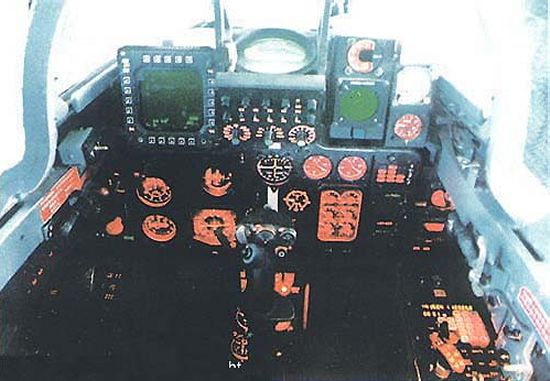
In fact buddy the PLAAF are humble enough to acknowledge they need ask to Israel for Technology and were smart enough to get avoid many years of R&D.
MiG-23MLDI don’t know if there’s a size limit for canards, but I do believe the Mirage 2000 has strakes, or small vortex generators, not canards.
Strake and canards what is the difference? foreplanes are moveable, the JAS-39, Eurofighter have forerplanes, the Kfir, Mirage 2000 have strakes or canards because these are fixed and have the only function of creating vortexes
The Mirage 4000 and Mirage 2000 have canards fixed to the inlet trunks, the Mirage 4000 canards are very easy to recognize, the Mirage 2000 canards are so small that sometimes are called strakes however both fixed canards and strakes have the same function
MiG-23MLDThe Russians had not shortage in metal alloys, but they were eager to learn the “secrets” of ‘Nimonic **’. The RD-45F is a direct copy of Nene. Despite Russian paper claims, their jet-engine development started late (1944/45), but they catched up very fast. Even the Americans were in need of British expertise, when in a much more favourable position before. As we can see, such a tempory lead does not last for ever.
The British were no idiots, when they sold their jet-engines to a former ally. At that time RR had realised that the radial jet-engine will be overtaken by the axial-engine in the near future. They did not realize the will and determination of the Russian s to bring the Nene into mass-production so fast without the related licenses.
The Russians faced a similar fate with China.
Your last section shows, that the Russian stick to the market rules now and exspect the same from the Chinese.
In 1945, all the great powers of WWII had jet engine technology, the Soviet Union was not an exception, after Germany and England, both the US and Russia had domestic jet engines, both future Super powers were behind Germany and Britain in jet technology so they used the German research to speed up their own technology, by 1948 germany was out of the race and only the Soviet Union, the USA and Britan remained, however the English still had some superiority over the Soviet Union and that is when the nene technology was usueful, by 1955 Russia was already getting ahead of Britain
MiG-23MLDPlease let the propaganda aside about the heritage of the former SU engine-production and development. In the “Homeland” of comunismn all important findings had been made in the same time-scale or even earlier of their own. Maybe most Russians and many other do that believe till today for different reasons. Reality is, that from the 50s the former SU reached the top-league in the aviation engine business. (UK, USA, SU)
If you read all articles never these claimed the Russian build jet engines S-18 or TR-1 were more powerful than the RR Nene in what respect thrust, the Russians were lagging in what respects metal alloys, but it does not mean the Russians did not have domestic jet engines before the RR nene, the only thing the Russians did was to get the metal technology needed for more powerful engines and the Engine to power the MiG-15 faster than with a domestic design.
On May 28, 1948, the hunter Known-11 Sukhoï twin-jet aircraft took the air for the first time followed closely by the bomber Ilyushine It-22, both motorized by the TR-1. They were the first Soviet jets to fly with a turbojet of national design.
Lyulka quickly started design of an improved version, the TR-1A, of a push of 1600 kgp and one lifespan 35 hours. This engine was more powerful than Jumo 004 and BMW 003 (and than their copy RD-10 and RD-20) but they remained less powerful than the British engines of the same time. Moreover, they had a specific consumption too high.
By 1948 Russia had russian developed and built engines more advanced than the Jumo 004 but still could not produce engines in the range of beyond 2000kg of thrust.
The whole aspect is this, since Russia built their first jet engines in the 1940s, they only included some aspects of the design of the Jumo and Nene into their engines and they did it, not because they did not have domestic jet engines and engine technology but because it shortened the time taken to build a jet in the Class of the MiG-15.
China to the contrary since the 1950s to the year 2000 relied in Russian and British technology in what respect jet engine technology to power their jets domestically and when it did not have the manufacturing license to build them in China simply the Chinese had to content to buy the engines directly from the original manufacturer and this situation has not changed a lot even with the fact they have designed 100% chinese engines.
MiG-23MLDThe dumbest thing I ever heard.
The Lavi is a failed design that was based on American technology (F-16) to begin with. It was in no way, shape or form ahead of the F-16 or F-18.
If it were, the Lavi design (which is basically American with American-funding and dependent on American technology and parts) would have been made into an American plane.
There is no American Lavi in the USAF just as there is no Israeli Lavi in the IAF which tells you how “advance” the design was.
There is the IAI Lavi derivative in the PLAAF AKA J-10 it tells you how advanced the lavi was ask SIBNIA :dev2:
MiG-23MLDHardware and infrastructure is everything. If you’ve ever been in involved in a business that did any kind of manufacturing you’d understand.
You can design the greatest thing in the world and you would NOT be able to make it unless you’ve designed it with the knowledge of the infrastructure you have.
Are you saying that you need to design something first then spend the next 15 years developing and building the infrastructure to actually make that design?
If design were so important and infrastructure were so much less important then why not design a space-ship and have the machinery to make the spaceship magically appear? Why stop at airplanes?
Simply handing a design of say the Lavi that expects American subsystems and parts made to American specifications to a country like China which have an entire different infrastructure is ludicrous.
Unless you are saying that the Lavi design also includes the blueprints for the hundreds of machine tools, composite curing systems, etc. and China then spent decades building and putting those Lavi-required American infrastructure into place, the Lavi cannot be made in China.
The biggest problem we have with kids on the internet is the idea that everything is virtual and all you need is a “idea.” No, that is not the case in the real world. Parts do not grow miraculously from a paper design.
You cannot retool the massive machinery in the Chinese aviation infrastructure (which actually employs more people than the American one) when you hand them a paper design that requires US parts.
The Lavi could be made in the US or Canada if the design were handed to them. It could not be made in China just with the blue-prints.
The Super-7 formed the project base of the FC-1 project. But the FC-1 officially began in 1999 when Pakistan and China actually signed a co-development pact.
One of the provisions was that the FC-1 would be modular with the engine, avionics, radar, weapon systems and even the flight control system (FBW, partial-FBW, standard) totally decoupled from air frame. That pretty much created a new aircraft that might have kept some of the Super 7 lessons but is no longer anywhere near the original Super 7 design (which was based on leveraging the J-7 parts infrastructure.)
The FC-1 probably share more with the J-10 in its backend infrastructure.
The J-11 required new infrastructure to be put into place. This also exemplifies how idiotic the idea that the J-10 could have been built with just the blueprints from the Lavi (which couldn’t even be made into a production machine in Israel.) The J-11 was a full-technology transfer that was above board and still it ran into problems (though far less than people think.)
As for Russian engines. The JH-7 flies on British technology. But then again, even Russia’s massive industry would not have flown if it were not for British engine-technology.
Was the world excited in 1950 when the first MiG-15 flew with the British Nene? Sure it was. Because the entire Russian aviation industry could be traced to the Nene does that mean we could dismiss the Russians as aircraft producers? Of course not, it would be ludicrous.
Every advancement in human technology is based on previous inventions. It’s a timeline. Fire–> gunpowder –> combustion-engine –> Nene –> Klimov. So what is your point?
Bearcat/tigershark/golden dragon
Soviet engine design had some similarities of what China did, however the Russian engine development in 1944 was far more domestic than China in 1994, the Chinese engine development had a really letargic development, today China can boast the chinese aircraft industry has achieved the capability of design jet engines after almost 50 years of building engines, Russia to the contrary was in the forefront of jet engine development since the early 1930s.
Proof read this:
From “Samoliotostroyenie v SSSR (1917-1945)” [Aircraft Development in the USSR], Vol 2, published by TsAGI in 1994, regretably with the printout of only 1,200 copies:
p426: “In 1938-1939 under the leadership of V.V.Uvarov prototype gas trubine powerplants GTU-3 with the turboshaft layout rated at 1,150hp and intended for the TB-3 aircraft were built. In 1938 A.M.Lyulka who was working in Kharkov aviation institute in a team developing steam turbine for A.N.Tupolev’s heavy bomber, worked out a design of a turbojet RTD-1 with 500kg thrust with one- or two-stage centrifuge compressor driven by a gas turbine. The characteristic feature of that engine was relatively low turbine inlet temperature (650-700 deg C). The implemented design decisions and thermodynamical parametres of the RTD-1 ensured that it could be developed in relatively short time using construction materials fully mastered by that time by the industry. Estimations made by A.M.Lyulka showed that a single-seat fighter powered by the RTD-1 engine could reach the speed of 900km/h….The order adopted by the Defence Committee of the USSR’s Council of People’s Commissars [then the name of the Soviet Government] on 12 July 1940 the necessity to continue the work on the turbojet engine of A.M.Lyulka’s design was stressed with the aim to test the engine on a test rig already in December 1940”.
Naturally, not all went as the Soviet government ordered. The prototype of the engine did not appear before Germany invaded the Soviet Union and captured Kharkov. Like many other design teams and production plants, Lyulka and his engineers joined the exodus to the east. Hating “what if” approach to historical issues, I nevertheless can postulate that if not the war, the Soviets could have developed an airworthy indigenous turbojet design much earlier than it actually happened in 1947, (but still not in early 1950s as somebody in this thread suggested!). I think that captured German turbojets may be considered as some kind of a compensation.
Back to quoting the mentioned source, p435: “In the war years the work on development of A.M.Lyulka’s RTD-1 engine continued…. In 1943 under the leadership of M.I.Gudkov (one of the designers of the known LaGG-3 piston- engined fighter), a variant of the LaGG-3 powered by the RTD-1 engine was being designed. The engine was to be installed in the “step” layout at the bottom of the fuselage with jet exhaust under the tail [Yak-15 look-alike]. The maximum speed of the modified LaGG-3 was estimated at 900km/h”.
And more, p435: “The ultimate result of the work of A.M.Lyulka’s team in the war years … became ground tests of the first Soviet turbojet S-18 with the thrust of 1,030kg which were conducted in March 1945”. To add to that, the first Lyulka’s flying turbojet was the TR-1, a completely indigenous design starting a highly successful series of Lyulka engines. Two TR-1s rated at 1,300kg of thrust powered Sukhoi Su-11 fighter (the first aircraft with this designation and the one resembling, but not copied !! from Me-262) and four – Ilyushin Il-22 bomber, both flew in 1947.
http://aeroweb.lucia.it/rap/RAFAQ/JetEngines.html if you are still not convinced see this
http://www.airwar.ru/enc/engines/tr1.html or this http://xplanes.free.fr/lavo/arl-2.html http://engine.aviaport.ru/issues/03/page44.html
In fact the Su-11 (not the Su-9 derivative with delta wing) was powered by a Soviet jet engine, China until 2000 could boast it had jet engine domestic technology with the Kunlun after almost 50 years of building copies of russian engines and their derivatives
By the end of the 1960s China had enough infrastructure to develop and built jet aircraft and by the late 1980s was already developing complex aircraft programs, that it is true however aircraft technology many times has revolutionary leaps that required to China ask for foreign assistance in order to breach the gap, despite China had by 1985 domestically designed aircraft, it had no domestically designed engines and had to rely on derivatives of Russian R-11 and R-13s built in China.
The J-10 is a quit complex aircraft, it is at least a leap of 20 years from the 1960s tech emboddied in the J-8II first flown in 1986 to the J-10 first flown in 1996 and 1998, the Lavi was even ahead of the F-16 and F-18 by at least 10 years, because this aircraft represent an example of the Eurofighter and Gripen generation.
This forced China to rely in the IAI lavy and the AL-31 to breach a 20 years gap of difference in technology in less than 10 years since basicly the J-10 was first flown in the middle of the 1990s decade, around 10 years after the first J-8II was flown.
To Europe it costed more time because if you know from the early AJ-37 Viggen first flight to the Rafale and Gripen it took to Europe almost 20 years and almost 30 if we consider the first flight of the Eurofighter Typhoon in 1994.
MiG-23MLDI dun think M2000 has canards!
Why are u comparing F-16XL to Lavi and normal F-16 when u should be comparing to Tejas.
It does have canards, in the extric sense of the word, it has canards, it has not moveable foreplanes, but it has canards very small it is true but still these can be called canards
the reason i told you i like more the LCA is because as an F-16 the F-16XL is not my favorite, niether it is as cool as the LCA because i feel it looks better the inlet wing combination the LCA has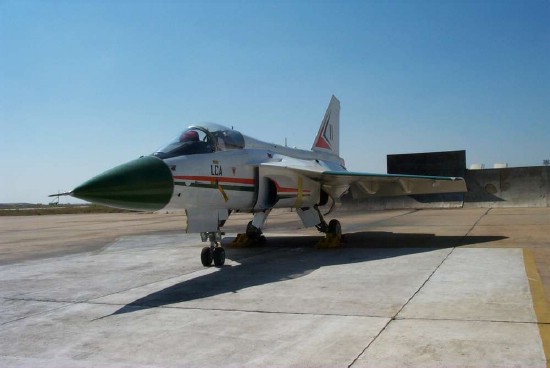

MiG-23MLDAs much as the saying goes “Beauty is in the eyes of the Beholder”, I very much believe that most of us would disagree with Tejas being the nicest delta wing aircraft. Its quite a nice looking aircraft, but far from being the nicest.
The F-16XL have more of that claim than Tejas anytime. :diablo:
I do agree beauty is in the eye of the beholder but personaly i prefer the LCA, because the F-16XL wings are not as cool as the IAI Lavi wing set niether as nice as the F-16A/C
To compare F-16XL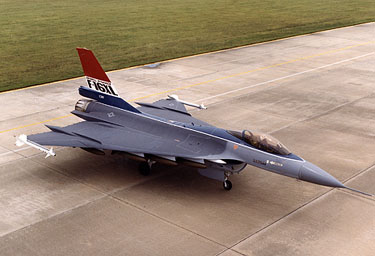
IAI Lavi

F-16C

MiG-23MLDIf we talk pure delta’s, I think the Mirage 2000 has the best looks! But if we allow dubbeldeltas, nothing beats the J35 Draken! 🙂
Well the Mirage 2000 indeed is a cool design but it is not a pure delta it has canards, it is more like the Mirage 4000.
i like the LCA because its wing is not a pure delta it is very similar to the AJ-37 Viggen wing
The J-35 is not as cool as the AJ-37 tough.
MiG-23MLDThen why are you trying to pass yourself on as one? You obviously don’t know much about stealth or aerodynamics.
I am not an expert but i have read books that explain why the F-16 has that design, in fact aerodynamics are not as difficult as you think in terms of principles, they are quit simple what is really difficult is the math needed to apply them to real aircraft and the different studies needed to get the best configuration for a different array of speeds and heights.
MiG-23MLDalteast MIG-23MLD is implying that J-10 is copy of Lavi.
by that logic China should have built Su-27 by itself without resorting to license by merely looking at it for years. if Su-27 license without engine is $2.5B. so how much will be Lavi with unlimited quantity and more advanced design (80s vs 70s) as mention.
It is not me but SIBNIA and The US intelligence services, second they are saying the J-10 is based upon the IAI Lavi, all sources say the J-10 is a more modern aircraft that included modification to the original Lavi airframe layout and aerodynamic configurations.
This is the original configuration for a IAI Lavi twin seat
This is the same concept re-worked by SIBNIA , CHENGDU and the IAI
Israeli engineeres working in the J-10 program

The basic differences are what Chengdu, SIBNIA and the Israelies deemed necesarity to improve the J-10 into a far more capable design in terms of speed


 Sign In