 MiG-23MLD
No one is opposed to the idea of that China had consultants. If Mig-23/Strevitel had treated the J-10 like the Gripen then no one would have bothered contradicting him.
Because if the Gripen doesn’t become an American plane just because it used American consultants then why should the J-10 become Israeli because of someone imagined the Lavi going to China.
But even that premise is patently false. The Lavi NEVER went to China All five prototypes remain in Israel. So why should a few drawing in Hebrew have such an impact?
China’s aviation infrastructure is entirely different from Israel. It’s like giving a kosher recipe in Hebrew to a Chinese restaurant. The Chinese cooks not only can’t read Hebrew but they can’t make it if they could since they don’t have the supplies or the rabbi in place for kosher meat.
If Israel cannot even produce and induct the Lavi for its own air force, why in hell would this American-dependent design suddenly work for China? Israel doesn’t have a full aviation industry. It depends on American technology, parts and financing. So where would the Chinese get those American parts?
Now, it would be FAR more plausible for American and British consultants to working in China and designing schematics for the Chinese infrastructure.
There is a reason why there were the JH-7, the Super 7 and Peace Pearl projects even though the British and Americans were far more experience aircraft designers than the Israelies.
Those American and British projects leveraged China’s own industrial infrastructure.
The Lavi is exactly the opposite. It is a plane so dependent on American parts that Israel could not build it without American agreement. It didn’t leverage the Chinese aviation infrastructure at all.
It is time we stop believing that a “design” would allow you to suddenly materialize an airplane. The real world is still made out of heavy machinery and metal. Not some “design” on paper. There are millions of designs in China. But until the 1980s, the Chinese infrastructure was not in place for anything beyond the J8II.
What the J-10 was built, it was because the Chinese infrastructure was in place for it. Not because of some drawings in Hebrew.
Tigershark/golden dragon
Israel is not inferior to China specially since China is not powering series aircraft without russian engines yet, rest of engines are copies Israel can make copies.
The Israel also cancelled the IAI Lavi due to US pressure but also under their own economical problems.
See this small detail, a five million country can have space launcher build by IAI, AWACS built by IAI, latest generation fighters and jet airliners, latest SAMs, you should give credit that that small nation tiny as an ANT can still have better AAMs than China adn even turn an F-16 into a warplane that can beat the Su-27, J-10 and Su-30MKI
MiG-23MLDIf anyone might have helped in the design, it would be the Russians, not the Israelis. The notion that IAI acted as ‘consultants’ for the J10 airframe design is based on what? A passing resemblence between the J10 and the mostly non-Israeli designed LAVI? It might be more credible if IAI actually has some established reputation for independent design expertise, but all the indicators are to the contrary. In that list of GD, Dassault, BAe, SIBNIA, Mikoyan etc, IAI sticks out like a sour thumb. Its not even in the same leauge as any of the others, and is far behind even CAC, who has the J10 and FC1 under its belt.
The Israelis have no proven record of independent design capablity, what is the point in having ‘consultants’ who have even less experience then you? The Israelis excell at radars and avionics, and if they had a hand in the J10, their part would most likely to limited to those fields. Why is that so hard for some to comtemplate?
It is amazing how you can call IAI a lesser player
I will give you the link for IAI and check what they built, they built from AWACS,fighters, jet airliners UAV and satellite lauchers in few words IAI is as complex as Boeing http://www.iai.co.il/Default.aspx?FolderID=16122&lang=EN



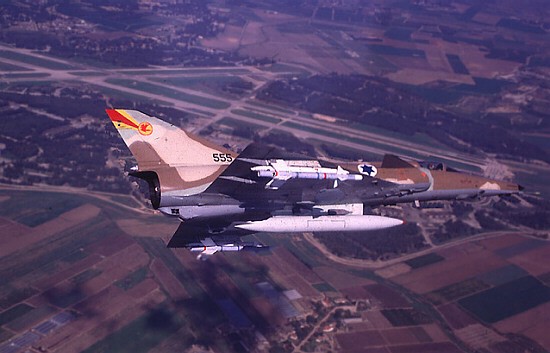

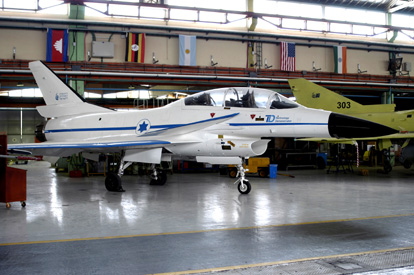
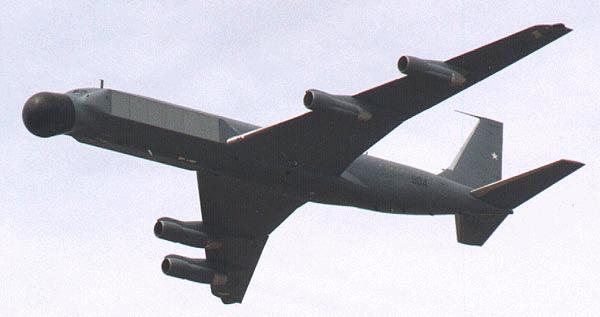

MiG-23MLDMig-23MLD
Crobato’s argument is perfectly legitimate. A fighter is normally built around an engine with former’s outer body acting like a skin around the latter. While in theory u can put Al-31F in say J-7/Mig-21 which uses WP-13, modifications for such a change would be so drastic that J-7 may not be even recogniseable after that.
Its easy for anyone to argue such a point. For example, anyone can claim that first SU-27/Mig-29 protypes were flown with WP-13. But could this be proven?
vikasrehman
Crobato is niether totally wrong niether totally right, aircraft are designed with some degree of growth potential, why? because any aircraft will be upgraded during it`s operative life, they are not doomed to just one type of powerplant, some powerplants will mean some degree of modification that many times the manufactures end up baptizing the new variant as a new aircraft, case IAI Kfir, F-20, MiG-27 etc etc however this has more to do with promotion of the new plane.
The MiG-23BN is basicly a MiG-27, the Pantera, Cheetah and Kfir are Mirage V.
What crobato claims is preferibly an aircraft will use same diameter and lenght engines in order to keep the less changed the airframe a very good example is the MiG-29.
Since the Russians articles i have read claim the Chinese used the R-13/WP-13 to power an early J-10 prototype this does not mean is not possible, the MiG-23M and MiG-23ML are powered by very slim engines as slim as the WP-13, the latest upgrade accepts AL-31, this proves you it is possible to fit an early J-10 with an WP-13.
Question is if the AL-31 was the second choice engine before Russia stepped up and the WS-10 was ready what engine was going to power the J-10 in 1993?
MiG-23MLDGood time for a J-10 article in Combat Aircraft Magazine then!
In the current issue, the author argues that IAI acted as a consultant, just like General Dynamics consulted for the Ching Kuo, to design an aircraft for China’s needs, or Dassault was consulted on the Novi Avion. Even SAAB contracted Rockwell, MBB, and BAe for support in various areas for the Gripen. I don’t see why certain forum members seem so opposed to the idea that IAI, SIBNIA, or Mikoyan might have been contracted to support J-10 development.
The reason why the oppose this is becasue they feel offended, they will be intrenched upon a false believe due to pride.
MiG-23MLDNot without extensive airframe modifications and frankly, i doubt any MiG-23 was ever fitted with the AL-31F and flew.
Idiot. The Kfit had its rear end completely changed. Even the heat shields for the J79 are different from the Atar’s. That’s why the Kfir is not the same aircraft as the Mirage III. There are extensive airframe modifications.
You are the one with the reality denial. You can’t prove a WP-13 J-10 proto.
If an engine is fitted you look for the best advantages.
[/QUOTE]
Crobato you are wrong here is the link that proved the Indian MiG-23 are being fitted with Al-31
Истребитель-бомбардировщик МиГ-27 получит новый двигатель
Основной истребитель-бомбардировщик ВВС Индии МиГ-27 получит новый двигатель, сообщает ИТАР-ТАСС.
Соответствующее заявление сделал генеральный директор ММПП “Салют” Юрий Елисеев на проходящем в Великобритании авиасалоне Farnborough-2006.
По проекту модернизации, на истребитель-бомбардировщик МиГ-27 устанавливается один двигатель АЛ-31Ф. Новый двигатель весит на двести килограммов легче устанавливавшегося ранее Р-29Б-300, имеет на одну тонну большую, нежели старый двигатель, тягу (12300 кг/с против 11300), и одновременно на 15 процентов меньший расход топлива в номинальном режиме работы.
На вооружении ВВС Индии находится 150 истребителей бомбардировщиков МиГ-27 Bahadur. В настоящий момент предполагается модернизация 60 этих машин. Модернизируемые самолеты также пройдут капитальный ремонт и получат улучшенное бортовое оборудование, что позволит значительно увеличить их возможности.
МиГ-27 Bahadur является основным истребителем-бомбардировщиком ВВС Индии. Он создан в середине 70-х годов, а в 1986-1996 производился в Индии по лицензии.
Этот сверхзвуковой самолет с изменяемой стреловидностью крыла предназначен для нанесения ударов по наземным целям противника с применением, в том числе, и высокоточного оружия (корректируемых бомб, управляемых ракет). Модернизация истребителей-бомбардировщиков МиГ-27 и их предшественников – МиГ-23БН, по мнению специалистов, способна принести российскому ВПК не меньше миллиарда долларов в течение ближайших 10-12 лет.
Ссылки по теме
basicly they say the Indians are retrofitting Al-31 to their MiG-27s and MiG-23BN a total of 60 aircraft will be upgrade, the AL-31 will replace the R-29B-300
Link http://www.lenta.ru/news/2006/07/20/bahadur/
modifications are natural what happens many manufactures prefers to avoid them as much as possible but retroffiting a new engine is plausible
The company management also advocates the replacement of regular MiG-23 and MiG-27 engines with AL-31 engines to increase thrust and reduce weight and fuel consumption.http://mdb.cast.ru/mdb/6-2002/di/cedm/
MiG-23MLDThat’s bull****. You’re the one who has to come up with pictures of 1995 J-10s not me. You’re the one making the claim, not me.
And you surely know not one zilch of aircraft engineering or any idea of airframes to say that jet aircraft can easily be modified to your wishes. Even if the aircraft still looks similar from the outside, the inside airframe changes are quite drastic that it really is a new airplane (F-5E vs F-20 Tigershark). I think it’s clear you just ran out of any technical argument and once again, have gone to the deep end. But then everyone in the forum already thinks you’re a loon. So nothing new here.
And by the way, a twin engined J-10 isn’t a J-10 anymore but a totally new aircraft and there is no official twin engined J-10. And even when that happens, it will be given a new number.
Crobato
tell me explain me how the MiG-23 can fit a fat Al-31 and also the slim R-35?
Modifications contrary to what you are saying are very common during the development and research program of any aircraft that is the reason they are prototypes, and not main production aircraft they can be modify at any stage of the prototype phase, see the MiG-23 it started with even Al-21 or R-27 engines and ended with Al-31, or the Mirage III/IAI kfir, or the F-5/F-20 you are just denying your self a reality the J-10 can be powered by an slim R-13 in the prototype stage and later even change it to the Al-31 your arguments are just based on pride and fear and are only to scape from reality and deny the very real J-10-Lavi connection.
If an engine is fitted you look for the best advantages.
MiG-23MLDThanks a lot for that !!!
I just need to change that statement only a little but to sum up this discussion:
If you want to me select a version in this discussion between a brilliant argumentation or a foolish list of unreliable sources without any technical argument to support it, I and the rest will go the brilliant, do you ?
I think there are some more who think the same !
Deino 😀
Oh now i am a loon, yes i am a loon but i prefer that to continue blind and deny my self the Lavi-J-10 connection as you do only because it bothers your ego
MiG-23MLDIf you could do all of that simply from a paper design then people would talk. In fact, you simply can’t do it. Because you never had the infrastructure in place.
If you were mass producing old models of old-style porcelain bowls for years and years then making a leap to hi-tech ceramic ones is the obvious step.
The leap from the J-8II to JH-7 to J-10 is not that great. China’s infrastructure was there and on the ground.
You’re missing the point. Unless the Lavi prototypes had gone to China, the drawings in Hebrew would offer less than nothing to China and its infrastructure.
not if you send some Israeli engineers and technicians to China, buy some US aircraft tooling and ask some Russian help and a Russian engine 😉
MiG-23MLDPlease what can paper design do for you? I can draw a paper design of a hi-tech ceramic toilet bowl. And I’ll write the instructions in Chinese (or Hebrew, if you choose) and give it to you or your neighbor. I guarantee that you two would NOT be able to make that toilet bowl on your own. Not just because you won’t be able to understand my chicken scratches but also because you simply don’t have the infrastructure to shape and fire ceramic.
In the same vein, you can give a paper design of the F-16 to a tribe of bushmen or Yemen and it’ll stay a paper design. But for countries that has the infrastructure in place for things as such as the F-16, they already have the design part as well.
Drawing crap on paper is ALWAYS easier than the physical machinery needed to actually make those “designs” into reality.
The idea is to design items that YOUR infrastructure could build. The Lavi was designed around American technology and American parts. It’s less than useless for China and its infrastructure. Useless, unless China gets a hard copy, a prototype. Then it’ll be able to reverse engineer all the American pieces.
So even if I gave you my ceramic toilet bowl design, you would discard it for another design of a bowl made from wood or sheet-metal because your basement workshop could probably handle that.
China got aircraft tooling from the US
Chinese Firms Diverted U.S. Machine Tools, Commerce Department Finds
The Risk Report
Volume 2 Number 3 (May-June 1996)
Three Chinese companies “knowingly violated” U.S. export regulations by diverting sensitive American machine tools to a missile factory in Nanchang, according to a Commerce Department investigation completed in late 1995.
The companies, CATIC (China National Aero-Technology Import-Export Corporation), China National Aero-Technology and China National Supply and Marketing Corporation imported the machines under export licenses issued by the U.S. Commerce Department with the stated purpose of making civilian aircraft. The machines had been used previously to make parts for the B-1 strategic bomber. The machines were shipped to China between September 1994 and March 1995 by the McDonnell-Douglas Corporation and were destined for CATIC’s Beijing Machining Center. The Machining Center, however, did not exist at the time the licenses were granted and was never created. Instead, the tools were illegally sent to other locations, including the China Nanchang Aircraft Manufacturing Company which makes military attack aircraft and Silkworm anti-ship missiles.
Commerce Department investigators found that the three companies had committed “intentional and willful violations of U.S. export regulations” and that the diversion posed “an imminent threat to the security of the United States.” The investigators recommended that the three companies and their subsidiaries and affiliates be denied U.S. export privileges until they complied with the 1994 export licenses under which the machines were shipped.
Of the seventeen machines exported, eleven were sent to Tianjin where they were stored, and six were sent to the Nanchang plant where one was uncrated, installed and operated. McDonnell-Douglas first discovered the diversion in March 1995 and in August, a McDonnell-Douglas employee saw one of the diverted machines in operation. The Commerce investigators concluded that the Chinese companies “demonstrated neither technical errors nor negligence” and were guilty of “deliberate violations.” The machines consisted of a Wheelon hydraulic stretch press, a White Sunstrand numerical machining center, a Sheffield (Bendix) coordinate measuring machine and three Cincinnati Milacron vertical bed mills.
After discussions among McDonnell-Douglas and the U.S. and Chinese governments, the Commerce Department agreed to amend the export licenses in February 1996 to designate Shanghai, where McDonnell-Douglas maintains a joint venture facility. On April 19, 1996, Commerce Department spokesperson Rosemary Warren, in response to questions from the Risk Report, stated that the machines “will remain in Shanghai for use on the previously approved joint-venture with the Chinese.” Warren also said that the “future of these machines is under review as part of the overall investigation.” On February 23, 1996, Rep. Floyd Spence, chairman of the House National Security Committee, asked the General Accounting Office (GAO) to investigate the transaction.
Portions of an undated Commerce Department document summarizing the Commerce investigation are included here. It appears to have been written in late 1995.
http://www.wisconsinproject.org/countries/china/divert.html
China Nanchang Aircraft Manufacturing Company (CNAMC)
China Nanchang Aircraft Manufacturing Company (CNAMC) produces military and civilian aircraft, cruise missiles, and commercial products such as motorcycles. Nanchang produces the Q-5 Fantan single-seat dual-engined supersonic attack aircraft, which is exported under the designation A-5. Shenyang Aircraft Corporation [SAC] provided assitance to Nanchang Aircraft for the production of the Q-5. It also produces the Silkworm anti-ship cruise missile. Nanchang Aircraft also produces the K-8, a new jet trainer co-designed by China and Pakistan Aeronautical Complex.
McDonnell Douglas and China National Aero-Technology Import and Export Corporation (CATIC) entered into an agreement in 1992 to co-produce 40 MD-80 and MD-90 aircraft in China for the country’s domestic “trunk” routes. A contract revision signed in November 1994 reduced the number of aircraft to be built in China to 20 and called for the direct purchase of 20 U.S.-built aircraft. The four Chinese factories involved in the Trunkliner program include the Shanghai Aviation Industrial Corporation, Xian Aircraft Company, Chengdu Aircraft Company, and Shenyang Aircraft Company. The Shanghai facility is responsible for final assembly of the aircraft. All of these factories are under the direction of Aviation Industries Corporation of China (AVIC) and CATIC. CATIC is the principal purchasing arm of China’s military as well as many commercial aviation entities.
In May 1994, McDonnell Douglas submitted license applications for exporting machine tools to China. The machine tools were to be wholly dedicated to the production of 40 Trunkliner aircraft and related work. Under the Trunkliner program, the Chinese factories were responsible for fabricating and assembling about 75 percent of the airframe structure and the tools were required to produce parts to support the planned 10 aircraft per year production rate. The machine tools exported by McDonnell Douglas to China have military and commercial applications. Some of these US exported machine tools were subsequently diverted to a Chinese facility engaged in military production. The machine tools were shipped to three locations contrary to the license conditions and CATIC’s assurances regarding end use. Six machine tools were diverted to the Nanchang Aircraft Company, and the rest were stored in two locations in the port city of Tianjin. By August 1996, about 18 months after the diversion was first reported, all the machine tools were at the Shanghai aviation facility
source http://www.globalsecurity.org/military/world/china/cnamc.htm
MiG-23MLDNo hardware and all you have is zilch.
Expertise in avionics, American AAM codes and weaknesses, American engines. Yes. But in aircraft design, assembly and manufacture? No.
The J-10 is a delta-canard because its predecessor, the J-9 was a delta-canard. The Lavi just happens to be one as well, just like the Rafale and the EF.
Really? Tell me what 4th gen aircraft the IAI produces? In fact, name one aircraft from Israel that competes with the J-7 today or the JF-17 in the future? Hell, where is the Israeli competition for the K-8 or even the Y-12?
It’s the same thing. If it is too expensive to build then it’s a failure. In Israel’s case, why would it be too expensive? The US is paying for it. Hell, if it is too expensive for Israel, it would be doubly so for China.
If you are going to bend over backwards to hide the Lavi’s transfer to China then why not bend backwards and let the Israelies have it as well?
It makes absolutely no sense.
Reason of canceletion of IAI Lavi is: eliminate a F-16 and F-18 competitor in the world market, keep the Israeli dependence of US made Fighters
the aircrafrt was never a failure becasue it was better than any thing china had
rating of IAI Lavi in 1987: as good as the JAS -39 Gripen better than the J-8II by several decades in research and development
MiG-23MLDListen to me closely. There is no J-10 prototype flying in 1993. And even if they did, it would have been easier for them to use the Spey, which is already a turbofan and with an output much closer to the PW1120 than the WP-13. And certainly China has 50 of them before 1990 and only built four JH-7 prototypes. Won’t hurt to take one engine right?
lOl. Nothing but circular reasoning. Let repeat the bottom line.
You got no photo or tangible evidence to back up your claim that a WP-13 based prototype existed.
There is no mention of that in Chinese texts.
You don’t have a technical argument to support such. Even the JH-7 would have required a massive fuselage alteration and that’s for a plane that’s switching from turbofan to turbofan, and isn’t a monoque. What more the problems if the engine from a small turbojet to a fat turbofan (the AL-31FN is even wider and has a higher bypass than the standard AL-31F) and from a fuselage designed as a monoque.
You don’t have historical precedents from any of the other Chinese development projects, which during their development phase, used the WP-13 as temporary engine.
And lastly, there is no precedent at all, that the Chinese make special technology demonstrators. Everyone of their projects, from the J-8I, the J-8II, the JH-7, the FC-1 showed prototypes remarkably similar and very little changed from the definitive production versions.
Crobato you do not have any picture of the 1995 J-10s do you? all of the nine prototypes, the aircraft built in 1993 do you?
you are just following a childish reasoning you can modify the J-10 is not like you are saying, any aircraft can be modified so all your brilliant reason is so false because how in that case they plan to make a naval twin engine J-10 if they can not modiy the aircraft? any airframe can be modified to make room for a new engine , you are just going in a false reasoning path
MiG-23MLDThere is a third and the most obvious way and that is one which does not require conspiracy theories.
The J-10 is obviously an extension of the canard-delta J-9. Every aircraft design changes over time and among the changes are that lessons learned from other design coming out at the same period: Rafale, Eurofighter and yes maybe even the Lavi were incorporated into the J-10.
But just as with the features incorporated from the Rafale and the EF, the Lavi features were gleamed in the same way — from afar and from basic understanding of aerodynamics.
The Lavi prototypes never went to China. China cannot hold and touch the Lavi. It would be one thing if the Chinese had access to the American technology, especially the engine in one of the prototypes. But none of the Lavi prototypes are in China.
Giving so much importance to some paper “design” written in Hebrew — which probably no one in China’s aircraft infrastructure could even read — from an Israeli aviation industry that is actually far smaller and far less experienced than the Chinese one is ludicrous.
The J-10 flies in China and the Chinese air force and not the Israeli one. If the Lavi truly were the J-10 then the J-10/Lavi would be flying in the Israeli air force as well.
The bottom line is if Congress is not hanging the Israelis by their toes for the Lavi transfer to China, then it never happened. Leave the conspiracy theories to X-Files.
here is where you are totally wrong
In 1980 Israel was building IAI Kfir armed with better radars and missiles than the J-8I. in 1986 israel had the IAI Lavi, China`s best aircraft was the J-8II, the IAI Lavi had in 1987 a super advanced cockpit and radar, China`s J-8II was at the most a MiG-23M class fighter, proof Israel has more advanced technology is the Phalco, selective memory eh! tigershark
In 1980 we have versus
in 1987 israel had  china had
The Best fighter engines in China were WP-13 copy of the russian R-13, Israel was building copies of the J-79
MiG-23MLDWhatever troubles the Chinese had in obtaining the Spey, they still have 50 engines they received from the British, and that’s certainly more than enough to make a potential J-10 prototype out of that. And if you think fitting engines is that easy, if the Chinese had problems obtaining the Spey, why not design the JH-7 around two WP-13s like the J-8IIs?
Guess what, it can’t happen for the same reason why you can’t have a J-10 around the WP-13. It would require a massive redesign of the fuselage.
You really are out of technical arguments are you? The WP-13 is so different from the engine the J-10 was intended for that to use the WP-13 would result in a totally different aircraft. The Chinese know more than enough of the WP-13 to know that this will be the result. Hence not even the J-9 concepts ever called for using the WP-13.
To sum it up,
You got no photo or tangible evidence to back up your claim that a WP-13 based prototype existed.
There is no mention of that in Chinese texts.
You don’t have a technical argument support such.
You don’t have historical precedents from any of the other Chinese development projects.
No Crobato is not technical it is political, your technically is a false excuse you use i have shown you the MiG-23 acccepts engine of very different diameters and lengths, You have a very false reasoning in fact a very crucial flaw if the WS-10 was not ready in 1993, the AL-31 was not the first engine chosen to power the J-10 what engine was powering the first J-10 prototypes? not an AL-31 for sure not an WS-10 since it was not yet ready niether the Kunlun also was very foolish to built an airframe and wait 10 years just to be power by the WS-10, conclusion you are just giving excuses
MiG-23MLDWrong wrong wrong.
As a matter of fact, the Spey would have made a much more logical choice than the WP-13 because of its greater power output and dimensional similarity than the WP-13.
The J-10 isn’t “modified”. You show no concept what a monoque is. The airplane structure is built around the engine like one giant cylinder, where the engine support structure and the airframe is considered one. The plane has to be built around its intended engine for one thing, which is basically not the AL-31F but the WS-10 whch even has a larger diameter than the AL-31F.
While your figure of 1.14m diameter for the AL-31F is correct, it’s actually wrong for the J-10 because the AL-31FN has an even larger diameter than the AL-31F. The J-10’s engine cavity would have been extremely cavernous to stick a WP-13 in it. Worst yet, the intake air tunnels leading to the engine would have been massively disrupted because of the great change of the tunnel shape.
What you say isn’t technically possible. If the Chinese made a delta canard from a WP-13, that certainly isn’t a J-10 by far. However, the Chinese have shown no history in making X type experimental prototypes intended purely for research.
Mister tell me how many troubles the JH-7 had with the Spey? first the british delayed the JH-7 program due to the unwillingless to grant the license, second the Spey was a new engine for China, third Tianamen Square also froze many economic links including military transfers and fourth and more important you can modified aircraft, usually a modification must have technical and economic advantages.
remember the WP-13 was already a very well known engine however it was not what the Chinese needed so they later remodified a prototype which is far more cheaper than modify a manufacturing line that would be little bit more expensive but since China only built 9 prototypes in the 1990s well it was not expensive to modify the J-10 in order to re engine it.
MiG-23MLDI like to see them try without a major change of the airframe. Just remember the JH-7A was proposed for an AL-21 or AL-31F engine swap and the project was eventually cancelled because such a change would require a major change in the airframe. And the JH-7 isn’t a monoque.
If that’s so clever why are you not fitting MiG-21s with AL-31Fs?
Like I said this article is blatently lying. There is no proof or evidence that a prototype flew with the WP-13. As a matter of fact, neither did FC-1 and JH-7 prototypes ever flew with WP series engines so there is simply no precedent for it either.
However the AL-31FN is bigger than both of them, and the J-10 already needed a brand new airframe to accomodate the AL-31FN. Simply said, the Lavi won’t fit the AL-31FN either, and the same level of size difference exists between the PW1120 engine and the WP-13 engine. The Chinese would not make that kind of investment to redesign an airframe. And again there is no precedent for it from either JH-7 and FC-1 projects. Even the L-15 project showed that the prototype was designed with the intended engine from the get go.
Crobato
The MiG-23 accepts many different types of engine, redesign it`s possible.
However you try to say redesign is not possible, the J-10 was modified many times remember that.
now the Russians claim the chinese turn to the Russians for one simple reason they did not have a good engine, however the J-10 program was already in a very advanced stage when they asked to Russia for help, so tell me what engine they tried to fit? a ghost engine? in 1993 the only engine available they had is the WP-13 so it is obvoius they tried to fit it.
I feel the Russian account sounds more logic because claims the Chinese first tried to fly the J-10 with a locally built engine and go for domestic technology, the AL-31 was not the first choice.


 Sign In







