 MiG-23MLD
30KM is maximum launch range of R-73 not the maximum range. just like target speed of Mach 2.5 which does not mean maximum speed of R-73.
and how u find aircraft behind you to begine with unless u have 360 degree coverage which only AWACS can provide or if u have rear facing radar so its a moot point of giving so much angular tracking when u are not sure where the target is. but if u have AWACS support than possibility of very close combat are remote. u can fire from ur favourable position.
Meteor is not in operation yet and customers still buying R-73. Asraam hasnt been that big success even in EU.
this from 1998. alteast 60 degree tracking which is now 75 degree. so it is very close and long range gives it first shot ability which will offbalance the opposition.
The Meteor is getting ready fro the battle check this news
15 May 2006 Meteor fired for the first time
Robert Hewson Editor, Jane’s Air-Launched Weapons
London
Europe’s Meteor Beyond Visual Range Air-to-Air Missile (BVRAAM) programme has taken a major step forward with the launch of the first test missile on 9 May, Jane’s has learned.
The first Meteor was fired from a Saab JAS 39 Gripen multirole fighter aircraft over the RFN Test Range at Vidsel, northern Sweden.
The launch in May was the first time that the Meteor’s propulsion system had been fully tested under real-world conditions.
The firing was intended to verify the missile’s ability to transition from rocket-boosted to ramjet-powered flight. The Meteor is powered by a solid-fuel throttleable ducted ramjet motor,developed by Germany’s Bayern-Chemie. The missile is designed to sustain a speed of M4.0 over its 100+ km engagement range.
The R-73 max launch range means that is the max distance it can fly but since targets are moving that distance will depend upon the speed, direction and distance of the target.
The ASRAAM can be cued by HMS and the aircraft has several other systems to locate the target among them electro optical.
The Panavia Tornado pilot has superior launch options than the Su-30 in what respects angular engament tracking and lock on.
MiG-23MLDHere is a British engine that is produced under license in China, the Rolls Royce Spey MK 202 that powered the original F-4K.
MiG-23MLDNo one is disputing that missile which is currently entering service versus a missle that is in service for two decades. and now wvr missiles have the range that even half decent pilot can exploit without getting into dangerous close maneours.
not necessary if pilots are well trained and required situational awarness are provided.
no one has done actuall aircombat with those missiles so u cannot say they are definitely better. U can look at customers from Su-30MKI/MKA/MKM and future MIG-29K of IN no one has chosen any other wvr to be integrated at the moment.
Flanker has very poweful radar and now newer IRST backed by long range, speed and TVC and Pilots trained on its weopons system for alteast a decade now. how many years of training with new Asraam has EF/Tornado pilots got.
STAR49
What you are saying it`s true, definitively the 30km range that R-73 has is quit useful, the ASRAAM has much, much shorter range, however the Su-30 can not fire the R-73 at aft hemisphere targets unless you have a radar sting like in the Su-34 or Su-35, nevertheless the very close combat in a Panavia Tornado has become available thanks to the ASRAAM which entered service just four years ago.
At longer range the Panavia Tornado has AMRAAM and up to 18km range targets the ASRAAM.
One weakness the Panavia Tornado has with respect the Su-30 is basicly combat persistance, carrying shorter ranged ASRAAM AIM-132 and less AIM-120 makes it more vulnerable to a certain degree.
The Eurofighter won`t have that vulnerability thanks to the Meteor and supercruise.
The strong point of the ASRAAM is it has a more complex head seeker that is harder to fool and has wider angular tracking capability than that fitted to the current R-73 available on the market.

The picture is from the Ministry of defence webpage here it is the link to the original webpage
from Ministry of Defence
MiG-23MLDur picture does not make sense. it shows TVC equiped Flanker so close behind Tornado? why would be Flanker in such situation to begin with?.( it has more fuel, acceleration, bigger radar). it can chose when to fire and from which position to hit an enemy. 60 degree or 90 degree boresight only makes a difference when u are too in wvr combat even than Flanker equiped with TVC have big advantage with its rapidly turning nose pointing where whole aircraft energy is transferred to missile in direction of target. i read this in there interview and probably that is the reason that IAF and RMAF still using R-73.
STAR49
From my humble opinion, the ASRAAM does have several advantages over the R-73, first it has a better seeker harder to fool, second can be fired without the seeker even lock on unto the target and third does not force the fighter into complicated maneouvring.
You need a more maneouvrable fighter when the missile is not all aspect like the Python V or ASRAAM, the laters have full sphere engagement capability.
I do not think Russia has at this moment any fifth generation AAM on the Market or operational that is the reason you have Su-30MKI armed with R-73, the ASRAAM as well as the Python V or AIM-9X are definitively better missiles than the R-73.
The only posibility i see for a fighter to beat a Su-30MKI is with better missiles, supercruise and if possible Thrust Vectoring nozzles.
I think the Panavia Tornado armed with AMRAAM and ASRAAM is on par with the Su-30MKI, the Eurofighter slightly superior due to ASRAAM, AMRAAM and Meteor, the F-22 overwhelmingly superior and the F-35 slightly superior to a Su-30MKI. thanks to stealth and better missiles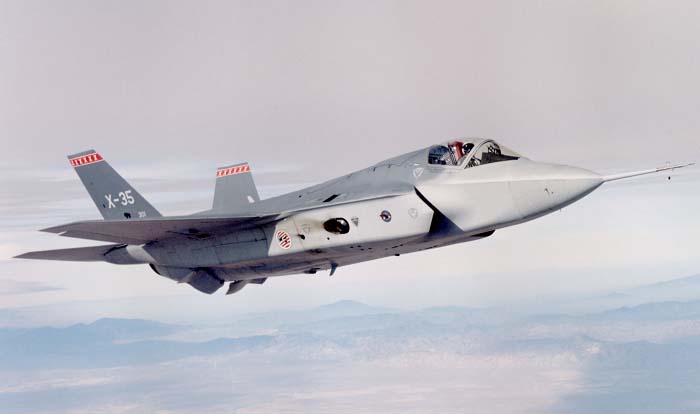
The Panavia Tornado as an airframe is not match for a Su-30MKI but as an overall weapons system it is on par, the Eurofighter thanks to supercruise and the fact it has better missiles well i feel it`s superior to the Su-30MKI, the F-35 only thanks to the missiles it carries and the fact of it`s stealthiness is slightly superior, the F-22 is in another class however as a gun dogfighter i feel the SU-30MKI has some chances
MiG-23MLDMiG-23MLDFrom China’s experience with R-73, I can tell you that it’s definitely not more advanced than ASRAAM, Python-5, AIM-9X and IRIS-T
AAMs like aircraft are sorted by generation and the R-73 is not in the fifth generation, to the contrary the ASRAAM it is.
The Python V is slightly more maneouvrable and has a slightly wider angular tracking capability.
The ASRAAM gives to the Tornado a real close combat capabilty beyond the limits of it`s 7.5Gs max overload, undoutedly the Tornado is not a very agile fighter, but the SRAAM expands the close combat capability of the Panavia Tornado
MiG-23MLD:rolleyes: Why are you posting British engines on a WS-10 thread? Do the British need your advertisement? Like China, they’re a P5 country.
Repeat after me, Flogger, just because China makes lots of turbojet engines, it does not mean Japan is “uncapable” or the UK “does not make military aircraft.”
Don’t make up phoney arguments and then argue against yourself.
Golden Dragon
Your statement was that China is the third most prolific jet engine maker after Russia and the US, however you considered that England`s capacity is under the Chinese capability
Rolls Royce is:
Established as the world’s number two engine maker overall Number one in large turbofans
Number one in business jets
Annual sales of £3.5 billion in 2005, 59 per cent of which came from services
TotalCare® contracts cover 80 per cent of new customers since 2001
Record growth of CorporateCare® saw 90 contracts signed in 2005
600 airlines and 4,000 corporate and utility operators rely on Rolls-Royce power
11,500 jet engines in service, spanning business jets to modern widebody airliners – thrusts ranging from under 2,000 to almost 100,000lb.
Trent series engines have a 45 per cent share of the new-generation widebody market
from World`s number two jet aircraft maker
First Rolls Royce is the Second largest jet engine maker it provides jet engines to Airbus and Boeing as well as several military programs in fact the WS-9 is a British design, you denied a real fact England has the second largest jet engine maker.
Check that the variety and complexity of the Rolls Royce jet engines makes your statement quit baseless.
Rolls Royce is not the only British Jet engine maker, i have provided you with numbers for several jet engines, and you can see just by the Rolls Royce`s webpage England built several dozen thousends jet engines alone.
China has a good aircraft manufacturing capacity i do not deny it but claiming it has the third most prolific jet engine industry i see it as quit blurr because Rolls Royce alone has built a huge number of jet engines and seems unlikely the Chinese have built only jet engines as you claim i think the British company Rolls Royce as it has been claimed is the second largest jet engine manufacturer in the world and i do not think China has built more jet engines than Britan, and since England had many jet engine manufactures and aircraft manufactures i doubt China can be called more productive in that area than Rolls Royce alone
I think Rolls Royce alone has built more engines than any Chinese jet engine maker and has much more advanced technology because has been a commercial success and as it has been claimed it is the Second largest aircraft jet engine maker
military engines: Number one military aero engine manufacturer in Europe*
Number two military aero engine manufacturer in the world*
Powering approximately 25 per cent of the world’s military fleet*
Rolls-Royce supplies engines to many more customers (160) in more countries (103) than any other manufacturer*
Our operational base reflects our global position
We have whole engine design, engineering and manufacturing facilities in the UK (Bristol), Germany (Dahlewitz) and the U.S (Indianapolis)
In 2004, Rolls-Royce Defence sales were £1,374 million, comprising approximately 23 per cent of total sales and 45 per cent of profit
from Military engines 25% of military fleet

Over 1,200 Pegasus engines have been produced, and customers in the UK, US, Spain, Italy, India and Thailand have accumulated more than 2 million flying hours.
from Pegasus
MiG-23MLDThey were experiments only with the missile mounted on a pylon facing backwards. What I am talking about is locking on to a target heading towards you that is about to fly past. Launch your R-73 before it crosses behind you and the thrust vectoring and wide FOV and fast target tracking capability should allow the missile to maintain a lock and continue to track the target. If you launch too late the target will blow past and the missile will lose lock, too early and the missile will hit the target head on. If the target is widely seperated horizontally however it is more likely to turn and chase the target plane.
So they can recognise enemy aircraft IR signatures? Otherwise how do they distinguish the enemy plane from your wingman?
But your aircraft must be able to detect and track the target to be able to pass on target data to the missile… otherwise it will not know when to go active and start looking for its intended target. If you think you can just launch an ASRAAM and expect it will work out where the target is by itself then what happens if it decides to engage an aircraft you happen to be escorting… or a civilian transport for that matter?
As you posted from their site:
In other words it can lock on to anything in its forward field of view… Unless it transmits a live IR video view from its nose that allows LOAL attacks I really can’t see over the shoulder engagements as being anything other than a desperate measure of last resort.
The ASRAAM has one of the most advanced head seekers IR imagery, the Python V has a similar head seeker.
Of course the ASRAAM needs information from the aircraft sensors to engage the target before it`s own head seeker homes in, but i do not know the Tornado how good will be without a HMS, the Eurofighter is a deadly machine because it has both a HMS and a HMD.
The question is can the Tornado engage aft hemisphere targets and fire at them ASRAAM with success without HMS?

MiG-23MLDHuh?
Who said Japan is uncapable? Again, you bring up a stupid idea that that you made up and then you go and answer it. Flogger, you don’t debate. You make up disjointed questions which you then give the obvious answer to.
Japan is one of the most technologically advanced nations on earth. How can they be “uncapable”? Why this phoney and stupid argument that only you have brought up?
Japan has made more turbojets than China?
Again, repeat after me, Japan is an advance technological nation. China, on the other hand, is a member of the Permanent Five in the UN Security Council and it is one of the three most prolific military jet engines makers in the post WWII war era.
Just because China makes lots of turbojet engines, it does not mean Japan is “uncapable” or the UK “does not make military aircraft.” Don’t make up stupid assumptions and then argue against yourself, Flogger.
I will give you data for British Engines only modern ones not old ones but just the new ones, this is from the Second largest jet engine company in the world yeah you guess right Rolls Royce
Spey Engine:
Besides military power, the Spey also provides power for civil applications of the Gulfstream GII and GIII executive aircraft, although the civil version is no longer in production. Other aircraft powered by the Spey include the BAC 1-11 and Fokker F28. The Spey entered service in 1968 and 2,768 civil and military engines were built, achieving over 50 million hours in service to date.
fromSpey Engine
Adour:
The Rolls-Royce Turbomeca Adour is a collaborative engine between Rolls-Royce and Turbomeca Thrust range from 5,240lbf dry to 8,430lbf with reheat
Over 2,800 engines sold to date
Over 7 million flying hours accumulated
fromAdour
Single-stage, direct-drive, wide-chord fan gives high efficiency and low noise Engine FAA/JAA certification in 1995
First flight of Global Hawk in February 1998
AE 3007 engines received CIS certification in March 1998
AE 3007-powered Citation X won 1996 Collier Trophy
Over 900 Embraer RJ 145s and ERJ 135s already in service
Combined Embraer order book comprises 1,400 firm aircraft
Over 900 Embraer RJ aircraft in service
Engine has accumulated more than 20 million hours
fromTay
100th BR715 engine delivered to Air Tran for its Boeing 717 operation in 2005
Rolls-Royce engines power 40 of the world’s top 50 airlines and more than 600 airlines depend on our engines and support services to give them the reliability that they and their customers expect. The fleet of more than 11,500 modern jet engines is the world’s youngest, with an average age in airline service of less than nine years.
Check these are just modern engines we are not including other british manufactures and not all the engines that Rolls Royce manufatures or has manufactured
only of the Rolls Royce Avon i have heard that close to 10000 jet engines were built
The Avon was the first Rolls-Royce axial compressor turbojet to enter production. Used in both civil and military aircraft, over 11,000 were built from 1947-74. Applications covered 12 types, including the Canberra, Hunter, and Lightening military aircraft and the Comet and Caravelle airliners. Industrial versions of the Avon also remain in service today
fromAvon

MiG-23MLDFlogger, who are you arguing with? Who, except for you, said Britain didn’t build military jets? Why would anyone, other than you, make up such a stupid assumption and then answer it himself?
Is UK not a P5 country like China? Did the UK not give the USSR the base engine for the MiG-15 and all the MiGs that followed?
Who are you arguing with? Yourself?
Repeat after me, the UK is a P5 nation like China. It had made thousands of military jet engines. Out of 191 nations registered with the UN, there are four others with the same capacity to build engines as China. And those are fellow members of China in the P5.
That said, the Chinese mil jet engine industry is one of the three most prolific in the world. It trailed only the US and the former USSR during the Cold War and it trails only the US and Russia after the fall of the USSR in 1991 in numbers produced.
So now AVIC II does not count? tell me how many jet engines England has produced? if China has built so many why they can not build a Pegasus or Trent 800? why if Japan is so uncapable why are they building the jet engine that will power the ARJ-21? Who is building the An-124 engines is not an Ukranian company?
Ukranian built D-18 that powers An-124
Ivchenko Progress Design Bureau
2, Ivanova St., Zaporozhye, 69068, Ukraine
Tel.: +38 (0612) 65-03-27
Fax: +38 (0612) 65-46-97
The Yak-130 also is powered by Ukranian made jet engines
MiG-23MLDWho said that? Who actually said that the British have not built military jet aircraft? Why would Britain who basicaly created the modern military jet engine in the Nene not have built many jets?
Why would you make up such stupidity and then proceed to give the obvious answer to that stupidity? Are you debating me or are you debating shadows on silly questions that you made up yourself?
The UK is a P5 nation like China. It has built MANY jet military aircraft. It simply had not built as many jet engines as China, according to what I’ve read. Britain never came close to a 4000-ship air force. Western engines also don’t need to be changed after short usage.
Don’t make up things up and then proceed to answer them. It’s a stupid way to debate.
Uhmmmm! so now it happens England has built Jets but not as many as China
however England built close to 9400 engines in just four aircraft and i did not mention that the Vampire was also build under license and around 1000 were built outside England so that will give you only 4400 engines built for the Vampire without counting replacements and more than 10000 engines built just for the Camberra , Vampire, Javelin and Meteor without counting replacements
The British have have built so many aircraft that the industrial capability of England in what respects it`s jet industry is quit amazing either in Military or civil engines, what you are failing to recognize is simply England exported many jet aircraft and has done it for a long time, they also have no need for 3000 obsolete MiG-19 remain in operational service as China did at one time
A total of 3,269 Vampire types were built between six plants in the UK and over 1,000 were built under licence to overseas customers serving some 30 countries from Vmapire production
When the Chinese talk about aeroengines they meant many types, also the Chinese have build several types of obsolete propeller aircraft and in large numbers, you are rushing to conclusions, why because Britan has built so many aircraft and so many types, also exports engines for non British Jets, the Reason why England has a more advanced jet engine production capability is because they have built and designed for more years than China.
Their production numbers are of course also large, England undoutedly has a great production capability and the Trent, Avon or Pegasus are a proof of that.
I have read also many wrong chinese assertions among one was that niether India, Japan or Ukraine are in the nations that can built jet engines.
Ukraine is by far a powerful nation in what respect jet engines and cargo aircraft and Japan is an aerospace power to reckon with, and to tell you the truth without a British press release of how many jet engines Engand has built or how many jet engines the chinese have built i doubt your claims, beside England has more advanced technology than China for sure in what respect jet aircraft engines
MiG-23MLDThe data I put up was at least 73000 engines. There are twin engines for the J-6, A5, J-8s and H6 while all Chinese jets based on the Russian model change their engines constantly. China built very few civilian aircaft.
The Chinese radials on the CJ-6A were instead replaced by parts like any other radial engine anywhere else in the world. The turbojets have to be replaced after several hours for the J-6.
10,000 jets with a large number of them being two engined with most certainly used up 50,000 engines. There were 3000 J-6s if the average J-6 had its engines changed just twice over the course of its life, this one model alone would have used up 12000 engines.
Both Liming and Liyang who produce engines for the J-6 and J-8 employ over 12,000 workers each. You have no idea as to the scale of the operations in China.
Who is arguing with you on this? England, like France, has a more advanced engine industry than Russia. In fact, most if not all of the Russian military engines could be traced back to the British Nene. By extension all of the thousands of engines built by Liming and Liyang were as much British in origin as Russian.
But who the heck is arguing with you? The third most prolific military jet engine industry in the world after the US and the former USSR is China. Why bring in civilian planes/engines when you know we are talking about the military?
Again, France and England are P5 countries alongside China, the US and Russia. No one is claiming China is more advanced than the UK in engine technology.
But it is more prolific. It also has more capacity to build military jet engines than any other nation not in the P-5.
It`s funny you have the idea the British have not built military jet aircraft, i will give you some data
The british built close to 3269 the Havilland Vampire, close to 434 twin engine Gloster Javelin, 1183 gloster Meteors
Check the Havilland Vampire were single engine, the Gloster Meteor were twin engine and the Javelin were also twin engined.
These gives you a total of close to 6503 engines alone and we are not inclluding other engines such as those fitted to other aircraft such as the Hawker Hunter, BAe Harrier. BAe Hawk and others
Just consider that the Camberra production in England was close 946 aircraft that will give you minimun of almost 1900 engines alone but if you add the B-57 you will see that Rolls Royce built close to 2700 Avon engines
See the numbers i have given you and you will see that only with the Camberra, Gloster Javelin, Gloster Meteor and Havilland Vampire England has made close to 9300 jet engines
We are not talking about replacements
Here is tehd ata for the De Havillan VampireDe Havlland Vampire
MiG-23MLDI rushed into no conclusion and repeated something I read more than once.
Those are 50,000 aero engines from just AVIC I. The companies of AVIC II are the ones that build civilian and helo engines.
Stop bringing up false arguments that no one is even arguing with you. No one claims that China is more advance than the other P5 members — which includes France and the UK.
If you want to believe that they built more jet engines then go ahead. Who cares?
The point is that the WS-10A is coming from a country that has built thousands upon thousands of jet engines and aircraft and have a 40 year history of building and testing turbofans.
There aren’t alot of other turbofans or turbojets can be used to power military jets anywhere else in the world. It is only matched by the other members of the P5.
You did indeed rush into conclusion why for example the RB211-535 that powers the Boeing 757 has more than 1300 engines built check even the Rolls Royce company webpaeg for that information
Check this:
The RB211-535 powers the Boeing 757 or Tupolev Tu-204. There are more than 1,300 engines in service which have accumulated almost 35 million hours of operation. Average time to first shop visit is around 20,000 hours.
Rolls Royce is one of the most powerful companies in the world, you Rushed into conclusion because you claimed that England had a less powerful jet engine industry when Rolls Royce is involved in so many programs that dwarfs the vast majority of aircraft engine manufactures
In fact just Singapore Airlines has 58 boeing 777 powered by Rolls Royce, that is 116 engines alone
Singapore Airlines (SIA) is a major Rolls-Royce customer on a global scale. In late 1995, SIA placed the largest order in the company’s history for the supply of Trent 800 engines for its fleet of Boeing 777 aircraft. Since then, SIA has chosen Rolls-Royce Trent engines for its fleet of Airbus A340-500s, A380 and further Boeing 777 aircraft. Today, 63 out of 90 (nearly 70 per cent) of SIA’s current fleet in operation are powered by Rolls-Royce engines. This includes 58 Boeing 777 variants, powered by the Trent 800 and the Trent 500 operated on a fleet of five A340-500s. The Trent 900 enters service on SIA’s new Airbus A380 later this year. These engines, entering service on an on-going basis, are supported by a dedicated Rolls-Royce Field Service Office located at the Singapore Changi Airport.
fromSingapore Airlines Boeing 777
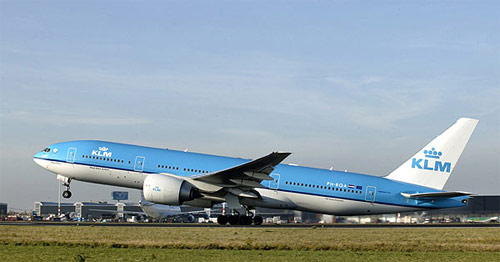
The trend that power the Boeing 777 and AIrbus 340 have almost 1700 orders
check this and this is from 2003
total of 40 customers have placed firm and option orders for almost 1,700 Trents, which have won over half the available engine business on new generation widebody aircraft from Airbus and Boeing. The four current variants are all market leaders on aircraft they power – the Trent 700 for the A330, Trent 800 on the Boeing 777, Trent 500 on the latest A340s, and Trent 900 currently being developed for the A380.
from Trent market in 2003
MiG-23MLDSo you are saying ASRAAM has a 90 degree field of view. It can see 90 degrees left, right and up and down. Few fighter radars can detect targets over such a field of view. That is why you need a HMS. A human eye just looking forward has roughly a similar field of view, but in combat you need to be able to distinguish between potential targets and tell the missile to engage a specific target. For example you are flying in formation with friendly aircraft. There are 10 heat sources in your field of view that you could immediately target your missile on. 3 are on your side, 2 are enemy planes (in this example) and the remaining 5 objects are things on the ground like cars and busses. To target the enemy planes you use the helmet mounted sight or if the target is right in front of you you might use the radar to tell the ASRAAM where to look to find the target. The missile will look in that direction and will lock onto what it sees. The 90 degree FOV just means that the seeker can move to look in those directions. If it is mounted on your left wing and the target is to your right the body of the aircraft you are in will block its view and it wont get a lock.
A very wide field of view is good because it means it is less likely that you will have to manouver your aircraft to fire… so you can launch straight away. Seconds count. Obviously a quick rudder turn can mean your missile doesn’t have to turn so hard on launch and will get to the target quicker, but locking quickly is useful either way.The R-73 can also engage targets behind the launch aircraft, but it has to lock on before launch… if the target flys past and gets in behind the R-73 carrier as long as they launch before the target has passed and the missile can turn and maintain a lock it can still kill a target behind the aircraft it was launched from… the R-73 has thrust vector control and a lot of control surfaces and can turn 180 degrees on launch.
If it has lock on after launch capability it should be able to accept target data from other platforms including other fighters or AWACS in theory.
A RWR will give accurate angular information about where a target is that is using its radar. It might have a problem with range, but IR guided missiles don’t need range information… they either can track or they miss.Sounds to me like it can only aquire targets in front of the launch aircraft, even if it can follow them if they go behind the aircraft during the engagement.
Garry
I know the Russians have fired the R-73 against targets in the aft hemisphere, but up to what i know those missile were fired backwards and they used a radar facing backwards on the tail sting of a Su-27.
I think only the Su-35 and Su-34 can fire the missile bacwards.
The Python V and ASRAAM do not need a radar tail sting or missiles facing backwards ala Firefox.
The ASRAAM and Python V are like an AMRAAM they can be fired and guided to the target by inertial guidance without their head seekers locking on into the Target before the launch because they can adquire the target much later after they have been fired and when they are close to their intended target that is LOAL.
I do not think the R-73 has LOAL i think you have to lock on the target before you launch the R-73.
The Tornado up to what i know does not have a HMS but since the ASRAAM can be fed with other sensors information i do not know what are the real capabilities of those ASRAAM but i guess they have a +90 and -90 deg angular tracking capability and that is much more than an R-73`s capability


 Sign In








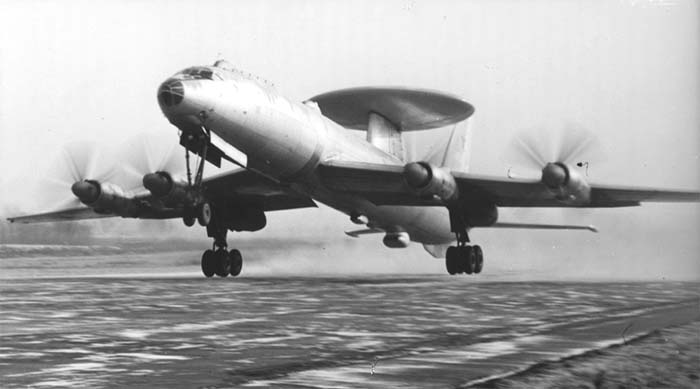
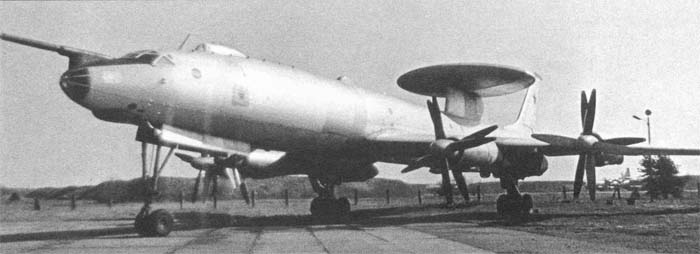
 from
from