MiG-23MLD
MiG-23MLDThe above is inaccurate. The technical paper of Vigyan Inc. posted by you earlier unambiguously mentions that, and I quote, “Apex fences are highly swept, upper surface spoiler-like surfaces hinged at the leading-edge of the delta-wing“, end quote.
The 6 slats of Tejas (3 on each wing) are also hinged on the leading edges of each wing. They can deflect above or below to generate vortices at all AoA regimes. Photos, schematics and official technical documents pertaining to the same have been posted earlier.
The above is inaccurate. The location of the notch in the disassembled wing panel is shown in this photo.
As mentioned earlier the ‘notch’ seen in front-view (and also in the above photo) is not only due to the “abrupt” change in angle of sweep of the leading-edge but also partly because the lower-swept portion slopes upward as it goes aft (the reason why the wing’s cross-section is thick in your photo). This slope creates a low-pressure region over the wing as was shewn in this photo posted earlier.
Note that the notch as seen from the front-view, is NOT seen in any other fighter including Viggen, Draken or F-16.
See and try to think what implies each word in the clause[B]Apex fences are highly swept, upper surface spoiler-like surfaces hinged at the leading-edge of the delta-wing

http://www.paperjet.net/spoilers.php
see spoilers and wing fences are well defined, same slats or leading edge flaps.
You are implying the three leading edge flaps are such spoilers. see more details
http://www.centennialofflight.gov/essay/Theories_of_Flight/Transonic_Wings/TH20G6.htm
see more details
http://aerodyn.org/Drag/vxdrag.html

MiG-23MLDKaduna2003, as per the articles posted earlier, canards were tested on scale-models of naval variant of Tejas. ADA rejected them and will install LEVCONs instead, as experiments showed that they did not result in increase of lift, stability or manoueverability.
As per the article quoted by you, there is no unanimity over the addition of an auxillary control wing which may not necessarily be canards, but similar to the small and immobile canards of Su-30 MKI.
I disagree that no “aerodynamic proof” was provided by me. As per similar “aerodynamic proof” with supporting photos that was furnished repeatedly earlier, the Tejas has compounded AND a cranked wing structure, whereas Draken, Gripen are ONLY compounded and NOT cranked.
As demonstrated by photographs and technical papers from NASA, the cranked-arrow F-16XL has a different definition of ‘crank’, which seen from the top-view is the “abrupt” change of the wing’s angle of sweep. But as per the diagram of another research paper posted earlier, the crank is defined as the dihedra of the wing seen from front-view. The Tejas’ crank component of the wing, corresponds to the latter definition and not the definition of F-16XL.
This crank is formed by the slope over the Tejas’ lower-swept wing part (as demonstrated in a labeled photo posted earlier). It assists in vortex generation over the wing to achieve lift effectively performing the action of a canard to quite an extent.
The following photo demarcates the point location of the crank of Tejas’ wing, as seen from front-view.
This point is the confluence of the lower and higher swept leading edges. As noted earlier (again with supporting photos), as Tejas wing base is plain, this crank is apparently visible due to the combined effect of the compound and the slope over the lower-swept part.
I disagree with the above. The abstract of the research paper has only taken 76/40 combination as a subject of the test, and neither does it conclude nor aims to conclude that this particular combination of sweep is superior to a wing of lesser sweep. It only tries to study the effects of vortex breakdown on an example 76/40 wing.
Here, I may personally advise you to comprehend the abstract and conclusions of formal research papers.
The above is inaccurate. The Tejas’ wing is outward compounded also. The Draken’s wing is inward compounded, whereas the Concorde does not have a “sharp” compound, but a smooth curve known as ‘ogee’.
I disagree with the above. As per the detailed labeled diagrams of the Gripen’s cutout schematic and schematic of Rafale posted earlier, it can be observed that the actuator assemblies of these 2 planes are much smaller in comparison to Tejas’ elevon actuators. Thus, the elevons of these planes are expected to trim lesser than Tejas’ elevons in part because the canard is the primary pitch authority, and also in part because being subjected to ‘wash’, they anyway cannot “harness” their complete trim potential.
In contrast, the Tejas compensates for the lack of canards by elevons that deflect far much more than elevons of Rafale or Gripen.
The above is inaccurate. As per the official website of ADA, Tejas is highly unstable in the pitch axis, wherein it’s CG shifts in the sub-sonic and transonic regimes. It’s flight control is configured to bring back the Tejas to stable configuration every 12 milliseconds.
Note that Tejas’ handling during numerous flight-conditions has been tested in I disagree with the above. The Tejas has negative static stability, which is handled adequately by the flight-control computers that bring it’s frame back to stability every 12 milliseconds.
Though there is no auxilary wing to provide a moment to the most aft center of the CG, how the Tejas overcomes this disadvantage is enunciated below, using your own research paper.
The above is inaccurate. The above papers mention how the tailless delta has low pitch-down authority when the CG is shifted aft at supersonic regimes. This results in instability.
Hence the paper suggests the addition of ‘fences’ on the leading edge of the wing that can trim to provide a counter-moment to the aft shifted CG. This is exactly the approach used by Tejas, in which 6 slats (3 on each leading-edge) are placed that trim to provide moment from the front, besides vortex generation.
Once again, I may kindly advise you to properly ascertain and comprehend abstracts like the above, for I think the above contradicts your core point of view that Tejas’ delta is disadvantage, whereas the paper details an approach that Tejas has in fact embodied itself. Another interesting point to note is that the paper is from an Indian research institute of the based in the US, and one author is Indian.
The above abstract only summarizes that canards are ineffective at supersonic speeds, maybe even detrimental. The horizontal tail is shown to be superior to the canard design at low to moderate AoA. The paper neither mentions tailless delta devices, nor compares them with Su-35.
I disagree with the above. 2 NASA papers from 1959 and 1996 have been posted and analysed earlier, as per whom the wing cranks are shown to be effective for stability and lift. A research paper that diagramatically shows the wing crank of an experiment, also arrived at a similar conclusion. Supporting photos of Tejas’ slope above the lower-swept part have been posted a few times earlier.
Detailed comparisons with detailed labeled schematics of Rafale and Gripen have also been done.
From this picture is evident your famous crank might be just an optical illusion since the wing of the LCA thickens abruptly just after the notch

MiG-23MLDKaduna2003, as per the articles posted earlier, canards were tested on scale-models of naval variant of Tejas. ADA rejected them and will install LEVCONs instead, as experiments showed that they did not result in increase of lift, stability or manoueverability.
As per the article quoted by you, there is no unanimity over the addition of an auxillary control wing which may not necessarily be canards, but similar to the small and immobile canards of Su-30 MKI.
I disagree that no “aerodynamic proof” was provided by me. As per similar “aerodynamic proof” with supporting photos that was furnished repeatedly earlier, the Tejas has compounded AND a cranked wing structure, whereas Draken, Gripen are ONLY compounded and NOT cranked.
As demonstrated by photographs and technical papers from NASA, the cranked-arrow F-16XL has a different definition of ‘crank’, which seen from the top-view is the “abrupt” change of the wing’s angle of sweep. But as per the diagram of another research paper posted earlier, the crank is defined as the dihedra of the wing seen from front-view. The Tejas’ crank component of the wing, corresponds to the latter definition and not the definition of F-16XL.
This crank is formed by the slope over the Tejas’ lower-swept wing part (as demonstrated in a labeled photo posted earlier). It assists in vortex generation over the wing to achieve lift effectively performing the action of a canard to quite an extent.
The following photo demarcates the point location of the crank of Tejas’ wing, as seen from front-view.
This point is the confluence of the lower and higher swept leading edges. As noted earlier (again with supporting photos), as Tejas wing base is plain, this crank is apparently visible due to the combined effect of the compound and the slope over the lower-swept part.
I disagree with the above. The abstract of the research paper has only taken 76/40 combination as a subject of the test, and neither does it conclude nor aims to conclude that this particular combination of sweep is superior to a wing of lesser sweep. It only tries to study the effects of vortex breakdown on an example 76/40 wing.
Here, I may personally advise you to comprehend the abstract and conclusions of formal research papers.
The above is inaccurate. The Tejas’ wing is outward compounded also. The Draken’s wing is inward compounded, whereas the Concorde does not have a “sharp” compound, but a smooth curve known as ‘ogee’.
I disagree with the above. As per the detailed labeled diagrams of the Gripen’s cutout schematic and schematic of Rafale posted earlier, it can be observed that the actuator assemblies of these 2 planes are much smaller in comparison to Tejas’ elevon actuators. Thus, the elevons of these planes are expected to trim lesser than Tejas’ elevons in part because the canard is the primary pitch authority, and also in part because being subjected to ‘wash’, they anyway cannot “harness” their complete trim potential.
In contrast, the Tejas compensates for the lack of canards by elevons that deflect far much more than elevons of Rafale or Gripen.
The above is inaccurate. As per the official website of ADA, Tejas is highly unstable in the pitch axis, wherein it’s CG shifts in the sub-sonic and transonic regimes. It’s flight control is configured to bring back the Tejas to stable configuration every 12 milliseconds.
Note that Tejas’ handling during numerous flight-conditions has been tested in I disagree with the above. The Tejas has negative static stability, which is handled adequately by the flight-control computers that bring it’s frame back to stability every 12 milliseconds.
Though there is no auxilary wing to provide a moment to the most aft center of the CG, how the Tejas overcomes this disadvantage is enunciated below, using your own research paper.
The above is inaccurate. The above papers mention how the tailless delta has low pitch-down authority when the CG is shifted aft at supersonic regimes. This results in instability.
Hence the paper suggests the addition of ‘fences’ on the leading edge of the wing that can trim to provide a counter-moment to the aft shifted CG. This is exactly the approach used by Tejas, in which 6 slats (3 on each leading-edge) are placed that trim to provide moment from the front, besides vortex generation.
Once again, I may kindly advise you to properly ascertain and comprehend abstracts like the above, for I think the above contradicts your core point of view that Tejas’ delta is disadvantage, whereas the paper details an approach that Tejas has in fact embodied itself. Another interesting point to note is that the paper is from an Indian research institute of the based in the US, and one author is Indian.
The above abstract only summarizes that canards are ineffective at supersonic speeds, maybe even detrimental. The horizontal tail is shown to be superior to the canard design at low to moderate AoA. The paper neither mentions tailless delta devices, nor compares them with Su-35.
I disagree with the above. 2 NASA papers from 1959 and 1996 have been posted and analysed earlier, as per whom the wing cranks are shown to be effective for stability and lift. A research paper that diagramatically shows the wing crank of an experiment, also arrived at a similar conclusion. Supporting photos of Tejas’ slope above the lower-swept part have been posted a few times earlier.
Detailed comparisons with detailed labeled schematics of Rafale and Gripen have also been done.
You have misunderstood the concep of wing fences, number one these are upper wing surfaces, you first have to prove the LCA has them, not claim a thing without a single shred of evidence, number two the wing has not a real horizontal view, so perspective is a fact you forget, on your picture the LCA has very visible the trailing edges so you can not see if the wing is really cranked or not since it is inclined.
The F-16XL has fences that aliviate the pitch up movement however the LCA has not upper wing fences see

The LCA has not a single upper wing fence however the F-16XL does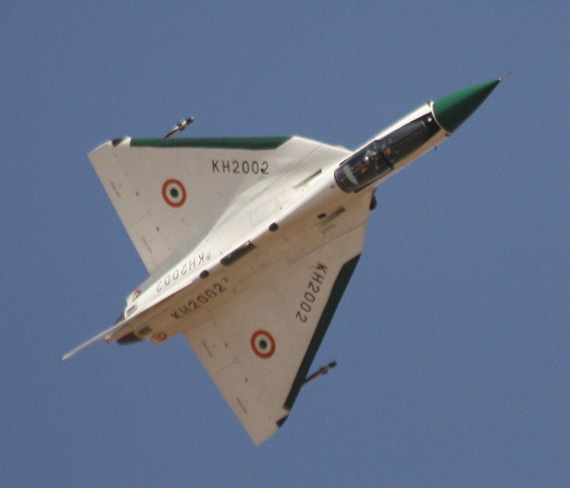
MiG-23MLDhow can there be anything concrete mig-23mld, we dont have you. :(:(
you are a divine personality, mig-23 mld, we are but sand!!how can i even claim this mig-23 mld. everyone here knows you know everything about aerospace and the j-10. i mean, you post about the j-10 and so many chinese posters rush to post, telling you how “great you are”. surely, someone as talented as you doesnt need me to say anything?
oh mig-23 mld, me/i attack you? pls point out where i have done so!! nowhere have i do so.
you have already informed me i am nationalistic, i am not as intelligent as you, as smart as you, how could i even rebut you? i dont even know how to copy paste web pages from the internet to match you? how can i point out trivia such as the IAF’s ASRs about STR, ITR and the fact that the J-10 doesnt have any public ones released either. in fact, if i point these out, I will fall in your so enlightened eyes. it will devastate me, that mig-23 mld thought so. please mig-23 mld, say it aint so. :(:(:(
oh mig-23 mld, how would i ever match you in presenting evidence. all i have are subscription papers from aero conferences, and alternate day meets with people in the industry, how can they match up with you, and your internet research?? :(:(
you are truly one of a kind, who makes me feel so small.whenever real world figures are presented, they are “nationalistic”.so obviously you are right, and the world is wrong.
about nationalistic speech, here i am talking about how primitive indian scientists are, they have to spend days and nights analysing flosolver data but still need more work to come to tentative results. how stupid of them. using a supercomputer, developed expressly for the purpose. didnt they know websites on the internet had all the answers?!?!?
of course they are not as smart as you!! in fact, hard work and perseverence matters nothing. it is all luck.
either you are mig-23 mld or you are not. its just bad luck, india and china didnt have mig-23 mld born on their shores, how sad are these countries. the PM of india and the chinese committee on state security cry everynight thinking of their bad luck, thinking how mig-23 mld didnt help them develop fighter planes overnight. the stupid indians forgot to put canards on their plane, the bad chinese went and copied russia and israel. :(:(
all because mig-23 mld didnt teach them how to use the internet and what nasa research said. how sad is life?? :(:(
all my tax money going waste because mig-23 mld, who knows everything wasnt born here.
very true mig-23. how correct you are. you are a truly superior person mig 23 mld, you must be so smart and so successful. how could i even put my pride against yours. :(:(
oooooooooooooooooooh, now LCA is tailless so its the best jet!! and i must think that because i am indian!!
wow mig-23 mld, you are so smart and a telepath now.
can lca beat the f-22 mig-23 mld? can it outmaneuver and defeat it??
oh wait,….can it do the ultimate…defeat the ultimate jet, designed in a crucible in olympus itself?
the mig23? please tell me mig-23 mld, i am fainting, waiting for your statements.
You should post things based upon what is know about aircraft aerodynamics
see
The drawbacks as well as the good features were evident. A sometimes heated debate on this topic had been going on inside the Swedish aeronautical community for years. Wind tunnel testing and project work on alternative aft tailed configurations had pointed out many advantages for that particular layout, where perhaps range and sustained turn rate were the most noticeable, granted the technological level of that time.
This man shows why the MiG-29 has higher STR than the Gripen but lower ITR

If you have read the caption on the image you can see why the Viggen can be out turn by a MiG-29 and even a MiG-23
In this way you can prove more than in the way you are doing specially since articels from NASA who also usee computers and are made by scientists and aerodynamists give more credit to your points all what you do, is try to pretend to be a smart debater but in reality you just do not debate nietehr politely niether logically and frankly man, you do not prove your points in that way
http://www.mach-flyg.com/utg80/80jas_uc.html
In this other article they show that the Viggen for example has a Max turn rate of 15.6 deg/s at low altitude, and this show very clearly why a Viggen won`t outturn a MiG-29 and why the European nations opted for the F-16 since basically it outperformed and out turned it
MiG-23MLDhow can there be anything concrete mig-23mld, we dont have you. :(:(
you are a divine personality, mig-23 mld, we are but sand!!how can i even claim this mig-23 mld. everyone here knows you know everything about aerospace and the j-10. i mean, you post about the j-10 and so many chinese posters rush to post, telling you how “great you are”. surely, someone as talented as you doesnt need me to say anything?
oh mig-23 mld, me/i attack you? pls point out where i have done so!! nowhere have i do so.
you have already informed me i am nationalistic, i am not as intelligent as you, as smart as you, how could i even rebut you? i dont even know how to copy paste web pages from the internet to match you? how can i point out trivia such as the IAF’s ASRs about STR, ITR and the fact that the J-10 doesnt have any public ones released either. in fact, if i point these out, I will fall in your so enlightened eyes. it will devastate me, that mig-23 mld thought so. please mig-23 mld, say it aint so. :(:(:(
oh mig-23 mld, how would i ever match you in presenting evidence. all i have are subscription papers from aero conferences, and alternate day meets with people in the industry, how can they match up with you, and your internet research?? :(:(
you are truly one of a kind, who makes me feel so small.whenever real world figures are presented, they are “nationalistic”.so obviously you are right, and the world is wrong.
about nationalistic speech, here i am talking about how primitive indian scientists are, they have to spend days and nights analysing flosolver data but still need more work to come to tentative results. how stupid of them. using a supercomputer, developed expressly for the purpose. didnt they know websites on the internet had all the answers?!?!?
of course they are not as smart as you!! in fact, hard work and perseverence matters nothing. it is all luck.
either you are mig-23 mld or you are not. its just bad luck, india and china didnt have mig-23 mld born on their shores, how sad are these countries. the PM of india and the chinese committee on state security cry everynight thinking of their bad luck, thinking how mig-23 mld didnt help them develop fighter planes overnight. the stupid indians forgot to put canards on their plane, the bad chinese went and copied russia and israel. :(:(
all because mig-23 mld didnt teach them how to use the internet and what nasa research said. how sad is life?? :(:(
all my tax money going waste because mig-23 mld, who knows everything wasnt born here.
very true mig-23. how correct you are. you are a truly superior person mig 23 mld, you must be so smart and so successful. how could i even put my pride against yours. :(:(
oooooooooooooooooooh, now LCA is tailless so its the best jet!! and i must think that because i am indian!!
wow mig-23 mld, you are so smart and a telepath now.
can lca beat the f-22 mig-23 mld? can it outmaneuver and defeat it??
oh wait,….can it do the ultimate…defeat the ultimate jet, designed in a crucible in olympus itself?
the mig23? please tell me mig-23 mld, i am fainting, waiting for your statements.
Where are the aerodynamic examples? where is the science to validate your point? well nick definitively you are just saying blah blah blah nothing concrete
MiG-23MLDWhat aerodynamics? ever seen a flow separation test? ever provided hardware for a purpose built aerodynamics application with seven different parameters to play with? boss, you are just whistling in the dark. i have seen the field, and it isnt a joke. you are just gassing and gassing and gassing and hoping that nobody can see through your non stop fibs and copy and paste.
second, did you know that a lot of what you copied and pasted is also uncertain? yes, uncertain. in fact, the real aero data for several conditions including your favourite copy paste “vortex” is available to a handful of oem’s worldwide and it requires govt to govt talks to get assistance on those, unless you have a decades worth of time to conduct blowdowns. and you can only do a few blowdowns per month unless you have superhumans who can analyse the results overnight. shootman, you have absolutely no idea of the real world, do you?who says they are Gods? talk about some silly belief system you have going here. in my field, if these chaps come, i can teach them. in theirs, they teach me. its an esoteric, research intensive, long timeline field which doesnt appeal to everyone. which is why i didnt do aeroengineering. but it is very similar to my field in that basic calculations reliant upon theory often flop in reality. we simply cannot model enough real world variables. there are over 967 items that have to be catalogued for a single flow separation test. that requires a computer run of many hours, in fact left overnight and through the day. to analyse the results takes a team of 12, 7*8 manhours, to come out with a basic dashboard. which then means the actual aero team has to figure out what worked and what didnt. i mean, you really have no clue of the expertise some companies have and others are working towards. for you fellows, its all internet magic. three webpages and you are an automatic expert. boss, if things were that simple..
on the internet, sure. i am sure you are reknowned, why keymags should have a section for you. and star49. you would give us so much knowledge that our primitive brains would explode.
do you even realise how illogical you are? ever heard of an “appeal to authority” – look it up in wiki, you’ll understand.
nasa, and the french are human and belong to the USA and france respectively. they release generic data which is good for the basics, after that is where the money sink begins, and where only doggedness matters. you obviously have no idea of how research is conducted and how abso-expletive-lutely painful it is. companies have gone bankrupt on the basis of just one LRU, and an aircraft is several thousand LRUs. I cannot help but be amused at your confidence on Ctrl+C and paste, when my peers are putting day and night in figuring out what you call “basic”. they should surely hire you, since they are so primitive and third world, like you say. you were obviously from a superior stock and you already know everything on the internet, you will teach them all. please help us mig-23 MLD, we need you. how sad are we, that we dont have you?? windtunnels dont matter, structural tests dont matter, mig-23mld you are so great and we dont have your expertise, you read the NASA pages and you know everything about aerodynamics, in fact you even know how to post pictures. we are sp lost without you. please please please help us. :(:(:(
man too much blab blah blah and nothing concrete.
Your main disagrement with me is you think because i say the LCA is not as agile as the J-10, and this irritates you claiming there are many unkown variables and therefore there is a posibility the LCA is even more agile or as agile as the J-10.
Since your reasoning claims, i disregard those unkown variables, you asume there is not concrete proof the LCA is less agile.
All your evidence against me are personal attacks, not a single and i say a single aerodynamic example, niether evidence in sustained turn rates or instantaneous turn rates.
Do you bring an article where NASA says, yes tailess wings make more agile aircraft because this and that? no you do not present any evidence not a sigle one, you only evidence is a hope the LCA could be more agile or at least as agile becasue you asume i might not know some facts, however you do not present any example or studies that show tailess wings are better than tailed or canards, so you only go to a typical nationalistic speech talking about the great Indian scientists or personal attacks of have you ever work in this or that, but no evidence in studies or proof in aerodynamic research
So far nick_76 you have prefered ignorance because your pride is bigger and you prefer ignorance because you can not accept the facts studies say canards and tailplanes are better than tailess designs in terms of AoA handling and trimming.
Since the LCA is a tailess design and Indian you think it most be the best jet not because of science but because of nationality.
MiG-23MLDThe above is inaccurate. Please note that earlier it was mentioned that Tejas has compounded and cranked wing, the combination of which is NOT present in any of the fighters mentioned by you, including Mirage-2000.
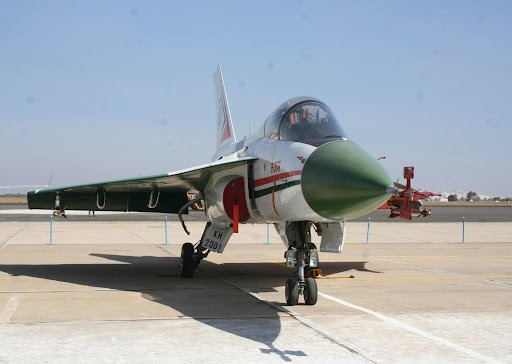
The Tejas has a crank which apparent as a dihedral, is seen in the photo of Tejas from the front-view that you had posted earlier. However, the dihedral is an “illusion” only because as seen in this photo, the lower portion of Tejas’ wing is flat and so indicates no cranking.
This crank is visually apparent due to the slope of the lower-swept portion that is parallel to the boundary of the glass cockpit (seen in the same photo). As per the article, “Radiance of the Tejas”, this crank is used for vortex generation thus performing the function of canards to quite an extent. This shape of the wing is not seen in other fighters including Draken, Viggen or Mirage-2000.
It must be noted that it is true, as you said above, that as canards work in tandem with tailplanes a greater moment about the lift-point can be achived (this was noted by crobato earlier). However, note that Tejas’ elevon actuators are far larger than those shown earlier on diagram of Gripen, or Rafale. Thus, Tejas’ deflection angles are likely to be much more to compensate for the lack of canards.
It may also explain why the actuator fairings for ‘elevons’ on canard planes are either small (as in Gripen) or partially absent (as in J-10). It is because being subjected to ‘wash’ from canards, they cannot achieve the fullest desired output on a given AoA, and consequently further power to deflect them may not be necessary.
Thus, it is highly likely that Tejas can match the J-10 or any so-termed ‘Eurocanard’ in manoeuverability and agility.
Again, for a given manouever, the degrees of AoA required for delta-planes are likely to be lesser than those of tailed or canard delta-planes, as a delta design has “natural” tendency to respond well to pitch (especially at high speeds), albeit at the cost of “bleeding” forward thrust.
Read this article about how the tailess delta wing has all the properties i have said before such as low drag but lack the trimming capacity of the tailed configuration
http://www.aiaa.org/content.cfm?pageid=406&gTable=mtgpaper&gID=45836
http://pdf.aiaa.org/preview/1986/PV1986_1838.pdf
and how it limits flap and leading edge deflection and if the LCA has larger flaps and elevons is simply to reduce the deflection of these devices, the J-10 or Gripen have relatively smaller elevons because trimming is also done by the canards
MiG-23MLDThe XL-1 aircraft was previously used in NASA’s Cranked-Arrow Wing Aerodynamics Project, or CAWAP, which provided aerodynamic data for NASA’s High Speed Civil Transport (HSCT) research program. The unique cranked-arrow wing shape provided better low-speed lift and handling characteristics than the modified “double-delta” wing used on the Concorde supersonic transport (SST).
http://www.nasa.gov/centers/dryden/history/pastprojects/F16XL1/index.html
This is a cranked arrow wing
This is the double delta wing

the Draken also has a wing betwen the Concord and F-16XL
another excellent article that proves thrust vectoring makes the F-22 better than the F-15 and F-16 for roll control and inertia coupling but without it is not as good as the F-16 and shows how the trailing edge extensions and notch on the F-16 improved the F-16XL general design, note the Draken also has trailing edge extensions as the F-16XL and its wing its very close to a cranked arrow
MiG-23MLDwhat drivel you write, and with such confidence. when other posters are saying you dont have actual evidence since you dont have real test data, you speculate, and then you accuse them of speculating and abuse them as being nationalists and what not. really really weird behaviour.
what specific aerodynamic principles have you explored? copy pasting stuff from different websites is not nobel level work, unlike what you believe.
what a useless and utterly irrelevant remark. i work with people from different walks of life and meet folks like this every day. if i show them this thread, they will give up in ten second of what you are trying to say with your ridiculous font sizes, colored posts and rambling statements. all i said was experimental data is essential before making conclusions. the gripen team never expected their fighter would perform as well as it did. indian navy designers surprised their russian peers when their hulls outperformed their russian counterparts in kp’s. experimental data validates assumptions. you keep copy pasting so much stuff. how much have you worked with in real life?
your nonsensical abuse really has no limits. it is obvious you have zero real world engineering experience to point out something practical as a third world mentality. i really dont care which backwater you live in to have such an inferiority complex and to project it on others, but any engineer who works in aviation would always tell you that he estimates, and that execution will bring out the real status. i have seen project plans from folks with 30 years in the domain go screwed up because of unseen variables, and aviation remains a challenge. if you werent so egotistical and attacking other posters, you would understand that india actually runs a supercomputer at NAL to even simulate flows for partial solutions. an engineer got the national r and d award last year for extending navier stokes and here you are bragging about your own lack of knowledge and passing it off as something great. on top of it, you abuse people who tell you that real world testing is essential to come to valid conclusions as being from the third world. absolutely disgusting behaviour.
your statements come from your ridiculous ego which has ruined thread after thread on chinese aviation and now i guess its the lca’s turn. after that you will be berating the swedes for their gripen, and the french for their rafale. wonderful.
not only do you apparently lack the professional qualifications to make an assessment, i can also reasonably state that you are definitely not working in an engineering field where one does this for a living where anyone worth their salt is very conservative about making categorical statements.
let alone city copy paste as facts.ridiculous. i told you that we have no way to judge the ultimate LCA performance at, or even the J-10s with certainty since critical parameters will not be released. all one can have is speculation. instead, you respond with more bombast and copy and paste.
your simple aero principles are apparently unknown to professionals who spend millions of dollars every year in wind tunnel blowdowns and supercomputer runs to determine even basic things such as carriage separation. but here you know it all. all that matters for both the LCA and J-10 is that they meet what their respective AFs demand of them in performance, not what some self assigned expert from who knows where thinks of basic principles.
on second thoughts i will print out this thread and circulate it so some folks have a good laugh, both at the thought that webpages printed off the net can tell everyone about an aircraft and its performance, and that you know everything.more nonsense. so now you are a telepath. i for one explicitly said that the j-10 may turn out superior in some criteria, time will tell. you otoh are the one ranting and raving about some fighters you are unlikely to see even in real life. all said and done, keep doing so, and good luck to you.
yeah yeah no aerodynamics, only a long speech, yeah yeah only engineers know better yeah yeah yeah.
So i can see your basis are speculation but no basis upon aerodynamic only the gods know better.
In fact buddy i have seen the F-2, F-15, F-16, F-14, F-18, T-2, T-4 and the magnificent Tornado.
And at least i post articles published by NASA no speculation, you are posting your opinions without any base upon NASA or reknown french institutes, but you only post your opinions without any real aerodynamic base.
MiG-23MLDThe above is inaccurate. Please note that earlier it was mentioned that Tejas has compounded and cranked wing, the combination of which is NOT present in any of the fighters mentioned by you, including Mirage-2000.
The Tejas has a crank which apparent as a dihedral, is seen in the photo of Tejas from the front-view that you had posted earlier. However, the dihedral is an “illusion” only because as seen in this photo, the lower portion of Tejas’ wing is flat and so indicates no cranking.
This crank is visually apparent due to the slope of the lower-swept portion that is parallel to the boundary of the glass cockpit (seen in the same photo). As per the article, “Radiance of the Tejas”, this crank is used for vortex generation thus performing the function of canards to quite an extent. This shape of the wing is not seen in other fighters including Draken, Viggen or Mirage-2000.
It must be noted that it is true, as you said above, that as canards work in tandem with tailplanes a greater moment about the lift-point can be achived (this was noted by crobato earlier). However, note that Tejas’ elevon actuators are far larger than those shown earlier on diagram of Gripen, or Rafale. Thus, Tejas’ deflection angles are likely to be much more to compensate for the lack of canards.
It may also explain why the actuator fairings for ‘elevons’ on canard planes are either small (as in Gripen) or partially absent (as in J-10). It is because being subjected to ‘wash’ from canards, they cannot achieve the fullest desired output on a given AoA, and consequently further power to deflect them may not be necessary.
Thus, it is highly likely that Tejas can match the J-10 or any so-termed ‘Eurocanard’ in manoeuverability and agility.
Again, for a given manouever, the degrees of AoA required for delta-planes are likely to be lesser than those of tailed or canard delta-planes, as a delta design has “natural” tendency to respond well to pitch (especially at high speeds), albeit at the cost of “bleeding” forward thrust.
Man you are dreaming and without even any aerodynamic real proof.
The reality is compounded wings are called double delta, the Draken and Concord have compounded double delta wings, the same we can say about the F-16XL and Su-27 see the geometry, however these last two aircraft can be considered a different type by some basic technical reasons
See that in this article they say fluid mechanics of interaction between the strake and wing vortices of a generic 76°/40° double-delta wing leading to vortex breakdown, check the angles 76 deg is a high swept and 40 deg is low swept like the wing of a MiG-29 or an F-16XL not an AJ-37 or LCA
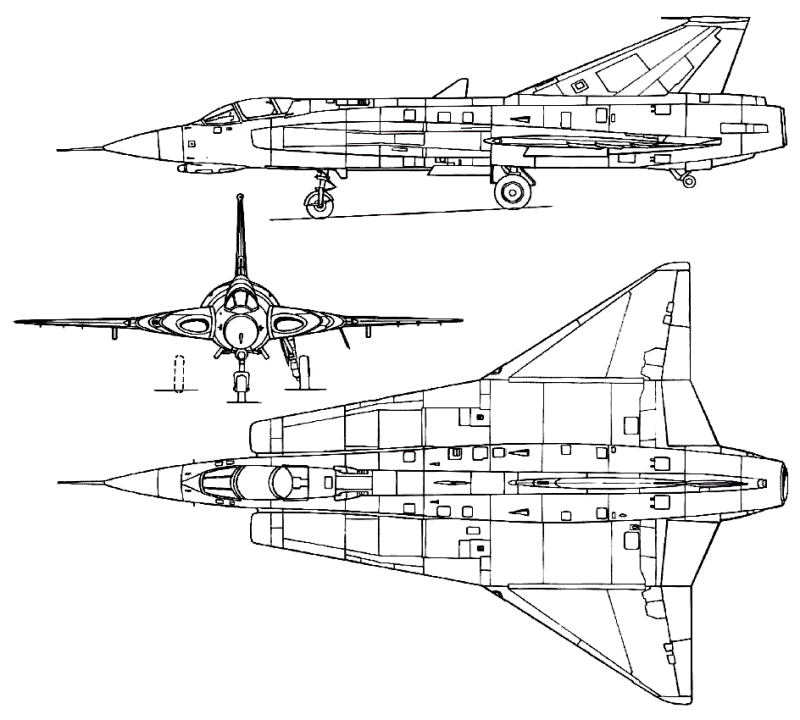
see the wing
 Abstract
Modern high-speed aircraft, especially military, are very often equipped with single or compound delta wings. When such aircraft operate at high angles-of-attack, the major portion of the lift is sustained by streamwise vortices generated at the leading edges of the wing. This vortex-dominated flow field can breakdown, leading not only to loss of lift but also to adverse interactions with other airframe components such as the fin or horizontal tail. The wind tunnel and water studies described herein attempt to clarify the fluid mechanics of interaction between the strake and wing vortices of a generic 76°/40° double-delta wing leading to vortex breakdown. Some studies of passive control using fences at the apex and kink region are also described. Various diagnostic methods-laser sheet flow visualisation, fluorescent dyes, and pressure sensitive paints have been used
http://cat.inist.fr/?aModele=afficheN&cpsidt=15477146
Check the webpage is from an authorized french scientific institute
The LCA and Viggen have delta wings with a notch, some people might call them conpound since the leading edge has two sweep angles but by definition the real conpounded wing is the one seen on the Concord or Drakken
Now all this talk by yours that the elevons are smaller in a delta canard configuration has no aerodynamic real base and the reason is in an aircraft like the J-10 it has number one two centers of lift since it has two wings and both have positive lift, flap deployment is less restrited but also the need for triming is reduced.
see
The performance of a canard design depends strongly on the amount of lift that the canard must carry. This is set by stability and trim requirements.
It is first necessary to determine the position of the c.g. and the relative loads carried by the wing and the canard. The ratio of lift carried by the canard to that carried by wing:
Trimming will be relatd to stability, the tailess delta wing usually is neutrally stable to reduce the amount of pitching moment
see The value of the static margin, sm, should be large enough to provide acceptable handling qualities at the most aft center of gravity position. This may require an analysis of the aircraft dynamics at various flight conditions. Since the destabilizing effect of the fuselage is not included explicitly here the value of sm used in the above expressions should be increased appropriately
Lift Curve Slopes
A difficulty with the above equations is that a, the ratio of canard to wing lift curve slopes must be calculated. If the wings did not interfere with each other one could use the approximate relations:
However, the surfaces produce upwash and downwash on each other so that the effective lift curve slope is changed. Unless the canard and wing are very close together, the major effect is that of the canard on the wing.
The canard produces downwash on the inner part of the wing and upwash outboard of the canard tip vortices. The net effect, though, is a reduction in wing lift which can be estimated roughly by the following formula which is based on the Hayes Reverse Flow Theorem (see Ref. 3):
where kappa is a correction which is applied if the canard is very close to the wing or does not lie in the plane of the wing. kappa should be computed from a 2-surface lifting line or lifting surface program.
http://www.desktopaero.com/appliedaero/configuration/canardstability.html
With this i am sure you will adduce the canard disadvantages but in reality you disregard the stability problems a tailess delta wing will have.
Abstract : An analysis of the effects of canard shape, position, and deflection on the aerodynamic characteristics of two general research models having leading edge sweep angles of 25 and 50 degrees is presented. The analysis summarizes findings of three experimental transonic wind-tunnel programs and one supersonic wind-tunnel program conducted at this Center between 1970 and 1974. The analysis is based on four canard geometries varying in planform from a 60-degree delta to a 25-degree swept wing, high aspect ratio canard. The canards were tested at several positions and deflected from -10 to +10 degrees. In addition, configurations consisting of a horizontal tail and a canard with horizontal tails are analyzed. Results of the analysis indicate that the canard is effective in increasing lift and decreasing drag at Mach numbers from subsonic to high transonic speeds by delaying wing separation. The effectiveness of the canard is, however, decreased with increasing Mach number. At supersonic speeds the canard has little or no favorable effects on lift or drag. It is further shown that the horizontal tail is a superior trimming device than the close- coupled canard at low-to-moderate angles of attack and that a configuration consisting of canard, wing, and horizontal tail is superior in performance, to either canard or horizontal tail at high angles of attack.
http://stinet.dtic.mil/oai/oai?verb=getRecord&metadataPrefix=html&identifier=ADA085065
See It is further shown that the horizontal tail is a superior trimming device than the close- coupled canard at low-to-moderate angles of attack and that a configuration consisting of canard, wing, and horizontal tail is superior in performance, to either canard or horizontal tail at high angles of attack.
this is the configuration the Su-35 has

MiG-23MLDMiG-23MLDthis thread has effectively been ruined once MiG-23 started posting here 🙂 have fun arguing against a dead end street guys. On the upside, you are treated to a bunch of nice pictures.
For people like you who only do pandering of nationalistic and their own ego projections through aircraft well yes i have ruined the thread for people who like aerodynamics no i have not
MiG-23MLDWhat are the sustained and instantaneous turn rates of the LCA? Here’s the data for the MiG-23 that you are leaving out: Max instantaneous turn rate of 16.7 deg/sec at the speed of 780 km/h and a max sustained turn rate of 14.1 deg/sec. The MiG-23’s AOA is obviously not making it super agile, so that comparison is invalid. The figures came from the flight manual as well: http://backfiretu-22m.tripod.com/id16.html
Of course man i am not saying the MiG-23 is even comparable to the Eurofighter, just saying that the numbers seen for the LCA are far too low to be the operational ones and the needed ones for an operational fighter.
If you have seen the numbers of the ITR and STR for the fighters i mentioned, simply you can guess the numbers for the LCA.
The LCA must have similar numbers to the Mirage 2000 or at the most similar to the F-16, however the current reports show it is in trouble, so perhaps at the most can be as good as the Mirage 2000 due to similar aerodynamics. So very likely has an ITR of 24 deg/s but perhaps even lower since the current data shows has very low AoA limits
Since it is underpowered and barely has achieved numbers even inferior to those seen on a third generation fighter, we can guess perhaps the Mirage 2000 numbers are the best number it can get.
Of course comparing the configuration and numbers seen on the Gripen you can see the J-10 must be as good as the Gripen and superior to the LCA in sustained turn rate
The LCA has a tailess configuration and flap and aerodynamic center shift limits that make it far less capable than a canard delta fighter like the J-10
MiG-23MLDIndian Express report of only achieving 17 AOA is proven false Tejas has already achieved 20 AOA as per IAF’s ASR it should be 22 AOA which might have been achieved or will be achieved with the new engine
That number is still far too low, the MiG-23 has even a max AoA of 26deg do you expect the LCA to be inferior to the MiG-23MLD?
These numbers show the LCA is not as super agile as many expect and the proof is why India needs to buy MIG-29s or Gripen if you have a good fighter? simply the LCA is not a super fighter.
It does not add up, if the LCA is as good as the gripen why you need to bring MiG-29s and Eurofighters with F-18Es to a tender?
reason well simple the LCA is a very limited light fighter


 Sign In