MiG-23MLD
When it comes to ferry-range it is the max possible range with the max possible fuel load in doing so.
It is max. internal + external = liter in total divided by the ferry range in km.
At MTOW the ceiling of the F-111 is limited to 15000 feet. To reach max ferry range the F-111 is never loaded to MTOW.
Internal fuel is ~14815 kg or (0,77 specific)~ 19240 liter to start with.
Is this information based upon a F-111 manual or your personal opinion?
MiG-23MLDhttp://www.sukhoi.org/eng/planes/military/su24mk/lth/
Step by step the simple math.
The internal fuel-load of the Su-24MK is 11100 kg
11100:0,77 (specific weight) = 14415 liter +
2*3000 liter ETsTotal fuel of 20415 liter does generate a ferry-range of 2775 km
Next simple step is
20415 liter : 2775 km = 7,3567.. liter per kmIf something is wrong about that, you are free to show that.
Next simple step is, what value does the F-111 show.
When you have both data for both aircraft the lower liter value per km is 100% and the higher liter value per km is >100% and the difference is given in ** percent.
No it is your turn franc to do the math for the F-111 (Please give the source about the used data too as I did above.)
Your theory would be believeable if the F-111 weights only 45000kg and carries 28000 liters however the weight according to the RAAF is 51800kg, now calculate in a ferry range how many tanks it will carry it can carry six.
There is something you biasly forget. the 5700km is also value of what weight? 45000kg or 51000kg what range shall we take the Ukranian air force 3800km range or only Sukhoi with two fuel tanks, what thrust shall we take 66KN or 79KN?, you forget this aspects to claim the 5700km will be an aircraft with a weight of 45000kg
claiming a weight of 14000 liters and reducing the weight of the F-111, the RAAF claims 51000kg of max weight and the Ukranian air force claims 39000kg for the Su-24 what values shall we use? answer you will use the ones that make the Su-24 look bad
General Dynamics F-111 technical specifications Manufacturer General Dynamics
Role Long-range strike fighter
Crew Pilot and navigator, who also operates the weapons systems
Engine Two Pratt and Whitney TF-30 turbofans (9,500 kg thrust each)
Airframe Length: 23m, height: 5.3m
Wingspan 21.3m extended, 10.3m swept
Weight 24,000kg basic, 51,846kg fully loaded
Speed Supersonic at sea level, Mach 2.5 at altitude
Range Ferry range in excess of 5,500km
Ceiling Above 50,000 feet
Weapons Harpoon anti-ship missiles
Sidewinder air-to-air missiles
Laser-guided bombs
Conventional bombs
Avionics Digital flight controls
Terrain-following radar
Attack radar
Pave Tack target system
Inertial navigation and integrated weapons system
Now if the RAAF is right, the F-111 carries around 30000kg of fuel since the F-111 weighs around 21000kg at empty weight, if you canculate the total fuel it will be around 38000liters and this will give you a km/liter ratio of 6.6 or a Su-24/F111 relation of only 10% if the Su-24 uses its economical setting SFC of 0.76
MiG-23MLDSee, wherever the crank is located on the Tejas’ wing, we do know that it is aerodynamically very advantageous. This is as per the conclusions of various NASA research projects, including F-16 XL, as discussed earlier.
Thus, without further debate to “hunt” for the crank, I may once again mention to what I was referring to on the Tejas earlier, that generates vortices.
As per the photo posted by me earlier, the lower-swept part is shown in red and the higher swept part is demarcated in blue. Now, seen from the side-view (as shown in the photo), it may be observed that it ‘slopes’ downward at an angle.
Firstly, we may at least agree that one can see a sloping lower-swept wing part of the leading-edge from the side-view.
One may visually converge upon the said portion in this manner :-
Wing –> leading edge –> lower-swept portion –> slope over it.
This slope generates the vortex above the wing, thus performing the function of a canard. It is not seen on the Viggen.
Abhimanyu
You are forgeting the advantages of canards, the LCA has not all the advantages of canards for several reasons, in a canard delta wing you have the following advantages
the aircraft has two centers of lift and one center of gravity, in the LCA it has only one center of lift and one center of gravity
Canards are foreplanes and can be used to trim the aircraft and also be used at pitch and roll, the LCA has non of these advantages.
In a canard and delta wing there is the safety device for stalling first the canard instead of the main wing and the caanrd can be used as an air brake
This makes the Rafale more agile than the Mirage 2000, the LCA has non of those advantages
MiG-23MLDName the data where. Not my fault, when you are unable about basic physics.
So you still have to explain, where the difference in fuel economy comes from?
F-111 = 5,66 l per km
Su-24 = 7,41 l per kmFrom every l of fuel a F-111 generates 30,9% more range!
all is just your oversimplistic conclusion based upon prejudices upon anything russian.
To make a real comparasion you have to have the same thrust, at 79KN the TF-30 already is in afterburner, so while it is true the AL-21 will have a SFC of 0.86kgf/kg/h, the reality you do not know and have the SFC of the TF-30 at that specific throttle and thrust setting or do you have it? tell me the SFC of the TF-30 at 79KN can you do it?
Tell me how much fuel the F-111 it has at 51800kg MTOW and how much fuel the SU-24 carries at 43000kg of MTOW and the right ranges for those MTOWs
MiG-23MLD*I guess it might also delay further the vortex formation and flow separation
Are you sure the inclination on the Stuka wing has nothing to do with structural design and the landing gear location?
The cranked wing generate vortices over the outboard wing’s side, you can “delay ” it formation ,to find a better location to generate vortices (which depends with the wing design), the crank itself doesnt generate the flow, neither the inner wing section -yes low swept wings dont have that “vortex flow”-, but the highly swept leading edge does
the F-16XL to be specific delays and reduces the vortices by sweeping less the angles of the outer wing panels and the notch, by doing this, the vortices dynamics will change this will allow a slower flow separation by the vortices.
however overg i never said the flow dynamics of the Stuka are related to the F-16XL i only mentioned to specified a shape not to infer they were the same type of wings
MiG-23MLDMiG-23MLD, I now agree that there may be uncertainties over the constitution of the ‘crank’ on the wing of an aeroplane.
As per a diagram shown in a page of Aerospaceweb.org, the crank is defined to be the upward curvature of the wing away from the dihedral, i.e. going upwards. It is exactly the same as described as a “notch” by you, on the photo of the green coloured WW2 plane posted by you previously.
However, in a research paper on the “Cranked arrow wing” of the F-16 XL, the crank on it is defined (as seen from top-view) as the junction between the lower-swept component and the higher-swept components of the wing’s leading edge : in this case, the lower-swept portion is away from the fuselage and the higher-swept wing is joint to the fuselage — opposite of the Tejas.
The diagram from the webpage of Aerospaceweb’ that labels the crank, is shown below :-
The diagram below is that of the F-16 XL, which was the subject of NASA’s research project titled, “Cranked-Arrow Wing Aerodynamics Project” :-
Link of schematic of the F-16XL from NASA’s website :-
http://www.dfrc.nasa.gov/Gallery/Graphics/F-16XL1/Medium/EG-0035-01.gifAs per the above mentioned technical research paper of NASA, “Cranked-Arrow Wing Aerodynamics project”, or CAWAP, the crank is that part of the blue portion of the wing, where the wing abruptly changes angle. In addition to this, a declassified NASA research paper dated to October 1959, has also specifically investigated the “Effects of wing-crank, leading edge cord extensions, and horizontal tail-height”. It concludes that such a design leads to improved statical longitudinal stability.
Hence, from the above as yet incompletely comprehended technical papers, the conclusion is the same i.e. cranked-wings provide for superior wing-stability, superior lift and better lateral directional stability (the last one from Aerospaceweb, investigating these on hypersonic vehicles).
References :-
2) NASA Langley Research Center Review of Cranked Arrow wing project
I do understand that, and i agree with you, the leading edge crank you are talking is in anhedral, the notch i am talking about is the leading edge sweep angle.
The F-16XL as you have noticed is from the outer wing panel, the AJ-37 is in the inner wing panels.
The F-16XL has a leading edge notch at the root of the wing and an outboard less swept angle leading edge.
The Viggen and LCA have a inner wing pannel less swept leading edge angle.
The Viggen has canards and if you are right the LCA a crank in anhedral.
The question will be if the LCA can have an instantaneous turn rate better than the J-10 and better AoA handling, personally i think the LCA is more or less as good as the Mirage 2000 but if it is armed with Python Vs and Derbys it can defeat the J-10, but i do not think it is more agile in terms of turn rate
MiG-23MLD“77.5 kg/(h·kN) (0.76 lb/(h·lbf)) at idle”
The one able to read the own writings is in advantage about that, is he?!!!!!!!
Sens i did make a mistake and i recognize it i did not read well, the real military power SFC for the AL-21F3 is 0.86kgf/kg/h. and the 0.76 SFC is not like you are saying idle it is at economic cruise and i can prove it, however you should see that the 0.86 SFC is achieved with 15% more thrust, so the difference in SFC is not reflected in 30% more fuel burnt at the same thrust
see
Удельный расход топлива:, (кг/ч)/Н SFC
– на максимальном режиме 0.86 at max military power 0.86
– на форсаже 1.86 at full after burner
– минимальный 0.76 minimal
http://www.airwar.ru/enc/engines/al21f.html
Удельный расход топлива, кг/кгс·ч.: SFC
на форсажном режиме 1,90 1.86 at full afterburner
на крейсерском режиме 0.72 0.76 at cruising regime
http://aviaros.narod.ru/al-21f.htm
Parameters Thrust, kg r.p.m. Compr. Ratio
Maximum reheat 11250 8316 14.55
Minimum reheat 9700 8316 14.55
Maximum regime 7800+234 8316 14.55
Minimal fuel consumption mode 3300:4500 6890;7400 9.0;11.35
Idling 350 http://www.rbs.ru/vttv/99/firms/baranov/e-al21.htm
So efectively the max military SFC of the AL-21F3 is 30% more fuel thirsty than the TF-30`s SFC at its max military power , you are right in that sense, however the real thrust is not the same, the SFC of the AL-21 is achieved at a higher thrust of 15% more KN.
So you can not say the AL-21 is 30% less economical since the 0.67 SFC number is achieved by the Tf-30-P-100 with 15% less thrust, so the TF-30-P-100 at 79KN is already at afteburner and its SFC at afterburner is in fact higher than the AL-21 at the same power setting.
I think and i say honestly that the Su-24 is more fuel thirsty but the difference is still should consider max internal fuel and SFC at the same thrust.
The minimal thrust the Al-21 can have is 3300kg thrust and idle is 300kgs
MiG-23MLDBecause the planet is round????? So what would the Earth’s orbit look like if the earth was shaped like a cube?? :rolleyes:
Airplanes DO NOT follow a parabolic trajectory, unless they are falling and pulling 0 g. Astronauts train for 0 g in a 707(?) that flies in an arc to achieve 0 g. Thats approximately a parabolic flight. I suppose you could say a plane in level flight is travelling in a circle, because the Earth is round and the plane would fly all they way around the Earth if it had enough fuel – but its not going nearly fast enough to say its in orbit.
“Newton” is a unit of force, not “kilo newton”.
No, the Su-24 is not a rocket in space. The top speed is all determined by thrust and drag. Mass is only an issue in acceleration. I think Sens told you that too.
This is total nonsense.
Actually, its funny you should say that. You wrote that objects follow a parabolic trajectory. When one calculates the path of an artillery shell on a parabolic trajectory, that is actually a simplified approximation that assumes a vacuum and that the Earth is flat. It works over short distances. At less than escape velocity, objects in ballistic motion are actually following the path of an ellipse. The Earth goes around the Sun in an ellipse, satelites go around the Earth in an ellipse, and when you throw a rock, its path is an ellipse, until it runs into something like the ground. An object travelling faster than escape velocity follows a hyperbolic trajectory. An object travelling exactly at escape velocity follows the path of a parabola.
I know kilo newton means 1000 newtons and when i posted it was written like that, however kilonewtons are used for aircraft engines.
I have never said the the wing`s lift is not a element that makes an aircraft fly, however it is not the only fact, wings also work as stabilizing aerodynamic surfaces.
Now let us see why i said i said that the AL-21 has a max SFC at military power of 0.86 kilograms per kgf/kg/h, now the TF-30 has a max SFC of 0.67kgf/kg/h, however their max military power is different the AL-21F3 is a 79KN engine at military power, in the TF-30-P-100`s case it is lower it has a max military power of around 66KN, the AL-21F3 at 66KN has not a SFC of 0.86kgf/kg/h its SFC at that thrust of course is lower and since the Su-24 is lighter needs less thrust to acheive the same speed a heavier F-111 needs
for that reason the Russians never felt so compelled to build Su-24 variants with turbofans, the AL-31 is another history since it has a Max military power of 79KN and a SFC at military power of 0.75kgf/kg/h, however it meant a different inlet system for the Su-24, something that sukhoi was unwilling to do and never did
MiG-23MLDA hopeless case, when it comes to the understanding of the basics of physics. To read something and do understand the meaning of that are two different worlds sometimes.
So someone has to live with the mystery, that the F-111 can generate at least 1/3 more range from every kg of fuel carried over the Su-24.
hahahaha yeah yeah so kilo newtons are not the real measure for thrust eh? niether mean the acceleration a mass can get for a given mass in time yeah Sens yeah a hopeless case true if you think thrust is not an element that keeps an airplane flying, lift is also another element but not the only one, planes use lift but also speed in the same way a satellite in orbit goes fast to avoid falling into earth
In the SI system, the three fundamental quantities are mass, length, and time. The units are kilograms (kg) for mass, meter (m) for length, and second (s) for time. The force unit is called a newton (N), and is defined as the force required to accelerate a mass of 1 kg at a rate of 1 meter/sec. Mathematically expressed;
1 N = (1 kg)(1 m/s²) or 1 N = 1 kg.m/s²
http://www.southeastclimbing.com/faq/faq_kilonewton.htm
Specifications (AL-21F-3)
General characteristics
Type: Afterburning turbojet
Length: 5,300 mm (209 in)
Diameter: 1,000 mm (39 in)
Dry weight: 1,700 kg (3,740 lb)
Components
Compressor: 14-stage axial compressor with variable stator blades
Performance
Thrust:76.4 kN (17,175 lbf) dry
109.8 kN (24,675 lbf) with afterburner
Overall pressure ratio: 14.75:1
Turbine inlet temperature: 1,100 °C (2,000 °F)
Specific fuel consumption:
77.5 kg/(h·kN) (0.76 lb/(h·lbf)) at idle
87.7 kg/(h·kN) (0.86 lb/(h·lbf)) at maximum military power
189.7 kg/(h·kN) (1.86 lb/(h·lbf)) with afterburner
Thrust-to-weight ratio: 64.7 N/kg (6.6:1)
MiG-23MLDNo no no. A jet is rarely in ballistic flight, and never in cruise.
:rolleyes:
This is a mass of irrelevancy. Thrust to weight ratio and acceleration have nothing to do with range or fuel consumption in cruise. A jet is not an ICBM. Sens knows more about the issues here than I do, so I’m not going to wade into this fencing match, but you are clearly lost in the dark.No, it gets lift from its body. But I very much doubt it reaches any equilibrium between thrust and drag before burnout, so it doesn’t cruise either.
The Saturn V does not fly. A glider flies. A Saturn V is ballistic.
hehehe or shall i say hahahaha, all of us are in a parabolic trajectory, why? because the the planet is round and spining in its own axis even wabbling, if the earth was flat you can say all airplanes fly and rockets have parabolic trajectories, however if you know the concept of limit taken from calculus, you know when X is close to 0 the Gradient seem to be a point but when X is X>0 or bigger than zero it seems to be a slope, however for our planet a plane is flying a parabolic trajectory due to gravity, in fact if you do not follow a parabolic trajectory you will get out of the earth`s gravity and go into orbit or out of earth`s gravity pull
Since you can not see thet kilo newtons is a measure to see force and to see the acceleration a mass can reach then you can not see a lighter mass will get higher acceleration, the Su-24 is lighter and has a higher thrust at military power therefore it needs less kilo newtons to achieve the same speed an F-111
W = mg
W = (1 kg)(9.807 m/s²)
W = 9.807
This proves you that gravity exerts to a mass of one kilo 9.8 newtons, a higher thrust to weight ratio exerts then higher acceleration and therefore the Al-21 is not using its max SFC it has when it has the same thrust the TF-30 has its max SFC at military power
rocky are you still in the middle ages when people thought the world was flat?
or is this you idea of the world 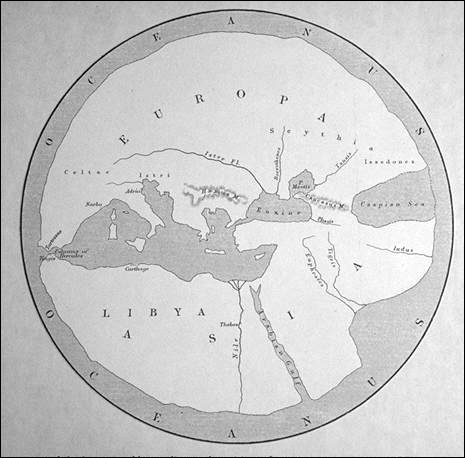 http://links999.net/cartography/cartography_history.html
MiG-23MLDi was wondering, the mitsubishi F1 should be considered a 3rd gen or 2nd gen fighter?
The F1 is considered a third generation attach fighter, like its western equivalent the Sepecat Jaguar from which it was inspired
MiG-23MLDPlease read carefully and do sleep a night about that.
Even the simple math you left aside.The engine has nothing to do with the weight of a flying aircraft at first.
The counterforce of weight is the lift.
That lift is generated by lifting areas and speed. (The single exception are VTOL aircraft).
The more weight you will bring into the air the more lift you are in need of.
A Su-24 or F-111 are in need of lifting areas to do so and some related controls for stability.
But that lift is not for free. In a similar way you rise lift by that, you have to counter the related rise in drag, when doing so.
To counter that drag, you are in need of a propulsion-system. One central part of that is the engine to accelerate to lift-off speed and overcome the flying drag.
The trick is to get the most lift for the least drag. (One of the main advantages of the VG-design).
When doing so you do reduce the need of thrust to overcome the related drag.
Related to your minimum demand in lift you will choose the least draggy speed to do so, which is subsonic in general. The best engine for that is an engine, which does operate close to its optimum cycle, when doing so.
A TF has two cycles to benefit from, when the Tj has a single cycle, which can not adjusted in a similar way to the related power-demands.In the meanwhile it is common knowledge, that the drag-thrust ratio is the most important yardstick. For the lack of published data about that, some got the idea to use the installed thrust to have a rough yardstick.
When assuming, that in the 50s all jets did have a similar drag, a similar jet-engine, that may have worked some way, just to give the public an idea about that.
That was never true as it its with different designs and technology.
You theory is only part true and over simplistic, why? let us start by simple physics
The newton (symbol: N) is the SI unit of force. It is named after Sir Isaac Newton in recognition of his work on classical mechanics.A newton is the amount of force required to accelerate a mass of one kilogram at a rate of one meter per second squared. In addition
http://www.convertworld.com/en/weight/Kilonewton.html
A jet engine measures thrust in Kilo newtons, the Russians usually do it, SFC only reflects the amount of fuel to accelerate kilo newtons.
In a jet engine, air is compressed by a turbine. Fuel is added to this air and is exhausted out the other end. This gas exerts an equal reaction force, providing forward thrust as it exits the engine. This thrust is transmitted from the engine to an airframe and engine mountings to propel the aircraft. Thrust is measured in pounds (lb), kilogram force (kgf), or the international unit, newtons (N).
http://hypertextbook.com/facts/2000/KennethKwan.shtml
Now an aircraft fights gravity by two simple forces, centrifugal force and lift
Fc = mv2/r, where Fc = centrifugal force, m = mass, v = speed, and r = radius
and we can say that despite for us the F-111 or Su-24 are flying straight, in reality they are traveling in a gravitational parabolic path in the same way a cannon ball flies however they constantly burn fuel and fly straight in our reference point of view
parabolic trajectory. The downward force of gravity would act upon the cannonball to cause the same vertical motion as before – a downward acceleration.
now since we are not in the vaccum the F-111 and Su-24 will experience drag, however by simple physics we know An object in motion would continue in motion at a constant speed in the same direction if there is no unbalanced force so our F-111 or Su-24 will slow down due to air drag or in other words friction.
Know if the Su-24 and F-111 have different masses, the same amount of kilo newton force will accelerate them differently since they have a difference in weight.
If the Max military power of the TF-30 is lower then the SFC of the AL-21 at the same thrust will be lower and therefore more efficient than you really expect, now if the Su-24 is lighter and has higher thrust to weight ratio at full military power you can not expect the aircraft to be less fuel efficient as you claim, however in aboslute numbers the F-111 has a longer range and higher payload, in that sense the F-111 is a more efficient aircraft by packing a higher density at a given volume
Now the SRAAM AIM-132 shows you an AAM can fly by just thrust alone

The Saturn V also is wingless and flies
MiG-23MLDWhen someone is unable or at best unwilling to understand some basic, there is no problem to accept that. But it becomes worse, when someone tries to distract from that shortcomings through further ridiculous claims.
For the benefit of the others.
The flow of air does behave different with different speeds.
There is the true subsonic range below Mach 0,7 – the transonic range – the true supersonic range and the high supersonic range.
For take-off and climb most aircraft do operate in the true subsonic range, when for cruise they stay in the lower transonic-range at around Mach 0,8.
The best suited engine is the high bypass TF with 4:1 up to 10+:1 or the TP
of 100:1 sticking to the true subsonic range only.
Military TFs are at 1,5:1 or lower, related to the wider speed range.
Military Tj are at best at true supersonic or behind Mach 1,2. The best possible military engine will one with a variable cycle. That was the promise with the first GE F120 engine, which was too futuristic for the USAF.
The low by-path PW F119 does offer the best available compromise between lower fuel consumption of a TF and still good enough at supersonic.
The best compromise for fighters was 0,5:1 in the 80s or lower. Below of 0,5:1 such engines are called “leaky Tj”.
Possible through the gains in pressure-ratio and TET.But for someone I have to push the basics to the limits, despite little hope about that.
The V10 engine of a F1 Ferrari did deliver 925 hp at 19.800 U/min.
The V12 engine of a T-72 MBT did deliver 780 hp at ~2000 U/min.Nominal the Ferrari engine has a higher output in hp, but none will get the idea to put that into the T-72 MBT?!
Can it be, that hp or kp are not the single yardstick about force?!The bypath-ratio of the TF30 did differ between 1,1:1 to 17,1 pressure ratio or 0,7:1 to 22 pressure ratio.
Every variant of that was on the higher side of bypath-ratio for military engines (up to 1,5:1)
I never got the idea, that someone may try to compare that to present airliner-engines and their limited flying envelope to operate.
To save my time, I will not explain how an AB does work. (As the related AB-ratios and the related sfc) That does not make sense about the lack of understanding about the basics and the limited use in striker-missions.Even the math is limited. Please try it again.
0,69 = 100
0,76 = XThe next fancy “highlight” is about MTOW.
The ferry-range is related to the amount of fuel at take-off, whatever you prefer, be it kg or liter. (conversion-rate is ~0,77 kg per liter).
The yardstick is, how far can you go in km for every kg or liter?!
Filling the same amount of fuel into into a Su-24 and the F-111 does bring a remarkable difference in range from that, well behind the difference in SFC.
Why you forget simple details you that always claim to know details?
You clearly know by simple physics an aircraft needs a force to achieve a speed when it weighs a specific mass and in an aircraft you have to consider gravity and air drag.
you know perfectly the F-111 at full military power has a lower Thrust to weight ratio than the Su-24 at full military power, perhaps at subsonic cruise speeds the F-111 is more economical but carrying a heavy load it won`t fly too fast either due to weight
The inlet was designed to disaccelerate the supersonic flow to subsonic speeds, a true ramjet has not such limitations since already air preasure and compression is achieved by the speed the airplane flies, so no need for compressor or blades, however the turbofan and you know it very well can not work with a supersonic flow, it compresses the air but not due to speed since the ramp and duct slow down the supersonic flow to subsonic speeds, and for such a reason you have a ramp or even an variable geometry ramp that generates multishock waves.
A scram jet even can work at supersonic speeds of air flow.
With engines like the TF-30 and AL-21, you have a very similar yield of 11000kg thrust, however one engine compresses air more and needs therefore less fuel to produce thrust however it has lower thrust at military power ask your self at the same max military thrust of the TF-30 the AL-21 does not have its max military power and does not spend the same amount of fuel at a SFC of 0.86, but has a lower fuel consumption .
In a high by pass engine like the Trent 900 you do not need a ramp simply because air is not traveling supersonic so there is no need for a ramp to slow down the supersonic flow however with the olympus fitted to the Concord you need a ramp and the same happens with the F-101 that powers the B-1A and B-1B


MiG-23MLDThe size of Tu-22 almost same as B-1, so it is hard to say, Tu-22 is a sort of bomber which is more efficient than neither F-111 or Su-24.
The undercarriger was designed on F-111 makes inlet shorter so that structual weight reduced. Dual-wheel which Su-24 undercarriage used gives a using flexible for wild runway but more space in aeroframe occupied.
The Tu-22M is in a total different class from the F-111, however the irony is the FB-111 tried to fill the same niche successfully, but it failed and today the Tu-22M remains one of the most sucessful bombers of all time.
The F-111 might have a SFC more economical but at lower thrust.
MiG-23MLDI tried it in easy words.
You claim things, that none did post in that way.
The claim about the wider cross section is from yourself.
Your way to explain, where the higher internal fuel load of the F-111 comes from.
In the meanwhile you have learned, that a lot of fuel is housed in the wings of the F-111, when not so in the Su-24.
The F-111 undercarriage is different to the Su-24, which does free further volume for internal fuel.
The links about the pics were related to that. See the height difference of related cockpits to bottom
All that has nothing to do with logic, but to stick to data and material at hand.The force to propel the F-111/Su-24 does come from the airflow of the engine.
The TF30 has an airflow of 118 kg/sec each
The AL-21F has an airflow of 105 kg/sec eachTo generate that the TF30 has ~5500 kp dry each
To generate that the AF-21F has ~8000 kp dry eachTo generate flying thrust you are in need of three main elements.
The most import one is the inlet-system, the second important one is the out-let-system and then the engine. The higher the speed the more in that ranking. At a given speed you do not need even an engine, see the RAM-Jet-system.
The kp output-value has something to do with the temperature. But with a TF you have a bypath-ratio. A hot stream through the engine and a colder one around that, both do produce thrust up to the transonic range.
To have some way to compare effective thrust-levels, you can no longer look at the installed max dry at ground-level and zero-speed.
Comparing Tj or comparing Tf with the same bypath ratio, such comparison can work, but it does not work, when comparing a Tj with a Tf.
I hope you got it, but I fear too much details from my side again for easy understanding.
The higher installed nominal thrust does not mean, that you have the higher force from that too. kN – kg/sec you remember.
The AL-21F has a higher fuel consumption of 10% at least for every kN.
To reach similar flight-performances to a more powerful TF30 the AL-21F is in need of more kN to feed. = double penalty, which does rise the difference to ~30% really.When you give the F-111 and the Su-24 the same internal fuel of 4 tons for example, what result in range will you get from that.
Will it be none as you claim, or will it be ~10% more for the F-111 or will it be ~30% more for the F-111?
So now we have the mistery thrust, the mystery thrust!:eek: Sens is the TF-30 a ramjet? ramjets only work at speeds of Mach 3 or more, the F-111 is no more than a Mach 2.5 speed aircraft, its inlet only reduces the amount of fuel needed but still it has a specific thrust, using a fan the turbofan reduces the amount of fuel spent, but still a turbofan can not work beyond a specific subsonic flow, besides big turbofans with high by pass ratios are for subsonic speeds and commercial aircraft and beyond that ramjets and turbofans with very low by pass ratios are more practical, these low by pass ratios are not very different from a turbojet in reality. So the AL-21 will spend more fuel to produce the same thrust because it sucks less air, however its thrust is higher at military power, the TF-30 is a low by pass ratio engine not a high by pass ratio like a Trent 900

This Trent 900 high by pass turbofan has a simple inlet nacelle cowling with no ramp or even VG ramp
So Sens this explains you why the TF-30 is not more different than the AL-21 at full afterburner, simply because the by pass ratio is still low.
When you fly at speeds beyond Mach 3 the ramjet can start working.
Now you have to see a reality, the TF-30 has lower yield and has to power a heavier aircraft, but of course you are in one way belittling the Al-21F3 used by the Su-24, this engine might be more fuel thirsty in SFC and this is not by 10% but only 8% at full military power, this engine however will power a lighter aircraft and has a higher thrust at military power.
Sukhoi claims the MTOW for the Su-24MK is slightly more than 43000kg and the RAAF claims the F-111 has a MTWO of almost 52000kg, see that the difference in absolute ferry range at max fuel weight, has a difference in fuel weight of almost 11000kg between both aircraft, that ratio is almost the same in range and in max fuel capacity


 Sign In