 MiG-23MLD
Now we turn back, when Aardvark carry 6X2271liter tanks, yes, no doubt it can even reach 6000 km ferry range, but is this compareable ? is it still a swing wing aircraft compare with Su-24 which can swing wing during full load?
The F-111 has its hardpoints swingwing as the way its wings do
The aircraft’s wings and much of the fuselage behind the crew module contained fuel tanks. Using internal fuel only, the plane had a range of more than 2,500 nautical miles (4,000 kilometers). External fuel tanks could be carried on the pylons under the wings and jettisoned if necessary.
The F-111 could carry conventional as well as nuclear weapons. It could carry up to two bombs or additional fuel in the internal weapons bay. External ordnance included combinations of bombs, missiles and fuel tanks. The loads nearest the fuselage on each side pivoted as the wings swept back, keeping ordnance parallel to the fuselage. Outer pylons did not move but could be jettisoned for high-speed flight.
MiG-23MLDYou’re going to switch a current deployed fighters list so you could place the LCA which has no inducted air force units over the F-CK-1 which numbers over 120 and has served in the ROCAF since the 1990s across one of the world’s most heavily armed flashpoints :rolleyes:
probably this will prove the LCA`s aerodynamic solutions are not as good as those of the J-10`s in aerodynamics and engine, the J-10 was more practical settling for the AL-31 and adding canards
LCA dogged by engine power limitations
Special Correspondent
NEW DELHI: The first batch of light combat aircraft (LCA) Tejas would carry “limited weaponry” because of engine power limitations, said highly placed Defence Ministry sources.
The Indian Air Force (IAF) has placed orders for 20 LCAs and agreed in principle to take another 20.
“There is no way you can have any other engine for the first 40 LCAs,” said the sources. The LCA was undergoing tests fitted with the American GE-404 engine with a capacity of 80 to 85 kilo newtons (kn).
The IAF, on the other hand, wanted the capacity to be 95-100 kn, the same as the ones powering the F-16 fighters. “If we buy a more powerful engine, the aircraft structure will have to be completely changed. This will not be possible with the initial lot,” the sources said.
The initial operational clearance is slated for 2010 end but besides the engine issue, the LCA is facing problems on two other fronts — the angle of attack and the landing gear. While the angle of attack achieved by LCA is 17 degrees, the IAF wants it to be 21.
In order to fit a more powerful engine in the future, the government is considering both direct import and co-development options. In case the import route is preferred, the contenders will be General Electric’s GE-414 and the European EZ 200. The IAF has indicated its preference for the former.
For co-development, the choice will be between Snecma of France and the Russian NPO Saturn.
http://www.hindu.com/2008/06/06/stories/2008060654911200.htm
MiG-23MLDYou’re going to switch a current deployed fighters list so you could place the LCA which has no inducted air force units over the F-CK-1 which numbers over 120 and has served in the ROCAF since the 1990s across one of the world’s most heavily armed flashpoints :rolleyes:
The LCA has the merit of being a very advanced aircraft mostly developed in India, of course in one way or another it has some foreign technologies input but still is a truelly domestic aircraft.
The IDF is not really very domestic and not really very powerful.
The Indians are moving in the right direction in terms of weaponry with the LCA and with 7 prototypes well they are not close to the J-10 which already must have around 100 examples but still the LCA is a very advanced aircraft and a good attempt of building something truelly domestic and original
India to launch Light Combat Aircraft Tejas by 2010
User Rating: / 0
PoorBest
NEW DELHI, June 8 (KUNA) — In an effort to add firepower to its Air Force, Indias is developing — Tejas– a Light Combat Aircraft (LCA), which is expected to be launched by 2010. LCA was in the final stages of testing and by 2010 it was expected to be launched, a source in the Indian Defene Ministry told KUNA here Sunday. After LCAs are launched, the MiG-21 fighter jets of the Indian Air Force (IAF) would be gradually phased out, the source added. Tejas is being developed by Indias Defence Research Development Organisation. Tejas underwent hot weather flight trials at Air Force Station in the Western Indian city of Nagpur recently, the source said, adding, the trials were planned at Nagpur because of the high ambient temperature conditions prevailing there during this period. The aim of the trials was to check operation of the aircraft systems under high ambient temperature conditions of over 40 deg C, representative of the stringent conditions the aircraft would be expected to operate in, after induction into the IAF.
“All aircraft systems, specifically the avionics system, flight control system and air conditioning system of Tejas were tested extensively during the trials and functioned satisfactorily on ground as well in flight,” the source said, adding, a total of seven flights of four hours duration were flown at Nagpur on two prototype aircraft PV2 and PV3. The tests included flights at 200 meters above the ground with a speed up to 1000 km per hour.
“It was the first time that the Tejas flew a non-stop distance of about 1, 000 km from Southern Indian city of Bangalore to Nagpur. This was possible due to the presence of external fuel tanks on the aircraft which were integrated recently. This was also the first time that the Tejas aircraft had been flown at such high ambient temperature conditions. A first look at the test data indicated that all the trial objectives were met satisfactorily,” the source informed. The successful completion of the trial marked a significant step towards attainment of all important initials operational clearance and subsequent induction into the squadron service with the IAF. Tejas is now planned for delivering precision guided bombs in the deserts of Western Indian state of Rajasthan, later this year.
http://www.khabrein.info/index.php?option=com_content&task=view&id=14705&Itemid=88
MiG-23MLDMiG:
The web data you show me didn’t say what’s condition cause F-111 approach over 5000km ferry range. what if max internal fuel with 4X2271 Liters external fuel tanks which Aardvark normally carry?
it will carry a max of 6 external fuel tanks
MiG-23MLDThe thing we are missing here and often gets overlooked is the fact that the WS-10 is not a direct AL-31 copy.
Rather it is based on the core of the CFM56 which in itself based on the
General Electric GE-F101 from the B1B. A highly logical idea considering the GE-F101 was used as the basis for the GE-F110.The problem for China is whilst the core of the CFM56 is a good starting point getting the materials right for a fighter engine is a difficult task. Certainly the WS-10 development was fairly stagnent until techology from the AL31 was introduced. Unfortunately certain Russian fan boys have locked onto this as evidence that the WS-10 is an AL-31 copy which it just isn’t.
For China the WS-10 is probably more of a technology improvement program to benefit any future J10 sales to Pakistan and their own next generation fighter program.
The J-10 still uses the Al-31 for several reason, number one it is a mature engine and the Russians reported the J-10 was going to be sold to Iran simply because China asked Russia if they could re-export the Al-31.
http://jp.youtube.com/watch?v=jJoTNOqFrNk
However as far we can say the J-10 is the best fighter that has ever been designed in China and in the far east.
If China will ever develop a fifth generation needs an engine like the 117S
and not like we are working on it but as here we have the engine fitted into a J-10 fighter like the Russians have shown in the Su-35BM.
I am sure China will develop a fifth generation fighter, but i do not think they are as close to do it as many claim.
If the Russians claim the WS-10 is not ready is simply becasue they will deliver 100 more AL-31s in 2008-2009 for the J-10, so probably they know the WS-10 still can not compete with the AL-31 and also this was reported by some sources that the WS-10 was still deficient and therefore the Russians claim the copy of the Su-27 is not as capable as the original Su-27 and much less les capable than the Su-35BM
A top manager of the Russian aviation holding said several J-11s had been assembled with Russian components, but at the moment mass production is not an issue.
According to a staff member of the aero engine design bureau, the WS-10 is not good enough for serial manufacture. In 2007, the Chinese concluded a new contract for the delivery of 54 AL-31FN engine (a version of the AL-31F) and are now discussing the purchase of an improved AL-31F-M, he said.
MiG-23MLDread my blog and the WS-10 thread SDF, it’s all there.
There was a huge ramp up in production level in October of last year.
oh man, L-15 project is going absolutely no where. The slowness of Hongdu in developing this thing has really pissed off the PLA brass. If anything, it looks like JF-17 is going to take a lot of orders that would’ve gone to L-15. HAIG really is an embarrassment to AVIC.
Man i did not find any evident and solid proof only again specualation of your part even the typical argument to justify the Su-27/J-11B
Nothing concrete
Give me a solid proof the J-10 uses WS-10 and no AL-31, the Russians have already said the eventrually the WS-10 will turn out to be a operational engine but so far still is not.
Москва. 21 февраля. ИНТЕРФАКС-АВН – Российские эксперты в области вооружений не исключают, что Китаю удалось скопировать один из лучших истребителей в мире Су-27СК, о чем сообщалось в российских и зарубежных СМИ, но они уверены, что по летным и боевым характеристикам китайская копия существенно уступает российскому оригиналу.
“Отказ КНР от перевода в твердый контракт опциона на поставку технологических комплектов для лицензионного производства истребителей Су-27СК (J-11) свидетельствует о том, что в КНР взят курс на создание собственной копии этой машины. Нельзя исключать, что рано или поздно им удастся скопировать российский истребитель, но в любом случае это будет лишь китайская копия, а не оригинал. Ни технически, ни технологически Китай пока не готов создать такую копию, которая по боевым и летно-техническим характеристикам соответствовала бы российскому Су-27”, – заявил “Интерфаксу-АВН” заместитель директора Центра анализа, стратегий и технологий Константин Макиенко.
Он напомнил, что в 1995 году был подписан контракт на лицензионное производство в Китае 200 истребителей Су-27СК, но реально было построено лишь 95 машин. Затем китайская сторона приостановила закупку машинокомплектов для сборки истребителей.
К.Макиенко отметил, что аналогичные усилия предпринимаются китайской оборонной промышленностью и в отношении практически всех других систем вооружений российского или западного происхождения. “Стоит напомнить, что, получив в 50-е годы технологию истребителя МиГ-21, китайский авиапром затем в течение сорока лет создавал на базе этой машины различные варианты собственных истребителей. В этом контексте попытки создать полностью китайский аналог Су-27 не могут вызывать удивления”, – сказал эксперт.
По его словам, в настоящий момент главным препятствием для создания китайской версии Су-27 являются трудности в копировании двигателя АЛ-31Ф, передача технологии которого не была предусмотрена лицензионным контрактом 1995 года. “Масштабные китайские закупки двигателей АЛ-31Ф и АЛ-31ФН в России свидетельствуют о том, что китайская реплика WS-10A все еще не удовлетворяет современным требованиям, вероятнее всего, по ресурсным характеристикам. С учетом быстрого и устойчивого экономического и научно-технологического роста КНР создание аналога АЛ-31Ф представляется делом времени, но на сегодняшний момент можно уверенно констатировать все еще сохраняющееся отставание китайского военного двигателестроения от российских возможностей”, – сказал К.Макиенко.
Он отметил, что в России ведутся масштабные работы по созданию более современных версий АЛ-31Ф. “Стоит напомнить, что не далее как 19 февраля совершил первый полет прототип истребителя Су-35, оснащенный двигателями “изделие 117” разработки НПО “Сатурн” с увеличенной на 15% тягой и значительно возросшим ресурсом”, – сказал К.Макиенко.
Moscow. February 21. Interfax-AVN – Russian experts in the field of armaments do not exclude that China was able to copy one of the best fighters in the world Su-27SK, as reported in Russian and foreign media, but they are confident that on the flight and combat characteristics of the Chinese copy substantially inferior to Russian original.
“The refusal of the PRC at a solid option contract for the supply of technological kits for licensed production of Su-27SK fighters (J-11) indicates that the course taken in China to create its own copy of this machine. It can not be excluded that sooner or later they will be able to Russian fighter copy, but in any case it will only copy of the Chinese, rather than the original. Neither technically nor technologically China is not yet ready to establish such a copy, which military aircraft and technical characteristics consistent with the Russian Su-27 “- said” Interfax-AVN “Deputy Director of the Center analysis, strategies and technologies Konstantin Makienko.
He recalled that in 1995 a contract was signed on licensed production in China 200 Su-27SK fighters, but they really were built only 95 cars. Then the Chinese side suspended the purchase of mashinokomplektov to build fighter planes.
K. Makienko noted that similar efforts are the Chinese defense industry and against almost all other weapons systems Russian or Western origin. “It will be recalled that, having received in the 50 – s technology MiG-21 fighter aircraft, Chinese aviaprom then over forty years, created on the base of the machine, various options for its own fighters. In this context, attempts to create a fully analog Chinese Su-27 may not be surprising “- Said the expert.
According to him, currently the main obstacle to creating a Chinese version of Su-27 was the difficulty in copying the AL-31F engine, transfer of technology which was not provided for the licensing contract in 1995. “Large-scale Chinese purchases AL-31F engines and the AL-31FN in Russia indicate that the Chinese WS-10A replica still does not meet modern requirements, most likely on the resource characteristics. Given the rapid and sustainable economic and scientific-technological growth in China the creation of an analogue AL-31F seems a matter of time, but at this point can confidently conclude there were still lagging behind the Chinese military from Russian engine of opportunity “- said K. Makienko.
He noted that Russia conducted extensive work to create a more modern versions AL-31F. “It will be recalled that no further as February 19, performed its first flight of a prototype Su-35 fighter aircraft, equipped with engines” product 117 “development of Saturn with increased traction by 15% and significantly increased resources” – said K. Makienko
MiG-23MLDwhy limit it to just fighters.. there’s not exactly THAT many fixed wing aircraft made in Asia anyways.
Japanese C-X
Japanese P-X
The C-X and P-X are the most advanced aircraft built in Asia in terms of engine technology.
The Japanese have assured a place in the aviation industry however i do not see without alliances with other Asian manufactures how can the create a really independent and leading industry as Boeing or Sukhoi are.
MiG-23MLDWell MIG, with all the due respect, lets dont mix economy/politic/etc, on the thread, i mean that is highly speculative, and we will end with the oil prices/diamonds/titanium markets, etc, stuff that dont goes well with the discussion.
The main problem is to develop the new aircraft is the engine, plain and simple, all that because the supercruiser fashion, ram airframe/X-band LO , really arent that hard as the engine
Supercruiser is a plain failure IMO, actually i hope the russians wont develop a new engine for the pak-fa, with SC and a base higher fuel consume, well, some guys here will say “but it dont have SC”….but im sure many engineers/logistic team will say….”and who cares?”, dont get me wrong but sometimes is about the higher nominal thrust, and sometimes is about how long you can sustain it, agility is about aerodesign /engine, well yes a new engine would be needed, but a more powerful engine not always ensure a better maneouverability
The japanese seems to have something real,i dont know from where they got the money,i dont care, but seems they have progresed a lot more than the chinese, so if you take the tangent now…well seems the japaguys will get first the plane
I guess if the chinese or Japanese are going to develop a fifth generation fighter, they will need several technologies already used by the F-22.
The Su-35BM has the engines but not the airframe, has the avionics but not the stealthy fuselage used by the F-22.
There are several technologies needed by any country to make a truely fifth generation fighter, so far the best 4+ fighter in Asia is the J-10.
The LCA is a small aircraft a truely 4th generation fighter but besides avionics and weaponry it is not a fifth generation fighter and the Kaveri is not even an equivalent of the Al-31 fitted to the Su-37 or Su-30MKI.
If we look at its aerodynamics we can see that the J-10 might be a really good fighter, something in between the Gripen and F-16, but the Mirage 2000 is not as good as the F-16 in all the flight regimes and the LCA looks like a modern upgraded Mirage 2000.
Having canards foreplanes and delta wings, the J-10 very likely can out fly the LCA and F-2 and surely will beat the Ching Kuo.
However with new technologies the LCA and F-2 might be able to outgun the J-10.
MiG-23MLDSouth Korea and Japan can not match the british Rolls Royce engine technology, niether Lyulka-Saturn`s 117s, and that is just for 4.5 generation fighters such as the Eurofighter and Su-35BM.
The Japanese might say we are going to build that and that but basicly their best fighter is a clone of the F-16 with very few technologies develop domestically as “innovative”. therefore i can conclude Japan is just bluffing.
I guess China is different becasue they might copy but at the end they get the resuts and they do not compromise, do you think the US will let South korea and Japan build an F-22 equivalent? the answer is not
MiG-23MLDThe ATD-X seems to advanced to cancel it, since when the project began?, sadly it airframe is too conventional, i would expected something more original…anyway..
Any speculation about the J-12?
What about Korean projects for 5th generation design?
in my opinion niether Japan or Korea will develop a fifth generation fighter, at least to F-22 standards.
China will do it why? China has the economic growth to ensure a large military budget, the Chinese Government has the will to develop their own stuff, even if its a derivative or copied, the chinese are developing their own weaponry.
If we look at the chinese the J-8II was flown after 20 years of the MiG-23 first flight and almost 30 years of the F-4`s however the aircraft had no compromises with foreign powers like the F-2 has.
The J-10 also is a prove that the chinese do not compromise for their national security, the J-10 is 20 years younger than the MiG-29A and in its early prototypes 30 years younger than the F-16A however it is the same level of technology.
Seen the american case it is easy to see China might develop a real stealth fighter at the earliest in 2020, almost 23 years after the american equivalent and might put it into service by 2030.
Why? China contrary to Russia has not shown any fifth generation engine, a must if you want supercruise and super maneouvrability and the WS-10 still is an AL-31 equivalent basicly an engine of the 1970s.
The SU-35BM has that type of engine and is flying and by 2010 will start operational life in the VVS.
MiG-23MLDInteresting thread, but better keep out russia from it.
Now, it would be interesting to classify fields per country, so, lets say..
What nations are more advanced on…
-Aerodynamics
-Structural airframe (composites/titanium, Al alloys)
-Electronics (radar, IR stuff, networking)
-Engines (this gonna be good ;))Would be nice if some of you throw some of these wind-tunel models from different countries, the J-10 evolution , J-12 speculation, etc.
I would say that must be between India, Japan and China, India and China have developed quit advanced aircraft, the Japanese only have subsystems, their jets are mostly western aircraft indigenized.
The LCA is a very good example of a Mirage 2000 equivalent, a Mirage III of the 21st century in technology
MiG-23MLDIf you consider pure projects only and not a derivative of an older American or Russian machine like the F-15J or MKI then the most successful Asian fighters currently in service are
1. J-10
2. F-CK-1
3. F-2
4. J-8II
5. JH-7A (fighter bomber/strike fighter)There really isn’t any others. Certainly nothing with the numbers in service like the five above.
I’d put the F-2 behind the F-CK-1 because the F-2 is heavily based on the F-16 (though it was because of pressure from American Congress over trade balance.) Also, when the F-CK-1 came out in the 1990s, it was the one true 4th generation aircraft developed in Asia with a homegrown MRAAM. Amazing to speculate where Taiwan’s aviation industry would be if it had continued.
New projects:
1. FC-1/JF-17: this one would have the most impact in Asia — and beyond — because of the number of potential aircraft and users
2. T/A 50: impact similar to the FC-1 because it would be the only new trainer/light attack craft for users of American aircraft
3. L-15: even if Hongdu just inherits the current customer base built by the K-8, it would be a major success. But as a supersonic trainer/attack craft, it could expand the market of its predecessor
4. Tejas: if and when it actually makes it to service, it should have a fairly large home market and so should have an impact even though it would probably never be exported as much as the first three.
5. F-CK-1C/D: upgrade of the F-1-CK
As far as fifth generation projects, there is really none that is more than paper or speculation. The most viable are probably the multiple projects from CAC and SAC.
Considering that the J-10 was thought to be nothing more than rumor (and photoshops) just year and a half ago, it would be far less surprising to see one of the J-XX projects suddenly popping into reality. (It’s a trend we saw with not just the J-10 but the Z-10, the J-11B and a host of naval projects like the Yuan SSK and Type 054A.)
Your list should be modified
1. J-10
2. F-CK-1
3. F-2
4. J-8II
5. JH-7A (fighter bomber/strike fighter)
and the reason is the F-1 should be included there
1. J-10
2. F-2
3. LCA (a few flying)
4. IDF Ching Kuo
5. J-8II
6. F-1 (retired but was succesful)
7. JH-7A (fighter bomber/strike fighter)

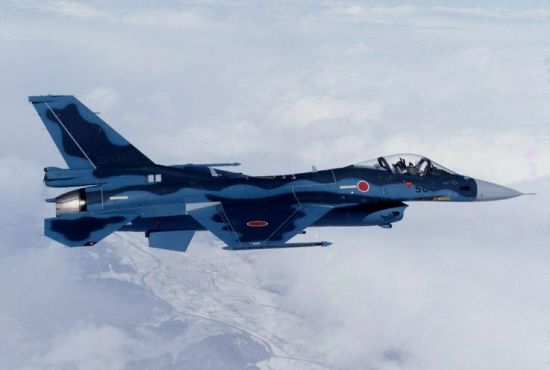
The IDF Ching Kuo is an excellent aircraft but not as good as the F-2
Now the F-2 can probably beat the J-10 if the new Japanese missiles are better than what latest Chinese weapons can achieve, one example is the AAM-5 and AAM-4
Title
AAM-5 (Type 04) (Japan)
Section
AIR-TO-AIR MISSILES – WITHIN VISUAL RANGE
Appearing in
Jane’s Air-Launched Weapons
Publication date
Feb 06, 2007
Type
Infra-red guided air-to-air missile.
Development
Reports in 1991 first stated that design studies had started for a new, more manoeuvrable short-range air-to-air missile to replace Japan’s AAM-3, which itself entered development only in 1986. This new missile emerged as the XAAM-5 programme. As with previous Japanese AAMs, it was a joint development between the Japan Defense Agency’s (JDA) Technical Research and Development Institute (TRDI) and Mitsubishi Heavy Industries. In 1997, it was reported that the AAM-5 design would be evaluated against the Python 4, ASRAAM and AIM-9X missiles and that Mitsubishi had been awarded a lead contractor role for its further development. Flight tests are understood to have begun in 2001 using F-15 aircraft, carrying the missiles on shoulder-launch rails fitted to the main underwing pylons. Almost nothing is known about the design process and development history of the AAM-5. By 2003 TRDI sources had referred to ground-launched trials from the southern sea ranges at the Nijima test centre. The first deliveries of weapons were made to the JASDF in 2004 and its official service designation, Type 04, was allocated. By 2005 the AAM-5 was no longer listed as a major development programme by the TRDI.
MiG-23MLDDue to upper surface, МиГ-23МЛД, you are right, but when we count available section, please notice that no matter how the inlet on Su-24 narrow are, the section of inlet on F-111 is semicirclar so that bottom surface factually is narrower that Su-24.
According to some photos, I believe, only two 454kg bombs could be put in F-111’s bomb bay abreast, but three same weight bombs under Su-24. Remember what the diameter of X-58 is.
Then if the fact in terms of somebody here taught me is true, only 2 pylons are usable under each wing for F-111, we can concieve that range of Su-24 while it carring 2 X 3000 liters tank, won’t be smaller that F-111 which only internal fuel used, meanwhile more warloads that Su-24 can carry than F-111.
For max speed, that 2.5M is almost some sort of fantasy while F-111 have to fixed swept angle at inferior limit if both 4 or 6 pylons are fully used. I bet that speed of Su-24 with max swept wing must be faster much more than F-111 with mini swpet wing.
Concerning nuke bomb, yes F-111 can drop nuke, but Su-24 couldn’t?
Franc
You do not need empirically made guesses to know the F-111 can carry more fuel if you read the Sukhoi webpage about the Su-24 you will confirm the Su-24 has less range and it is lighter, having therefore a lighter weapons load if you compare tht date from the official Australian air force
General Dynamics F-111 technical specifications Manufacturer General Dynamics
Role Long-range strike fighter
Crew Pilot and navigator, who also operates the weapons systems
Engine Two Pratt and Whitney TF-30 turbofans (9,500 kg thrust each)
Airframe Length: 23m, height: 5.3m
Wingspan 21.3m extended, 10.3m swept
Weight 24,000kg basic, 51,846kg fully loaded
Speed Supersonic at sea level, Mach 2.5 at altitude
Range Ferry range in excess of 5,500km
Ceiling Above 50,000 feet
Weapons Harpoon anti-ship missiles
Sidewinder air-to-air missiles
Laser-guided bombs
Conventional bombs
Avionics Digital flight controls
Terrain-following radar
Attack radar
Pave Tack target system
Inertial navigation and integrated weapons system
http://www.airforce.gov.au/aircraft/f111.htm
Aircraft performance
Takeoff weight:
– normal, kg 38,040
– maximum, kg 43,755
Maximum landing weight, kg 27,900
Maximum internal fuel, kg 11,100
Normal ordnance load, kg 3,000
Maximum ordnance load, kg 8,000
Service ceiling (without external ordnance and stores), km 11
Maximum flight speed at sea level (without external ordnance and stores), km/h 1,315
Max Mach (without external ordnance and stores) 1.35
G-limit (operational) 6
Operational radius of action at sea level in mixed mode (Vcr in the 200-km area, V=900 km/h in other areas) with PTB external fuel tanks and 6x FAB -500M-62 bombs, km 615
Ferry flight range with 2xPTB-3000 external fuel tanks, km:
– with PTB external fuel tanks dropped 2,775
– with one in-flight refuelling 5,000
Takeoff run at normal take-off weight, m 1,550
Landing run at normal landing weight (with braking parachute), m 1,100
Aeroplane dimensions:
– length, m 24.532
– wingspan, m 17.638 (10.366)
– height, m 6.193
Crew 2
In-flight refuelling system
Maximum flow rate (at entry pressure of 3.5 kg/cm 2), l/min 1,100
Powerplant
Number and type of engines 2 x AL-21FZA
Thrust:
– in afterburner, kgf 111,200
– at full power, kgf 11,200
Avionics
MiG-23MLDI disagree with the above. Technologically, Tejas is unlikely to be inferior to ANY Asian fighter like J-10, J-11 or F-16 clones like F-2, Ching-Kuo or T-50.
In my opinion the J-10 is the best far eastern fighter because of the following reason.
Both the LCA and J-10 have delta wings but both have different ways of dealing with flow separation at high AoA, the J-10 uses canards, the LCA uses less swept at the the root of the leading edge to delay flow separation like the AJ-37 Viggen
However the F-2 and Ching Kuo use LERXes to deal with flow separation.
The J-10 has a high TWR and canards that also double as tail first surfaces.
The Ventral inlet is better fit for high AoA flight.
All of these makes me feel the J-10 is more agile than the LCA, also the J-10 has a proven engine and a spare one in the WS-10, the LCA is not operational in the numbers the J-10 is.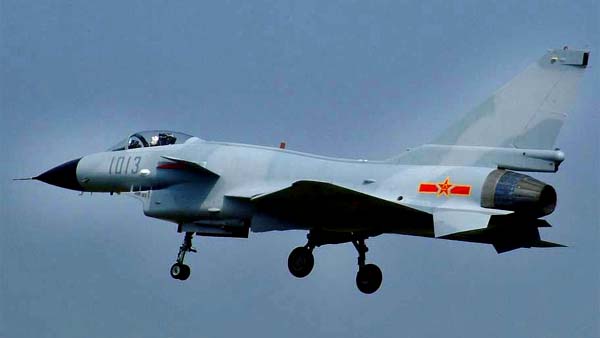
In my opinion the J-10 is the best fighter
The SU-30MKM or Su-30MKI are still the bests of all them all

The iranian fighter is not more than an upgraded F-5
MiG-23MLDThe best fighter is Asia is the J-10 why?
A) the J-10 is the fastest of all the asian fighters, faster than the Ching Kuo, F-2 and LCA
B) it is very likely the most agile of all them all
C) It is relatively the cheapest to build and put in production in terms of cost effectivenes
D)it is operational in large number and has the most potential for a high production rate and high production numbers



 Sign In








