 MiG-23MLD
actually, I know quite a bit. I read all the kanwa articles on it, all the Russian promotion on it. How much of J-11B info do you think is available for people like you to understand.
so, you don’t know about the improved Taihang that will be ready in a couple of years and have higher thrust and T/W ratio than 117S and you claim that su-35 has more advanced engine?
Other than PL-12, have you seen the latest generation SRAAM and LRAAM that China is developing? But we have seen all the stuff about the new generation Russian AAMs that have been hyped for years but have not come out.so basically, it’s still less reliable than F110 series. It has worse T/W ratio (I mean US standard T/W, not the Russian Standard) than 132. Unobjectively looking at the Russian engines, I would say FM4 is actually better than 117S.
WS-10A has better thrust, better T/W ratio and once it matures will have better reliablility and it’s worse than AL-31? Do you know that they ramped up the production of WS-10A in October of last year. And it’s expected to reach 100 this year and equip all of the J-11Bs and large number of J-10s?
it’s still a 4th generation fighter no matter how much boasting Russians do.
The missiles we got for su-30 are inferior in every way to domestic options. That’s why they like jh-7a more than su-30 now. And who is going to fight with the maximum load? You loose range and maneuverability doing so.
don’t boast to me, it does not good. Again, plaaf have already tested this out. It has nothing on the AESA radar being prepared for J-11B in the near future.
it’s a good thing they are getting a newer version of AA-12, because it wasn’t any good compared to PL-12. As I mentioned, the new generation of SRAAM has finished development. It will certainly be a newer generation than R-73. As for ramjet based LRAAM, that will also be coming out.
you are boasting because it has a couple of MFDs, a wide-angled HUD and a FBW? It’s certainly a modern 4th generation cockpit, but how many fighters don’t have that right now? I even see all of the above on JF-17.
You are only talking propaganda the WS-10 is not even ready for the J-10, and China even bought AL-31s for J-10s and Su-27s last years the Taihan WS-10 is only propaganda that is not ready for service and still inferior to the AL-31 that is only propaganda of the Chinese sicne the continue buying Al-31s, same like the Chinese Jumbo, Bombardier and Embraer do build aircraft like the CRJ-900 and E-195 and they need a market and is not easy to gain a foothold in the market specially since Russia, Canada and brazil are struggling to even remain competitive in the RJ class now that even Japan will be added and china has the ARJ-121, China is bluffing when they are saying we are going to build a Jumbo they need a Market even the A-380 is a machine that almost has banckrupt Airbus.
Recipient China
Weapon designation AL-31FN jet engines
No. ordered 100
Year(s) of deliveries 2008-2009
Contract value, mln USD 320
Notes For Chinese J-10 (Super-10) fighters
e
Major Identified Deliveries of Russian Arms in 2007
Recipient China
Weapon
designation AL- jet engines
No. ordered 180
Year of contract 2005
Year(s) of deliveries 2006-2007
Delivered in 2007
Delivered by 2008, units 140
Notes complete
Contract value – 550 mln USD. For Chinese Su-27/30 fighters previously bought in Russia
mln USD
units
http://mdb.cast.ru/mdb/4-2007/item_5/article_2/AL- jet engines
Russia has the large Il-96 and still the aircraft is not competitive compared to the B-777, B-747, A-340 or A-380
MiG-23MLDThe National Engineering Research Center for high end CNC located in Shengyang has developed series 5 to 8 axis CNC tooling with IP copyrights. The indigenous Lantian CNC was used to machine various parts for indigenous turbofan engine of WS-10A.
Impeller of internal combustion made by Lantian CNC
National Engineering Research Center For High-End CNC
since SAC Liming plant using the Lantian( Blue-sky) 5-axis CNC, it now achieves parts surface roughness to 0.01 um grade( 1/1000th thickness of a piece of hair ), and its speed can be up to 10000r/m to machine out a cone shape part with a thickness of only 0.8cm with a roughness of 0.08um. as reported by Chinese CCTV several years ago:
http://www.youtube.com/watch?v=NvDSqxNGlxs
Meanwhile, china is building world largest 80000 ton grade Press Forge:
This type of Machine is nothing special already Russia has that type of machines and not Propaganda of building Jumbos
High-Speed 5-Axes Machining Center with Hexapod Parallel Structure of ГЕКСАМЕХ-1 (HEXAMECH-1) make
The machine is designed to process components of awkward space shape for airspace, automobile, shinbuilding and other machin building industry branches. Components to process are beams, ribs, longerons, panels,
and in Russia they do not make propaganda they have the An-124 to prove it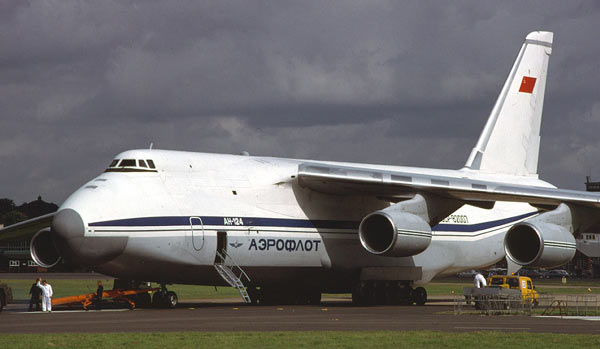
High-Speed Laser Complex of КЛР-1 (KLR-1) make
The complex is designed to do programmed nesting of metal sheets with max dimensions of 1500 x 3000 mm and a thickness of up to 8 mm. The complex can be used in automobile, airspace, shipbulding industries as well in defense and mining industry to cut flat blanks of structural, tool, stainless, silicon and sprin steel alloys

MiG-23MLDWho cares..You think Russia made everything from scratch? :p
Here’re couple more…
Dalian machine tool owning German Zimmermann; US, Ingersoll System and CM Systems.
Zimmermann builds 5-axis machines, serving Boeing and Airbus, BMW and Volkswagen, etc..
http://www.imts.com/visitor/exdir/show_url.cfm?eid=00039350
http://www.f-zimmermann.com/Shenyang machine tool
http://www.smtcl.com/SCHIESS GmbH owned by Shenyang machine tool.
http://www.schiess.de/
1994 Rudolf Gänzle takes over the F. Zimmermann GmbH as sole shareholder.
1995 First 5-axis FZ 30 is delivered.
1/1999 Foundation of the subsidiary Zimmermann + Bokö (UK) Ltd. in Birmingham (GB).
3/1999 Presentation of the FZ 35 at the Euromold.
8/2000 Foundation of the 100% subsidiary Bokö GmbH.
2/2001 Foundation of the Zimmermann-Bokö China Office in Shanghai.
6/2001 Zimmermann “Open House” with presentation of the FZ 37 and LMC.
12/2001 Fair highlight FZ 37 at the Euromold.
11/2004 Cooperation with DMTG – Dalian Machine Tool Group Corp. Beijing, China
04/2005 Participation in CIMT – China International Machine Tool Show – 2005, Beijing China with impressive exhibit FZ 37
Zimmerman owned by chinese where does it say that? more fantasies it is still a German owned Company
MiG-23MLDOh what you seemed to miss is that Russia barely has a machine tool industry now, and that it has to import all sorts of machine tools. China alone in 2005 manufactured over 51,000 machine tools, but even that wasn’t enough to cover local demand. Don’t expect that the machine tools Chengdu and Shenyang bought in the 90s will stay that way—they will eventually be upgraded.
No. India built those planes with kits from Russia, and look today the trouble they are having with Tejas development. Apparently they did not learn from this much. The problem with you is that the Russian formula for “trusting” technologies to India did not result India getting or digesting the best tech. Look at the Charlie class submarine India leased, the Russians guarded the reactor room and won’t let Indians come in. Today China is now serially manufacturing its second generation nuclear submarines, India will only get its first ever nuclear sub a few years from now with Russian “help”. Look at the Kaveri engine, the Russians are doing the testing and up to now, it hasn’t been done. Why would the Indians let the Kaveri be tested with the Russians is beyond me since the Russians have dubious motives; the Kaveri would probably have been done already if the Indians developed a flying test bed on their own. The one industry India had the most progress is, is the one industry that had the most contact with the West, the IT industry.
Crobato do not lie to your self we are talking about the tooling needed to build aircraft, Russia has already enough experience because they have built aircraft since the 1920s, the 1990s crisis did not halt aircraft production in Russia and russai did build aircraft for export, more than 200 Su-27s were only built for China and China did assemble them too.
See this aspects
Three To Watch
The Ryazan Machine Tool Works, for example, has done well in both Russia and North America. This company specializes in large lathes that are in strong demand from the oil industry and other heavy industries such as rail equipment and shipbuilding. Ryazan showed a flatbed lathe for heavy-duty turning. This machine was recently redesigned to meet specs suggested by its U.S. seller, Shamrock Machinery Co., of Houston, Texas. The company has enlarged the spindle bore to 320 mm, beefed up the headstock to 40-ton capacity, and added a tailstock for parts weighing as much as 25 tons. It features a C axis with independent drive. The bed has three guideways to handle heavy thrust forces while maintaining stability. The earlier version of this model was shown at IMTS 2006 and sold to a U.S. company for machining wind turbine parts. This builder also produces some large slantbed lathes, VMCs and gear-cutting machines, which are sold worldwide.
The Russian tooling companies have western buyers
The design of Ryazan’s RT417RF3-6 flatbed lathe reflects the needs of U.S. customers who need exceptionally large spindle bores for applications such as heavy duty pipe threading in the oilfield industry or machining hydraulic cylinders. Larger, more powerful models will be shown at the EMO show this month in Hannover, Germany.
http://www.mmsonline.com/articles/090705.html

Big picture High-Speed Machining Center of МЦ-1 (MTS-1) make
The machine is designed to process components having complex surfaces of single and double curvature with end and face milling cutters, the components being such as wing or fuselage elements and shape forming tools, The machine allows drilling elements and shape forming tools.
MiG-23MLDwell i did not know it but also the Sukhoi T-5 was flown on July 18, so i share my birthday with this sukhoi experiemtal fighter
The “T-5”, as the prototype was known, was modified from the original T-3 prototype. It performed its initial flight on 18 July 1958, with Vladimir Ilyushin at the controls
MiG-23MLD1 July
German Fokker E1 monoplane fighters, the first aeroplanes to be fitted with synchronised machine-guns, enabling them to be fired through the propeller arc, are introduced on the Eastern Front.1 July
The Office of Naval Aeronautics is formed to oversee United States naval air operations.http://www.century-of-flight.freeola.com/Aviation%20history/aviation%20timeline/1915.htm
Still nothing modern…..oh well….
Your birthday is also the birthday of the DC-1
July 1: The first Douglas airliner, the DC-1, makes its first flight
MiG-23MLDi was born on May-10, on that day:
1972 – Lts Randy Cunningham and J G William become the first US Navy aces of the Vietnam War, adding three Mikoyan-Gurevich MiG-17s to their tally on this day alone.
1941 – Rudolf Hess parachutes into Scotland to try and negotiate an alliance with Britain against the Soviet Union .
1940 – Germany invades the Netherlands, Belgium, and Luxembourg. Paratroops again play a key role.
Cool your birthday is the same day my mother`s and my best friend`s birthday and also the day the great A-10 was first flown
The first flight of the A-10 was in May 1972.
http://www.airforce-technology.com/projects/a-10/a-104.html
also the Bombardier CRJ-100 flew on a May 10
see
CRJ-100″ performed its first flight on 10 May 1991,
MiG-23MLDlol this is the problem with crobato vs Flogger/Star49 threads.
it first starts off about Russian aircraft A vs Chinese aircraft
then it goes off about some other industry like computers and then cars
then it stops being about Russia and China and then becomes Latin America, Russia vs China and the rest of Asia because one guy has too much latin pride and an obsession with Russia, while the other has too much Asian pride and a dislike over Russia, probably because of some historical things between China and Russia that are not so relevant today.Yes, we know Russia doesn’t produce nice consumer electronics like Japan or Taiwan, but what relevancy that has to do with military aircraft is beyond me.. especially since Russia (while its no US) is able to produce some interesting designs that are usually beyond everyone else except the US, and in many cases, W.Europe). The only unfortunate thing is the procurement will be slow while as procurement in China will be faster simply because they have more money to throw and obviously a greater need at the moment.
Also i see alot of arguing between pro Russian kids and over optomistic Chinese nationalists, and very little stats and links to actually back up the claim. one side often posting irrelevant links with dubious credibility, and the other side not even posting any links at all.
The link are not dobious, i posted KnAAPO, Sukhoi, Rosoboronexport, TASS and many others, this thing is not about nationalism as you say simply is about History.
tell me why i have to always accept a historical account that basicly Russian or other sources are against? the answer is simple try to put up things straight
we are talking about aircraft and technologies related to aviation such as electronics or tooling and you are trying to say the thread has been spoiled by us, but is not true, you simply do not understand all the technologies involved in aircraft manufacturing.
The answer why the topics deviate are simply because aviation is the last and top industry where all the technologies of a nation`s are shown and therefore exihibit the real development a nation has and aircraft also reflect that.
We are not doing anything bad if we respect the forum rules by just discussing these aspects
MiG-23MLDyou clearly have no clue how modern J-11B is
Actually, the tooling in the Chinese aircraft factories are much better than the Russian ones. Most of them are still using the Soviet era ones. But for some reason, the Russians still manage to pump them out in good quality. Says a lot of good things about the skill of the Russian work force.
you are not saying much.
Use of the phrase “far more advanced” at this day and age should only be applied on 5th generation fighters.
by what sense is it that much more advanced. Have you seen what J-11B will be in 2 or 3 years when su-35 will really be ready for mass exports? Does su-35 use fiberoptics cable for communication? what kind of databus standard does it use? What kind of newer generation AAMs will actually be ready by then for the Russians and for Chinese?Face it, you know very little about J-11B.
And you know very little about the Su-35BM.
Russia is not claiming fiber optics communications we do not know what type of systems it has in detail we do know it has more advanced engine and missiles see
In terms of engineering, the engines are substantially modified AL-31F production engines employing fifth-generation technologies. They use a new fan, new high and low pressure turbines, and a new digital control system. A provision is made for using a vectored thrust nozzle. The modernization has increased the engine special mode thrust by 16%, up to 14,500 kgf. In the maximum burner-free mode it reaches 8,800 kgf. Compared to today’s AL-31F engines, their capabilities will grow substantially, by 2 to 2.7 times. For instance, the between-repair period will grow from 500 to 1,000 hours (the operating period before the first overhaul is 1,500 hours). The designed period will vary between 1,500 and 4,000 hours
http://www.sukhoi.org/eng/planes/military/Su-35/
The J-11B has the same AL-31 in fact china just bought Al-31 for their aircraft, the J-11B even with the WS-10 can not match that, it can not match even the standard AL-31.
Also it is a cliche that Russia has not modernized its tooling, they have modernized it simply becasue they are recovering economically and the Su-35BM is a truely modern fighter
see other factors among the radar that is far more advanced
Armament
In addition to the armaments onboard the modern Su-30MK, it is planned to additionally arm the Su-35 with new types of air-to-air and air-to-surface guided missiles, including long-range types. The maximum ordnance load of the Su-35 is 8,000 kg. This is placed in 12 weapon stations.
Irbis-E radar control system detects and tracks up to 30 air targets, retaining continuity of space observation and engaging up to eight targets. The system detects, chooses and tracks up to four ground targets in several map-making modes with various resolution at a range of up to 400 km, without stopping to monitor the airspace.
here it is suggested new versions of the AA-12 with ramjet, (meteorskii) or even the R-37 and KS-172
http://www.sukhoi.org/eng/planes/military/Su-35/
here are the avionics
New engines with all-aspect TVC nozzle and thrust of 14,500 kg are installed on the air-craft. The inner fuel capacity is increased and the aircraft can carry two external fuel tanks with 2,000 liters capacity. The aircraft is equipped with the new Integrated digital aircraft con-trol system (ICS) carried out the functions of Fly-by-wire and Automatic Flight Control systems, Signal limiting system and Air Data System, and Landing Gear Wheel Braking Control System. The aircraft boasts of new avionics with the use of multiplex communication links, and phased array radar. Wide-angle colour head-up display and two large-format colour MFDs form the aircraft indication system. Due to the cockpit lightening equipment the pilot can use night vision goggle.
MiG-23MLDOnly thing I could find was that Osama Bin Laden formed Al Qaeda on my birth day (August 11). 😮 🙁
The ERJ-145’s first flight took place on August 11 1995 same day you were born, that is the same day my ex-mother in law was born
http://www.airliners.net/aircraft-data/stats.main?id=198
also the F-5E was first flown on a 11 August
The first flight of the F-5E was on Aug. 11, 1972
http://www.globalsecurity.org/military/systems/aircraft/f-5e.htm
MiG-23MLDYou’re right; let me rephrase: The F-4 will probably outlive the F-5 and Mig-23 in the future in my opinion. 😉
That is just Phantasy and a Phallasy, the F-5 is still flown in several nations in Latin america and they will remain flying there many years, the MiG-23/MiG-27 won`t be phased right away some developing nations use the MiG-23 and MiG-21 still in large quantities
MiG-23MLDGood for them, but here is the REAL TRUTH about the Russian machine tool industry.
http://www.larouchepub.com/other/2006/3325russian_auto.html
Globalization Devastated
Machine-Tool Industry in Russiaby Rachel Douglas
“The Russians just bought our entire assembly line at auction,” an auto industry trade unionist told my associate over the phone. And which Russians would that be? It was easy to find out: Type “Sterling Heights, Michigan” in the Cyrillic alphabet, enter it into a Russian-language search engine, and—voilà!
NIZHNY NOVGOROD, April 14—GAZ will spend $150 million to purchase equipment and licenses from Chrysler. The GAZ group plans to acquire equipment from DaimlerChrysler AG’s Sterling Heights, Michigan assembly plant for around $150 million, GAZ group Deputy Director of Strategic Planning Erik Eberkhardson has announced. The price includes the cost of shipping the production facility and setting it up in Russia, as well as the cost of the machinery. GAZ plans to make the purchase with its own funds…. Eberkhardson said that the U.S. factory would begin to be dismantled in May. Within a year and a half, it will have been completely reinstalled at GAZ, where there will be a separate assembly unit. American specialists will be on hand to assist with set-up, quality control, launch, and the assembly process itself.
GAZ, Gorkovsky Avtomobilny Zavod—a name out of history. The Gorky Auto Works in the giant industrial city of Nizhny Novgorod, Russia’s third largest, which was called Gorky during the Soviet period, is where the Reuther brothers, Victor and future UAW leader Walter, worked in 1933-35. As Victor wrote movingly about it later, they were at GAZ during the time when young Russian men, born into peasant families, were being trained as tool-and-die makers, becoming the most qualified people in the Soviet labor force.
And now GAZ, owned by a Russian aluminum magnate, is buying an entire assembly plant from Chrysler in Michigan. What is this? This is globalization. The average wage of a full-time worker in Russia’s auto industry rose from the equivalent of $72 in 1999 to the equivalent of $250 in 2004, according to a Russian Academy of Sciences study. That’s per month. About $11.50 a day.
The story about Gorky and Sterling Heights brought into focus for me the source of the queasy feeling I’d had over recent weeks, as one report after another came in on Western car manufacturers setting up assembly operations in Russia. The rush did not start yesterday. Already in 2002, for example, the Ford Motor Company opened one of the first foreign-owned assembly plants, near St. Petersburg, to turn out Ford Focus cars. Renault, KIA, BMW, and Hyundai have assembly operations in Russia. In 2005 a total of 156,920 foreign-model cars were assembled in the country. This Spring has seen an explosion of such activity: General Motors in a deal to put up a Chevrolet assembly plant near St. Petersburg, Volkswagen choosing the city of Kaluga in central Russia for its semi-knocked-down (SKD) assembly facility for up to 115,000 cars annually. Nissan and Toyota have made known their intentions to start turning out cars in Russia.
The coincidence of the surge in new assembly operations in Russia (and the Czech Republic, and Mexico, and Mississippi, and many other cheap-labor venues) with the breakneck demolition of the auto industry in the U.S.A., as well as the U.K. and some other places, was not missed by Russian commentators. Under the headline “General Motors Hides From Bankruptcy in Shushary” (the St. Petersburg industrial area announced for the GM assembly plant), Rosbalt news agency on June 1 said, “Market analysts and experts are unanimous in their opinion, that GM is not really going to build a new factory in St. Petersburg, but will simply be shifting facilities here from European countries, where the company has been cutting back production and laying off workers.” Rosbalt noted that GM plans to close 12 factories around the world, eliminating 30,000 jobs. The St. Petersburg government granted GM substantial tax breaks—total exemption from the property tax and a reduction of the tax on profit—in order to attract the plant. Other cities competing for the assembly operations have done likewise, also taking advantage of Russian Federation Government Resolution #166, which authorized the lifting of tariffs on car components imported for assembly in Russia.
In that respect, the GAZ-DaimlerChrysler deal is an exception, since the proprietor of the transplanted assembly facility in Nizhny Novgorod will be a Russian company. Prof. Stanislav Menshikov, the noted Russian economist, reports in his book The Anatomy of Russian Capitalism, that the privatization auction of GAZ in 1993 was a scandalous affair, during which GAZ management was accused of using government funds to buy up shares in their own factory. Nonetheless, GAZ executives owned the auto works until 2000, when the Kremlin-favored aluminum tycoon Oleg Deripaska made his move to take over GAZ through his Ruspromavto group. With 51 “dollar billionaires,” most of their fortunes based on oil and metals exports from giant companies they acquired during privatization in the 1990s, Russia has become an integrated element of major global financial flows.
Most of the new assembly operations even aim to market the cars in Russia, to the upper crust that can afford new cars, which is a relatively tiny layer, but not negligible in a country with a population of 143 million. Where they are going to drive the cars is a separate question, since the condition of Russia’s roads has not been addressed in a decisive way in recent years and Moscow gridlock is a phenomenon that has to be experienced, to be believed.
I asked a Russian friend of mine, who watches the country’s economy closely, his opinion of the latest auto deals with GM and Volkswagen. “In some other day I would be against it,” he replied. “But now this Third World-type SKD production is at least bringing jobs to some Russian regions where a great number of enterprises just dropped dead after the hurricane of ‘reforms.’ “
Ordzhonikidze Moscow Machine-Tool FactoryThe fallacy of “cheap labor” is a fallacy everywhere it is applied, in the industrialized countries and the Third World alike. The interrelated cases of America and Russia, the world’s superpowers in the second half of the 20th Century, dramatize how the loss of the machine-tool sector destroys the national security, damaging the ability of a national economy to recover on its own.
Given the size and degree of development of the Soviet industrial economy, Russia should not be importing auto assembly plants. But Russia’s ability to build up its own auto industry was crippled in the mid-1990s, when the Ordzhonikidze Moscow Machine-Tool Factory (ZiO), the U.S.S.R.’s only manufacturer of integrated auto assembly lines, was privatized. The interests that took over ZiO stripped out the machine tools and turned the floor space into offices for rent. It looked like what is happening in Michigan and Ohio today.
I was there in April 1994, accompanying Lyndon LaRouche as guests of ZiO General Director Anatoli Panov. A scientist and a production man to his core, one of Russia’s leading experts on machine-tool technology, Panov was then recovering from a physical assault in which he was nearly killed, as the fight for control of ZiO had begun to heat up the previous year.
He showed us the shops, and briefed us on the plant’s history as the flagship of Soviet civilian-sector machine-building. “The factory’s role in meeting major national economic objectives grew markedly in the period of postwar reconstruction and thereafter,” Panov told me in an interview later that year (EIR, July 29, 1994). “ZiO began to produce automated transfer lines, transfer machines, and custom machine tools…. In 1959, the factory produced the U.S.S.R.’s first numerically controlled (NC) semiautomatic lathe…. In the 1960s, the factory increased the output of automated lines to the level of 42 per year. In the 1970s, it produced most of the equipment for the Volga and Kama Auto Factories (VAZ and KamAZ), and equipped other important plants: the Minsk Motor Factory (in Belarus), the Lenin Komsomol Light Automobile Factory in Moscow (AZLK), the factory in Taganrog that produces ‘Kolos’ and ‘Niva’ grain-harvesting combines, and others.”
I asked Panov, what would happen if he lost control of ZiO. He warned, “I think (although I am doing everything in my power to prevent this) there is a high probability that, under the pretext of creating an industrial-finance company, our factory will end up as the property of individuals from the finance companies and commercial banks. In that case, I believe that ZiO will cease to exist as a machine-tool company, not because—I emphasize again—it produces unneeded goods, but because its new owners are not going to invest their funds in complex and expensive production processes. They will prefer to free up the shop floors for the now extraordinarily profitable business of warehousing imported goods, as well as for rental as office space to various firms. In light of what I have said about the unique nature of ZiO, I am absolutely convinced that this is wrong from the standpoint of the national interest.”
One month later (EIR, Sept. 2, 1994), I reported under the headline, “Machine-Tool Plant Seized by Bank Clique,” on Panov’s ouster from ZiO. The perpetrators were from two banks, Keibank and Orgbank, which had maneuvered into ownership of a controlling stake in the company.
Vladimir Lisichkin is a top expert on Russian industry (translated excerpts of his report on the first stage of privatization in Russia, “bandit” privatization, appeared in EIR, Nov. 3, 1995). As a State Duma deputy for three terms, he made efforts to save ZiO, paralleling those of Panov. In an interview with Trud newspaper, April 3, 2003, Lisichkin recalled, “For five years I fought for the Ordzhonikidze Machine-Tool Factory, whose shares had been bought up by three banks through cut-outs. This was the only enterprise in the country that made NC machine-tools for the auto industry. The new owners, who didn’t give two hoots about manufacturing anything, immediately sold off the machine tools, or just scrapped them. And then they rented out the shop floor—in central Moscow!—as office space. The fight I waged did not succeed.”
Arkadi Volsky, head of the Russian Union of Industrialists and Entrepreneurs, told Trud in November 2003, “The Ordzhonikidze Factory is just standing there, and we’re buying machine tools [abroad], which are no better than the ones we used to make.” In March 2006, an entire wing of ZiO burned in a huge conflagration. The plant’s 22-acre territory in central Moscow is prime real estate. Last year Mayor Yuri Luzhkov announced that the French retail chain Auchan would develop part of the site as a shopping mall.
“What are you so distraught about the machine tools for?” asked another Russian friend. “Think of the people, their skills! The time will come when something has to be fixed, and they’ll be gone.”
ZiO employed 4,000 workers. While its products were shipped to customers throughout the Soviet Union, the Moscow plant also served as a training center for workers and managers from all over the country. Panov told me about that in 1994: “From the ranks of the first generation of ZiO workers, the 1930s generation, came management, engineering, and scientific cadre not only for this factory, but for the entire machine-tool sector, as well as scientific research institutes…. From the 1950s through the 1970s, ZiO transferred a number of its production areas to other plants in the U.S.S.R. Production of turret lathes was shifted to a factory in Alapayevsk. Production of two models of semiautomatic hydroduplicating lathes moved to a factory in Yeisk. Production of five models of centering-milling machines went to a plant in Kostroma. ZiO personnel helped set up the new production on site in each of these cities…. From the early 1960s on, ZiO helped to train managers, engineers, and skilled workers for new machine-tool plants….
“The situation of the Russian machine-tool industry, including our plant, has been deteriorating since the moment the market reforms began, and even somewhat earlier. Skilled machinists have been and are being let go…. Many former workers from this factory, in their search for a wage on which it would be possible to support a family, quit the machine-tool sector altogether…. If we go much farther, the last skilled workers and specialists in machine-tool construction will join the ranks of the unemployed….”
Between 1990 and 1994, economist Sergei Glazyev documented in his book Genocide, that the output of Russian machine-building dropped by 60%. The number of people employed in industry fell from 22.8 million in 1990, to 14.7 million in 2001—the relatively less ravaged oil and other extractive industries included. The average age of a tool-and-die maker in the United States today is 55-57 years. In Russia, that is approximately the age range of life expectancy for the male population.
The Chinese is not trying for the J-11B to get ahead of the Su-35. They got no reason too, they’re trying to achieve a better cost-effectiveness ratio. The Su-35 is not better than two or three J-11B. Furthermore, the Su-35 is not in squadron service and not until past this decade. Starting early this year, the J-11B is now operationally in service.
Furthermore, the Chinese prefer to use proven technologies rather than hot air, unproven technologies that can break in the field. While they had great trust on the equipment they got from the Soviet Union, the modern experience from “modern” Russia tells them to be wary.
I remember what one Chinese text said, and that is, they only prefer to buy the equipment what the Russian armed forces are willing and have tested for themselves.
When the time comes, the Chinese should have follow up projects of their own on the J-11B.
Crobato , you are just speculating and justifying the PLAAF`s lack of a real modern Su-27 variant.
First the article talks about the Russian car industry, not about Sukhoi buying western tooling contrary to the article i proved Shenyang did buy tooling in the 1990s from Europe and Japan for building aircraft
this is important because currently Russia is building modern jets and is using tooling built by russian manufactures and very likely some also gotten from other sources, however in aviation the Russians do build their own tooling for aircraft manufacturing.
Second Russia did not sell some technologies to China because russia knew the chinese could break the contract as they did with the Su-27 by just building 95 sets and later building illegal copies of the Su-27 AKA the J-11B and India got a better variant simply because India has a history of respecting the copyright of Russian aircraft .
Some people here claim here like you China was smarter than India just to cover the real fact India got the best airplane and the best tech simply because India has built several hundred of MiG-21s and MiG-27 without building any illegal copy or selling any of them to third parties, contrary to china that has a real history of trying to outsmart the Russians, therefore China got the less advanced aircraft simply because they have tried and have cheated russia in the past.
in fact if we are honest for Russia the J-11B is not a real threat beyond the fact China should not get profits from a Russian product, the reality the J-11B is for the russians as when they were in the late 1970s when they authorised the MiG-21 license to India and were poised to start the first flight of the Su-27/T-10S or when they authorized the MiG-27 license to India and started building Su-27s or when they sold MiG-25s to the arabs and started building MiG-31; the J-11B is 1980s tech, not even the 1990s Su-37, the Su-30MKI is far more modern in terms of aerodynamics and engine
That is the reason the Su-35BM is far more advanced, simply because Russia has allowed China to copy what Russia considered less risky and still allows them to get money. if China has the chance they will copy the Su-35BM and the 117S engine for sure
MiG-23MLDgood news for thjose who love the yak-130
Россия в 2009 году поставит Алжиру новейшие учебно-боевые самолеты
Корпорации “Иркут” в январе 2009 года планирует начать поставку учебно-боевых самолетов (УБС) нового поколения Як-130 для ВВС Алжира. Об этом сообщает РИА Новости со ссылкой на заявление главы корпорации Олега Демченко на авиасалоне ILA-2008 в Берлине.
Контракт с Алжиром был подписан в 2006 году и предусматривает поставку 16 УБС Як-130. Помимо алжирского заказа российская корпорация получила заявки еще на 150 самолетов данного типа от других стран.
В ближайшей перспективе, по словам Олега Демченко, “Иркут” планирует занять более половины мирового рынка учебно-боевых самолетов, объемы которого оцениваются примерно в 2500 новых машин, необходимых для замены снимаемых с вооружения образцов.
Двухместный УБС Як-130 разработан ОКБ имени Яковлева по заказу ВВС России и предназначен для базовой и углубленной подготовки летчиков фронтовой авиации. Самолет обладает высокой маневренностью и оснащается современным бортовым оборудованием. Два турбореактивных двигателя АИ-222-25 позволяют ему развивать скорость до 1060 километров в час.
На данный момент Як-130 является единственным в мире учебным самолетом с аэродинамической компоновкой и летно-техническими характеристиками дозвукового полета, аналогичными современному реактивному истребителю.
В боевом варианте на девяти узлах подвески Як-130 может нести пушечные контейнеры, авиабомбы и ракеты общей массой до 3 тонн.
Russia in 2009 to Algeria to supply new school-combat aircraft
Corporation “Irkut” in January 2009, plans to begin delivery of training and combat aircraft (UBS), a new generation of Yak-130 military aircraft to Algeria. This RIA Novosti, citing the statement of heads of corporations Oleg Demchenko on Air ILA-2008 in Berlin.
The contract was signed with Algeria in 2006 and provides for the supply of UBS 16 Yak-130. In addition to ordering the Algerian Russian corporation has received applications for another 150 aircraft of this type from other countries.
In the short term, according to Oleg Demchenko, “Irkut plans to take more than half the world market training and combat aircraft, which amounts estimated at 2500 new machines needed to replace the weapons removed from the samples.
Two UBS Yak-130 is designed Yakovlev OKB behalf of Russia to order the Air Force and is designed for basic and advanced training pilots aviation front. The plane has high maneuverability and is equipped with advanced avionics. Two turbojet engine AI-222-25 enabled him to develop speeds of up to 1060 kilometers per hour.
At the moment, Yak-130 is the only trainer aircraft in the world with aerodynamic layout and performance specifications subsonic flight, similar to modern jet fighters.
In the battle option on nine nodes suspension Yak-130 can carry containers gun, bombs and missiles total weight of up to 3 tons
MiG-23MLDYou don’t seem to know anything do you. ICAM is a company that is going into a partnership with Chinese company. What benefit does ICAM does with mere tech transfers alone if it could not get something from the Chinese companies in relation to their technologies also. PLEASE NOTE THIS IS A MARKETING PARTNERSHIP. You don’t seem to know sh*t that ICAM is a CAD/CAM company, not a tooling company. What they are doing is integrating ICAM’s software with DMTG tools, which shows you the growing global importance of DMTG. Companies go into partnerships all the time, does not mean its a tech transfer happening. Besides what would DMTG need ICAM for, DMTG has also acquired different tool companies around the world, absorbing their technology while developing their own.
Crobato here is a good example the Russians are modernizing their machinery tooling
Savelovo Joint Stock Machine Building Company “SMZ” is situated in an old Russian town Kimry within 125km to the north from Moscow on the Volga bank which is the homeland of A.Tupolev.
In March 1993 the factory was registered as Savelovo Joint Stock Machine Building Company” (JSC”SAVMA”).
The Company is a large machine building enterprise now. It manufactures complex high-precision equipment of the new generation that is employed not only by the airspace industry but also by other industry branches of Russia and the Commonwealth of Independent States.
Products of the Company are also known abroad.
http://www.s-m-z.ru/?history/2
Russian and foreign companies introduced machines for various purposes and functions. Many plants demonstrated facilities that hadn’t been exhibited anywhere before.
Ryazan Machine-Tool Plant that has participated in MASHEX for 10 years, for the first time exhibited a new model of programmed numerical control lathe tool РТ417RФЗ-6 (sold at the exhibition) and lathe-milling working centre of a 1715S model. According to the plant’s representative, they expected the audience to get interested in tools.
Ivanovo Heavy Machine-Tool Building Works demonstrated a heavy-duty high-speed horizontal ИСБ 1200-2 worked out in 2007 and exhibited for the first time. The tool is designed for processing of complex basic parts of cast iron and steel. The tool’s innovation is two changeable pallets (1200 х 1200 mm) that make the tool a working centre. Using of two pallets increases the number of produced work pieces as compared with the one-pallet tool. It is a conceptually new standard size model.
Savelovo Machine Building Factory, established in 1915, demonstrated a number of this year innovations: a high-speed vertical turning mill ФП-17ВС2М and 6М1ЗВС with programmed numerical control FLEX NC.
Как прокомментировала начальник отдела маркетинга “СМЗ” Валентина Шпилёва, аналог станка “ФП-17ВС2М” установлен на авиационном заводе в г. Комсомольск-на-Амуре
As Head of Marketing commented “SMZ” Valentine Shpileva, analog machine “FP-17VS2M is used in an aircraft factory in Komsomolsk-on-Amur (sukhoi)

http://www.mashex.ru/2008/news/exhibition/14071.stm
http://www.mvk.ru/eng/about/press/publications/publication_317.shtm
Russia currently has enough technology to build modern fighters and aircraft.
However it does not mean Russia in the past or in the Present has always been on leading edge of technology, if the J-11B is more advanced than the original Su-27 is logic, the Russian lost investment in the early 1990s from the soviet military machine, china did have a good strategy, building a russian fighter (the only available for them) with some machinery taken from different sources among them western adn japanese machinery, was it smart of them? yes it was. was it practical? yes it was, however Russia did the same and continues advancing in all the areas of aviation.
See that even if the chinese build the J-11B for export will be only competitive in price, however in technology it is not ahead of the Su-35, is it a good machine? i guess so and the Russians are aware of that that is the reason they want to stop them from selling it to regurlar chinese customers.
However it is not like you portrait the Russian aviation industry russia has recovered a lot the time lost of the 1990s and modern russian equipment still is in demand.
MiG-23MLDYou don’t seem to know anything do you. ICAM is a company that is going into a partnership with Chinese company. What benefit does ICAM does with mere tech transfers alone if it could not get something from the Chinese companies in relation to their technologies also. PLEASE NOTE THIS IS A MARKETING PARTNERSHIP. You don’t seem to know sh*t that ICAM is a CAD/CAM company, not a tooling company. What tjeu are doing is integrating ICAM’s software with DMTG tools, which shows you the growing global importance of DMTG. Companies go into partnerships all the time, does not mean its a tech transfer happening. Besides what would DMTG need ICAM for, DMTG has also acquired different tool companies around the world, absorbing their technology while developing their own.
Yeah but Icam has partners such as Siemens, Dassault systems or Mazak which is Japanese.
You are trying to forget partnership does mean necesarily 50%/50% development it might mean different terms like airbus or panavia which have members who are resposible for less than that their equal share.
Any way the J-11B does not show any advantage over the Su-35BM in fact the Su-35BM has a reduction of its radar cross section in the terms of an F-16, has an increase of internal fuel and increase in thrust to weight ratio and despite they do not mention if it has supercruise they mention high speed interceptions since the 117S is a more powerful engine.
in few words your statements that Russia has inferior technology is not truth.
If China built the early J-11s with better tooling was thanks to western and Japanese tech transfers and equipment and Russia shows in the Su-35 they still build a better machine than the J-11B because Russia is also modernizing its aviation machinery tooling
Two other Russian machine tool builders, Savelovo Machine-Building Plant and Ivanovo Heavy Machine Tool Building Works, deserve mention. Each has pursued different strategies in the years since the Soviet break-up while coping with a competitive marketplace without government support. Savelovo diversified. Although 50 percent of its output is still metalcutting machine tools, the company also produces packaging equipment, product test stands and other machines for manufacturing. Most of its machine tools are designed and built to customer specification for special applications in the aviation industry.
Ivanovo, meanwhile, concentrated on large HMCs and machines for hard turning. This builder now focuses on machines for the automotive, energy and defense industries. The machines at the show presented an impressive appearance. The sheet metal guarding, for example, is attractively designed and well made. One large HMC on display featured HSK-63 tooling, a large pallet changer and a Siemens Sinumerik CNC control.
This new apartment complex typifies Moscow’s growing prosperity.
Opportunities


 Sign In








