 MiG-23MLD
Som AF Photos
BTW , have the F-22 and the F-35 been together for a photoshoot so far??
cool pictures man
MiG-23MLDYou make, once more, no sense.
The Su was indeed navalised afterwards, and could do the job, because of its huge thrust.
The Rafale however, was designed from the start as a naval fighter.
The F4U was pressy lousy on a carrier, because of its handling characteristics. It fared much better from landbases (And that’s where it was mainly used)
As for arrestor gear on US built fighters, you can check, they ALL have an arresting hook. Would you by that suffest that a F-104 could have been navalised ? Or a F-106 ? That is an emergency arrestor gear, that subjects the plane to much less strain than a carrier landing. So, no, a hook is no proof that you could navalise a plane, or that the designers even had the option remotely in mind.
Now to the F-111: there was no main version. The USAF needed th F-105 replacement, the Navy, a fighter ( or rather, they wanted a Missileer).
But they didn’t want the -111B, hence the Tomcat development.Oh, and you can obviously base any navalised plane on land … without ANY modification.
My point was very simple, an arrestor hook does indeed help in emergency landings and many fighters use it as a safety measure, no ones denies that.
Naval fighers always use arrestor hooks (except the Harrier and Forger which can land vertically) however land fighters can lack arrestor hooks they can use thrust reversers like the Tornado and Viggen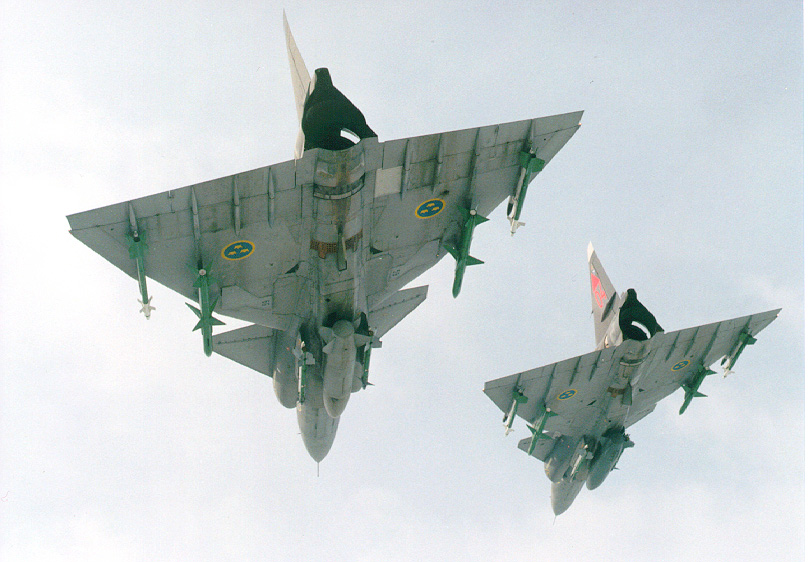
, air brakes like the Su-27 and F-15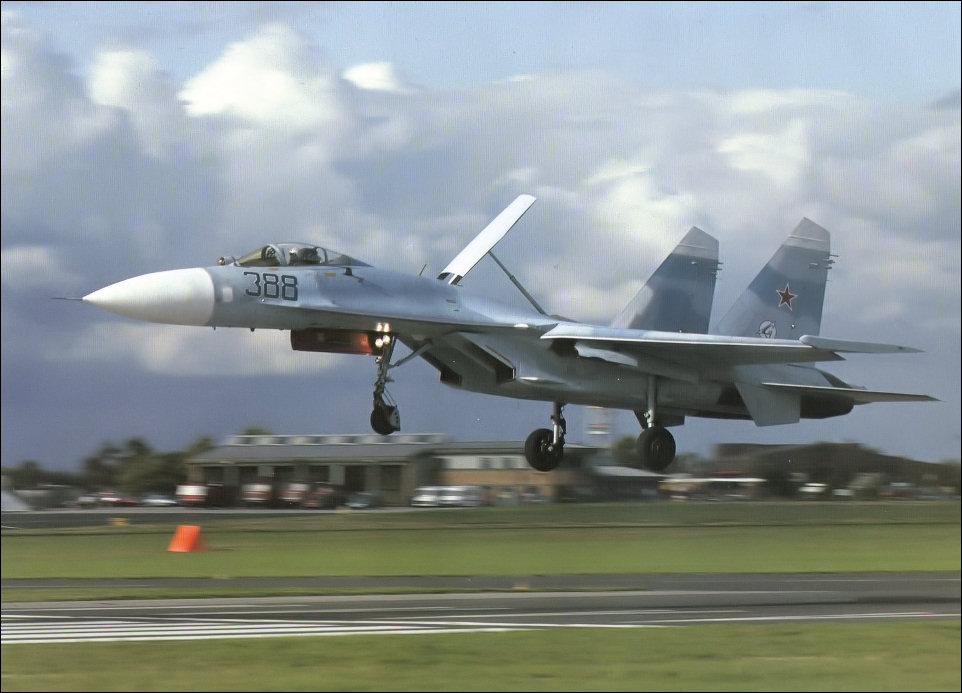
, canards like the Gripen and J-10
,
other aircraft use parachutes
 .
.
An arrestor hook is a must to a conventional fighter with no VTOL, however land based fighters not always use them in fact few have them.
The Rafale is a Mirage 4000 evolution and as such a land based fighter, when it was offered to the Germans or even Italians and british it was not offered as a naval fighter, but as a land based fighter and the proof is the Eurofighter has no arresting hook, which means it was not navalized.

The F-16 is a typical pure land fighter and lacks an arrestor hook

MiG-23MLDMany purely land based military aircraft have arrester hooks. Its for emergency landings. The hook and the associated structures are nowhere near as strong as on arrested recovery naval aircraft. The hooks presence has no bearing on suitability for naval conversion.
Dan
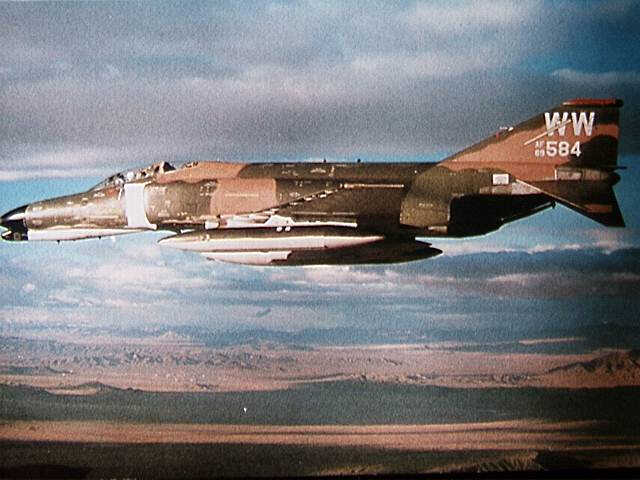
Your position is true up to a point, the land based aircraft always needs to be tailored to operate as a naval aircraft however it is easier to make a dedicated naval aircraft a land based example are the F-14, F-18, A-4 and F-4
Land based F-14

Land based F-18

land based A-4

land based F-4
MiG-23MLDIts a tricky situation , the rafale on the designers board was meant to exist in 2 forms ie , carrier borne and land based . The F-35 was similar (3 forms instead of 2) . Both these aircrafts cannot be called purely Land based fighters designed for Naval fighters . A pure land based F-35 strike fighter would have looked a lot different had their been no STOVL and CV . The rafale wouldnt even have existed (EF typhoon for the french) .
Cant comment about the History of the SU or if it was meant to exist in the Navalized form from the outset but if the designers had the idea then obviously it influenced their design .
The F-35 is similar to the F-111 or a bit like the Rafale, however usually the main variant is always the air force variant therefore the naval variants always are purchased in smaller numbers if that is the case, exception to the case is the F-14 that only a few dozen flew in the iranian colors as land based fighters
Fighters like the F-4-U Corsari of the A-4 were designed as naval aircraft however later they showed that using them as land based aircraft was okay, for example the F-15 has an arresting hook sign of a possible navalization but the Su-27B has no arresting hook niether the Su-30, most of the Su-27 Flankers are land based and just a few dozens have been of the naval variant, the A-4 is the opposite it was first and for most a a naval aircraft, same the F-4-U Corsair.
you can easily transform a naval fighter into one land based but the opposite is not true for a land based aircraft
MiG-23MLDThe french have chosen a land fighter that they navalised ??? Which one ?
The Rafale was designed as a naval plane from the outset.
The SuE: same thing
…
It is niether tricky niether wrong originally a dedicated naval fighter is not a land based aircraft however originally the Su-27 was designed as a land based fighter, however later it was navalized why? simply because the first model that flew was a land based fighter and the Soviets wanted first to navalize the MiG-23 or operate the Yak-141 as the naval main fighter for the soviet aircraft carrier projects nevertheless both designs never became a reality.
The Rafale was based upon the Mirage 4000 experience and tailored for the Eurofighter program, however later it was used as the base of a naval fighter.
the F-14 was totally different it was a dedicated naval fighter from the start.
Design a naval fighter is either a dedicated naval fighter as the F-14 or a derivative of a land based fighter.
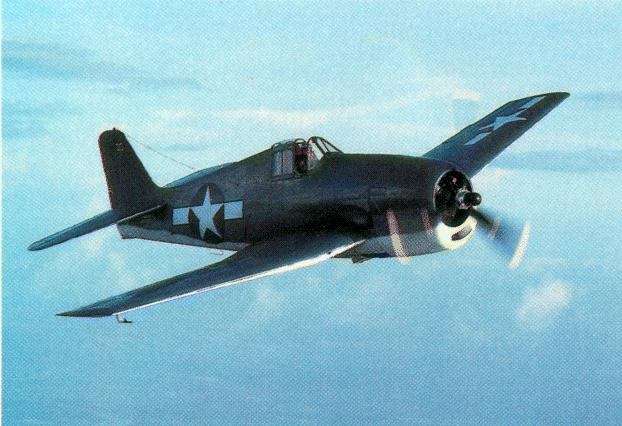
The hellcat was for example a dedicated naval fighter, the A-5 Vigilante a naval bomber and in history there are many examples of dedicated naval fighters, the reverse was the F-4 or the A-4 which from dedicated naval aircraft became land based aircraft.
these are two dedicated naval fighters
MiG-23MLDThe F-14 is bigger than the F-15. The F-15’s T/W advantage is not going to keep it in the air with the same big load after it clears the end of the deck on launch. You could put all six Phoenix on it, but it wouldn’t have the same range.
You should say, while the F-14 has a smaller wing, with its pancake fuselage it can generate more lift per pound than the F-15. Its not really true to say that the F-15 has a lower wing loading, except in the most literal sense. The F-14 is not G limited in combat, either. (Lets see, which plane has broken in half in flight… 😀 )
Not quite that bad, but true, the Phoenix is not for dogfighting. But it would have a tough time pulling 6Gs anyway with all of that Phoenix weight, so a 6G limit is no problem at all. Besides, why would a pilot want to pull more than 6G with a load of AIM-54? The only manuver you would need to make is a 45 degree pull up to lob the Phoenix at a Backfire.
If an F-14 can’t bring back six AIM-54, an F-15N never would have.The Navy chose a heavy VG aircraft because it will have the range and payload capability that a fixed wing Mach 2 fighter (or some slower Boeing pig) would not have, as well as other advantages. The F-14 and the F-15 are each beautifully optimized for their roles. Neither could perform the role of the other as well, which is why both were built. (Although the F-14A really deserved a better engine.)
Like when it went for the F-18E/F.
As an airframe, I would say the F-14 is more advanced. It has several innovative tricks, like the pancake, the retractable vanes, and of course the automatic variable sweep wings. The F-15 doesn’t even have leading edge flaps. As a fighter, the F-15 is superior for the reasons that you stated. But the F-14 is superior in the fleet defense role.
The recent problems with F-15s are more related to worn out fuselages than the design in general, the F-15 has had one of the safest records up to now.
The real facts show the US took both designs and the US navy the F-14 and the USAF the F-15, has the F-14 merits as a fleet defence fighter? probably yes it has, in reality we can say the F-15N was a looser, since it never reached real operational status or even the manufacturing stage , so the F-14 is the winner, but the question is if but in history ifs do not exist.
Certainly the F-14 was a fine aircraft, proved to be a good aircraft, an excellent carrier fighter but i think personally the F-15N was perhaps more practical if the US would not been as wealthy as it was in the 1970s.
The F-14 was good just because the US could afford to pay the price of it, however the russians and french have chosen land fighters to navalize and operate them aboard the deck
MiG-23MLDI’m sorry if it offends your aerodynamic sensibilities Schorsch, if I had had more time I would have put the main gear into bulges under the wing roots.
I was just trying to bring a little levity into the world – I’ll go back to being sensible now…. 🙁
FWIW, it is a 1:48 scale Su-27 – with a 1:72 scale Su-24 cockpit and two Su-24 ‘rear ends’ – there is no B-1B involved.
I was just musing what would happend if Sukhoi had ‘scaled up’ the Su-27 in the same way that Dassault did with the Mirage III to create the Mirage IV.
Ken
The aircraft in question does exist the Su-34 is bascly a larger Su-27

MiG-23MLDQueretaro, Mexico
Bombardier to Add 300 Workers at Mexico Parts Plant in 2008, Beaudoin Says
Posted by roboblogger on Sunday Mar 2
Bombardier Inc., the world’s third- largest aircraft maker, plans to add 300 workers in Mexico this year to increase parts production, said the head of the aerospace unit
http://www.topix.com/mx/queretaro/2008/03/bombardier-to-add-300-workers-at-mexico-parts-plant-in-2008-beaudoin-says
Bombardier Weighs Boost to Train Production in Mexico (Correct)
By Thomas Black
(Corrects type of aircraft that Bombardier assembles fuselages for in seventh paragraph of story published March 3.)
March 3 (Bloomberg) — Bombardier Inc., the world’s second- largest train maker, is weighing whether to build a plant that may double train-production capacity in Mexico, said Flavio Diaz, the company’s chief country representative in Mexico.
The Mexican government is planning transportation projects requiring as many as 250 locomotives and train cars by 2012, Diaz said. Bombardier will need to decide within three years whether to go ahead with the plant, a choice that hinges on how quickly the projects are bid and how many of them the company wins.
“I could end up short of capacity,” Diaz said in an interview in Mexico City. “There’s not a city today in the world with the need to resolve its transportation needs as urgently as Mexico City.”
Mexican President Felipe Calderon has said the government and companies will invest 500 billion pesos ($46.7 billion) a year on roads, bridges, ports, light trains and other infrastructure to boost the economy and make the country more attractive for investment. His administration ends in 2012.
The commuter-train plans include the second and third legs of a light train to connect Mexico City with neighborhoods in the state of Mexico, Diaz said. The government is also looking to build a new subway line in Mexico City and renovate Mexico City’s tramcar system. Another potential project is to add more light train lines in the northern city of Monterrey, he said.
Aerospace
Bombardier builds locomotives and train cars at its plant in Ciudad Sahagun in the Mexican state of Hidalgo. The plant can make 250 locomotives, 375 mass-transit cars and 3,000 freight cars, the company said.
Diaz also said that Bombardier, the world’s third-largest aircraft maker, will be ready to present a plan to produce complete airplanes in Mexico to its board in four or five years. The company now assembles cockpit wiring systems, fuselages for its Challenger aircraft and aft fuselages for its Global business jets, putting Bombardier about a year ahead of its 2005-2012 investment plan, he said.
“I can see it happening,” he said, referring to building complete airplanes in Mexico. “It wouldn’t be logical to have so much industrial success and then halt it when you’re getting close to the goal.”
To persuade Bombardier’s board on Mexican airplane production, the company needs to attract more suppliers in the country and continue to show it can manufacture quality aircraft parts at a lower cost.
In three to four years, Bombardier’s operations in Queretaro, Mexico, will probably show a savings of 25 percent on manufacturing costs, Diaz said. The percentage of local supplier content may rise to 20 percent in about five years from almost none now, he said.
The Queretaro state government is negotiating with eight aerospace suppliers to locate near the Bombardier plant, Diaz said. Of the eight suppliers, seven are non-Mexican companies with experience in the aerospace industry, he said.
To contact the reporter on this story: Thomas Black in Queretaro,
http://www.bloomberg.com/apps/news?pid=20601086&refer=latin_america&sid=aJDhnOXIqIuQ
Montréal, February 28, 2008 — Today, Bombardier Aerospace announced the official opening of its world-class manufacturing facility located at the Querétaro Aerospace Park in Mexico. This new facility complements Bombardier’s existing manufacturing sites located in Canada, Northern Ireland and the United States. Manufacturing operations in this facility began in the second half of 2007.
Currently, Bombardier Aerospace has approximately 900 full-time employees working at its facilities in Mexico where they manufacture electrical harnesses and structural aircraft components. These components include the Challenger 850 mid-fuselage, the Q400 aircraft flight control work package (rudder, elevator and horizontal stabilizer), and the Global family of aircraft aft fuselage. By the end of 2008, Bombardier Aerospace expects to employ 1,200 full-time staff.
“Bombardier Aerospace and Mexico have a solid relationship based on a long-term commitment to develop the aerospace industry within Mexico and we are particularly proud to be the first manufacturer at Querétaro’s new aerospace park,” said Pierre Beaudoin, President and Chief Operating Officer, Bombardier Aerospace. “In parallel to the establishment of this world-class facility, we also plan to develop a local supplier base to further support our Mexican operations and other facilities, and we look forward to other companies joining us in Quetéraro. In this highly competitive industry, which is becoming increasingly global in its scope, we view Mexico as the springboard to the further development of the aerospace industry in Central and South America, and to our increased competitiveness in the international marketplace.”
“We are extremely pleased with the work being accomplished by our Mexican employees. Their sense of professionalism and dedication, as well as their willingness to take on, and overcome, tough challenges, has contributed to the success of this venture. Their efforts are setting the standard that will ultimately allow Mexico to become a vital participant in the international aerospace industry. All participants have the right to be proud of their achievements,” Mr. Beaudoin continued.
“We applaud the strong commitment shown by both the Federal and State of Querétaro governments to participate and support the three pillars upon which our industry stands: infrastructure, certification and training. I have every confidence that, together, we will build a strong and vital future for the Mexican aerospace industry and for Bombardier.”
Bombardier also acknowledges the VESTA-GE alliance that combines the two companies’ experience in the construction and the administration of industrial-type properties, as well as the financing of real estate. VESTA-GE will jointly undertake the investment, the development and the management of the Querétaro Aerospace Park.
Querétaro, located north of Mexico City, offers quality industrial and educational infrastructures, a skilled population and dynamic economic development policies. Its modern airport will provide Bombardier Aerospace, its suppliers and other future members of the new Mexican aerospace cluster, the best potential for growth and synergies.
In addition to Bombardier Aerospace having aircraft component facilities located in Mexico, Bombardier Transportation is also present through its facility in Ciudad Sahagún.
About Bombardier
http://www.ontaero.org/Page.asp?PageID=122&ContentID=1110&SiteNodeID=114
MiG-23MLDTVC wouldn’t bring any gain, and would need considerable design effort. The flight control design of such an aircraft does not suffice to integrate TVC.
As Sens said, more power wouldn’t make it much faster when low. The top speed is usually limited by transonic drag rise. There drag increases about 50 to 100% (when carrying external loads) from M0.85 to M0.9. As you will hardly have 50 to 100% more power, it would likely give you another one or two Mach counts (0.01-0.02), nothing that changes mission success rate. May be helpful for climb, high altitude performance and field performance.
двигателя этого типа создают самолету тяговооруженность на земле на режиме «полный форсаж», соответствующую 1,2 ед. Это выше, чем у любого другого истребителя в мире, будь то Eurofighter-2000, Mirage-2000 или да¬же Су-37. Поэтому, чтобы приблизиться или превзойти характеристики F-22 Raptor, отечественный истребитель МиГ необходимо оснастить силовой установкой из двух ТРДДФ, способных обеспечить на земле при работе на режиме «полный форсаж» это же значение тяговооруженности. Для российских авиационных комплексов семейства «Су» такой ТРДДФ должен обладать тягой на режиме полного форсажа в 20.000 кгс на каждый двигатель, то есть, суммарной тягой силовой установки в 40.000 кгс. Для МиГ-23МЛ подобным двигателем может стать ТРДДФ АЛ-41 Ф или ему подобный 5-го поколения.
This is explained as following; a fifth generation russian fighter needs at least a unitary thrust of an AL-41 of 20000 kgs and a a total of 40000kg to beat the F-22 in terms of thrust to weight ratio, higher than the 26000kgs a Su-27 generates currently however a single engine should be able to power and generate enough power to give to the PAK-FA a thrust to weight ratio of 1.2:1 in the case of the MiG-23ML, this is only achieved with the retrofitting of an AL-41F, that gives it a thrust to weight ratio similar to the F-22 or PAK-FA
See that the MiG-23 is a quit light aircraft, its empty weight is only 9900kgs so an AL-41 gives it a really high thrust to weight ratio in the class of the F-22, even its weight load is only 14700kg
Now let us examine a question about the maneuverability characteristics of this machine, using a procedure of German professor K Heineker, and by the Russian development of the author of this article (published in the collection of the works of defense of the University of Debrezeite in 2001.). With respect to it we compare horizontal turn rate with the use of a nozzle with variable thrust vectoring and without it.
We calculated the turn radius while this maneuvering. Which is interesting, if we compared to the F-22
We assume, that the turning of the nozzle is achieved in the pitching plane to the angles +- 20° as in F -22, so in MiG-23ML. The ratio of the parameters of angular rate of rotation MiG-23ML to F -22 composes 0,963.
Теперь рассмотрим вопрос о маневренных характеристиках этой машины, используя методику немецкого профессора К.Хайнека,дополненную российской разработкой автора этой статьи (опубликована в сборнике трудов Оборонного университета в Деб-ре-Зейте в 2001 г.). По ней мы сравниваем скорость вращения самолета на вираже в горизонтальной плоскости с применением многоракурсного сопла с изменяемым вектором тяги и без такового. Или рассчитываем радиус виража, который описывает самолет при этом маневре. Что любопытно, сравнивать будем с истребителем F-22 Raptor.Принимаем, что поворот многоракурсного сопла осуществляется в плоскости тангажа на углы +/- 20° как у F-22, так и у МиГ-23МЛ. Отношение параметров угловой скорости вращения МиГ-23 к F-22 составляет 0,963. То есть, старенький советский истребитель .
the parameters, identical for both engines [TRDDF]) it is obtained by 1550,7 m, and it is identical in both machines. Thus, [re-engine of domestic fighter aircraft is capable of drawing nearer and of even making even the parameters of maneuverability of the MiG-23ML with the F-22 Raptor. The angular velocity of turn in this case corresponds 12° per second.
параметрах, идентичных для обоих ТРДДФ) получается 1550,7 м, и у обеих машин одинаков. Таким образом, ремоторизация отечественных истребителей способна приблизить и даже уравнять параметры маневренности МиГ-23МЛ с F-22 Raptor. Угловая скорость виража при этом соответствует 12° в секунду.
MiG-23MLDAerospace design and engineering activities are also taking place in Mexico. In Coahuila state, there is GE’s Center for Advanced Engineering in Turbo machinery, a place where Mexican engineers are designing control systems for jet engines.
Video about bombardier, Queretaro in Spanish
http://video.google.com/videoplay?docid=228111046330765388&q=Bombardier+queretaro&total=3&start=0&num=10&so=0&type=search&plindex=1
An opinion about Bombardier working conditions
En esta empresa disque de primer mundo te exigen que curses una capacitacion de 4 meses como tecnico en electronica aero espacial, pero cual sera tu sorpresa que despues de pagar tu capacitacion en la UTQ de queretaro, y llenar todos los requisitos que te piden que no son pocos, que la llegar a la planta firmas un contrato por un mes, despues por otro y asi hasta llegar a 3, despues de los cuales te dan la planta y un misero sueldo de neto de $1200 semanales, firmas tu contrato de planta, no como tecnico aeroespacial, sino como vil operador de produccion, ademas te tratan de la patada, hay muchos rasgos de racismo en esta empresa, e impocisiones tontas solo para fastidiar a los trabajadores, admas las personas de recursos humanos te tratan con despotismo, para colmo el pin…che bono trimestral asiende en el mejor de los casos a $390 de valuados pesos y si tenias poco de entrar te dan $60, asi como lo estas leyendo, pero por esta feria te suben el impuesto sobre el trabajo, casi al triple…
In this so called first world corporation, you require a 4-month training as an avionics technician, but you will find out to your own amazement that after paying your training in the UTQ of queretaro and finishing the course, you will find out at the Bombardier`s plant that you only will sign a contract for one month, then for another and so on until the third month you will sign a contract for only MX$1200 pesos a week (less than USD $120), but not as aerospace technician, but as a mere production operator, you also will see that racism is present in this company, and there are silly measures just to annoy the workers, further more the human resources people are despotic in their dealing with the workers, on top of the that. The quarterly bonus in the best of cases is just merely MX $ 390 pesos (around USD $35 dollars), however if you just started working there they will just give you MX$ 60 pesos, however the company will make you pay a tax almost three times that amount.
http://www.apestan.com/cases/bombardier-queretaro-queretaro-mexico_6101.html
MiG-23MLDIS it not the reason to have Affordable aircraft, that can be had by any country in proption to their need???
Brizil can buy, but they don’t think it is necessary………….but they do want to have Airforce………….made up of what?
But that is crumbling equation of the yesterday….
[B]Russian allies will buy Russian, among them India, Iran or algeria, these nations either can buy a light fifth generation fighter made buy Russia or cheap fighters like MiG-29s or second hand Su-27s.
Very true……. in the coldwar Soviet and US would supply cheap aircraft for their respective block countries. With the fall of curtain …… smaller nation have limited chioce.
This is the most appropriate time for Simple, affordable, Maintanence friendlyy aircraft for any nation which need to maintain Airforce arm.
Well i agree each nation needs a different type of fighter but in my opinion i think in Latin america we do not buy as much weapons as in other parts of the world, for example several air forces in the area still operate F-5s, Kfirs, Mirage IIIs and A-4s, few nations have F-16s and Mirage 2000 and only Cuba and Peru have MiG-29s and venezuela a few Su-30.
In latin america we have two economies with a PPP GDP of of more than one billion dollars, In fact Brazil has an economy as large as Russia larger than Spain, south Korea and far far larger than Iran or Pakistan; Mexico also has an economy as large as South Korea and Spain and still operates F-5s, in Latin america politicians know social programs are more important or even their own pokets.
In latin america the political alliances are mostly with the US and Europe; Russia and China are not common allies beyond a few programs.
brazil wants and prefers the Rafale and Su-35 because it is important the technology transfer they offer
See that for example in Latin america during the recent Brazil supported Venezuela and Ecuador see
The minister of the Defense, Nelson Jobim, during his recent trip to the U.S.A., defended the governments of Hugo Chávez, in Venezuela, and Rafael Correa president of the Equator, about the accusation that these governments support the colombian guerrillas. He also evaluated that the political transistion in Cuba will be in calm.
Rice revealed special interest in the Brazilian vision on Chávez and on the incident between Colombia and the Equator, when Columbian troops had bombed an encampment of the FARC (Revolutionary Armed Forces of Colombia) in Ecuadorian territory, in the dawn of the first day of this month.
Advice of Defense
He added that the future South American Defense system articulated by Brazil, can be precious in eventual similar situations.
Brazil and Chávez
Jobim also repeated for Rice, Hadley and Mattis the Brazilian position about Chávez: he was elect democratically and follows all the institucional norms, also respecting the defeat in the plebiscite on multiple mandates. “Who did not act democraticatically was the opposition that [ with support of U.S.A. ] tried a blow to knock down Chávez in 2002.”
The minister also disagreed with the speech of president George W. Bush of that South American countries would give a safe haven to guerrila groups and narcotics traffickers, as the Farc.
“the governments [ of the Equator and Venezuela ] do not have nothing to do with this. If the guerrillas hide and at times it is impossible to detect them it is because it is not easy to track them and find them in the jungle, he said Who does not know the Jungle is capable to find that it is easy to identify encampments in the borders “, said, in defense of Chávez and Correa.
Military purchases
The minister, who visited the base of Norfolk and the air base of Langley also participated in talks with representatives of the industry of defense, organized by Brazil and the U.S.A., he left clearly that Brazil is not satisfied in being a mere purchaser. “we do not want dependence, we want to make national partnerships”, said.
he insisted on the technology transfer.
France, Russia, U.S.A. and Sweden offer their military fighter aircrafts for Brazil`s F-X project for the replacement ofa squadron of the BAF (Brazilian Air Force).http://www.defesanet.com.br/md1/usa_4.htm
MiG-23MLDWhat really lost in the discussion is the acceptance of necessity of Fighter for any country who needs to have/had Airforce when Migs/Mirage could easily procured. Now to procure any aircraft we get a ballpark figure of $100Mil, which simply could not afford by even rich countries in large Nos.
The repeated quick/dirty solution of used f-16 being dissed is not really the best option or available options. First accept the necessity of Light Fighter in the world and the lost oppertunity of the established Fighter manufacturer America , Europe , Russia in this regard.
Aircraft are not as expensive as many think, there are at least more than 20 nations with large GDPs, a fleet of 40 Eurofighters or 40 Gripen is not as expensive as to be forbidingly unaffordable.
the question is more or less what nations are willing to fight a war?
In Latin america no nation is willing to spend a billion dollars in 5 F-22s or 10 F-35 if the purchase is not needed.
Having the USAF around in Latin america is a bless up to degree, no non latin american nation will attack a latin american nation and not face the USAF.
The only nations able to have long range bombers are Russia and the USAF and only the USAF has F-22s and B-2s, so it is more practical to have a few second hand F-16s perhaps a few Su-30s as a psycological threat.
Even Brazil can buy F-35s they have been offered the cheapest available fifth generation fighter and they rejected the offer.
Without allainces with a powerful air force, small air forces will suffer the same fate the Polish, danish, dutch, or Norwegian air forces during WWII when they faced the mighty Luftwaffe, in few words defeat
The most logic arrangement is like the following
Russian allies will buy Russian, among them India, Iran or algeria, these nations either can buy a light fifth generation fighter made buy Russia or cheap fighters like MiG-29s or second hand Su-27s.
Allies of China can buy FC-1s or J-7s among them we have Zimbawe, Sudan, Pakistan, perhaps a few former soviet republics or a few Latin american or African nations.
the Allies of the US will buy american or sometimes Israeli or European fighters, but basicly F-16s or F-35s, among them, Turkey, Mexico, Chile, Japan, Israel, Egypt, South Korea.
The Europeans also have allies and they share their market with the US, nations in Latin america like Brazil, Peru or Argentina, European nations like Poland, Hungary, Czech or Bulgaria and some nations in the middle east might buy Rafales, Gripen or Eurofighters
however the most likely cheapest light weight fighter is not the Gripen but the F-35 because up to now the lightest fifth generation available is the F-35 and if you want the best seller fourth generation fighter wellthe F-16 is always the best

MiG-23MLDIn less than three years Mexico will be one of the few countries specialized in the manufacture of turbines of low pressure, that are widely sold in the world and they are not made in any country of Latin America, but only in England, Germany and Spain; in addition to which it will repair turbines CFM56. ITR which is located in Querétaro Mexico, is dedicated to the manufacture of tubes and maintenance of motors, which has Mexican capital and share holders, it made alliances with the Spanish company ITP, the British Rolls Royce and the Snecma French. Currently they are studying and preparing the conditions to make turbines of low pressure with ITP and Rolls Royce and the repair of the jet engine CFM56 with Snecma.
During an interview with Manufacture department, Jose Luis Chávez Vásquez, director of the area of Recursos Humanos (RH) of ITR. “in Mexico there has never been made a turbine of low pressure, it is a level of very advnaced engineering that will allow us to arm not only small components, but complete units”, he explained. The fact we will manuifacture turbines of low pressure in Mexico means a quantum jump for the Mexican aeronautics industry “, explained. It detailed that in addition to the support which they are offering to the European companies to develop the technology that is required for the manufacture of the mentioned turbine, we will ask for economic support to the mexican federal government. Chávez Vásquez indicated that what we are looking for is to manufacture the turbine of low pressure here in Mexico, since is a “very important component of the Jet engine”.
http://www.cnnexpansion.com/manufactura/actualidad/itr-de-tubos-a-turbinas/view
MiG-23MLDI’ve been thinking about the current options for an air force with limited defence budgets & wants an affordable lightweight fighter – a modern day equivalent of the F-5E or Mig-21.
An aircraft that is cheap to buy, simple to maintain & one that most developing countries could afford as new-build aircraft.
Of course the definition of “affordable” is subjective. But arbitrarily, for the sake of argument, let’s set the Saab Gripen (new build) as the upper limit of the threshold, as the Gripen itself is a lightweight fighter.
The list of possibilities seems rather limited:
Saab JAS-39C/D Gripen
Chengdu J-10
CAC/PAC FC-1 (PF-17)
Chengdu F-7MG
Mig-35 Fulcrum-F (?)
F-16 Block 50/52 (?)I am not sure how much a new F-16 Block 50/52/60 or Mig-35 costs, but I imagine they are not cheap.
Do you think the affordable lightweight fighter has been neglected by the Western aviation industry, or am I overestimating the purchase price of a new F-16 Block 52/60?
Are economically challenged developing countries destined to rely on refurbished 2nd-hand aircraft? :confused:
Everything depends in politics and budget
Considering budget is important but politics is more.
For example in Latin America nations with close relations to the US will buy F-16s.
Chile just recently adquiered 34 F-16s, some new ones and some ex-dutch air force; in Mexico there is the expeculation it will become another F-16 and F-18 customer, Colombia has bought more Kfirs that armed with Israeli weapons are excellent and really cheap, however nations like Brazil bought some ex-french Mirage 2000 and there is the posibility for Argentina to become another F-16 user
Many nations won`t buy fighters with limited range and warload and have decided to buy Su-30 in Venezuela or are mulling the posibility of buying Su-35s like Brazil and also Venezuela
Brazil is mulling the purchase of the Su-35 mostly on tech transfer grounds because recently the US offered the F-35 to the Brazilian defence minister Nelson Jobim, however Brazil has rejected the offer because the aircraft is useless for brazil, it is too expensive and has no tech transfer
O ministro da Defesa, Nelson Jobim, descartou ontem a compra de equipamentos militares dos Estados Unidos, principalmente os aviões de caça F-35 Joint Strike Fighter, da fábrica Lockheed Martlin, alegando que o país veta a transferência de tecnologia e o custo/benefício não interessa ao Brasil. Cada exemplar custa de US$ 50 milhões a US$ 60 milhões
http://www.defesanet.com.br/md1/usa_2.htm
Africa might buy some really cheap airframes but surprisingly the Su-27/30 derivatives have been bought in Algenria, Angola and Ethiopia, and the reason is obvious, currently the top nocht fighters are the Eurofighter and F-22 and the only way offer a realistic defence or a realistic cheap fighter to a really advanced version of Eurofighter is only in the form of a Su-30MKI or Su-35 fighter which are comparatively cheaper and almost as good as the really top dogs
MiG-23MLDMexico. – Group ITP signs an agreement with the State of Querétaro to develop aeronautical turbines of low pressure CITY OF MEXICO, 24 Ene. (EUROPE PRESS) – The governor of the Mexican State of Querétaro, Francisco Garrido Pattern, and the president of the Council of the Spanish group Industria de Turbo Propulsores S.A. (ITP), Ricardo Martí, signed a collaboration agreement to develop a project of manufacture of turbines of low pressure for the aeronautical sector, inquired officially. In an official notice of the government of Querétaro, it was indicated that the company/signature was made in Spain, where Garrido makes a work tour in which it has visited the facilities of ITP in Bilbao where it has been able to know the projects future the company. Group ITP is the first house of the company ITR Mexico, that is dedicated to the maintenance of turbines of commercial airplanes and that has been installed in Querétaro for ten years. Garrido participated in addition in a seminary in the technological park to Zamundio, in Bilbao, where it exposed the projects of the aeronautical complex of Querétaro. After their exhibition, representatives of attending companies when char showed it to the governor their intention to invest in the Mexican city. ITR, branch of ITP in Mexico, makes motors for airplanes and makes the tests of these. With the new agreement signed with the Interior de Querétaro it will impel the construction of turbines of low pressure. ITR is formed in a 57 percent by Spanish ITP, Mexican of Aviacio’n and Aeroméxico in a 14.5 percent respectively and by General Electric, who counts on the 14 percent of the actions. The first house, Group ITP, are participated by Aeronautical Sener (53.125 percents) and by Rolls Royce (46.875 percents) and it is dedicated to engineering, investigation and development, to the manufacture and smelting, and the assembly and tests of aeronautical motors and gas turbines.
In less than three years Mexico will be one of the few countries specialized in the manufacture of turbines of low pressure, that are sold in the world and they are not made in any country of Latin America, but in England, Germany and Spain; in addition to which it will repair turbines CFM56. ITR wich located in Querétaro, is dedicated to the manufacture of tubes and maintenance of motors, which has Mexican capital, it made alliances with the Spanish company ITP, the British Rolls Royce and the Snecma French. Currently they are studying and preparing the conditions to make turbines of low pressure with ITP and Rolls Royce and the repair of the motor CFM56 with Snecma.
During an interview with Manufacture department, Jose Luis Chávez Vásquez, director of the area of Recursos Humanos (RH) of ITR. “in Mexico there has never been made a turbine of low pressure, it is a level of very advnaced engineering that will allow us to arm not only small components, but complete Jet engines”, he explained. The fact we will manuifacture turbines of low pressure in Mexico means a quantum jump for the Mexican aeronautics industry “, explained. It detailed that in addition to the support which they are offering to the European companies to develop the technology that is required for the manufacture of the mentioned turbine, we will ask for economic support to the mexican federal government. Chávez Vásquez indicated that what we are looking for is to manufacture the turbine of low pressure here in Mexico, since is a “very important component of the motor”.
http://www.cnnexpansion.com/manufactura/actualidad/itr-de-tubos-a-turbinas/view


 Sign In








